
Preoperatieve pijnstilling femurfractuur
Uitgangsvraag
Wat is de aanbevolen preoperatieve pijnstilling bij een proximale femurfractuur?
Aanbeveling
Plaats een perifeer zenuwblokkade ten behoeve van pijnstilling van een proximale femurfractuur, tenzij deze technisch niet uitvoerbaar is en/of er contra-indicaties zijn.
Overwegingen
Balans tussen gewenste en ongewenste effecten
Er is literatuuronderzoek uitgevoerd naar de optimale preoperatieve anesthesiologische zorg bij een proximale femurfractuur. Pijn werd als cruciale uitkomtmaat gedefinieerd. Gebruik van morfine, patiënttevredenheid, duur van ziekenhuisopname en mortaliteit werden als belangrijke uitkomstmaten gedefinieerd.
Er werd één systematische review geïncludeerd in de literatuuranalyse (Hayashi, 2024) die alle cruciale en belangrijke uitkomstmaten rapporteerde. Daarnaast werden vier RCT's opgenomen (Fontes, 2024; Gerlier, 2024; Unneby, 2020; Usman, 2024).
Er werd voor geen enkele uitkomstmaat, zowel de cruciale als belangrijke, een klinisch relevant verschil gevonden bij de vergelijking van wel of geen gebruik van preoperatieve analgesie bij patiënten met een proximale femurfractuur. De bewijskracht varieerde van redelijke bewijskracht voor de uitkomstmaat pijn tot zeer lage bewijskracht voor mortaliteit. Er werd een lage bewijskracht gevonden voor het gebruik van morfine, patiënttevredenheid en duur van ziekenhuisopname.
De geïncludeerde literatuur beschrijft veelal patiënten met een hogere leeftijd. Specifiek voor deze groep is het gebruik van opioïden een verhoging van het risico op delier. Zie ook richtlijn ‘Delier bij volwassenen en ouderen’.
Een nuance met betrekking tot het onderzoek naar de pijnstilling: Voor alle zenuwblokkades werd een verbetering gezien ten opzichte van geen zenuwblokkade. Hierbij was de winst van een single zenuwblokkade wel kleiner dan dat van een zenuwblokkade van meerdere zenuwen.
In de verschillende onderzoek zit verschil in gebruik van soort en hoeveelheid lokaal anestheticum.
Kwaliteit van bewijs
De overall kwaliteit van bewijs is redelijk. Dit betekent dat we redelijk zeker zijn over het gevonden geschatte effect van de cruciale uitkomstmaat pijn. De bewijskracht tussen de uitkomstmaten varieerde echter sterk, aangezien er voor de belangrijke uitkomstmaten een lage tot zeer lage bewijskracht werd gevonden.
Er is afgewaardeerd vanwege het risico op bias, vanwege onduidelijkheden in de randomisatie van de patiënten in de geïncludeerde studies en imprecisie, omdat het betrouwbaarheidsinterval een grens van klinische relevantie overschrijdt.
Waarden en voorkeuren van patiënten (en eventueel hun naasten/verzorgers)
Het plaatsen van een zenuwblokkade lijkt voor de gemiddelde patiënt een verbetering van pijnstilling op te leveren. Hierdoor lijkt er minder van de co-medicatie nodig te zijn, zoals NSAIDs en opioïden, waardoor er ook minder risico’s op bijwerkingen zijn. Echter, dient per individuele patiënt beoordeeld te worden wat de beste pijnstilling is. Een zenuwblokkade moet technisch wel mogelijk zijn. Morbide obesitas en allergie voor lokale anesthetica of huidinfectie op de beoogde priklocatie kunnen een contra-indicatie zijn. Ook kan therapeutische antistolling een contra-indicatie zijn voor een psoas-compartment blok, echter niet voor een femoraal of fascia lata blok (zie tabel 9.2 van de richtlijn 'Antistollingsmiddelen i.c.m. zenuwblokkade'). Verder moet de patiënt coöperatief zijn en moet er sprake zijn van informed consent. Anderzijds kan overgevoeligheid van de patiënt voor NSAID’s en opioïden een extra reden zijn om voor de plexusblokkade te kiezen.
Afhankelijk van de plaatselijke logistiek en de tijdsduur tot de OK kan gekozen worden voor een ‘single shot techniek’ of het plaatsen van een katheter.
Iedere patiënt heeft zijn eigen pijnbeleving en die wisselt per patiënt. Factoren die hierin meespelen zijn leeftijd, angst en reeds pijnmedicatie voor pijn met een andere oorzaak dan de fractuur. Zeker als de patiënt al gewend is veel pijnmedicatie te nemen kan een locoregionale blokkade veel toevoegen. Het is belangrijk om de voor- en nadelen van de verschillende opties voor pijnbehandeling met de patiënt te bespreken volgens de principes van samen beslissen. Hierbij dienen zowel de verwachte effectiviteit van de pijnstilling als de mogelijke risico’s, contra-indicaties, voorkeuren en persoonlijke situatie van de patiënt te worden meegewogen. Op basis hiervan kan gezamenlijk worden besloten welke vorm van pijnbehandeling het meest passend is voor de individuele patiënt. Vooraf aan een blokkade moet er een informed consent zijn nadat de patiënt is ingelicht over de mogelijke complicaties: falen, bloeding, infectie en zenuwschade.
Gewenste effecten
Gewenste effecten van een locoregionale analgesie (perifeer zenuwblok) zijn een betere pijnstilling met name ook bij bewegen en bewogen worden. Doordat er minder andere pijnstillers zoals opioïden nodig zijn heeft de patiënt daar ook minder bijwerkingen van. Met name de oudere patiënt met een kwetsbare gezondheid heeft daar profijt van. Minder pijn geeft tevens een verbetering van kwaliteit van leven
Ongewenste effecten
Ongewenste effecten van een perifeer zenuwblok zijn onvoldoende pijnstilling, een technisch niet mogelijke perifeer zenuwblok, zenuwschade, bloeding en een infectie. Zie de keuzehulp anesthesiologie.nl/documenten/keuzehulp-anesthesiologie-nva-pfn. Ook kan de patiënt het hinderlijk vinden dat de heup hierna motorisch beperkt is. De laatste twee complicaties zijn zeldzaam en profylactische antistolling is dan ook geen contra-indicatie, therapeutisch antistolling wel. Zie ook de module Antistollingsmiddelen i.c.m. zenuwblokkade. Verder kan de procedure stress opleveren bij een al angstige patiënt. Ook kan de patiënt het hinderlijk vinden dat de heup hierna motorisch beperkt is.
Kostenaspecten
Het plaatsen van een zenuwblokkade met toediening van aanvullende medicatie kost meer dan alleen het toedienen van medicatie. Voor de plexusblokkade is een extra echoapparaat, een plexusnaald en eventueel een steriele set en steriele handschoenen nodig. Bovendien moet er medisch personeel beschikbaar en bekwaam zijn om de blokkade te plaatsen.
Zonder plexusblokkade kan er gebruik gemaakt worden van ‘Patient Controlled Analgesia (PCA)’ pompen.
Gelijkheid ((health) equity/equitable)
De logistieke organisatie van het plaatsen van een plexusblokkade kan in met name kleinere instellingen een uitdaging zijn. Het is echter niet zo dat het niet plaatsen van een blok direct ook afname van gezondheidswinst genoemd kan worden, omdat de winst bescheiden is.
Er zijn meerdere artikelen waarbij er prehospitaal naar tevredenheid zenuwblokken door paramedici zijn geplaatst (Davis, 2021).
Aanvaardbaarheid:
Ethische aanvaardbaarheid
De interventie lijkt aanvaardbaar voor de betrokkenen. Er zijn geen ethische bezwaren.
Het plaatsen van een zenuwblokkade lijkt voor de gemiddelde patiënt een verbetering van pijnstilling op te leveren. Hierdoor lijkt er minder van de co-medicatie nodig te zijn, zoals NSAIDs en opioïden, waardoor er ook minder risico’s op bijwerkingen zijn. Echter, dient per individuele patiënt beoordeeld te worden wat de beste pijnstilling is. Een overgevoeligheid van de patiënt voor NSAID’s en opioïden kan een extra reden zijn om voor perifeer zenuwblokkade te kiezen.
Duurzaamheid
Bij de interventie en controle spelen duurzaamheidsaspecten geen significante rol. Voor het plaatsen van een zenuwblokkade zijn wel extra niet-herbruikbare materialen nodig, zoals een plexusnaald. Extra medicatie bij afwezigheid van een blokkade levert meer medicijnverpakkingen op. Hetzelfde geldt voor de behandeling van bijwerkingen.
Haalbaarheid
Een zenuwblokkade moet technisch wel mogelijk zijn. Morbide obesitas en allergie voor lokale anesthetica of huidinfectie op de beoogde priklocatie kunnen een contra-indicatie zijn. Verder moet de patiënt voldoende coöperatief zijn.
Afhankelijk van de plaatselijke logistiek en de tijdsduur tot de OK kan gekozen worden voor een ‘single shot techniek’ of het plaatsen van een katheter.
Rationale van de aanbeveling: weging van argumenten voor en tegen de interventies
In de literatuur is aangetoond dat het plaatsen van een plexus blokkade bij een patiënt met een femurfractuur in afwachting van een operatie betere pijnstilling geeft dan alleen medicatie. Het effect van een femoralisblokkade is wel kleiner dan een FICB of 3-in-1 blok. Als bijkomend voordeel heeft een blok weinig bijwerkingen en kan er volgens diezelfde literatuur geminderd worden op co analgetica zoals opiaten. Voor het PENG blok is er nog geen duidelijkheid over de potentieel nadelige gevolgen van een bloedingscomplicatie bij therapeutische antistolling. Bij een update van de richtlijn antitrombotisch beleid en/of Neuraxisblokkade en antistolling hier meer duidelijkheid over komt.
Onderbouwing
Proximal femur fractures are painful, especially during movement. During transport to the hospital, the patient is immobilized, allowing time for pain management, intravenous fluid administration, and thermal management. Stabilizing this patient group requires continuous attention, both in the emergency department and on the wards, particularly because it takes time before the patient is formally admitted to the ward. Even then, sufficient attention must be given to pain relief, fluid administration, thermal management, and blood pressure regulation. Multidisciplinary input and collaboration are essential to optimize the patient for surgery as quickly as possible. The composition and expertise of the multidisciplinary treatment team are often determined locally, which can lead to under- or overdiagnosis and subsequent under- or overtreatment. The role of anesthetic management in the outcomes of patients with proximal femur fractures is challenging to quantify but will undoubtedly play an important part in future patient-centered care.
Summary of Findings
|
Outcome Timeframe |
Study results and measurements |
Absolute effect estimates |
Certainty of the evidence (Quality of evidence) |
Summary |
||
|
No preoperative anesthetic block |
Preoperative anesthetic block |
|||||
|
Pain (critical)
|
Based on data from 1704 participants in 23 studies1
|
Difference: SMD 1.23 lower (CI 95% 1.5 lower - 0.96 lower) |
Moderate Due to serious risk of bias2 |
A preoperative anesthetic block probably results in little to no difference in pain in comparison with no preoperative anesthetic block in patients with a proximal femur fracture (undergoing surgical intervention). |
||
|
Consumption of morphine equivalents (important)
|
Based on data from 578 participants in six studies3
|
Difference: SMD 0.54 lower (CI 95% 0.81 lower - 0.27 lower) |
Low Due to very serious risk of bias4 |
A preoperative anesthetic block may result in less opioid consumption in comparison with no preoperative anesthetic block in patients with a proximal femur fracture (undergoing surgical intervention). |
||
|
Patient satisfaction (important)
|
Based on data from 404 participants in seven studies5 |
Difference: SMD 1.16 higher (CI 95% 0.29 higher - 2.04 higher) |
Low Due to serious risk of bias and serious indirectness6 |
A preoperative anesthetic block may result in little to no difference in patient satisfaction in comparison with no preoperative anesthetic block in patients with a proximal femur fracture (undergoing surgical intervention). |
||
|
Length of hospital stay (important)
|
Based on data from 798 participants in seven studies7
|
Difference: MD 0.89 lower (CI 95% 2.35 lower - 0.57 higher) |
Low Due to serious risk of bias and serious imprecision8 |
A preoperative anesthetic block may result in little to no difference in length of hospital stay in comparison with no preoperative anesthetic block in patients with a proximal femur fracture (undergoing surgical intervention). |
||
|
Mortality (important)
|
Risk ratio: 0.88 (CI 95% 0.33 - 2.32) Based on data from 485 participants in six studies9
|
40 per 1000 |
35 per 1000 |
Very low Due to serious risk of bias and very serious imprecision10 |
The evidence is very uncertain about the effect of a preoperative anesthetic block on mortality in comparison with no preoperative anesthetic block in patients with with a proximale femur fracture (undergoing surgical intervention). |
|
|
Difference: 5 fewer per 1000 (CI 95% 27 fewer - 53 more) |
||||||
1. Systematic review [2] with included studies: Gille (2006), Haddad (1995), Luger (2013), Henderson (2008), Szucs (2012), Ranjit (2016), Diakomi (2014), Uysal (2020), Ma (2018), Dickman (2010), Alrefaey (2020), Morrison (2016), Dickman (2010), Mayel (2022), Kullenberg (2004), Graham (2008), Rowlands (2018), Pradhan (2022), Zhang (2019), Unneby (2017), Madabushi (2016), Loessin (2019), Güllüpinar (2022), Yun (2009) Baseline/comparator Control arm of reference used for intervention.
2. Risk of Bias: serious. Inadequate sequence generation/ generation of comparable groups, resulting in potential for selection bias.
3. Systematic review [2] with included studies: Szucs (2012), Luger (2013), Henderson (2008), Beaupre (2020), Zhang (2019), Unneby (2017) Baseline/comparator Control arm of reference used for intervention.
4. Risk of Bias: very serious. Inadequate sequence generation/ generation of comparable groups, resulting in potential for selection bias, Inadequate/lack of blinding of participants and personnel, resulting in potential for performance bias.
5. Systematic review [2] with included studies: Sahithi (2022), Pradhan (2022), Ma (2018), Elhalim (2021), Szucs (2012), Diakomi (2014), Alrefaey (2020) Baseline/comparator Control arm of reference used for intervention.
6. Risk of Bias: serious. Inadequate/lack of blinding of outcome assessors, resulting in potential for detection bias, Inadequate sequence generation/ generation of comparable groups, resulting in potential for selection bias; Indirectness: serious. Differences between the outcomes of interest and those reported (e.g short-term/surrogate,not patient-important).
7. Systematic review [2] with included studies: Ma (2018), Kullenberg (2004), Altermatt (2018), Unneby (2017), Spyraki (2020), Rowlands (2018), Morrison (2016) Baseline/comparator Control arm of reference used for intervention.
8. Risk of Bias: serious. Inadequate sequence generation/ generation of comparable groups, resulting in potential for selection bias, Inadequate/lack of blinding of participants and personnel, resulting in potential for performance bias, Inadequate/lack of blinding of outcome assessors, resulting in potential for detection bias; Imprecision: serious. Wide confidence intervals.
9. Systematic review [2] with included studies: Loessin (2019), Ma (2018), Fletcher (2003), Haddad (1995), Monzon (2010), Rowlands (2018) Baseline/comparator Control arm of reference used for intervention.
10. Risk of Bias: serious. Inadequate sequence generation/ generation of comparable groups, resulting in potential for selection bias, Inadequate/lack of blinding of outcome assessors, resulting in potential for detection bias; Imprecision: very serious. Wide confidence intervals.
Description of studies
A total of five studies (one systematic review in which 30 randomized controlled trials were included and four additional randomized controlled trials) were included in the literature analysis. Key study characteristics and results are summarized in Table 2, which also includes the assessment of the risk of bias.
Characteristics of included studies
Table 2. Systematic review(s)
|
Study |
Participants |
Comparison |
Follow-up |
Outcome measures |
Comments |
Risk of bias |
|
|
Included systematic review Hayashi (2024) |
|||||||
|
Inclusion criteria: RCTs comparing one block with no block for preoperative pain management of hip fractures.
Exclusion criteria: Studies without an informed consent |
Inclusion criteria: Participants ≥ 16y with hip fractures who received interventions for preoperative pain management.
Exclusion criteria: Studies included participants with allergies to study medication, infection at the injection site |
Inclusion criteria: FNB, 3-in-1 block, FICB, PENG, lumbar plexus block, placebo, and standard care (no block) as interventions and comparators.
Excluded: Combined interventions involving these blocks and any interventions combining the blocks with other nerve blocks. |
|
Primary outcomes: Pain 2 hours after block placement, consumption of morphine equivalents (mg), and length of hospital stay (days)
Secondary outcomes: All adverse events, patient satisfaction, and mortality.
Exclusion: Studies in which pain scores were assessed following intraoperative anesthesia or surgery, |
|
Most RCTs were single-center studies with small sample sizes and a high risk of bias due to inadequate allocation concealment. Many outcomes were assessed as high risk or raised some concerns, particularly regarding deviations from the intended intervention and the lack of blinding of the outcome assessor. Patient-reported outcomes in the intervention group may have been overestimated due to the nonblinding of both intervention providers and outcome assessors. |
|
|
3-in-1 block vs no block |
|||||||
|
Graham (2008) |
N at baseline Intervention: 15 Control: 18
Age (mean, SD) Intervention: 77 Control: 81
Sex (♀/♂) Intervention: 93% ♀- 7%♂ Control: 94%♀- 6%♂ |
Intervention 3-1 block (0.5% bupivacaine)
Control no block (IV morphine) |
30m, 2h, 6h, 12h |
Pain 2h after placement (VAS) |
|
Rob Pain: high |
|
|
Luger (2013) |
N at baseline Group A: 10 Group C: 10
Age (mean, SD) Group A: 87 (10.1) Group C: 91.1 (9.0)
Sex (♀/♂) Group A: ?♀- ?♂ Group C: ?♀- ?♂ |
Intervention 3-in-1 block, 0.125% bupivacaine
Control no block (IV piritramide) |
3h, 24h |
Pain 2h after placement (VAS)
Consumption of morphine equivalents
|
|
Rob Pain: high Consumption of morphine: high |
|
|
Fletcher (2003) |
N at baseline Intervention: 24 Control: 26
Age (mean, SD) Intervention: 76 (13) Control: 80 (9)
Sex (♀/♂) Intervention: 17♀- 5 ♂ Control: 18♀- 8 ♂ |
Intervention 3-in1 block, 0.5% bupivacaine 20ml
Control no block, IV morphine |
1, 4, 8, 12, 16, and 24h 6m (mortality) |
Mortality
|
|
RoB Mortality: some concerns |
|
|
FICB vs no block |
|||||||
|
Diakomi (2014) |
N at baseline Intervention: 21 Control: 20
Age (mean, SD) Intervention: 80 (12) Control: 76 (10)
Sex (♀/♂) Intervention: 17♀- 4♂ Control: 16♀- 4♂ |
Intervention FICB 0.5% ropivacaine 40ml
Control no block (IV fentanyl) |
? |
Pain 2h after placement (NRS)
Patient satisfaction
|
|
Rob Pain: high Patient satisfaction: high |
|
|
Dickman (2010) |
N at baseline Intervention: 20 Control: 17
Age (mean, SD) Intervention: ? Control: ?
Sex (♀/♂) Intervention: ?♀- ?♂ Control: ?♀- ?♂ |
Intervention FICB 0.25% bupivacaine
Control no block (morphine) |
2h after block |
Pain 2h after placement (VAS) |
|
Rob Pain: high |
|
|
Loessin (2019) |
N at baseline Intervention: 15 Control: 15
Age (mean, SD) Intervention: ? Control: ?
Sex (♀/♂) Intervention: ?♀- ? ♂ Control: ?♀- ? ♂ |
Intervention FICB ropivacaine 40ml and 0.2% ropivacaine 10 ml/hour
Control no block, opioids and other adjuncts such as non-steroidal anti-inflammatory drugs and acetaminophen |
2h after block |
Pain 2h after placement
Mortality (30 days)
|
|
Rob Pain: some concerns Mortality: some concerns |
|
|
Ma (2018) |
N at baseline Intervention: 44 Control: 44
Age (mean, SD) Intervention: 84.05 (5.04) Control: 83.73 (3.40)
Sex (♀/♂) Intervention: 28♀- 16♂ Control: 30♀- 14♂ |
Intervention FICB
Control no block |
2h after block |
Pain 2h after placement (VAS)
Length of hospital stay (days)
Patient satisfaction
Mortality
|
|
Rob Pain: high Length of hospital stay: low Patient satisfaction: high Mortality: low
|
|
|
Madabushi (2016) |
N at baseline Intervention: 30 Control: 30
Age (mean, SD) Intervention: 60.43 (15.91) Control: 58.83 (14.79)
Sex (♀/♂) Intervention: 12♀- 18♂ Control: 16♀- 14♂ |
Intervention FICB 0.375% ropivacaine
Control no block, IV fentanyl |
15m after block |
Pain 2h after placement (VAS)
|
|
Rob Pain: high
|
|
|
Morrison (2016) |
N at baseline Intervention: 72 Control: 81
Age (mean, range) Intervention: 83.4 (62-98) Control: 81.7 (60-97)
Sex (♀/♂) Intervention: 54♀- 18♂ Control: 57♀- 24♂ |
Intervention FICB 0.5% bupivacaine 20ml and continuous infusion of 0.2% ropivacaine
Control no block, oral and intravenous analgesic therapy |
1, 2h after block |
Pain 2h after placement
Length of hospital stay (days)
|
|
Rob Pain: high Length of hospital stay: high |
|
|
Yun (2009) |
N at baseline Intervention: 20 Control: 20
Age (mean, SD) Intervention: 75 (69-85) Control: 75.1 (62-68)
Sex (♀/♂) Intervention: 13♀- 5♂ Control: 13♀- 7♂ |
Intervention FICB
Control no block, IV alfentanil |
Before block, 20 min after block, during positioning to the lateral decubitus for spinal anaesthesia |
Pain 2h after placement (VAS)
|
|
Rob Pain: some concerns
|
|
|
Sahithi (2022) |
N at baseline Intervention: 33 Control: 33
Age (mean, SD) Intervention: 52.64 (14.26) Control: 51.61 (14.74)
Sex (♀/♂) Intervention: 18♀- 15♂ Control: 17♀- 16 ♂ |
Intervention FICB, 0.5% ropivacaine
Control no block, fentanyl |
|
Patient satisfaction
|
|
Rob Patient satisfaction: some concerns |
|
|
Monzon (2010) |
N at baseline Intervention: 92 Control: 62
Age (mean, SD) Intervention: 73.5 (3.29) Control: 79.4 (3.38)
Sex (♀/♂) Intervention: 59♀- 33♂ Control: 37♀- 25♂ |
Intervention FICB, 0.25% bupivacaine
Control no block |
|
Mortality
|
|
Rob Mortality: some concerns |
|
|
FNB vs no block |
|||||||
|
Dickman (2010) |
N at baseline Intervention FNB: 24 Intervention FICB: 20 Control: 17
Age (mean, SD) Intervention: ? Control: ?
Sex (♀/♂) Intervention: ?♀- ?♂ Control: ?♀, ?♂ |
Intervention FNB 0.25% bupivacaine
Control no block (morphine) |
2h after block |
Pain 2h after placement (VAS) |
|
Rob Pain: high |
|
|
Gille (2006) |
N at baseline Intervention: 50 Control: 50
Age (mean, SD) Intervention: 82 (8.85) Control: 78 (13.16)
Sex (♀/♂) Intervention: 39♀- 11♂ Control: 38♀- 12♂ |
Intervention FNB, 1% prilocaine 40ml and 2 hours thereafter with 30 ml of 0.2% ropivacaine every 6 hours
Control no block, tilidine 50mg |
2h after block |
Pain 2h after placement (VRS) |
|
Rob Pain: high |
|
|
Haddad (1995) |
N at baseline Intervention: 24 Control: 21
Age (mean, SD) Intervention: ? Control: ?
Sex (♀/♂) Intervention: ?♀- ?♂ Control: ?♀- ?♂ |
Intervention FNB, 0.25% bupivacaine 0.3ml/kg
Control no block, dydramol, voltarol, pethidine |
15min, 2+8h after block |
Pain 2h after placement (VAS)
Mortality
|
|
Rob Pain: high Mortality: high |
|
|
Henderson (2008) |
N at baseline Intervention: 6 Control: 8
Age (mean, SD) Intervention: ? Control: ?
Sex (♀/♂) Intervention: ♀?- ?♂ Control: ?♀- ?♂ |
Intervention FNB, 0.5% bupivacaine
Control no block |
2h after block |
Pain 2h after placement (NRS)
Consumption of morphine equivalents |
|
Rob Pain: high Consumption of morphine: some concerns |
|
|
Kullenberg (2004) |
N at baseline Intervention: 40 Control: 40
Age (mean, SD) Intervention: 81.3 (7.5) Control: 82.7 (6.5)
Sex (♀/♂) Intervention: 25♀- 15♂ Control: 26♀- 14♂ |
Intervention FNB, 0.2% ropivacaine
Control no block, paracetamol + tramadol |
2h after block |
Pain 2h after placement (VAS)
Length of hospital stay (days) |
|
Rob Pain: high Length of hospital stay: some concerns |
|
|
Mayel (2002) |
N at baseline Intervention: 20 Control: 20
Age (mean) Intervention: 70 Control: 74
Sex (♀/♂) Intervention: 5♀,15♂ Control: 8♀- 12♂ |
Intervention FNB, 2% lidocaine 20ml
Control no block, IV fentanyl |
15min after block
|
Pain 2h after placement (NRS)
|
|
Rob Pain: low |
|
|
Pradhan (2022) |
N at baseline Intervention: 32 Control: 33
Age (mean) Intervention: 68 Control: 70
Sex (♀/♂) Intervention: 20♀- 12 ♂ Control: 15♀- 18♂ |
Intervention FNB, 0.2% ropivacaine
Control no block, IV nalbuphine
|
15min after block |
Pain 2h after placement (VAS)
Patient satisfaction
|
|
Rob Pain: high Patient satisfaction: high |
|
|
Ranjit (2016) |
N at baseline Intervention: 20 Control: 20
Age (mean, SD) Intervention: ? Control: ?
Sex (♀/♂) Intervention: ?♀,? ♂ Control: ?♀- ? ♂ |
Intervention FNB, 2% lidocaine 20ml
Control no block, intravenous fentanyl 2 µg/kg |
2h after block |
Pain 2h after placement
|
|
Rob Pain: high |
|
|
Rowlands (2018) |
N at baseline Intervention: 67 Control: 83
Age (mean, SD) Intervention: 83.0 (5.81) Control: 83.9 (6.24)
Sex (♀/♂) Intervention: 54♀- 13♂ Control: 48♀- 15♂ |
Intervention FNB, 0.2% ropivacaine
Control no block |
2h after block |
Pain 2h after placement
Length of hospital stay (days)
Mortality
|
|
Rob Pain: high Length of hospital stay: high Mortality: high |
|
|
Szucs (2012) |
N at baseline Intervention: 12 Control: 12
Age (mean, SD) Intervention: Control: ?
Sex (♀/♂) Intervention: ?♀- ?♂ Control: ?♀- ?♂ |
Intervention 0.25% bupivacaine
Control no block, paracetamol + morphine |
2h after block |
Pain 2h after placement (VAS)
Consumption of morphine equivalents
Patient satisfaction
|
|
Rob Pain: high Consumption of morphine: high Patient satisfaction: high |
|
|
Unneby (2017) |
N at baseline Intervention: 129 Control: 137
Age (mean, SD) Intervention: 83.8 (7.0) Control: 84.4 (6.7)
Sex (♀/♂) Intervention: 85♀- 44♂ Control: 86♀- 51♂ |
Intervention FNB, 0.25% levobupivacaine
Control no block |
2h after block
|
Pain 2h after placement (VAS)
Consumption of morphine equivalents
|
|
Rob Pain: high Consumption of morphine: high |
|
|
Uysal (2020) |
N at baseline Intervention: 46 Control: 45
Age (mean, SD) Intervention: 81.41 (8.06) Control: 82.04 (6.83)
Sex (♀/♂) Intervention: 26♀- 20 ♂ Control: 25♀- 20 ♂ |
Intervention FNB, 0.25% bupivacaine
Control no block, paracetamol |
2h after block |
Pain 2h after placement (VAS) |
|
Rob Pain: high |
|
|
Zhang (2019) |
N at baseline Intervention: 95 Control: 91
Age (mean, SD) Intervention: ? Control: ?
Sex (♀/♂) Intervention: ?♀- ?♂ Control: ?♀- ? ♂ |
Intervention FNB
Control no block |
2h after block |
Pain 2h after placement (VAS)
Consumption of morphine equivalents
|
|
Rob Pain: high Consumption of morphine: high |
|
|
Beaupre (2020) |
N at baseline Intervention: 48 Control: 25
Age (mean, SD) Intervention: 79.9 (8.9) Control: 76.8 (9.0)
Sex (♀/♂) Intervention: 27♀- 21♂ Control: 20♀- 5 ♂ |
Intervention FNB FNB, 0.2% ropivacaine
Control no block |
Pre-op, 1-5 post-op |
Consumption of morphine equivalents
|
|
Rob Consumption of morphine: high |
|
|
Spyraki (2020) |
N at baseline Intervention: 15 Control: 15
Age (mean, SD) Intervention: ? Control: ?
Sex (♀/♂) Intervention: ?♀- ?♂ Control: ?♀- ?♂ |
Intervention FNB
Control no block |
|
Length of hospital stay (days) |
|
Rob Length of hospital stay: high |
|
|
PENG vs no block |
|||||||
|
Alrefaey (2020) |
N at baseline Intervention: 30 Control: 30
Age (mean, SD) Intervention: 54 (11) Control: 57 (8)
Sex (♀/♂) Intervention: ?♀- ?♂ Control: ?♀- ?♂ |
Intervention PENG, 0.25% bupivacaine
Control no block |
2h after block |
Pain 2h after placement
Patient satisfaction
|
|
Rob Pain: high Patient satisfaction: high |
|
|
Güllüpınar (2022) |
N at baseline Intervention: 18 Control: 21
Age (mean, SD) Intervention: 78.6 (10.51) Control: 72.5 (20.11)
Sex (♀/♂) Intervention: 6♀- 12♂ Control: 7♀- 14♂ |
Intervention PENG, 0.125% bupivacaine
Control no block, fentanyl |
2h after block |
Pain 2h after placement (NRS)
|
|
Rob Pain: high |
|
|
ElHalim (2021) |
N at baseline Intervention: 30 Control: 30
Age (mean, SD) Intervention: 51.2 (4.9) Control: 50.5 (5.3)
Sex (♀/♂) Intervention: 12♀- 18♂ Control: 13♀- 17♂ |
Intervention PENG, 0.125% bupivacaine
Control no block, fentanyl |
2h after block |
Patient satisfaction
|
|
Rob Patient satisfaction: high |
|
Table 3. Randomized controlled trials
|
Individual studies |
||||||
|
PENG vs no block |
||||||
|
Fontes (2024)
|
N at baseline Intervention: 15 Control: 15
Age (mean, SD) Intervention: 80.9 (9.7) Control: 79.5 (11.3)
Sex (♀/♂) Intervention: 12♀- 3♂ Control: 12♀- 3♂ |
Intervention PENG 0.25% levobupivacaine
Control No block, IV analgesia
|
45m, 12h, 24h and 36h |
Pain after placement (PAINAD) after 45min in movement
Pain after placement (PAINAD) after 12h in movement
Pain after placement (PAINAD) after 24h in movement
Pain after placement (PAINAD) after 36h in movement |
|
Rob Pain: some concerns |
|
FNB vs no block |
||||||
|
Gerlier (2024) |
N at baseline Intervention: 15 Control: 15
Age (mean, SD) Intervention: 87.9 (6.2) Control: 85.3 (6.6)
Sex (♀/♂) Intervention: 11♀- 4♂ Control: 13 ♀- 2♂ |
Intervention FNB
Control no block, paracetamol |
Every hour during 4h, and then every 6h until hospital discharge |
Opioid consumption (during hospital stay)
|
|
Rob Consumption of morphine: high |
|
Unneby (2020) |
N at baseline Intervention: 116 Control: 120
Age (mean, SD) Intervention: 83.7 (7.1) Control: 84.4 (6.4)
Sex (♀/♂) Intervention: 79♀- 37♂ Control: 77♀- 43♂ |
Intervention FNB 0.25% levobubivacaine
Control No block, opioids |
|
Pain after 3-5 days (VAS)
Length of hospital stay (days)
|
|
Rob Pain: high Length of hospital stay: high |
|
FICB vs no block |
||||||
|
Usman (2024) |
N at baseline Intervention: 25 Control: 25
Age (mean, SD) Intervention: 18-65y Control: 18-65y
Sex (♀/♂) Intervention: ?♀- ?♂ Control: ?♀- ? ♂ |
Intervention FICB, 0.5% bupivacaine
Control: No block, paracetamol |
30, 60, 90, 120, 150, 180, 210, and 240min after block. |
Pain 30min after placement (NRS)
|
|
Rob Pain: low |
MA: meta-analysis, NRS: numeric pain rating scale, VAS: visual analogue scale, FICB: fascia iliaca compartment block, FNB: femoral nerve block, PENG: pericapsular nerve group
Results
Pain (critical)
Twenty-four trials from the systematic review of Hayashi (2024) reported pain scores in patients who received a preoperative anesthetic block and patients who did not receive a preoperative anesthetic block at two hours follow-up. The results were pooled in a meta-analysis.
The pooled standardized mean difference (SD) between patients who received a preoperative anesthetic block (n=848) and patients who did not receive a preoperative anesthetic block (n=856) was -1.23 (95% CI -1.50 to -0.96), in favor of patients who received a preoperative anesthetic block (see figure 1). This difference was not considered clinically relevant.

Figure 1. Forest plot showing the comparison between preoperative anesthetic blocks and no preoperative anesthetic blocks for pain scores at two hours follow-up Pooled standardized mean difference, random effects model. Z: p-value of overall effect; df: degrees of freedom; I2; statistical heterogeneity; CI: confidence interval
Fontes (2024) reported mean (SD) pain scores during movement at 45 minutes, 12 hours, 24 hours, and 36 hours post-block. As no data were reported at the two-hour follow-up, the study could not be included in the meta-analysis.
- At 45 minutes, patients in the block group reported a mean (SD) score of 3.6 (2.1) points, compared to 6.1 (1.2) points in the group without a block.
- At 12 hours, patients in the block group reported a mean (SD) score of 3.1 (2.0) points, compared to 6.5 (1.2) points in the group without a block.
- At 24 hours, patients in the block group reported a mean (SD) score of 3.8 (1.6) points, compared to 6.5 (1.2) points in the group without a block.
- At 36 hours, patients in the block group reported a mean (SD) score of 4.3 (1.1) points, compared to 6.3 (1.3) points in the group without a block.
Usman (2024) reported pain scores 30 minutes after block placement and could also not be included in the meta-analysis, as no data were presented at the two-hour follow-up. The mean (SD) pain score in patients who received a preoperative anesthetic block was 4.79 (0.83) points, compared to 7.24 (0.83) points in those without a block.
Unneby (2020) reported pain scores 3-5 days after block placement and could also not be included in the meta-analysis, as no data were presented at the two-hour follow-up. The mean (SD) pain score in patients who received a preoperative anesthetic block was 33.6 (29.4) points, compared to 29.2 (23.4) points in those without a block.
Consumption of morphine equivalents (important)
Six trials from the systematic review of Hayashi (2024) reported consumption of morphine equivalents (in milligram). The results were pooled in a meta-analysis. The pooled standardized mean difference (SD) for opioid consumption for patients who received a preoperative anesthetic block (n=297) and patients who did not receive a preoperative anesthetic block (n=281) was -0.54 (95% CI -0.81 to -0.27) milligram, in favor of patients who received a preoperative anesthetic block (see figure 2). This difference was considered clinically relevant.
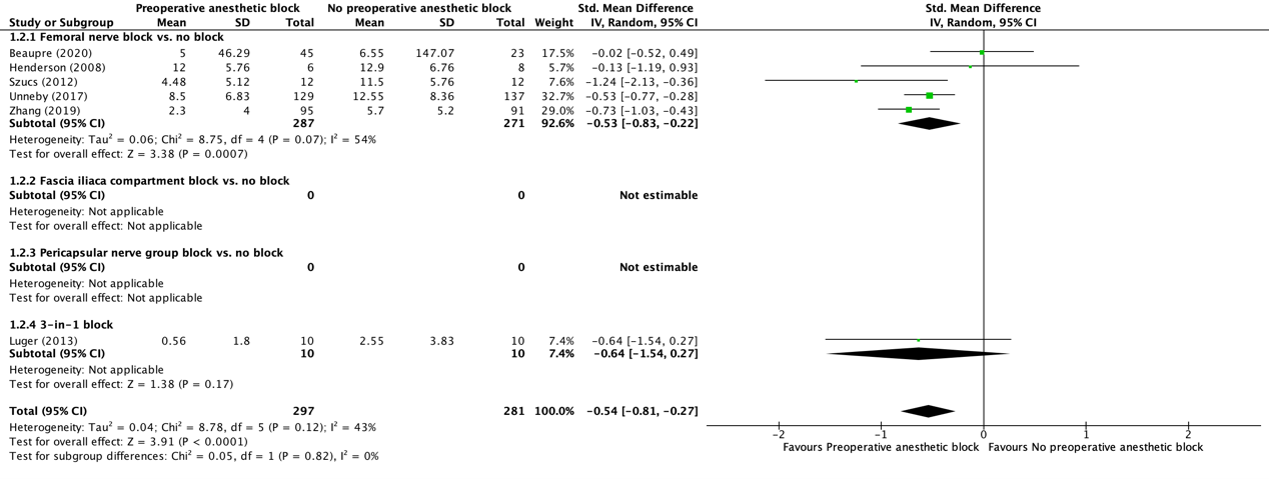
Figure 2. Forest plot showing the comparison between preoperative anesthetic blocks and no preoperative anesthetic blocks for opioid consumption
Pooled standardized mean difference, random effects model. Z: p-value of overall effect; df: degrees of freedom; I2; statistical heterogeneity; CI: confidence interval
Gerlier (2024) reported opioid consumption between patients who did receive and did not receive a preoperatieve anesthetic block. However, the data could not be pooled in a meta-analysis since Gerlier (2024) only reported the median opioid consumption.
The median (IQR) opioid consumption in patients who received a preoperative anesthetic block was 9.0 milligram (IQR 6.0 to 18.0), compared to 20.5 milligram (IQR 15.5 to 30.0) in patients who did not receive a preoperative anesthetic block.
Patient satisfaction (important)
Seven trials from the systematic review of Hayashi (2024) reported patient satisfaction between patients who did receive and did not receive a preoperative anesthetic block. The results were pooled in a meta-analysis.
The pooled standardized mean difference (SD) for patient satisfaction with preoperative pain for patients who received a preoperative anesthetic block (n=202) and patients who did not receive a preoperative anesthetic block (n=202) was 1.16 (95% CI 0.29 to 2.04), in favor of patients who did not receive a preoperative anesthetic block (see figure 3). This difference was not considered clinically relevant.
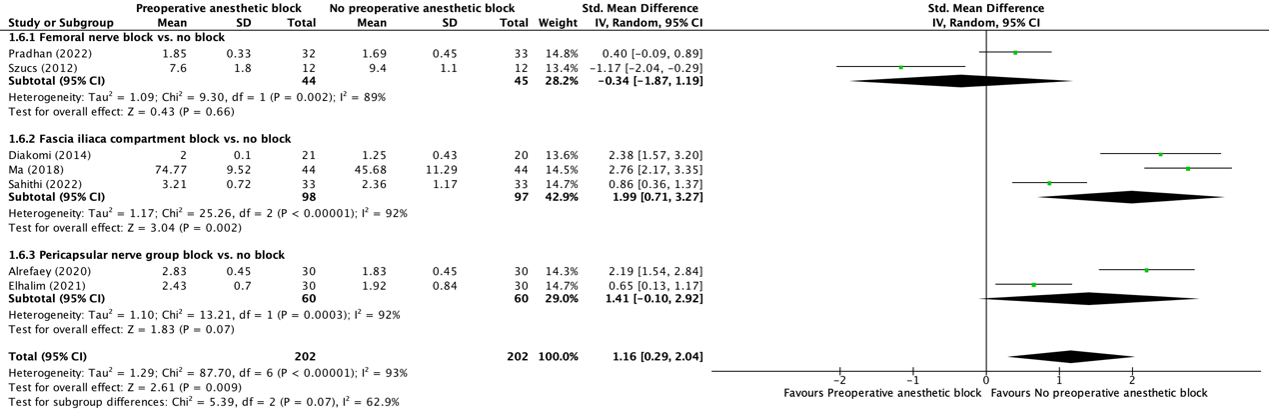
Figure 3. Forest plot showing the comparison between preoperative anesthetic blocks and no preoperative anesthetic blocks for patients’ satisfaction
Pooled standardized mean difference, random effects model. Z: p-value of overall effect; df: degrees of freedom; I2; statistical heterogeneity; CI: confidence interval
Length of hospital stay (important)
Seven trials reported length of hospital stay between patients who did receive and did not receive a preoperative anesthetic block. The results were pooled in a meta-analysis.
The pooled mean difference (SD) for length of hospital stay for patients who received a preoperative anesthetic block (n=384) and patients who did not receive a preoperative anesthetic block (n=414) was -0.89 (95% CI -2.35 to 0.57) days, in favor of patients who received a preoperative anesthetic block (see figure 4). This difference was considered clinically relevant.

Figure 4. Forest plot showing the comparison between preoperative anesthetic blocks and no preoperative anesthetic blocks for length of hospital stay
Pooled standardized mean difference, random effects model. Z: p-value of overall effect; df: degrees of freedom; I2; statistical heterogeneity; CI: confidence interval
Mortality (important)
Six trials from the systematic review of Hayashi (2024) reported mortality between patients who did receive and did not receive a preoperative anesthetic block. The results were pooled in a meta-analysis.
The RR for mortality for patients who received a preoperative anesthetic block (n=258) and patients who did not receive a preoperative anesthetic block (n=227) was 0.88 (95% CI 0.33 to 2,23), in favor of patients who received a preoperative anesthetic block (see figure 5). This difference was considered clinically relevant.

Figure 5. Forest plot showing the comparison between preoperative anesthetic blocks and no preoperative anesthetic blocks for mortality
Pooled risk ratio, random effects model. Z: p-value of overall effect; df: degrees of freedom; I2; statistical heterogeneity; CI: confidence interval
A systematic review of the literature was performed to answer the following question:
What are the advantages and disadvantages of a preoperative anesthetic block compared with no block in patients with a proximal femur fracture?
Table 1. PICO
| Patients | Patients with a proximal femur fracture (undergoing surgical intervention) |
| Intervention |
Preoperative anesthetic block |
| Control | No preoperative anesthetic block |
| Outcomes | Pain, consumption of morphine equivalents, patient satisfaction, length of hospital stay, mortality |
| Other selection criteria | Study design: systematic reviews and randomized controlled trials |
Definition of the blocks from caudal to cranial:
- Nervus femoralis block (NFB): blockade of Nervus femoralis in the groin only.
- 3 in 1 block: Nervus femoralis, Nervus cutanesu lateralis, Nervus obturatorius: same place as the Nervus femoralis block but with more volume of local anesthetic and caudal pressure to encourage the anesthetic to drift cranially and involve the lateral femoral cutaneus and obturator nerves.
- Fascia iliaca compartiment block (FICB): Nervus femoralis, Nervus cutaneus lateralis, Nervus obturatorius. A infra- or suprainguinal approach can be chosen. The infra inguinal approach can be done without the assistance of ultrasound .
- Pericapsulair Nerve group (PENG): targets the anterior hip capsule by blocking the articular branches of the femoral nerva and accessory obturator nerve. Painkilling but less motoric depression.
- Lumbar plexus block: Nervus Genitofemoralis, Nervus cutaneus lateralis, Nervus femoralis, Nervus obturatorius
Relevant outcome measures
The guideline panel considered pain reduction as a critical outcome measure for decision making, pain (and pain during transfers), opiod-use, opiod side effects, mortality and patient satisfaction as important outcome measures for decision making.
The guideline panel defined a difference of 25% for dichotomous outcome measures (relative risk <0.8 or >1.25) and a difference of 10% for continuous outcome measures as a minimal clinically (patient) important difference.
Search and select (Methods)
A systematic literature search was performed by a medical information specialist using the following bibliographic databases: Embase.com and Ovid/Medline. Both databases were searched untill July 2024 for systematic reviews and RCTs.
Systematic searches were completed using a combination of controlled vocabulary/subject headings (e.g., Emtree-terms, MeSH) wherever they were available and natural language keywords. The overall search strategy was derived from three primary search concepts: (1) anesthesiology; (2) preoperative; (3) proximal femur fracture. Duplicates were removed using EndNote software. After deduplication a total of 383 records were imported for title/abstract screening. Initially, thirteen studies were selected based on title and abstract screening. After reading the full text, eight studies were excluded (see the exclusion table under the tab ‘Evidence tabellen’), and five studies were included.
- Davis S, Olaussen A, Bowles KA, Shannon B. Review article: Paramedic pain management of femur fractures in the prehospital setting: A systematic review. Emerg Med Australas. 2021 Aug;33(4):601-609. doi: 10.1111/1742-6723.13793. Epub 2021 May 12. PMID: 33982421.
- Fontes GM, Perez MV, Miashiro EH, Neto AIS, Grigio TR, Rodrigues LHS. Pericapsular Hip Block Guided by Ultrasonography in Elderly People with Hip Fracture in the Emergency Sector: Clinical Trial. Rev Bras Ortop (Sao Paulo). 2024 Apr 10;59(2):e284-e296. doi: 10.1055/s-0044-1785494. PMID: 38606128; PMCID: PMC11007597.
- Gerlier C, Mijahed R, Fels A, Bekka S, Courseau R, Singh AL, Ganansia O, Chatellier G. Effect of early ultrasound-guided femoral nerve block on preoperative opioid consumption in emergency patients with hip fracture: a randomized trial. Eur J Emerg Med. 2024 Feb 1;31(1):18-28. doi: 10.1097/MEJ.0000000000001075. Epub 2023 Aug 24. PMID: 37650732.
- Hayashi M, Yamamoto N, Kuroda N, Kano K, Miura T, Kamimura Y, Shiroshita A. Peripheral Nerve Blocks in the Preoperative Management of Hip Fractures: A Systematic Review and Network Meta-Analysis. Ann Emerg Med. 2024 Jun;83(6):522-538. doi: 10.1016/j.annemergmed.2024.01.024. Epub 2024 Feb 22. PMID: 38385910.
- Unneby A, Svensson PO, Gustafson PY, Lindgren APB, Bergström U, Olofsson PB. Complications with focus on delirium during hospital stay related to femoral nerve block compared to conventional pain management among patients with hip fracture - A randomised controlled trial. Injury. 2020 Jul;51(7):1634-1641. doi: 10.1016/j.injury.2020.04.013. Epub 2020 Apr 20. PMID: 32360090.
- Usman MA, Rabiu MB, Salahu D. A comparison of fascia iliaca compartment block with intravenous analgesia to improve pain control in patients with femoral fracture. J West Afr Coll Surg. 2024 Jul-Sep;14(3):255-261. doi: 10.4103/jwas.jwas_66_23. Epub 2024 May 24. PMID: 38988430; PMCID: PMC11232794.
Risk of bias table
|
Study reference
(first author, publication year) |
Was the allocation sequence adequately generated?
Definitely yes Probably yes Probably no Definitely no |
Was the allocation adequately concealed?
Definitely yes Probably yes Probably no Definitely no |
Blinding: Was knowledge of the allocated interventions adequately prevented?
Definitely yes Probably yes Probably no Definitely no |
Was loss to follow-up (missing outcome data) infrequent?
Definitely yes Probably yes Probably no Definitely no |
Are reports of the study free of selective outcome reporting?
Definitely yes Probably yes Probably no Definitely no |
Was the study apparently free of other problems that could put it at a risk of bias?
Definitely yes Probably yes Probably no Definitely no |
Overall risk of bias If applicable/necessary, per outcome measure
LOW Some concerns HIGH
|
|
Alrefaey (2020) |
Probably no. |
Probably no. |
Definitely no. |
Probably yes. |
Probably yes. |
Probably yes. |
High |
|
Beaupre (2020) |
Probably yes. |
Probably yes. |
Probably no |
Probably yes. |
Probably yes. |
Probably yes. |
Some concerns |
|
Diakomi (2014) |
Probably yes. |
Probably yes. |
Probably no. |
Probably yes. |
Probably yes. |
Probably yes. |
High |
|
Dickman (2010) |
Probably no. |
Probably no. |
Probably no. |
Probably yes. |
Probably yes. |
Probably yes. |
High |
|
El Halim (2021) |
Probably no. |
Probably no. |
Probably no. |
Probably yes. |
Probably yes. |
Probably yes. |
High |
|
Fletcher (2003) |
Probably yes |
Probably no. |
Probably yes. |
Probably yes. |
Probably yes. |
Probably yes. |
Some concerns |
|
Fontes (2024) |
Probably yes. |
Probably yes. |
Probably no |
Probably yes. |
Probably yes. |
Probably yes. |
Some concerns |
|
Gerlier (2024) |
Probably yes. |
Probably yes. |
Probably no |
Probably yes. |
Probably yes. |
Probably yes. |
Some concerns |
|
Gille (2006) |
Probably no. |
Probably no. |
Probably no |
Probably yes. |
Probably yes. |
Probably no. |
High |
|
Graham (2008) |
Probably yes. |
Probably yes. |
Definitely no. |
Probably no. |
Probably yes. |
Probably no. |
High |
|
Güllüpinar (2022) |
Probably yes. |
Probably yes. |
Probably no |
Probably yes. |
Probably yes. |
Probably yes. |
High |
|
Haddad (1995) |
Probably yes. |
Probably yes. |
Probably no |
Probably yes. |
Probably yes. |
Probably yes. |
High |
|
Henderson (2008) |
Probably no. |
Probably no. |
Probably no. |
Probably yes. |
Probably yes. |
Probably yes. |
High |
|
Kullenberg (2004) |
Probably no. |
Probably no. |
Probably no. |
Probably yes. |
Probably yes. |
Probably yes. |
High |
|
Loessin (2019) |
Probably yes. |
Probably no. |
Probably no. |
Probably yes. |
Probably yes. |
Probably yes. |
Some concerns |
|
Luger (2013) |
Probably yes. |
Probably yes. |
Probably no. |
Probably yes. |
Probably yes. |
Probably no. |
High |
|
Ma (2018) |
Probably yes. |
Probably yes. |
Definitely no. |
Probably yes. |
Probably yes. |
Probably yes. |
Some concerns |
|
Madabushi (2016) |
Probably yes. |
Probably yes. |
Definitely no. |
Probably yes. |
Probably yes. |
Probably yes. |
Some concerns |
|
Mayel (2002) |
Probably yes. |
Probably yes. |
Probably yes. |
Probably yes. |
Probably yes. |
Probably yes. |
Low |
|
Monzon (2010) |
Probably yes. |
Probably yes. |
Probably yes. |
Probably yes. |
Probably yes. |
Probably yes. |
Low |
|
Morrison (2016) |
Probably yes. |
Probably yes. |
Definitely no. |
Probably no. |
Probably yes. |
Probably yes. |
High |
|
Pradhan (2022) |
Probably yes. |
Probably yes. |
Definitely no. |
Probably yes. |
Probably yes. |
Probably yes. |
Some concerns |
|
Ranjit (2018) |
Probably yes. |
Probably yes. |
Definitely no. |
Probably yes. |
Probably yes. |
Probably yes. |
Some concerns |
|
Rowlands (2018) |
Probably yes. |
Probably yes. |
Probably no. |
Probably yes. |
Probably yes. |
Probably yes. |
Some concerns |
|
Sahiti (2022) |
Probably yes. |
Probably yes. |
Probably no. |
Probably yes. |
Probably yes. |
Probably yes. |
Some concerns |
|
Spyraki (2020) |
Probably no. |
Probably no. |
Definitely no. |
Probably yes. |
Probably yes. |
Probably yes. |
High |
|
Szucs (2012) |
Probably yes. |
Probably yes. |
Probably no. |
Probably no. |
Probably yes. |
Probably yes. |
High |
|
Unneby (2017) |
Probably yes. |
Probably yes. |
Definitely no. |
Probably no. |
Probably yes. |
Probably yes. |
High |
|
Unneby (2020) |
Probably yes. |
Probably yes. |
Definitely no. |
Probably no. |
Probably yes. |
Probably yes. |
High |
|
Usman (2024) |
Probably yes. |
Probably yes. |
Probably yes. |
Probably yes. |
Probably yes. |
Probably yes. |
Low |
|
Uysal (2020) |
Probably no. |
Probably no. |
Definitely no. |
Probably yes. |
Probably yes. |
Probably yes. |
High |
|
Yun (2009) |
Probably yes. |
Probably yes. |
Definitely no. |
Probably yes. |
Probably yes. |
Probably yes. |
Some concerns |
|
Zhang (2019) |
Probably no. |
Probably no. |
Definitely no. |
Probably no. |
Probably yes. |
Probably yes. |
High |
Table of excluded studies
|
Reference |
Reason for exclusion |
|
Alshawadfy A, Elewa AM, Mewafy MA, Ellilly AA. Comparison between pericapsular nerve group block and morphine infusion in reducing pain of proximal femur fracture in the emergency department: A randomized controlled study. Egyptian Journal of Anaesthesia. 2023 Dec 31;39(1):26-31. |
No raw data |
|
Guay J, Kopp S. Peripheral nerve blocks for hip fractures in adults. Cochrane Database Syst Rev. 2020 Nov 25;11(11):CD001159. doi: 10.1002/14651858.CD001159.pub3. PMID: 33238043; PMCID: PMC8130997. |
Wrong intervention |
|
Choi JV, Cheung RM, Mozel MR, Merchant RN, Lee SM. Perioperative Outcomes After Preoperative Epidural Analgesia in Patients with Hip Fracture Undergoing Surgical Repair: A Systematic Review. Pain Med. 2022 Feb 1;23(2):234-245. doi: 10.1093/pm/pnab176. PMID: 34022058. |
Wrong intervention
|
|
Guay J, Parker MJ, Gajendragadkar PR, Kopp S. Anaesthesia for hip fracture surgery in adults. Cochrane Database Syst Rev. 2016 Feb 22;2(2):CD000521. doi: 10.1002/14651858.CD000521.pub3. PMID: 26899415; PMCID: PMC6464323. |
Wrong comparison |
|
Prajapati SK, S. and Ganvit, K. and Bumiya, P. R. and Maru, N. and Patel, U. P. Evaluating Efficacy of Fascia Iliaca Compartment Block Preoperatively for Alleviating Pain of Positioning for Subarachnoid Block in Patients with Proximal Femur Fracture: A Prospective Randomized Clinical Study
|
Wrong intervention |
|
Yadav AR, Kumar P, Bhandari RL. Comparison of Ultrasound-Guided Fascia Iliaca Compartment Block with 0.25% Ropivacaine to Intravenous Fentanyl for Positioning under Hip Surgeries. European Journal of Molecular & Clinical Medicine 2022; 9(4). |
Inconsistent results |
|
Beaupre LA, Menon MR, Almaazmi K, Kang SH, Dieleman S, Tsui B. Preoperative nerve blocks for hip fracture patients: A pilot randomized trial. Injury. 2021 Mar;52(3):548-553. doi: 10.1016/j.injury.2020.10.029. Epub 2020 Oct 7. PMID: 33051072. |
Wrong comparison |
|
Klimkiewicz J, Klimkiewicz A, Gutowski M, Rustecki B, Kochanowski D, Ryczek R, Lubas A. Femoral and Lateral Femoral Cutaneous Nerve Block as Anesthesia for High-Risk Intertrochanteric Fracture Repair Patients. J Clin Med. 2022 Jun 27;11(13):3708. doi: 10.3390/jcm11133708. PMID: 35806989; PMCID: PMC9267460. |
Wrong comparison |
Beoordelingsdatum en geldigheid
Publicatiedatum : 15-09-2026
Beoordeeld op geldigheid : 15-09-2026
Samenstelling werkgroep
Voor het ontwikkelen van de richtlijnmodule is in 2023 een multidisciplinair cluster ingesteld. Het cluster Letsel na ongeval bestaat uit meerdere richtlijnen (zie hier de actuele clusterindeling). De stuurgroep bewaakt het proces van modulair onderhoud binnen het cluster. De expertisegroepsleden brengen hun expertise in, indien nodig. De volgende personen uit het cluster zijn betrokken geweest bij de herziening van deze modules:
Clusterstuurgroepleden
- Dr. M.F. (Frank) Termaat, Nederlandse Vereniging voor Heelkunde
- Dr. E.M. (Eelco) Fennema, Nederlandse Vereniging voor Heelkunde
- Drs. R.P.T.C.G. (René) Groetelaers, Nederlandse Vereniging voor Heelkunde
- Prof. dr. V.A. (Victor) de Ridder, Nederlandse Vereniging voor Heelkunde
- Dr. S. (Sarah) Woltz, Nederlandse Vereniging voor Heelkunde
- Dr. J. (Jakob) van Oldenrijk, Nederlandse Orthopaedische Vereniging
- Dhr. dr. C.L.P. (Marc) van de Ree, Nederlandse Orthopaedische Vereniging
- Drs. H.H. (Hugo) Wijnen, Nederlandse Vereniging voor Klinische Geriatrie
- Dr. T. (Tim) de Jong, Nederlandse Vereniging voor Plastische Chirurgie
- Drs. H. (Hassan) Amghar, Nederlandse Vereniging voor Radiologie
- Dhr. dr. H.R. (Herman) Holtslag, Nederlandse Vereniging voor Revalidatieartsen
- Dhr. Prof. dr. W.C. (Wilco) Peul, Nederlandse Vereniging voor Neurochirurgie
Betrokken clusterexpertisegroepleden
- Dr. S.M. (Sander) Verhage, Nederlandse Vereniging voor Heelkunde
- Dhr. Drs. M.V. (Matthijs) Nijenhuis, Nederlandse Vereniging voor Heelkunde
- Dhr. Dr. M.H. (Matthijs) van Gool, Nederlandse Vereniging voor Heelkunde
- Dhr. Dr. R.C. (Robert) Dettmers, Nederlandse Vereniging voor Heelkunde
- Dhr. dr. M.P. (Matthijs) Somford, Nederlandse Orthopaedische Vereniging
- Mevr. drs. M.R. (Mariëlle) Hofman, Nederlandse Vereniging voor Klinische Geriatrie
- Dhr. drs. D. (Dawi) van der Stap, Nederlandse Vereniging voor Klinische Geriatrie
- Mevr. drs. M. (Matthea) Dijkshoorn, Nederlandse Vereniging voor Klinische Geriatrie
- Mevr. I.C. (Isabelle) Huig, Nederlandse Vereniging voor Anesthesiologie
- Dr. G. (Jorgos) Alexandridis, Nederlandse Vereniging voor Spoedeisende Hulp Artsen
- Dhr. Drs. Ö.(Özcan) Sir, Nederlandse Vereniging voor Spoedeisende Hulp Artsen
Met ondersteuning van
- Dr. M.S. (Matthijs) Ruiter, senior adviseur, Kennisinstituut van de Federatie Medisch Specialisten
- M. (Mitchel) Griekspoor, adviseur, Kennisinstituut van de Federatie Medisch Specialisten
- E. (Esther) van der Bijl, medisch informatiespecialist, Kennisinstituut van de Federatie Medisch Specialisten
Belangenverklaringen
Een overzicht van de belangen van de clusterleden en het oordeel over het omgaan met eventuele belangen vindt u in onderstaande tabel. De ondertekende belangenverklaringen zijn op te vragen bij het secretariaat van het Kennisinstituut van de Federatie Medisch Specialisten via secretariaat@kennisinstituut.nl.
Gemelde (neven)functies en belangen stuurgroepleden
|
Naam |
Hoofdfunctie |
Nevenwerkzaamheden |
Persoonlijke financiële belangen |
Persoonlijke relaties |
Extern gefinancierd onderzoek |
Intellectuele belangen en reputatie |
Overige belangen |
Restrictie |
|
Dr. M.F. (Frank) Termaat |
LUMC Leiden; Traumachirurg (betaald dienstverband) |
|
Geen. |
Geen. |
Geen. |
Geen. |
Geen. |
Geen. |
|
Dr. E.M. (Eelco) Fennema |
Traumachirurg, Heelkunde Friesland, Nijsmellinghe Drachten |
Geen. |
Geen. |
Geen. |
Geen. |
Geen. |
Geen. |
Geen. |
|
Drs. R.P.T.C. (René) Groetelaers |
Traumachirurg Máxima Medisch Centrum Veldhoven - Eindhoven (0,8 FTE) Traumachirurg St Jans Gasthuis Weert (0,2 FTE) |
|
Geen. |
Geen. |
Geen. |
Geen. |
Geen. |
Geen. |
|
Prof. dr. V.A. (Victor) de Ridder |
Prof. Dr. V.A. de Ridder MBA BA LLB FRCS Professor Emergency Care and Logistics, Trauma and Pediatric Trauma Acad Zh Utrecht UMCU |
(Alle bovengenoemde nevenwerkzaamheden zijn onbetaald.) |
Geen. |
Geen. |
Geen. |
Geen. |
Geen. |
Geen. |
|
Dr. S. (Sarah) Woltz |
Traumachrirug Spaarne Gasthuis |
|
Geen. |
Geen. |
Geen. |
Geen. |
Geen. |
Geen. |
|
Dr. J. (Jakob) van Oldenrijk |
Orthopedisch chirurg - Traumatoloog, Erasmus Medisch Centrum Rotterdam |
|
Geen. |
Geen. |
Geen. |
Geen. |
Geen. |
Geen. |
|
Dhr. dr. C.L.P. (Marc) van de Ree |
Orthopedisch chirurg Erasmus MC |
Voorzitter CORE (Kennisagenda NOV) |
Geen. |
Geen. |
Geen. |
Geen. |
Geen. |
Geen. |
|
Drs. H.H. (Hugo) Wijnen |
Klinisch geriater |
Klinisch geriater, ziekenhuis Arnhem |
Geen. |
Geen. |
Geen. |
Geen. |
Rijnstate heeft via Hugo Wijnen een educational grant van Vifor ontvangen t.w.v. 4000 euro Rijnstate heeft via Hugo Wijnen transformatiegelden (120.000 euro) ontvangen van de zorgverzekeraar wat door het ziekenhuis wordt ingezet voor de verbetering van de transmurale samenwerking en uitplaatsing van patiënten uit het ziekenhuis in de regio. Een deel van deze gelden worden gebruikt voor de uitbreiding van het arbeidscontract van Hugo Wijnen (0,1 fte gedurende 2 jaar). Deze tijd gebruikt hij om de transmurale samenwerking te optimaliseren (0,1 fte gedurende 2 jaar) |
Geen. |
|
Dr. T. (Tim) de Jong |
Plastisch chirurg |
Richtlijncommissie NVPC; onbetaald. |
Geen. |
Geen. |
Geen. |
Geen. |
Geen. |
Geen. |
|
Drs. H. (Hassan) Amghar |
Radioloog |
Waarnemend radioloog - Jeroen Bosch Ziekenhuis |
Geen. |
Geen. |
Geen. |
Geen. |
Geen. |
Geen. |
|
Dhr. dr. H.R. (Herman) Holtslag |
Revalidatiearts, Amsterdam UMC |
|
Geen. |
Geen. |
Geen. |
Geen. |
Geen. |
Geen. |
|
Dhr. Prof. dr. W.C. (Wilco) Peul |
Prof. dr. Neurochirurg te LUMC |
|
|
|
|
Geen. |
Geen. |
Geen. |
Gemelde (neven)functies en belangen betrokken expertisegroepleden
|
Naam |
Hoofdfunctie |
Nevenwerkzaamheden |
Persoonlijke financiële belangen |
Persoonlijke relaties |
Extern gefinancierd onderzoek |
Intellectuele belangen en reputatie |
Overige belangen |
Restrictie |
|
Dr. S.M. (Sander) Verhage |
Chirurg Haaglanden Medisch Centrum |
Geen. |
Geen. |
Geen. |
Geen. |
Geen. |
Geen. |
Geen. |
|
Dhr. Drs. M.V. (Matthijs) Nijenhuis |
Traumachirurg, Amsterdam UMC |
Cursuscoordinator CASH NTS |
Geen. |
Geen. |
Geen. |
Geen. |
Geen. |
Geen. |
|
Dhr. Dr. M.H. (Matthijs) van Gool |
Traumachirurg, Maasstad ziekenhuis |
Geen. |
Geen. |
Geen. |
Geen. |
Geen. |
Geen. |
Geen. |
|
Dhr. Dr. R.C. (Robert) Dettmers |
Traumachirurg isala ziekenhuis zwolle |
Atls instructeur |
Geen. |
Geen. |
Geen. |
Geen. |
Geen. |
Geen. |
|
Dhr. dr. M.P. (Matthijs) Somford |
Orthopedisch chirurg, zelfstandige |
Geen. |
Geen. |
Geen. |
Geen. |
Geen. |
Geen. |
Geen. |
|
Mevr. drs. M.R. (Mariëlle) Hofman |
Klinisch geriater Elisabeth tweestedenziekenhuis |
Geen. |
Geen. |
Geen. |
Adfice it Studie, Financier: ZonMW, Inhoud onderzoek: RCT, effectiviteit beslisondersteuning medicatie afbouw valrisico verhogende medicatie, Projectleidersrol: nee. |
Geen. |
Geen. |
Geen. |
|
Dhr. drs. D. (Dawi) van der Stap |
Klinisch Geriater Maasstad Ziekenhuis |
Geen. |
Geen. |
Geen. |
Aanleveren patient inclusie,Financier: ZonMW, Inhoud onderz. 1:Frail-hip implementatie, Inhoud onderz. 2: PENG-studie, Inhoud onderz. 3: Frail Hip studie. Geen projectleidersrol |
Geen. |
Geen. |
Geen. |
|
Mevr. drs. M. (Matthea) Dijkshoorn |
Klinisch geriater, Tjongerschans (na fusie, vanaf 1-1-25: Frisiusmc) |
Geen. |
Geen. |
Geen. |
Geen. |
Geen. |
Geen. |
Geen. |
|
Mevr. I.C. (Isabelle) Huig |
(urgentie)-anesthesioloog in het Erasmus MC |
Geen. |
Geen. |
Geen. |
Geen. |
Geen. |
Geen. |
Geen. |
|
Dr. J. (Jorgos) Alexandridis |
SEH-arts KNMG te CWZ, Nijmegen |
APLS instructeur voorzitter wetenschapscommissie NVSHA |
Geen. |
Geen. |
Geen. |
Geen. |
Geen. |
Geen. |
|
Dhr. Drs. Ö.(Özcan) Sir |
dr. Ozcan Sir, SEH-arts Radboudumc |
Geen. |
Geen. |
Geen. |
Geen. |
Geen. |
Geen. |
Geen. |
Inbreng patiëntenperspectief
Kwalitatieve raming van mogelijke financiële gevolgen in het kader van de Wkkgz
Bij de richtlijnmodule voerden de clusterleden conform de Wet kwaliteit, klachten en geschillen zorg (Wkkgz) een kwalitatieve raming uit om te beoordelen of de aanbevelingen mogelijk leiden tot substantiële financiële gevolgen. Bij het uitvoeren van deze beoordeling is de richtlijnmodule op verschillende domeinen getoetst (zie het stroomschema bij Werkwijze).
|
Module |
Uitkomst raming |
Toelichting |
|
Preoperatieve pijnstilling femurfractuur |
Geen substantiële financiële gevolgen. |
Hoewel uit de toetsing volgt dat de aanbeveling(en) breed toepasbaar zijn (5.000-40.000 patiënten), volgt ook uit de toetsing dat het geen nieuwe manier van zorgverlening of andere organisatie van zorgverlening betreft. Er worden daarom geen substantiële financiële gevolgen verwacht.
|
Werkwijze
Voor meer details over de gebruikte richtlijnmethodologie verwijzen wij u naar de Werkwijze. Relevante informatie voor de ontwikkeling/herziening van deze richtlijnmodule is hieronder weergegeven.
Zoekverantwoording
Algemene informatie
|
Cluster/richtlijn: Letsel na ongeval - 14.1 Preoperatieve anesthesiologie femurfractuur |
|
|
Uitgangsvraag/modules: Wat is de optimale preoperatieve anesthesiologische zorg bij een proximale femurfractuur? |
|
|
Database(s): Embase.com, Ovid/Medline |
Datum: 15 juli 2024 |
|
Periode: vanaf 2009 |
Talen: geen restrictie |
|
Literatuurspecialist: Esther van der Bijl |
Rayyan review: https://rayyan.ai/reviews/1094883 |
|
BMI-zoekblokken: voor verschillende opdrachten wordt (deels) gebruik gemaakt van de zoekblokken van BMI-Online https://blocks.bmi-online.nl/ Deduplication: voor het ontdubbelen is gebruik gemaakt van http://dedupendnote.nl/ |
|
|
Toelichting: Voor deze vraag is gezocht op de elementen anesthesiologie EN preoperatief EN proximale femurfractuur.
De sleutelartikelen worden gevonden met deze search. |
|
|
Te gebruiken voor richtlijntekst: In de databases Embase.com en Ovid/Medline is op 15 juli 2024 systematisch gezocht naar systematische reviews en RCTs over preoperatieve anesthesiologische zorg bij een proximale femurfractuur. De literatuurzoekactie leverde 383 unieke treffers op. |
|
Zoekopbrengst - 15 juli 2024
|
|
EMBASE |
OVID/MEDLINE |
Ontdubbeld |
|
SR |
81 |
39 |
82 |
|
RCT |
285 |
88 |
301 |
|
Totaal |
366 |
127 |
383* |
*in Rayyan
Zoekstrategie - 15 juli 2024
Embase.com
|
No. |
Query |
Results |
|
#1 |
'proximal femur fracture'/exp OR 'hip fracture'/exp OR 'femoral head fracture'/exp OR 'femoral neck fracture'/exp OR 'femur intertrochanteric fracture'/exp OR 'femur pertrochanteric fracture'/exp OR 'femur subtrochanteric fracture'/exp OR 'femur trochanteric fracture'/exp OR 'fracture of greater trochanter'/exp OR 'fracture of lesser trochanter'/exp OR (((fem?r* OR hip* OR trochanter* OR intertrochanter* OR intratrochanter* OR pertrochanter* OR subtrochanter*) NEAR/3 (fracture* OR broken)):ti,ab,kw) |
87599 |
|
#2 |
'preoperative period'/exp OR 'pre-operati*':ti,ab,kw OR 'pre-surg*':ti,ab,kw OR 'preoperati*':ti,ab,kw OR 'presurg*':ti,ab,kw OR 'pre hospital*':ti,ab,kw OR prehospital*:ti,ab,kw |
856760 |
|
#3 |
'anesthesiological procedure'/exp OR 'pericapsular nerve group block'/exp OR 'pericapsular nerve block'/exp OR 'femoral block'/exp OR 'fascia iliaca compartment block'/exp OR 'nerve block catheter'/exp OR 'nerve block'/exp OR (((peng OR fic) NEAR/7 (nerve* OR block*)):ti,ab,kw) OR (((pericapsular OR 'peri capsular' OR fem?r* OR hip* OR 'fascia iliaca') NEAR/3 block*):ti,ab,kw) OR 'nerve block*':ti,ab,kw OR 'stimucath':ti,ab,kw OR 'nerve catheter*':ti,ab,kw OR anaesthe*:ti,ab,kw OR analge*:ti,ab,kw OR 'pain management*':ti,ab,kw |
1237075 |
|
#4 |
#1 AND #2 AND #3 |
1683 |
|
#5 |
#4 AND [2009-2024]/py NOT ('conference abstract'/it OR 'editorial'/it OR 'letter'/it OR 'note'/it) NOT (('animal'/exp OR 'animal experiment'/exp OR 'animal model'/exp OR 'nonhuman'/exp) NOT 'human'/exp) |
962 |
|
#6 |
'meta analysis'/exp OR 'meta analysis (topic)'/exp OR metaanaly*:ti,ab OR 'meta analy*':ti,ab OR metanaly*:ti,ab OR 'systematic review'/de OR 'cochrane database of systematic reviews'/jt OR prisma:ti,ab OR prospero:ti,ab OR (((systemati* OR scoping OR umbrella OR 'structured literature') NEAR/3 (review* OR overview*)):ti,ab) OR ((systemic* NEAR/1 review*):ti,ab) OR (((systemati* OR literature OR database* OR 'data base*') NEAR/10 search*):ti,ab) OR (((structured OR comprehensive* OR systemic*) NEAR/3 search*):ti,ab) OR (((literature NEAR/3 review*):ti,ab) AND (search*:ti,ab OR database*:ti,ab OR 'data base*':ti,ab)) OR (('data extraction':ti,ab OR 'data source*':ti,ab) AND 'study selection':ti,ab) OR ('search strategy':ti,ab AND 'selection criteria':ti,ab) OR ('data source*':ti,ab AND 'data synthesis':ti,ab) OR medline:ab OR pubmed:ab OR embase:ab OR cochrane:ab OR (((critical OR rapid) NEAR/2 (review* OR overview* OR synthes*)):ti) OR ((((critical* OR rapid*) NEAR/3 (review* OR overview* OR synthes*)):ab) AND (search*:ab OR database*:ab OR 'data base*':ab)) OR metasynthes*:ti,ab OR 'meta synthes*':ti,ab |
1045334 |
|
#7 |
'clinical trial'/exp OR 'randomization'/exp OR 'single blind procedure'/exp OR 'double blind procedure'/exp OR 'crossover procedure'/exp OR 'placebo'/exp OR 'prospective study'/exp OR rct:ab,ti OR random*:ab,ti OR 'single blind':ab,ti OR 'randomised controlled trial':ab,ti OR 'randomized controlled trial'/exp OR placebo*:ab,ti |
4068983 |
|
#8 |
#5 AND #6 - SR’s |
81 |
|
#9 |
#5 AND #7 NOT #8 - RCT’s |
285 |
|
#10 |
#8 OR #9 |
366 |
Ovid/Medline
|
# |
Searches |
Results |
|
1 |
exp Hip Fractures/ or exp Femoral Neck Fractures/ or exp Proximal Femoral Fractures/ or ((fem?r* or hip* or trochanter* or intertrochanter* or intratrochanter* or pertrochanter* or subtrochanter*) adj3 (fracture* or broken)).ti,ab,kf. |
58661 |
|
2 |
exp Preoperative Period/ or pre-operati*.ti,ab,kf. or pre-surg*.ti,ab,kf. or preoperati*.ti,ab,kf. or presurg*.ti,ab,kf. or pre hospital*.ti,ab,kf. or prehospital*.ti,ab,kf. |
461610 |
|
3 |
exp "Anesthesia and Analgesia"/ or exp Nerve Block/ or ((peng or fic) adj7 (nerve* or block*)).ti,ab,kf. or ((pericapsular or peri capsular or fem?r* or hip* or fascia iliaca) adj3 block*).ti,ab,kf. or nerve block*.ti,ab,kf. or stimucath.ti,ab,kf. or nerve catheter*.ti,ab,kf. or anaesthe*.ti,ab,kf. or analge*.ti,ab,kf. or pain management*.ti,ab,kf. |
466088 |
|
4 |
1 and 2 and 3 |
468 |
|
5 |
limit 4 to yr="2009 -Current" |
381 |
|
6 |
5 not (comment/ or editorial/ or letter/) not ((exp animals/ or exp models, animal/) not humans/) |
367 |
|
7 |
meta-analysis/ or meta-analysis as topic/ or (metaanaly* or meta-analy* or metanaly*).ti,ab,kf. or systematic review/ or cochrane.jw. or (prisma or prospero).ti,ab,kf. or ((systemati* or scoping or umbrella or "structured literature") adj3 (review* or overview*)).ti,ab,kf. or (systemic* adj1 review*).ti,ab,kf. or ((systemati* or literature or database* or data-base*) adj10 search*).ti,ab,kf. or ((structured or comprehensive* or systemic*) adj3 search*).ti,ab,kf. or ((literature adj3 review*) and (search* or database* or data-base*)).ti,ab,kf. or (("data extraction" or "data source*") and "study selection").ti,ab,kf. or ("search strategy" and "selection criteria").ti,ab,kf. or ("data source*" and "data synthesis").ti,ab,kf. or (medline or pubmed or embase or cochrane).ab. or ((critical or rapid) adj2 (review* or overview* or synthes*)).ti. or (((critical* or rapid*) adj3 (review* or overview* or synthes*)) and (search* or database* or data-base*)).ab. or (metasynthes* or meta-synthes*).ti,ab,kf. |
759539 |
|
8 |
exp clinical trial/ or randomized controlled trial/ or exp clinical trials as topic/ or randomized controlled trials as topic/ or Random Allocation/ or Double-Blind Method/ or Single-Blind Method/ or (clinical trial, phase i or clinical trial, phase ii or clinical trial, phase iii or clinical trial, phase iv or controlled clinical trial or randomized controlled trial or multicenter study or clinical trial).pt. or random*.ti,ab. or (clinic* adj trial*).tw. or ((singl* or doubl* or treb* or tripl*) adj (blind$3 or mask$3)).tw. or Placebos/ or placebo*.tw. |
2750718 |
|
9 |
6 and 7 - SR’s |
39 |
|
10 |
(6 and 8) not 9 - RCT’s |
88 |
|
11 |
9 or 10 |
127 |