Behandelindicaties asymptomatisch meningeoom
Uitgangsvraag
Wanneer dient behandeling (chirurgie, gefractioneerde radiotherapie of radiochirurgie) bij patiënten met asymptomatisch intracranieel meningeoom overwogen te worden?
Aanbeveling
Bespreek eventuele behandelindicaties van patiënten met een asymptomatisch meningeoom in een multidisciplinair overleg indien er sprake is van:
- Diagnose <40 jaar
- Massawerking en/of oedeem;
- Groot meningeoom (≥2,5-3 cm);
- Relevante groei*;
- Meningeoom waarbij geringe groei tot verwachte symptomen zal leiden, zoals bij nabijheid van belangrijke structuren (craniale zenuwen zoals de nervus opticus, hersenstam of neurovasculaire structuren, in het bijzonder de veneuze sinussen);
Overweeg bij deze patiënten behandeling middels chirurgie, gefractioneerde radiotherapie of stereotactische radiochirurgie.
Bespreek behandelopties met patiënt in het kader van gedeelde besluitvorming.
Volg bij patiënten met een asymptomatisch meningeoom zonder behandelindicatie een primair wait-and-scan beleid (zie module Primair wait-and-scan beleid bij asymptomatisch meningeoom).
Raadpleeg de module Hormoontherapie bij patiënten met een nieuw ontdekt meningeoom en gebruik van vrouwelijke geslachtshormonen.
*Relevante groei wordt gedefinieerd als groei >10% (langste diameter) per jaar. Bij kleine meningeomen <10mm, een groei van 3mm/jaar.
Overwegingen
Waarom deze aanbeveling?
De beschikbare literatuur biedt onvoldoende onderbouwing om een voorkeur uit te spreken voor vroegtijdige behandeling dan wel een afwachtend beleid bij asymptomatische meningeomen. Behandeling kan veilig worden uitgevoerd, maar de indicatie dient zorgvuldig te worden afgewogen. Risicofactoren die kunnen leiden tot een behandelindicatie zijn massawerking, tumorgrootte en groei, nabijheid van belangrijke structuren en leeftijd. De werkgroep adviseert bij een of meerdere van deze factoren de patiënt te bespreken in een multidisciplinair overleg.
Eindoordeel:
Conditionele aanbeveling voor.
Balans tussen gewenste en ongewenste effecten
Uit de systematische literatuursamenvatting met GRADE-beoordeling blijkt dat er weinig direct bewijs beschikbaar is met betrekking tot lokale behandeling (chirurgie, stereotactische radiochirurgie (kortweg radiochirurgie) of gefractioneerde radiotherapie) bij asymptomatische meningeomen. De bewijskracht van alle gerapporteerde uitkomstmaten is zeer laag, hierdoor bestaat aanzienlijke onzekerheid over het werkelijke effect van vroege behandeling middels chirurgie, gefractioneerde radiotherapie of radiochirurgie ten opzichte van een afwachtend beleid.
Voor radiochirurgie suggereren observationele cohortgegevens een lagere radiologische progressiekans in vergelijking met actieve surveillance. De zekerheid van dit effect is echter zeer laag vanwege het retrospectieve ontwerp en mogelijke residuele confounding. Aanvullende subgroepanalyses van het IMPASSE-cohort (Sheehan, 2022; Pikis, 2022; Islim, 2022; Mantziaris, 2022), die niet afzonderlijk met GRADE zijn beoordeeld, laten vergelijkbare associaties zien binnen specifieke anatomische subgroepen, waaronder convexiteit, parafalcine/parasagittaal, frontobasaal en schedelbasislokalisaties. Deze analyses zijn gebaseerd op hetzelfde retrospectieve cohort en kennen vergelijkbare methodologische beperkingen.
Voor chirurgie zijn de beschikbare vergelijkende gegevens beperkt tot één kleine observationele studie waarin uitsluitend kwaliteit van leven werd gerapporteerd. Voor deze uitkomstmaat is de bewijskracht zeer laag. Voor andere klinisch relevante uitkomsten, zoals progressievrije overleving, algehele overleving of cognitief functioneren, zijn geen vergelijkende gegevens beschikbaar. Voor chirurgie geldt wel dat directe tumorverwijdering histopathologische bevestiging mogelijk maakt, inclusief WHO-classificatie en moleculaire kenmerken conform de huidige WHO CNS-classificatie. Dit kan aanvullende prognostische informatie opleveren die bij een afwachtend beleid ontbreekt.
Voor gefractioneerde radiotherapie zijn in deze systematische review geen vergelijkende studies geïdentificeerd. In de klinische praktijk kan primaire gefractioneerde radiotherapie worden overwogen bij grotere tumoren of bij tumoren gelegen nabij kritieke structuren, waarbij (radio)chirurgie minder geschikt wordt geacht. Deze overweging berust echter voornamelijk op extrapolatie uit andere behandelsettings en op expert opinion.
Het potentiële gewenste effect van vroege lokale behandeling is het bereiken van lokale tumorcontrole en het voorkomen van symptomatische progressie. Daartegenover staan mogelijke nadelen in de vorm van behandeling gerelateerde complicaties op korte termijn en (bij radiochirurgie) op de langere termijn, die afhankelijk zijn van variabelen zoals de tumorlocatie en de grootte. Vanwege de lage bewijskracht kan geen algemene voorkeur worden uitgesproken voor vroege behandeling. De keuze dient daarom per patiënt te worden afgewogen, waarbij de volgende factoren relevant zijn en kunnen leiden tot een behandeling:
- Leeftijd < 40 jaar bij diagnose;
- Aanwezigheid van massawerking en/of oedeem;
- Tumorgrootte >2,5-3 cm;
- Relevante groei;
- Meningeoom waarbij geringe groei tot verwachte symptomen zal leiden, zoals nabijheid van belangrijke structuren (craniale zenuwen zoals de nervus opticus, hersenstam of neurovasculaire structuren, in het bijzonder de veneuze sinussen).
De klinische relevantie van zowel tumorprogressie als behandelmorbiditeit wordt in belangrijke mate bepaald door de lokalisatie en grootte van het meningeoom. Bij tumoren gelegen nabij kritieke structuren kan beperkte volumetoename reeds leiden tot neurologische uitval, waardoor een afwachtend beleid mogelijk minder veilig is. Tegelijkertijd kan juist behandeling in deze gebieden gepaard gaan met een verhoogd risico op complicaties, waaronder visusstoornissen of hersenzenuwuitval. Dit spanningsveld tussen het risico van natuurlijke progressie en het risico van interventie maakt dat de behandelbeslissing steeds een individuele afweging vereist.
Naast medische factoren kan ook de psychische belasting bij de patiënt een rol spelen in de behandelafweging. De wetenschap dat er een intracraniële tumor aanwezig is, kan bij sommige patiënten leiden tot verhoogde angst of somberheid, zelfs in afwezigheid van neurologische symptomen. Enkele kwantitatieve studies (Kalasauskas, 2020; Kasper, 2022) tonen aan dat patiënten met onbehandelde meningeomen verhoogde angst- en depressiescores kunnen hebben. Hoewel deze gegevens beperkt zijn en niet direct aantonen dat behandeling deze klachten vermindert, onderstrepen ze het belang van het meenemen van de psychologische impact in gedeelde besluitvorming.
Kwaliteit van bewijs
De overall kwaliteit van bewijs is zeer laag. Dit betekent dat we zeer onzeker zijn over het gevonden geschatte effect van de cruciale uitkomstmaten.
Er is afgewaardeerd vanwege (zeer) ernstige:
- Risk of Bias: methodologische beperkingen
- Inconsistentie: onnauwkeurigheid, omdat het betrouwbaarheidsinterval de grens/beide grenzen van klinische relevantie overschrijdt
Waarden en voorkeuren van patiënten (en eventueel hun naasten/verzorgers)
De voorkeuren van patiënten bij een asymptomatisch meningeoom zijn sterk persoonsafhankelijk. Sommige patiënten zijn risicomijdend en geven de voorkeur aan een afwachtend beleid, terwijl anderen juist actieve behandeling verkiezen boven wachten tot het meningeoom symptomatisch wordt. Deze voorkeuren worden mede beïnvloed door persoonlijke opvattingen over gezondheid, risico, controle, evenals door de mate van psychische belasting die de aanwezigheid van een onbehandeld meningeoom met zich mee kan brengen.
Daarnaast kan de levensfase van de patiënt een belangrijke rol spelen in de behandelafweging, maar deze dient te worden bezien in samenhang met tumorkenmerken en het verwachte risico op klinische progressie. Factoren zoals groeisnelheid, volumetoename en lokalisatie zijn primair bepalend voor het risico op toekomstige symptomatische progressie. Bij jongere patiënten kan de verwachte langere resterende levensverwachting betekenen dat de kans op tumorprogressie in de loop der tijd groter wordt. Tegelijkertijd kunnen bij deze groep de potentiële langetermijngevolgen van behandeling zwaarder wegen, zoals het risico op late radiotherapie-effecten (bijvoorbeeld hypofysefunctiestoornissen of secundaire tumoren) of cumulatieve chirurgische morbiditeit.
Bij oudere patiënten kan een verwachte beperkte levensverwachting bijdragen aan de overweging om een afwachtend beleid te voeren, mits het risico op klinisch relevante progressie laag wordt ingeschat. Leeftijd op zichzelf is echter geen zelfstandige indicatie voor vroege behandeling of voor afwachten, maar dient altijd te worden gewogen in de context van tumorgedrag, klinisch functioneren (performance status), behandelrisico’s en patiëntvoorkeuren.
Dit maakt gedeelde besluitvorming (shared-decision making) essentieel: behandelopties, onzekerheden in het bewijs en mogelijke consequenties moeten expliciet met de patiënt worden besproken om tot een keuze te komen die past bij diens waarden en voorkeuren.
Kostenaspecten
Zowel bij afwachtend beleid als bij behandeling van asymptomatische meningeomen blijven patiënten langdurig radiologisch gevolgd. Dit betekent dat kosten voor beeldvorming (zoals MRI-scans) in beide gevallen doorlopen. Behandeling brengt hogere initiële kosten met zich mee (zowel chirurgie als gefractioneerde radiotherapie en radiochirurgie), maar neemt de noodzaak tot follow-up niet weg. Bij een afwachtend beleid bestaat het risico op latere kosten door complicaties bij tumorprogressie. Vanwege de onzekerheid over de effectiviteit van vroege behandeling, zijn de kosteneffecten moeilijk te kwantificeren. Wel is de verwachting dat vroege behandeling op populatieniveau tot hogere kosten zal leiden dan een beleid van primair afwachten, omdat veel meningeomen in de ‘afwachten’-groep nooit behandeld zullen hoeven te worden.
Gelijkheid ((health) equity/equitable)
Het beleid is breed toepasbaar, aangezien toegang tot zowel chirurgische behandeling als gefractioneerde radiotherapie of radiochirurgie landelijk beschikbaar is. Er zijn geen aanwijzingen dat geslacht, leeftijd of sociaaleconomische status leiden tot ongelijkheid in behandeling. Regionale verschillen in expertise of techniek (bijvoorbeeld de keuze voor specifieke vormen van radiotherapie) kunnen wel bestaan, maar leiden in de praktijk doorgaans niet tot structurele verschillen in behandeling of uitkomsten.
Aanvaardbaarheid:
Ethische aanvaardbaarheid
Het beleid wordt als aanvaardbaar gezien, omdat het aansluit bij de huidige klinische praktijk waarin patiënten met risicofactoren vaker in aanmerking komen voor behandeling.
Het is ethisch van belang dat patiënten volledig geïnformeerd worden over de onzekerheden in bewijs en de mogelijke risico’s van behandeling. Dit ondersteunt gelijkwaardige besluitvorming en voorkomt dat patiënten op basis van onvolledige informatie onnodige behandelingen ondergaan.
Duurzaamheid
Vroege behandeling kan leiden tot onnodig zorggebruik bij meningeomen die mogelijk nooit klachten zouden geven, terwijl afwachten bijdraagt aan gepaste inzet van zorgmiddelen. Tegelijkertijd kan tijdige interventie toekomstige, mogelijk zwaardere behandelingen voorkomen. Een duurzame keuze vereist daarom een zorgvuldige balans tussen medisch nut, patiëntvoorkeuren en verantwoord zorggebruik.
Haalbaarheid
Het beleid is goed uitvoerbaar in centra met toegang tot zowel neurochirurgie als radiotherapie. De besluitvorming over een eventuele lokale behandeling vereist multidisciplinaire afstemming, aangezien de keuze tussen afwachten, chirurgie, radiochirurgie of gefractioneerde radiotherapie afhankelijk is van meerdere factoren, waaronder tumorlokalisatie, tumorgrootte en groeisnelheid, patiëntgebonden kenmerken en de verwachte behandelmorbiditeit. Beschikbaarheid van adequate beeldvorming en expertise in volumetrische beoordeling kan de besluitvorming ondersteunen, maar is niet in alle centra standaard beschikbaar. Multidisciplinaire bespreking draagt bij aan een consistente en zorgvuldig afgewogen indicatiestelling.
Onderbouwing
It remains uncertain whether patients with an asymptomatic intracranial meningioma benefit from local treatment(surgery, single-fraction radiosurgery, or fractionated radiotherapy) compared with an initial wait-and-scan strategy. Recent observational studies suggest that radiosurgery may be associated with improved radiological tumor control compared with active surveillance; however, the certainty of this evidence is limited, and the clinical relevance of improved radiological outcomes—particularly with respect to symptom development, quality of life, and long-term functioning—remains unclear.
In patients managed conservatively, the definition of tumor growth is critical. Some literature suggests that volumetric assessment and absolute growth rates may better reflect clinically relevant progression than relative percentage changes alone, as clinical risk is more closely related to absolute tumor size and its relationship to surrounding structures. However, volumetric measurements require appropriate imaging protocols and software and may not be routinely available in all centers. In clinical practice, linear measurements are therefore often used, and growth definitions should be interpreted within the context of available imaging techniques and local expertise.
There is substantial practice variation in the management of asymptomatic meningiomas. Some centers favor early local treatment, whereas others prefer prolonged observation before considering intervention. The choice between surgery, radiosurgery, and fractionated radiotherapy also varies depending on tumor characteristics, institutional expertise, and clinician preference. In addition to medical and radiological factors, the psychological burden associated with living with an untreated intracranial tumor may influence decision making and should be addressed as part of shared decision making.
|
|
Outcome
|
Study results and measurements |
Absolute effect estimates |
Certainty of the Evidence (Quality of evidence) |
Conclusions |
|
|
Wait-and-see |
(Radio-)surgery |
|||||
|
Radiosurgery |
||||||
|
Zhang, 2021 (Jo, 2010 Kim, 2018)
|
PFS (Critical)
|
Kim, 2018: 3 years: 94.4% vs. 60.2% 5 years: 94.4% vs. 38.5% 10 years: 88.5% vs. 7.9%
Jo, 2010: 5 years: 100% vs. 77.2% 10 years: 100% vs. 61.8% |
- |
Very low1 |
The evidence is very uncertain about the effect of radiosurgery on PFS when compared with Wait-and-see in patients Patients with an asymptomatic intracranial meningioma (Zhang, 2021 (Jo, 2010;Kim, 2018); Sheehan, 2022 ) |
|
|
Zhang, 2021 (Jo, 2010 Kim, 2018)
Sheehan, 2022
|
Tumor progression rate |
OR: 0.04 (95% CI, 0.01 to 0.12) |
- |
- |
Very low1 |
The evidence is very uncertain about the effect of radiosurgery on tumor progression rate when compared with Wait-and-see in patients Patients with an asymptomatic intracranial meningioma (Zhang, 2021; Sheehan, 2022) |
|
Surgery |
||||||
|
Kalasaukas, 2020 |
QoL (critical) |
HRQoL: Physical health component: 50.5 (±9.5) vs. 43.7 (± 16.6)
Mental health component: 46.2 (±13.3) vs. 39.9 (±15.7)
|
Very low1 |
The evidence is very uncertain about the effect of surgery on QoL when compared with Wait-and-see in patients Patients with an asymptomatic intracranial meningioma (Kalasaukas, 2020) |
||
1 Risk of bias: serious (-2 level).
Inconsistency: serious (-1 level.
Description of studies
In the included studies, radiosurgery was the only radiotherapeutic intervention that was investigated. No comparative studies were identified evaluating primary fractionated radiotherapy versus active surveillance. Evidence for primary surgery versus active surveillance was limited to a small, non-randomized observational study.
A total of 3 studies were included in the analysis of the literature. Important study characteristics and results are summarized in table 2. The assessment of the risk of bias is summarized in the risk of bias tables (under the tab ‘Evidence tabellen’).
• Individual study of Kalasauskas, 2020
Conducted a monocenter cross-sectional study within a neurosurgery department of a university hospital in Germany. Participants were eligible if they were 18 years and older, had radiological diagnosis of intracranial meningioma for patients in the wait-and-see group or histologically confimed completely resected meningioma for operated patients. Exclusion criteria included the presence of another tumor, indication for surgery due to large tumor size, midline shift, hydrocephalus, or neurological deficits.
• Systematic review of Zhang, 2021
A systematic literature search was performed from inception until 26 March 2020. Studies were considered eligible if they included adult patients (aged 18 years and older) with incidental radiological diagnoses of intracranial meningioma. Exclusion criteria were studies including patients with meningiomas associated to neurofibromatosis type II, patients with radiation induced meningiomas, patients who underwent prior treatment and studies enrolling a fewer than five patients for each arm. A total of 4 observational studies were included.
• Individual study of Sheehan, 2022
Conducted an international multicenter matched cohort from participating centers through the International Radiosurgery Research Foundation.
Table 2. Characteristics of included studies
|
Study |
Participants |
Comparison |
Follow-up |
Outcome measures |
Risk of bias (per outcome measure)* |
|
Included in Zhang, 2021 |
|||||
|
Park, 2006 |
N at baseline Intervention: 12 Control: 9
Age (mean, SD) Intervention: 44 Control: 64 |
Intervention: radiosurgery Control: Observation (Wait-and-see) |
3 years |
HIGH |
|
|
Jo, 2011 |
N at baseline Intervention: 69 Control: 77
Age (mean, range) Intervention: 54.9 (27–83) Control: 63.1 (35–87)
Sex (F:M) Intervention: 54:15 Control: 61:16 |
Intervention: radiosurgery Control: Observation (Wait-and-see) |
3 years |
PFS |
HIGH |
|
Seifert, 2010 |
N at baseline Intervention: 12 Control: 9
Age (mean, SD) Intervention: NR Control: NR
Sex Intervention: NR Control: NR |
Intervention: radiosurgery Control: Observation (Wait-and-see) |
|
|
HIGH |
|
Kim, 2018 |
N at baseline Intervention: Control: 9
Age (mean, SD) Intervention: 44 Control: 64
|
Intervention: radiosurgery Control: Observation (Wait-and-see) |
3 years |
PFS |
HIGH |
|
Individual studies |
|||||
|
Kalasauskas, 2020 |
N at baseline Intervention: 31 Control: 31
Age (mean, SD) Intervention: 57 ±13 Control: 66 ± 12
Sex (female, %) Intervention: 25 (81%) Control: 26 (84%) |
Intervention: surgery Control: wait-and-see |
10 years |
QoL
|
HIGH |
|
Sheehan, 2022
|
N at baseline Intervention: 311 Control: 311
Age (mean, SD) Intervention: 61.1 ± 12.9 Control: 60.7 ± 11.7
Sex (male, %) Intervention: 72 (23.2%) Control: 63 (20.3%) |
Intervention: radiosurgery
Control: conservative management (Wait-and-see) |
|
PFS (tumor) |
Some concerns |
*For further details, see risk of bias table in the appendix
Results
Progression-free survival (PFS, critical)
PFS was reported in two studies (Jo, 2010 and Kim, 2017 in Zhang, 2021). PFS was defined as the rate of freedom from progression or death at fixed time points. In the study of Kim (2017) PFS was reported as radiological PFS. The rates at 3, 5, and 10 years in the Gamma Knife surgery (GKS) group (n=153) were 94.4%, 94.4%, and 88.5%, respectively. In the observation group (n=201), the actuarial radiological PFS rates at 3, 5, and 10 years were 60.2%, 38.5%, and 7.9%, respectively. In the study of Jo (2010) the PFS rates at 4 and 5 years in the radiosurgery group (n=69) were both 100%. In the observation group (n=77), the rates were 77.2% at 4 years and 61.8% at 5 years.
Tumor progression rate
Tumor progression rate was reported in 2 studies (Impasse; Zhang, 2021). Tumor progression rate was defined as tumor volume increase of ≥25% of its baseline (Sheean, 2021- Impasse-study) or the proportion of patients with an increase in tumor diameter or volume at fixed time points (Zhang, 2021). A total of 15 out of 574 in the stereotactic radiosurgery group (SRS) reported tumor progression compared to 296 out of 622 in the wait-and-see group. The overall OR was 0.04 (95% CI, 0.01 to 0.04). This difference was clinically relevant in favor of SRS.
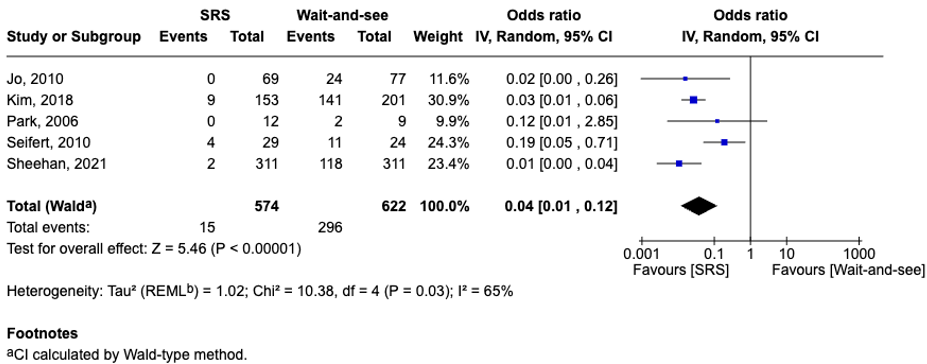
Figure 1: Tumor progression rate in patients who underwent SRS compared to Wait-and-see.
Quality of Life (QoL) (critical)
Health-related quality of life was reported in one study (Kalasauskas, 2020) and was assessed using the SF-36, a questionnaire comprising eight scales, with higher scores indicating better QoL. For the physical health component, the score was 50.5 (±9.5) in the SRS group (n=31) compared to 43.7 (±16.6) in the wait-and-see group (n=31). For the mental health component, the score was 46.2 (±13.3) in the SRS group compared to 39.9 (±15.7) in the wait-and-see group. These differences were considered clinically relevant in favor of SRS.
Overall survival
Not reported
General functioning (KPS score, modified Rankin scale)
Not reported
Cognition
Not reported
A systematic review of the literature was performed to answer the following question(s):
What is the added value of local treatment (surgery, radiosurgery orfractionated radiotherapy) for people with asymptomatic meningioma?
Table 1. PICO
|
Patients |
Patients with an asymptomatic intracranial meningioma |
|
Intervention |
Local treatment: surgery, radiosurgery or fractionated radiotherapy |
|
Control |
wait-and-see, watchful waiting policy |
|
Outcomes |
Overall survival, progression-free survival, cognitive functioning, quality of life (patient reported, SF36, EQ5D, EORTC-QLQ-BN20, EORTC-QLQ-C30, PROMIS), general functioning (KPS score, modified Rankin scale) |
|
Other selection criteria |
Study design: systematic reviews and randomized controlled trials, other comparative studies, other non-comparative studies. |
Relevant outcome measures
The guideline panel considered progression free survival and quality of life as a critical outcome measure for decision making; and overall survival, cognition and general functioning as an important outcome measure for decision making.
The guideline panel defined the outcome measures as follows:
- Progression free survival: Defined as the time interval from the moment of diagnosis (or initiation of observation/treatment) until either:
- The patient died (regardless of cause);
- The meningioma became symptomatic;
- The meningioma showed growth (radiologically confirmed increase in size or volume on imaging), with:
- Relative growth rate (RGR): growth in percentage of tumor size in %/interval
- Absolute growth rate (AGR): growth of meningioma in cm3/interval
- Overall survival: Defined as the time from diagnosis (or initiation of observation/treatment) until death from any cause.
- Cognitive functioning: Quantifiable performance across (multiple) neurocognitive domains assessed through validated neuropsychological instruments.
- Quality of life: Measured using the following validated patient-reported outcome measures (PROMs) SF36, EQ5D, EORTC-QLQ-BN20, EORTC-QLQ-C30, PROMIS
- General functioning: Measured using either the Karnofsky Performance Status (KPS or the modified Rankin scale.
The guideline panel defined the following thresholds as a minimal clinically (patient) important difference.
- Overall survival: minimum of 12 weeks survival benefit.
- Tumor growth (as proxy for progression-free survival):The guideline panel considered RGR to be the leading criterion in the assessment of tumor size, and defined an RGR of at least 10% per year as a minimal clinically (patient) important difference, but preferably only for meningiomas ≥10mm. For meningiomas <10mm in size, growth is not clinically relevant, unless the absolute growth rate (AGR) is >3mm/year.
- Cognitive functioning: 0.5 SD on continuous scales
- Quality of life: 0.5 SD on continuous scales
- General functioning (KPS score, modified Rankin scale): difference of 20%
Search and select (Methods)
A systematic literature search was performed by a medical information specialist using the following bibliographic databases: Embase.com and Ovid/Medline. Both databases were searched from 2000 to November 22, 2024 for systematic reviews, RCTs, observational and other studies. Systematic searches were completed using a combination of controlled vocabulary/subject headings (e.g., Emtree-terms, MeSH) wherever they were available and natural language keywords. The overall search strategy was derived from three primary search concepts: (1) asymptomatic meningioma; (2) radiotherapy; (3) surgery. Duplicates were removed using EndNote software. After deduplication a total of 868 records were imported for title/abstract screening. Initially, 27 studies were selected based on title and abstract screening. After reading the full text, 24 studies were excluded (see the exclusion table under the tab ‘Evidence tabellen’), and 3 studies were included.
- 1 - Kalasauskas D, Keric N, Abu Ajaj S, von Cube L, Ringel F, Renovanz M. Psychological Burden in Meningioma Patients under a Wait-and-Watch Strategy and after
- 2 - Complete Resection Is High-Results of a Prospective Single Center Study. Cancers (Basel). 2020 Nov 25;12(12):3503. doi: 10.3390/cancers12123503. PMID: 33255551; PMCID: PMC7761113.
- 3 - Sheehan J, Pikis S, Islim AI, Chen CJ, Bunevicius A, Peker S, Samanci Y, Nabeel AM, Reda WA, Tawadros SR, El-Shehaby AMN, Abdelkarim K, Emad RM, Delabar V, Mathieu D, Lee CC, Yang HC, Liscak R, Hanuska J, Alvarez RM, Patel D, Kondziolka D, Moreno NM, Tripathi M, Speckter H, Albert C, Bowden GN, Benveniste RJ, Lunsford LD, Jenkinson MD. An international multicenter matched cohort analysis of incidental meningioma progression during active surveillance or after stereotactic radiosurgery: the IMPASSE study. Neuro Oncol. 2022 Jan 5;24(1):116-124. doi: 10.1093/neuonc/noab132. PMID: 34106275; PMCID: PMC8730768.
- 4 - Zhang C, Zhang H. Stereotactic Radiosurgery Versus Observation for Treating Incidental Meningiomas: A Systematic Review and Meta-Analysis. Turk Neurosurg. 2021;31(2):151-160. doi: 10.5137/1019-5149.JTN.31405-20.2. PMID: 33624282.
Risk of Bias tables
|
Author, year |
Selection of participants
Was selection of exposed and non-exposed cohorts drawn from the same population?
|
Exposure
Can we be confident in the assessment of exposure?
|
Outcome of interest
Can we be confident that the outcome of interest was not present at start of study? |
Confounding-assessment
Can we be confident in the assessment of confounding factors?
|
Confounding-analysis
Did the study match exposed and unexposed for all variables that are associated with the outcome of interest or did the statistical analysis adjust for these confounding variables? |
Assessment of outcome
Can we be confident in the assessment of outcome? |
Follow up
Was the follow up of cohorts adequate? In particular, was outcome data complete or imputed?
|
Co-interventions
Were co-interventions similar between groups?
|
Overall Risk of bias
|
|
Definitely yes, probably yes, probably no, definitely no |
Definitely yes, probably yes, probably no, definitely no |
Definitely yes, probably yes, probably no, definitely no |
Definitely yes, probably yes, probably no, definitely no |
Definitely yes, probably yes, probably no, definitely no |
Definitely yes, probably yes, probably no, definitely no |
Definitely yes, probably yes, probably no, definitely no |
Definitely yes, probably yes, probably no, definitely no |
Low, Some concerns, High |
|
|
Kalasauskas, 2020
|
Definitely no
Reason: Selection bias. Single centre |
Definitely yes
Not reported |
Definitely yes
Not reported |
Definitely no
Not reported |
Definitely no
Not reported |
Definitely no
Not reported |
Definitely yes
Not reported |
Definitely no
Not reported |
HIGH |
|
Sheehan, 2021 |
probably yes
Reason: Selection bias. |
Definitely yes
|
Definitely yes
Reason: only asymptomatic patients included |
Probably no
Reason: matching for measured variables, confounding due to unmeasured variables |
Probably yes
Reason: The study used 1:1 propensity score matching for age, tumor volume, location, and follow-up, which reduces confounding. But unmeasured confounders may still bias the results |
Probably yes
Reason: Tumor control was assessed with RANO criteria and MRI/CT follow-up. Neurological deficits were recorded, but no centralized imaging review was performed, |
probably no
reason: follow-up was 4 years, with no imputation for LTFU patients. |
Definitely no
Not reported |
Some concerns |
|
Jo, 2010 |
Definitely no
Reason: |
Definitely no
Reason: |
Probably yes
Reason: |
Definitely no
Not reported |
Definitely no
Not reported |
Probably yes
Not reported
|
Definitely no
Not reported |
Definitely no
Not reported |
HIGH |
|
Kim, 2018 |
Definitely no
Not reported |
Definitely yes
Not reported |
Definitely yes
Not reported |
Definitely no
Not reported |
Definitely no
Not reported |
Probably yes
Not reported |
Definitely no
Not reported |
Definitely no
Not reported |
HIGH |
|
Park, 2006 |
Definitely no
Not reported |
Definitely no
Not reported |
Probably yes
Not reported |
Definitely no
Not reported |
Definitely no
Not reported |
Probably yes
Not reported
|
Definitely no
Not reported |
Definitely no
Not reported |
HIGH |
|
Seifert, 2010 |
Definitely no
Not reported |
Definitely no
Reason: Not reported |
Probably yes
Reason: Not reported |
Definitely no
Not reported |
Definitely no
Not reported |
Probably yes
Not reported
|
Definitely no
Not reported |
Definitely no
Not reported |
HIGH |
Table of excluded studies
|
Reference |
Reason for exclusion |
|
Seifert V. Clinical management of petroclival meningiomas and the eternal quest for preservation of quality of life: personal experiences over a period of 20 years. Acta Neurochir (Wien). 2010 Jul;152(7):1099-116. doi: 10.1007/s00701-010-0633-6. Epub 2010 Apr 25. PMID: 20419460. |
Already included in Zhang article |
|
Park CK, Jung HW, Kim JE, Paek SH, Kim DG. The selection of the optimal therapeutic strategy for petroclival meningiomas. Surg Neurol. 2006 Aug;66(2):160-5; discussion 165-6. doi: 10.1016/j.surneu.2005.12.024. PMID: 16876612. |
Already included in Zhang article |
|
Jo KW, Kim CH, Kong DS, Seol HJ, Nam DH, Park K, Kim JH, Lee JI. Treatment modalities and outcomes for asymptomatic meningiomas. Acta Neurochir (Wien). 2011 Jan;153(1):62-7; discussion 67. doi: 10.1007/s00701-010-0841-0. Epub 2010 Oct 16. PMID: 20953804. |
Already included in Zhang article |
|
Kim KH, Kang SJ, Choi JW, Kong DS, Seol HJ, Nam DH, Lee JI. Clinical and radiological outcomes of proactive Gamma Knife surgery for asymptomatic meningiomas compared with the natural course without intervention. J Neurosurg. 2018 May 18;130(5):1740-1749. doi: 10.3171/2017.12.JNS171943. PMID: 29775154. |
Already included in Zhang article |
|
Mantziaris G, Pikis S, Samanci Y, Peker S, Nabeel AM, Reda WA, Tawadros SR, El-Shehaby AMN, Abdelkarim K, Emad RM, Delabar V, Mathieu D, Lee CC, Yang HC, Liscak R, Hanuska J, Alvarez RM, Moreno NM, Tripathi M, Speckter H, Albert C, Benveniste RJ, Bowden GN, Patel DN, Kondziolka D, Bernstein K, Lunsford LD, Jenkinson MD, Islim AI, Sheehan J. Stereotactic radiosurgery versus active surveillance for asymptomatic, skull-based meningiomas: an international, multicenter matched cohort study. J Neurooncol. 2022 Feb;156(3):509-518. doi: 10.1007/s11060-021-03923-3. Epub 2022 Jan 24. PMID: 35067846. |
Double article, subgroup analysis
|
|
Islim AI, Mantziaris G, Pikis S, Chen CJ, Bunevicius A, Peker S, Samanci Y, Nabeel AM, Reda WA, Tawadros SR, El-Shehaby AMN, Abdelkarim K, Emad RM, Delabar V, Mathieu D, Lee CC, Yang HC, Liscak R, May J, Alvarez RM, Moreno NM, Tripathi M, Kondziolka D, Speckter H, Albert C, Bowden GN, Benveniste RJ, Lunsford LD, Sheehan JP, Jenkinson MD. Comparison of Active Surveillance to Stereotactic Radiosurgery for the Management of Patients with an Incidental Frontobasal Meningioma-A Sub-Analysis of the IMPASSE Study. Cancers (Basel). 2022 Mar 3;14(5):1300. doi: 10.3390/cancers14051300. PMID: 35267608; PMCID: PMC8909178. |
Double article, subgroup analysis
|
|
Pikis S, Mantziaris G, Bunevicius A, Islim AI, Peker S, Samanci Y, Nabeel AM, Reda WA, Tawadros SR, El-Shehaby AMN, Abdelkarim K, Emad RM, Delabar V, Mathieu D, Lee CC, Yang HC, Liscak R, May J, Alvarez RM, Patel DN, Kondziolka D, Bernstein K, Moreno NM, Tripathi M, Speckter H, Albert C, Bowden GN, Benveniste RJ, Lunsford LD, Jenkinson MD, Sheehan J. Stereotactic Radiosurgery Compared With Active Surveillance for Asymptomatic, Parafalcine, and Parasagittal Meningiomas: A Matched Cohort Analysis From the IMPASSE Study. Neurosurgery. 2022 Jun 1;90(6):750-757. doi: 10.1227/neu.0000000000001924. Epub 2022 Mar 25. PMID: 35319529. |
Double article, subgroup analysis
|
|
Pikis S, Mantziaris G, Islim AI, Peker S, Samanci Y, Nabeel AM, Reda WA, Abdelkarim K, El-Shehaby AMN, Tawadros SR, Emad RM, Delabar V, Mathieu D, Lee CC, Yang HC, Licsak R, Hanuska J, Alvarez RM, Patel DN, Kondziolka D, Bernstein K, Moreno NM, Tripathi M, Speckter H, Albert C, Bowden GN, Benveniste RJ, Lunsford DL, Jenkinson MD, Sheehan J. Stereotactic radiosurgery versus active surveillance for incidental, convexity meningiomas: a matched cohort analysis from the IMPASSE study. J Neurooncol. 2022 Mar;157(1):121-128. doi: 10.1007/s11060-022-03953-5. Epub 2022 Jan 29. PMID: 35092547. |
Double article, subgroup analysis
|
|
Akimoto T, Yoshikawa H, Fushimi S, Takagi R, Nakamura T, Ohtake M, Kawasaki T, Sakata K, Yamamoto T. Surgical complications and recurrence factors for asymptomatic meningiomas: a single-center retrospective study. Acta Neurochir (Wien). 2023 May;165(5):1345-1353. doi: 10.1007/s00701-022-05420-6. Epub 2022 Nov 17. PMID: 36394668. |
Wrong outcomes
|
|
Elhammady MS, Heros RC. Asymptomatic meningiomas. J Neurosurg. 2013 Aug;119(2):482-6. doi: 10.3171/2012.12.JNS122338. Epub 2013 May 24. PMID: 23706049. |
wrong design (editorial)
|
|
Islim AI, Mohan M, Moon RDC, Srikandarajah N, Mills SJ, Brodbelt AR, Jenkinson MD. Incidental intracranial meningiomas: a systematic review and meta-analysis of prognostic factors and outcomes. J Neurooncol. 2019 Apr;142(2):211-221. doi: 10.1007/s11060-019-03104-3. Epub 2019 Jan 17. Erratum in: J Neurooncol. 2019 Sep;144(2):427-429. doi: 10.1007/s11060-019-03237-5. PMID: 30656531; PMCID: PMC6449307. |
reporting of study details insufficient
|
|
Islim AI, Mohan M, Moon RDC, Rathi N, Kolamunnage-Dona R, Crofton A, Haylock BJ, Mills SJ, Brodbelt AR, Jenkinson MD. Treatment Outcomes of Incidental Intracranial Meningiomas: Results from the IMPACT Cohort. World Neurosurg. 2020 Jun;138:e725-e735. doi: 10.1016/j.wneu.2020.03.060. Epub 2020 Mar 19. PMID: 32200011. |
No comparative study
|
|
Iwai Y, Yamanaka K, Morikawa T, Ishiguro T, Honda Y, Matsusaka Y, Komiyama M, Yasui T. [The treatment for asymptomatic meningiomas in the era of radiosurgery]. No Shinkei Geka. 2003 Aug;31(8):891-7. Japanese. PMID: 12968492. |
Japanese article
|
|
Kalasauskas D, Keric N, Abu Ajaj S, von Cube L, Ringel F, Renovanz M. Distress and quality of life do not change over time in patients with operated and conservatively managed intracranial meningioma. Acta Neurochir (Wien). 2021 Dec;163(12):3417-3424. doi: 10.1007/s00701-021-05004-w. Epub 2021 Oct 13. PMID: 34643803; PMCID: PMC8511617. |
Wrong comparison |
|
Keshwara SM, Gillespie CS, Mustafa MA, George AM, Richardson GE, Clynch AL, Wang JZ, Lawson DDA, Gilkes CE, Farah JO, Yousaf J, Chavredakis E, Mills SJ, Brodbelt AR, Zadeh G, Millward CP, Islim AI, Jenkinson MD. Quality of life outcomes in incidental and operated meningiomas (QUALMS): a cross-sectional cohort study. J Neurooncol. 2023 Jan;161(2):317-327. doi: 10.1007/s11060-022-04198-y. Epub 2022 Dec 16. PMID: 36525165; PMCID: PMC9756745. |
Wrong comparison
|
|
Lv P, Wang JJ, Xiong NX, Liu XM, Yao DX, Jiang XB, Zhao HY, Zhang FC, Fu P. Long-term outcome in meningiomas involving the major dural sinuses with combined therapy of subtotal resection and early postoperative gamma knife radiosurgery. Acta Neurochir (Wien). 2021 Jun;163(6):1677-1685. doi: 10.1007/s00701-021-04766-7. Epub 2021 Feb 20. PMID: 33608765. |
background article
|
|
Näslund O, Strand PS, Skoglund T, Solheim O, Jakola AS. Overview and recent advances in incidental meningioma. Expert Rev Anticancer Ther. 2023 Apr;23(4):397-406. doi: 10.1080/14737140.2023.2193333. Epub 2023 Mar 27. PMID: 36951191. |
background article
|
|
Näslund O, Jakobsson S, Thurin E, Skoglund T, Pettersson-Segerlind J, Brynedal B, Jakola AS, Bartek J Jr. Health-related quality of life in surgically treated asymptomatic meningioma patients: A population-based matched cohort study. Neurooncol Pract. 2024 Nov 15;11(6):723-732. doi: 10.1093/nop/npae047. PMID: 39554792; PMCID: PMC11567747. |
background article
|
|
Reinert M, Babey M, Curschmann J, Vajtai I, Seiler RW, Mariani L. Morbidity in 201 patients with small sized meningioma treated by microsurgery. Acta Neurochir (Wien). 2006 Dec;148(12):1257-65; discussion 1266. doi: 10.1007/s00701-006-0909-z. Epub 2006 Nov 9. PMID: 17086473. |
Wrong population |
|
Schmieder K, Engelhardt M, Wawrzyniak S, Börger S, Becker K, Zimolong A. The impact of microsurgery, stereotactic radiosurgery and radiotherapy in the treatment of meningiomas depending on different localizations. GMS Health Technol Assess. 2010 Mar 16;6:Doc02. doi: 10.3205/hta000080. PMID: 21289875; PMCID: PMC3010884. |
Summary article
|
|
Sonoda Y, Sakurada K, Saino M, Kondo R, Sato S, Kayama T. Multimodal strategy for managing meningiomas in the elderly. Acta Neurochir (Wien). 2005 Feb;147(2):131-6; discussion 136. doi: 10.1007/s00701-004-0391-4. PMID: 15570440. |
About development of multimodel strategy
|
|
Vera E, Iorgulescu JB, Raper DM, Madhavan K, Lally BE, Morcos J, Elhammady S, Sherman J, Komotar RJ. A review of stereotactic radiosurgery practice in the management of skull base meningiomas. J Neurol Surg B Skull Base. 2014 Jun;75(3):152-8. doi: 10.1055/s-0033-1354747. Epub 2014 Mar 12. PMID: 25072008; PMCID: PMC4078167. |
Narrative review
|
|
Verbruggen LC, Hudson MM, Bowers DC, Ronckers CM, Armstrong GT, Skinner R, Hoving EW, Janssens GO, van der Pal HJH, Kremer LCM, Mulder RL. Variations in screening and management practices for subsequent asymptomatic meningiomas in childhood, adolescent and young adult cancer survivors. J Neurooncol. 2020 Apr;147(2):417-425. doi: 10.1007/s11060-020-03436-5. Epub 2020 Feb 22. PMID: 32088813. |
background article
|
|
Yano S, Kuratsu J; Kumamoto Brain Tumor Research Group. Indications for surgery in patients with asymptomatic meningiomas based on an extensive experience. J Neurosurg. 2006 Oct;105(4):538-43. doi: 10.3171/jns.2006.105.4.538. PMID: 17044555. |
background article
|
Beoordelingsdatum en geldigheid
Publicatiedatum : 29-09-2026
Beoordeeld op geldigheid : 29-09-2026
Algemene gegevens
De herziening van deze richtlijnmodule werd ondersteund door het Kennisinstituut van de Federatie Medisch Specialisten (www.demedischspecialist.nl/kennisinstituut) en werd gefinancierd door de Stichting Kwaliteitsgelden Medisch Specialisten (SKMS).
De financier heeft geen enkele invloed gehad op de inhoud van de richtlijnmodule.
Samenstelling werkgroep
Voor het ontwikkelen van de richtlijnmodule is in 2024 een multidisciplinaire werkgroep ingesteld, bestaande uit vertegenwoordigers van alle relevante specialismen (zie hiervoor de Samenstelling van de werkgroep) die betrokken zijn bij de zorg voor patiënten met een Intracranieel meningeoom.
Werkgroep
- dr. A. (Alejandra) Méndez-Romero, radiotherapeut-oncoloog, namens de NVRO
- drs. B. (Bram) van der Pol, neurochirurg, namens de NVvN
- dr. E.H.H. (Elwin) Mommers, radioloog, namens de NVvR
- dr. E.J.J. (Esther) Habets, klinisch neuropsycholoog, namens het NIP
- dr. E.M. (Eelke) Bos, neurochirurg, namens de NVvN
- K. (Katy) Krzywicka, AIOS neurologie, namens de NVN
- prof. dr. L.J.A. (Lukas) Stalpers, radiotherapeut, namens de NVRO
- dr. M. (Matthijs) van der Meulen, neuroloog, namens de NVN
- drs. N. (Nelleke) Tolboom, nucleair geneeskundige, namens de NVNG
- dr. S.L.N. (Niek) Maas, patholoog, namens de NVVP
- dr. T.J. (Tom) Snijders (voorzitter), neuroloog, namens de NVN
- V. (Vivian) Grandia MSc, verpleegkundig specialist, namens de V&VN
- dr. V.P.M. (Vera) Schepers, revalidatiearts, namens de VRA
- W. (Wendela) van Daal, ervaringsdeskundige, namens Hersenletsel
Met ondersteuning van
- I. (Isabelle) Laseur, adviseur, Kennisinstituut van de Federatie Medisch Specialisten
- dr. R. (Rayna) Anijs, adviseur, Kennisinstituut van de Federatie Medisch Specialisten
- dr. J. (Jing) de Haan-Du, adviseur, Kennisinstituut van de Federatie Medisch Specialisten
- A. (Alies) Oost, medisch informatiespecialist, Kennisinstituut van de Federatie Medisch Specialisten
Belangenverklaringen
Een overzicht van de belangen van werkgroepleden en het oordeel over het omgaan met eventuele belangen vindt u in onderstaande tabel. De ondertekende belangenverklaringen zijn op te vragen bij het secretariaat van het Kennisinstituut van de Federatie Medisch Specialisten via secretariaat@kennisinstituut.nl.
Tabel 1 Gemelde (neven)functies en belangen werkgroep
|
Naam |
Hoofdfunctie |
Nevenwerkzaamheden |
Persoonlijke financiële belangen |
Persoonlijke relaties |
Extern gefinancierd onderzoek |
Intellectuele belangen en reputatie |
Overige belangen |
Datum |
Restrictie |
|
dr. A. (Alejandra) Méndez-Romero
|
Radiotherapeut-oncoloog, Erasmus MC
|
Geen |
Geen |
Geen |
*KWF; Perihilar cholangiocarcinoma stereotctaic radiotherapy after chemotherapy (PI) *Varian Medical systems;Varian Medical systems (PI) *Varian Medical systems; Liver stereotactic radiotherapy on Ethos system (PI) *NWO: Advanced MRI in target delineation for glioblastoma (supervisor) |
Geen |
Geen |
23-03-2024 |
Geen restricties |
|
drs. B. (Bram) van der Pol
|
Neurochirurg, regionale coöperatie neurochirurgie Brabant, o.a. werkzaam in het ETZ Tilburg en Amphia ziekenhuis Breda |
*Medisch manager Coöperatie Neurochirurgie Brabant - betaald *Onderzoeksaanstelling Radboud UMC Nijmegen - onbetaald |
Geen |
Geen |
Geen |
Mijn afdeling neurochirurgie in ETZ Tilburg heeft een goede reputatie op het gebied van complexe meningeoom behandeling waarvan stereotactische radiochirurgie met het GammaKnife een onderdeel is. |
Geen |
13-5-2024 |
Geen restricties |
|
dr. E.H.H. (Elwin) Mommers
|
Neuroradioloog Zuyderland Medisch Centrum |
Medisch directeur van Mitralis diagnostisch centrum, geen relatie tot meningeomen |
Geen |
Geen |
Nationaal MS Fonds - Mspine studie - Geen projectleider |
Geen |
Geen |
20-5-2024 |
Geen restricties |
|
dr. E.J.J. (Esther) Habets |
Klinisch neuropsycholoog, afdeling Medische Psychologie, Haaglanden Medisch Centrum in Den Haag. |
Docent binnen de master 'Clinical neuropsychology' van de Universiteit Leiden; een keer per jaar hoorcollege verzorgen, betaald |
Geen |
Geen |
*Stichting CCA - 'GRIP op vermoeidheid' Cognitive Behavioral thepary in treating severe fatigue in patients with primary brain tumors a RCT - Geen projectleider *LUMC - The long-term impact of immunotherapy and targeted therapy on outcomes in patients with brain metasstases - Geen projectleider |
Geen |
Geen |
27-5-2024 |
Geen restricties |
|
dr. E.M. (Eelke) Bos
|
*Neurochirurg, Erasmus MC Rotterdam *Neurochirurg Admiraal de Ruyterziekenhuis Goes/Zierikzee |
Voorzitter management team Hersentumorcentrum Erasmus MC Rotterdam - onbetaald |
Product development consultant, Brainlab A.G., Munchen, Duitsland - betaald
Adviseurschap (in 2018), ontwikkeling van een robotarm voor biopt operaties, welke niet bij meningeomen worden gebruikt). |
Geen |
Stophersentumoren - Toepasbare technieken voor het voorspellen van gedrag van meningeomen - Mede projectleider met Niek Maas, 2023, 40.000 euro van StopHersenTumoren.nl |
Geen |
Geen |
19-5-2024 |
Geen restricties |
|
K. (Katy) Krzywicka
|
Arts assistent in opleiding tot neuroloog (AIOS) Universitair Medisch Centrum Grongingen |
Resident vertegenwoordiger bij de scientific committee van European Academy of Neurology |
Geen |
Geen |
Geen |
Geen |
Geen |
14-5-2024 |
Geen restricties |
|
prof. dr. L.J.A. (Lukas) Stalpers
|
*Radiotherapeut, Amsterdam UMC *Opleider radiotherapie, Universiteit van Amsterdam |
Geen |
Geen |
Geen |
*KWF-Project Consortia 2022-3 DEV/ 14642 - KWF-Project Consortia 2022-3 DEV/ 14642: BRAINS - Bevacizumab for cerebral RAdiation Induced NecrosiS: clinical efficacy and cost-effectiveness. RAINS-Consortium project. PIs: dr. Dieta Brandsma, NKI, prof. dr. Lukas Stalpers, (Projectleider JA) *EU Horizon2020 project 955625 - EU Horizon2020 project 955625-HyperBoost, project nr.: H2020. Creation of advanced cancer treatment planning to boost the effect of Radiotherapy by combining with hyperthermia, heating the tumor. (Projectleider NEE) *KWF-Project 12183 / 2019-1- Fast, accurate, and insightful brachytherapy treatment planning for cervical cancer through artificial intelligence (Tanja Alderliesten, Peter Bosman, Lukas Stalpers, Bradley Pieters) (Projectleider JA) *KWF UvA-2018-1/11690; - Optical coherence tomography and widefield fundus photography for 3D radiation dose-response relationship in partial eye irradiation (Projectleider NEE) |
*NVvO - Nederlandse Vereniging voor Oncologie (Secretary since Jan. 2002): *NVvO-Oncology Day committee (secretary since 2002) *NVvO Basicursus Oncologie (organizer / teacher / moderator (since 1992) *NVRO - Nederlandse Vereniging voor Radiotherapie & Oncologie (1989) *LPRNO – Landelijk Platform Radiotherapie in de Neuro-Oncologie *LPRGT - Landelijk Platform Radiotherapie in de Neuro-Oncologie *LPPT - Landelijk Platform Palliatie *René Vogels Foundation, -a private foundation for the promotion of young cancer investigators (travel grants), (secretary since 2002) *NVTK - Nederlandse Vereniging tegen de Kwakzalverij (Board member since Oct. 2010) *Member Stuurgroep Eindspel Tabak/Rookpreventie Jeugd [Committee Endgame *Tabacco / Prevent Smoking in Children (Board member, 2014) www.rookpreventiejeugd.nl ; www.tabaknee.nl *2024 co-editor Leerboek Oncologie, BSL Publishers |
Geen |
12-11-2024 |
Geen restricties |
|
dr. M. (Matthijs) van der Meulen
|
Neuroloog Leids Universitair Medisch Centrum |
*Voorzitter commissie wetenschappelijke dag landelijke werkgroep neuro-oncologie (LWNO) *Lid organisatie nascholing neuro-oncologie landelijke werkgroep neuro-oncologie-verpleegkundigen (LWNO-v) *Vice voorzitter Educational Commitee European Association Neuro-oncology (EANO) *Lid Quality of Life commitee Brain Tumor Group European Organisation Research and Treatment of Cancer (EORTC) *Lid stuurgroep Nieuw Landelijk Opleidingsplan Neurologie Nederlandse Vereniging voor Neurologie (NVN) Allen onbetaald |
Geen |
Geen |
LWNO, Onderzoek naar prognostische implicaties van de verandering van receptoren op hersenmetastasen van een mammacarcinoom, rol als projectleider |
Geen |
Geen |
21-2-2025 |
Geen restricties |
|
drs. N. (Nelleke) Tolboom |
Nuclear medicine physician, Department of Radiology and Nuclear Medicine, University Medical Centre Utrecht and Prinses Maxima Centre for pediatric oncology, Utrecht |
*Nul uren aanstelling (wetenschap) appointment AUMC, location Vumc, Department of Radiology end Nuclear Medicine *Head of the local nuclear medicine residency programme *EANM liaison person to the EAN & Brain Health Summit initiative *EANM representative for the European Association of Neurology (EAN), member of management group of EAN scientific panel on neuroimaging *Member of Neuroimaging committee, European Association of Nuclear Medicine (EANM) *Member of imaging committee of pacific pediatric neuro-oncology consortium (PNOC) *Member of EORTC Brain tumour group/ nuclear medicine committee *Chair of the Dutch Nucleair Medicine group *Member of scientific committee of Symposium Nuclear Precision Medicine in Neuro oncology *Scientific committee of European Conference for Clinical Neuroimaging Allen onbetaald. |
Geen |
Geen |
*Stichting LongCOVID - Total body PET examinations of post COVID patients - Projectleider *ZonMW - PET project researching FET-PET-Guided management of pseudoprogression in Glioblastoma - Projectleider *ZonMw - PET project researching the neurobiological basis of longterm cognitive and fatigue complaints after COVID-19 - Projectleider *ZonMw - PET project researchting clinical value of TAU PET - Geen projectleider *KWF - Project researching of metabolic MRI/FET in glioblastoma - Geen projectleider |
Uiteraard speelt beeldvorming (en eventueel experimentele therapie) vanuit de nucleaire een rol bij meningeomen en heeft de nucleaire geneeskunde in het algemeen (dus niet ik zelf) baat bij meer exposure. |
Geen |
23-5-2024 |
Geen restricties |
|
dr. S.L.N. (Niek) Maas
|
*Patholoog, Leids Universitair Medisch Centrum *Patholoog, Erasmus Medisch Centrum |
Geen |
Geen |
Geen |
Stophersentumoren - Toepasbare technieken voor het voorspellen van gedrag van meningeomen - Mede projectleider met Eelke Bos, 2023, 40.000 euro van StopHersenTumoren.nl |
Ik ben betrokken bij het ontwikkelen van een van de moleculaire risicopredictie modellen op basis van histologische en moleculaire parameters voor menigeomen. Dit werk is in 2021 gepubliceerd (Maas et al. Journal of Clinical Oncology) met een folow-up artikel in 2022 (Hielscher et al. Brain Pathology). Op deze techniek zijn geen patenten aangevraagd, het betreft puur intellectuele erkenning. Mijn expertise met dit model en vergelijkbare modellen, is tevens de reden waarom ik gevraagd ben om bij te dragen aan de richtlijn. |
Geen |
24-5-2024 |
Geen restricties |
|
dr. T.J. (Tom) Snijders (voorzitter)
|
Neuroloog, medisch hoofd zorglijn neuro-oncologie, afdeling neurologie en neurochirurgie, UMC Utrecht |
*2020-current Chairperson of the Scientific Day-committee of the Dutch Working Group Neuro-oncology (LWNO) *2018-current Member of the Imaging committee of the European Organisation for Research and Treatment of Cancer (EORTC)’s Brain tumor group. *2021-current Member of the Steering committee of the European Organisation for Research and Treatment of Cancer (EORTC)’s Brain tumor group. *2014-current Committee Member of the Task Force on Bing Neel Syndrome of the 8th International Workshop on Waldenström’s Macroglobulinemia (IWWM8). *2012-current Head of the Editorial board (‘redactieraad’) of Hersentumor.nl (non-profit organisation & website for public awareness and education on brain tumors). |
Geen |
Geen |
Geen |
Geen |
Geen |
7-10-2021 |
Geen restricties |
|
V. (Vivian) Grandia MSc
|
Verpleegkundig specialist (i.o.) in het Erasmus MC, afdeling Neurochirurgie |
Actief lid van de Landelijke Werkgroep Neuro-Oncologie - verpleegkundigen (LWNO-v), onbetaald |
Geen |
Geen |
Geen |
Geen |
Geen |
21-5-2024 |
Geen restricties |
|
dr. V.P.M. (Vera) Schepers |
Revalidatiearts en opleider, UMC Utrecht |
Geen |
Geen |
Geen |
Geen |
Geen |
Geen |
11-6-2024 |
Geen restricties |
|
W. (Wendela) van Daal |
*Leerkracht/Rt-er basisschool De Ijsbreker (Amsterdam) *Administratief medewerkster Taxwise Advocaten BV (Amsterdam) |
Lid patiëntenvereniging Hersenletsel.nl (deelnemer bijeenkomste lotgenotencontact) |
Geen |
Geen |
Geen |
Geen |
Geen |
6-6-2024 |
Geen restricties |
Inbreng patiëntenperspectief
De werkgroep besteedde aandacht aan het patiëntenperspectief door afgevaardigden namens patiëntenorganisatie Hersenletsel in de werkgroep. De richtlijn is tevens voor commentaar voorgelegd aan Hersenletsel en de eventueel aangeleverde commentaren zijn bekeken en verwerkt.
Kwalitatieve raming van mogelijke financiële gevolgen in het kader van de Wkkgz
Bij de richtlijnmodule voerde de werkgroep conform de Wet kwaliteit, klachten en geschillen zorg (Wkkgz) een kwalitatieve raming uit om te beoordelen of de aanbevelingen mogelijk leiden tot substantiële financiële gevolgen. Bij het uitvoeren van deze beoordeling is de richtlijnmodule op verschillende domeinen getoetst (zie het stroomschema bij Werkwijze).
|
Module |
Uitkomst raming |
Toelichting |
|
Behandelindicaties asymptomatisch meningeoom |
Geen financiële gevolgen |
Uit de toetsing volgt dat de aanbeveling(en) niet breed toepasbaar zijn (<5.000 patiënten) en zal daarom naar verwachting geen substantiële financiële gevolgen hebben voor de collectieve uitgaven |
Werkwijze
Voor meer details over de gebruikte richtlijnmethodologie verwijzen wij u naar de Werkwijze. Relevante informatie voor de ontwikkeling/herziening van deze richtlijnmodule is hieronder weergegeven.
Zoekverantwoording
Embase.com
|
No. |
Query |
Results |
|
#1 |
('meningeal tumor'/exp OR meningioma*:ti,ab,kw OR meningeoma*:ti,ab,kw OR (((meningeal OR meninges OR meninx OR meningo* OR 'dura mater' OR dural*) NEAR/3 (cancer* OR carcino* OR neoplas* OR tumor* OR tumour* OR mass* OR malignan* OR metasta*)):ti,ab,kw)) AND ('asymptomatic disease'/de OR 'incidental finding'/exp OR asymptom*:ti,ab,kw OR nonsymptom*:ti,ab,kw OR 'non symptom*':ti,ab,kw OR 'no symptom*':ti,ab,kw OR presymptom*:ti,ab,kw OR 'pre symptom*':ti,ab,kw OR subclinical*:ti,ab,kw OR 'sub clinical*':ti,ab,kw OR symptomless:ti,ab,kw OR 'symptom less':ti,ab,kw OR (((incidental* OR accident*) NEAR/3 (find* OR found* OR discover*)):ti,ab,kw)) OR ((incident* NEAR/3 (meningioma* OR meningeoma*)):ti,ab,kw) |
1723 |
|
#2 |
'radiotherapy'/exp OR 'radiotherap*':ti,ab,kw OR irradiat*:ti,ab,kw OR radiat*:ti,ab,kw OR sbrt:ti,ab,kw OR sabr:ti,ab,kw OR sabrt:ti,ab,kw OR imrt:ti,ab,kw OR inrt:ti,ab,kw OR isrt:ti,ab,kw OR rfa:ti,ab,kw OR chemoradi*:ti,ab,kw OR radiochemo*:ti,ab,kw OR (((radio* OR bioradiant OR rontgen OR roentgen OR 'x ray' OR bucky OR proton* OR photon OR vmat) NEAR/3 (therap* OR treatment*)):ti,ab,kw) |
1459390 |
|
#3 |
'surgery'/exp OR 'surgical patient'/exp OR 'surgical risk'/exp OR 'perioperative period'/exp OR 'surgery'/lnk OR surgic*:ti,ab,kw OR surger*:ti,ab,kw OR microsurg*:ti,ab,kw OR operation*:ti,ab,kw OR operative:ti,ab,kw OR presurg*:ti,ab,kw OR preoperati*:ti,ab,kw OR perisurg*:ti,ab,kw OR perioperati*:ti,ab,kw OR postsurg*:ti,ab,kw OR postoperati*:ti,ab,kw OR nonsurg*:ti,ab,kw OR nonoperatic*:ti,ab,kw OR laparoscop*:ti,ab,kw OR intraoperati*:ti,ab,kw OR resect*:ti,ab,kw OR craniotom*:ti,ab,kw OR craniostom*:ti,ab,kw OR radiosurg*:ti,ab,kw OR 'radio surg*':ti,ab,kw OR srs:ti,ab,kw |
8287958 |
|
#4 |
#1 AND (#2 OR #3) NOT ('conference abstract'/it OR 'editorial'/it OR 'letter'/it OR 'note'/it) NOT (('animal'/exp OR 'animal experiment'/exp OR 'animal model'/exp OR 'nonhuman'/exp) NOT 'human'/exp) NOT (('adolescent'/exp OR 'child'/exp OR adolescent*:ti,ab,kw OR child*:ti,ab,kw OR schoolchild*:ti,ab,kw OR infant*:ti,ab,kw OR girl*:ti,ab,kw OR boy*:ti,ab,kw OR teen:ti,ab,kw OR teens:ti,ab,kw OR teenager*:ti,ab,kw OR youth*:ti,ab,kw OR pediatr*:ti,ab,kw OR paediatr*:ti,ab,kw OR puber*:ti,ab,kw) NOT ('adult'/exp OR 'aged'/exp OR 'middle aged'/exp OR adult*:ti,ab,kw OR man:ti,ab,kw OR men:ti,ab,kw OR woman:ti,ab,kw OR women:ti,ab,kw)) |
864 |
|
#5 |
#4 AND [2000-2025]/py |
760 |
|
#6 |
'meta analysis'/exp OR 'meta analysis (topic)'/exp OR metaanaly*:ti,ab OR 'meta analy*':ti,ab OR metanaly*:ti,ab OR 'systematic review'/de OR 'cochrane database of systematic reviews'/jt OR prisma:ti,ab OR prospero:ti,ab OR (((systemati* OR scoping OR umbrella OR 'structured literature') NEAR/3 (review* OR overview*)):ti,ab) OR ((systemic* NEAR/1 review*):ti,ab) OR (((systemati* OR literature OR database* OR 'data base*') NEAR/10 search*):ti,ab) OR (((structured OR comprehensive* OR systemic*) NEAR/3 search*):ti,ab) OR (((literature NEAR/3 review*):ti,ab) AND (search*:ti,ab OR database*:ti,ab OR 'data base*':ti,ab)) OR (('data extraction':ti,ab OR 'data source*':ti,ab) AND 'study selection':ti,ab) OR ('search strategy':ti,ab AND 'selection criteria':ti,ab) OR ('data source*':ti,ab AND 'data synthesis':ti,ab) OR medline:ab OR pubmed:ab OR embase:ab OR cochrane:ab OR (((critical OR rapid) NEAR/2 (review* OR overview* OR synthes*)):ti) OR ((((critical* OR rapid*) NEAR/3 (review* OR overview* OR synthes*)):ab) AND (search*:ab OR database*:ab OR 'data base*':ab)) OR metasynthes*:ti,ab OR 'meta synthes*':ti,ab |
1079450 |
|
#7 |
'clinical trial'/exp OR 'randomization'/exp OR 'single blind procedure'/exp OR 'double blind procedure'/exp OR 'crossover procedure'/exp OR 'placebo'/exp OR 'prospective study'/exp OR rct:ab,ti OR random*:ab,ti OR 'single blind':ab,ti OR 'randomised controlled trial':ab,ti OR 'randomized controlled trial'/exp OR placebo*:ab,ti |
4147743 |
|
#8 |
'major clinical study'/de OR 'clinical study'/de OR 'case control study'/de OR 'family study'/de OR 'longitudinal study'/de OR 'retrospective study'/de OR 'prospective study'/de OR 'comparative study'/de OR 'cohort analysis'/de OR ((cohort NEAR/1 (study OR studies)):ab,ti) OR (('case control' NEAR/1 (study OR studies)):ab,ti) OR (('follow up' NEAR/1 (study OR studies)):ab,ti) OR (observational NEAR/1 (study OR studies)) OR ((epidemiologic NEAR/1 (study OR studies)):ab,ti) OR (('cross sectional' NEAR/1 (study OR studies)):ab,ti) |
8504363 |
|
#9 |
'case control study'/de OR 'comparative study'/exp OR 'control group'/de OR 'controlled study'/de OR 'controlled clinical trial'/de OR 'crossover procedure'/de OR 'double blind procedure'/de OR 'phase 2 clinical trial'/de OR 'phase 3 clinical trial'/de OR 'phase 4 clinical trial'/de OR 'pretest posttest design'/de OR 'pretest posttest control group design'/de OR 'quasi experimental study'/de OR 'single blind procedure'/de OR 'triple blind procedure'/de OR (((control OR controlled) NEAR/6 trial):ti,ab,kw) OR (((control OR controlled) NEAR/6 (study OR studies)):ti,ab,kw) OR (((control OR controlled) NEAR/1 active):ti,ab,kw) OR 'open label*':ti,ab,kw OR (((double OR two OR three OR multi OR trial) NEAR/1 (arm OR arms)):ti,ab,kw) OR ((allocat* NEAR/10 (arm OR arms)):ti,ab,kw) OR placebo*:ti,ab,kw OR 'sham-control*':ti,ab,kw OR (((single OR double OR triple OR assessor) NEAR/1 (blind* OR masked)):ti,ab,kw) OR nonrandom*:ti,ab,kw OR 'non-random*':ti,ab,kw OR 'quasi-experiment*':ti,ab,kw OR crossover:ti,ab,kw OR 'cross over':ti,ab,kw OR 'parallel group*':ti,ab,kw OR 'factorial trial':ti,ab,kw OR ((phase NEAR/5 (study OR trial)):ti,ab,kw) OR ((case* NEAR/6 (matched OR control*)):ti,ab,kw) OR ((match* NEAR/6 (pair OR pairs OR cohort* OR control* OR group* OR healthy OR age OR sex OR gender OR patient* OR subject* OR participant*)):ti,ab,kw) OR ((propensity NEAR/6 (scor* OR match*)):ti,ab,kw) OR versus:ti OR vs:ti OR compar*:ti OR ((compar* NEAR/1 study):ti,ab,kw) OR (('major clinical study'/de OR 'clinical study'/de OR 'cohort analysis'/de OR 'observational study'/de OR 'cross-sectional study'/de OR 'multicenter study'/de OR 'correlational study'/de OR 'follow up'/de OR cohort*:ti,ab,kw OR 'follow up':ti,ab,kw OR followup:ti,ab,kw OR longitudinal*:ti,ab,kw OR prospective*:ti,ab,kw OR retrospective*:ti,ab,kw OR observational*:ti,ab,kw OR 'cross sectional*':ti,ab,kw OR cross?ectional*:ti,ab,kw OR multicent*:ti,ab,kw OR 'multi-cent*':ti,ab,kw OR consecutive*:ti,ab,kw) AND (group:ti,ab,kw OR groups:ti,ab,kw OR subgroup*:ti,ab,kw OR versus:ti,ab,kw OR vs:ti,ab,kw OR compar*:ti,ab,kw OR 'odds ratio*':ab OR 'relative odds':ab OR 'risk ratio*':ab OR 'relative risk*':ab OR 'rate ratio':ab OR aor:ab OR arr:ab OR rrr:ab OR ((('or' OR 'rr') NEAR/6 ci):ab))) |
15555418 |
|
#10 |
#5 AND #6 |
34 |
|
#11 |
#5 AND #7 NOT #10 |
43 |
|
#12 |
#5 AND (#8 OR #9) NOT (#10 OR #11) |
259 |
|
#13 |
#5 NOT (#10 OR #11 OR #12) |
424 |
Ovid/Medline
|
1 |
((exp Meningeal Neoplasms/ or meningioma*.ti,ab,kf. or meningeoma*.ti,ab,kf. or ((meningeal or meninges or meninx or meningo* or 'dura mater' or dural*) adj3 (cancer* or carcino* or neoplas* or tumor* or tumour* or mass* or malignan* or metasta*)).ti,ab,kf.) and (Asymptomatic Diseases/ or exp Incidental Findings/ or asymptom*.ti,ab,kf. or nonsymptom*.ti,ab,kf. or 'non symptom*'.ti,ab,kf. or 'no symptom*'.ti,ab,kf. or presymptom*.ti,ab,kf. or 'pre symptom*'.ti,ab,kf. or subclinical*.ti,ab,kf. or 'sub clinical*'.ti,ab,kf. or symptomless.ti,ab,kf. or 'symptom less'.ti,ab,kf. or ((incidental* or accident*) adj3 (find* or found* or discover*)).ti,ab,kf.)) or (incident* adj3 (meningioma* or meningeoma*)).ti,ab,kf. |
1027 |
|
2 |
exp Radiotherapy/ or 'radiotherap*'.ti,ab,kf. or irradiat*.ti,ab,kf. or radiat*.ti,ab,kf. or sbrt.ti,ab,kf. or chemoradi*.ti,ab,kf. or radiochemo*.ti,ab,kf. or sabr.ti,ab,kf. or sabrt.ti,ab,kf. or imrt.ti,ab,kf. or inrt.ti,ab,kf. or isrt.ti,ab,kf. or rfa.ti,ab,kf. or ((radio* or bioradiant or rontgen or roentgen or 'x ray' or bucky or proton* or photon or vmat) adj3 (therap* or treatment*)).ti,ab,kf. |
969457 |
|
3 |
exp Surgical Procedures, Operative/ or exp Specialties, Surgical/ or su.fs. or exp Perioperative Period/ or surgic*.ti,ab,kf. or surger*.ti,ab,kf. or microsurg*.ti,ab,kf. or operation*.ti,ab,kf. or operative.ti,ab,kf. or presurg*.ti,ab,kf. or preoperati*.ti,ab,kf. or perisurg*.ti,ab,kf. or perioperati*.ti,ab,kf. or postsurg*.ti,ab,kf. or postoperati*.ti,ab,kf. or nonsurg*.ti,ab,kf. or nonoperatic*.ti,ab,kf. or laparoscop*.ti,ab,kf. or resect*.ti,ab,kf. or craniotom*.ti,ab,kf. or craniostom*.ti,ab,kf. or radiosurg*.ti,ab,kf. or 'radio surg*'.ti,ab,kf. or srs.ti,ab,kf. |
5929730 |
|
4 |
(1 and (2 or 3)) not (comment/ or editorial/ or letter/) not ((exp animals/ or exp models, animal/) not humans/) not ((Adolescent/ or Child/ or Infant/ or adolescen*.ti,ab,kf. or child*.ti,ab,kf. or schoolchild*.ti,ab,kf. or infant*.ti,ab,kf. or girl*.ti,ab,kf. or boy*.ti,ab,kf. or teen.ti,ab,kf. or teens.ti,ab,kf. or teenager*.ti,ab,kf. or youth*.ti,ab,kf. or pediatr*.ti,ab,kf. or paediatr*.ti,ab,kf. or puber*.ti,ab,kf.) not (Adult/ or adult*.ti,ab,kf. or man.ti,ab,kf. or men.ti,ab,kf. or woman.ti,ab,kf. or women.ti,ab,kf.)) |
679 |
|
5 |
limit 4 to yr="2000 -Current" |
580 |
|
6 |
meta-analysis/ or meta-analysis as topic/ or (metaanaly* or meta-analy* or metanaly*).ti,ab,kf. or systematic review/ or cochrane.jw. or (prisma or prospero).ti,ab,kf. or ((systemati* or scoping or umbrella or "structured literature") adj3 (review* or overview*)).ti,ab,kf. or (systemic* adj1 review*).ti,ab,kf. or ((systemati* or literature or database* or data-base*) adj10 search*).ti,ab,kf. or ((structured or comprehensive* or systemic*) adj3 search*).ti,ab,kf. or ((literature adj3 review*) and (search* or database* or data-base*)).ti,ab,kf. or (("data extraction" or "data source*") and "study selection").ti,ab,kf. or ("search strategy" and "selection criteria").ti,ab,kf. or ("data source*" and "data synthesis").ti,ab,kf. or (medline or pubmed or embase or cochrane).ab. or ((critical or rapid) adj2 (review* or overview* or synthes*)).ti. or (((critical* or rapid*) adj3 (review* or overview* or synthes*)) and (search* or database* or data-base*)).ab. or (metasynthes* or meta-synthes*).ti,ab,kf. |
791331 |
|
7 |
exp clinical trial/ or randomized controlled trial/ or exp clinical trials as topic/ or randomized controlled trials as topic/ or Random Allocation/ or Double-Blind Method/ or Single-Blind Method/ or (clinical trial, phase i or clinical trial, phase ii or clinical trial, phase iii or clinical trial, phase iv or controlled clinical trial or randomized controlled trial or multicenter study or clinical trial).pt. or random*.ti,ab. or (clinic* adj trial*).tw. or ((singl* or doubl* or treb* or tripl*) adj (blind$3 or mask$3)).tw. or Placebos/ or placebo*.tw. |
2808730 |
|
8 |
Epidemiologic studies/ or case control studies/ or exp cohort studies/ or Controlled Before-After Studies/ or Case control.tw. or cohort.tw. or Cohort analy$.tw. or (Follow up adj (study or studies)).tw. or (observational adj (study or studies)).tw. or Longitudinal.tw. or Retrospective*.tw. or prospective*.tw. or consecutive*.tw. or Cross sectional.tw. or Cross-sectional studies/ or historically controlled study/ or interrupted time series analysis/ [Onder exp cohort studies vallen ook longitudinale, prospectieve en retrospectieve studies] |
4888367 |
|
9 |
Case-control Studies/ or clinical trial, phase ii/ or clinical trial, phase iii/ or clinical trial, phase iv/ or comparative study/ or control groups/ or controlled before-after studies/ or controlled clinical trial/ or double-blind method/ or historically controlled study/ or matched-pair analysis/ or single-blind method/ or (((control or controlled) adj6 (study or studies or trial)) or (compar* adj (study or studies)) or ((control or controlled) adj1 active) or "open label*" or ((double or two or three or multi or trial) adj (arm or arms)) or (allocat* adj10 (arm or arms)) or placebo* or "sham-control*" or ((single or double or triple or assessor) adj1 (blind* or masked)) or nonrandom* or "non-random*" or "quasi-experiment*" or "parallel group*" or "factorial trial" or "pretest posttest" or (phase adj5 (study or trial)) or (case* adj6 (matched or control*)) or (match* adj6 (pair or pairs or cohort* or control* or group* or healthy or age or sex or gender or patient* or subject* or participant*)) or (propensity adj6 (scor* or match*))).ti,ab,kf. or (confounding adj6 adjust*).ti,ab. or (versus or vs or compar*).ti. or ((exp cohort studies/ or epidemiologic studies/ or multicenter study/ or observational study/ or seroepidemiologic studies/ or (cohort* or 'follow up' or followup or longitudinal* or prospective* or retrospective* or observational* or multicent* or 'multi-cent*' or consecutive*).ti,ab,kf.) and ((group or groups or subgroup* or versus or vs or compar*).ti,ab,kf. or ('odds ratio*' or 'relative odds' or 'risk ratio*' or 'relative risk*' or aor or arr or rrr).ab. or (("OR" or "RR") adj6 CI).ab.)) |
5841119 |
|
10 |
5 and 6 |
24 |
|
11 |
(5 and 7) not 10 |
26 |
|
12 |
(5 and (8 or 9)) not (10 or 11) |
211 |
|
13 |
5 not (10 or 11 or 12) |
319 |