
Behandeling met over-the-scope clips
Uitgangsvraag
Wat is de plaats van over-the-scope clips (OTSC) bij de behandeling van ulcusbloedingen van de maag en het duodenum?
Aanbeveling
Aanbeveling-1
Gebruik bij patiënten met actief bloedverlies uit een ulcus, waarbij er sprake is van een groot uitgeponst ulcus (>2 cm) of met een zichtbaar bloedvat groter dan 2 mm, een over-the-scope clip.
Volg een training in een skills lab voorafgaand aan het toepassen van een OTSC in een endoscopiepraktijk.
Aanbeveling-2
Plaats bij patiënten met een recidief bloeding uit een ulcus (waarbij standaardbehandeling heeft gefaald) bij voorkeur een over-the-scope clip, indien technisch haalbaar.
Overwegingen
Balans tussen gewenste en ongewenste effecten
Er is een systematische literatuuranalyse uitgevoerd naar de effecten van het plaatsen van een over the scope clip (OTSC) vergeleken met de standaard endoscopische behandeling van ulcusbloedingen. Er werden vijf gerandomiseerde studies gevonden die aan de inclusiecriteria voldeden.
Het plaatsen van een OTSC is minstens even effectief, zo niet effectiever dan de standaard endoscopische behandeling van patienten met een ulcusbloeding. Op de belangrijkste uitkomstmaten namelijk het onder controle brengen van de bloeding is de OTSC met een relatief risico van 0.46 (0.29 – 0.74) significant beter dan de standaardbehandeling.
Hierbij moet worden opgemerkt dat de effectiviteit van de standaardarmen varieert tussen de 14- 35%. Op zichzelf is dit vergelijkbaar met andere studies, maar de studie waarbij de standaardarm het slechts presteerde weegt wel het zwaarste mee in de gepoolde resultaten.
De systematic review is de zogenaamde “STING” studie door Schmidt (2018) betrof patienten met een recidief bloeding veroorzaakt door een peptisch ulcus. Patienten werden gerandomiseerd tussen behandeling met een OTSC en standaardbehandeling. Het primaire eindpunt was verdere bloeding. In de groep van patienten die werden behandeld met een OTSC had 15.2% een recidief bloeding; in de standaardbehandeling was dit 58% (p = 0.001).
Het is belangrijk om te realiseren dat de studies gedaan zijn door endoscopisten die zeer bedreven zijn in het behandelen van upper GI bloedingen en het plaatsen van OTSC. Het plaatsen van een OTSC heeft ook een aantal potentiele nadelen/beperkingen. Ten eerste de endoscoop moet teruggetrokken uit de patient om het device op de tip van de scoop te installeren. Ten tweede, het endoscopisch zicht wordt enigszins verminderd doordat de cap (met clip) ongeveer 10mm uitsteekt. Ten derde, soms is het device lastig te introduceren met name langs de bovenste slokdarmsfincter. Ten vierde, op bepaalde plekken is het postioneren van de clip lastig door een tangetieele positie. Verder is het belangrijk om te realiseren dat er slechts één kans is om de clip goed te positioneren, mocht de clip niet accuraat zijn geplaatst, dan is het endoscopisch oplossen van de bloeding zeer lastig of zelfs onmogelijk.
Desalniettemin, OTSC is een effectieve behandeling van ulcus bloedingen die zeker overwogen dient te worden in situaties waarbij we weten dat standaard behandelingsmodaliteiten minder effectief zijn. Dit zijn met name ulceraties groter dan 2 cm (meer ernstige fibrose) en een zichtbaar bloedvat groter dan 2mm. In de behandeling van recidief bloedingen is een OTSC effectiever gebleken dan de standaardbehandeling.
Kwaliteit van bewijs
De overall kwaliteit van bewijs is redelijk. Dit betekent dat we redelijk zeker zijn over het gevonden geschatte effect van de cruciale uitkomstmaten.
Er is afgewaardeerd vanwege:
- Risk of Bias: methodologische beperkingen van de geincludeerde studies (o.a. gebrek aan blindering).
- Inconsistentie (bij belangrijke uitkomstmaten): inconsistentie van de resultaten.
Het plaatsen van een OTSC heeft waarschijnlijk een klinisch relevant effect op de uitkomstmaat ‘falen om controle over de bloeding te krijgen’ (samengesteld eindpunt).
Met betrekking tot belangrijke uitkomstmaten, het plaatsen van een OTSC heeft waarschijlijk een klinisch relevant effect op mortaliteit (belangrijke uitkomstmaat), vergeleken met de standaardbehandeling. Voor de belangrijke uitkomstmaat ‘bloedtransfusie’ (het verschil in het aantal getransfundeerde units rode bloedcellen) is er mogelijk een klein tot geen verschil tussen het plaatsen van een OTSC en standaardbehandeling. Er konden geen conclusies getrokken worden over het effect van het plaatsen van een OTSC vergeleken met standaardbehandeling op de belangrijke uitkomstmaat ‘incidentie van intestinale perforaties’, omdat deze uitkomstmaat niet is gerapporteerd in de studies.
Waarden en voorkeuren van patiënten (en eventueel hun naasten/verzorgers)
Voor patiënten is het vooral belangrijk dat een behandeling de bloeding snel en effectief stopt en de kans op opnieuw bloeden zo klein mogelijk maakt. Zij willen dat een over-the-scope clip (OTSC) wordt ingezet wanneer dit duidelijk meerwaarde heeft ten opzichte van andere behandelopties, bijvoorbeeld bij moeilijk te stoppen bloedingen. Tegelijk hechten patiënten waarde aan veiligheid en een zo min mogelijk belastende behandeling. Duidelijke uitleg over wanneer en waarom voor een OTSC is gekozen, voorlichting over evt. postprocedurele pijn en de behandeling daarvan en waar mogelijk betrokken worden bij de besluitvorming helpt patiënten om de OTSC behandeling te begrijpen en vertrouwen te hebben in de gekozen aanpak.
Kostenaspecten
De interventie levert meer kosten ten opzichte van de controlebehandeling. Momenteel liggen de materiele kosten van een OTSC in Nederland op ongeveer 600 euro per OTSC. De kosten voor het gebruik van een coagulatie probe is ongeveer 250 euro; en de prijs van een enkele hemoclip zit tussen de 70-80 euro. Ondanks dat de materiele kosten voor het gebruik van een OTSC hoger liggen, zijn de kosten op ziekenhuisniveau lager als de OTSC wordt ingezet bij een recidief bloeding (Kuellmer, 2019).
Er is een studie naar de kostenefectiviteit van het gebruik van OTSC bij een recidief ulcusbloeding. Deze studie is een zijstudie van de zogenaamde “STING” studie (Schmidt, 2018). Dit is een studie waarbij patienten met een recidief bloeding veroorzaakt door een peptic ulcer werden gerandomiseerd tussen behandeling met een OTSC en standaardbehandeling. Het primaire eindpunt was verdere bloeding. Van de patienten die werden behandeld met een OTSC had 15.2% een recidief bloeding; in de standaardbehandeling was dit 58%. Dit significante verschil in het stoppen van de bloeding heeft uiteraard ook impact op de later gepubliceerde kosteneffectiviteitsstudie. Destijds (2019) waren de materiele kosten van de OTSC-behandeling vergelijkbaar met die van de standaardbehandeling, maar de overall kosten van de behandeling met een OTSC (incl. ziekenhuisopname, bloedtransfusies en reinterventies) lag significant lager in vergelijking tot de standaardbehandeling.
Gelijkheid ((health) equity)
De gelijkheid in behandeling betreft voornamelijk de beschikbaarheid van MDL-artsen die ervaring hebben met het gebruik van OTSC. Er is een kleine groep artsen die ervaring heeft met het plaasten van dergelijke clips, met name ook door het gebruik van zogenaamde endoscopic full thickness resection devices die uitgaan van een vergelijkbaar principe. Echter, de grootste groep artsen heeft geen of zeer beperkte ervaring met het plaatsen van een OTSC. Hierdoor is de beschikbaarheid/ervaring in Nederland beperkt.
De richtlijncommissie is dan ook van mening dat er meer artsen getraind moeten worden voor het gebruik van deze clips. Anderzijds speelt ook ervaring van artsen een rol; hierbij is het de vraag of je een vaardigheid voldoende in de vingers hebt als je dit 1-2x per jaar doet.
Vaak komen de bloedingen voor in de dienst. Derhalve is het wenselijk dat het grootste deel van de artsen bekwaam is in het plaatsen van een dergelijke clip.
Aanvaardbaarheid
Ethische aanvaardbaarheid
De interventie lijkt aanvaardbaar voor de betrokkenen.
Duurzaamheid
Bij de interventie spelen de duurzaamheidsaspecten mogelijk een rol.
Het gebruik van OTSC kan duurzamer dan standaardbehandeling zijn door de vermindering van hoeveelheid verpakkingsmateriaal, kortere ziekenhuisopname, lagere personele inzet en afname van reisbewegingen naar het ziekenhuis.
Haalbaarheid
Het plaatsen van OTSC in Nederland is haalbaar. Nu verschillende studies hebben aangetoond dat het een effectieve manier is om een ulcusbloeding te stoppen is het zaak dat meer MDL-artsen getraind worden in het gebruik hiervan. Er is een leercurve voor het succesvol plaatsen van een OTSC en technische expertise is noodzakelijk om de clip te installeren. Bij de OTSC is het zo dat er slechts éen kans is om het goed te doen: mocht de clip niet accuraat zijn geplaatst dan is het endoscopisch oplossen van de bloeding zeer lastig of zelfs onmogelijk (Chan, 2022).
In Nederland ontbreekt het aan een hands-on training voor de endoscopische behandeling van tractus digestivus bloedingen, bijv. een bloedingsworkshop op jaarlijkse basis (zoals in het VK). Met name het gebruik van de OTSC is belangrijk om te trainen om de implementatie van de aanbeveling te bevorderen.
Daarnaast moet de meerprijs van het plaatsen van een OTSC worden meegenomen in de DBC.
Rationale van aanbeveling-1: weging van argumenten voor en tegen de interventies
Naast de standaardbehandeling van ulcusbloedingen met thermocoagulatie of hemoclips +/- adrenaline, is het gebruik van een OTSC een effectieve en veilige behandeloptie gebleken. Bij het overwegen om OTSC in te zetten, is het aan te bevelen om daarvoor een training te hebben gevolgd zowel voor endoscopist als verpleegkundige teamleden.
Eindoordeel:
Sterke aanbeveling voor (Doen).
Rationale van aanbeveling-2: weging van argumenten voor en tegen de interventies
Indien eerdere standaardbehandeling (thermocoagulatie of hemoclips) heeft gefaald om de bloeding te stelpen, wordt bij een nieuwe endoscopische interventie het aangeraden om een OTSC te plaasten. Op basis van gegevens van een prospectief gerandomiseerde studie is de kans op het stelpen van een recidieif bloeding met een OTSC circa 85% en bij het gebruik van standaardbehandeling circa 42%.
Eindoordeel:
Sterke aanbeveling voor (Doen).
Onderbouwing
Bleeding from a gastric and duodenal ulcer is preferably treated endoscopically. To effectively stop an ulcer bleeding, treatment is recommended by means of adrenaline in combination with (thermo)coagulation therapy or adrenaline with a so-called hemoclip.
Endoscopic hemostasis is initially successful in approximately 90% of patients, but recurrence of hemorrhage occurs in approximately 10% (Lau, 2013). The technical success of hemoclip placement to effectively seal a visible vessel depends largely on the presence of fibrosis. If there is no or little fibrosis, a hemoclip is very successful in sealing a vessel. However, in an area with extensive fibrosis (such as in ulceration >2 cm) a hemoclip is not useful due to the fact that not enough tissue can be mobilized into both limps for effective sealing off the vessel.
The technical success of coagulation depends on the size of the visible vessel. An animal study showed thermal methods are only effective on vessels up to 2 mm in external diameter (Johnston, 1987). This prompted investigators to develop and so-called over the scope clip (OTSC). Over-the-scope clips (OTSCs) were initially developed for closure of gastrointestinal perforations or leaks but are increasingly used for hemostasis. We performed a systematic literature search to indentify studies evaluating the effectiveness and safety of OTSC placement in gastric and duodelal ulcer bleeding.
Summary of Findings
|
Outcome
|
Study results and measurements |
Absolute effect estimates |
Certainty of the evidence (Quality of evidence) |
Conclusions |
|
|
Standard treatment |
OTSC |
||||
|
Failure to control bleeding/ failure of initial endoscopic hemostatic treatment (critical)
|
Relative risk: RR 0.46 (CI 95%: 0.29; 0.74) Based on data from 555 participants in 5 studies Follow-up 30 days |
234 per 1000 |
108 per 1000 |
Moderate Due to serious risk of bias1 |
Using OTCS probably decreases the rate of failure to control bleeding/failure of initial endoscopic hemostatic treatment, when compared with standard endoscopic treatment in patients with NVUGIB. (Jensen 2021, Meier 2022, Lau 2023, Chan 2023, Soriani, 2024) |
|
Difference: 126 fewer per 1000 (CI 95%: 166 fewer - 61 fewer) |
|||||
|
All-cause mortality <30 days (important)
|
Risk difference: -0.02 (CI 95% -0.06; 0.01) Based on data from 555 participants in 5 studies Follow-up 30 days |
57 per 1000 |
29 per 1000 |
Moderate Due to serious risk of bias1 |
Using OTCS probably decreases all-cause mortality <30 days, when compared with standard endoscopic treatment in patients with NVUGIB. (Jensen 2021, Meier 2022, Lau 2023, Chan 2023, Soriani, 2024) |
|
Difference: 28 fewer per 1000 |
|||||
|
Blood transfusion: number of RBC units (important)
|
Measured by: Mean (units) Based on data from 343 participants in 3 studies Follow-up 30 days |
(Mean)
Difference: MD -0.38 lower (CI 95%: -0.82 lower - 0.06 higher) |
Low Due to serious risk of bias1, due to serious inconsistency2
|
Using OTSC may have little to no effect on the number of transfused RBC units, when compared wiht standard endoscopic treatment in patients with NVUGIB.
(Jensen 2021, Lau 2023, Chan 2023) |
|
|
Intestinal perforation rate (important) |
- |
- |
No GRADE |
No conclusions could be drawn about the effect of OTCS on the rate of intestinal perforation, compared with standard endoscopic treatment in patients with NVUGIB, because of the absence of data. |
|
1. Due to serious risk of bias. Inadequate/lack of blinding of participants and personnel, resulting in potential for performance bias, Inadequate/lack of blinding of outcome assessors, resulting in potential for detection bias.
2. Due to serious inconsistency. The direction of the effect is not consistent between the included studies.
NVUGIB, non-variceal upper gastro-intestinal bleeding. ORTSC, over the scope clip.
Description of studies
Five RCT’s (Jensen, 2021; Meier, 2022; Lau, 2023; Chan, 2023; Soriani, 2024) reporting outcomes of interest within 30 days of initial hemostatic treatment were included in the analysis of literature. All RCT’s compared primary OTSC treatment with standard endoscopic treatment (hemoclips or thermal methods, with or without an epinephrine injection) for severe non-variceal upper gastro-intestinal (GI) bleeding (NVUGIB). Most patients had bleeding from gastric or duodenal peptic ulcers, and a smaller percentage had bleeding due to Dieulafoy’s lesions and other upper GI lesions. Chan (2023) specifically investigated a subgroup of patients with peptic ulcers ≥15 mm.
Important study characteristics and results are summarized in Table 2. The assessment of the risk of bias is summarized in the risk of bias tables (under the tab ‘Evidencetabellen’).
Table 2. Characteristics of the included studies
|
Author, year |
Study characteristics |
Participants (Intervention/ Control) |
Comparison |
Follow-up |
Outcome measures (Intervention/ Control) |
Risk of bias (per outcome measure)* |
|
Jensen, 2021
|
Study design double-blind randomized controlled trial
Setting and country: 2 academic medical centers (Ronald Reagan UCLA and Veterans Administration West Los Angeles Medical Centers), USA
Inclusion criteria - adults with severe NVUGIB by clinical parameters (hypotension, shock, syncope, tachycardia, melena, hematemesis, and/orhematochezia), laboratory evidence (hemoglobin Hgb ≤ 9 grams; or Hgb decrease of ≥ 2 grams from baseline), and 1 or more units RBC transfusion. - NVUGI lesion on endoscopy - EGD (DU, GU, anastomotic ulcer or Dieulafoy’s lesion) with SRH including major SRH and lesser stigmata - Life expectancy of at least 30 days as determined by their ICU attending.
Exclusion criteria: - Active GI or other malignancy with survival expected < 30 days - American Society of Anesthesiology (ASA) score of ≥ 5 - Shock, unresponsive to vasoactive drugs and/transfusion of ≥ 6 units RBC’s - Severe coagulopathy - Absolute contraindication to urgent EGD - Stricture of the esophagus, stomach, or pylorus - Cirrhosis of the liver with a history of recent GI bleeding from varices; recent band ligation with possible bleeding post banding ulcers; or recent bleeding from a nasopharyngeal (ENT) source, a Mallory Weiss tear, or portal hypertensive gastropathy - Recent UGI bleeding from a diffuse lesion |
N at baseline Intervention: 25 Control: 28
Age, years [mean, SD] 67.6 ± 16.5 / 66.5 ± 14.8
Sex, male [n, %] 19 (76) / 24 (85.7)
Peptic ulcer disease [n]
9 / 10
13/ 11
1/ 4 Mean ulcer size, mm [mean, SD] 11.4 ± 6.0 / 12.4 ± 6.4
Ulcers ≥ 15 mm [n, %] 11 (48)/ 11 (44)
Dieulafoy’s lesion [n] 2/ 3
Patients with rebleeding within 30 days [n (%)] (Intervention/ Control) Total: 1 out of 17 (5.9)/ 8 out of 23 (34.8)
Forrest classification (Intervention/ Control) Forrest Ia (active arterial bleeding), [n (%)] 0 out of 2 (0) / 3 out of 7 (42.9) Forrest IIa (non-bleeding visible vessel) [n (%)] 1 out of 12 (8.3) / 3 out of 12 (25) Forrest IIb (adherent clot) [n (%)] 0 out of 3 (0) / 2 out of 4 (50)
|
Pre-injection of epinephrine prior to randomization
Intervention OTSC treatment: diagnostic sized panendoscope with an OTSC 11/3a was used to find the lesion, center and deploy OTSC over the SRH.
Control standard treatment: through-the-endoscope hemoclips or MPEC
|
30 days |
failure of endoscopic hemostatic treatment (failure to control bleeding) [n, %] NA/ NA
Re-bleeding rate (over 30 days) [n, %] 1/25 (4%)/ 8/28 (28.6%)
Complications – intestinal perforation n.a/ n.a.
All-cause mortality <30 days [n, %] 0 (0)/ 0 (0)
Number of RBC units [mean, SD] 0.04 ± 0.2/ 0.68 ± 1.56
|
LOW (for all outcome measures) |
|
Meier, 2022 |
Study design: Prospective, multicenter, open-label, randomized controlled trial
Setting and country: 13 academic referral centers, Germany
Inclusion criteria: endoscopic evidence of acute NVUGIB with high risk of rebleeding (complete Rockall Score ≥7), age ≥ 18 years
Exclusion criteria: variceal bleeding, tumour bleeding, endoscopic pretreatment of NVUGIB within last 4 weeks, obvious requirement of surgical therapy (eg, perforated ulcer), pregnancy or breast feeding |
N at baseline Intervention: 48 Control: 52
Age, years [median, range] 78 (42–92) / 79 (51–96)
Sex, male [n, %] 33 (68.8) / 37 (71.2)
Peptic ulcer disease [n, %] 42 (87.5) / 42 (80.7)
NA/NA
NA/NA
3 (6.2)/ 3 (5.8) Mean ulcer size [mean, SD] NA/NA
Ulcers ≥ 15 mm [n, %] NA/NA
Dieulafoy’s lesion [n] 2 (4.2) / 3 (5.8)
Forrest classification [n, %] (Intervention/ Control) Forrest Ia (spurting) 6 (12.5) / 9 (17.3) Forrest Ib (oozing) 24 (50.0) / 23 (44.2) Forrest IIa (visible vessel)+evidence of bleeding 17 (35.4) / 16 (30.8) |
Intervention OTSC treatment: the endoscope was equipped with the OTSC (11mm or 12 mm), before OTSC application the lesion was mobilized into the applicator cap using suction or tissue retraction; injection of diluted epinephrine before clip was allowed but not mandatory
Control Standard treatment: at least two hemoclips or hemostasis with a thermal method + injection of diluted epinephrine (choice of volume and timing, before or after clip application, was left to the endoscopist) |
30 days |
Success rate [n, %] Intervention: 44 (91.7) Control: 38 (73.1) p=0.019
Failure of initial treatment [n, %] Intervention: 4/48 (8.3) Control: 14/ 52 (26.9)
Re-bleeding rate (over 30 days)‡ [n, %] (“further bleeding”) 6 (12.5) / 14 (26.9); p=0.084
0 (0) / 6 (11.5); p=0.027
4 (8.3) / 8 (15.4) p= 0.777
2 (4.2)/ 0 (0)
All-cause mortality <30 days [n, %] 3 (6.3) / 4 (7.7); p=1.000
Number of RBC units: mean not reported
Complications – intestinal perforation [n, %] NA/NA
|
Some concerns due to open label design (for all outcome measures, except mortality) |
|
Lau, 2023
|
Study design Multicenter, open-label randomized controlled trial
Setting and country University teaching hospitals in Hong Kong, China, and Australia.
Inclusion criteria: - acute upper gastrointestinal bleeding (melena, hematemesis, or decrease in hemoglobin level with or without hypotension); - endoscopic criteria: active bleeding (pulsatile or Forrest Ia bleeding, oozing from a visible vessel, or Forrest Ib bleeding) or a non-bleeding visible vessel (Forrest IIa lesion; to unveil a vessel prior to randomization clots overlying bleeding lesions were irrigated or elevated)
Exclusion criteria: esophagogastric varices, pregnant or lactating women, moribund patients not considered for active treatment; lesions with endoscopic appearance or positions considered not favorable for OTSC placement
|
N at baseline Intervention: 93 Control: 97
Age, years [mean, SD] 62.4 ± 18.9 / 64.1 ± 17.2
Sex, male [n, %] 74 (79.6) / 75 (77.3)
Peptic ulcer disease [n, %] 86 (92.5) / 87 (89.7)
31 / 28
51 / 54
4 /5 Mean ulcer size, mm [mean, SD] 11.0 ± 6.1 / 10.3 ± 7.7
Ulcers ≥ 15 mm [n, %] NA/ NA
Dieulafoy’s lesion [n, %] 4 (4.3) / 4 (4.1)
Forrest classification [n, %] (Intervention/ Control) Forrest Ia 1 out of 10 (10) / 2 out of 5 (40) Forrest Ib 0 out of 22 (0) / 2 out of 30 (6.7) Forrest IIa 2 out of 58 (3.4) / 9 out of 56 (16.1) |
Intervention OTSC treatment
Control Standard treatment: combined epinephrine injection and thermocoagulation or hemoclips (n=51); or hemoclips alone (n=26); or thermocoagulation alone (n=12); or combined injection, clips, and thermocoagulation (n=4); or hemostatic forceps (n=2); or epinephrine injection alone (n=1) |
30 days |
Failure rate: 1.1% (1 of 93) in the OTSC group 6.2% (6 of 97) in the standard group
‘Further bleeding’ rate (including failures of primary hemostasis) [n, %] 3 (3.2) / 14 (14.6)
Re-bleeding rate (after initial hemostasis, over 30 days) [n, %] 2 (2.2) / 8 (8.8)
All-cause mortality <30 days [n, %] 2 (2.2) / 4 (4.1)
Number of RBC units [mean, SD] 2.9 ± 3.1 / 3.0 ± 2.0
Complications – intestinal perforation [n, %] NA/ NA
|
Some concerns due to open-label design
(for all outcome measures, except mortality) |
|
Chan, 2023
|
Study design Multicenter, international, open-label randomized controlled trial
Setting and country 5 university medical centers and hospitals in Hong Kong, China, Taiwan, Thailand
Inclusion criteria: adult patients (≥18 y.o.) with actively bleeding peptic ulcers (Forrest Ia and Ib), ulcers with a non-bleeding visible vessel or Forrest IIa ulcer with a size of ≥15 mm
Exclusion criteria: age< 18 years, peptic ulcer with concomitant perforation, tumour bleeding, variceal bleeding, stricture of the oesophagus, stomach or pylorus that could not be dilated to allow passage of a 11 mm endoscope or an 11 mm OTSC; patients who are pregnant or lactating; and moribund patients or patients with terminal malignancy or end-stage non-malignant conditions, in whom life expectancy is less than 30 days |
N at baseline Intervention: 50 Control: 50
Age [mean, SD] 72.41 ± 13.81/ 70.74 ± 10.77
Sex, male [n, %] 34 (68)/ 33 (66)
Peptic ulcer disease [n]
19/ 24
31/ 26 Mean ulcer size, cm [mean, SD] 1.81 ± 0.45 / 2.03 ± 0.74
Ulcers ≥ 15 mm [n] 50/ 50
Forrest classification [n, %] (Intervention/ Control) Forrest Ia 3 out of 50 / 2 out of 50 Forrest Ib 8 out of 50/ 8 out of 50 Forrest IIa 39 out of 50 / 40 out of 50 |
Intervention OTSC treatment: application of the OTSC; pretreatment with diluted epinephrine solution injection and use of an anchor device were optional
Control Standard endoscopic treatment: an injection with diluted epinephrine solution with the application of standard clips or the use of a contact thermal coagulation technique (heater probe 25 J four continuous pulses per station)
All patients were treated with PPI infusion for 72 hours after endoscopic hemostasis. Oral PPI was prescribed for 6–8 weeks after the procedure. |
30 days
|
Success rate, [n, %]: 46 (92) / 48 (96)
Failure rate**: Intervention: 4/50 Control: 2/50
Re-bleeding rate (over 30 days) [n, %] Intervention: 5 (10%) Control: 9 (18%) p=0.23
All-cause mortality <30 days, [n, %] 2 (4)/ 4 (8), p=0.68
Number of RBC units [mean, SD] 3.13 ± 3.64/ 2.90 ± 4.07; p=0.31
Complications – intestinal perforation [n, %] NA/ NA
|
Some concerns due to open label design
(for all outcome measures, except mortality) |
|
Soriani, 2024 |
Study design Multicenter, international, parallel, open-label randomized controlled trial
Setting and country five European centers (nonacademic and academic, four in Italy and one in Spain)
Inclusion criteria: age ≥18 years, clinically suspected acute (<24) NVUGIB, Forrest Ia, Ib, IIa or IIb bleeding, peptic ulcer disease, American Society of Anaesthesiologists (ASA) score I–IV before endoscopy, ability to give informed consent.
Exclusion criteria: age <18 years, ASA score V, and pregnancy or breastfeeding.
|
N at baseline Intervention: 61 Control: 51
Age, years [median, range] 76 (19–93) / 75 (46–95)
Sex, male [n, %] 44 (72.1)/ 33 (64.7)
Peptic ulcer disease [n, %]
17 (27.9) / 11 (21.6)
44 (72.1) / 40 (78.4)
Mean ulcer size, mm [median, range] 12 (5–40) / 12 (3–40)
Ulcers ≥ 15 mm [n, %] NA/ NA
Ulcers <20 mm [n, %] 48 (78.7) / 37 (72.6)
Ulcers ≥ 20 mm [n, %] 13 (21.3) / 14 (27.4)
Forrest classification, [n, %] (Intervention/ Control) Forrest Ia (spurting) 3 (4.9) / 0 (0) Forrest Ib (oozing) 13 (21.3) / 12 (23.5) Forrest IIa (visible vessel) 37 (60.7) / 32 (62.8) Forrest IIb (adherent clot) 8 (13.1) / 7 (13.7) |
Intervention OTSC treatment: OTSC type 10/6a,10/6 t, 11/6a, 11/6 t, 12/6a, and 12/6t (choice of endoscopist)
Control Standard endoscopic treatment: Through the scope clip (TTC), according to the ESGE guideline; Forrest Ia and Ib - TTS clip and diluted epinephrine injection; Forrest IIa, IIb - TTS clip with or without diluted epinephrine injection.
After endoscopic hemostasis patients were treated according to the ESGE guidelines. |
30 days
|
Success rate, [n, %]: 60 (98.4) / 40 (78.4) P=0.001 RR 1.25 (95% CI: 1.08 - 1.45) P = 0.003
Failure** Intervention: 1/61 Control: 11/51
Re-bleeding rate (over 30 days) [n, %] 1 (1.6) / 2 (3.9) RR 0.42 (95% CI: 0.04 - 4.53) P = 0.47
All-cause mortality <30 days, [n, %] 1 (1.6) / 4 (7.8) P = 0.18
Number of RBC units: mean not reported
Complications (related to endoscopic treatment) [n, %] 0/ 0 Intestinal perforation: n.a./ n.a.
|
Some concerns due to open label design
(for all outcome measures, except mortality) |
*For further details, see risk of bias table in the appendix.
**Complications related to further bleeding and requiring escalation of medical care were: 1 CVA, 1 CHF, 1 aspiration pneumonia and 1 bleeding ischemic ulcers after angiographic embolization (Jensen, 2021).
***Success rate calculated from the reported failure rate in the study by Lau, 2023.
‡Cumulative 30-day rate of persistent and recurrent bleeding and late rebleeding (Meier, 2022).
#For the present analysis we assumed a 100% success rate for the study of Jensen (2021).
CVA, cerebral vascular accident (or stroke). CHF, congestive heart failure. NVUGIB, non-variceal upper gastro-intestinal bleeding. MPEC, multipolar electrocoagulation. SRH, stigmata of recent hemorrhage. Major SRH: active spurting or pulsatile arterial bleeding, non-bleeding visible vessel -NBVV, or adherent clot .Lesser SRH: oozing bleeding without clot or visible vessel or a flat spot with arterial blood flow underneath, detected by DEP
Results
Failure of initial endoscopic hemostatic treatment (critical outcome)
Five studies provided data for the composite endpoint ‘failure of initial endoscopic hemostatic treatment’ and ‘re-bleeding within 30 days’ (Meier, 2022; Lau, 2023; Chan, 2023; Soriani, 2024). The definitions of these outcome measure per study are provided in Table 3 and Table 4.
Table 3. Definitions of ‘failure of the first endoscopic hemostatic treatment’ per study
|
Author, year |
Definitions |
|
Jensen, 2021 |
Failure was not reported (“All patients with active bleeding or oozing had hemorrhage controlled”) |
|
Meier, 2022 |
Failure = total number of procedures – number of succesfull endoscopic hemostatic procedures. Succesfull procedure: as absence of persistent bleeding after the assigned endoscopic therapy. Persistent bleeding: present bleeding at the conclusion of index endoscopy. |
|
Lau, 2023 |
Failure to control bleeding: persistent or active bleeding after attempted application of assigned endoscopic treatment during the first endoscopy. |
|
Chan, 2023 |
The failure of initial hemostatic treatment: persistent bleeding despite application of therapy in the randomized arm with the need for additional endoscopic therapy. |
|
Soriani, 2024 |
Successful initial hemostasis: absence of bleeding after at least 1 minute of observation, verified using the timer on the endoscopy screen, after the effective application of the assigned endoscopic therapy. |
Table 4. Definitions of re-bleeding per study
|
Author, year |
Definitions |
|
Jensen, 2021 |
“Further bleeding” (all bullet points below were required):
|
|
Meier, 2022 |
“Further bleeding”: - cumulative 30-day rate of outcome measures ‘persistent bleeding’ + ‘recurrent bleeding’ + ‘late rebleeding’, which were defined as follows:
bleeding present at the conclusion of index endoscopy (when active bleeding does not stop despite study intervention or when a nonbleeding lesion develops active bleeding during the index endoscopy and is not controlled with the study therapy);
- endoscopic evidence of active bleeding (Forrest Ia or Ib) or new evidence of fresh blood/ clots after primary successful endoscopic hemostasis. |
|
Lau, 2023 |
“Further bleeding”: - a composite of outcomes ‘failure to control bleeding’ after assigned endoscopic treatment and ‘recurrent bleeding’ within 30 days:
|
|
Chan, 2023 |
“Rebleeding within 30 days”:
|
|
Soriani, 2024 |
“Thirty-day rebleeding”: newly onset clinical and/or laboratory signs of acute upper GI bleeding with endoscopic evidence of active bleeding from the previously treated peptic ulcer within 30 days after successful initial hemostasis. |
The numbers for the composite outcome measure per study are provided in Table 5.
Table 5. Composite endpoint: failure of endoscopic hemostatic treatment
|
Author, year |
Trial arms |
Failure to control bleeding during the first attempt |
Re-bleeding within 30 days from initial successful endoscopic treatment |
Failure of endoscopic hemostatic treatment |
|
Jensen 2021 |
|
|
|
|
|
|
OTSC |
0/25 (0) |
1/25 (4.0%) |
1/25 (4.0%) |
|
|
Standard |
0/28 (0) |
8/28 (28.6%) |
8/28 (28.6%) |
|
Meier 2022 |
|
|
|
|
|
|
OTSC |
4/48 (8.3%) |
2/48 (4.2%) |
6/48 (12.5%) |
|
|
Standard |
14/52 (26.9%) |
0/52 (0%) |
14/52 (26.9%) |
|
Lau 2023 |
|
|
|
|
|
|
OTSC |
1/ 93 (1.1%) |
2/93 (2.2%) |
3/93 (3.2%) |
|
|
Standard |
6/ 97 (6.2%) |
8/97 (8.8%) |
14/97 (14.4%) |
|
Chan 2023 |
|
|
|
|
|
|
OTSC |
4/50 (8%) |
5/50 (10%) |
9/50 (18%) |
|
|
Standard |
2/50 (4%) |
9/50 (18%) |
11/50 (22%) |
|
Soriani 2024 |
|
|
|
|
|
|
OTSC |
1/61 (1.6%) |
(1* + 8**)/ 61 (14.8%) |
10/ 61 (16.4%) |
|
|
Standard |
11/51 (21.6%) |
(2* + 5**)/ 51 (13.7%) |
18/ 51 (35.3%) |
*numbers for UGIB with endoscopic evidence of active bleeding from the previously treated peptic ulcer within 30 days after successful initial hemostasis.
**numbers for UGIB with clinical signs but with no endoscopic evidence of rebleeding within 30 days: OTSC 8 (14.8%), TTC 5 (13.7%)
A meta-analysis for the composite endpoint ‘failure of endoscopic hemostatic treatment/ failure to control bleeding’ is shown in Figure 1. The risk ratio was RR 0.46 (95% confidence interval (CI): 0.29, 0.74).
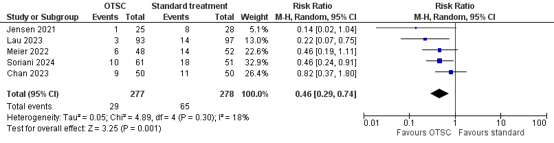
Figure 1. Forest plot of failure to control bleeding/failure of endoscopic hemostatic treatment: OTSC versus standard treatment
Z: p-value of overall effect; df: degrees of freedom; I2: statistical heterogeneity; CI: confidence interval
All-cause mortality <30 days (important outcome)
Five studies reported 30-day mortality (Jensen, 2021; Meier, 2022; Lau, 2023; Chan, 2023; Soriani, 2024). A meta-analysis is shown in Figure 2. The risk difference (RD) for the outcome measure ‘all-cause mortality < 30 days’ was -0.02 (95% CI: -0.06 to 0.01).
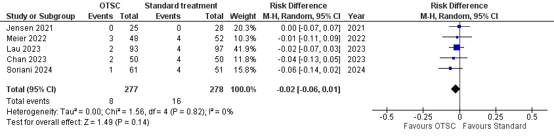
Figure 2. All-cause mortality < 30 days: OTSC versus standard treatment
Z: p-value of overall effect; df: degrees of freedom; I2: statistical heterogeneity; CI: confidence interval
Blood transfusion: number of RBC units (important outcome)
Three studies reported the mean number of transfused RBC units (Jensen, 2021; Meier, 2022; Lau, 2023; Chan, 2023). A meta-analysis was performed (Figure 3). The mean difference in RBC units was -0.38 (95% CI: -0.82 to 0.06).

Figure 3. Mean number of transfused RBC units: OTSC versus standard treatment
Z: p-value of overall effect; df: degrees of freedom; I2: statistical heterogeneity; CI: confidence interval
Complications - intestinal perforation (important outcome)
Meier (2022), Lau (2023), Jensen (2021), Soriani (2024) and Chan (2023) did not report on the outcome measure ‘intestinal perforation’ as a complication of endoscopic treatment. In the study by Soriani (2024) no complications related to endoscopic treatment occurred in either of the trial arms.
A systematic review of the literature was performed to answer the following question:
What are the favorable and unfavorable effects of OTCS, compared to standard endoscopic treatment, on failure of initial endoscopic hemostatic treatment, all-cause mortality <30 days, complications of OTSC placement, and blood transfusions in adult patients with gastric or duodenal peptic ulcer bleeding?
Table 1. PICO
| Patients | Adult patients with upper GI bleeding due to peptic ulcer disease (gastric or duodenal ulcer bleeding; Forest Ia, Ib, IIa) |
| Intervention | Over the scope clip (OTSC) treatment |
| Control | Standard endoscopic treatment |
| Outcomes | Failure |
| Other selection criteria |
Study design: systematic reviews (SR’s) of randomized controlled trials (RCT’s), RCT’s Articles in English |
Relevant outcome measures
The guideline panel considered failure of endoscopic hemostatic treatment (failure to control bleeding) as a critical outcome measure for decision making; and intestinal perforation rate, blood transfusion (mean number of RBC units) and all-cause mortality <30 days as important outcome measures for decision making.
The guideline panel defined the outcome measure "failure of endoscopic hemostatic treatment (failure to control bleeding)" as a composite endpoint comprising two components: (1) failure of initial treatment, meaning uncontrolled or ongoing bleeding during the first endoscopic attempt, and (2) rebleeding within 30 days following initially successful endoscopic hemostasis. This composite outcome was chosen to maximize the inclusion of relevant studies, given the variability in how outcomes were reported across the literature.
A priori, the guideline panel did not define the other outcome measures listed above but used the definitions provided in the studies.
The guideline panel defined the following minimal clinically important differences per outcome measure:
- Failure of endoscopic hemostatic treatment/ failure to control bleeding: 15%-20%; RR < 0.80 of >1.25.
- Intestinal perforation rate: risk difference (RD) ≥ 2%
- All-cause mortality <30 days: RD ≥ 5%
- Blood transfusions (number of transfused RBC units): ≥ 30% reduction compared to control group, or mean difference (MD) ≥ 2 units.
Search and select (Methods)
The databases Medline (via OVID) and Embase (via Embase.com) were searched with relevant search terms from the 1st of January 2004 until the 29th of May 2024. The detailed search strategy is listed under the tab ‘Literature search strategy’. The systematic literature search resulted in 60 hits. 17 studies were initially selected based on title and abstract screening. After reading the full text, 12 studies were excluded (see the exclusion table under the tab ‘Evidence tabellen’), and 5 studies were included.
- Chan S, Pittayanon R, Wang HP, Chen JH, Teoh AY, Kuo YT, Tang RS, Yip HC, Ng SKK, Wong S, Mak JWY, Chan H, Lau L, Lui RN, Wong M, Rerknimitr R, Ng EK, Chiu PWY. Use of over-the-scope clip (OTSC) versus standard therapy for the prevention of rebleeding in large peptic ulcers (size ≥1.5 cm): an open-labelled, multicentre international randomised controlled trial. Gut. 2023 Apr;72(4):638-643. doi: 10.1136/gutjnl-2022-327007. Epub 2022 Oct 28. PMID: 36307177; PMCID: PMC10086285.
- Jensen DM, Kovacs T, Ghassemi KA, Kaneshiro M, Gornbein J. Randomized Controlled Trial of Over-the-Scope Clip as Initial Treatment of Severe Nonvariceal Upper Gastrointestinal Bleeding. Clin Gastroenterol Hepatol. 2021 Nov;19(11):2315-2323.e2. doi: 10.1016/j.cgh.2020.08.046. Epub 2020 Aug 20. PMID: 32828873; PMCID: PMC7895857.
- Johnston JH, Jensen DM, Auth D. Experimental comparison of endoscopic yttrium-aluminum-garnet laser, electrosurgery, and heater probe for canine gut arterial coagulation. Importance of compression and avoidance of erosion. Gastroenterology. 1987 May;92(5 Pt 1):1101-8. doi: 10.1016/s0016-5085(87)91065-1. PMID: 3493938.
- Kuellmer A, Behn J, Meier B, Wannhoff A, Bettinger D, Thimme R, Caca K, Schmidt A. Over-the-scope clips are cost-effective in recurrent peptic ulcer bleeding. United European Gastroenterol J. 2019 Nov;7(9):1226-1233. doi: 10.1177/2050640619871754. Epub 2019 Sep 25. PMID: 31700635; PMCID: PMC6826528.
- Lau JY, Barkun A, Fan DM, Kuipers EJ, Yang YS, Chan FK. Challenges in the management of acute peptic ulcer bleeding. Lancet. 2013 Jun 8;381(9882):2033-43. doi: 10.1016/S0140-6736(13)60596-6. PMID: 23746903.
- Lau JYW, Li R, Tan CH, Sun XJ, Song HJ, Li L, Ji F, Wang BJ, Shi DT, Leung WK, Hartley I, Moss A, Yu KYY, Suen BY, Li P, Chan FKL. Comparison of Over-the-Scope Clips to Standard Endoscopic Treatment as the Initial Treatment in Patients With Bleeding From a Nonvariceal Upper Gastrointestinal Cause : A Randomized Controlled Trial. Ann Intern Med. 2023 Apr;176(4):455-462. doi: 10.7326/M22-1783. Epub 2023 Mar 7. PMID: 36877964.
- Meier B, Wannhoff A, Denzer U, Stathopoulos P, Schumacher B, Albers D, Hoffmeister A, Feisthammel J, Walter B, Meining A, Wedi E, Zachäus M, Pickartz T, Küllmer A, Schmidt A, Caca K. Over-the-scope-clips versus standard treatment in high-risk patients with acute non-variceal upper gastrointestinal bleeding: a randomised controlled trial (STING-2). Gut. 2022 Jul;71(7):1251-1258. doi: 10.1136/gutjnl-2021-325300. Epub 2022 Mar 23. PMID: 35321938.
- Schmidt A, Gölder S, Goetz M, Meining A, Lau J, von Delius S, Escher M, Hoffmann A, Wiest R, Messmann H, Kratt T, Walter B, Bettinger D, Caca K. Over-the-Scope Clips Are More Effective Than Standard Endoscopic Therapy for Patients With Recurrent Bleeding of Peptic Ulcers. Gastroenterology. 2018 Sep;155(3):674-686.e6. doi: 10.1053/j.gastro.2018.05.037. Epub 2018 May 24. PMID: 29803838.
- Soriani P, Biancheri P, Bonura GF, Gabbani T, Rodriguez de Santiago E, Dioscoridi L, Andrisani G, Luigiano C, Deiana S, Rainer J, Del Buono M, Amendolara R, Marino M, Hassan C, Repici A, Manno M. Over-the-scope clip as first-line treatment of peptic ulcer bleeding: a multicenter randomized controlled trial (TOP Study). Endoscopy. 2024 Sep;56(9):665-673. doi: 10.1055/a-2303-4824. Epub 2024 Apr 10. PMID: 38599622.
Risk of Bias tables
Risk of bias table for intervention studies (randomized controlled trials; based on Cochrane risk of bias tool and suggestions by the CLARITY Group at McMaster University)
Research question: What are the (un)favourable effects of OTSC compared to standard endoscopic treatment in patients with NVUGIB?
|
Study reference
(first author, publication year) |
Was the allocation sequence adequately generated?
Definitely yes Probably yes Probably no Definitely no |
Was the allocation adequately concealed?
Definitely yes Probably yes Probably no Definitely no |
Blinding: Was knowledge of the allocated interventions adequately prevented?
Were patients blinded?
Were healthcare providers blinded?
Were data collectors blinded?
Were outcome assessors blinded?
Were data analysts blinded?
Definitely yes Probably yes Probably no Definitely no |
Was loss to follow-up (missing outcome data) infrequent?
Definitely yes Probably yes Probably no Definitely no |
Are reports of the study free of selective outcome reporting?
Definitely yes Probably yes Probably no Definitely no |
Was the study apparently free of other problems that could put it at a risk of bias?
Definitely yes Probably yes Probably no Definitely no |
Overall risk of bias If applicable/necessary, per outcome measure
LOW Some concerns HIGH
|
|
Jensen, 2021 |
Definitely yes
Reason: allocation sequence was computer generated by biostatistician |
Definitely yes
Reason: sealed opaque envelopes were opened during urgent endoscopy |
Probably yes
Reason: Patients, managing primary care and ICU teams, outcome assessors were blinded (blinding of data collectors and analysts not reported) |
Definitely yes
Reason: there was no loss to follow-up. |
Definitely yes
Reason: all relevant outcomes were reported |
Definitely yes
Reason: No other problems noted |
LOW (all outcomes) |
|
Meier, 2022 |
Definitely yes
Reason: allocation sequence was computer generated; randomisation was done in blocks by 4 and stratified per centre |
Definitely yes
Reason: sealed envelopes were used and opened during endoscopy |
Definitely no
Reason: open-label trial (patients, all participating study members, data recording and analysts were not blinded). |
Definitely yes
Reason: there was no loss to follow-up |
Definitely yes
Reason: all relevant outcomes were reported |
Definitely yes
Reason: No other problems noted |
Some concerns (all outcomes)
Reason: open-label design, however hard outcomes |
|
Lau, 2023 |
Definitely yes
Reason: computer generated sequence, stratified in bloks of 4 and 10 in different centers
|
Definitely yes
Reason: sealed envelopes were used and opened during endoscopy |
Definitely no
Reason: ward physicians were not blind to the assigned treatment, blinding of data collectors and outcome assessors was not described
|
Definitely yes
Reason: loss to follow-up was infrequent and reasons were well described |
Definitely yes
Reason: all relevant outcomes were reported |
Definitely yes
Reason: No other problems noted |
Some concerns (all outcomes)
Reason: open-label design, however hard outcomes |
|
Chan, 2023 |
Definitely yes
Patients were randomised with an online randomisation form by a computer-generated random sequence in blocks of 10. |
Probably no
Reason: allocation concealment was not performed/ not described in the article (method of hemostasis was performed according to randomisation during endoscopy) |
Definitely no
Reason: open-label trial (endoscopists were not blinded); blinding of data collectors and outcome assessors was not described
|
Definitely yes
Reason: there was no loss to follow-up |
Definitely yes
Reason: all relevant outcomes were reported |
Definitely yes
Reason: No other problems noted |
Some concerns (all outcomes)
Reason: open-label design, however hard outcomes |
|
Soriani, 2024 |
Definitely yes
Reason: Patients were randomised by means of computer-generated random numerical series in blocks with lists of 20 numbers per center, randomization lists were distributed in every center |
Probably no
Reason: allocation concealment is not described |
Definitely no
Reason: patients and treating physicians or endoscopists were not blinded; blinding of data collectors and outcome assessors was not described |
Definitely yes
Reason: there was no loss to follow-up |
Definitely yes
Reason: all relevant outcomes were reported |
Definitely yes
Reason: No other problems noted |
Some concerns (all outcomes)
Reason: open-label design, however hard outcomes |
Beoordelingsdatum en geldigheid
Publicatiedatum : 24-08-2026
Beoordeeld op geldigheid : 24-08-2026
Algemene gegevens
De ontwikkeling/herziening van deze richtlijnmodule werd ondersteund door het Kennisinstituut van de Federatie Medisch Specialisten (www.demedischspecialist.nl/kennisinstituut) en werd gefinancierd door de Stichting Kwaliteitsgelden Medisch Specialisten (SKMS). De financier heeft geen enkele invloed gehad op de inhoud van de richtlijnmodule.
Samenstelling werkgroep
Voor het ontwikkelen van de richtlijnmodule is in 2023 een multidisciplinaire werkgroep ingesteld, bestaande uit vertegenwoordigers van relevante specialismen (zie hiervoor de Samenstelling van de werkgroep) die betrokken zijn bij de zorg voor patiënten met (acute) tractus digestivus bloedingen.
Werkgroep
- Dr. I.L. (Lisanne) Holster (voorzitter), MDL-arts, Maasstad Ziekenhuis (NVMDL)
- Dr. E.T.T.L. (Eric) Tjwa, MDL-arts, Radboud UMC (NVMDL)
- Dr. L.G. (Lisette) Capelle, MDL-arts, Meander Medisch Centrum Amersfoort (NVMDL)
- Dr. N.L. (Nicolette) de Groot, MDL-arts, Rode Kruis Ziekenhuis Beverwijk (NVMDL)
- Dr. J.F. (Jilling) Bergmann, MDL-arts, HagaZiekenhuis (NVMDL)
- Dr. J.J. (Jurjen) Boonstra, MDL-arts, Leids Universitair Medisch Centrum (NVMDL)
- Dr. C.M.J. (Lia) Goltstein, AIOS MDL-ziekten, Jeroen Bosch ziekenhuis (NVMDL)
- Drs. T.E.A. (Tychon) Geeraedts, Radboud UMC (NVvR)
Klankbordgroep
- Dr. K.H. (Klaas) de Groot, internist-intensivist, Franciscus en Vlietland te Rotterdam en Schiedam (NVIC)
- Drs. K.S. (Kay) van Wonderen, SEH-arts, Treant (NVSHA)
- Dr. C. (Charlotte) van Noord, internist, Maasstad Ziekenhuis (NIV)
Met ondersteuning van
- Dr. E. V. (Ekaterina) Baranova-van Dorp, adviseur, Kennisinstituut van de Federatie Medisch Specialisten
- Dr. N. (Nikita) van der Zwaluw, senior adviseur, Kennisinstituut van de Federatie Medisch Specialisten (tot 22-09-2025)
- E. (Esther) van der Bijl, medisch informatiespecialist, Kennisinstituut van de Federatie Medisch Specialisten
Belangenverklaringen
Een overzicht van de belangen van werkgroepleden en het oordeel over het omgaan met eventuele belangen vindt u in onderstaande tabel. De ondertekende belangenverklaringen zijn op te vragen bij het secretariaat van het Kennisinstituut van de Federatie Medisch Specialisten via secretariaat@kennisinstituut.nl.
Gemelde (neven)functies en belangen werkgroepleden
|
Naam |
Hoofdfunctie |
Nevenwerkzaamheden |
Persoonlijke Financiële belangen |
Persoonlijke Relaties |
Extern gefinancierd onderzoek |
Intell, belangen en reputaties |
Overige belangen |
Actie |
|
Eric Tjwa |
MDL-arts Radboudumc 0.9 fte |
Geen |
Geen |
Geen |
Geen |
Geen |
Geen |
geen restrictie |
|
Jilling Bergmann |
MDL-arts in Haga Ziekenhuis Den Haag |
MDL-arts DC Klinieken Lairesse |
Geen |
Geen |
Geen |
Geen |
Geen |
geen restrictie |
|
Jurjen Boonstra |
Maag-, Darm-, Leverarts Leids Universitair Medisch Centrum (LUMC)
1.0 fte |
Redactieraad Nederlands tijdschrift voor Oncologie |
Geen |
Neen |
1. TRIASSIC studie (gerandomiseerde studie ESD vs TAMIS rectum laesies >2cm) - darmkanker- gesponsord door ZonMW, geen projectleider* 2. RUBATO trial (studie naar patient preferentie follow-up na T1 CRC), vragenlijst onderzoek onder patienten en dokters, na darmkanker, gesponsord door ZonMW, geen projectleider**
* ZonMw - 'A multicentre, randomised controlled trial comparing Transanal minimal invAsive Suergery (TAMIS) and and endoscopic Submucosal dIsseCtion (ESD) for resection of non-pedunculated rectal lesions.'- Geen projectleider ** ZonMw - 'ExploRing preferences and attitUdes of Both patients And doctors TOwards surveillance after local resection of T1 colorectal cancer: the RUBATO-study' - Geen Projectleider |
Geen |
Geen |
geen restrictie |
|
Lia Goltstein |
AIOS Maag-, Darm- en Leverziekten (betaald) - Radboudumc AIOS Interne geneeskunde, vooropleiding MDL (betaald) - Jeroen Bosch ziekenhuis |
Arts-onderzoeker Evidence based management of Gastrointestinal angiodysplasias (onbetaald) - Radboudumc |
Geen persoonlijke financiële belangen. |
Geen persoonlijke relaties die baat kunnen hebben bij een bepaalde uitkomst van het advies. |
De SAIPAN studie* (binnen mijn promotietraject; Clinicaltrials. Gov ID: NCT02874326) - werd gesponsord door ZonMw - Geen projectleider
* 'Effectiveness of Somatostatin Analogues in Patients with hereditary hemorrhagic telangiectasia and symptomatic gastrointestinal bleeding, the SAIPAN-trial: a multicenter, randomized, open-label, parallel-group, superiority trial' |
Geen intellectuele belangen of reputatie die baat hebben/heeft bij een bepaalde uitkomst. |
Niet van toepassing |
geen restrictie |
|
Lisanne Holster (vz.) |
NVMDL MDL-arts in het Maasstad ziekenhuis |
Geen |
Geen |
Geen |
Geen |
Geen |
Geen |
geen restrictie |
|
Lisette Capelle |
MDL-arts in Meander Medisch centrum |
Geen |
Geen |
Geen |
Geen |
Geen |
Geen |
geen restrictie |
|
Nicolette de Groot |
MDL-arts zelfstandig werkzaam in RKZ Beverwijk |
Geen |
Geen |
Nee |
Nee |
Niet van toepassing |
Niet van toepassing |
geen restrictie |
|
Tychon Geeraedts |
Interventieradioloog bij Radboud UMC |
Geen |
Geen |
Geen |
Geen |
Geen |
Geen |
geen restrictie |
Gemelde (neven)functies en belangen klankbordgroepleden
|
Naam |
Hoofdfunctie |
Nevenwerkzaamheden |
Persoonlijke Financiële belangen |
Persoonlijke Relaties |
Extern gefinancierd onderzoek |
Intell, belangen en reputaties |
Overige belangen |
Actie |
|
Charlotte van Noord |
Internist-acute geneeskunde Maasstad Ziekenhuis |
sinds 30 oktober 2025 geen voorzitter meer |
Geen |
Niet van toepassing |
Niet van toepassing |
Niet van toepassing |
Niet van toepassing |
geen restrictie |
|
Kay van Wonderen |
SEH-arts, Treant |
Penningmeester NVSHA Vacatiegelden |
Geen |
Geen |
Geen |
Geen |
Geen |
geen restrictie |
|
Klaas de Groot |
Internist-intensivist, Franciscus en Vlietland te Rotterdam en Schiedam |
Commissie Richtlijnontwikkeling NVIC, onbetaald FMS - kennisinstituut, clusterstuurgroep IC, onbetaald |
Geen financieel belang |
Geen |
REMAP-CAP - ZonMw - Pneumonie behandeling - Geen projectleider - REMAP-CAP (tot januari 2025 locale hoofdonderzoeker) |
Geen |
Geen |
geen restrictie |
Inbreng patiëntenperspectief
Inbreng patiëntenperspectief
De werkgroep besteedde aandacht aan het patiëntenperspectief door het uitnodigen van Patiëntenfederatie Nederland voor de schriftelijke knelpunteninventarisatie. Het verslag hiervan is besproken in de werkgroep. De conceptrichtlijn is tevens ter commentaar voorgelegd aan Patiëntenfederatie Nederland. De paragraaf ‘waarden en voorkeuren van patiënten’ binnen de overwegingen is door Patiëntenfederatie Nederland opgesteld.
Kwalitatieve raming van mogelijke financiële gevolgen in het kader van de Wkkgz
Bij de richtlijnmodule voerde de werkgroep conform de Wet kwaliteit, klachten en geschillen zorg (Wkkgz) een kwalitatieve raming uit om te beoordelen of de aanbevelingen mogelijk leiden tot substantiële financiële gevolgen. Bij het uitvoeren van deze beoordeling is de richtlijnmodule op verschillende domeinen getoetst (zie het stroomschema bij Werkwijze).
|
Module |
Uitkomst raming |
Toelichting |
|
Module Niet-variceuze bovenste tractus digestivus bloedingen |
||
|
Submodule Behandeling met over-the-scope clips |
geen financiële gevolgen |
Hoewel uit de toetsing volgt dat de aanbeveling(en) breed toepasbaar zijn (>40.000 patiënten), volgt ook uit de toetsing dat het geen nieuwe manier van zorgverlening of andere organisatie van zorgverlening betreft, het geen toename in het aantal in te zetten voltijdsequivalenten aan zorgverleners betreft en het geen wijziging in het opleidingsniveau van zorgpersoneel betreft. Er worden daarom geen substantiële financiële gevolgen verwacht. |
Werkwijze
Voor meer details over de gebruikte richtlijnmethodologie verwijzen wij u naar de Werkwijze. Relevante informatie voor de ontwikkeling/herziening van deze richtlijnmodule is hieronder weergegeven.