
Tranexaminezuur
Uitgangsvraag
Wat is de aanbevolen strategie voor het gebruik van tranexaminezuur bij patiënten met acute gastro-intestinale bloedingen?
Aanbeveling
Geef niet routinematig tranexaminezuur (intraveneus of via een sonde) bij patiënten met gastro-intestinale bloedingen.
Overwegingen
Balans tussen gewenste en ongewenste effecten
Er is een systematische literatuurzoekactie verricht naar de effecten van tranexaminezuur (intraveneus en oraal via een sonde toegediend) in combinatie met standaardbehandeling vergeleken met standaardbehandeling plus placebo bij patiënten met acute gastro-intestinale bloedingen. De cruciale uitkomstmaten waren mortaliteit (gedurende de hele follow-up en binnen de eerste 5 dagen na de endoscopische behandeling) en incidentie van trombo-embolische complicaties.
Voor tranexaminezuur intraveneus is er geen verschil in mortaliteit binnen de eerste 5 dagen na de endoscopische behandeling (GRADE: hoog) en waarschijnlijk geen verschil in mortaliteit gedurende de hele follow-up (GRADE: redelijk). Er is waarschijnlijk ook geen verschil in het aantal trombo-embolische complicaties (GRADE: redelijk).
Voor orale tranexaminezuur (via een sonde toegediend) konden geen eenduidige conclusies over mortaliteit en incidentie van trombo-embolische complicaties worden getrokken (GRADE: zeer laag).
De belangrijke uitkomstmaten waren recidief bloedingen (re-bleeding), bloedtransfusie en ziekenhuisopnameduur. Tranexaminezuur intraveneus lijkt mogelijk geen verschil te maken voor de recidief bloedingen (GRADE: laag) en maakt waarschijnlijk niet tot nauwelijks verschil in bloedtransfusies ten opzichte van placebo (GRADE: redelijk). Tranexaminezuur intraveneus lijkt mogelijk tot een kortere opnameduur (GRADE: laag).
Het is onduidelijk of tranexaminezuur oraal een effect op de recidief bloedingen (re-bleeding) heeft, de conclusie was zeer onzeker (GRADE: zeer laag). Er bestaat een kennislacune over de effecten van tranexaminezuur oraal op bloedtransfusies en opnameduur vanwege de afwezigheid van beschikbare data. De bewijskracht kon niet worden bepaald.
Kwaliteit van bewijs
Intraveneus tranexaminezuur
De overall kwaliteit van bewijs is redelijk. Dit betekent dat we redelijk zeker zijn over het gevonden geschatte effect van de cruciale uitkomstmaten.
Er is afgewaardeerd vanwege:
- Inconsistentie: inconsistentie van de resultaten.
Enterale tranexaminezuur
De overall kwaliteit van bewijs is zeer laag. Dit betekent dat we zeer onzeker zijn over het gevonden geschatte effect van de cruciale uitkomstmaten.
Er is afgewaardeerd vanwege:
- Risk of Bias: methodologische beperkingen van de geïncludeerde studies.
- Imprecisie: ernstige onnauwkeurigheid, omdat het betrouwbaarheidsinterval de grens van klinische relevantie overschrijdt, en vanwege een zeer klein aantal events bij een kleine steekproefgrootte.
Op basis van de gevonden resultaten, waarbij we mortaliteit als belangrijkste uitkomstmaat hebben gekozen, hebben we geen bewijs gevonden dat tranexaminezuur intraveneus zou moeten worden toegepast bij patiënten met gastro-intestinale bloedingen. De grootste trial op dit gebied is gedaan door Roberts et al. (2020), HALT-IT trial, waarbij patiënten werden gerandomiseerd tussen tranexaminezuur intraveneus of placebo. Er werd een mortaliteitsrisico gevonden van 3.7% in de interventie groep ten opzichte van 3.8 % in de placebogroep).
Er zijn nog enkele kleine studies gedaan die hebben gekeken naar tranexaminezuur oraal (via een sonde toegediend) (Saidi, 2017; Karadaş, 2020) welke mogelijk een positief effect liet zien op de mortaliteit, echter dienen deze resultaten voorzichtig te worden geïnterpreteerd vanwege methodologische beperkingen van de studies en de kleine steekproefgrootte.
In 2024 is er nog een meta-analyse gepubliceerd, waarbij er ook verouderde studies (vóór 2005) werden meegenomen in de resultaten (O’ Donnell, 2024). Maar ook deze meta-analyse toonde geen gunstig effect van tranexaminezuur op de mortaliteit (RR: 0.86, 95% CI (0.74–1.00), P=0.05). Er werd wel benoemd dat de uitkomsten van deze meta-analyse met name werden gedragen door de resultaten van de grote HALT-IT trial.
Kijkende naar andere relevante uitkomstmaten zoals voor het risico op een recidief bloeding (re-bleeding) hebben we eveneens geen positief effect kunnen vinden voor het gebruik van tranexaminezuur. Enkel Kumar (2024) toonde een significante reductie van het aantal re-bleedings (risk reduction 0.53 (95% CI: 0.40-0.70), echter dit betrof een studie voor enkel patiënten met onderliggende levercirrose. Het is dus niet duidelijk of we deze bevinding kunnen extrapoleren naar de gehele populatie van patiënten met gastro-intestinale bloedingen.
Het gebruik van tranexaminezuur kan ook nadelige effecten hebben. Tranexaminezuur heeft een anti-fibrinolytisch effect en kan derhalve bijdragen aan stolselvorming en daarmee een hoger risico geven op trombo-embolische events.
Drie studies hebben hiernaar gekeken (Roberts, 2020; Kumar, 2024; Tavakoli, 2018) echter vonden geen aanwijzingen dat het risico hierop significant verhoogd is in de groep met patiënten die tranexaminezuur hebben toegediend gekregen.
Tenslotte is er nog gekeken naar secundaire uitkomstmaten namelijk recidief bloedingen, bloedtransfusies en ziekenhuisopnameduur. Ook hierin vonden we geen duidelijke voordelen voor het gebruik van tranexaminezuur.
Waarden en voorkeuren van patiënten (en eventueel hun naasten/verzorgers)
Patiënten willen vooral dat een behandeling daadwerkelijk bijdraagt aan de best mogelijke uitkomst van hun bloeding: een zo laag mogelijk risico op overlijden, een zo klein mogelijke kans op een terugkerende bloeding en een zo kort mogelijke opnameduur.
Omdat tranexaminezuur deze uitkomsten niet aantoonbaar verbetert, vinden patiënten het belangrijk dat kritisch wordt afgewogen of het gebruik ervan toegevoegde waarde heeft. Tegelijk hechten patiënten veel waarde aan veiligheid. Met name het risico op trombo-embolische complicaties weegt zwaar, gezien de mogelijke ernstige en blijvende gevolgen. Patiënten vinden dat dit aspect nadrukkelijk moet worden meegenomen in de besluitvorming. En als dit, gezien de acute situatie, enigszins mogelijk is willen patiënten (en naasten) goed geïnformeerd worden over de voortgang en de voor- en nadelen van de behandeling.
Kostenaspecten
Roberts (2021) heeft een kosteneffectiviteitsanalyse gedaan met de resultaten uit de HALT-IT trial. Hieruit concludeerden zij dat de kosten tussen de patiëntengroepen die wel of geen tranexaminezuur gebruikten niet significant verschilden.
De interventie (gebruik van tranexaminezuur intraveneus naast de standaardbehandeling) levert derhalve waarschijnlijk geen significant verschil in kosten ten opzichte van de alleen standaardbehandeling bij gastro-intestinale bloedingen. Dit weegt niet op tegen het verschil in effectiviteit, omdat er geen verschillen in uitkomstmaten zijn bij het gebruik van tranexaminezuur intraveneus naast de standaardbehandeling.
Gelijkheid ((health) equity/equitable)
Het wel of niet gebruiken van tranexaminezuur leidt niet tot gezondheidsongelijkheid. Het middel tranexaminezuur is in alle ziekenhuizen in Nederland verkrijgbaar en de kosten er van zijn relatief laag. Ook de toedieningsvorm, namelijk intraveneus, is voor nagenoeg iedere patiënt toepasbaar.
Aanvaardbaarheid
Ethische aanvaardbaarheid
Er zijn geen ethische bezwaren voor het wel of niet toedienen van tranexaminezuur.
Duurzaamheid
Bij deze interventie spelen geen evidente duurzaamheidsaspecten een rol.
Haalbaarheid
Het toedienen van tranexaminezuur bij deze patiëntengroep lijkt een goed haalbare interventie.
Rationale van de aanbeveling: weging van argumenten voor en tegen de interventies
Het toedienen van tranexaminezuur bij patiënten met gastro-intestinale bloedingen leidt niet tot afname van de mortaliteit. Daarnaast zien we geen positief effect op andere secundaire eindpunten zoals recidief bloeding, bloedtransfusiebehoefte en opnameduur. In de grootste trial van tranexaminezuur was het risico op arteriële trombo-embolische events (myocardinfarct of CVA) vergelijkbaar tussen de tranexaminezuur- en placebogroep, terwijl veneuze trombo-embolieën (diepe veneuze trombose of longembolie) vaker voorkwamen bij het gebruik van tranexaminezuur.
Derhalve wordt het routinematig toedienen van tranexaminezuur niet aanbevolen.
Eindoordeel:
Sterke aanbeveling tegen (Niet doen).
Onderbouwing
Currently, tranexamic acid (TXA) is rarely used by gastroenterologists, but some patients already receive TXA in the ambulance and it is also sometimes used in the intensive care setting. There is also regular discussion about the use of tranexamic acid in patients with an ongoing bleeding where there are few or no other treatment options. In patients with a gastrointestinal bleeding, there are conflicting results in the scientific field. However, tranexamic acid is often used with positive results in the treatment of trauma or during surgery.
Summary of Findings
|
Outcome
|
Study results and measurements Timeframe |
Absolute effect estimates |
Certainty of the evidence (Quality of evidence) |
Summary |
|
|
|
|
||||
|
Intravenous tranexamic acid |
|||||
|
Mortality (critical) |
Based on data from 12843 participants in 3 studies Follow-up 28 days, 1 month, 6 weeks |
Tavakoli (2018): RD -0.07 (95% CI: -0.15, 0.01) Roberts (2020): RD 0.00 (95% CI: -0.01, 0.01) Kumar (2024): RD -0.07 (95% CI: -0.14, -0.00) |
Moderate Due to serious inconsistency1 |
The use of intravenous tranexamic acid probably results in little or no difference in mortality when compared to placebo in patients with GI bleeding. (Tavakoli 2018, Roberts 2020, Kumar 2024) |
|
|
Mortality in the first 5 days after endoscopic treatment (critical) |
Based on data from 12537 participants in 2 studies
|
Roberts (2020): RD -0.00 (95% CI: -0.01, 0.01) Kumar (2024): RD -0.02 (95% CI: -0.05, 0.01) |
High |
The use of intravenous tranexamic acid results in little or no difference in mortality within the first 5 days of the endoscopic treatment, when compared to placebo in patients with GI bleeding. (Roberts 2020, Kumar 2024) |
|
|
Thromboembolic events (critical) |
Based on data from 12804 participants in 3 studies Follow-up 28 days, 1 month, 6 weeks |
Roberts (2020): RD 0.00 (95% CI: -0.00, 0.01) Kumar (2024): RD 0.00 (95% CI: -0.01, 0.01) Tavakoli (2018): RD -0.03 (95% CI: -0.06, 0.01) |
Moderate Due to serious inconsistency1 |
The use of intravenous tranexamic acid probably results in little or no difference in thromboembolic events, when compared to placebo in patients with GI bleeding. (Tavakoli 2018, Roberts 2020, Kumar 2024) |
|
|
Re-bleeding (important)
|
Based on data from 12814 participants in 3 studies Follow up 3 days, 5 days |
Roberts (2020): RD -0.00 (95% CI: -0.01, 0.00) Kumar (2024): RD 0.07 (95% CI: -0.12, -0.02) Tavakoli (2018): RD -0.03 (95% CI: -0.09, 0.04) |
Low Due to serious indirectness2, Due to serious imprecision3 |
The use of intravenous tranexamic acid results in little to no difference in re-bleeding rate in the first days after endoscopic treatment, when compared to placebo in patients with GI bleeding. (Tavakoli 2018, Roberts 2020, Kumar 2024) |
|
|
Blood transfusion (important) |
Based on data from 9082 participants in 3 studies Follow-up 1 month, 28 days, 6 weeks |
Tranexamic acid Placebo |
Moderate Due to serious inconsistency1 |
The use of intravenous tranexamic acid probably results in little or no difference in blood transfusion rate, when compared to placebo in patients with GI bleeding. (Tavakoli 2018, Roberts 2020, Kumar 2024) |
|
|
939 per 1000 930 per 1000 Difference: 9 fewer per 1000 (CI 95% 75 fewer — 56 more) |
|||||
|
Length of hospital stay (important) |
Based on data from 877 participants in 2 studies Follow-up 1 month, 42 days |
Kumar (2024): MD -1.10 (95%CI: -1.93, -0.27) Tavakoli (2018): MD -0.36 (95% CI: -0.74, 0.02) |
Low Due to serious indirectness2, Due to serious imprecision3 |
The use of intravenous tranexamic acid may reduce the length of hospital stay when compared to placebo in patients with GI bleeding. (Tavakoli 2018, Kumar 2024) |
|
|
Enteral tranexamic acid (via nasogastric tube) |
|||||
|
Mortality (critical) |
Based on data from 288 participants in 2 studies Follow-up 4 weeks, 30 days |
Karadaş (2020): RD -0.02 (95%CI: -0.12; 0.08) Saidi (2017): RD -0.08 (95% CI: -0.18, 0.02)
|
Very low Due to serious risk of bias1, due to very serious imprecision2 |
The evidence is very uncertain about the effect of enteral tranexamic acid on mortality, when compared with placebo in patients with GI bleeding.
(Saidi 2017, Karadaş 2020) |
|
|
Thrombo-embolic events (critical) |
Based on data from 288 participants in 2 studies Follow up 4 weeks, 30 days |
Karadaş (2020): RD 0.03 (95% CI: -0.02, 0.08) Saidi (2017): RD 0.00 (95% CI: -0.03, 0.03) |
Very low Due to serious risk of bias1, Due to very serious imprecision2 |
The evidence is very uncertain about the effect of enteral tranexamic acid on thrombo-embolic events, when compared with placebo in patients with GI bleeding.
(Saidi 2017, Karadaş 2020) |
|
|
Re-bleeding (important) |
Based on data from 288 participants in 2 studies Follow up 4 weeks, 30 days |
Karadaş (2020): RD 0.01 (95%CI: -0.08, 0.11) Saidi (2017): RD -0.13 (95% CI: -0.24, -0.02) in favor of TXA |
Very low Due to serious risk of bias1, Due to serious imprecision2, Due to serious inconsistency3 |
The evidence is very uncertain about the effect of enteral tranexamic acid on re-bleeding, when compared with placebo in patients with GI bleeding. (Saidi 2017, Karadaş 2020) |
|
|
Blood transfusion (important) |
- |
- |
No GRADE (no evidence was found) |
No conclusions could be drawn about the effect of enteral tranexamic acid on blood transfusion, compared to placebo in patients with GI bleeding, because no evidence was found. |
|
|
Length of hospital stay (important) |
- |
- |
No GRADE (no evidence was found) |
No conclusions could be drawn about the effect of enteral tranexamic acid on the length of hospital stay, compared to placebo in patients with GI bleeding, because no evidence was found. |
|
Intravenous TXA: 1 Point estimates vary greatly. 2 Difference in the outcome definition (duration of observation). 3 Confidence interval crosing the upper or lower limit of minimally clinically important difference; wide confidence intervals.
Enteral TXA: 1Inadequate/lack of blinding of participants and personnel, resulting in potential for performance bias, Inadequate/lack of blinding of outcome assessors, resulting in potential for detection bias. 2Wide confidence intervals; low number of patients and number of events; confidence interval crosing the upper or lower limit of minimally clinically important difference. 3The direction of the effect is not consistent between the included studies.
Description of studies
A total of 5 randomized controlled trials (RCTs) were included in the analysis of literature. Three studies investigated intravenous tranexamic acid (TXA) (Tavakoli, 2018; Roberts, 2020; Kumar, 2024), and two studies reported the effectiveness of TXA solution administered via nasogastric tube (Karadaş, 2020; Saidi, 2017). Tavakoli (2018) used a combination of intravenous and enteral TXA (via nasogastric tube) in one of the three trial arms.
In all studies patients in the intervention and control groups received standard treatment for acute gastrointestinal (GI) bleeding. Most trials included patients with an acute upper GI bleeding, with a smaller percentage of patients with a lower GI bleeding.
Intravenous TXA
Tavakoli (2018) was a single-center, double-blinded RCT conducted in Rasoul-e-Akram Hospital in Tehran (Iran). All adult patients admitted to the emergency room or ICU with signs of an acute GI bleeding were eligible. In total, 410 patients with GI bleeding were enrolled and allocated in three groups (intravenous TXA, intravenous TXA combined with enteral TXA (administered via nasogastric tube), and placebo (normal saline)). The most frequent cause of upper GI bleeding in the study was a duodenal ulcer (30.7%). A diverticular bleeding was found during colonoscopy in 4.9% of the patients. The outcomes were assessed at 72 hours after admission and after 1 month since discharge from the hospital.
Roberts (2020) described results of an international, multi-centre, randomized, double-blinded, placebo-controlled trial (HALT-IT) performed in 164 hospitals in 15 countries (the UK, Pakistan, Nigeria, Egypt, Malaysia, Georgia, Romania, Nepal, Sudan, Saudi Arabia, Spain, Ireland, Albania, Papua New Guinea, and Australia). In total, 12.009 patients with signs of a GI bleeding were enrolled and randomly assigned to intravenous TXA (n=5.994, 49.9%) or placebo groups (n=6.015, 50.1%). 11% of patients had an acute lower GI bleeding and 89% an upper GI bleeding. The outcomes were assessed at 24 hours, 5 days and 28 days after randomization.
Kumar (2024) conducted a single-center, double-blinded, randomized controlled trial at the Institute of Liver & Biliary Sciences (ILBS) in New Delhi (India). In total, 600 patients with liver cirrhosis due to any cause and an acute upper GI bleeding were randomized to receive intravenous TXA or placebo, next to standard treatment. The most common sources of upper GI bleeding in this trial were esophageal and gastric varices (approximately 69% and 9%, respectively). The primary outcome measure was the proportion of patients developing 5-day treatment failure (i.e., the absence of control of bleeding or re-bleeding within 5 days). Outcomes were assessed at 5 days and 6 weeks after randomization.
Enteral TXA
Saidi (2017) was a prospective, placebo-controlled trial of TXA administration via nasogastric tube in patients with gastric or duodenal ulcer bleeding. In total, 131 patients were enrolled in the study, which was conducted at the Hazrat Rasool General Hospital, Tehran (Iran). TXA solution and placebo (normal saline) were administered via nasogastric tube. Outcomes were measured within 30 days after initial intervention.
Karadaş (2020) was a prospective, single-center, double-blinded, placebo-controlled, randomized trial in patients with an acute upper GI bleeding (excluding variceal bleeding). The trial was conducted in an academic emergency department (ED) in Turkey. Initially 162 patients were enrolled; after exclusion of patients with variceal bleeding, 157 patients were analyzed. In most cases (65%) the bleeding was due to peptic ulcer disease. TXA solution and placebo (normal saline) were administered via nasogastric tube. Outcomes were assessed 30 days after initial presentation to the ED by telephone interviews.
Important study characteristics and results are summarized in Table 2. The assessment of risk of bias is summarized in Table ‘risk of bias’ under the tab ‘Evidence tabellen’.
Table 2. Characteristics of included studies
|
Study |
Participants |
Inclusion/ exclusion criteria |
Comparison |
Follow-up |
Outcome measures |
Risk of bias (per outcome measure)* |
|
Intravenous tranexamic acid |
||||||
|
Tavakoli 2018 |
N at baseline Intervention 1: 138 Intervention 2: 133 Control: 139
Age (mean, SD) Intervention 1: 60.5 ± 15.4 Intervention 2: 56.7 ± 20.4 Control: 59.1 ± 15.7
Sex (male), n (%) Intervention 1: 85 (61.6) Intervention 2: 97 (72.9) Control: 92 (66.2)
Source of GI bleeding*, n (%) - upper GI: n.a., 30.7% duodenal ulcer - lower GI: n.a.
|
Inclusion criteria: Adult patients with GI Bleeding
Exclusion criteria: age <18 years, pregnancy, lactation, oral contraceptive pill use, history of a recent (12 months) thromboembolic disease, malignancy, end-stage renal disease and/or nephrotic syndrome, underlying cardiac arrhythmia with anticoagulat use; oral body temperature > 38C, vision impairment, seizures, severe liver disease and/or history of variceal bleeding, unobtainable informed consent |
Intervention 1: 1 g i.v. TXA every 6h + standard of care
Intervention 2: 1 g start-dose TXA via nasogastric tube, followed by i.v. TXA + standard of care
Control: placebo (sodium chloride 0.9% i.v. and via nasogastric tube) + standard of care
|
24-72 hours + 1 month where possible |
Mortality (72 hrs), n % Intervention 1: 1/138 (0.7) Intervention 2: 2/133 (1.5) Control: 6/139 (4.3)
Mortality rate (at 1 month), n (%) Intervention 1: 9/115 (7.8) Intervention 2: 11/115 (9.6) Control: 18/119 (15.1)
Re-bleeding (72 hrs), n (%) Intervention 1: 9/138 (6.5) Intervention 2: 11/133 (8.3) Control: 13/139 (9.4)
Re-bleeding (1 month), n (%) Intervention 1: 2/133 (1.5) Intervention 2: 1/131 (0.8) Control: 1/138 (0.7)
Thromboembolic events (at 1 month), n (%) Intervention 1: 1/137 (0.7) Intervention 2: 0/132 (0.0) Control: 5/138 (3.6)
Blood transfusion, n (%) Intervention1: 2/133 (1.5) Intervention 2: 1/131 (0.8) Control: 1/138 (0.7)
Length of hospital stay, mean±SD (days) Intervention1: 3.50 ± 1.21 Intervention 2: 4.01 ± 1.66 Control: 3.86 ± 1.92 |
Some concerns
(all-cause mortality at 1 month; thromboembolic events at 1 month, need for transfusion at 1 month, re-bleeding at 1 month)
LOW (outcomes measured within 72 hrs of admission)
|
|
Roberts 2020 |
N at baseline Intervention: 5994 Control: 6015
Age (mean, SD) Intervention: 58.1 (17.0) Control: 58.1 (17.0)
Sex (male), n (%) Intervention: 3852 (64) Control: 3891 (65)
Source of GI bleeding, n (%) - upper GI Intervention: 5320 (89) Control: 5361 (89) - lower GI Intervention: 674 (11) Control:654 (11) - haematemesis Intervention: 4285 (72) Control: 4240 (71) - melaena or fresh blood per rectum Intervention: 4573 (76) Control: 4626 (77) - suspected variceal bleeding Intervention: 2694 (45) Control: 2739 (46) |
Inclusion criteria: patients aged >=16 years or >=18 years (adult age according to law in participating countries) with acute GI bleeding and if the responsible clinician was substantially uncertain whether to use TXA
Exclusion criteria: patients in whom the responsible clinician considered there to be a clear indication for TXA (e.g. traumatic haemorrhage) or contraindication to TXA (e.g. history of convulsions, thromboembolic disease) were excluded |
Intervention: 1 g TXA added to a 100 mL infusion bag of 0.9% sodium chloride and infused by slow intravenous injection over 10 min, followed by a maintenance dose of 3 g TXA added to 1 L of any isotonic intravenous solution and infused at 125 mg/h for 24 h + standard of care
Control: placebo (sodium chloride 0.9%) added to a 100 mL infusion bag of 0.9% sodium chloride and infused by slow intravenous injection over 10 min, followed by placebo added to 1 L of any isotonic intravenous solution and infused at 125 mg/h for 24 h + standard of care |
28 days after randomization or discharge from the hospital, whichever occurred first |
Mortality at 28 days, n (%) Intervention: 564 (9.5) Control: 548 (9.2) RR (95% CI) 1.03 (0.92–1.16)
Mortality due to bleeding within 5 days of randomization, n (%) Intervention: 222 (3.7) Control: 226 (3.8) RR 0.99 (0.82 - 1.18)
Thromboembolic event, n (%) Intervention: 86/5952 (1.4) Control: 72/5977 (1.2) RR (95% CI) 1.20 (0.88 - 1.64)
Re-bleeding within 5 days of randomization, n(%) Intervention: 287 (4.8) Control: 315 (5.3) RR (95% CI): 0.91 (0.78 - 1.07)
Blood transfusion, n (%) Intervention: 4076/5951 (68.5) Control: 4129/5978 (69.1) RR (95% CI) 0.99 (0.97 to 1.02)
Length of hospital stay, mean: n.a. |
LOW (all outcomes) |
|
Kumar 2024 |
N at baseline Intervention: 300 Control: 300
Age (mean, SD) Intervention: 51.4 ± 11.7 Control: 51.9 ± 11.4
Sex (male), n (%) Intervention: 264 (88) Control: 252 (84)
Source of GI bleeding*, n (%) - upper GI: 600 (100) - lower GI: 0 (0)
- esophageal varices Intervention: 208 (69.3) Control: 206 (68.7)
- gastric varices Intervention: 28 (9.3) Control: 29 (9.7)
- esophageal and gastric varices Intervention: 23 (7.7) Control: 30 (10.0)
- post-EVL esophageal ulcers Intervention: 13 (4.3) Control: 19 (6.3)
- duodenal ulcer Intervention: 11 (3.7) Control: 9 (3.0)
- gastric ulcer Intervention: 8 (2.7) Control: 3 (1.0)
- GAVE Intervention: 8 (2.7) Control: 4 (1.3)
- no source found on initial endoscopy Intervention: 1 (0.3) Control: 0 (0.0)
Etiology of underlying liver disease, n (%) Intervention: alcohol/NASH//HBV/HCV/others 135 (45.0)/ 104 (34.7)/ 11 (3.7)/ 21 (7.0)/ 29 (9.6) Control: alcohol/NASH//HBV/HCV/others 136 (45.3)/ 99 (33.0)/20 (6.7)/ 18 (6.0)/ 27 (9.0) |
Inclusion criteria: patients with acute upper GI bleeding and Child-Turcotte-Pugh class B and C cirrhosis of any etiology and an acute upper GI bleeding
Exclusion criteria: no cirrhosis, CTP-A cirrhosis, known allergy to TXA, disseminated intravascular coagulation, chronic kidney disease requiring dialysis, recent (in the past 6 months) cerebrovascular accident, thrombotic events (PVT/hepatic vein thrombosis/other sites thrombosis), history of seizures, history of myocardial infarction, pregnancy and lactation
|
Intervention: 1 g TXA in 100 mL normal saline infused slowly over 10 minutes, followed by 3 g TXA in 1000 mL normal saline over 24 hrs + standard care
Control: placebo (normal saline) + 100 mL normal saline infused slowly over 10 minutes, followed by placebo + 1000 mL normal saline over 24 hrs + standard care
|
during hospital stay and up to 6 weeks (42 days) thereafter |
Mortality rate (all cause) (6 weeks), n (%) Intervention: 62 (20.7) Control: 84 (28) RR 0.74 (95% CI: 0.55 - 1.00)
Mortality first 5 days, n (%) Intervention: 11 (3.7) Control: 17 (5.7) RR 0.58 (95% CI: 0.28 - 1.20)
Thromboembolic events, n (%) Intervention: 1 (0.3) Control: 0 (0) RR 1.00 (95% CI: 0.99 - 1.01)
Re-bleeding first 5 days, n (%) Intervention: 19 (6.3) Control: 40 (13.3) RR 0.46 (95% CI: 0.28–0.80)
Blood transfusion, n (%) Intervention: 239 (79.7) Control: 254 (84.7) RR 0.94 (95% CI: 0.87–1.01)
Length of hospital stay, mean, SD, days, among survivors at 42 d Intervention: 7.3 ± 4.5 Control: 8.4± 5.8 Mean difference (95% CI) −1.10 (−1.93; −0.27)
|
Some concerns (thrombotic events, re-bleeding)
LOW (all other outcomes) |
|
Enteral tranexamic acid |
||||||
|
Saidi 2017 |
N at baseline Intervention: 67 Control: 64
Age (mean, SD) Intervention: 63.8 ± 13.6 Control: 64.7 ± 14.3
Sex (male), n (%) Intervention: 41 (61.2) Control: 41 (64.1)
Source of GI bleeding*, n (%) - upper GI: 131 (100), 48.5% from peptic ulcers - lower GI: 0 (0)
|
Inclusion criteria: >=18 y.o.; acute bleeding from gastric or duodenal ulcers
Exclusion criteria: no benign gastric or duodenal lesion upon endoscopy; GI malignancy, history of thromboembolism, myocardial infarction, ischemic cerebrovascular accident, end stage renal disease, allergy to TXA, ongoing anticoagulation therapy, congenital or acquired coagulopathy, pregnancy or lactation
|
Intervention: 1 g TXA diluted in 250 ml of saline solution via nasogastric tube started in the first 30 minutes of patients’ arrival at the ED + standard of care
Control: placebo (normal saline) via nasogastric tube + standard of care |
4 weeks |
Mortality rate (30 days), n (%) Intervention: 4 (6.0) Control: 9 (14.1)
Thromboembolic events = deep vein thrombosis, n (%) Intervention: 0 (0) Control: 0 (0)
Re-bleeding, n (%) Intervention: 4 (6.0) Control: 12 (18.8)
Blood transfusion: n.a.
Length of hospital stay, mean: n.a. |
HIGH
(all outcomes) |
|
Karadaş 2020 |
N at baseline Intervention: 78 Control: 79
Age (mean, SD) Intervention: 62.9 ± 18.7 Control: 63.2 ± 17.3
Sex (male), n (%) Intervention: 52 (66.7%) Control: 54 (68.4%)
Source of GI bleeding*, n (%) - upper GI 162 (100), 65% peptic ulcer disease - lower GI: 0 (0) |
Inclusion criteria: >= 18 y.o., upper GI bleeding
Exclusion criteria: documented allergy to TXA; (history of) esophageal variceal bleeding (also in case variceal bleeding was confirmed by diagnostic endoscopy after randomization); any thromboembolic disease; GI hemorrhage secondary to trauma; renal replacement therapy |
Intervention: single 2000 mg dose of 5% TXA solution in 100 mL isotonic saline via nasogastric tube + standard of care
Control: placebo: 100 mL isotonic saline via nasogastric tube + standard of care
|
30 days |
Mortality (30 days), n (%) Intervention: 8 (10.3) Control: 10 (12.7)
Thromboembolic events, n (%) Intervention: 3 (3.8) Control: 1 (1.3)
Re-bleeding rate, n (%) Intervention: 9 (11.5) Control: 8 (10.1)
Blood transfusion : n.a.
Length of hospital stay, mean: n.a. |
LOW
(all outcomes) |
For further details, see the risk of bias table in the appendix
TXA, tranexamic acid; i.v., intravenous; RR, risk ratio; ED, emergency department; GAVE, gastric antral vascular ectasia.
*Tavakoli (2018): data not extractable form figures
Results
Intravenous TXA
Mortality (critical outcome)
Table 3 provides follow-up for the measurement of the outcome ‘mortality’ in the included studies.
Table 3. Follow-up points for outcome measure ‘mortality’
|
Autor, year |
Definition outcome measurement |
|
Tavakoli, 2018 |
first 24-72 hrs, where possible up to 1-month; numbers for bleeding-related deaths not shown (only as a bar figure) |
|
Roberts, 2020 |
first 24 hrs due to bleeding, first 5 days due to bleeding, 28 days due to bleeding, 28 days all-cause |
|
Kumar, 2024 |
first 5 days due to bleeding, 5 days all-cause, 6 weeks (42 days) bleeding-related, 6 weeks (42 days) all-cause |
All-cause mortality was reported in the studies by Tavakoli (2018), Roberts (2020) and Kumar (2024) (Figure 1). The study by Tavakoli (2018) had three arms. For this analysis of all-cause mortality only the comparison between intravenous TXA vs. placebo was used, excluding the trial arm with combination treatment (intravenous and enteral TXA via nasogastric tube).

Figure 1. All-cause mortality, complete follow-up (risk difference; intravenous TXA)
In Tavakoli (2018), the all-cause mortality rate at 1 month was 9/115 (7.8%) in the intervention group and 18/119 (15.1%) in the placebo group (RR 0.52 (95% CI 0.24, 1.10)). The loss to follow-up was frequent. It is unclear whether the outcome ‘mortality at 1 month’ includes deaths in the first 72 hours (intervention: 1/138; control: 6/139) in this study.
In Roberts (2020), all-cause mortality at 28 days was 564 (9.5%) in the intervention group and 548 (9.2%) in the control group (RR (95% CI) 1.03 (0.92, 1.16)).
In Kumar (2024), all-cause mortality at 6 weeks was 62 (20.7%) in the intervention group and 84 (28%) in the control group (RR 0.74 (95% CI 0.55, 1.00)).
Mortality within the first 5 days after randomization was reported by Roberts (2020) and Kumar (2024) (Figure 2).
In Roberts, it was 222 (3.7%) in the intervention group and 226 (3.8%) in the placebo group (risk difference, RD -0.00 [95% CI -0.01, 0.01]).
Kumar (2024) reported 11 (3.7%) deaths in the intervention group and 17 (5.7%) in the control group (RD -0.02 [95%CI: -0.05, 0.01]; Figure 2).

Figure 2. Mortality in the first 5 days (risk difference, intravenous TXA)
(Any) thromboembolic events (critical outcome)
Roberts (2020) found that 86/5952 (1.4%) patients in the TXA group and 72/5977 (1.2%) patients in the control group had a thromboembolic event (either deep vein thrombosis, pulmonary embolism, stroke or myocardial infarction) at 28 days follow-up (RD 0.00 [95% CI: -0.00, 0.01]).
Kumar (2024) reported 1 (0.3%) thromboembolic event in the intervention group (a transient ischemic attack) and 0 events in the control group within a 6-weeks follow-up (RD 0.00 [95%CI: -0.01, 0.01]).
Tavakoli (2018) reported 1 (0.7%) thromboembolic event (not specified) in the intravenous TXA group and 5 (3.6%) events (not specified) in the placebo group at 1 month follow-up (RD -0.03 [95%CI -0.06, 0.01]) (Figure 3).

Figure 3. Forest plot of thromboembolic events (intravenous TXA, risk difference)
Re-bleeding (important outcome)
Table 4 provides the definition of the outcome measure ‘re-bleeding’ in the studies of intravenous TXA.
Table 4. Definition of the outcome measure ‘re-bleeding’ in the studies of intravenous TXA
|
Autor, year |
Definition |
|
Tavakoli, 2018 |
|
|
Roberts, 2020 |
|
|
Kumar, 2024 |
|
In Tavakoli (2018), the relative risk of re-bleeding at 72 hrs (withing the first 3 days) was RR 0.70 (95% CI: 0.31, 1.58)). In Roberts (2020), the relative risk for re-bleeding within the first 5 days was RR 0.91 (0.78, 1.07), and Kumar (2024) found RR 0.47 (95% CI: 0.28, 0.80) for re-bleeding in the first 5 days (Figure 4).

Figure 4. Forest plot of re-bleeding (risk ratio, intravenous TXA)
Blood transfusion (important outcome)
The forest plot of blood transfusion (whole blood or RBC) is shown in Figure 5. The pooled risk ratio was RR 0.99 (95% CI: 0.92, 1.06).
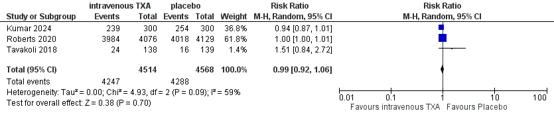
Figure 5. Forest plot of blood transfusion (risk ratio, intravenous TXA)
Length of hospital stay (important outcome)
In Tavakoli (2018), the mean length of hospital stay was 3.50 ± 1.21 days in the TXA group and 3.86 ± 1.92 days in the placebo group (mean difference (MD): -0.36 (95%CI: -0.74, 0.02)).
Kumar (2024) found that the mean length of hospital stay (among survivors at 42 days) was 7.3 ± 4.5 days in the TXA group and 8.4 ± 5.8 days in the control group (MD: −1.10 (95% CI: −1.93; −0.27) (Figure 6).
Roberts (2020) did not report the mean length of hospital stay.

Figure 6. Forrest plot of length of hospital stay (mean difference, intravenous TXA)
Enteral TXA (via nasogastric tube)
Mortality (critical outcome)
Saidi (2017) en Karadaş (2020) reported all-cause mortality rate within 4 weeks and 30 days follow-up, respectively (Figure 7).
Saidi (2017) reported 4 (6%) deaths in the TXA group and 9 (14%) deaths in the placebo group (RD -0.08 [95% CI: -0.18, 0.02]).
In Karadaş (2020), there were 8 (10%) deaths in the TXA group and 10 (12.7%) deaths in the control group (RD -0.02 [95% CI: -0.12, 0.08]).

Figure 7. All-cause mortality, complete follow-up (risk difference, enteral TXA)
Any thromboembolic events (critical outcome)
In Saidi (2017) none of the patients had deep vein thrombosis. No other thromboembolic events were reported (Figure 8).

Figure 8. Forest plot of thromboembolic events (risk difference, enteral TXA)
In Karadaş (2020), 3 (3.8%) patients in the enteral TXA group had a thromboembolic event (2 had pulmonary thromboembolism near the end of 30-day follow-up, 1 had non-ST elevated myocardial infarction after admission to the ward). In the placebo group, 1 (1.3%) patient had pulmonary thromboembolism near the end of 30-day follow-up.
Re-bleeding (important outcome)
Table 5 provides the definition of the outcome measure ‘re-bleeding’ in the studies of enteral TXA.
Table 5. Definition of the outcome measure ‘re-bleeding’ in the RCTs of enteral TXA
|
Autor, year |
Definition |
|
Saidi, 2017 |
|
|
Karadaş, 2020 |
|
Saidi (2017) en Karadaş (2020) reported re-bleeding rate within 4 weeks and 30 days follow-up (Figure 9).

Figure 9. Forest plot of re-bleeding, complete follow-up (risk difference, enteral TXA)
Saidi (2017) reported re-bleeding in 4 (6%) patients of the TXA group and 12 (18.8%) patients in the placebo group (RD -0.13 (95% CI -0.24, -0.02)).
Karadaş (2020) found that 9 (11.5%) patients in the TXA group and 8 (10.1%) patients in the control group had a re-bleeding (RD 0.01 (95% CI -0.08, 0.11).
Blood transfusion (important outcome)
The outcome measure ‘blood transfusion’ was not reported in the studies by Saidi (2017) en Karadaş (2020).
Length of hospital stay (important outcome)
Saidi (2017) and Karadaş (2020) did not report the mean length of hospital stay.
A systematic review of the literature was performed to answer the following question:
What are the favorable and unfavorable effects of tranexamic acid in adult patients with an acute (upper or lower) gastrointestinal bleeding, compared to placebo?
Table 1. PICO
| Patients | Adult patients with an acute (upper or lower) gastrointestinal bleeding |
| Intervention | (Intravenous or enteral) tranexamic acid + standard of care |
| Control | No tranexamic acid (placebo) + standard of care |
| Outcomes | Mortality, (any) thromboembolic events, re-bleeding (in the first 5 days), blood transfusion, length of hospital stay |
| Other selection criteria |
Study design: systematic reviews and randomized controlled trials Treatment in the control group included proton-pump inhibitor (PPI) use Language: English Publication date: from 2005 |
Relevant outcome measures
The guideline panel considered mortality and any thromboembolic events as critical outcome measures for decision making; and re-bleeding, blood transfusion, and length of hospital stay as important outcome measures for decision making.
A priori, the guideline panel did not define the outcome measures listed above but used the definitions used in the studies.
The guideline panel defined the following thresholds for effect measures as a minimal clinically important difference per outcome:
- mortality: 25% relative reduction (assuming a 4% mortality rate);
- any thromboembolic events: 50% increase (assuming a 1.2% rate of any thromboembolic event);
- re-bleeding: 10% relative reduction (assuming a 10% rebleeding rate, in the HALT-IT trial it was 5-8%);
- blood transfusion: 10% relative reduction (assuming a 70% average risk of receiving a blood transfusion);
- length of hospital stay: mean difference (MD) > 1 day.
Search and select (Methods)
A systematic literature search was performed by a medical information specialist using the following bibliographic databases: Embase.com and Ovid/Medline. Both databases were searched from 01-01-2004 to 16-06-2024 for systematic reviews and RCTs. Systematic searches were completed using a combination of controlled vocabulary/subject headings (e.g., Emtree-terms, MeSH) wherever they were available and natural language keywords. Duplicates were removed using EndNote software. After deduplication a total of 281 records were imported for title and abstract screening. Initially, 9 studies were selected based on title and abstract screening. After reading the full text, 4 studies were excluded (see exclusion reasons in a table under the tab ‘Evidence tabellen’), and 5 studies were included.
- Karadaş, A. and Doǧan, N. Ö and Pinar, S. G. and Yeşil, O. and Pekdemir, M. and Yilmaz, S. and Yaka, E. A randomized controlled trial of the effects of local tranexamic acid on mortality, rebleeding, and recurrent endoscopy need in patients with upper gastrointestinal hemorrhage. European Journal of Gastroenterology and Hepatology. 2020; 32 (1) :26-31.
- Kumar M, Venishetty S, Jindal A, Bihari C, Maiwall R, Vijayaraghavan R, Saggere Muralikrishna S, Arora V, Kumar G, Sarin SK. Tranexamic acid in upper gastrointestinal bleed in patients with cirrhosis: A randomized controlled trial. Hepatology. 2024 Aug 1;80(2):376-388. doi: 10.1097/HEP.0000000000000817. Epub 2024 Mar 5. PMID: 38441903.
- O’Donnell, O. and Gallagher, C. and Davey, M. G. and Coulter, J. and Regan, M. A systematic review and meta-analysis assessing the use of tranexamic acid (TXA) in acute gastrointestinal bleeding. Irish Journal of Medical Science. 2024; 193 (2) :705-719.
- Roberts, I. and Shakur-Still, H. and Afolabi, A. and Akere, A. and Arribas, M. and Austin, E. and Bal, K. and Bazeer, N. and Beaumont, D. and Brenner, A. and Carrington, L. and Chaudhri, R. and Coats, T. and Gilmore, I. and Halligan, K. and Hussain, I. and Jairath, V. and Javaid, K. and Kayani, A. and Lisman, T. and Mansukhani, R. and Miners, A. and Mutti, M. and Nadeem, M. A. and Pollok, R. and Prowse, D. and Simmons, J. and Stanworth, S. and Veitch, A. and Williams, J. A high-dose 24-hour tranexamic acid infusion for the treatment of significant gastrointestinal bleeding: Halt-it rct. Health Technology Assessment. 2021; 25 (58) :7-55.
- Roberts, I. and Shakur-Still, H. and Afolabi, A. and Akere, A. and Arribas, M. and Brenner, A. and Chaudhri, R. and Gilmore, I. and Halligan, K. and Hussain, I. and Jairath, V. and Javaid, K. and Kayani, A. and Lisman, T. and Mansukhani, R. and Mutti, M. and Arif Nadeem, M. and Pollok, R. and Simmons, J. and Soomro, M. and Stanworth, S. and Veitch, A. and Hawkey, C. and Cuzick, J. and Henry, D. and Metcalfe, C. and Gray, R. and Barkun, A. and David, S. and Devereaux, P. and Brady, T. and Coats, T. and Edwards, P. and Ker, K. and Manno, D. and Austin, E. and Bal, K. and Balogun, E. and Barrow, C. and Beaumont, D. and Benyahia, M. and Brooks, I. and Cargill, M. and Carrington, L. and Frimley, L. and Geer, A. and Gilbert, D. and Gilliam, C. and Gil Onandia, J. and Golfi, N. and Hetherington, D. and Howe, C. and Hughes, C. and I'Anson, D. and Jackson, R. and Joshi, M. and Kansagra, S. and Kawahara, T. and Kostrov, S. and Miah, H. and Ndungu, B. and Needham, K. and Outtandy, A. and Pearson, D. and Pepple, T. and Prowse, D. and Quashi, N. and Quinn, A. and Ramos, M. and Ranopa, L. and Reid, M. and Roukas, C. and Squires, C. and Tanner, J. and Thayne, A. and Uddin, R. and Fawole, B. and Bello, F. A. and Olayemi, O. and Okunade, O. and Adetayo, O. and Khamis, H. and Shukri Bin Jahit, M. and Gogichaishvili, T. and Mateescu, R. B. and Adhikaree, A. and Abdo, A. E. and Zaher, M. and Deasy, C. and Alvarez Gregori, J. and Wellsh, B. and Lawton, L. and Kamath, R. and Barry, A. and Carpio, R. and Finney, K. and Maguire, H. and James, M. and Coffey, F. and Gough, C. and Sawers, L. and Thi, A. A. and Burnett, C. and Jacques, N. and Murray, V. and Jarman, H. and Lambe, C. and Rounding, S. and Tucker, S. and Al-Idari, R. and Guest, S. and Stoddard, E. and Yeo, D. and Bergin, C. and Hardy, E. and Thunder, J. and Jhalli, P. and Hartley, E. and Jarvis, C. and Swann, C. and Reed, M. and Gallagher, B. and Grahamslaw, J. and O'Brien, R. and Harris, T. and Bellhouse, G. and Boulton, O. and Skene, I. and Stanley, A. and Johnstone, J. and Maguire, D. and Thornton, S. and Banks, M. and Bercades, G. and Marks, D. and Ryu, J. and Dowty, C. and Pott, J. and East, J. and Bailey, A. and Beer, S. and Davies, S. and Appelboam, A. and Mackle, D. and Small, J. and Vorwerk, C. and Atkins, R. and Bradbury, I. and Bryceland, C. and McClelland, L. and Thomas, M. and Clayton, K. and Michael, A. and Haig, S. and Al-Nahhas, S. and Godfrey, T. and Boger, P. and Comer, R. and Watkins, B. and Afolabi, O. and Afzal, S. and Cowton, A. and Everett, S. and Fazakerley, R. and Onoviran, F. and Snook, J. and Berry, J. and Simpson, D. and Keep, J. and Cotton, H. and Helyar, S. and Rutter, M. and Johnston, T. and O'Rourke, L. and Chan, L. and Tambellini, J. and Trodd, D. and Shutt, J. and Moreton, S. and Oglesby, A. and Boyle, A. and Haeger, N. and Hardwick, S. and Kendall, J. and Faulkner, B. and Worner, R. and Hearnshaw, S. and Doona, M. and Price, M. and Hunter, L. and Bell, M. and Loureiro, V. and Kehoe, A. and Jefferey, A. and Squire, R. and Hartin, D. and Bell, S. and Newman, A. and Gagg, J. and Foot, J. and Wakeford, S. and May, G. and Bartram, T. and Cumpstay, P. and Parker, L. and Das, R. and Pahary, S. and Wright, G. and Butt, G. and Christmas, N. and Wilson, S. and Ashfaq, M. and Chandler, L. and Demetriou, C. and Kaye, P. and Carley, S. and Brown, A. and Jones, L. and Whileman, A. and Greenaway, J. and Tregonning, J. and Kuhrt, A. and Goodacre, S. and Jones, J. and Owen, C. and Mitra, A. and Harper-Payne, A. and Trudgill, N. and Hayes, A. and Butt, F. and Clifford, G. and Kinnon, A. and Fowler, S. and Pillay, K. and Gidwani, S. and McNair, A. and Omer, O. and de Weymarn, T. and Amin, A. and Martin, J. and Mathieu, N. and Barnes, S. and Turvill, J. and Sweeting, H. and Draegebo, M. and McNaught, M. and Grocutt, M. and Margalef, J. and Humphrey, J. and Jackson, R. and Bellis, F. and Hunt, J. and Stevenson, A. and Watson, N. and Barden, S. and Paterson, S. and Macdonald, C. and Hobday, D. and Orugun, O. and Allison, A. and Dyer, T. and McBride, S. and Sawicki, W. and Rayner, B. and Flowerdew, L. and Barbour, J. and Klein, J. and Hood, S. and Palmer, N. and de Wolff, J. and Shenoy, A. and Swallow, P. and Srirajaskanthan, R. and Arshad, H. and Aslam, N. and Bangash, A. and Qamar, M. and Zahoor, H. and Arshad, S. and ain Ghalib, Q. and Hameed, T. and Saif, T. and Shafi, W. and Ali, A. and Khan, S. and Muaaz, M. and Taj, A. and Ghafoor, A. and Afridi, A. and Ahmad, M. and Aslam, M. and Kumar, S. and Ali, M. and Bughio, U. and Chang, A. and Shaikh, S. and Ahmad, S. and Ali, Z. and Waqar, M. and Mushir, A. and Sattar, S. and Goraya, S. and Aslam, S. and Fatima, N. and Noreen, S. and Saleem, S. and Rahman, F. and Iqbal, N. and Khalid, M. and Riaz, U. and Umar, M. and Akhter, T. and Khan, J. and Misbah, N. and Afzal, M. and Kayani, M. and Shah, S. and Tarar, S. and Khan, S. and Iqbal, Y. and Khan, E. and Reki, M. and Hussain, T. and Iqbal, S. and Khurram, M. and Shafi, M. and Shaikh, A. and Ahmed, A. and Kumar, A. and Sachdev, P. and Nasir, K. M. and Chaudhry, Z. I. and Zubair, M. and Tayyab, G. and Mushtaq, J. and Nasir, M. and Khan, A. and Ali, A. and Ali, S. and Uddin, W. and Ahmed, S. and Kazmi, T. and Channa, S. and Aman, A. and Shaikh, M. and Rizvi, T. and Hussain, A. and Baqai, H. Z. and Rasheed, Z. and Khan, A. and Irfan, A. and Husain, A. and Aslam, A. and Yahya, K. and Azhar, S. and Ul Haq, M. and Afzal, A. and Imran, M. and Saeed, I. and Yusuf, A. and Hassan, M. and Marwat, M. and Ishfaq, M. and Bashir, T. and Kumar, S. and Yaqoob, S. and Wahid, A. and Fakoya, T. and Oke, T. and Tejan, E. and Olaomi, O. and Badejo, O. and Nnaemaka, O. and Ukwu, N. and Arowolo, O. and Aderounmu, A. and Wuraola, F. and Ugiagbe, R. and Atiri, A. and Eghaghe, E. and Adekoya, A. and Tade, A. O. and Shonoiki, O. and Olatoke, S. and Raji, T. and Ekwunife, C. and Onyekpere, C. and Ahmed, A. and Muhammad, D. and Odeghe, E. and Lesi, O. and Osueni, A. and Samaila, A. and Nahuche, A. and Ajayi, A. and Dongo, A. and Ijoma, U. and Adebanjo, A. T. and Igetei, R. and Yilkudi, M. and Osisanya, K. and Okeke, E. N. and Enwere, O. O. and Esmat, S. and Ashoush, O. and Naga, M. and Nagy, F. and Saiid, M. and Shaker, A. and Helmy, A. and Saafan, S. and Abdel Monem, M. and Din, J. and Azis, K. and Brukan, M. and Singh, S. and Zakaria, A. and Farid, S. and Hashim, N. and Mafauzy, M. and Najmi, W. and Amri, N. and Yi, X. and Hisyam, M. and Ng, E. and Ramli, Z. and Yee Lim, S. and Voon, K. and Young Yam, S. and Jahit, M. and Joon, L. and Melikidze, B. and Kazaishvili, D. and Grubelashvili, N. and Mosidze, B. and Tomadze, G. and Megreladze, A. and Oprita, R. and Pestroiu Calescu, D. and Chioncel, C. and Ragea, A. and Mateescu, B. and Busuioc, B. and Voiosu, A. and Cotirlet, A. and Pintilie, I. and Jinga, M. and Balaban, D. and Tanău, M. and Negreanu, L. and Bataga, S. and Priya, K. and Baral, S. and Anuj, K. C. A. and Sah, V. and Yadav, V. and Abdo, A. and Ahmed, D. and Al Anazi, M. and Al Balkhi, A. and Álvarez Gregori, J. and Fornieles Pérez, H. and Beqiri, A. Effects of a high-dose 24-h infusion of tranexamic acid on death and thromboembolic events in patients with acute gastrointestinal bleeding (HALT-IT): an international randomised, double-blind, placebo-controlled trial. The Lancet. 2020; 395 (10241) :1927-1936.
- Saidi, H. and Shojaie, S. and Ghavami, Y. and Mirafzal, A. and Sisakht, M. T. and Sotudehnia, M. Role of intra-gastric tranexamic acid in management of acute upper gastrointestinal bleeding. IIOAB Journal. 2017; 8 (1) :76-81.
- Tavakoli, N. and Mokhtare, M. and Agah, S. and Azizi, A. and Masoodi, M. and Amiri, H. and Sheikhvatan, M. and Syedsalehi, B. and Behnam, B. and Arabahmadi, M. and Mehrazi, M. Comparison of the efficacy of intravenous tranexamic acid with and without topical administration versus placebo in urgent endoscopy rate for acute gastrointestinal bleeding: A double-blind randomized controlled trial. United European Gastroenterology Journal. 2018; 6 (1) :46-54.
Risk of Bias tables
Risk of bias table for intervention studies (randomized controlled trials; based on Cochrane risk of bias tool and suggestions by the CLARITY Group at McMaster University)
Research question: What are the favourable and unfavorable effects of tranexaminic acid in adult patients with an acute (upper or lower) gastrointestinal bleeding?
|
Study reference
(first author, publication year) |
Was the allocation sequence adequately generated?
Definitely yes Probably yes Probably no Definitely no |
Was the allocation adequately concealed?
Definitely yes Probably yes Probably no Definitely no
|
Blinding: Was knowledge of the allocated interventions adequately prevented?
Were patients blinded?
Were healthcare providers blinded?
Were data collectors blinded?
Were outcome assessors blinded?
Were data analysts blinded?
Definitely yes Probably yes Probably no Definitely no |
Was loss to follow-up (missing outcome data) infrequent?
Definitely yes Probably yes Probably no Definitely no |
Are reports of the study free of selective outcome reporting?
Definitely yes Probably yes Probably no Definitely no |
Was the study apparently free of other problems that could put it at a risk of bias?
Definitely yes Probably yes Probably no Definitely no
|
Overall risk of bias If applicable/necessary, per outcome measure
LOW Some concerns HIGH
|
|
Tavakoli, 2018 |
Definitely yes
an independent researcher made random allocation cards using computer- generated random numbers |
Definitely yes
random allocation sequences were kept in an inaccessible third place |
Probably yes
participants and study personnel were blinded to the study arms; blinding of data collectors, outcome assessors, data analysts not reported |
Definitely no
61 of 410 patients (14.9 %) did not complete 1-month follow-up; no flowchart of patient inclusion |
Definitely yes
all predefined outcomes are reported
|
Probably no
potential response bias for outcomes at 1 month follow-up: not all patients completed 1 month follow-up; data were collected from interviews or medical documentation; cause of death (at 1 month) could not be established in all cases |
Some concerns
(outcomes measured at 1 month)
Some concerns (all outcomes measured within 72 hrs of admission)
|
|
Roberts, 2020 |
Definitely yes
the lowest numbered treatment pack (containing randomisation number) was taken from a box of eight packs |
Definitely yes
the treatment pack label text was identical for tranexamic acid and placebo |
Definitely yes
patients, caregivers, and those assessing outcomes were masked to allocation, masking of data analysts not described |
Definitely yes
loss to follow-up was infrequent |
Definitely yes
all outcomes are reported |
Definitely yes
no other problems noted |
LOW
(all outcomes) |
|
Kumar 2024 |
Definitely yes
random allocation sequence was carried out by computer-generated random numbers code with an equal number of alternative treatments with a block size of 10 |
Definitely yes
sequentially numbered sealed, opaque, thick-papered envelopes were used to conceal the sequence until interventions were assigned |
Definitely yes
participants, investigator clinicians, data collectors, data analysts were blinded to the allocation |
Definitely yes
no loss to follow-up |
Definitely yes
all predefined outcomes are reported |
Probably no
assessment of outcome ‘thromboembolic events’: portal and other splanchnic vein thrombosis at baseline and follow-up were not systematically assessed, some cases may have been missed; outcome ‘re-bleeding’: pre-emptive TIPS were not placed after 1st successful endoscopy, because patients refused |
Some concerns (thrombotic events, re-bleeding)
LOW (all other outcomes)
|
|
Saidi 2017 |
Probably yes
random number sequence was generated, but it is unclear how |
Probably no
allocation is not described |
Probably no
blinding not described in detail (claims double-blinded design); randomization codes were known only to the pharmacist in charge and not revealed until the end of the study
|
Probably no
many patients were excluded after allocation because they did not have a bleeding from a gastric or duodenal ulcer and discontinued treatment |
Definitely no
need for surgical intervention was not reported (reported emergency endoscopy instead, definitions of outcomes not described) |
Definitely yes
no other problems noted |
HIGH
(all outcomes) |
|
Karadas 2020 |
Definitely yes
randomisation sequence was performed by the study nurse and generated using a computer program |
Definititely yes
treatment vials were numbered and blinded before they arrived at the patient care area |
Definititely yes
patients, nurses, physicians, endoscopists were blinded to the administered treatment; blinding of outcomes assessors and data analysts was not described |
Definitely yes
no loss to follow-up
|
Definitely yes
all predefined outcomes are reported |
Definitely yes
no other problems noted |
LOW
(all outcomes) |
Table of excluded studies
|
Reference |
Reason for exclusion |
|
Bashiri, H. and Hamzeii, M. and Bozorgomid, A. Effect of tranexamic acid on the treatment of patients with upper gastrointestinal bleeding: A double-blinded randomized controlled clinical trial. Journal of Acute Disease. 2021; 10 (2) :57-61 |
very low total number of patients and limitations of study design |
|
Chiang, H. C. and Chen, P. J. and Yang, E. H. and Hsieh, M. T. and Shih, I. C. and Cheng, H. C. and Chang, W. L. and Chen, W. Y. and Chiu, H. C. and Kuo, H. Y. and Tsai, W. C. and Lo, Y. N. and Yang, K. C. and Chiang, C. M. and Chen, W. C. and Huang, K. K. and Tseng, H. H. and Chen, C. Y. and Lin, X. Z. and Chuang, C. H. Precise application of topical tranexamic acid to enhance endoscopic hemostasis for peptic ulcer bleeding: a randomized controlled study (with video). Gastrointestinal Endoscopy. 2023; 98 (5) :755-764 |
Wrong I: TXA application to peptic ulcer during endoscopy |
|
Sedaghat, Meghdad and Iranshahi, Majid and Mardani, Maryam and Mesbah, Nima Efficacy of Tranexamic Acid in the Treatment of Massive Upper Gastrointestinal Bleeding: A Randomized Clinical Trial. Cureus. 2023; 15 (1) :e33503 |
very low total number of patients and limitations of study design |
|
Smith, S. R. and Murray, D. and Pockney, P. G. and Bendinelli, C. and Draganic, B. D. and Carroll, R. Tranexamic Acid for Lower GI Hemorrhage: A Randomized Placebo-Controlled Clinical Trial. Diseases of the Colon and Rectum. 2018; 61 (1) :99-106 |
Wrong I: oral TXA in lower GI bleeding |
Beoordelingsdatum en geldigheid
Publicatiedatum : 24-08-2026
Beoordeeld op geldigheid : 24-08-2026
Algemene gegevens
De ontwikkeling/herziening van deze richtlijnmodule werd ondersteund door het Kennisinstituut van de Federatie Medisch Specialisten (www.demedischspecialist.nl/kennisinstituut) en werd gefinancierd door de Stichting Kwaliteitsgelden Medisch Specialisten (SKMS). De financier heeft geen enkele invloed gehad op de inhoud van de richtlijnmodule.
Samenstelling werkgroep
Voor het ontwikkelen van de richtlijnmodule is in 2023 een multidisciplinaire werkgroep ingesteld, bestaande uit vertegenwoordigers van relevante specialismen (zie hiervoor de Samenstelling van de werkgroep) die betrokken zijn bij de zorg voor patiënten met (acute) tractus digestivus bloedingen.
Werkgroep
- Dr. I.L. (Lisanne) Holster (voorzitter), MDL-arts, Maasstad Ziekenhuis (NVMDL)
- Dr. E.T.T.L. (Eric) Tjwa, MDL-arts, Radboud UMC (NVMDL)
- Dr. L.G. (Lisette) Capelle, MDL-arts, Meander Medisch Centrum Amersfoort (NVMDL)
- Dr. N.L. (Nicolette) de Groot, MDL-arts, Rode Kruis Ziekenhuis Beverwijk (NVMDL)
- Dr. J.F. (Jilling) Bergmann, MDL-arts, HagaZiekenhuis (NVMDL)
- Dr. J.J. (Jurjen) Boonstra, MDL-arts, Leids Universitair Medisch Centrum (NVMDL)
- Dr. C.M.J. (Lia) Goltstein, AIOS MDL-ziekten, Jeroen Bosch ziekenhuis (NVMDL)
- Drs. T.E.A. (Tychon) Geeraedts, Radboud UMC (NVvR)
Klankbordgroep
- Dr. K.H. (Klaas) de Groot, internist-intensivist, Franciscus en Vlietland te Rotterdam en Schiedam (NVIC)
- Drs. K.S. (Kay) van Wonderen, SEH-arts, Treant (NVSHA)
- Dr. C. (Charlotte) van Noord, internist, Maasstad Ziekenhuis (NIV)
Met ondersteuning van
- Dr. E. V. (Ekaterina) Baranova-van Dorp, adviseur, Kennisinstituut van de Federatie Medisch Specialisten
- Dr. N. (Nikita) van der Zwaluw, senior adviseur, Kennisinstituut van de Federatie Medisch Specialisten (tot 22-09-2025)
- E. (Esther) van der Bijl, medisch informatiespecialist, Kennisinstituut van de Federatie Medisch Specialisten
Belangenverklaringen
Een overzicht van de belangen van werkgroepleden en het oordeel over het omgaan met eventuele belangen vindt u in onderstaande tabel. De ondertekende belangenverklaringen zijn op te vragen bij het secretariaat van het Kennisinstituut van de Federatie Medisch Specialisten via secretariaat@kennisinstituut.nl.
Gemelde (neven)functies en belangen werkgroepleden
|
Naam |
Hoofdfunctie |
Nevenwerkzaamheden |
Persoonlijke Financiële belangen |
Persoonlijke Relaties |
Extern gefinancierd onderzoek |
Intell, belangen en reputaties |
Overige belangen |
Actie |
|
Eric Tjwa |
MDL-arts Radboudumc 0.9 fte |
Geen |
Geen |
Geen |
Geen |
Geen |
Geen |
geen restrictie |
|
Jilling Bergmann |
MDL-arts in Haga Ziekenhuis Den Haag |
MDL-arts DC Klinieken Lairesse |
Geen |
Geen |
Geen |
Geen |
Geen |
geen restrictie |
|
Jurjen Boonstra |
Maag-, Darm-, Leverarts Leids Universitair Medisch Centrum (LUMC)
1.0 fte |
Redactieraad Nederlands tijdschrift voor Oncologie |
Geen |
Neen |
1. TRIASSIC studie (gerandomiseerde studie ESD vs TAMIS rectum laesies >2cm) - darmkanker- gesponsord door ZonMW, geen projectleider* 2. RUBATO trial (studie naar patient preferentie follow-up na T1 CRC), vragenlijst onderzoek onder patienten en dokters, na darmkanker, gesponsord door ZonMW, geen projectleider**
* ZonMw - 'A multicentre, randomised controlled trial comparing Transanal minimal invAsive Suergery (TAMIS) and and endoscopic Submucosal dIsseCtion (ESD) for resection of non-pedunculated rectal lesions.'- Geen projectleider ** ZonMw - 'ExploRing preferences and attitUdes of Both patients And doctors TOwards surveillance after local resection of T1 colorectal cancer: the RUBATO-study' - Geen Projectleider |
Geen |
Geen |
geen restrictie |
|
Lia Goltstein |
AIOS Maag-, Darm- en Leverziekten (betaald) - Radboudumc AIOS Interne geneeskunde, vooropleiding MDL (betaald) - Jeroen Bosch ziekenhuis |
Arts-onderzoeker Evidence based management of Gastrointestinal angiodysplasias (onbetaald) - Radboudumc |
Geen persoonlijke financiële belangen. |
Geen persoonlijke relaties die baat kunnen hebben bij een bepaalde uitkomst van het advies. |
De SAIPAN studie* (binnen mijn promotietraject; Clinicaltrials. Gov ID: NCT02874326) - werd gesponsord door ZonMw - Geen projectleider
* 'Effectiveness of Somatostatin Analogues in Patients with hereditary hemorrhagic telangiectasia and symptomatic gastrointestinal bleeding, the SAIPAN-trial: a multicenter, randomized, open-label, parallel-group, superiority trial' |
Geen intellectuele belangen of reputatie die baat hebben/heeft bij een bepaalde uitkomst. |
Niet van toepassing |
geen restrictie |
|
Lisanne Holster (vz.) |
NVMDL MDL-arts in het Maasstad ziekenhuis |
Geen |
Geen |
Geen |
Geen |
Geen |
Geen |
geen restrictie |
|
Lisette Capelle |
MDL-arts in Meander Medisch centrum |
Geen |
Geen |
Geen |
Geen |
Geen |
Geen |
geen restrictie |
|
Nicolette de Groot |
MDL-arts zelfstandig werkzaam in RKZ Beverwijk |
Geen |
Geen |
Nee |
Nee |
Niet van toepassing |
Niet van toepassing |
geen restrictie |
|
Tychon Geeraedts |
Interventieradioloog bij Radboud UMC |
Geen |
Geen |
Geen |
Geen |
Geen |
Geen |
geen restrictie |
Gemelde (neven)functies en belangen klankbordgroepleden
|
Naam |
Hoofdfunctie |
Nevenwerkzaamheden |
Persoonlijke Financiële belangen |
Persoonlijke Relaties |
Extern gefinancierd onderzoek |
Intell, belangen en reputaties |
Overige belangen |
Actie |
|
Charlotte van Noord |
Internist-acute geneeskunde Maasstad Ziekenhuis |
sinds 30 oktober 2025 geen voorzitter meer |
Geen |
Niet van toepassing |
Niet van toepassing |
Niet van toepassing |
Niet van toepassing |
geen restrictie |
|
Kay van Wonderen |
SEH-arts, Treant |
Penningmeester NVSHA Vacatiegelden |
Geen |
Geen |
Geen |
Geen |
Geen |
geen restrictie |
|
Klaas de Groot |
Internist-intensivist, Franciscus en Vlietland te Rotterdam en Schiedam |
Commissie Richtlijnontwikkeling NVIC, onbetaald FMS - kennisinstituut, clusterstuurgroep IC, onbetaald |
Geen financieel belang |
Geen |
REMAP-CAP - ZonMw - Pneumonie behandeling - Geen projectleider - REMAP-CAP (tot januari 2025 locale hoofdonderzoeker) |
Geen |
Geen |
geen restrictie |
Inbreng patiëntenperspectief
Inbreng patiëntenperspectief
De werkgroep besteedde aandacht aan het patiëntenperspectief door het uitnodigen van Patiëntenfederatie Nederland voor de schriftelijke knelpunteninventarisatie. Het verslag hiervan is besproken in de werkgroep. De conceptrichtlijn is tevens ter commentaar voorgelegd aan Patiëntenfederatie Nederland. De paragraaf ‘waarden en voorkeuren van patiënten’ binnen de overwegingen is door Patiëntenfederatie Nederland opgesteld.
Kwalitatieve raming van mogelijke financiële gevolgen in het kader van de Wkkgz
Bij de richtlijnmodule voerde de werkgroep conform de Wet kwaliteit, klachten en geschillen zorg (Wkkgz) een kwalitatieve raming uit om te beoordelen of de aanbevelingen mogelijk leiden tot substantiële financiële gevolgen. Bij het uitvoeren van deze beoordeling is de richtlijnmodule op verschillende domeinen getoetst (zie het stroomschema bij Werkwijze).
|
Module |
Uitkomst raming |
Toelichting |
|
Eerste opvang (pre-endoscopische behandeling) |
||
|
Submodule Tranexaminezuur |
geen financiële gevolgen |
Hoewel uit de toetsing volgt dat de aanbeveling(en) breed toepasbaar zijn (5.000-40.000 patiënten), volgt ook uit de toetsing dat het geen nieuwe manier van zorgverlening of andere organisatie van zorgverlening betreft. Er worden daarom geen substantiële financiële gevolgen verwacht. |
Werkwijze
Voor meer details over de gebruikte richtlijnmethodologie verwijzen wij u naar de Werkwijze. Relevante informatie voor de ontwikkeling/herziening van deze richtlijnmodule is hieronder weergegeven.
Zoekverantwoording
Zoekstratgie - 16 juni 2024
Embase.com
|
No. |
Query |
Results |
|
#1 |
'gastrointestinal hemorrhage'/exp OR 'upper gastrointestinal bleeding'/exp OR 'lower gastrointestinal bleeding'/exp OR 'rectum hemorrhage'/exp OR 'peptic ulcer bleeding'/exp OR 'peptic ulcer'/exp OR (((gastrointestinal OR 'gastro intestinal' OR gi OR digestive OR 'peptic ulcer' OR colon OR duodenum OR duodenal OR gastro‐duodenal OR gastroduodenal OR stomach OR gastri* OR epigastri* OR oeso?ag* OR esp?ag* OR rectum OR rectal OR rectocolic) NEAR/3 (bleeding* OR haemorrhag* OR hemorrhag* OR blood* OR 're‐bleed*' OR rebleed*)):ti,ab,kw) OR lgib:ti,ab,kw OR proctorrhag*:ti,ab,kw OR rectorrhag*:ti,ab,kw OR ugib:ti,ab,kw OR ulcer*:ti,ab,kw OR ulcus*:ti,ab,kw |
562831 |
|
#2 |
'tranexamic acid'/exp OR 'kapron'/exp OR (('intrax' NEAR/2 'tracid'):ti,ab,kw) OR (pause:ti,ab,kw AND (bleeding*:ti,ab,kw OR haemorrhag*:ti,ab,kw OR hemorrhag*:ti,ab,kw OR blood*:ti,ab,kw)) OR 'amcha':ti,ab,kw OR 'amca':ti,ab,kw OR 'amchafibrin':ti,ab,kw OR 'amikapron':ti,ab,kw OR 'aminomethyl cyclohexane carboxylic acid*':ti,ab,kw OR 'aminomethyl cyclohexanecarboxylic acid*':ti,ab,kw OR 'aminomethylcyclohexane carbonic acid*':ti,ab,kw OR 'aminomethylcyclohexane carboxylic acid*':ti,ab,kw OR 'aminomethylcyclohexanecarbonic acid*':ti,ab,kw OR 'aminomethylcyclohexanecarboxylic acid*':ti,ab,kw OR 'aminomethylcyclohexanocarboxylic acid*':ti,ab,kw OR 'aminomethylcyclohexanoic acid*':ti,ab,kw OR 'amstat':ti,ab,kw OR 'anexan':ti,ab,kw OR 'antivoff':ti,ab,kw OR 'anvitoff':ti,ab,kw OR 'cl 65336':ti,ab,kw OR 'cl65336':ti,ab,kw OR 'cyclocapron':ti,ab,kw OR 'cyclokapron':ti,ab,kw OR 'cyklo-f':ti,ab,kw OR 'cyklocapron':ti,ab,kw OR 'cyklokapron':ti,ab,kw OR 'espercil':ti,ab,kw OR 'exacyl':ti,ab,kw OR 'femstrual':ti,ab,kw OR 'fibrinon':ti,ab,kw OR 'frenolyse':ti,ab,kw OR 'hemostan':ti,ab,kw OR 'hexacapron':ti,ab,kw OR 'hexakapron':ti,ab,kw OR 'htb 003':ti,ab,kw OR 'htb003':ti,ab,kw OR 'hy 004':ti,ab,kw OR 'hy004':ti,ab,kw OR 'kalnex':ti,ab,kw OR 'lb 1148':ti,ab,kw OR 'lb1148':ti,ab,kw OR 'lysteda':ti,ab,kw OR 'menstralite':ti,ab,kw OR 'micranex':ti,ab,kw OR 'rikaparin':ti,ab,kw OR 'ronex':ti,ab,kw OR 'rp 18429':ti,ab,kw OR 'rp18429':ti,ab,kw OR 'spotof':ti,ab,kw OR 'statraxen':ti,ab,kw OR 'theranex':ti,ab,kw OR 'tramic':ti,ab,kw OR 'tranex':ti,ab,kw OR 'tranexam':ti,ab,kw OR 'tranexamic acid*':ti,ab,kw OR 'tranexanic acid*':ti,ab,kw OR 'tranexic':ti,ab,kw OR 'trans achma':ti,ab,kw OR 'trans amcha':ti,ab,kw OR 'trans aminomethyl cyclohexane carboxylic acid*':ti,ab,kw OR 'trans aminomethylcyclohexane carboxylic acid*':ti,ab,kw OR 'trans aminomethylcyclohexanecarboxylic acid*':ti,ab,kw OR 'transamin':ti,ab,kw OR 'transaminomethylcyclohexane carboxylic acid*':ti,ab,kw OR 'transexamic acid*':ti,ab,kw OR 'traxamic':ti,ab,kw OR 'trenaxin':ti,ab,kw OR 'trenolk':ti,ab,kw OR 'ugurol':ti,ab,kw OR 'unixam':ti,ab,kw OR 'xp 12b':ti,ab,kw OR 'xp12b':ti,ab,kw OR transcam:ti,ab,kw OR nicolda:ti,ab,kw OR 'kapron':ti,ab,kw |
22556 |
|
#3 |
#1 AND #2 |
1399 |
|
#4 |
#3 AND [2000-2024]/py NOT ('conference abstract'/it OR 'editorial'/it OR 'letter'/it OR 'note'/it) NOT (('animal'/exp OR 'animal experiment'/exp OR 'animal model'/exp OR 'nonhuman'/exp) NOT 'human'/exp) |
859 |
|
#5 |
'meta analysis'/exp OR 'meta analysis (topic)'/exp OR metaanaly*:ti,ab OR 'meta analy*':ti,ab OR metanaly*:ti,ab OR 'systematic review'/de OR 'cochrane database of systematic reviews'/jt OR prisma:ti,ab OR prospero:ti,ab OR (((systemati* OR scoping OR umbrella OR 'structured literature') NEAR/3 (review* OR overview*)):ti,ab) OR ((systemic* NEAR/1 review*):ti,ab) OR (((systemati* OR literature OR database* OR 'data base*') NEAR/10 search*):ti,ab) OR (((structured OR comprehensive* OR systemic*) NEAR/3 search*):ti,ab) OR (((literature NEAR/3 review*):ti,ab) AND (search*:ti,ab OR database*:ti,ab OR 'data base*':ti,ab)) OR (('data extraction':ti,ab OR 'data source*':ti,ab) AND 'study selection':ti,ab) OR ('search strategy':ti,ab AND 'selection criteria':ti,ab) OR ('data source*':ti,ab AND 'data synthesis':ti,ab) OR medline:ab OR pubmed:ab OR embase:ab OR cochrane:ab OR (((critical OR rapid) NEAR/2 (review* OR overview* OR synthes*)):ti) OR ((((critical* OR rapid*) NEAR/3 (review* OR overview* OR synthes*)):ab) AND (search*:ab OR database*:ab OR 'data base*':ab)) OR metasynthes*:ti,ab OR 'meta synthes*':ti,ab |
1037188 |
|
#6 |
'clinical trial'/exp OR 'randomization'/exp OR 'single blind procedure'/exp OR 'double blind procedure'/exp OR 'crossover procedure'/exp OR 'placebo'/exp OR 'prospective study'/exp OR rct:ab,ti OR random*:ab,ti OR 'single blind':ab,ti OR 'randomised controlled trial':ab,ti OR 'randomized controlled trial'/exp OR placebo*:ab,ti |
4051769 |
|
#7 |
#4 AND #5 – SR’s |
97 |
|
#8 |
#4 AND #6 NOT #7 – RCT’s |
167 |
|
#9 |
#7 OR #8 |
264 |
Ovid/Medline
|
# |
Searches |
Results |
|
1 |
exp Gastrointestinal Hemorrhage/ or exp Peptic Ulcer Hemorrhage/ or exp Peptic Ulcer/ or ((gastrointestinal or gastro intestinal or gi or digestive or peptic ulcer or colon or duodenum or duodenal or gastro duodenal or gastroduodenal or stomach or gastri* or epigastri* or oesophag* or esophag* or rectum or rectal or rectocolic) adj3 (bleeding* or haemorrhag* or hemorrhag* or blood* or re bleed* or rebleed*)).ti,ab,kf. |
159873 |
|
2 |
exp Tranexamic Acid/ or (intrax adj2 tracid).ti,ab,kf. or (pause and (bleeding* or haemorrhag* or hemorrhag* or blood*)).ti,ab,kf. or amcha.ti,ab,kf. or amca.ti,ab,kf. or amchafibrin.ti,ab,kf. or amikapron.ti,ab,kf. or aminomethyl cyclohexane carboxylic acid*.ti,ab,kf. or aminomethyl cyclohexanecarboxylic acid*.ti,ab,kf. or aminomethylcyclohexane carbonic acid*.ti,ab,kf. or aminomethylcyclohexane carboxylic acid*.ti,ab,kf. or aminomethylcyclohexanecarbonic acid*.ti,ab,kf. or aminomethylcyclohexanecarboxylic acid*.ti,ab,kf. or aminomethylcyclohexanocarboxylic acid*.ti,ab,kf. or aminomethylcyclohexanoic acid*.ti,ab,kf. or amstat.ti,ab,kf. or anexan.ti,ab,kf. or antivoff.ti,ab,kf. or anvitoff.ti,ab,kf. or cl 65336.ti,ab,kf. or cl65336.ti,ab,kf. or cyclocapron.ti,ab,kf. or cyclokapron.ti,ab,kf. or cyklo-f.ti,ab,kf. or cyklocapron.ti,ab,kf. or cyklokapron.ti,ab,kf. or espercil.ti,ab,kf. or exacyl.ti,ab,kf. or femstrual.ti,ab,kf. or fibrinon.ti,ab,kf. or frenolyse.ti,ab,kf. or hemostan.ti,ab,kf. or hexacapron.ti,ab,kf. or hexakapron.ti,ab,kf. or "htb 003".ti,ab,kf. or htb003.ti,ab,kf. or "hy 004".ti,ab,kf. or hy004.ti,ab,kf. or kalnex.ti,ab,kf. or lb 1148.ti,ab,kf. or lb1148.ti,ab,kf. or lysteda.ti,ab,kf. or menstralite.ti,ab,kf. or micranex.ti,ab,kf. or rikaparin.ti,ab,kf. or ronex.ti,ab,kf. or rp 18429.ti,ab,kf. or rp18429.ti,ab,kf. or spotof.ti,ab,kf. or statraxen.ti,ab,kf. or theranex.ti,ab,kf. or tramic.ti,ab,kf. or tranex.ti,ab,kf. or tranexam.ti,ab,kf. or tranexamic acid*.ti,ab,kf. or tranexanic acid*.ti,ab,kf. or tranexic.ti,ab,kf. or trans achma.ti,ab,kf. or trans amcha.ti,ab,kf. or trans aminomethyl cyclohexane carboxylic acid*.ti,ab,kf. or trans aminomethylcyclohexane carboxylic acid*.ti,ab,kf. or trans aminomethylcyclohexanecarboxylic acid*.ti,ab,kf. or transamin.ti,ab,kf. or transaminomethylcyclohexane carboxylic acid*.ti,ab,kf. or transexamic acid*.ti,ab,kf. or traxamic.ti,ab,kf. or trenaxin.ti,ab,kf. or trenolk.ti,ab,kf. or ugurol.ti,ab,kf. or unixam.ti,ab,kf. or xp 12b.ti,ab,kf. or xp12b.ti,ab,kf. or transcam.ti,ab,kf. or nicolda.ti,ab,kf. or kapron.ti,ab,kf. |
8770 |
|
3 |
1 and 2 |
259 |
|
4 |
limit 3 to yr="2000 -Current" |
170 |
|
5 |
4 not (comment/ or editorial/ or letter/) not ((exp animals/ or exp models, animal/) not humans/) |
153 |
|
6 |
meta-analysis/ or meta-analysis as topic/ or (metaanaly* or meta-analy* or metanaly*).ti,ab,kf. or systematic review/ or cochrane.jw. or (prisma or prospero).ti,ab,kf. or ((systemati* or scoping or umbrella or "structured literature") adj3 (review* or overview*)).ti,ab,kf. or (systemic* adj1 review*).ti,ab,kf. or ((systemati* or literature or database* or data-base*) adj10 search*).ti,ab,kf. or ((structured or comprehensive* or systemic*) adj3 search*).ti,ab,kf. or ((literature adj3 review*) and (search* or database* or data-base*)).ti,ab,kf. or (("data extraction" or "data source*") and "study selection").ti,ab,kf. or ("search strategy" and "selection criteria").ti,ab,kf. or ("data source*" and "data synthesis").ti,ab,kf. or (medline or pubmed or embase or cochrane).ab. or ((critical or rapid) adj2 (review* or overview* or synthes*)).ti. or (((critical* or rapid*) adj3 (review* or overview* or synthes*)) and (search* or database* or data-base*)).ab. or (metasynthes* or meta-synthes*).ti,ab,kf. |
753101 |
|
7 |
exp clinical trial/ or randomized controlled trial/ or exp clinical trials as topic/ or randomized controlled trials as topic/ or Random Allocation/ or Double-Blind Method/ or Single-Blind Method/ or (clinical trial, phase i or clinical trial, phase ii or clinical trial, phase iii or clinical trial, phase iv or controlled clinical trial or randomized controlled trial or multicenter study or clinical trial).pt. or random*.ti,ab. or (clinic* adj trial*).tw. or ((singl* or doubl* or treb* or tripl*) adj (blind$3 or mask$3)).tw. or Placebos/ or placebo*.tw. |
2739236 |
|
8 |
5 and 6 – SR’s |
30 |
|
9 |
(5 and 7) not 8 – RCT’s |
35 |
|
10 |
8 or 9 |
65 |