
Psychologische behandeling van de somatisch-symptoomstoornis
Uitgangsvraag
Wat is de plaats van psychologische behandeling in de zorg voor mensen met een somatisch-symptoomstoornis?
Aanbeveling
Overweeg psychologische behandeling bij patiënten met een somatisch-symptoomstoornis. Psychologische behandeling kan lichamelijke klachten verminderen, net als eventuele bijkomende angst- en depressieklachten (onderdeel van het B-criterium). Mogelijk kan psychologische behandeling het functioneren van patiënten met een somatisch-symptoomstoornis verbeteren.
Geef heldere uitleg over de somatisch-symptoomstoornis vanuit het biopsychosociaal model. Betrek hierin eventuele co-morbide somatische of psychische aandoeningen en systemische factoren die de klachten beïnvloeden. Door deze brede kijk op de lichamelijke klachten kan eventuele terughoudendheid en misverstanden ten aanzien van psychologische behandeling verminderd worden.
Voer diagnostiek uit volgens het gevolgenmodel om meer inzicht te krijgen in beïnvloedende factoren. Ga na welke factoren de eigen doelen en wensen van patiënten hinderen en welke factoren deze juist faciliteren. Stem de behandeldoelen en het psychotherapeutische referentiekader hierop af.
Beslis samen met de patiënt welke psychologische behandeling het meest passend is, waarbij er enig bewijs is voor de werkzaamheid van cognitieve gedragstherapie, EMDR en (online aangeboden) emotional awareness and expression therapy. Mogelijk is ook psychodynamische psychotherapie helpend in de behandeling van aanhoudende lichamelijke klachten.
Overweeg andere psychotherapeutische referentiekaders wanneer de hiervoor genoemde psychologische behandelingen niet passend zijn, niet toereikend zijn of niet aansluiten bij de voorkeuren van de patiënt. Het gaat dan bijvoorbeeld om acceptance and commitment therapy, hypnotherapie, mindfulness-based cognitieve gedragstherapie, lichaamsgerichte mentalisatie bevorderende therapie en schematherapie.
Informeer patiënten en naasten op begrijpelijke wijze over de verschillende psychotherapeutische referentiekaders en behandelvormen (individueel of in groep; face-to-face of digitaal). Kies samen met hen de aanpak die het best aansluit bij hun behoeften, omdat er geen overtuigend bewijs is dat het ene psychotherapeutisch referentiekader beter is dan de andere, of dat de ene behandelvorm beter is dan de andere.
Bied psychologische behandeling voor de somatisch-symptoomstoornis ook aan voor oudere volwassenen, mensen met een migratieachtergrond, met lage gezondheidsvaardigheden, een (licht) verstandelijke beperking of cognitieve problemen. Pas de psychologische behandeling waar nodig aan om beter aan te sluiten bij de specifieke behoeften van deze doelgroepen.
Bied middels gezamenlijke besluitvorming psychologische behandeling gelijktijdig met somatische behandeling aan bij comorbide somatische aandoeningen. Stem bij een ‘breedsporig beleid’ af met betrokken (para)medische disciplines.
Ga na of psychiatrische comorbiditeit een aparte psychologische behandeling vereist volgens de geldende richtlijnen, zoals klachten passend bij een posttraumatische stressstoornis of een depressie. Overweeg bij gemeenschappelijke beïnvloedende factoren een transdiagnostische psychotherapeutische aanpak.
Overwegingen
Voor- en nadelen van de interventie en de kwaliteit van het bewijs
Er is een systematisch literatuuronderzoek verricht naar de effectiviteit van psychologische behandeling in vergelijking met standaardzorg of wachtlijst controle bij de behandeling van mensen met een somatisch-symptoomstoornis (DSM-5) of classificatie uit de sectie somatoforme stoornissen (DSM-IV). De DSM-IV classificaties ‘body dysmorphic disorder’ en ‘hypochondrie’ zijn niet meegenomen in het literatuuronderzoek.
DSM-5 classificatie somatisch-symptoomstoornis
Er zijn drie RCTs gevonden die een vorm van psychologische behandeling hebben onderzocht bij volwassenen met een somatisch-symptoomstoornis (DSM-5). De cruciale uitkomstmaten lichamelijke klachten, functionele beperkingen en kwaliteit van leven (DSM-5, A-criterium van somatisch-symptoomstoornis), angst en depressie symptomen (DSM-5, B-criterium van somatisch-symptoomstoornis) werden allen gerapporteerd door drie studies. Er werden klinisch relevante effecten gevonden in het voordeel van psychologische behandelingen voor al deze uitkomstmaten.
DSM-IV classificaties in de sectie somatoforme stoornissen
Voor DSM-IV classificaties in de somatoforme stoornissen sectie zijn er een systematische review (met daarin drie relevante RCTs) en een RCT gevonden die een vorm van psychologische behandeling vergeleken met standaardzorg of wachtlijst. De cruciale uitkomstmaten voor de classificatie somatisch-symptoomstoornis zijn ook gebruikt voor somatoforme stoornissen. Lichamelijke klachten, functionele beperking en kwaliteit van leven, angst en depressie symptomen werden gerapporteerd door respectievelijk vier, twee, drie en drie studies. Voor de uitkomstmaten angst en depressie symptomen en functionele beperking en kwaliteit van leven (fysieke domein) werd een klinisch relevant effect gevonden in het voordeel van psychologische behandelingen.
De overall bewijskracht werd beoordeeld als zeer laag. Dit betekent dat we onzeker zijn over het gevonden geschatte effect van de cruciale uitkomstmaten. Er is afgewaardeerd vanwege (zeer) ernstige:
- Risk of Bias: methodologische beperkingen (geen goede randomisatie, ontbrekende informatie over randomisatie procedure, gebrek aan blindering, selectieve rapportage van uitkomsten, ontbrekende uitkomstdata).
- Inconsistentie: heterogeniteit tussen de verschillende onderzochte interventies.
- Imprecisie: onnauwkeurigheid, door brede betrouwbaarheidsintervallen en kleine studiepopulaties.
Psychologische behandeling van de somatisch-symptoomstoornis
De DSM-5 classificatie ‘somatisch-symptoomstoornis’ wordt alleen gesteld als er sprake is van gedachten (waaronder zorgen), gevoelens of gedragingen die samenhangen met lichamelijke klachten. De aanwezigheid van deze aspecten naast de lichamelijke klachten maakt psychologische behandeling tot een essentieel onderdeel van een biopsychosociale behandeling van somatisch-symptoomstoornis. Een belangrijk voordeel van het aanbieden van psychologische behandeling bij de somatisch-symptoomstoornis is dat lichamelijke klachten, angstklachten en depressie klachten in klinisch relevante mate kunnen afnemen ten opzichte van een controle- of wachtlijstconditie. Er zijn tevens aanwijzingen dat psychologische behandeling bij deze classificatie de fysieke kwaliteit van leven in klinisch relevante mate kan verbeteren. De huidige resultaten zijn gevonden voor EMDR, (digitaal aangeboden) emotional awareness and expression therapy, en cognitieve gedragstherapie (aangevuld met elementen uit psychodynamische psychotherapie). De bewijskracht van de beschikbare studies is zeer laag, waardoor de gepresenteerde effecten van psychologische behandeling met grote zorgvuldigheid geïnterpreteerd moeten worden.
Een belangrijk nadeel is dat onduidelijk blijft welk psychotherapeutisch referentiekader de voorkeur verdient bij het inzetten van psychologische behandeling. Daarnaast ontbreken gecontroleerde studies naar psychotherapeutische referentiekaders die in de klinische praktijk vaak worden toegepast in de behandeling van de somatisch-symptoomstoornis, zoals acceptance and commitment therapy, hypnotherapie, mindfulness-based cognitieve gedragstherapie, psychodynamische psychotherapie, lichaamsgerichte mentalisatie bevorderende therapie en schematherapie. Effectiviteit voor deze referentiekaders werd wel gevonden voor aanverwante klachten, zoals aanhoudende pijn (o.a. Veehof, 2011). Het is daarom aannemelijk dat deze psychotherapeutische referentiekaders ook van toegevoegde waarde kunnen zijn in de behandeling van de somatisch-symptoomstoornis.
Bij de digitaal aangeboden emotional awareness and expression therapy ervoeren enkele deelnemers na behandeling een toename van lichamelijke klachten ervaren. Ook werd door één deelnemer een toename van PTSS-symptomen gerapporteerd en door één deelnemer een toename van suïcidale gedachten gerapporteerd. Het is bovendien aannemelijk dat algemene risico’s van psychologische behandeling (o.a. Berk, 2009), zoals afhankelijkheid van de therapeut, ook opgaan voor de verschillende psychotherapeutische referentiekaders bij de behandeling van de somatisch-symptoomstoornis. Zorgvuldige indicatiestelling voor psychologische behandeling bij de somatisch-symptoomstoornis is daarom wenselijk.
Psychologische behandeling van somatoforme stoornissen
Een belangrijk voordeel van het aanbieden van psychologische behandeling bij een DSM-IV classificatie in de sectie somatoforme stoornissen is dat fysieke kwaliteit van leven kan toenemen ten opzichte van een controle- of wachtlijstconditie.
Een belangrijk nadeel is dat psychologische behandeling bij een classificatie in de sectie somatoforme stoornissen geen klinisch relevante afname laat zien in lichamelijke klachten; ook laat psychologische behandeling in deze groep geen afname zien in angst- en depressieklachten. De bewijskracht van de beschikbare studies is zeer laag, waardoor de gepresenteerde effecten van psychologische behandeling met grote zorgvuldigheid geïnterpreteerd moeten worden.
Hoewel in één studie geen complicaties gerapporteerd werden bij het aanbieden van psychologische behandeling, vond de andere studie die zich richtte op complicaties juist een hogere kans hierop in vergelijking met een wachtlijstconditie. Eén patiënt rapporteerde namelijk een toename van nadenken over het mogelijke overlijden van naasten na het volgen van de psychologische behandeling, met bijbehorende gevoelens van uitputting. Er is geen onderzoek beschikbaar naar de tevredenheid van patiënten met somatoforme stoornissen over psychologische behandelingen.
Waarden en voorkeuren van patiënten (en evt. hun verzorgers)
Het blijft op basis van de beschikbare literatuur onduidelijk welk psychotherapeutisch referentiekader de voorkeur verdient bij psychologische behandeling voor de somatisch-symptoomstoornis. Onderzoek bij andere psychiatrische classificaties (Cuijpers, 2008) laat zien dat het ene psychotherapeutische referentiekader vaak even effectief is als het andere, waardoor we - bij het ontbreken van onderzoek specifiek gericht op de somatisch-symptoomstoornis - aannemen dat dit ook voor de somatisch-symptoomstoornis het geval zal zijn. Om deze reden wordt duidelijke uitleg over de verschillende psychotherapeutische referentiekaders aangeraden, afgestemd op het begripsniveau van de betreffende patiënt. Het is bovendien raadzaam om na te gaan of er (evidence-based) psychologische behandelprotocollen beschikbaar zijn voor de specifieke lichamelijke klacht van de betreffende patiënt. Zo kan in overleg met de patiënt en eventuele naasten tot een passende keuze gekomen worden (‘gezamenlijke besluitvorming’). Het maken van een casusconceptualisatie en/of diagnostiek volgens het gevolgenmodel hierbij (van Rood, 2017, Zonneveld, 2021) kunnen behulpzaam zijn om samen met patiënten op gestructureerde wijze te onderzoeken welke factoren (hypothetisch) faciliterend of juist belemmerd zijn om doelen en wensen van patiënten te realiseren, zodat de psychologische behandeling hierop gericht kan worden. De casusconceptualisatie en/of diagnostiek volgens het gevolgenmodel in combinatie met de doelen en mogelijkheden van patiënten (in hun context) maakt de keuze voor een specifiek referentiekader en/of type interventie inzichtelijk voor de zorgverlener en de patiënt. Ook kan de invloed van eventuele somatische of psychiatrische comorbiditeit meegewogen worden, waardoor deze soms gelijktijdig, transdiagnostisch, behandeld kan worden. Overigens kunnen ook praktische argumenten meegewogen worden in de keuze voor een specifiek psychotherapeutisch referentiekader, waaronder beschikbaarheid en verwachte behandelduur: een behandeling met EMDR duurt bijvoorbeeld vaak korter dan een psychodynamische behandeling, waardoor er sneller afname in lijdensdruk kan optreden. Ten slotte is het -bij ontbreken van relevant onderzoek hierover- tot op heden onduidelijk op welke wijze psychologische behandeling voor de somatisch-symptoomstoornis het beste aangeboden kan worden: individueel of in een groep, face-to-face of digitaal. Door patiënten goed voor te lichten over eventuele voor- en nadelen van het volgen van de behandeling individueel of in groepsverband, en face-to-face of in een digitale setting, kunnen patiënten een geïnformeerde keuze maken.
Het is uit de literatuur onduidelijk wat de voornaamste behandeldoelen van psychologische behandeling zouden moeten zijn voor patiënten met een somatisch-symptoomstoornis. Vaak wordt vermindering van lichamelijke klachten als het primaire doel van psychologische behandeling gekozen, evenals het verminderen van de last van de gevolgen van deze lichamelijke klachten. Om niet langer te voldoen aan de criteria van de DSM-5-classificatie, is het primaire doel het verminderen van het lijden dat samenhangt met de lichamelijke klachten en het verbeteren van het functioneren, ook wanneer lichamelijke klachten blijven bestaan.
In algemene zin wordt aanbevolen om realistische, gepersonaliseerde doelen te formuleren voor psychologische behandeling samen met en aansluitend bij de wensen van de patiënt en eventuele naasten. Immers, voor oudere volwassenen met somatische comorbiditeit zal een klachtenvrij leven vaak geen optie zijn; toch kan meer rust of afname van impact van de gevolgen van de lichamelijke klachten de kwaliteit van leven verbeteren. Het is wenselijk om in overleg met patiënten te overwegen of naasten betrokken kunnen worden bij de psychologische behandeling. In het bijzonder voor de doelgroep mensen met een (licht) verstandelijke beperking of met andere cognitieve problemen is het raadzaam om naasten, inclusief eventuele begeleiders, te betrekken bij het opstellen van behandeldoelen om tot een optimaal behandelresultaat te komen.
Kosten (middelenbeslag)
Tijdige psychosociale zorg bij somatische aandoeningen blijkt tijd- en kostenbesparend te zijn, naast dat het tot hogere patiënttevredenheid en betere patiëntuitkomsten leidt. Het zorgt ook voor betere uitkomsten van medisch-specialistisch handelen, dat een kostenbesparend effect heeft op de somatisch zorg. (ref. Kwaliteitsstandaard 'Psychosociale zorg bij somatische aandoeningen'). Het is denkbaar dat tijdige inzet van psychologische behandeling onnodige verwijzingen naar de specialistische medische zorg kan voorkomen. Voor zover bekend zijn er echter geen wetenschappelijke studies beschikbaar die zorgkosten voor- en na psychologische behandeling bekeken hebben voor volwassen patiënten met een somatisch-symptoomstoornis. Eerder onderzoek heeft aangetoond dat patiënten met somatoforme stoornissen (DSM-IV) voorafgaand aan het volgen van psychologische behandeling gemiddeld hogere zorgkosten (naar schatting twee keer zoveel) hadden dan gemiddelde zorggebruikers (Hiller, 2003). In deze studie droeg psychologische behandeling bij aan een significante daling van zorgkosten bij mensen met een somatoforme stoornis (Hiller, 2003). Ook het aanbieden van psychologische behandeling in groepsverband bleek kostenbesparend bij patiënten met een pijnstoornis of ongedifferentieerde somatoforme stoornis (DSM-IV) (Visser, 2015). Wel zijn er vaak meer behandelsessies nodig bij een somatoforme stoornis dan bij psychologische behandeling voor andere problemen (Crane, 2012). In een derdelijns behandelsetting werd een gunstig verband gevonden tussen multidisciplinaire behandeling van ernstige somatoforme stoornissen, waaronder psychologische behandeling, en (zelfgerapporteerde) afname van zorggebruik (Houtveen, 2015). Daarom verwachten wij in algemene zin dat psychologische behandeling voor de somatisch-symptoomstoornis een gunstig effect op zorgkosten kan hebben.
Aanvaardbaarheid, haalbaarheid en implementatie
Over het algemeen wordt psychologische behandeling door patiënten gezien als een aanvaardbare en haalbare interventie voor de behandeling van lichamelijke klachten (Speckens, 1995; Rohricht, 2019), waardoor aangenomen wordt dat dit ook het geval is voor de somatisch-symptoomstoornis. In de praktijk leidt het aanbieden van psychologische interventies voor de somatisch-symptoomstoornis in sommige gevallen echter tot misverstanden. Mensen kunnen bijvoorbeeld de gedachte hebben dat psychologische behandeling ingezet wordt vanwege de wijdverbreide misvatting dat de klachten ‘tussen de oren’ zitten. Hiermee wordt verondersteld dat de klachten ingebeeld, aanstellerij of louter psychologisch te verklaren zijn. Deze en andere gedachten kunnen voortkomen uit eerdere nare ervaringen in de hulpverlening. Het is belangrijk om hiervoor aandacht te hebben. Door vervolgens te starten met passende educatie over de werkingsmechanismes en te verwachte resultaten van psychologische behandeling kan deze misverstanden mogelijk (deels) weggenomen worden (Weigel, 2020). In de gepersonaliseerde educatie wordt uitgelegd welke veranderingen in biologische, psychologische en sociale factoren kunnen helpen om lijden te verminderen, functioneren te verbeteren en eigen doelen te bereiken en hoe psychologische behandeling een rol kan hebben in deze veranderingen. In het geval van misverstanden over psychologische behandeling bij lichamelijke klachten kan het informatief zijn om uit te leggen dat psychologische behandeling ook positieve effecten heeft op bijvoorbeeld de regulering van diabetes (Winkley, 2006) of de behandeling van reumatoïde artritis (Prothero, 2018). In Nederland wordt deze educatie en toelichting van mogelijke effecten van psychologische behandeling vaak gegeven aan de hand van het gevolgenmodel (van Rood, 2017; Zonneveld, 2021). Ook inzet van een ervaringsdeskundige in deze fase van de behandeling kan helpend zijn om nieuw perspectief te bieden en eventuele misverstanden te bespreken en op te helderen. In het geval van somatische comorbiditeit kan gedacht worden aan de inzet van een zogenaamd breedsporig beleid, waarbij psychologische behandeling en adequate behandeling van de somatische aandoening(en) naast elkaar plaatsvinden. Verwachtingsmanagement over de in te zetten psychologische behandeling zal vermoedelijk bijdragen aan de therapietrouw van patiënten met een somatisch-symptoomstoornis, aangezien dit voor andere patiëntengroepen ook het geval is.
Let er goed op dat psychologische behandeling ook toegankelijk wordt aangeboden aan oudere volwassenen, mensen met een migratieachtergrond, mensen met lage gezondheidsvaardigheden en mensen met een lager niveau van algemeen functioneren, zoals mensen met een (licht) verstandelijke beperking. Hoewel er voor de somatisch-symptoomstoornis nog geen specifiek onderzoek beschikbaar is, wijzen studies naar de effectiviteit van psychologische behandelingen voor andere psychische classificaties in deze doelgroepen (bijvoorbeeld Hendriks, 2008; Dinnen, 2015, Vereenooghe, 2013, Anotiniados, 2014) erop dat ook zij baat kunnen hebben bij psychologische behandeling. Wij verwachten daarom dat psychologische behandeling voor de somatisch-symptoomstoornis ook haalbaar en effectief is voor oudere mensen, mensen met een migratieachtergrond, mensen met lage gezondheidsvaardigheden en mensen met een lager niveau van functioneren, eventueel met aanpassingen. Men kan bijvoorbeeld het psychotherapeutische referentiekader afstemmen op de voorkeuren en belevingswereld van de specifieke patiëntengroep. Zo blijkt bij oudere volwassenen met aanhoudende pijn acceptance and commitment therapy vaak beter aan te sluiten dan cognitieve gedragstherapie (Wetherell, 2016). Voor mensen met een migratieachtergrond kunnen aanpassingen in taalgebruik nodig zijn, waarbij het inschakelen van een tolk wenselijk kan zijn; bovendien dient men rekening te houden met culturele verschillen in de manier waarop lichamelijke klachten worden geuit (GGZ-standaard Diversiteit, 2018). Voor deze groep patiënten met een migratieachtergrond lijkt het succes van behandeling van aanhoudende lichamelijke klachten met name samen te hangen met het aanbieden van lichaams- en ervaringsgerichte oefeningen, duidelijke communicatie, culturele sensitiviteit in de behandeling, groepsinteractie aanbieden, en aandacht voor leefstijl (Van Twillert, 2024). Voor de groep patiënten met een lager niveau van functioneren kan overwogen worden om psychologische behandeling via anderen, zoals het gezin of begeleidingsteam, uit te voeren (mediatieve psychologische behandeling), hoewel er nog geen specifieke behandelrichtlijnen beschikbaar zijn voor de somatisch-symptoomstoornis.
Om psychologische behandeling voor de somatisch-symptoomstoornis breed toegankelijk te maken, is het van belang dat zorgverleners zoals GZ-psychologen, psychotherapeuten, klinisch (neuro)psychologen en psychiaters beschikken over actuele kennis van deze aandoening. Ook zorgverleners die niet werkzaam zijn binnen gespecialiseerde centra, inclusief zorgverleners in verpleeghuizen, revalidatiecentra en ziekenhuizen, zouden psychologische behandeling moeten kunnen bieden aan deze doelgroep, ongeacht de behandelsetting (Tak, 2023). Het aanbod van nascholing dat specifiek gericht is op de behandeling van de somatisch-symptoomstoornis is echter beperkt. Bovendien komt de stoornis vaak nauwelijks of helemaal niet aan bod binnen generieke (na)scholingstrajecten voor specifieke psychotherapeutische stromingen. Aanbieders van (na)scholingen voor psychologische behandeling zouden er daarom alert op kunnen zijn de somatisch-symptoomstoornis explicieter op te nemen in hun cursusaanbod of onderwijsprogramma.
Rationale van de aanbeveling: weging van argumenten voor en tegen de interventies
Psychologische behandeling van de somatisch-symptoomstoornis kan leiden tot een klinisch relevante vermindering van lichamelijke klachten, evenals van bijkomende angst en depressieklachten passend bij het B-criterium. Er worden geen eenduidige uitkomsten gevonden met betrekking tot verbetering van functioneren.
Er is geen overtuigend bewijs dat één psychotherapeutisch referentiekader superieur is. Gezamenlijke besluitvorming met patiënten is daarom essentieel. Praktische overwegingen, zoals beschikbaarheid, duur en vorm van de behandeling, kunnen hierbij meewegen. Psychologische behandeling wordt over het algemeen als aanvaardbaar en haalbaar beschouwd, ook voor diverse doelgroepen zoals ouderen, mensen met een migratieachtergrond en mensen met een lager niveau van functioneren. Tot slot is afstemming met somatische zorg en aandacht voor psychiatrische comorbiditeit belangrijk voor een integrale benadering.
Onderbouwing
This section discusses the different psychological treatments available for patients with DSM-5 somatic symptom disorder. The evidence for psychological treatment in patients with somatic symptom disorder is still unclear due to the paradigm shift in DSM classifications from DSM-IV (somatoform disorders) to DSM-5 (somatic symptom disorder and related disorders). Therefore, previously demonstrated effectiveness of psychological treatment for specific somatoform disorders does not necessarily extend to somatic symptom disorder. There is also a lack of clarity on which psychotherapeutic frames of reference are preferred when offering psychological treatment for somatic symptom disorder. Understanding the evidence for psychological treatment in treating somatic symptom disorder may lead to more informed decisions about the suitability and type of psychological treatment.
1. Physical symptoms
|
Very low GRADE |
The evidence is very uncertain about the effect of psychological treatment on physical symptoms when compared with treatment as usual or waiting list in people with a DSM-5 somatic symptom disorder. Source: Demirci (2017), Maroti (2022), Wang (2024). |
|
Very low GRADE |
The evidence is very uncertain about the effect of psychological treatment on physical symptoms when compared with treatment as usual or waiting list in people with a DSM-IV classification in the somatoform disorders section. Source: Allen (2006), Martin (2007), Monsen (2000), Zonneveld (2012). |
2. Psychological symptoms (anxiety, depression)
2.1 Anxiety, participant-rated
|
Very low GRADE |
The evidence is very uncertain about the effect of psychological treatment on anxiety (participant-rated) when compared with treatment as usual or waiting list in patients with a DSM-5 somatic symptom disorder. Source: Demirci (2017), Maroti (2022), Wang (2024). |
|
Very low GRADE |
The evidence is very uncertain about the effect of psychological treatment on anxiety (participant-rated) when compared with treatment as usual or waiting list in patients with a DSM-IV classification in the somatoform disorders section. Source: Zonneveld (2012), Monsen (2000), Martin (2007). |
2.2 Depressive symptoms (participant-rated)
|
Very low GRADE |
The evidence is very uncertain about the effect of psychological treatment on depressive symptoms (participant-rated) when compared with treatment as usual or waiting list in patients with a DSM-5 somatic symptom disorder. Source: Demirci (2017), Maroti (2022), Wang (2024). |
|
Very low GRADE |
The evidence is very uncertain about the effect of psychological treatment on depressive symptoms (participant-rated) when compared with treatment as usual or waiting list in patients with a DSM-IV classification in the somatoform disorders section. |
3. Functional disability and quality of life
|
Very low GRADE |
The evidence is very uncertain about the effect of psychological treatment on functional disability and quality of life when compared with treatment as usual or waiting list in patients with a DSM-5 somatic symptom disorder. Source: Demirci (2017), Wang (2024), Maroti (2022). |
|
Very low GRADE |
The evidence is very uncertain about the effect of psychological treatment on functional disability and quality of life when compared with treatment as usual or waiting list in patients with a DSM-IV classification in the somatoform disorders section. Source: Zonneveld (2012), Allen (2006). |
4. Complications
|
no GRADE |
The evidence is very uncertain about the effect of psychotherapy on complications when compared with treatment as usual or waiting list in patients with a DSM-5 somatic symptom disorder. Source: Maroti (2022). |
|
Very low GRADE |
The evidence is very uncertain about the effect of psychological treatment on complications when compared with treatment as usual or waiting list in patients with a DSM-IV classification in the somatoform disorders section. Source: Zonneveld (2012), Martin (2007). |
5. Patient satisfaction
|
no GRADE |
No evidence was found regarding the effect of psychological treatment on patient satisfaction when compared with treatment as usual or waiting list in patients with a DSM-5 somatic symptom disorder. Source: - |
|
no GRADE |
No evidence was found regarding the effect of psychological treatment on patient satisfaction when compared with treatment as usual or waiting list in patients with a DSM-IV classification in the somatoform disorders section. Source: - |
Description of studies
• Studies in participants with a DSM-5 classification somatic symptom disorder
Demirci (2017) performed a RCT to explore the efficiency of eye movement desensitization and reprocessing (EMDR) therapy in the treatment of patients with somatic symptom disorder. Female patients admitted to the psychiatry clinics of two Turkish hospitals were included if they had a first-time diagnosis based on DSM-5 criteria for somatic symptom disorder, were between 18-65 years old, and had no history of other psychiatric problems and had not received any psychological treatment or pharmacotherapy before. A total of 62 participants were included and randomly assigned to either the EMDR group (n=31) or the duloxetine group (n=31). Additional study characteristics are presented in table 1.
Maroti (2022) assessed the efficacy of internet-administered emotional awareness and expression therapy (I-EAET) in comparison to waiting list control. Participants were included if they were 1) ≥18 years of age, 2) had a total score ≥5 on the PHQ-15, 3) had a diagnosis of somatic symptom disorder according to the DSM-5, 4) had symptoms for ≥6 months, and 5) had stable ongoing medical treatment for 1 month. Current alcohol or substance abuse, a diagnosed psychological condition that might require other treatment, somatic disease with recognized tissue pathology and ongoing psychotherapy were considered exclusion criteria. A total of 74 participants were randomized to either I-EAET (n=37) or waiting list control (n=37). Further details are presented in table 1.
Wang (2024) aimed to determine whether specific integrative group psychotherapy (IGPT), based on cognitive behavioral therapy (CBT), combined with techniques of psychodynamic therapy and mindful body and emotional awareness is more effective than non-specific supportive group psychological treatment and treatment as usual alone. Participants were included if they were aged ≥16 years and had a primary classification of somatic symptom disorder based on DSM-5. People were excluded if they had a primary classification of schizophrenia, bipolar disorder, or alcohol or drug abuse, had a (severe) somatic disease or learning disability, or if they received psychological treatment within one year. A total of 116 participants were randomly assigned to one of the three following groups: specific IGPT (n=39), non-specific supportive group psychological treatment (SGPT) (n=40), or treatment as usual (n=37). Additional study characteristics are displayed in table 1.
• Studies in participants with a DSM-IV classification in the somatoform disorders section
Van Dessel (2014) performed a systematic review and meta-analysis to assess the effects of non-pharmacological interventions for somatoform disorders and medically unexplained physical symptoms (MUPS) in adults. Four international databases (EMBASE, PubMed, PsycINFO, and Cochrane Library) were searched until 29 November 2013. RCTs and cluster-RCTs which involved adults diagnosed with a somatoform disorder or MUPS, who were assigned to a non-pharmacological intervention compared with usual care, waiting list control, attention or psychological placebo, enhanced care, or another psychological or physical intervention were included. The Cochrane risk of bias tool for assessing risk of bias in randomized trials was used for quality assessment. The study included 21 RCTs with a total of 2658 participants. Eventually, 3 out of 21 studies were included in the current analysis because the remaining studies did not meet the criteria for the patient population (diagnosis of MUPS [n=9], diagnosis of chronic (multi-organ) bodily distress disorder [n=2], somatisation disorder according to DSM-III criteria [n=2], somatisation disorder according to criteria of specific functional disorders as outlined in the International Classification of Health Problems for Primary Care-2 [n=1], multisomatoform disorder [n=1], mulitiple somatoform symptoms [n=1], abriged somatisation disorder [n=1], and somatisation based on SOMS-2 and GHQ-12 scoring [n=1]). The outcome measures physical symptoms, functional disability and quality of life, psychological symptoms (depression and anxiety), and complications were evaluated. Characteristics of the included studies can be found in table 2.
Study characteristics and results (from Allen, 2006; Martin, 2007; Zonneveld, 2012) were extracted from Van Dessel (2014), except for results concerning three outcome measures ‘Physical symptoms’ (Zonneveld, 2012), ‘Anxiety’ (Martin, 2007), and ‘Functional disability and quality of life’ (Zonneveld, 2012). For these results, the original studies/data were consulted.
Monsen (2000) conducted an RCT to examine the efficacy of a psychodynamic treatment model focusing on organization of affect experience and interpersonal relationships in pain reduction. Participants were included if they fulfilled the criteria for the classification of pain disorder associated with psychological factors according to the DSM-IV. Participants experiencing pain associated with other medical conditions, such as spine prolapse, neuralgia, or chronic disorders manifested in organ systems than the musculoskeletal system, were excluded. In total, 40 patients were included, who were then matched on similarity of Minnesota Multiphasic Personality Inventory (MMPI) profiles, organized in pairs, and randomly assigned to either the psychodynamic body therapy (PBT) group (n=20) or the treatment as usual (TAU) group (n=20). Additional study characteristics are presented in table 1.
Table 1: Characteristics of the individual included studies
|
Author, year |
Classification |
Participants (number, age, other important characteristics) |
Comparison |
Outcome measure |
Comments |
Risk of bias* |
|
Participants with DSM-5 classification somatic symptom disorder |
||||||
|
Demirci (2017)
|
First-time DSM-5 classification of somatic symptom disorder |
N at baseline Intervention: 31 Control: 31 Age (mean, SD) Intervention: 27.7 (5.8) years Control: 28.5 (6.9) years Sex (% female): Intervention: 100 Control: 100 |
Intervention: EMDR 6 weekly 90-min sessions for 6 weeks
Control: Duloxetine Starting dose 30mg/day (1st week), thereafter 60mg/day for the remaining 5 weeks |
Physical symptoms (SCL-90-R) Psychological symptoms, anxiety (BAI) and depression (BDI) Functional disability and quality of life (SF-36) |
The authors reported to not receive any financial support. Additionally, the authors declared no potential conflicts of interest. |
High |
|
Maroti (2022) |
Classification of somatic symptom disorder according to the DSM-5 |
N at baseline Intervention: 37 Control: 37 Age (mean, SD) Intervention: 43.3 (9.5) years Control: 42.5 (11.3) years Sex (% female): Intervention: 81.1 Control: 83.8 |
Intervention: Internet-administered emotional awareness and expression therapy 10 weeks
Control: Waiting list
|
Physical symptoms (PHQ-15) Psychological symptoms, anxiety (GAD-7) and depression (PHQ-9) Functional disability and quality of life (SDS) Complications |
The study was funded by the Söderström Königska foundation, Karolinska Institute internal research grant. Potential conflicts of interest are reported.
|
High |
|
Wang (2024) |
Primary classification of somatic symptom disorder according to the DSM-5 |
N at baseline Intervention-1: 39 Intervention-2: 40 Control: 37 Age (mean, SD)# Intervention-1: 36.0 (11.7) years Intervention-2: 36.0 (11.7) years Control: 36.0 (11.7) years Sex (% female)#: Intervention-1: 56.9 Intervention-2: 56.9 Control: 56.9 |
Intervention-1: Integrative group psychotherapy, supportive group psychotherapy One session a week for 8 weeks
Intervention-2: Non-specific supportive group psychotherapy One session a week for 4 weeks
Control: Treatment as usual |
Physical symptoms (PHQ-15) Psychological symptoms, anxiety (GAD-7) and depression (PHQ-9) Functional disability and quality of life (SF-12) |
The study was supported by the Sino-German Center Project of National Natural Science Foundation of China (NFSC). The funder had no role in the design and conduct of the study, collection, management, analysis, and interpretation of the data; preparation, review, or approval of the manuscript; and decision to submit the manuscript for publication. All authors declared no conflicts of interest. |
High |
|
Participants with DSM-IV classification of pain disorder |
||||||
|
Monsen (2000)
|
DSM-IV classification of pain disorder associated with psychological factors |
N at baseline Intervention: 20 Control: 20 Age (mean) Intervention: 43 years Control: 47 years Sex: NR |
Intervention: Psychodynamic body therapy Average of 33 (range: 15-41) individual 1-hour sessions during 9 months
Control: Treatment as usual |
Physical symptoms (SCL-90-R) Psychological symptoms, anxiety and depression (SCL-90-R) |
Nothing is reported about potential funding or conflicts of interest. |
High |
|
Abbreviations: BAI = Beck Anxiety Inventory; BDI = Beck Depression Inventory; DSM = Diagnostic and Statistical Manual of mental Disorders; EMDR = Eye movement desensitization and reprocessing; GAD = Generalized Anxiety Disorder; GSI = Global severity index; UB = Unguided bibliotherapy; ICBT = Internet-delivered cognitive behavioral therapy; NR = not reported; PHQ = Patient Health Questionnaire; SCL-90-R = Symptom Checklist-90-Revised instrument; SD = standard deviation; SDS = Sheehan Disability Scale; SF-12 = 12-item Short Form Health Survey; SF-36 = 36-item Short Form Health Survey; U-ICBT = Unguided cognitive behavioral therapy. *For further details, see risk of bias table in the appendix # Values are reported for the total study population only. |
||||||
Table 2: Characteristics of the studies included in van Dessel (2014)
|
Author, year |
Diagnosis |
Intervention |
Control |
Risk of bias |
||
|
Characteristics |
Type |
Characteristics |
Type |
|||
|
Allen, 2006 RCT, USA |
DSM-IV diagnosis of somatisation disorder |
n = 43 Mean (SD) age: 45.5 (8.5) years Sex (% female): 84 |
CBT + PCI 10 CBT-sessions during a period of 3 months |
n = 41 Mean (SD) age: 47.9 (11.0) years Sex (% female): 95 |
PCI alone |
Higha,b,c |
|
Martin, 2007 RCT, Germany |
DSM-IV psychiatric diagnoses (e.g. diagnosis of somatoform disorder, affective disorder, and anxiety disorder)* |
n = 70 Mean (SD) age: 45.7 (13.6) years Sex (% female): 69 DSM-IV somatoform disorder: 64 (91.4%) |
CBT 1 session of 3-4 hours, 2 weeks after baseline |
n = 70 Mean (SD) age: 51.7 (15.9) years Sex (% female): 81 DSM-IV somatoform disorder: 61 (87.1%) |
Standard medical care |
Higha,b |
|
Zonneveld, 2012 RCT, the Netherlands |
DSM-IV diagnosis of an undifferentiated somatoform disorder or chronic pain disorder |
n = 84 Median (IQR) age: 46 (38-53) years Sex (% female): 80 |
CBT Group training 13 weekly 2-hour sessions in groups of 5-9 participants for a period of 13 weeks |
n = 78 Median (IQR) age: 44 (35-52) years Sex (% female): 82 |
Waiting list |
Higha,d |
|
Abbreviations: DSM = Diagnostic and Statistical Manual of Mental Disorders; CBT = Cognitive Behavioral Therapy; IQR = Interquartile range; PCI = Psychiatric consultation intervention; TAU = treatment as usual. * Most participants in both groups fulfilled DSM-IV criteria for at least one somatoform disorder (CBT: 91.4%; control group: 87.1%). a Participants and personnel were not blinded b Most outcomes were participant reported and participants were not blinded c Missing information about allocation procedure (selection bias) d Incomplete outcome data (attrition bias) |
||||||
Results
1. Physical symptoms
• Participants with a DSM-5 classification somatic symptom disorder
The outcome measure physical symptoms was reported by all three studies in participants with somatic symptom disorder according to the DSM-5 (Demirci, 2017; Maroti, 2022; Wang, 2024). All studies assessed physical symptoms at the end of treatment.
Demirci (2017) assessed self-reported physical symptoms with a possible psychosomatic origin by using the somatization subscale of the Symptom Checklist-90-Revised instrument (SCL-90-R). Maroti (2022) and Wang (2024) assessed the severity of self-reported physical symptoms by using the Patient Health Questionnaire (PHQ-15). For both instruments, a higher score reflects greater severity of self-reported physical symptoms.
The pooled data show a SMD of -1.03 (95%CI -2.18 to 0.12) in favour of psychological treatment (Figure 1). This difference is considered clinically relevant. SMD was used because different instruments were used to assess physical symptoms.
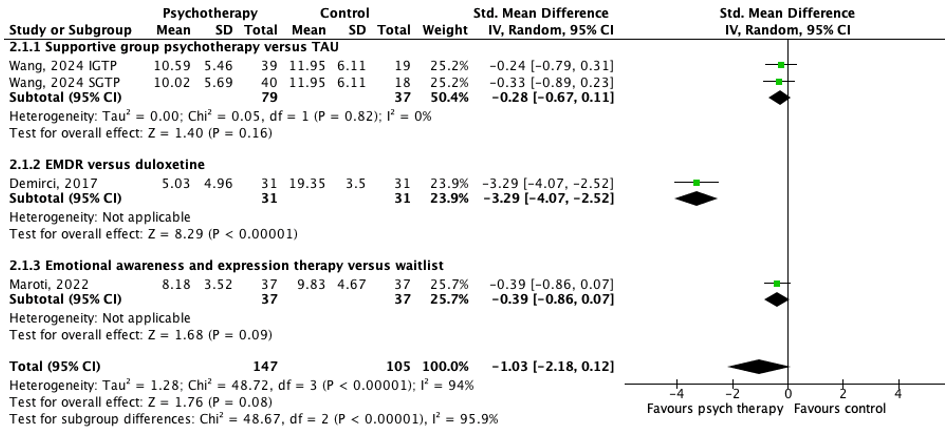
Figure 1: The effect of psychological treatment on physical symptoms at the end of treatment in participants with somatic symptom disorder (DSM-5).
Z: p-value of the pooled effect; df: degrees of freedom; I2: statistic heterogeneity; CI: confidence interval.
• Participants with a DSM-IV classification in the somatoform disorders section
The outcome measure physical symptoms -for participants with a DSM-IV classification in the somatoform disorders section- was reported by three studies included in van Dessel (2014) (Allen, 2006; Martin, 2007; Zonneveld, 2012) and by one additional study (Monsen, 2000). All studies assessed physical symptoms at the end of treatment.
Monsen (2000) and Zonneveld (2012) assessed self-reported physical symptoms with a possible psychosomatic origin using the somatization subscale of the SCL-90-R. Allen (2006) used the Severity of Somatic Symptom scale (SSS) (range: 0-280). Martin (2007) used the somatization subscale of the Brief Symptom Inventory (BSI-SOM) (range: 0-4). For all instruments, a higher score reflects greater severity of (self-reported) physical symptoms.
The pooled data show a SMD of -0.25 (95%CI -0.60 to 0.10) in favour of psychological treatment (Figure 2). This difference is considered not clinically relevant. SMD was used because different instruments were used to assess physical symptoms.
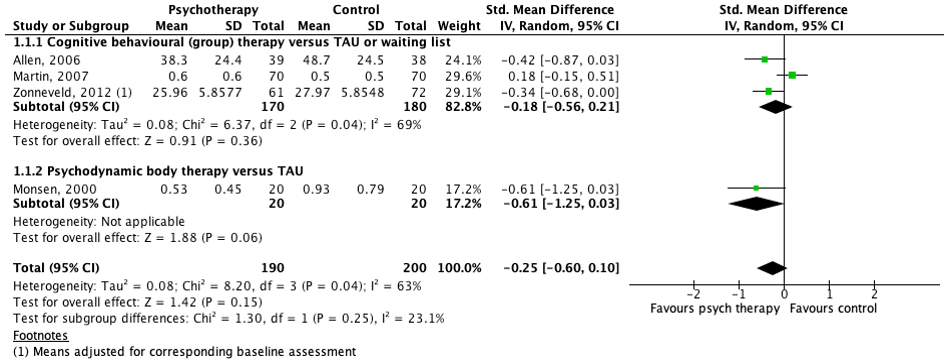
Figure 2: The effect of psychological treatment on physical symptoms at the end of treatment in participants with a DSM-IV classification in the somatoform disorders section.
Z: p-value of the pooled effect; df: degrees of freedom; I2: statistic heterogeneity; CI: confidence interval.
2. Psychological symptoms (anxiety, depression)
2.1 Anxiety
• Participants with a DSM-5 classification somatic symptom disorder
The outcome measure anxiety assessed by a participant-rated instrument in participants with the DSM-5 classification somatic symptom disorder was reported by three studies (Demirci, 2017; Maroti, 2022; Wang, 2024). All studies assessed the outcome measure at the end of treatment.
Demirci (2017) used the Beck Anxiety Inventory (BAI) (range: 0-63). Maroti (2022) and Wang (2024) used the Generalized Anxiety Disorder (GAD-7) (range: 0-21). For both instruments, a higher score indicates more severe levels of anxiety.
The pooled data show a SMD of -0.61 (95%CI -1.15 to -0.07) in favour of psychological treatment (Figure 3). This difference is considered clinically relevant. SMD was used because different instruments were used to assess anxiety.
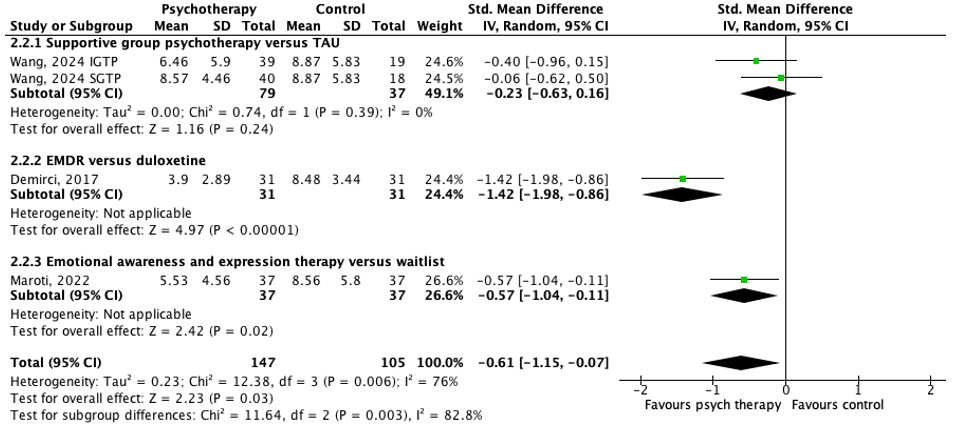
Figure 3: The effect of psychological treatment on participant-rated levels of anxiety at the end of treatment in participants with somatic symptom disorder (DSM-5).
Z: p-value of the pooled effect; df: degrees of freedom; I2: statistic heterogeneity; CI: confidence interval.
• Participants with a DSM-IV classification in the somatoform disorders section
The outcome measure anxiety assessed by a participant-rated instrument in participants with a DSM-IV undifferentiated somatoform disorder or pain disorder was reported by two studies included in van Dessel (2014) (Zonneveld, 2012; Martin, 2007), and by Monsen (2000).
Zonneveld (2012) assessed the outcome measure anxiety by using the anxiety subscale of the SCL-90-R (higher scores indicate more severe levels of anxiety). The authors reported a mean (SD) SCL-90-R score of 17.8 (7.7) for the intervention group receiving group training (n=61) and 16.7 (6.9) for the waiting list control group (n=49). Mean difference is 1.10 (95%CI -1.63 to 3.83) in favor of waiting list. This difference is considered not clinically relevant.
Martin (2007) reported on the outcome measure hypochondriacal anxiety by using the Whiteley Index (WI) (range: 0-28). A higher total score indicates a greater severity of health anxiety. At the end of treatment, the authors reported a mean (SD) WI score of 5.9 (4.1) for the CBT group (n=70) and 5.5 (3.6) for the control group (n=70). Mean difference is 0.40 (95%CI -0.88 to 1.68) in favor of the control group. This difference is considered not clinically relevant.
Monsen (2000) also assessed the outcome measure anxiety by using the anxiety subscale of the SCL-90-R. At the end of treatment, the authors reported a mean (SD) SCL-90-R score of 0.31 (0.31) for the psychodynamic body therapy group (n=20) and 0.60 (0.64) for the treatment as usual group (n=20). Mean difference is 0.29 (95%CI -0.60 to 0.02) in favor of psychodynamic body therapy. This difference is considered clinically relevant.
2.2 Depressive symptoms
• Participants with a DSM-5 classification somatic symptom disorder
The outcome measure depressive symptoms assessed by a participant-rated instrument in participants with a DSM-5 somatic symptom disorder was reported by three studies (Demirci, 2017; Maroti, 2022; Wang, 2024). All studies assessed the outcome measure at the end of treatment.
Demirci (2017) used the Beck Depression Inventory (BDI) (range: 0-63). Maroti (2022) and Wang (2024) used the Patient Health Questionnaire (PHQ-9) (range: 0-27). For both instruments, a higher score indicates more severe depressive symptoms.
The pooled data show a SMD of -0.68 (95%CI -1.35 to -0.01) in favour of psychological treatment (Figure 4). This difference is considered clinically relevant. SMD was used because different instruments were used to assess depressive symptoms.
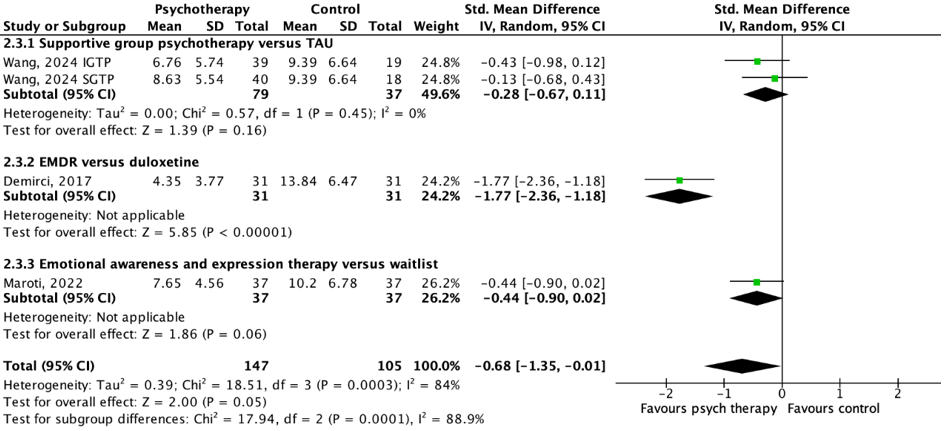
Figure 4: The effect of psychological treatment on participant-rated depressive symptoms at the end of treatment in participants with somatic symptom disorder (DSM-5).
Z: p-value of the pooled effect; df: degrees of freedom; I2: statistic heterogeneity; CI: confidence interval.
• Participants with a DSM-IV classification in the somatoform disorders section
The outcome measure depressive symptoms assessed by a participant-rated instrument in participants with a DSM-IV classification in the somatoform disorders section was reported by two studies included in van Dessel (2014) (Zonneveld, 2012; Martin, 2007) and by Monsen (2000). All studies assessed the outcome measure at the end of treatment.
Zonneveld (2012) assessed the outcome measure depressive symptoms by using the depression subscale of the SCL-90-R (higher scores indicate more severe depressive symptoms). The authors reported a mean (SD) SCL-90-R score of 29.2 (9.7) for participants in the intervention group receiving group training (n=61), and 29.8 (11.6) for participants in the waiting list control group (n=49). Mean difference is 0.60 (95%CI -4.66 to 3.46) in favor of group training. This difference was considered not clinically relevant.
Martin (2007) used the Beck Depression Inventory (BDI) (range: 0-63). A higher score indicates more severe depressive symptoms. The authors reported a mean (SD) BDI score of 13.7 (9.1) for the CBT group (n=70), and 12.5 (7.4) for the standard medical care group (n=70). Mean difference is 1.20 (95%CI -1.55 to 3.95) in favor of standard medical care. This difference was considered not clinically relevant.
Monsen (2000) also assessed the outcome measure depressive symptoms by using the depression subscale of the SCL-90-R. At the end of treatment, the authors reported a mean (SD) SCL-90-R score of 0.49 (0.45) for the psychodynamic body therapy group (n=20) and 0.83 (0.53) for the treatment as usual group (n=20). Mean difference is 0.34 (95%CI -0.64 to -0.04) in favor of psychodynamic body therapy. This difference is considered clinically relevant.
3. Functional disability and quality of life
• Participants with a DSM-5 classification somatic symptom disorder
The outcome measure functional disability and quality of life was reported by three studies in participants with a DSM-5 somatic symptom disorder classification (Demirci, 2017; Wang, 2024; Maroti, 2022).
Demirci (2017) assessed the outcome measure at the end of treatment by using the 36-item Short Form Questionnaire (SF-36). The instrument consists of 36 items that yield ten domains. All domains are scores on a scale from 0 to 100, and the scores are standardized with a mean of 50 and a SD of 10. Lower scores indicate more disability and worse health. Table 3 shows the results.
Table 3. Results on functional disability and quality of life (SF-36) as reported by Demirci (2017).
|
Subscale |
EMDR (n=31) |
Duloxetine (n=31) |
Mean difference (95%CI) |
Clinically relevant (yes/no) |
|
Physical function |
84.03 (11.43) |
47.74 (13.77) |
36.29 (29.99 to 42.59) |
Yes |
|
Role function |
90.32 (26.36) |
28.23 (25.61) |
62.09 (49.15 to 75.03) |
Yes |
|
Body pain |
83.55 (15.52) |
43.58 (13.55) |
39.97 (32.72 to 47.22) |
Yes |
|
General health |
74.58 (13.23) |
37.84 (16.23) |
36.74 (29.37 to 44.11) |
Yes |
|
Physical component |
52.15 (4.88) |
35.48 (5.44) |
16.67 (14.10 to 19.24) |
Yes |
|
Vitality |
72.90 (13.46) |
34.03 (15.35) |
38.87 (31.68 to 46.06) |
Yes |
|
Social function |
81.85 (16.72) |
45.97 (15.27) |
35.88 (27.91 to 43.85) |
Yes |
|
Role emotion |
91.07 (25.15) |
29.03 (30.73) |
62.04 (48.06 to 76.02) |
Yes |
|
Mental health |
72.13 (12.46) |
45.81 (8.69) |
26.32 (20.97 to 31.67) |
Yes |
|
Mental component |
51.08 (6.71) |
34.95 (6.75) |
16.13 (12.78 to 19.48) |
Yes |
|
Abbreviations: CI = Confidence interval; EMDR = Eye movement desensitization and reprocessing. |
||||
Wang (2024) used the physical component summary of the 12-item Short Form Questionnaire (SF-12) to assess the outcome at the end of treatment. Lower SF-12 scores indicate more disability. The authors reported a mean (SD) SF-12 score of 44.25 (7.34) for the IGPT group (n=39), 44.47 (8.06) for the SGPT group (n=40), and 41.18 (10.01) for the waiting list control group (n=37). Mean differences are 3.07 (95%CI -1.99 to 8.13) in favor of IGTP, and 3.29 (95%CI -1.97 to 8.55) in favor of SGTP when compared with waiting list control. These differences were both considered not clinically relevant.
Maroti (2022) reported on the Sheehan Disability Scale (SDS) (range: 0-30), indicating functional impairment. Higher SDS scores reflect higher functional impairment. At the end of treatment, the authors reported a mean (SD) score of 17.7 (7.38) for the I-EAET group (n=37) and 20.2 (6.91) for the waiting list control group (n=37). Mean difference is -2.50 (95%CI -5.76 to 0.76) in favor of I-EAET. This difference is considered not clinically relevant.
• Participants with a DSM-IV classification in the somatoform disorders section
The outcome measure functional disability and quality of life in participants with a DSM-IV classification in the somatoform disorders section was reported by two studies included in van Dessel (2014) (Allen, 2006; Zonneveld, 2012). Allen (2006) assessed the outcome measure at the end of treatment by using the physical functioning subscale of the SF-36 (range: 0-100). Zonneveld (2012) also assessed the outcome measure by using the SF-36, and reported a physical component summary as well as a mental component summary. Lower scores indicate more disability.
Allen (2006) reported mean (SD) SF-36 physical functioning scores of 63.3 (25.5) for the CBT group (n=39) and 56.9 (25.7) for the control group (n=38). Mean difference is 6.40 (95%CI -5.04 to 17.84) in favor of the control group. This difference was considered not clinically relevant.
Zonneveld (2012) reported means adjusted for the corresponding baseline assessment. For the physical component summary, the authors reported a mean (SD) SF-36 score of 34.5 (6.4) for the participants receiving CBT group training (n=56) and 31.0 (6.4) for the waiting list control group (n=65). Mean difference is 3.56 (95%CI 1.26 to 5.86) in favor of CBT group training. This difference was considered clinically relevant. Additionally, for the mental component summary, values of 46.5 (8.6) and 45.0 (8.5) were reported for the CBT group training and waiting list control group, respectively. Mean difference is 1.46 (95%CI -1.61 to 4.53) in favor of CBT group training. This difference was considered not clinically relevant.
4. Complications
• Participants with a DSM-5 classification somatic symptom disorder
One study in participants with a DSM-5 somatic symptom disorder reported on the outcome measure complications (Maroti, 2022).
Maroti (2022) reported on adverse events, defined as a 50% worsening of somatic symptoms or pain at post-treatment or a participant recording to the therapist a substantial increase of symptoms or suicidality. Four participants (10.8%) in the I-EAET group reported an adverse event compared to two participants (5.4%) in the waiting list control group. Risk ratio was 2.00 (95%CI 0.39 to 10.26) in favor of waiting list control. This difference was considered clinically relevant.
Two participants in the I-EAET group and two in the waiting list control group deteriorated on the Brief Pain Inventory. Additionally, one I-EAET participant expressed suicidal thoughts, and one other I-EAET participant stated that the intervention was activating their PTSD symptoms.
• Participants with a DSM-IV classification in the somatoform disorders section
The outcome measure complications was reported by two studies in participants with a DSM-IV classification in the somatoform disorders section, included in van Dessel (2014) (Zonneveld, 2012; Martin, 2007).
Martin (2007) reported no complications in both studied groups. Risk ratio was not estimable.
Zonneveld (2012) reported complications in one participant (1.4%) in the group receiving group training, and no complications in the waiting list group (n=67). Risk ratio was 2.87 (95%CI 0.12 to 69.32) in favor of waiting list control. This difference was considered clinically relevant.
5. Patient satisfaction
• Participants with a DSM-5 classification somatic symptom disorder
No studies in participants with a DSM-5 somatic symptom disorder reported on the outcome measure patient satisfaction.
• Participants with a DSM-IV classification in the somatoform disorders section
No studies in participants with a DSM-IV classification in the somatoform disorders section reported on the outcome measure patient satisfaction.
Level of evidence of the literature
1. Physical symptoms
• Participants with a DSM-5 classification somatic symptom disorder
The level of evidence regarding the outcome measure physical symptoms was downgraded by three levels to very low because of study limitations (missing information about randomization procedure, no allocation concealment, lack of blinding, incomplete outcome data) (risk of bias: -1), heterogeneity in interventions studied (indirectness: -1), and overlap of confidence interval with border of clinical relevance (imprecision: -1).
• Participants with a DSM-IV classification in the somatoform disorders section
The level of evidence regarding the outcome measure physical symptoms was downgraded by three levels to very low because of study limitations (no proper randomization, missing information about allocation concealment, lack of blinding, incomplete outcome data) (risk of bias: -1), heterogeneity in interventions studied (indirectness: -1), and overlap of confidence interval with border of clinical relevance (imprecision: -1).
2. Psychological symptoms (anxiety, depression)
2.1 Anxiety, participant-rated
• Participants with a DSM-5 classification somatic symptom disorder
The level of evidence regarding the outcome measure anxiety (participant-rated) was downgraded by three levels to very low because of study limitations (missing information about randomization procedure, no allocation concealment, lack of blinding, incomplete outcome data) (risk of bias: -1), heterogeneity in interventions studied (indirectness: -1), and overlap of confidence interval with border of clinical relevance (imprecision: -1).
• Participants with a DSM-IV classification in the somatoform disorders section
The level of evidence regarding the outcome measure anxiety (participant-rated) was downgraded by three levels to very low because of study limitations (no proper randomization, lack of blinding, incomplete outcome data) (risk of bias: -1), heterogeneity in the two interventions studied (indirectness: -1), and wide confidence intervals of the individual studies (imprecision: -1).
2.2 Depressive symptoms, participant-rated
• Participants with a DSM-5 classification somatic symptom disorder
The level of evidence regarding the outcome measure depressive symptoms (participant-rated) was downgraded by three levels to very low because of study limitations (missing information about randomization procedure, no allocation concealment, lack of blinding, incomplete outcome data) (risk of bias: -1), heterogeneity in interventions studied (indirectness: -1), and overlap of confidence interval with border of clinical relevance (imprecision: -1).
• Participants with a DSM-IV classification in the somatoform disorders section
The level of evidence regarding the outcome measure depressive symptoms (participant-rated) was downgraded by three levels to very low because of study limitations (no proper randomization, lack of blinding, incomplete outcome data) (risk of bias: -1), heterogeneity in the interventions studied (indirectness: -1), and wide confidence intervals of the individual studies (imprecision: -1).
3. Functional disability and quality of life
• Participants with a DSM-5 classification somatic symptom disorder
The level of evidence regarding the outcome measure functional disability and quality of life was downgraded by three levels to very low because of study limitations (missing information about randomization procedure, lack of blinding, incomplete outcome data) (risk of bias: -1), heterogeneity in interventions studied (indirectness: -1), and wide confidence intervals of the individual studies (imprecision: -1).
• Participants with a DSM-IV classification in the somatoform disorders section
The level of evidence regarding the outcome measure functional disability and quality of life was downgraded by three levels to very low because of study limitations (missing information about allocation concealment, lack of blinding, incomplete outcome data) (risk of bias: -1), heterogeneity in the interventions studied (inconsistency: -1), and wide confidence intervals of the individual studies (imprecision: -1).
4. Complications
• Participants with a DSM-5 classification somatic symptom disorder
The level of evidence regarding the outcome measure complications was downgraded by three levels to very low because of study limitations (lack of blinding, no adequate allocation concealment) (risk of bias: -1), overlap of confidence interval with border of clinical relevance, and the low number of patients/events (imprecision: -2).
• Participants with a DSM-IV classification in the somatoform disorders section
The level of evidence regarding the outcome measure complications was downgraded by three levels to very low because of study limitations (lack of blinding, incomplete outcome data) (risk of bias: -1), wide confidence interval, inability to calculate an effect measure, and the low number of patients/events (imprecision: -2).
5. Patient satisfaction
• Participants with a DSM-5 classification somatic symptom disorder
The level of evidence regarding the outcome measure patient satisfaction could not be assessed because none of the studies reported on this outcome measure.
• Participants with a DSM-IV classification in the somatoform disorders section
The level of evidence regarding the outcome measure patient satisfaction could not be assessed because none of the studies reported on this outcome measure.
A systematic review of the literature was performed to answer the following question:
What are the benefits and risks of psychological treatment for patients with somatic symptom disorder?
| P: | Patients with a somatic symptom disorder (DSM-5) classification or a classification in the somatoform disorders section (DSM-IV), except for hypochondriasis and body dysmorphic disorder |
| I: | Psychological treatment |
| C: | Waiting list or treatment as usual |
| O: |
Physical symptoms, psychological symptoms (anxiety, stress, mood), functional disability and quality of life, patient satisfaction, complications |
Relevant outcome measures
The guideline development group considered physical symptoms, psychological symptoms, and functional disability and quality of life as critical outcome measures for decision making, and patient satisfaction and complications as important outcome measures for decision making.
A priori, the working group did not define the outcome measures listed above but used the definitions used in the studies.
For all outcome measures, the working group defined a 25% difference for dichotomous outcomes (0.8 ≤ RR ≥ 1.25) and 0.5 SD for continuous outcomes as a minimal clinically (patient) important difference. If studies use different instruments to assess the same outcome measure, the standardized mean difference (SMD) is calculated. For SMDs, results were clinically relevant if they were smaller than -0.5 or larger than 0.5.
Search and select (Methods)
The databases Medline (via OVID), PsycINFO (via OVID), and Embase (via Embase.com) were searched with relevant search terms from 2010 until 15 April 2024. The detailed search strategy is available upon request. The systematic literature search resulted in 498 hits. Studies were selected based on the following criteria:
- Systematic reviews and randomized controlled trials (RCTs);
- Full-text English language publication;
- Studies according to the PICO.
In total 29 studies were initially selected based on title and abstract screening. After reading the full text, 26 studies were excluded (see the table with reasons for exclusion under the tab Methods), and one systematic review and two RCTs were included. Besides, two additional RCTs were included that were identified through reference screening of the excluded systematic reviews.
Results
One systematic review and four RCTs were included in the analysis of the literature. Important study characteristics and results are summarized in table 1 and 2. The assessment of the risk of bias is summarized in the risk of bias tables.
- Antoniades J, Mazza D, Brijnath B. Efficacy of depression treatments for immigrant patients: results from a systematic review. BMC Psychiatry. 2014 Jun 16;14:176. doi: 10.1186/1471-244X-14-176. PMID: 24930429; PMCID: PMC4084503.
- Allen LA, Woolfolk RL, Escobar JI, Gara MA, Hamer RM. Cognitive-behavioral therapy for somatization disorder: a randomized controlled trial. Arch Intern Med. 2006 Jul 24;166(14):1512-8. doi: 10.1001/archinte.166.14.1512. PMID: 16864762.
- Berk M, Parker G. The elephant on the couch: side-effects of psychotherapy. Aust N Z J Psychiatry. 2009 Sep;43(9):787-94. doi: 10.1080/00048670903107559. PMID: 19670051.
- Crane R, Morton L, Fawcett D, Moore A, Larson J, & Sandberg J. Somatoform disorder: Treatment utilization and cost by mental health profession. Contemporary Journal of Family Therapy. 2012; 34(3), 322-333.
- Cuijpers P, van Straten A, Andersson G, van Oppen P. Psychotherapy for depression in adults: a meta-analysis of comparative outcome studies. J Consult Clin Psychol. 2008 Dec;76(6):909-22. doi: 10.1037/a0013075. PMID: 19045960.
- Demirci OO, Sagaltici E, Yıldırım A. Comparison of Eye Movement Desensitization and Reprocessing (EMDR) and Duloxetine Treatment Outcomes in Women Patients with Somatic Symptom Disorder. Sleep and Hypnosis. 2017 Sep;19(3):70-77. doi: http://dx.doi.org/10.5350/Sleep.Hypn.2017.19.0146
- van Dessel N, den Boeft M, van der Wouden JC, Kleinstäuber M, Leone SS, Terluin B, Numans ME, van der Horst HE, van Marwijk H. Non-pharmacological interventions for somatoform disorders and medically unexplained physical symptoms (MUPS) in adults. Cochrane Database Syst Rev. 2014 Nov 1;2014(11):CD011142. doi: 10.1002/14651858.CD011142.pub2. PMID: 25362239; PMCID: PMC10984143.
- Dinnen S, Simiola V, Cook JM. Post-traumatic stress disorder in older adults: a systematic review of the psychotherapy treatment literature. Aging Ment Health. 2015;19(2):144-50. doi: 10.1080/13607863.2014.920299. Epub 2014 Jun 5. PMID: 24898218.
- Hendriks GJ, Oude Voshaar RC, Keijsers GP, Hoogduin CA, van Balkom AJ. Cognitive-behavioural therapy for late-life anxiety disorders: a systematic review and meta-analysis. Acta Psychiatr Scand. 2008 Jun;117(6):403-11. doi: 10.1111/j.1600-0447.2008.01190.x. PMID: 18479316.
- Hiller W, Fichter MM, Rief W. A controlled treatment study of somatoform disorders including analysis of healthcare utilization and cost-effectiveness. J Psychosom Res. 2003 Apr;54(4):369-80. doi: 10.1016/s0022-3999(02)00397-5. PMID: 12670616.
- Houtveen JH, van Broeckhuysen-Kloth S, Lintmeijer LL, Bühring ME, Geenen R. Intensive multidisciplinary treatment of severe somatoform disorder: a prospective evaluation. J Nerv Ment Dis. 2015 Feb;203(2):141-8. doi: 10.1097/NMD.0000000000000250. PMID: 25594786.
- GGZ Standaarden. Diversiteit. 2018. Geraadpleegd op 14 oktober 2025, via https://www.ggzstandaarden.nl/zorgstandaarden/diversiteit/introductie
- Maroti D, Lumley MA, Schubiner H, Lilliengren P, Bileviciute-Ljungar I, Ljótsson B, Johansson R. Internet-based emotional awareness and expression therapy for somatic symptom disorder: A randomized controlled trial. J Psychosom Res. 2022 Dec;163:111068. doi: 10.1016/j.jpsychores.2022.111068. Epub 2022 Oct 22. PMID: 36327532.
- Martin A, Rauh E, Fichter M, Rief W. A one-session treatment for patients suffering from medically unexplained symptoms in primary care: a randomized clinical trial. Psychosomatics. 2007 Jul-Aug;48(4):294-303. doi: 10.1176/appi.psy.48.4.294. PMID: 17600165.
- Monsen K, Monsen JT. Chronic pain and psychodynamic body therapy: A controlled outcome study. Psychotherapy: Theory, Research, Practice, Training. 2000;37(3):257–269. https://doi.org/10.1037/h0087658.
- Prothero L, Barley E, Galloway J, Georgopoulou S, Sturt J. The evidence base for psychological interventions for rheumatoid arthritis: A systematic review of reviews. Int J Nurs Stud. 2018 Jun;82:20-29. doi: 10.1016/j.ijnurstu.2018.03.008. Epub 2018 Mar 13. Erratum in: Int J Nurs Stud. 2020 Jul;107:103581. doi: 10.1016/j.ijnurstu.2020.103581. PMID: 29573593.
- Röhricht F, Sattel H, Kuhn C, Lahmann C. Group body psychotherapy for the treatment of somatoform disorder - a partly randomised-controlled feasibility pilot study. BMC Psychiatry. 2019 Apr 23;19(1):120. doi: 10.1186/s12888-019-2095-6. PMID: 31014294; PMCID: PMC6480707.
- Speckens AE, van Hemert AM, Spinhoven P, Hawton KE, Bolk JH, Rooijmans HG. Cognitive behavioural therapy for medically unexplained physical symptoms: a randomised controlled trial. BMJ. 1995 Nov 18;311(7016):1328-32. doi: 10.1136/bmj.311.7016.1328. PMID: 7496281; PMCID: PMC2551242.
- Tak LM, Chrispijn M, Rosmalen JGM. Somatisch-symptoomstoornis: een grote maar onderschatte psychiatrische stoornis. Tijdschrift voor psychiatrie. 2023 Sep 19.
- van Twillert E, Hulsman MMC, Tak LM. Facilitating and hindering factors in the treatment of persistent somatic symptoms in migrants: A scoping review. J Psychosom Res. 2024 Nov;186:111887. doi: 10.1016/j.jpsychores.2024.111887. Epub 2024 Aug 15. PMID: 39213940.
- Van Rood, Y., & de Roos, C. (2017). Somatisch onvoldoende verklaarde lichamelijke klachten en somatisch-symptoomstoornis: Protocol voor een gepersonaliseerd behandelplan voor patiënten met somatisch onvoldoende verklaarde lichamelijke klachten (SOLK). In G. Keijsers, A. van Minnen, M. Verbraak, K. Hoogduin, & P. Emmelkamp (red.), Protocollaire behandelingen voor volwassenen met psychische klachten 3 (pp. 19-62). Uitgeverij Boom.
- Veehof MM, Oskam MJ, Schreurs KMG, Bohlmeijer ET. Acceptance-based interventions for the treatment of chronic pain: a systematic review and meta-analysis. Pain. 2011 Mar;152(3):533-542. doi: 10.1016/j.pain.2010.11.002. Epub 2011 Jan 19. PMID: 21251756.
- Vereenooghe L, Langdon PE. Psychological therapies for people with intellectual disabilities: a systematic review and meta-analysis. Res Dev Disabil. 2013 Nov;34(11):4085-102. doi: 10.1016/j.ridd.2013.08.030. Epub 2013 Sep 18. PMID: 24051363.
- Visser MS, Zonneveld LN, Van't Spijker A, Hunink MG, Busschbach JJ. The Cost-Effectiveness of Cognitive-Behavioral Group Training for Patients with Unexplained Physical Symptoms. Value Health. 2015 Jul;18(5):570-7. doi: 10.1016/j.jval.2015.03.1791. Epub 2015 May 19. PMID: 26297084.
- Wang Y, Li L, Huang L, Ma J, Zheng L, Fritzsche K, Leonhart R, Toussaint AC, Schaefert R, Zhang L. Integrative group psychotherapy for patients with somatic symptom disorder: A randomized controlled trial. Psychiatry Res. 2024 Jan;331:115660. doi: 10.1016/j.psychres.2023.115660. Epub 2023 Dec 3. PMID: 38061179.
- Weigel A, Maehder K, Witt M, Löwe B. Psychotherapists' perspective on the treatment of patients with somatic symptom disorders. J Psychosom Res. 2020 Nov;138:110228. doi: 10.1016/j.jpsychores.2020.110228. Epub 2020 Aug 29. PMID: 32896756.
- Wetherell JL, Petkus AJ, Alonso-Fernandez M, Bower ES, Steiner AR, Afari N. Age moderates response to acceptance and commitment therapy vs. cognitive behavioral therapy for chronic pain. Int J Geriatr Psychiatry. 2016 Mar;31(3):302-8. doi: 10.1002/gps.4330. Epub 2015 Jul 28. PMID: 26216753.
- Winkley K, Ismail K, Landau S, Eisler I. Psychological interventions to improve glycaemic control in patients with type 1 diabetes: systematic review and meta-analysis of randomised controlled trials. BMJ. 2006 Jul 8;333(7558):65. doi: 10.1136/bmj.38874.652569.55. Epub 2006 Jun 27. PMID: 16803942; PMCID: PMC1489251.
- Zonneveld, L. N. L., Rikkert, M. E., & Wertheim, B. (2021). Clinical practice 'Medisch-psychologische zorg voor patiënten met somatisch-symptoomstoornis en verwante stoornissen (SSSevs) in het ziekenhuis'. Amsterdam: Landelijke Vereniging Medische Psychologie.
- Zonneveld LN, van Rood YR, Timman R, Kooiman CG, Van't Spijker A, Busschbach JJ. Effective group training for patients with unexplained physical symptoms: a randomized controlled trial with a non-randomized one-year follow-up. PLoS One. 2012;7(8):e42629. doi: 10.1371/journal.pone.0042629. Epub 2012 Aug 7. Erratum in: PLoS One. 2013;8(5). doi:10.1371/annotation/9cefaaa9-c367-4f2d-a927-0a0b304ae21f. PMID: 22880056; PMCID: PMC3413637.
Risk of bias tables
For further details about the risk assessment of the studies included in van Dessel (2024), see https://www.cochranelibrary.com/cdsr/doi/10.1002/14651858.CD011142.pub2/full
|
Study reference
(first author, publication year) |
Was the allocation sequence adequately generated?
Definitely yes Probably yes Probably no Definitely no |
Was the allocation adequately concealed?
Definitely yes Probably yes Probably no Definitely no |
Blinding: Was knowledge of the allocated interventions adequately prevented? Were patients, healthcare providers, data collectors, outcome assessors, data analysts blinded?
Definitely yes Probably yes Probably no Definitely no |
Was loss to follow-up (missing outcome data) infrequent?
Definitely yes Probably yes Probably no Definitely no |
Are reports of the study free of selective outcome reporting?
Definitely yes Probably yes Probably no Definitely no |
Was the study apparently free of other problems that could put it at a risk of bias?
Definitely yes Probably yes Probably no Definitely no |
Overall risk of bias If applicable/necessary, per outcome measure
LOW Some concerns HIGH |
|
Monsen (2000)
|
Definitely no
Reason: Participants were matched on similarity of MMPI profiles, organized in pairs, and then randomized. |
No information |
Probably no
Reason: Outcome assessment was done blindly, but it is unclear whether participants were blinded. |
Probably yes
Reason: Not reported. |
Definitely yes
Reason: No trial registration or protocol mentioned. No reason to doubt that the study is free of selective outcome reporting. All outcomes as specified in the methods section are reported. |
Probably yes
Reason: Nothing reported. |
High |
|
Demirci (2017)
|
Definitely no
Reason: Participants were randomized utilizing the SCL-90 somatization subscale score determined at baseline. |
No information |
Probably no
Reason: Nothing is reported about blinding. |
Probably yes
Reason: Not reported. |
Definitely yes
Reason: No trial registration or protocol mentioned. No reason to doubt that the study is free of selective outcome reporting. All outcomes as specified in the methods section are reported. |
Probably yes
Reason: Nothing reported. |
High |
|
Maroti (2022) |
Definitely yes
Reason: An online randomization tool was used. |
Definitely no
Reason: No blinding of concealment of group allocation took place. |
Definitely no
Reason: No blinding. |
Probably yes
Reason: Attrition from the trial was very low. |
Definitely yes
Reason: Trial is registered at ClinicalTrials.gov (NCT04751825). Primary and secondary outcomes are reported as prespecified. |
Probably yes
Reason: Nothing reported. |
High |
|
Wang (2024) |
Definitely yes
Reason: A true random number service (RRID: SCR_008544) was used for randomization. |
Probably yes
Reason: The random allocation sequence is unknown to any of the investigators or therapists until interventions are assigned.
|
Definitely no
Reason: The doctor was blinded for the first diagnosis. Blinding the doctor to the applied psycho-therapeutic intervention was not possible. Nothing is reported about blinding of investigators or participants. |
Probably no
Reason: 14 participants were lost to follow-up. Unclear if numbers were evenly distributed across groups. |
Definitely yes
Reason: Trial is registered at ClinicalTrials.gov (ChiCTR2200055654). Primary and secondary outcomes are reported as prespecified. |
Probably yes
Reason: Nothing reported. |
High |
Table of excluded studies
|
Reference |
Reason for exclusion |
|
Abbass AA, Hancock JT, Henderson J, Kisely S. Short-term psychodynamic psychotherapies for common mental disorders. Cochrane Database Syst Rev. 2006 Oct 18;(4):CD004687. doi: 10.1002/14651858.CD004687.pub3. Update in: Cochrane Database Syst Rev. 2014 Jul 01;(7):CD004687. doi: 10.1002/14651858.CD004687.pub4. PMID: 17054212. |
Includes only 2 suitable studies (Sattel, 2012; Monsen, 2000). Sattel (2012) is included in van Dessel (2014) which is more recent, Monsen (2000) is included in the literature summary. |
|
Berezowski L, Ludwig L, Martin A, Löwe B, Shedden-Mora MC. Early Psychological Interventions for Somatic Symptom Disorder and Functional Somatic Syndromes: A Systematic Review and Meta-Analysis. Psychosom Med. 2022 Apr 1;84(3):325-338. doi: 10.1097/PSY.0000000000001011. PMID: 34524264; PMCID: PMC8983947. |
Includes only 1 study that investigates early psychological interventions in people with any somatoform disorder, but diagnosis according to ICD-10: F44.4-F48.0 criteria. |
|
Crowe M, Jordan J, Burrell B, Jones V, Gillon D, Harris S. Mindfulness-based stress reduction for long-term physical conditions: A systematic review. Aust N Z J Psychiatry. 2016 Jan;50(1):21-32. doi: 10.1177/0004867415607984. Epub 2015 Sep 29. PMID: 26419491. |
Includes no studies that are according to our P-selection criteria. |
|
Hempel S, Taylor SL, Marshall NJ, Miake-Lye IM, Beroes JM, Shanman R, Solloway MR, Shekelle PG. Evidence Map of Mindfulness [Internet]. Washington (DC): Department of Veterans Affairs (US); 2014 Oct. PMID: 25577939. |
Wrong publication type (review of systematic reviews). |
|
Koelen JA, Houtveen JH, Abbass A, Luyten P, Eurelings-Bontekoe EH, Van Broeckhuysen-Kloth SA, Bühring ME, Geenen R. Effectiveness of psychotherapy for severe somatoform disorder: meta-analysis. Br J Psychiatry. 2014 Jan;204(1):12-9. doi: 10.1192/bjp.bp.112.121830. PMID: 24385460. |
Includes 3 (suitable) studies (Allen, 2006; Nickel, 2006; Zaby (2008). Allen (2006) is included in van Dessel (2014) which is more recent, Nickel (2006) is included in the literature summary, Zaby (2008) is a full-text German article. |
|
Lakhan SE, Schofield KL. Mindfulness-based therapies in the treatment of somatization disorders: a systematic review and meta-analysis. PLoS One. 2013 Aug 26;8(8):e71834. doi: 10.1371/journal.pone.0071834. PMID: 23990997; PMCID: PMC3753315. |
Includes no studies that are according our selection criteria. Fjorback (2013) is not according to our P-criteria (bodily distress syndrome), Sampalli (2009) used a nonrandomized design. |
|
Liu J, Gill NS, Teodorczuk A, Li ZJ, Sun J. The efficacy of cognitive behavioural therapy in somatoform disorders and medically unexplained physical symptoms: A meta-analysis of randomized controlled trials. J Affect Disord. 2019 Feb 15;245:98-112. doi: 10.1016/j.jad.2018.10.114. Epub 2018 Oct 22. PMID: 30368076. |
Includes 7 suitable studies, of which four (Allen, 2006; Martin, 2007; Moreno, 2013; Schröder, 2013) are included in van Dessel (2014) which is of better quality (Cochrane review) and three are not according to our selection criteria: *Hedman (2016): wrong population (patients with SSD and IAD, no subgroup analysis). *Ravesteijn (2013): wrong population (13% somatization disorder, 20% pain disorder; no subgroup analysis). *Fjorback (2013): wrong population (bodily distress syndrome). |
|
Maass, U., Kühne, F., Maas, J., Unverdross, M., & Weck, F. (2020). Psychological interventions for health anxiety and somatic symptoms: A systematic review and meta-analysis. Zeitschrift für Psychologie, 228(2), 68–80. https://doi.org/10.1027/2151-2604/a000400 |
Includes no studies that are according to our selection criteria (Hedman, 2016; Newby, 2018). See reasons above. |
|
Leaviss J, Davis S, Ren S, Hamilton J, Scope A, Booth A, Sutton A, Parry G, Buszewicz M, Moss-Morris R, White P. Behavioural modification interventions for medically unexplained symptoms in primary care: systematic reviews and economic evaluation. Health Technol Assess. 2020 Sep;24(46):1-490. doi: 10.3310/hta24460. PMID: 32975190; PMCID: PMC7548871. |
Includes 2 (suitable) studies (Ravesteijn, 2013; Zonneveld, 2012). Zonneveld (2012) is included in van Dessel (2014) which is more complete and of better quality, Ravesteijn (2013) is not according to our P-selection criteria (see above). |
|
Pinquart M, Oslejsek B, Teubert D. Efficacy of systemic therapy on adults with mental disorders: A meta-analysis. Psychother Res. 2016;26(2):241-57. doi: 10.1080/10503307.2014.935830. Epub 2014 Jul 17. PMID: 25032487. |
Descriptive review, no raw data presented. Not usable for the literature summary. |
|
Reuter L, Bengel J, Scheidt CE. Therapie-Non-Response in der psychosomatischen Krankenhausbehandlung und Rehabilitation - Eine systematische Übersicht [Non-response to therapy in acute and rehabilitative psychosomatic inpatient care - a systematic review]. Z Psychosom Med Psychother. 2014;60(2):121-45. German. doi: 10.13109/zptm.2014.60.2.121. PMID: 24877571. |
Full-text not available. German article. |
|
Kleinstäuber M, Witthöft M, Hiller W. Efficacy of short-term psychotherapy for multiple medically unexplained physical symptoms: a meta-analysis. Clin Psychol Rev. 2011 Feb;31(1):146-60. doi: 10.1016/j.cpr.2010.09.001. Epub 2010 Sep 16. PMID: 20920834. |
Descriptive review, no raw data presented. Not usable for the literature summary. |
|
Sarter L, Heider J, Kirchner L, Schenkel S, Witthöft M, Rief W, Kleinstäuber M. Cognitive and emotional variables predicting treatment outcome of cognitive behavior therapies for patients with medically unexplained symptoms: A meta-analysis. J Psychosom Res. 2021 Jul;146:110486. doi: 10.1016/j.jpsychores.2021.110486. Epub 2021 Apr 7. PMID: 33879330. |
Descriptive review, no raw data presented. Not usable for the literature summary. |
|
Sarter L, Heider J, Witthöft M, Rief W, Kleinstäuber M. Using clinical patient characteristics to predict treatment outcome of cognitive behavior therapies for individuals with medically unexplained symptoms: A systematic review and meta-analysis. Gen Hosp Psychiatry. 2022 Jul-Aug;77:11-20. doi: 10.1016/j.genhosppsych.2022.03.001. Epub 2022 Mar 7. PMID: 35390568. |
Descriptive review, no raw data presented. Not usable for the literature summary. |
|
Carlbring P, Andersson G, Cuijpers P, Riper H, Hedman-Lagerlöf E. Internet-based vs. face-to-face cognitive behavior therapy for psychiatric and somatic disorders: an updated systematic review and meta-analysis. Cogn Behav Ther. 2018 Jan;47(1):1-18. doi: 10.1080/16506073.2017.1401115. Epub 2017 Dec 7. PMID: 29215315. |
Includes no studies that are according to our P-selection criteria (social anxiety disorder, panic disorder, depressive symptoms, body dissatisfaction, tinnitus, sexual dysfunction, fibromyalgia, spider/snake phobia, insomnia). |
|
Hofmann SG, Asnaani A, Vonk IJ, Sawyer AT, Fang A. The Efficacy of Cognitive Behavioral Therapy: A Review of Meta-analyses. Cognit Ther Res. 2012 Oct 1;36(5):427-440. doi: 10.1007/s10608-012-9476-1. Epub 2012 Jul 31. PMID: 23459093; PMCID: PMC3584580. |
Descriptive review, no raw data presented. Not usable for the literature summary. |
|
Leichsenring F, Abbass A, Heim N, Keefe JR, Kisely S, Luyten P, Rabung S, Steinert C. The status of psychodynamic psychotherapy as an empirically supported treatment for common mental disorders - an umbrella review based on updated criteria. World Psychiatry. 2023 Jun;22(2):286-304. doi: 10.1002/wps.21104. PMID: 37159376; PMCID: PMC10168167. |
Wrong publication type (umbrella review). |
|
Leichsenring, F., & Klein, S. (2014). Evidence for psychodynamic psychotherapy in specific mental disorders: A systematic review. Psychoanalytic Psychotherapy, 28(1), 4–32. https://doi.org/10.1080/02668734.2013.865428 |
Includes only 2 suitable studies (Sattel, 2012; Monsen, 2000). Sattel (2012) is included in van Dessel (2014) which is more recent, Monsen (2000) is included in the literature summary. |
|
Leichsenring F, Leweke F, Klein S, Steinert C. The empirical status of psychodynamic psychotherapy - an update: Bambi's alive and kicking. Psychother Psychosom. 2015;84(3):129-48. doi: 10.1159/000376584. Epub 2015 Mar 28. PMID: 25833321. |
Includes only 2 suitable studies (Sattel, 2012; Monsen, 2000). Sattel (2012) is included in van Dessel (2014) which is more recent, Monsen (2000) is included in the literature summary. |
|
Leichsenring, F., Steinert, C., Rabung, S. and Ioannidis, J.P.A. (2022), The efficacy of psychotherapies and pharmacotherapies for mental disorders in adults: an umbrella review and meta-analytic evaluation of recent meta-analyses. World Psychiatry, 21: 133-145. https://doi.org/10.1002/wps.20941 |
Wrong publication type (umbrella review). Descriptive review, no raw data presented. Not usable for the literature summary. Includes systematic reviews as well. |
|
Scelles C, Bulnes LC. EMDR as Treatment Option for Conditions Other Than PTSD: A Systematic Review. Front Psychol. 2021 Sep 20;12:644369. doi: 10.3389/fpsyg.2021.644369. PMID: 34616328; PMCID: PMC8488430. |
Includes 1 suitable study (Demirci, 2017) which is included in the literature summary. |
|
Ejeby K, Savitskij R, Ost LG, Ekbom A, Brandt L, Ramnerö J, Asberg M, Backlund LG. Randomized controlled trial of transdiagnostic group treatments for primary care patients with common mental disorders. Fam Pract. 2014 Jun;31(3):273-80. doi: 10.1093/fampra/cmu006. Epub 2014 Mar 18. PMID: 24642702; PMCID: PMC4024961. |
Wrong population (diagnosis somatoform disorders according to DSM-IV). |
|
Seitz T, Stastka K, Schiffinger M, Rui Turk B, Löffler-Stastka H. Interprofessional care improves health-related well-being and reduces medical costs for chronic pain patients. Bull Menninger Clin. 2019 Spring;83(2):105-127. doi: 10.1521/bumc_2019_83_01. Epub 2019 Mar 6. PMID: 30840490. |
Wrong study design (non-randomized single-arm trial). |
|
Zargar F, Rahafrouz L, Tarrahi MJ. Effect of Mindfulness-Based Stress Reduction Program on Psychological Symptoms, Quality of Life, and Symptom Severity in Patients with Somatic Symptom Disorder. Adv Biomed Res. 2021 Feb 26;10:9. doi: 10.4103/abr.abr_111_19. PMID: 33959566; PMCID: PMC8095256. |
Wrong population (diagnosis SSD according to DSM-IV), wrong comparator (venlafaxine). |
|
Rostami R, Bozorgi ZD. Research Paper: Effectiveness of Acceptance and Commitment Therapy on Resiliency and Alexithymia of Somatic Symptoms. Practice in Clinical Psychiatry. 2019. doi: http://dx.doi.org/10.32598/jpcp.7.2.87 |
Wrong outcomes (resiliency, alexithymia). |
|
Jongsma K, Darboh BS, Davis S, MacKillop E. A cognitive behavioural group treatment for somatic symptom disorder: a pilot study. BMC Psychiatry. 2023 Nov 30;23(1):896. doi: 10.1186/s12888-023-05141-9. PMID: 38037036; PMCID: PMC10690984. |
Wrong study design (non-randomized single-arm trial). |
Beoordelingsdatum en geldigheid
Publicatiedatum : 09-07-2026
Beoordeeld op geldigheid : 09-07-2026
Algemene gegevens
Er is een verklaring van geen bezwaar afgegeven door:
- Ergotherapie Nederland
- Nederlandse Vereniging voor Neurologie
- Nederlands Huisartsen Genootschap
Samenstelling werkgroep
Voor het ontwikkelen van de richtlijnmodule is in 2023 een multidisciplinaire werkgroep ingesteld, bestaande uit vertegenwoordigers van alle relevante specialismen (zie hiervoor de Samenstelling van de werkgroep) die betrokken zijn bij de zorg voor mensen met een somatisch-symptoomstoornis of functioneel-neurologisch-symptoomstoornis.
Werkgroep
- dr. E. (Ella) Bekhuis, psychiater, namens de NVvP
- D. (Door) Boxhoorn, patiëntvertegenwoordiger, namens het NALK (tot mei 2025)
- K. (Karin) Bruynesteyn, patiëntvertegenwoordiger, namens het NALK (tot april 2024)
- dr. E.M.J. (Elisabeth) Foncke, neuroloog, namens de NVN
- S. (Sem) Foreman, patiëntvertegenwoordiger, namens het NALK
- dr. J. (Jeannette) Gelauff, AIOS neurologie, namens de NVN (vanaf maart 2025)
- dr. D.J.C. (Denise) Hanssen, klinisch psycholoog/psychotherapeut, namens het NIP
- dr. H. (Hanneke) Kalisvaart, psychomotorisch therapeut, namens Vaktherapie Nederland
- drs. M. (Manouk) van de Klundert, patiëntvertegenwoordiger, namens het NALK
- prof. dr. R.C. (Richard) Oude Voshaar, psychiater, namens de NVvP
- prof. dr. J.G.M. (Judith) Rosmalen, hoogleraar, persoonlijke titel
- dr. S. (Sonja) Rutten, psychiater, namens de NVvP
- drs. C.A. (Lot) Spiertz, klinisch psycholoog/psychotherapeut, namens het NIP
- dr. L.M. (Lineke) Tak (voorzitter), psychiater, namens de NVvP
- dr. P.E. (Els) van Westrienen, docent-senior onderzoeker, namens het KNGF
- prof. dr. A.P. (André) Wolff, anesthesioloog-pijnspecialist, namens de NVA
- dr. L.N.L. (Lyonne) Zonneveld, klinisch psycholoog/psychotherapeut, namens het NIP
Klankbordgroep
- drs. M. (Marieke) van Beugen, revalidatiearts, namens de Nederlandse Vereniging van Revalidatieartsen (VRA)
- drs. B.F. (Bart) van Buchem, fysiotherapeut, namens het KNGF
- drs. W.B. (Wouter) Doorn, klinisch geriater, namens de Nederlandse Vereniging voor Klinische Geriatrie (NVKG)
- H.W.P.C. (Henk) van de Meerendonk, bedrijfsarts, namens de Nederlandse Vereniging voor Arbeids- en Bedrijfsgeneeskunde (NVAB)
- dr. A.F. (Alex) Muller, internist-endocrinoloog, namens Nederlandse Internisten Vereniging (NIV)
- dr. S.L. (Sonja) van Ockenburg, internist, namens de NIV
- dr. T.C. (Tim) Olde Hartman, huisarts(-onderzoeker), namens het Nederlands Huisartsen Genootschap (NHG)
- drs. R.F.A. (René) Oosterwijk, revalidatiearts, namens de VRA
- E.M. (Ilse) Otten, ergotherapeut, namens Ergotherapie Nederland (EN)
- drs. F. (Felice) Tauer, vaktherapeut, namens de Vaktherapie Nederland
- dr. K.H.N. (Kristel) Weerdesteijn, verzekeringsarts, namens de Nederlandse Vereniging voor Verzekeringsgeneeskunde (NVVG)
- dr. M.S.H. (Margreet) Wortman, senior onderzoeker, namens de Vereniging van Oefentherapeuten Cesar en Mensendieck (VvOCM)
Met ondersteuning van
- dr. M.L. (Marja) Molag, adviseur, Kennisinstituut van de Federatie Medisch Specialisten
- drs. L.C. (Laura) van Wijngaarden, junior adviseur, Kennisinstituut van de Federatie Medisch Specialisten
Belangenverklaringen
Een overzicht van de belangen van werkgroepleden en het oordeel over het omgaan met eventuele belangen vindt u in onderstaande tabel. De ondertekende belangenverklaringen zijn op te vragen bij het secretariaat van het Kennisinstituut van de Federatie Medisch Specialisten via secretariaat@kennisinstituut.nl.
Tabel 1. Gemelde (neven)functies en belangen werkgroep
|
Werkgroeplid |
Functie |
Nevenfuncties |
Gemelde belangen |
Ondernomen actie |
|
E. (Ella) Bekhuis |
Psychiater, Dimence, Alkura |
Geen |
Geen |
Geen restricties |
|
D. (Door) Boxhoorn (tot mei 2025) |
Ervaringsdeskundige, Dimence Alkura |
Geen |
Geen |
Geen restricties |
|
K. (Karin) Bruynesteyn (tot april 2024) |
Lid patiëntenpanel NALK |
Geen |
Geen |
Geen restricties |
|
E.M.J. (Elisabeth) Foncke |
Neuroloog, Acibadem International Medical Center, Amsterdam |
Geen |
Geen |
Geen restricties |
|
S. (Sem) Foreman |
Lid patiëntenpanel NALK |
* Investment manager, Graduate Entrepreneur Fund |
Geen |
Geen restricties |
|
J. (Jeannette) Gelauff (vanaf maart 2025) |
AIOS neurologie, Amsterdam UMC |
* Voorzitter landelijke werkgroep FNS van de Nederlandse Vereniging voor Neurologie. * Deelname werkgroep zorgstandaard FNS (Akwa GGZ). |
Extern gefinancierd onderzoek: Zonmw; National Plan Hoofdzaken: BEGRIP studie naar educatie over FNS. ProjectLeidersrol, nee |
Geen restricties |
|
D.J.C. (Denise) Hanssen |
* Klinisch psycholoog/psychotherapeut, UMC Groningen * Senior wetenschappelijk onderzoeker ouderenpsychiatrie, UMC Groningen |
* Hoofddocent somatiek binnen de GZ-opleiding |
Extern gefinancierd onderzoek: * ZonMW, Haalbaarheidsstudie Acceptance and Commitment Therapy bij kwetsbare ouderen EU, Horizon 2020 * Kennis vergroten over Functionele Stoornissen (labeling, multidisciplinaire samenwerking) |
Geen restricties |
|
H. (Hanneke) Kalisvaart |
Psychomotorisch therapeut, vrijgevestigd |
* Trainer/supervisor in sensorimotor psychotherapy. * Freelance senior onderzoeker (Tilburg University) * Gast-docent Master PMT Hogeschool Windesheim. * Deelname werkgroep zorgstandaard FNS (Akwa GGZ). |
Extern gefinancierd onderzoek: * Stichting tot steun VCVGZ. Het effect van sensorimotor psychotherapie bij cliënten met persoonlijkheidsstoornissen. |
Geen restricties |
|
M. (Manouk) van de Klundert |
Lid patiëntenpanel NALK |
* Office manager NALK * Project manager/junior consultant Ftrprf |
Geen |
Geen restricties |
|
R.C. (Richard) Oude Voshaar |
* Psychiater, UMC Groningen * Hoogleraar ouderenpsychiatrie, Rijksuniversiteit Groningen |
Geen |
Geen |
Geen restricties |
|
J.G.M. (Judith) Rosmalen |
Hoogleraar Psychosomatiek, UMC Groningen, Rijksuniversiteit Groningen |
* Voorzitter Netwerk Aanhoudende Lichamelijke Klachten (NALK) tot okt 2024. * Vice-president European Association of Psychosomatic Medicine (EAPM) tot September 2025 |
Persoonlijke belangen: Ontwikkelaar van een eLearning op het gebied van ALK. Deelnemen aan de elearning is betaald voor sommige groepen; inkomsten gaan naar het UMCG en hiervan wordt de accreditatie betaald. Ontwikkelaar van Grip, een eHealth systeem dat zich richt op ALK. Momenteel is Grip niet beschikbaar buiten studiedoeleinden. Ik heb en had nooit persoonlijke financiële belangen bij Grip.
Extern gefinancierd onderzoek: * ZonMw: ME/CFS Lines – A multidisciplinary consortium and biobank for unravelling ME/CFS aetiology in Lifelines, projectleider * EU: Decision support for prediction and management of Long Covid Syndrome, geen projectleider * NIMH: An Integrative Approach to the Etiology of Internalizing Disorders in the Lifelines Cohort, geen projectleider * ZonMw: Persistent symptoms after COVID-19: perspective from the population, the patient, and the care system, projectleider * SBOH Innovatiefonds Huisartsopleiding: Ontwikkeling, implementatie en evaluatie van onderwijsprogramma voor somatisch onvoldoende verklaarde lichamelijke klachten (SOLK) in de huisartsopleiding, geen projectleider * NIMH: An Integrative Approach to the Etiology of Internal Sex and gender inequalities in COVID * Regionaal ALK netwerk Salland. Sex and gender inequalities in medical trajectories of patients with common somatic symptoms. Master Your symptoms: personalized e-health for Self-management of somatic symptom disorder (MYSelf), projectleider * EU: Encompassing Training in functional Disorders across Europe (ETUDE), projectleider * EU: Towards evidence-based tailored implementation strategies for eHealth (ImpleMentAll), geen projectleider |
Geen restricties |
|
S. (Sonja) Rutten |
* Psychiater, Amsterdam UMC * Senior-onderzoeker, Amsterdam UMC |
Geen |
Extern gefinancierd onderzoek: ZonMW: Meer BEkendheid en GRIP voor mensen met FNS middels een online educatiemodule (BEGRIP) |
Geen restricties |
|
C.A. (Lot) Spiertz |
Klinisch-psycholoog, behandelcoördinator en teamleider, Dimence, Deventer |
* Gastdocent Psychology master, Universiteit Twente (t/m 2024). * Gastdocentschap Psychology master, Radboud Universiteit (t/m 2025). |
Geen |
Geen restricties |
|
L.M. (Lineke) Tak |
Psychiater, Dimence, Deventer |
* Bestuurslid NALK, sinds okt 2024 voorzitter * Kernredactielid Tijdschrift voor Psychiatrie |
* EU: Encompassing Training in functional Disorders across Europe (ETUDE), * Collaborative care networks for Functional Disorders |
Geen restricties |
|
P.E. (Els) van Westrienen |
* Docent-senior onderzoeker, Fontys Hogeschool * Docent, Hogeschool Utrecht |
Geen |
* SIA RAAK publiek - PARASOL studie * SIA RAAK top-up - vervolg PARASOL studie * SIA RAAK MKB - van sensoren naar zorg * SIA RAAK publiek Evaluatie van een proactief interventie ter preventie van chroniciteit bij mensen met matige SOLK * SIA RAAK MKB Het toepassen van stressmetingen met wearables in de praktijk |
Geen restricties |
|
A.P. (André) Wolff |
* Anesthesioloog-pijnspecialist, UMC Groningen * Hoogleraar Rijksuniversiteit Groningen |
* Medisch hoofd UCG pijncentrum |
Extern gefinancierd onderzoek: * Philips, DANI studie, geen projectleider * KWR, Chordotomie studie, projectleider * Interreg, Chronische pijn in Noord-Nederland/Niedersachsen * QPS, verrichtingen voor derden, geen projectleider * Grunenthal, Prince studie, projectleider |
Geen restricties |
|
L.N.L. (Lyonne) Zonneveld |
Klinisch-psycholoog, Amsterdam UMC |
Geen |
* ZonMW Stimuleringssubsidie * Doelmatigheidsonderzoek |
Geen restricties |
Tabel 2. Gemelde (neven)functies en belangen klankbordgroep
|
Klankbordgroeplid |
Functie |
Nevenfuncties |
Gemelde belangen |
Ondernomen actie |
|
M. (Marieke) van Beugen |
Revalidatiearts bij Heliomare Wijk aan Zee |
Geen |
Geen |
Geen restricties |
|
B.F. (Bart) van Buchem |
Eigenaar praktijk voor fysiotherapie Praktijk Noorder Spaarne |
Geen |
Nascholing voor fysiotherapeuten, het organiseren en doseren van cursussen. Aandeel in Noigroup Publications (Australia) Royalties van het boek Begrijp de Pijn (Explain Pain) |
Geen restricties |
|
W.B. (Wouter) Doorn |
Klinisch Geriater te Altrecht |
Secretaris en vice-voorzitter Stichting Buddho, onbetaald. |
Geen |
Geen restricties |
|
H.W.P.C. (Henk) van de Meerendonk |
VDM Medisch Consult: zelfstandig bedrijfsarts. |
Lid CROW NVAB |
Geen |
Geen restricties |
|
A.F. (Alex) Muller |
Internist Diakonessenziekenhuis Utrecht 1.0 fte |
Geen |
Geen |
Geen restricties |
|
S.L. (Sonja) van Ockenburg |
Internist-endocrinoloog in het UMCG (bezoldigd 1.0 fte) |
Geen |
Ja, Lifelines long covid studie ZonMw Pathofysiologisch onderzoek naar 'long covid' in de Lifelines populatie (werkpakket 2). Geen hoofdonderzoeker. |
Geen restricties |
|
T.C. (Tim) Olde Hartman |
Huisarts-onderzoeker, hoofd van de onderzoeksgroep Huisartsgeneeskunde Afdeling Eerstelijnsgeneeskunde Radboudumc (afgevaardigde vanuit het Nederlands Huisartsen Genootschap - NHG) |
Praktijkhoudend huisarts |
ZonMw Mental Health Verbindt - digitaal platform voor zoeken juiste zorg EU (Horizon ITN) ETUDE: Encompassing Training in fUnctional Disorders across Europe - Stigma - symptom diagnoses ZonMw GRIP3: General practice Research Infrastructure Pandemic Preparedness Program ZonMw ACTION: Aanhoudende Klachten na COVID-19: perspectief vanuit de populatie, patiënt, en zorg ZonMw Inzicht in aanhoudende klachten na Covid-19 besmetting: Een mixed methods benadering. |
Geen restricties |
|
R.F.A. (René) Oosterwijk |
Revalidatiearts-medisch directeur, CIR , Clinics In Revalidatie. Loondienstverband. Het betreft 0.6 fte patiëntenzorg voor patiënten met chronische pijn en 0.4 fte medisch manager. |
Onbezoldigd lid van het bestuur van het NALK |
Geen |
Geen restricties |
|
E.M. (Ilse) Otten |
Ergotherapeut in dienst bij Klimmendaal revalidatie. 24 uur/w |
Ergotherapeut ZZP bij Care2change 2-6 uur/w |
Geen |
Geen restricties |
|
F. (Felice) Tauer |
1. Beeldend therapeut bij Altrecht GGZ (16u), behandeling van patiënten met psychosomatische klachten in een multidisciplinair team, betaald 2. docent beeldende therapie bij Hogeschool van Arnhem en Nijmegen (20u), methodieklessen, onderzoek coördinatie bacheloronderzoek, docentonderzoeker lectoraat. betaald |
Geen |
Geen |
Geen restricties |
|
K. (Kristel) Weerdesteijn |
Verzekeringsarts en opleider bij UWV |
Betaald docent |
Gepromoveerd in 2022 KCVG Work-related functioning among long-term sick-listed workers with persistent subjective health complaints |
Geen restricties |
|
M.S.H. (Margreet) Wortman |
Senior onderzoeker Hogeschool van Amsterdam, 0.5 fte, betaald |
Curriculum ontwikkelaar en docent Hogeschool Windesheim, 0.5 fte, betaald |
ZonMw Oefentherapie voor gezond beweeggedrag in de leefomgeving van cliënten |
Geen restricties |
Inbreng patiëntenperspectief
De werkgroep besteedde aandacht aan het patiëntenperspectief door afgevaardigden van het patiëntenpanel NALK te betrekken in de werkgroep. De verkregen input is meegenomen bij het opstellen van de uitgangsvragen, de keuze voor de uitkomstmaten en bij het opstellen van de overwegingen (zie kop ‘Waarden en voorkeuren van patiënten’). De conceptrichtlijn is tevens voor commentaar voorgelegd aan NALK en MIND en de eventueel aangeleverde commentaren zijn bekeken en verwerkt.
Kwalitatieve raming van mogelijke financiële gevolgen in het kader van de Wkkgz
Bij de richtlijnmodule voerde de werkgroep conform de Wet kwaliteit, klachten en geschillen zorg (Wkkgz) een kwalitatieve raming uit om te beoordelen of de aanbevelingen mogelijk leiden tot substantiële financiële gevolgen. Bij het uitvoeren van deze beoordeling is de richtlijnmodule op verschillende domeinen getoetst (zie het stroomschema bij Werkwijze).
Module |
Uitkomst raming |
Toelichting |
|
Module Psychologische behandeling van de somatisch-symptoomstoornis |
Geen financiële gevolgen |
Hoewel uit de toetsing volgt dat de aanbevelingen breed toepasbaar zijn (>40.000 patiënten), volgt ook uit de toetsing dat het geen nieuwe manier van zorgverlening of andere organisatie van zorgverlening betreft. |
Werkwijze
Voor meer details over de gebruikte richtlijnmethodologie verwijzen wij u naar de Werkwijze. Relevante informatie voor de ontwikkeling/herziening van deze richtlijnmodule is hieronder weergegeven.
Zoekverantwoording
Literature search strategy
Algemene informatie
|
Cluster/richtlijn: NVvP Akwa GGZ somatisch-symptoomstoornis en functioneel-neurologisch-symptoomstoornis |
|
|
Uitgangsvraag/modules: Wat is de plaats van psychotherapie bij somatisch-symptoomstoornis? |
|
|
Database(s): Embase.com, Ovid/Medline, Ovid/PsycInfo |
Datum: 15 april 2024 |
|
Periode: vanaf 2010 |
Talen: geen restrictie |
|
Literatuurspecialist: Alies Oost |
Rayyan review: https://rayyan.ai/reviews/960955 |
|
BMI-zoekblokken: voor verschillende opdrachten wordt (deels) gebruik gemaakt van de zoekblokken van BMI-Online https://blocks.bmi-online.nl/ Deduplication: voor het ontdubbelen is gebruik gemaakt van http://dedupendnote.nl/ |
|
|
Toelichting: Voor deze vraag is gezocht op de elementen:
De sleutelartikelen worden gevonden met deze search |
|
|
Te gebruiken voor richtlijntekst: In de databases Embase.com, Ovid/Medline en Ovid/PsycInfo is op 15 april 2024 systematisch gezocht naar systematische reviews en RCTs vanaf 2010 over de plaats van verschillende vormen van (psycho)therapie bij somatisch-symptoomstoornis. De literatuurzoekactie leverde 1198 unieke treffers op. |
|
Zoekopbrengst
|
|
EMBASE |
OVID/MEDLINE |
OVID/PSYCINFO |
Ontdubbeld |
|
SR |
329 |
121 |
215 |
498 |
|
RCT |
562 |
293 |
186 |
700 |
|
Totaal |
891 |
414 |
401 |
1198* |
*in Rayyan
Zoekstrategie
Embase.com
|
No. |
Query |
Results |
|
#1 |
'somatoform disorder'/exp OR ((('somatic symptom*' OR somatoform OR somatization OR somatisation) NEAR/3 disorder*):ti,ab,kw) OR 'conversion disorder'/exp OR ((conversion NEAR/3 (disorder* OR syndrome*)):ti,ab,kw) OR 'functional neurological disorder'/exp OR (('functional neurologic*' NEAR/3 disorder*):ti,ab,kw) OR 'pain disorder*':ti,ab,kw |
42372 |
|
#2 |
'psychotherapy'/de OR 'psychodynamic psychotherapy'/exp OR psychotherap*:ti,ab,kw |
140457 |
|
#3 |
'cognitive therapy'/exp OR 'cognitive therap*':ti,ab,kw OR 'cognitive psychotherap*':ti,ab,kw OR 'commitment therap*':ti,ab,kw OR 'cognitive remediation':ti,ab,kw OR 'cognitive enhancement':ti,ab,kw OR 'cognitive behavior*':ti,ab,kw OR 'cognitive behaviour*':ti,ab,kw OR cbt:ti,ab,kw OR ccbt:ti,ab,kw OR cbsm:ti,ab,kw OR 'cognitive process*':ti,ab,kw OR cpt:ti,ab,kw OR 'cognitive restructur*':ti,ab,kw OR 'cognitive reframing':ti,ab,kw OR 'dialectical behavior*':ti,ab,kw OR 'dialectical behaviour*':ti,ab,kw |
158978 |
|
#4 |
'acceptance and commitment therapy'/exp OR ((acceptance NEAR/2 commitment):ti,ab,kw) |
3571 |
|
#5 |
'mindfulness'/exp OR 'mindfulness-based stress reduction'/exp OR mindfulness:ti,ab,kw OR mbsr:ti,ab,kw OR mbt:ti,ab,kw |
25263 |
|
#6 |
'client centered therapy'/exp OR ((('client centered' OR 'person centered' OR nondirective) NEAR/3 (therap* OR psychotherap*)):ti,ab,kw) |
1007 |
|
#7 |
'eye movement desensitization and reprocessing'/exp OR emdr:ti,ab,kw OR (('eye movement' NEAR/2 desensiti*):ti,ab,kw) |
1704 |
|
#8 |
'interpersonal psychotherapy'/exp OR 'interpersonal therapy'/exp OR ((interpersonal NEAR/3 (therap* OR psychotherap*)):ti,ab,kw) |
3020 |
|
#9 |
'hypnotherapy'/exp OR 'hypnosis'/exp OR hypnotherap*:ti,ab,kw OR hypnos*:ti,ab,kw |
20772 |
|
#10 |
'schema therapy'/exp OR ((schema NEAR/3 therap*):ti,ab,kw) |
804 |
|
#11 |
'imaginal exposure therapy'/exp OR 'guided imagery'/exp OR (((imaginal OR imaginary OR imagery) NEAR/3 (exposure OR psychotherap* OR guided)):ti,ab,kw) |
3061 |
|
#12 |
'relaxation training'/exp OR ((relax* NEAR/3 (therap* OR techni* OR method* OR training)):ti,ab,kw) |
20172 |
|
#13 |
'behavioral activation'/exp OR 'behavioral activation therapy'/exp OR (((behavior* OR behaviour*) NEAR/3 activation):ti,ab,kw) |
6518 |
|
#14 |
'graded exposure':ti,ab,kw OR 'graded activit*':ti,ab,kw OR 'graded physical activit*':ti,ab,kw OR 'graded exercis*':ti,ab,kw |
4011 |
|
#15 |
((behavior* OR behaviour*) NEAR/2 experiment*):ti,ab,kw |
8944 |
|
#16 |
'rational emotive behavior therapy'/exp OR ((rational NEAR/3 (therap* OR psychotherap*)):ti,ab,kw) |
8823 |
|
#17 |
(sensorimotor NEAR/3 (therap* OR psychotherap*)):ti,ab,kw |
178 |
|
#18 |
'pesso boyden':ti,ab,kw OR ((pesso NEAR/3 (therap* OR psychotherap* OR psychomotor*)):ti,ab,kw) OR pbsp:ti,ab,kw |
55 |
|
#19 |
'body psychotherapy'/exp OR ((somatic NEAR/3 experiencing):ti,ab,kw) OR (((body OR psychosomatic) NEAR/3 (therap* OR psychotherap* OR intervention* OR treat*)):ti,ab,kw) |
35351 |
|
#20 |
'family therapy'/exp OR 'family counseling'/exp OR (((family OR 'parent* child*') NEAR/3 (therap* OR psychotherap* OR intervention* OR treat* OR counsel*)):ti,ab,kw) OR pcit:ti,ab,kw |
47157 |
|
#21 |
'couple therapy'/exp OR 'marital therapy'/exp OR (((couple* OR marital OR marriage) NEAR/2 (therap* OR psychotherap* OR intervention* OR treat* OR counsel*)):ti,ab,kw) |
10841 |
|
#22 |
'systemic therapy'/exp OR (((systemic OR 'system* orient*') NEAR/3 (therap* OR psychotherap* OR intervention* OR treat* OR approach*)):ti,ab,kw) |
139784 |
|
#23 |
#1 AND (#2 OR #3 OR #4 OR #5 OR #6 OR #7 OR #8 OR #9 OR #10 OR #11 OR #12 OR #13 OR #14 OR #15 OR #16 OR #17 OR #18 OR #19 OR #20 OR #21 OR #22) NOT ('conference abstract'/it OR 'editorial'/it OR 'letter'/it OR 'note'/it) NOT (('animal'/exp OR 'animal experiment'/exp OR 'animal model'/exp OR 'nonhuman'/exp) NOT 'human'/exp) AND [2010-2024]/py |
2929 |
|
#24 |
'meta analysis'/exp OR 'meta analysis (topic)'/exp OR metaanaly*:ti,ab OR 'meta analy*':ti,ab OR metanaly*:ti,ab OR 'systematic review'/de OR 'cochrane database of systematic reviews'/jt OR prisma:ti,ab OR prospero:ti,ab OR (((systemati* OR scoping OR umbrella OR 'structured literature') NEAR/3 (review* OR overview*)):ti,ab) OR ((systemic* NEAR/1 review*):ti,ab) OR (((systemati* OR literature OR database* OR 'data base*') NEAR/10 search*):ti,ab) OR (((structured OR comprehensive* OR systemic*) NEAR/3 search*):ti,ab) OR (((literature NEAR/3 review*):ti,ab) AND (search*:ti,ab OR database*:ti,ab OR 'data base*':ti,ab)) OR (('data extraction':ti,ab OR 'data source*':ti,ab) AND 'study selection':ti,ab) OR ('search strategy':ti,ab AND 'selection criteria':ti,ab) OR ('data source*':ti,ab AND 'data synthesis':ti,ab) OR medline:ab OR pubmed:ab OR embase:ab OR cochrane:ab OR (((critical OR rapid) NEAR/2 (review* OR overview* OR synthes*)):ti) OR ((((critical* OR rapid*) NEAR/3 (review* OR overview* OR synthes*)):ab) AND (search*:ab OR database*:ab OR 'data base*':ab)) OR metasynthes*:ti,ab OR 'meta synthes*':ti,ab |
733409 |
|
#25 |
'clinical trial'/exp OR 'randomization'/exp OR 'single blind procedure'/exp OR 'double blind procedure'/exp OR 'crossover procedure'/exp OR 'placebo'/exp OR 'prospective study'/exp OR rct:ab,ti OR random*:ab,ti OR 'single blind':ab,ti OR 'randomised controlled trial':ab,ti OR 'randomized controlled trial'/exp OR placebo*:ab,ti |
4010868 |
|
#26 |
#23 AND #24 - SR |
329 |
|
#27 |
#23 AND #25 NOT #26 - RCT |
562 |
|
#28 |
#26 OR #27 |
891 |
Ovid/Medline
|
# |
Searches |
Results |
|
1 |
exp Somatoform Disorders/ or (('somatic symptom*' or somatoform or somatization or somatisation) adj3 disorder*).ti,ab,kf. or exp Conversion Disorder/ or (conversion adj3 (disorder* or syndrome*)).ti,ab,kf. or ('functional neurologic*' adj3 disorder*).ti,ab,kf. or 'pain disorder*'.ti,ab,kf. |
26643 |
|
2 |
Psychotherapy/ or exp Psychotherapy, Psychodynamic/ or psychotherap.ti,ab,kf. |
59230 |
|
3 |
exp Cognitive Behavioral Therapy/ or Cognitive Remediation/ or (cognitive therap* or cognitive psychotherap* or commitment therap* or cognitive remediation or cognitive enhancement).ti,ab,kf. or (cognitive behavior* or cognitive behaviour* or CBT or CCBT or CBSM or cognitive process* or CPT or cognitive restructur* or cognitive reframing or dialectical behavior* or dialectical behaviour*).ti,ab,kf. |
105969 |
|
4 |
exp "Acceptance and Commitment Therapy"/ or (acceptance adj2 commitment).ti,ab,kf. |
2140 |
|
5 |
Mindfulness/ or mindfulness.ti,ab,kf. or MBSR.ti,ab,kf. or mbt.ti,ab,kf. |
17423 |
|
6 |
exp Person-Centered Psychotherapy/ or (('client centered' or 'person centered' or nondirective) adj3 (therap* or psychotherap*)).ti,ab,kf. |
722 |
|
7 |
Eye Movement Desensitization Reprocessing/ or EMDR.ti,ab,kf. or (eye movement adj2 desensiti*).ti,ab,kf. |
1146 |
|
8 |
exp Interpersonal Psychotherapy/ or (interpersonal adj3 (therap* or psychotherap*)).ti,ab,kf. |
2017 |
|
9 |
exp Hypnosis/ or hypnotherap*.ti,ab,kf. or hypnos*.ti,ab,kf. |
16320 |
|
10 |
exp Schema Therapy/ or (schema adj3 therap*).ti,ab,kf. |
543 |
|
11 |
exp Imagery, Psychotherapy/ or ((imaginal or imaginary or imagery) adj3 (exposure or psychotherap* or guided)).ti,ab,kf. |
3381 |
|
12 |
exp Relaxation Therapy/ or (relax* adj3 (therap* or techni* or method* or training)).ti,ab,kf. |
18032 |
|
13 |
((behavior* or behaviour*) adj3 activation).ti,ab,kf. |
5327 |
|
14 |
('graded exposure' or 'graded activit*' or 'graded physical activit*' or 'graded exercis*').ti,ab,kf. |
3195 |
|
15 |
((behavior* or behaviour*) adj2 experiment*).ti,ab,kf. |
7968 |
|
16 |
exp Psychotherapy, Rational-Emotive/ or (rational adj3 (therap* or psychotherap*)).ti,ab,kf. |
5939 |
|
17 |
(sensorimotor adj3 (therap* or psychotherap*)).ti,ab,kf. |
124 |
|
18 |
('pesso boyden' or (pesso adj3 (therap* or psychotherap* or psychomotor*)) or pbsp).ti,ab,kf. |
37 |
|
19 |
((somatic adj3 experiencing) or ((body or psychosomatic) adj3 (therap* or psychotherap* or intervention* or treat*))).ti,ab,kf. |
22882 |
|
20 |
exp Family Therapy/ or ((family or 'parent* child*') adj3 (therap* or psychotherap* or intervention* or treat* or counsel*)).ti,ab,kf. or pcit.ti,ab,kf. |
27734 |
|
21 |
exp Couples Therapy/ or ((couple* or marital or marriage) adj2 (therap* or psychotherap* or intervention* or treat* or counsel*)).ti,ab,kf. |
7348 |
|
22 |
((systemic or 'system* orient*') adj3 (therap* or psychotherap* or intervention* or treat* or approach*)).ti,ab,kf. |
73359 |
|
23 |
2 or 3 or 4 or 5 or 6 or 7 or 8 or 9 or 10 or 11 or 12 or 13 or 14 or 15 or 16 or 17 or 18 or 19 or 20 or 21 or 22 |
346130 |
|
24 |
(1 and 23) not (comment/ or editorial/ or letter/) not ((exp animals/ or exp models, animal/) not humans/) |
2527 |
|
25 |
limit 24 to yr="2010 -Current" |
1101 |
|
26 |
meta-analysis/ or meta-analysis as topic/ or (metaanaly* or meta-analy* or metanaly*).ti,ab,kf. or systematic review/ or cochrane.jw. or (prisma or prospero).ti,ab,kf. or ((systemati* or scoping or umbrella or "structured literature") adj3 (review* or overview*)).ti,ab,kf. or (systemic* adj1 review*).ti,ab,kf. or ((systemati* or literature or database* or data-base*) adj10 search*).ti,ab,kf. or ((structured or comprehensive* or systemic*) adj3 search*).ti,ab,kf. or ((literature adj3 review*) and (search* or database* or data-base*)).ti,ab,kf. or (("data extraction" or "data source*") and "study selection").ti,ab,kf. or ("search strategy" and "selection criteria").ti,ab,kf. or ("data source*" and "data synthesis").ti,ab,kf. or (medline or pubmed or embase or cochrane).ab. or ((critical or rapid) adj2 (review* or overview* or synthes*)).ti. or (((critical* or rapid*) adj3 (review* or overview* or synthes*)) and (search* or database* or data-base*)).ab. or (metasynthes* or meta-synthes*).ti,ab,kf. |
739031 |
|
27 |
exp clinical trial/ or randomized controlled trial/ or exp clinical trials as topic/ or randomized controlled trials as topic/ or Random Allocation/ or Double-Blind Method/ or Single-Blind Method/ or (clinical trial, phase i or clinical trial, phase ii or clinical trial, phase iii or clinical trial, phase iv or controlled clinical trial or randomized controlled trial or multicenter study or clinical trial).pt. or random*.ti,ab. or (clinic* adj trial*).tw. or ((singl* or doubl* or treb* or tripl*) adj (blind$3 or mask$3)).tw. or Placebos/ or placebo*.tw. |
2712861 |
|
28 |
25 and 26 - SR |
121 |
|
29 |
(25 and 27) not 28 - RCT |
293 |
|
30 |
28 or 29 |
414 |
Ovid/PsycInfo
|
# |
Searches |
Results |
|
1 |
exp Somatoform Disorders/ or exp Somatic Symptom Disorder/ or (('somatic symptom*' or somatoform or somatization or somatisation) adj3 disorder*).ti,ab,id. or (conversion adj3 (disorder* or syndrome*)).ti,ab,id. or ('functional neurologic*' adj3 disorder*).ti,ab,id. or exp Somatoform Pain Disorder/ or 'pain disorder*'.ti,ab,id. |
18191 |
|
2 |
Psychotherapy/ or exp Psychodynamic Psychotherapy/ or psychotherap.ti,ab,id. |
63958 |
|
3 |
exp Cognitive Behavior Therapy/ or exp Cognitive Remediation/ or (cognitive therap* or cognitive psychotherap* or commitment therap* or cognitive remediation or cognitive enhancement).ti,ab,id. or (cognitive behavior* or cognitive behaviour* or CBT or CCBT or CBSM or cognitive process* or CPT or cognitive restructur* or cognitive reframing or dialectical behavior* or dialectical behaviour*).ti,ab,id. |
126094 |
|
4 |
exp "Acceptance and Commitment Therapy"/ or (acceptance adj2 commitment).ti,ab,id. |
3850 |
|
5 |
exp Mindfulness/ or exp Mindfulness-Based Interventions/ or mindfulness.ti,ab,id. or MBSR.ti,ab,id. or mbt.ti,ab,id. |
21482 |
|
6 |
exp Client Centered Therapy/ or (('client centered' or 'person centered' or nondirective) adj3 (therap* or psychotherap*)).ti,ab,id. |
4620 |
|
7 |
exp EMDR/ or EMDR.ti,ab,id. or (eye movement adj2 desensiti*).ti,ab,id. |
2591 |
|
8 |
exp Interpersonal Psychotherapy/ or exp Interpersonal Therapy/ or (interpersonal adj3 (therap* or psychotherap*)).ti,ab,id. |
4245 |
|
9 |
exp Hypnotherapy/ or Hypnosis/ or hypnotherap*.ti,ab,id. or hypnos*.ti,ab,id. |
17879 |
|
10 |
exp Schema Therapy/ or (schema adj3 therap*).ti,ab,id. |
955 |
|
11 |
exp Imaginal Exposure/ or ((imaginal or imaginary or imagery) adj3 (exposure or psychotherap* or guided)).ti,ab,id. |
2230 |
|
12 |
exp Relaxation Therapy/ or (relax* adj3 (therap* or techni* or method* or training)).ti,ab,id. |
13075 |
|
13 |
exp Behavioral Activation/ or ((behavior* or behaviour*) adj3 activation).ti,ab,id. |
4298 |
|
14 |
('graded exposure' or 'graded activit*' or 'graded physical activit*' or 'graded exercis*').ti,ab,id. |
614 |
|
15 |
((behavior* or behaviour*) adj2 experiment*).ti,ab,id. |
5935 |
|
16 |
exp Rational Emotive Therapy/ or (rational adj3 (therap* or psychotherap*)).ti,ab,id. |
3009 |
|
17 |
(sensorimotor adj3 (therap* or psychotherap*)).ti,ab,id. |
139 |
|
18 |
('pesso boyden' or (pesso adj3 (therap* or psychotherap* or psychomotor*)) or pbsp).ti,ab,id. |
54 |
|
19 |
((somatic adj3 experiencing) or ((body or psychosomatic) adj3 (therap* or psychotherap* or intervention* or treat*))).ti,ab,id. |
6096 |
|
20 |
exp Family Therapy/ or ((family or 'parent* child*') adj3 (therap* or psychotherap* or intervention* or treat* or counsel*)).ti,ab,id. or pcit.ti,ab,id. |
46166 |
|
21 |
exp Couples Therapy/ or ((couple* or marital or marriage) adj2 (therap* or psychotherap* or intervention* or treat* or counsel*)).ti,ab,id. |
14065 |
|
22 |
((systemic or 'system* orient*') adj3 (therap* or psychotherap* or intervention* or treat* or approach*)).ti,ab,id. |
6270 |
|
23 |
2 or 3 or 4 or 5 or 6 or 7 or 8 or 9 or 10 or 11 or 12 or 13 or 14 or 15 or 16 or 17 or 18 or 19 or 20 or 21 or 22 |
290468 |
|
24 |
(1 and 23) not (comment/ or editorial/ or letter/) not ((exp animals/ or exp models, animal/) not humans/) |
3040 |
|
25 |
limit 24 to yr="2010 -Current" |
1167 |
|
26 |
((literature review or systematic review or meta analysis).md. or "literature review"/ or meta analysis/ or (((meta adj2 analy*) or metaanaly* or (synthes* adj2 (literature* or research* or studies or data)) or (pooled and analys*) or ((data adj1 pool*) and studies) or medline or medlars or embase or cinahl or scisearch or psychlit or psyclit or cinhal or cancerlit or cochrane or bids or pubmed or ovid or ((hand or manual or database* or computer*) adj1 search*) or (electronic adj1 (database* or data base or data bases))).ti,ab,id. or (review* or overview).ti. or (bibliograph* or relevant journals or ((review* or overview*) adj9 (systematic* or methodologic* or quantitativ* or research* or literature* or studies or trial* or effective*))).ab.)) not (((retrospective* or record* or case* or patient*) adj1 review*) or ((patient* or review*) adj1 chart*)).ti,ab,id. |
491789 |
|
27 |
exp clinical trial/ or randomized controlled trial/ or randomized controlled trials as topic/ or Random Allocation/ or Double-Blind Method/ or Single-Blind Method/ or (clinical trial, phase i or clinical trial, phase ii or clinical trial, phase iii or clinical trial, phase iv or controlled clinical trial or randomized controlled trial or multicenter study or clinical trial).pt. or random*.ti,ab. or (clinic* adj trial*).tw. or ((singl* or doubl* or treb* or tripl*) adj (blind$3 or mask$3)).tw. or Placebos/ or placebo*.tw. |
299903 |
|
28 |
25 and 26 - SR |
215 |
|
29 |
(25 and 27) not 28 - RCT |
186 |
|
30 |
28 or 29 |
401 |