
Leefstijlaanpassing als behandeling van PMS
Uitgangsvraag
Wat is de effectiviteit van leefstijlinterventies (lichaamsbeweging & dieet) bij de behandeling van PMS?
Aanbeveling
Bespreek dat meer lichaamsbeweging een positief effect kan hebben op zowel fysieke als psychische PMS-gerelateerde klachten.
Bespreek dat het onzeker is of een gezond voedingspatroon van invloed is op PMS-gerelateerde klachten.
Overwegingen
Balans tussen gewenste en ongewenste effecten
In algemene zin hebben aanpassingen in de leefstijl, zoals meer lichaamsbeweging en dieetadviezen een positief effect op de fysieke en algehele gezondheid. Sporten bevordert daarnaast de aanmaak van serotonine, dopamine en endorfine wat een positief effect heeft op stress levels, humeur, impulscontrole en zelfvertrouwen.
Bijna alle studies rapporteerden positieve effecten van lichaamsbeweging interventies op PMS en PMS-gerelateerde klachten. In de studies werden yoga of aerobe oefeningen als interventie gebruikt in diverse schema’s. De kwaliteit van de geïncludeerde studies is laag, daarnaast zijn alle studies uitgevoerd in niet westerse landen wat mogelijk een bias zou kunnen zijn.
Op basis van deze studies is het niet mogelijk om gerichte adviezen te geven welke lichaamsbeweging-interventies het meest zinvol zijn. Er lijken in de beschreven studies geen nadelige effecten te zijn op de ernst van de PMS-klachten. Het verdient aanbeveling om deze bevindingen mee te nemen in de counseling van patiënten en op individuele basis samen met te patiënte te bekijken welke vorm van lichaamsbeweging en welke intensiteit het best bij de patiënte past.
Op basis van de geïncludeerde studies is het onzeker of dieetinterventies een effect hebben op PMS en PMS-gerelateerde klachten.
Kwaliteit van bewijs
De overall kwaliteit van bewijs is zeer laag tot laag. Dit kan worden verklaard door het feit dat zowel de geboden leefstijlinterventies als de PMS-klachten variabele begrippen zijn en dat er in de literatuur verschillende meetinstrumenten gebruikt worden. Leefstijl kenmerkt zich door een breed scala aan mogelijkheden (als sporten; dan welke sport en hoe lang/intensief etc.). PMS is een individueel ervaren klachtenpatroon waar de DRSP of PMS-kalender slechts een afspiegeling van is. Dat maakt dat de toegevoegde waarde van een leefstijlinterventie zal verschillen per individu. Op basis van de geïncludeerde studies zou je kunnen stellen:
- Over het algemeen positief effect, grote variaties in effect berusten op bovenstaande
- Geen ernstige bijwerkingen/risico’s
Dit heeft geleid tot de kernboodschap dat aangegeven leefstijlinterventies een positief effect zouden kunnen hebben, maar wel met de geformuleerde kennisvraag dat vervolgonderzoek, vooral in westerse landen, noodzakelijk is.
Waarden en voorkeuren van patiënten (en eventueel hun naasten/verzorgers)
Bespreek in de spreekkamer dat aanpassingen in leefstijl (meer lichaamsbeweging en gezonder voedingspatroon) geen ongewenste effecten opleveren en mogelijk wel voordeel opleveren. Gezien de beperkte kwaliteit van de studies kan er geen gericht advies gegeven worden welke interventie het beste is.
Het strekt tot de aanbeveling om een geïndividualiseerd plan te maken en overweeg het beweegadvies van de WHO te bespreken:
- Beweeg minimaal 150 minuten matig intensief of minimaal 75 minuten intensief per week.
- Doe minimaal 2 keer per week spierversterkende oefeningen voor alle grote spiergroepen.
- Voorkom veel stilzitten.
Bespreek daarnaast simpele dieetaanpassingen (WHO, 2025):
- Eet een dieet rijk in complexe koolhydraten, zoals volkorenbrood, volkorenpasta, zilvervliesrijst, bonen, linzen en aardappel.
- Eet tenminste 400g groente en fruit op een dag, het liefste in alle kleuren van de regenboog.
- Voeg calcium-rijke voedingsmiddelen zoals yoghurt en groene bladgroenten toe aan je dieet.
- Verlaag de consumptie van suiker. Beperk de inname van vrije suikers tot minder dan 10% van de dagelijkse energie (idealiter minder dan 5%). Dit komt overeen met 50 g of 12 theelepels suiker (5% is 25 g of 6 theelepels). Vrije suiker is alle suiker die aan een voedsel of drank is toegevoegd, inclusief suiker die al in honing, siroop en vruchtensap zit.
- Verlaag de consumptie van (verzadigd) vet. Beperk de totale vetinname tot minder dan 30% van de dagelijkse energie. Beperk verzadigde vetten tot minder dan 10% en transvetten tot minder dan 1%. Verzadigde vetten komen voor in vlees, boter, palm- en kokosolie en zijn meestal vast bij kamertemperatuur. Transvetten zijn industrieel geproduceerde vetten die vaak voorkomen in gebak en gefrituurd voedsel in landen zonder beleid om ze te beperken als een onnodige en potentieel schadelijke chemische stof. Vervang verzadigde en transvetten in uw voeding. Dit kan met meervoudig onverzadigde vetten die voorkomen in vis, avocado, noten en de meeste plantaardige oliën.
- Verlaag de consumptie van zout tot <5 g/dag; gebruik gejodeerd zout.
- Beperk de inname van cafeine. Vervang ongefilterde door gefilterde koffie (Gezondheidsraad, 2015).
- Minder alcohol is beter, geen alcohol is het beste.
De leefstijlinterventies hoeven weinig tot geen geld te kosten en kunnen met simpele aanpassingen in het dagelijks leven al worden gemaakt.
Rationale van de aanbeveling: weging van argumenten voor en tegen de interventies
Bijna alle studies rapporteerden positieve effecten van lichaamsbeweging-interventies op PMS en PMS-gerelateerde klachten. De methodologische kwaliteit van de studies was echter laag en de sample sizes waren klein.
Er is slechts zeer beperkte data over het effect van dieet op PMS-symptomen gemeten met een gevalideerde vragenlijst. Derhalve valt er geen betrouwbare uitspraak te doen op de vraag of dieet interventies PMS-klachten kunnen verlagen. Wel laten studies een positief effect zien van dieet op algemeen welbevinden.
Onderbouwing
Available evidence regarding the effects of lifestyle changes (exercise and diet) on PMS symptoms is contradictory, complicating evidence-based decision making. Patients and healthcare providers would benefit from an overview of available evidence to support decision making and patient centered care.
Klik hier om de Summary of Findingstables te vergroten
Summary of Findings table 1: Exercise as treatment for premenstrual syndrome?
Population: Patients with premenstrual syndrome
Intervention: Exercise or exercise program
Comparison: No exercise, no exercise program or placebo intervention
|
Outcome |
Study results and measurements |
Absolute effect estimates |
Certainty of the Evidence (Quality of evidence) |
Summary |
|
|
Total PMS symptoms measured with DRSP (critical) |
Based on data of 0 participants in 0 studies |
- |
No GRADE |
No evidence was found regarding the effect of exercise on total PMS symptoms when compared with no exercise in patients with PMS. |
|
|
PMS symptoms (important) |
Total |
Measured with various scales A lower score is better
Based on data of 134 participants in 4 studies |
Standardized mean difference: 1.55 lower (95% CI 2.92 lower - 0.19 lower) |
Very low Due to serious risk of bias, serious inconsistency and serious imprecision2 |
The evidence is very uncertain about the effect of exercise on total PMS symptoms when compared with no exercise in patients with PMS.
(Abic 2014, Samadi 2013, Yang and Kim 2016, Zoodfekr 2017) |
|
Physical |
Measured with various scales A lower score is better
Based on data of 257 participants in 4 studies |
Standardized mean difference: 2.17 lower (95% CI 3.52 lower - 0.82 lower) |
Low Due to serious risk of bias and serious imprecision3 |
Exercise may result in less physical PMS symptoms when compared with no exercise in patients with PMS.
(Jafernajad 2016, Kamalifard 2017, Samadi 2013, Tonekaboni 2012) |
|
|
Psycho-logical |
Measured with various scales A lower score is better
Based on data of 291 participants in 5 studies |
Standardized mean difference: 1.99 lower (95% CI 2.71 lower - 1.27 lower) |
Low Due to serious risk of bias and serious imprecision3 |
Exercise may result in less psychological PMS symptoms when compared with no exercise in patients with PMS.
(Abic 2024, Jafernajad 2016, Kamalifard 2017, Samadi 2013, Tonekaboni 2012) |
|
|
Quality of life (important) |
Based on data of 0 participants in 0 studies |
- |
No GRADE |
No evidence was found regarding the effect of exercise on quality of life when compared with no exercise in patients with PMS. |
|
Abbreviations: CI: Confidence Interval, DRSP: Daily Record of Severity of Problems, PMS: PreMenstrual Syndrome.
1 Risk of bias: serious. Due to limitations in study designs.
Imprecision: very serious. Due to low number of participants in only one study.
2 Risk of bias: serious. Due to limitations in the study designs.
Inconsistency: serious. Due to conflicting results.
Imprecision: serious. Due to low number of participants.
3 Risk of bias: serious. Due to limitations in the study designs.
Imprecision: serious. Due to low number of participants.
Summary of Findings table 2: Diet as treatment for premenstrual syndrome?
Population: Patients with premenstrual syndrome
Intervention: Diet
Comparison: No diet or placebo intervention
|
Outcome |
Study results and measurements |
Absolute effect estimates |
Certainty of the Evidence (Quality of evidence) |
Summary |
|
|
Total PMS symptoms measured with DRSP (critical) |
Measured with DRSP A lower score is better
Based on data of 72 participants in 1 study |
Mean difference: 30 lower (95% CI 36 lower - 23 lower) |
Low Due to serious risk of bias and serious imprecision1 |
Diet may result in less PMS symptoms when compared with no diet in patients with PMS.
(Al Kiyumi 2023) |
|
|
PMS symptoms (important) |
Total |
Measured with various scales A lower score is better
Based on data of 103 participants in 2 studies |
Standardized mean difference: 1.56 lower (95% CI 3.91 lower - 0.80 higher) |
Very low Due to serious risk of bias and very serious imprecision2 |
The evidence is very uncertain about the effect of diet on total PMS symptoms when compared with no diet in patients with PMS.
(Al Kiyumi 2023, Yurt 2020) |
|
Physical |
Based on data of 0 participants in 0 studies |
- |
No GRADE |
No evidence was found regarding the effect of diet on physical PMS symptoms when compared with no diet in patients with PMS. |
|
|
Psycho-logical |
Measured with PSS A lower score is better
Based on data of 72 participants in 1 study |
Mean difference: 1.19 higher (95% CI 0.88 lower - 1.50 lower)
|
Very low Due to serious risk of bias and very serious imprecision3 |
The evidence is very uncertain about the effect of diet on psychological PMS symptoms when compared with no diet in patients with PMS.
(Al Kiyumi 2023) |
|
|
Quality of life (important) |
Measured with SF-36 Scale 0 to 100 A higher score is better
Based on data of 31 participants in 1 study |
Physical health: Mean difference: 9.90 higher (95%CI 5.04 higher - 14.76 higher)
Mental health: Mean difference: 7.00 higher (95%CI 1.36 higher - 12.64 higher) |
Very low Due to serious risk of bias and very serious imprecision4 |
The evidence is very uncertain about the effect of exercise or diet on quality of life when compared with no exercise or diet in patients with PMS.
(Yurt 2020) |
|
Abbreviations: CI: Confidence Interval, DRSP: Daily Record of Severity of Problems, PMS: PreMenstrual Syndrome, SF-36: Short Form 36.
1 Risk of bias: serious. Due to limitations in study designs.
Imprecision: very serious. Due to low number of participants in only one study.
2 Risk of bias: serious. Due to limitations in the study designs.
Imprecision: very serious. Due to low number of participants and overlap with the limits of the 95% confidence interval of the minimal clinically important difference.
3 Risk of bias: serious. Due to limitations in the study designs.
Imprecision: very serious. Due to low number of participants in only study and overlap with the upper limit of the 95% confidence interval of the minimal clinically important difference.
4 Risk of bias: serious. Due to limitations in the study designs.
Imprecision: very serious. Due to low number of participants and optimal information size is not reached.
Description of studies
A total of four studies were included in the analysis of the literature. Important study characteristics and results are summarized in table 2. The assessment of the risk of bias is summarized in the risk of bias tables (under the tab ‘Evidence tabellen’).
One study was a systematic review with meta-analysis (Pearce 2020) that included 15 studies with a total of 757 participants. Inclusion criteria of the review were (1) women with regular menstrual cycles of 21 to 35 days and symptoms of PMS, (2) any exercise intervention during at least eight weeks, (3) a non-exercising control group, (4) any outcome measure quantifying PMS symptoms on a continuous scale, and (5) a randomized controlled trial design. Any co-interventions (e.g., nutritional supplements) were allowed if delivered to both the intervention and control groups. The systematic review included studies from inception up until April 2019.
Six of the 15 studies in the review were included in the summary of literature. The nine studies that we excluded had either a wrong article type, were not written in English or Dutch, wrong population, wrong comparison or no extractable data.
The other three studies were randomized controlled trials (RCTs). In all studies, participants had a regular cycle, had symptoms of PMS, did not use any kind of hormonal therapy and did not have any endocrine disorder or other relevant disease. All participants received any exercise intervention (Abic 2024), or dietary intervention (Al Kiyumi 2023, Yurt 2020), or no intervention (control groups).
Table 2. Characteristics of included studies
|
Study |
Participants (number, age, other important characteristics) |
Comparison |
Outcome measures |
Comments |
Risk of bias* |
|
Included in systematic review of Pearce, 2020 |
|||||
|
Jafernajad, 2016 |
N total: 65 - Intervention: 35 - Control: 30
University students aged 20 to 40 years. |
Intervention: Home-based aerobic exercise for 20 minutes, three times a week for 8 weeks.
Control: No intervention. |
- PMS symptoms using the Daily record of symptoms of premenstrual syndrome - Psychological PMS symptoms - Physical PMS symptoms |
Iran |
High |
|
Kamalifard, 2017 |
N total: 62 - Intervention: 31 - Control: 31
Outpatient clinic attendees aged 20 to 45 years. |
Intervention: Yoga for 60 minutes, three times a week for 10 weeks.
Control: No intervention. |
PMS symptoms using the Premenstrual Symptoms Screening Tool psychological symptoms - Psychological PMS symptoms - Physical PMS symptoms |
Iran |
High |
|
Samadi, 2013 |
N total: 40 - Intervention: 20 - Control: 20
Students aged 18 to 25 years. |
Intervention: Aerobic exercise for 60 minutes, three times per week for 8 weeks, intensity gradually increased.
Control: No intervention. |
- PMS symptoms using an unvalidated tool - Psychological PMS symptoms - Physical PMS symptoms |
Iran |
High |
|
Tonekaboni, 2012 |
N total: 90 - Intervention: 30 and 30 - Control: 30
‘Women in childbearing age’. |
Intervention I: High intensity aerobic exercise Intervention II: Moderate intensity aerobic exercise. Both for 50 minutes, three times a week for 12 weeks.
Control: No intervention. |
- PMS symptoms using an unvalidated tool - Psychological PMS symptoms - Physical PMS symptoms |
Iran |
High |
|
Yang and Kim, 2016 |
N total: 40 - Intervention: 20 - Control: 20
Nursing students aged 18 to 25 years. |
Intervention: Yoga for 60 minutes, once a week for 12 weeks.
Control: No intervention, not practising yoga. |
- PMS symptoms using the Modified Short-Form Menstrual Distress Questionnaire |
Korea |
High |
|
Zoodfekr, 2017 |
N total: 40 of which 20 allocated to a study arm of our interest - Intervention: 10 - Control: 10
Hospital clinic patients aged 18 to 35 years. |
Intervention: Aerobic exercise for 60 minutes, three times a week for 8 weeks.
Control: Placebo pill (two other groups used different dosages of curcumin pills) |
- PMS symptoms using the Dickerson Questionnaire |
Iran |
High |
|
Individual studies |
|||||
|
Abic, 2024 |
N total: 68 of which 34 allocated to a study arm of our interest - Intervention: 17 - Control: 17
Female nursing students aged >18 years ≥110 points on the PMSS scale. |
Intervention: Yoga twice a week 60 minutes for 8 weeks, including breathing exercises, stretches, balance-based physical postures and mediation.
Control: No intervention. (two other groups performed progressive muscle relaxation, and progressive muscle relaxation and yoga). |
- PMS symptoms with PMSS - Depression, anxiety and stress with DASS-21 |
Non-blinded RCT in Turkey. |
Moderate |
|
Al Kiyumi, 2023 |
N total: 72 - Intervention: 36 - Control: 36
Students aged ≥16 years who fitted the PMS criteria based on the DRSP questionnaire two consecutive months. Those with PMDD were excluded. |
Intervention: Individual face-to-face dietary consultations twice a week recommending a healthy diet based on the dietary guidelines customized for adolescents: carbohydrates (330–450 g), proteins (48–60 g), fiber (19–48 g), energy (2400 Kcal), calcium (600–960 mg) and salt (<5 mg/day). Limit extra salt, caffeine and sugar. Once every two weeks a motivational phone consultation. Advise for physical exercise.
Control: No intervention, advice for physical exercise. |
- PMS symptoms using DRSP - Psychological PMS symptoms using PSS |
Open-label RCT in Oman. |
High |
|
Yurt, 2020 |
N total: 31 - Intervention: 16 - Control: 15
Students aged 20 to 28 years with PMS diagnosed by a doctor and who were consuming less than the recommended dietary allowance of calcium. |
Intervention: Consumption of 1000mg of calcium for two months: 50g Kasseri cheese, 400mL milk and 150g yogurt per day.
Control: No intervention. |
- PMS symptoms using PMSS - Quality of life with SF-36 |
RCT in Cyprus. |
High |
*For further details, see risk of bias table in the appendix
Abbreviations: DASS-42: Depression, Anxiety, and Stress Scale, DRSP: Daily Record of Severity of Problems, N: number, PMS: PreMenstrual Syndrome, PMSS: PreMenstrual Syndrome Scale, PSS: Perceived Stress Scale, RCT: Randomized Controlled Trial, SF-36: Short Form 36.
Results
- Exercise
1.1 Suffering of PMS symptoms measured with the Daily Record of Severity of Problems (DRSP)
None of the studies reported on this outcome.
1.2 PMS symptoms
1.2.1 Total PMS symptoms
Total PMS symptoms were not defined as outcome measure, but are reported here since some studies only reported total scores and can thus be included for the outcome measure.
Total PMS symptoms were reported in four studies with data of 134 participants. A variety of measures were used to evaluate PMS symptoms. The pooled standardized mean difference for the change from baseline in total PMS symptoms among participants in the intervention group versus participants in the control group was -1.55 (95% CI -2.92 to -0.19), in favor of the intervention group (figure 1). This difference is considered clinically relevant.
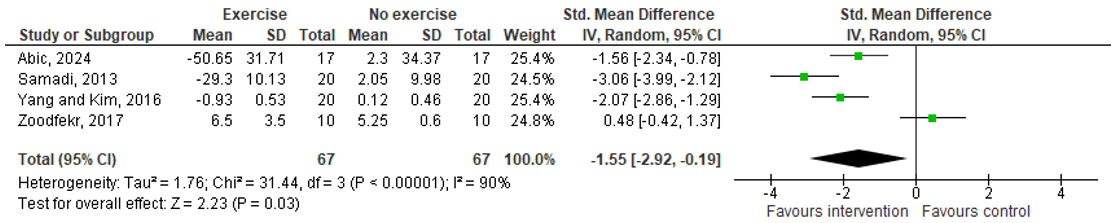
Figure 1. Forest plot of total PMS symptoms among participants with exercise versus participants without exercise intervention.
1.2.2 Physical PMS symptoms
Physical PMS symptoms were reported in four studies with 257 participants. Changes from baseline were measured in various ways. The pooled standardized mean difference for the change in physical PMS symptoms among participants in the exercise group versus participants in the control group was -2.17 (95% CI -3.52 to -0.82), in favor of the intervention group (figure 2). This difference is considered clinically relevant.

Figure 2. Forest plot of physical PMS symptoms among participants with exercise versus participants without exercise intervention.
1.2.3 Psychological PMS symptoms
Data regarding psychological PMS symptoms were extractable from five studies with data of 291 participants. Different measures were used to investigate psychological symptoms. The pooled standardized mean difference for the change in psychological PMS symptoms among participants in the intervention group versus participants in the control group was -1.99 (95% CI -2.71 to -1.27), in favor of the exercise group (figure 3). This difference is considered clinically relevant.
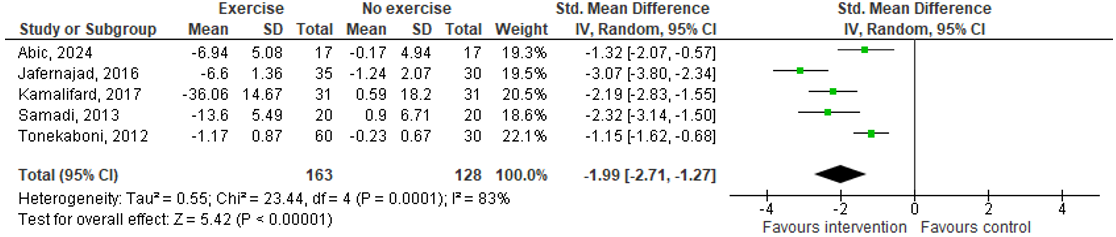
Figure 3. Forest plot of psychological PMS symptoms among participants with exercise versus participants without exercise intervention.
1.3 Quality of life
None of the studies reported on this outcome.
- Diet
2.1 Suffering of PMS symptoms measured with the Daily Record of Severity of Problems (DRSP)
The DRSP is a valid measure to diagnose and evaluate symptoms related to premenstrual syndrome and premenstrual dysphoric disorder. Each of 24 items need to be rated on a six-point scale every day to determine symptom severity. A higher score reflects more severe symptoms.
DRSP scores could be extracted from one study covering data of 72 participants (Al Kiyumi 2023). The intervention group had a mean score of 268.55 (SD 13.64) and the control group had a score of 298.23 (SD 13.26). The mean difference for total PMS symptoms among participants after the intervention versus participants after no intervention was -29.68 (95% CI -35.89 to -23.47), in favor of the intervention group. This difference is considered clinically relevant.
2.2 PMS symptoms
2.2.1 Total PMS symptoms
Total PMS symptoms were not defined as outcome measure, but are reported here since some studies only reported total scores and can thus be included for the outcome measure.
Total PMS symptoms were reported in two studies with data of 103 participants. Different measures were used to evaluate PMS symptoms. The pooled standardized mean difference for the change from baseline in total PMS symptoms among participants in the intervention group versus participants in the control group was -1.56 (95% CI -3.91 to 0.80), in favor of the intervention group (figure 4). This difference is not considered clinically relevant.

Figure 4. Forest plot of total PMS symptoms among participants with diet versus participants without diet.
2.2.2 Physical PMS symptoms
None of the studies reported on this outcome.
2.2.3 Psychological PMS symptoms
Data regarding psychological PMS symptoms were extractable from one study with data of 72 participants (Al Kiyumi 2023). This was measured with the Perceived Stress Score, an instrument assessing the perceived stress in the last month. A score ranging from 0 to 56 and a higher score indicates more stress.
The mean score in the intervention group 2 months after intervention was 27.61 (SD 0.67) and in the control group 26.42 (SD 0.671). The mean difference was 1.19 (95% CI 0.88 to 1.50) in favor of the control group. This difference is not considered clinically relevant.
2.3 Quality of life
Yurt 2020 investigated quality of life using the validated 36-Item Short-Form Health Survey (SF-36). In this questionnaire, scores range from 0 to 100 and a higher score corresponds with a better quality of life. The questionnaire has two components: physical health and mental health. Regarding physical health, the mean difference between participants who received a diet intervention and those who did not was 9.90 (95% CI 5.04 to 14.76), favoring diet. This difference is considered clinically relevant. For mental health, the mean difference was 7.00 (95% CI 1.36 to 12.64), favoring diet (figure 5). This difference is considered clinically relevant.

Figure 5. Forest plot of SF-36 scores among participants receiving a diet intervention and participants not receiving an intervention.
A systematic review of the literature was performed to answer the following question: What is the effectiveness of lifestyle interventions (exercise and diet) in the treatment of premenstrual syndrome?
Table 1. PICO
|
Patients |
Patients with premenstrual syndrome |
|
Intervention |
Exercise, exercise program or diet |
|
Control |
No exercise, no exercise program, no diet or placebo intervention |
|
Outcomes |
- Suffering of PMS symptoms measured with the Daily Record of Severity of Problems (DRSP) or with a PMS calendar - PMS symptoms (physical and psychological) |
|
Other selection criteria |
Study design: systematic reviews, randomized controlled trials and observational studies. From January 1st, 2005 |
Relevant outcome measures
The guideline panel considered the outcome measure ‘suffering of PMS symptoms measured with the DRSP or with a PMS calendar’ as a critical outcome measure for decision making; and ‘PMS symptoms’ and ‘quality of life’ as important outcome measures for decision making.
The guideline panel defined a 25% difference for dichotomous outcomes (RR< 0.8 or >1.25) and 0.5 SD for continuous outcomes (default boundaries as defined by GRADE) as minimal clinically (patient) important difference.
Search and select (Methods)
The databases Medline (via OVID) and Embase (via Embase.com) were searched with relevant search terms from January 1st, 2005 until March 7th, 2024. The detailed search strategy is listed under the tab ‘Literature search strategy’. The systematic literature search resulted in 965 hits. Studies were selected based on the PICO criteria which initially included the use of supplements and stress reduction as interventions as well. Because of the large number of studies, the use of supplements and stress reduction were removed as interventions in the PICO. 79 studies were initially selected based on title and abstract screening of which 19 regarded exercise, exercise program or diet. After reading the full text, 15 of the 19 studies were excluded (see the exclusion table under the tab ‘Evidence tabellen’), and 4 studies were included: 2 regarded exercise (1 review with 6 RCTs and one RCT) and 2 regarded diet (both RCTs).
A large number of studies were excluded during the selection process due to the wide variation in the interventions described. For example, within the category of supplements/dietary interventions, a broad range of approaches was included—ranging from individual vitamins and minerals, flower extracts, supplements of endogenous substances, herbal preparations or herbal teas to comprehensive dietary advice. Similarly, in the studies focused on stress reduction/exercise, the interventions varied greatly as well, including different forms of relaxation therapy, relaxation (muscle relaxation) yoga programs, massage, aromatherapy, meditation/mindfulness, homeopathy and support groups.
Therefore, we chose to include studies in which a specific exercise program or comprehensive dietary recommendation was prescribed to the intervention group and compared to a no intervention or placebo group. Yoga was included if it was part of an exercise program (with active muscle engagement).
- Abedy HA, Neksereshgt A, Tashakoriyan F. The effects of resistance and endurance exercise on physical and psychobehavioral symptoms of pre-menstruation syndrome. Pars Journal of Medical Sciences 2014; 12(3): 9–14.
- Abic A, Dag-Canatan S, Er-Korucu A, Aksoy-Can A. The effects of yoga and progressive muscle relaxation exercises on premenstrual syndrome: a randomized controlled trial. Women Health. 2024 Mar;64(3):261-273. doi: 10.1080/03630242.2024.2314524. Epub 2024 Feb 11. PMID: 38343144.
- Al Kiyumi MH, Al Belushi Z, Al Amri A, Al Musharrafi R, Al Rashdi F, Jaju S, Al Shidhani A, Al Mahrezi A. Effects of a Healthy Diet on Reducing Symptoms of Premenstrual Syndrome and Improving Quality of Life among Omani Adolescents: A Randomized Controlled Open-Label Trial. Int J Environ Res Public Health. 2023 Dec 12;20(24):7169. doi: 10.3390/ijerph20247169. PMID: 38131720; PMCID: PMC10742710.
- Gezondheidsraad. Richtlijnen goede voeding 2015. URL [Richtlijnen goede voeding 2015 | Gezondheidsraad] Geraadpleegd op 28-01-2026.
- Jafarnejad F, Dehnavi ZM, Mojahedi M, et al. Effect of aerobic exercise program on premenstrual syndrome in women of hot and cold temperaments. Journal of Babol University of Medical Sciences 2016; 18(8): 54–60.
- Kamalifard M, Yavari A, Asghari-Jafarabadi M, et al. The effect of yoga on women’s premenstrual syndrome: A randomized controlled clinical trial. International Journal of Women's Health and Reproduction Sciences 2017; 5(3):205–211. DOI: https:// doi. org/ 10. 15296/ ijwhr. 2017. 37
- Naeini KS. The comparison between aerobic and physical exercises effects on PMS of women in Shiraz. Medical Science Journal of Islamic Azad University Tehran Medical Branch 2008; 18(3): 177–180.
- Pazoki H, Bolouri G, Farokhi F, Azerbayjani MA. Comparing the effects of aerobic exercise and Foeniculum vulgare on pre-menstrual syndrome. Middle East Fertil Soc J 2016; 21(1): 61–64. DOI: https:// doi. org/ 10. 1016/ j. mefs. 2015.08. 002
- Pearce E, Jolly K, Jones LL, Matthewman G, Zanganeh M, Daley A. Exercise for premenstrual syndrome: a systematic review and meta-analysis of randomised controlled trials. BJGP Open. 2020 Aug 25;4(3):bjgpopen20X101032. doi: 10.3399/bjgpopen20X101032. PMID: 32522750; PMCID: PMC7465566.
- Samadi Z, Taghian F, Valiani M. The effects of 8 weeks of regular aerobic exercise on the symptoms of premenstrual syndrome in non-athlete girls. Iran J Nurs Midwifery Res 2013; 18(1): 14–19.
- Tonekaboni MM, Peeri M, Azarbayjani MA. Effect of two intensity of aerobic exercise on clinical symptoms of premenstrual syndrome in fertile women. World Appl Sci J 2012; 19(3): 295–301.
- World Health Organization. A healthy lifestyle - who recommendations (July 2025) Available at: Nutrition for a healthy life – WHO recommendations (Accessed: 28-01-2026).
- Yang N-Y, Kim S-D. Effects of a yoga program on menstrual cramps and menstrual distress in undergraduate students with primary dysmenorrhea: a single-blind,randomized controlled trial. J Altern Complement Med 2016; 22(9): 732–738. DOI: https:// doi. org/ 10. 1089/ acm. 2016. 0058
- Yekke Fallah L, Azimi H, Sadeghi T. The effect of aerobic and walking exercise on physical and psychological symptoms and pain of premenstrual syndrome. Iran Journal of Nursing 2013; 25(80): 46–55.
- Yurt M, Mercanligil SM, Kabaran S. Effect of dairy products intake in women with premenstrual syndrome: A randomized controlled trial. Progress in Nutrition. 2020 Jan. DOI: 10.23751/pn.v22i1.7680
- Zoodfekr L, Matinhomai H, Tarverdizadeh B. The effect of aerobic exercise and curcumin consumption on clinical signs and serum levels of sexual hormones in 18–35 year-old women with premenstrual syndrome: randomized clinical trial. Iranian Journal of Obstetrics, Gynaecology and Infertility 2017; 20(8): 70–79.
Klik hier om de Risk of Bias tables te vergroten
Risk of Bias tables
Risk of bias table for systematic reviews
|
Study reference |
Appropriate and clearly focused question?1 |
Comprehensive and systematic literature search?2 |
Description of included and excluded studies?3 |
Description of relevant characteristics of included studies?4 |
Assessment of scientific quality of included studies?5 |
Enough similarities between studies to make combining them reasonable?6 |
Potential risk of publication bias taken into account?7 |
Potential conflicts of interest reported?8
|
|
Pearce, 2020 |
Yes |
Yes |
Yes |
Yes |
Yes |
Yes |
Yes |
No |
- Research question (PICO) and inclusion criteria should be appropriate (in relation to the research question to be answered in the clinical guideline) and predefined
- Search period and strategy should be described; at least Medline searched
- Potentially relevant studies that are excluded at final selection (after reading the full text) should be referenced with reasons
- Characteristics of individual studies relevant to the research question (PICO) should be reported
- Quality of individual studies should be assessed using a quality scoring tool or checklist (preferably QUADAS-2; COSMIN checklist for measuring instruments) and taken into account in the evidence synthesis
- Clinical and statistical heterogeneity should be assessed; clinical: enough similarities in patient characteristics, diagnostic tests (strategy) to allow pooling? For pooled data: at least 5 studies available for pooling; assessment of statistical heterogeneity and, more importantly (see Note), assessment of the reasons for heterogeneity (if present)? Note: sensitivity and specificity depend on the situation in which the test is being used and the thresholds that have been set, and sensitivity and specificity are correlated; therefore, the use of heterogeneity statistics (p-values; I2) is problematic, and rather than testing whether heterogeneity is present, heterogeneity should be assessed by eye-balling (degree of overlap of confidence intervals in Forest plot), and the reasons for heterogeneity should be examined.
- There is no clear evidence for publication bias in diagnostic studies, and an ongoing discussion on which statistical method should be used. Tests to identify publication bias are likely to give false-positive results, among available tests, Deeks’ test is most valid. Irrespective of the use of statistical methods, you may score “Yes” if the authors discuss the potential risk of publication bias.
- Sources of support (including commercial co-authorship) should be reported in both the systematic review and the included studies. Note: To get a “yes,” source of funding or support must be indicated for the systematic review AND for each of the included studies.
Risk of bias table for intervention studies
|
Study reference (first author, year) |
Was the allocation sequence adequately generated? |
Was the allocation adequately concealed? |
Blinding: |
Was loss to follow-up (missing outcome data) infrequent? |
Are reports of the study free of selective outcome reporting? |
Was the study apparently free of other problems that could put it at a risk of bias? |
Overall risk of bias |
|
Abic, 2024 |
Definitely yes
Reason: Authors used an online research randomizer. |
Definitely yes
Reason: Authors used numbered opaque envelopes. |
Definitely no
Reason: No blinding. |
Definitely no
Reason: There were no loss to follow-up. |
Definitely yes
Reason: Protocol checked, all outcomes are reported. |
Probably yes
Reason: No funding or competing conflicts of interest reported. Sample size calculation performed. |
Some concerns
Reason: No blinding. |
|
Al Kiyumi, 2023 |
Unclear
Reason: Cluster randomization of the two schools, no further information provided. |
Probably no
Reason: No information provided. |
Definitely no
Reason: Open-label trial. |
Definitely no
Reason: There were no loss to follow-up. |
Definitely yes
Reason: Protocol checked, all outcomes are reported. |
Probably no
Reason: Adherence to intervention is unknown. Sample size calculation performed. |
High risk of bias
Reason: Unclear randomization process, open-label study. |
|
Yurt, 2020 |
Definitely yes
Reason: Authors used random number charts. |
Probably no
Reason: No information provided. |
Definitely no
Reason: No blinding. |
Probably no
Reason: 4 out of 20 and 5 out of 20 were loss to follow-up. |
Probably yes
Reason: All outcomes reported in the Methods section are reported. |
Probably no
Reason: Small sample size: number of calculation not reach. Funding of professors of the department. |
High risk of bias
Reason: No blinding, funding. |
Table of excluded studies
|
Reference |
Reason for exclusion |
|
Choudhary A, Mishra J. Effect of 16 weeks yogic intervention in premenstrual syndrome. Int J Pharma Bio Sci 2013;4:B207‑12. |
Wrong comparison |
|
Chang HC, Cheng YC, Yang CH, Tzeng YL, Chen CH. Effects of Yoga for Coping with Premenstrual Symptoms in Taiwan-A Cluster Randomized Study. Healthcare (Basel). 2023 Apr 21;11(8):1193. doi: 10.3390/healthcare11081193. PMID: 37108027; PMCID: PMC10138357. |
Meets PICO, but no extractable data |
|
El-Lithy A, El-Mazny A, Sabbour A, El-Deeb A. Effect of aerobic exercise on premenstrual symptoms, haematological and hormonal parameters in young women. J Obstet Gynaecol. 2015 May;35(4):389-92. doi: 10.3109/01443615.2014.960823. Epub 2014 Oct 3. PMID: 25279689. |
Included in Pearce 2020, wrong comparison |
|
Jafarnejad F, Dehnavi ZM, Mojahedi M, et al. Effect of aerobic exercise program on premenstrual syndrome in women of hot and cold temperaments. Journal of Babol University of Medical Sciences 2016; 18(8): 54–60. |
Included in Pearce 2020 |
|
Kamalifard M, Yavari A, Asghari-Jafarabadi M, et al. The effect of yoga on women’s premenstrual syndrome: A randomized controlled clinical trial. International Journal of Women's Health and Reproduction Sciences 2017; 5(3): 205–211. DOI: https:// doi. org/ 10. 15296/ ijwhr. 2017. 37. |
Included in Pearce 2020 |
|
Maged AM, Abbassy AH, Sakr HRS, Elsawah H, Wagih H, Ogila AI, Kotb A. Effect of swimming exercise on premenstrual syndrome. Arch Gynecol Obstet. 2018 Apr;297(4):951-959. doi: 10.1007/s00404-018-4664-1. Epub 2018 Jan 19. Erratum in: Arch Gynecol Obstet. 2024 Jun;309(6):2957. doi: 10.1007/s00404-024-07429-x. PMID: 29350276. |
Meets PICO, but no extractable data |
|
Mohebbi Dehnavi Z, Jafarnejad F, Sadeghi Goghary S. The effect of 8 weeks aerobic exercise on severity of physical symptoms of premenstrual syndrome: a clinical trial study. BMC Womens Health. 2018 May 31;18(1):80. doi: 10.1186/s12905-018-0565-5. PMID: 29855308; PMCID: PMC5984430. |
Meets PICO, but no extractable data |
|
Nithyanisha R, Ashwini S, Mary SM, Kirupa K, Lochani VP. Efficacy of aerobic exercise and relaxation training in premenstrual symptoms in collegiates. Drug Invent Today 2019;11:391‑95. |
Wrong comparison |
|
Pazoki H, Bolouri G, Farokhi F, Azerbayjani MA. Comparing the effects of aerobic exercise and Foeniculum vulgare on premenstrual syndrome Middle East Fertil Soc J. 2016;21:61–4 |
Included in Pearce 2020 |
|
Ravichandran H, Janakiraman B. Effect of Aerobic Exercises in Improving Premenstrual Symptoms Among Healthy Women: A Systematic Review of Randomized Controlled Trials. Int J Womens Health. 2022 Aug 16;14:1105-1114. doi: 10.2147/IJWH.S371193. PMID: 35996479; PMCID: PMC9392489. |
Wrong comparison |
|
Sevimli D. The effects of a six-week aerobic training on premenstrual syndrome. Gazzetta Medica Italiana Archivio per le Scienze Mediche 2012 October;171(5):583-9. |
Wrong design: before/after study, fulltext not available |
|
Vishnupriya R, Rajarajeswaram P. Effects of aerobic exercise at different intensities in pre menstrual syndrome. J Obstet Gynaecol India. 2011 Dec;61(6):675-82. doi: 10.1007/s13224-011-0117-5. Epub 2012 Feb 14. PMID: 23204690; PMCID: PMC3307925. |
Wrong comparison |
|
Wu WL, Lin TY, Chu IH, Liang JM. The acute effects of yoga on cognitive measures for women with premenstrual syndrome. J Altern Complement Med. 2015 Jun;21(6):364-9. doi: 10.1089/acm.2015.0070. Epub 2015 May 12. PMID: 25965108. |
Wrong comparison, wrong population, wrong outcome |
|
Yesildere Saglam H, Orsal O. Effect of exercise on premenstrual symptoms: A systematic review. Complement Ther Med. 2020 Jan;48:102272. doi: 10.1016/j.ctim.2019.102272. Epub 2019 Nov 27. PMID: 31987230. |
Wrong comparison |
|
Zoodfekr L, Matin Homaee H, Tarverdizadeh B. The Effect of an Aerobic Training course and Consumption of Curcumin on Prostaglandin E2 and Prolactin Levels in Women with Premenstrual Syndrome. Iran J Endocrinol Metabol 2018; 19: 444-451. |
Wrong outcome |
Beoordelingsdatum en geldigheid
Publicatiedatum : 29-09-2026
Beoordeeld op geldigheid : 29-09-2026
Algemene gegevens
Het Koninklijk Nederlands Genootschap voor Fysiotherapie (KNGF) heeft een verklaring van geen bezwaar afgegeven.
Samenstelling werkgroep
Voor het ontwikkelen van de richtlijnmodule is in 2024 een multidisciplinaire werkgroep ingesteld. Het cluster Benigne Gynaecologie bestaat uit meerdere richtlijnen (zie hier de actuele clusterindeling). De stuurgroep bewaakt het proces van modulair onderhoud binnen het cluster. De expertisegroepsleden brengen hun expertise in, indien nodig.
De volgende personen uit het cluster zijn betrokken geweest bij de herziening van deze module:
Clusterstuurgroepleden
(Voorzitter) Timmermans, Mevr. dr. A. (Anne), gynaecoloog, AmsterdamUMC, Amsterdam,
NVOG
Breijer, Mevr. dr. M.C. (Merel), gynaecoloog, ADRZ, Goes en Vlissingen, NVOG
Radder, Mevr. Dr. C.M. (Celine), gynaecoloog, OLVG, Amsterdam, NVOG
Betrokken clusterexpertisegroepleden
Schrijvers module Leefstijlaanpassing als behandeling van PMS
Dijkstra, Dhr. Drs. J.R. (Jeroen) Dijkstra, gynaecoloog, MSB Isala, Zwolle, NVOG
Samuels, Mevr. dr. S. (Sanne), gynaecoloog, Jeroen Bosch Ziekenhuis, ’s-Hertogenbosch, NVOG
Versluis, MD Dhr. dr. M.A.C. (Marco), gynaecoloog, UMC Groningen, NVOG
Meelezers module Leefstijlaanpassing als behandeling van PMS
Balk, Mevr. L. (Linda), patiëntenvertegenwoordiger, Stichting PMDD Nederland
Blauw-Hofman, MSc. Mevr. M. (Mayke) de, bekkenfysiotherapeut, Fysio-manuele therapie Overhees, Soest, KNGF-NVFB
De Bie, Mevr. B.L.F. (Bianca), patiëntenvertegenwoordiger, Endometriose Stichting
Hout, MSc. Mevr. A. (Anja) van den, bekkenoefentherapeut, oefentherapie Cesar Zeist, VvOCM
Janssen, Mevr. dr. C.A.H. (Ineke), gynaecoloog, Groene Hart Ziekenhuis (GHZ), Gouda, NVOG
Schoot, Mevr. Drs. K. (Kim) van der, GZ-psycholoog, UMCG, Groningen, LVMP
Versteegen, Mevr. Dr. G.J. (Gerbrig), klinisch psycholoog en psychotherapeut, UMCG, Groningen, LVMP
Vogel, BSc. Mevr. A.L. (Aileen) de, diëtist, Diëtistenpraktijk Aileen de Vogel, Dordrecht, NVD
Met ondersteuning van
Bommel, Mevr. dr. M.H.D. (Majke) van, adviseur, Kennisinstituut van de Federatie Medisch Specialisen
Labeur, MSc. Mevr. Y.J. (Yvonne), adviseur bij het Kennisinstituut van de Federatie Medisch Specialisten, Utrecht, FMS
Tuijtelaars, Mevr. dr. J. (Jana), adviseur bij het Kennisinstituut van de Federatie Medisch Specialisten, Utrecht, FMS
Belangenverklaringen
Een overzicht van de belangen van de clusterleden en het oordeel over het omgaan met eventuele belangen vindt u in onderstaande tabel. De ondertekende belangenverklaringen zijn op te vragen bij het secretariaat van het Kennisinstituut van de Federatie Medisch Specialisten via secretariaat@kennisinstituut.nl.
|
Stuurgroeplid |
Functie |
Nevenfuncties |
Gemelde belangen |
Ondernomen actie |
|
(Voorzitter) Timmermans, Anne |
Gynaecoloog, Amsterdam UMC |
Lid commissie kwaliteitsdocumenten NVOG |
Geen |
Geen restricties |
|
Breijer, Merel |
Gynaecoloog, Admiraal De Ruyter Ziekenhuis |
Lid commissie kwaliteitsdocumenten NVOG |
Geen |
Geen restricties |
|
Radder, Celine |
Gynaecoloog, OLVG |
Geen |
Geen |
Geen restricties |
|
Expertisegroeplid, schrijvend |
Functie |
Nevenfuncties |
Gemelde belangen |
Ondernomen actie |
|
Dijkstra, Jeroen |
Gynaecoloog, MSB Isala |
Geen |
Extern gefinancierd: Mychoiche trial (https://my-choice.eu/en/the-study/) profound, Isala wetenschapsfonds vergelijkende studie tussen verschillende behandelingen voor vrouwen met uterus myomatosus |
Geen restricties |
|
Samuels, Sanne |
Gynaecoloog, HMC |
Geen |
Geen |
Geen restricties |
|
Versluis, Marco |
Gynaecoloog, UMCG |
Geen |
Geen |
Geen restricties |
|
Expertisegroeplid, meelezend |
Functie |
Nevenfuncties |
Gemelde belangen |
Ondernomen actie |
|
Balk, Linda |
Bestuurslid en mede-oprichter Stichting PMDD Nederland (vrijwillig) |
Ondersteuner onderzoek, Gemeente Helmond |
Overige belangen: vrijwillig onderzoeksmedewerker Erasmuc MC – PERIOD-studie (niet gefinancierd) |
Geen restricties |
|
Blauw-Hofman, Mayke de |
Bekkenfysiotherapeut Overhees te Soest |
Voor de NVFB Sponsorcommissie Huisartsennascholing Scholing voor de NVFB (vergoeding) Docentschap bij AVANS + breda voor de opleiding bekkenfysiotherapie (betaald) |
Geen |
Geen restricties |
|
De Bie, Bianca |
Projectleider bij Endometriose Stichting |
Voorzitter Endometriose Stichting (onbetaald) |
Intellectuele belangen: een nieuwe up to date richtlijn voor endometriose zou voor ons als patientenorganisatie van grote toegevoegde waarde zijn voor de verbetering van de behandeling van die patientengroep. |
Geen restricties |
|
Hout, Anja van den |
Lid platform BOT |
Eigen praktijk voor bekkenoefentherapie |
Geen |
Geen restricties |
|
Janssen, Ineke |
Gynaecoloog, GHZ Gouda |
Geen |
Geen |
Geen restricties |
|
Schoot, Kim van der |
GZ-psycholoog UMCG |
Onderwijs en onderzoek |
Intellectuele belangen: boegbeeldfunctie binnen de patiënten doelgroep |
Geen restricties |
|
Versteegen, Gerbrig |
Klinisch psycholoog-psychotherapeut UMCG |
Hoofdopleider GZ- en Hoofdopleider Klinische psychologie en Psychotherapie-opleiding; Postmasteropleidingen Psychologie en Orthopedagogie (PPO) Rijksuniversiteit Groningen |
Geen |
Geen restricties |
|
Vogel, Aileen de |
Geregistreerd diëtist en eigenaar Diëtistenpraktijk Aileen de Vogel |
Bestuurslid Vrouw en Vruchtbaarheid met daaronder bij NVD bekende Kennisnetwerk PCOS, tevens bestuurslid bij NVD bekende kennisnetwerk Endometriose (onbetaald) |
Intellectuele belangen: erkenning expertise door bijdrage aan de richtlijn |
Geen restricties |
Inbreng patiëntenperspectief
De richtlijn is opgesteld door een multidisciplinaire commissie met vertegenwoordigers vanuit de gynaecologen, betrokken patiëntenorganisaties (o.a. PMDD NL, Endometriose Stichting en Bekkenbodem4All), bekkenfysiotherapeuten, bekkenoefentherapeuten, psychologen, huisartsen, psychiaters, kinderartsen en diëtisten.
Kwalitatieve raming van mogelijke financiële gevolgen in het kader van de Wkkgz
Bij de richtlijnmodule voerden de clusterleden conform de Wet kwaliteit, klachten en geschillen zorg (Wkkgz) een kwalitatieve raming uit om te beoordelen of de aanbevelingen mogelijk leiden tot substantiële financiële gevolgen. Bij het uitvoeren van deze beoordeling is de richtlijnmodule op verschillende domeinen getoetst (zie het stroomschema bij Werkwijze).
|
Module |
Uitkomst raming |
Toelichting |
|
Leefstijlaanpassing als behandeling van PMS |
Geen financiële gevolgen |
Implementatietabel (bijlage) |
Werkwijze
Voor meer details over de gebruikte richtlijnmethodologie verwijzen wij u naar de Werkwijze. Relevante informatie voor de ontwikkeling/herziening van deze richtlijnmodule is hieronder weergegeven.
Zoekverantwoording
Embase.com 7 March 2024
|
No. |
Query |
Results |
|
#1 |
'premenstrual syndrome'/exp OR 'premenstrual dysphoric disorder'/exp OR ((('premenstrual' OR 'premenstruation' OR 'menstrual' OR 'pre menstrual' OR 'pre menstruation') NEAR/3 ('syndrome*' OR 'pain' OR 'tension*' OR 'dysphor*' OR 'distress' OR 'symptom*' OR 'stress' OR 'complaint*' OR 'disease*' OR 'disorder*')):ti,ab,kw) OR (('dysphoric' NEAR/3 'disorder*'):ti,ab,kw) OR (('luteal' NEAR/5 'symptom*'):ti,ab,kw) OR 'late luteal':ti OR 'luteal phase':ti,ab,kw OR 'pms':ti,ab,kw OR 'pmdd':ti,ab,kw OR 'llpdd':ti,ab,kw |
39853 |
|
#2 |
'lifestyle'/exp OR 'lifestyle modification'/exp OR 'lifestyle intervention'/exp OR 'exercise'/exp OR 'diet'/exp OR 'diet therapy'/exp OR 'dietary supplement'/exp OR 'supplementation'/exp OR 'multivitamin'/exp OR 'magnesium'/exp OR 'isoflavone'/exp OR 'pyridoxine'/exp OR 'stress management'/exp OR (('fitness' NEAR/3 ('training' OR 'workout')):ti,ab,kw) OR (('physical' NEAR/3 ('effort*' OR 'exertion' OR 'work-out' OR 'workout')):ti,ab,kw) OR (('nutrition' NEAR/3 ('intervention*' OR 'therap*' OR 'treatment*')):ti,ab,kw) OR ((('nutrition*' OR 'food') NEAR/3 ('therap*' OR 'intervention*' OR 'treatment*' OR 'advice*' OR 'supplement*' OR 'additive*')):ti,ab,kw) OR ((('oral' OR 'food' OR 'multinutrient*' OR 'multi nutrient*' OR 'vitamin*' OR 'magnesium' OR 'isoflavone') NEAR/3 'supplement*'):ti,ab,kw) OR (('vitamin*' NEAR/1 ('b6' OR 'b 6')):ti,ab,kw) OR 'life style*':ti,ab,kw OR 'lifestyle*':ti,ab,kw OR 'exercis*':ti,ab,kw OR 'supplement*':ti,ab,kw OR 'diet*':ti,ab,kw OR 'dietar*':ti,ab,kw OR 'dietetic*':ti,ab,kw OR 'dietic*':ti,ab,kw OR 'dietit*':ti,ab,kw OR 'pyridoxin*':ti,ab,kw OR 'multivitamin*':ti,ab,kw OR 'piridoxin*':ti,ab,kw |
2668209 |
|
#3 |
#1 AND #2 |
4423 |
|
#4 |
#3 AND [2005-2024]/py NOT ('conference abstract'/it OR 'editorial'/it OR 'letter'/it OR 'note'/it) NOT (('animal'/exp OR 'animal experiment'/exp OR 'animal model'/exp OR 'nonhuman'/exp) NOT 'human'/exp) |
2073 |
|
#5 |
'meta analysis'/exp OR 'meta analysis (topic)'/exp OR metaanaly*:ti,ab OR 'meta analy*':ti,ab OR metanaly*:ti,ab OR 'systematic review'/de OR 'cochrane database of systematic reviews'/jt OR prisma:ti,ab OR prospero:ti,ab OR (((systemati* OR scoping OR umbrella OR 'structured literature') NEAR/3 (review* OR overview*)):ti,ab) OR ((systemic* NEAR/1 review*):ti,ab) OR (((systemati* OR literature OR database* OR 'data base*') NEAR/10 search*):ti,ab) OR (((structured OR comprehensive* OR systemic*) NEAR/3 search*):ti,ab) OR (((literature NEAR/3 review*):ti,ab) AND (search*:ti,ab OR database*:ti,ab OR 'data base*':ti,ab)) OR (('data extraction':ti,ab OR 'data source*':ti,ab) AND 'study selection':ti,ab) OR ('search strategy':ti,ab AND 'selection criteria':ti,ab) OR ('data source*':ti,ab AND 'data synthesis':ti,ab) OR medline:ab OR pubmed:ab OR embase:ab OR cochrane:ab OR (((critical OR rapid) NEAR/2 (review* OR overview* OR synthes*)):ti) OR ((((critical* OR rapid*) NEAR/3 (review* OR overview* OR synthes*)):ab) AND (search*:ab OR database*:ab OR 'data base*':ab)) OR metasynthes*:ti,ab OR 'meta synthes*':ti,ab |
1007394 |
|
#6 |
'clinical trial'/exp OR 'randomization'/exp OR 'single blind procedure'/exp OR 'double blind procedure'/exp OR 'crossover procedure'/exp OR 'placebo'/exp OR 'prospective study'/exp OR rct:ab,ti OR random*:ab,ti OR 'single blind':ab,ti OR 'randomised controlled trial':ab,ti OR 'randomized controlled trial'/exp OR placebo*:ab,ti |
3985109 |
|
#7 |
'major clinical study'/de OR 'clinical study'/de OR 'case control study'/de OR 'family study'/de OR 'longitudinal study'/de OR 'retrospective study'/de OR 'prospective study'/de OR 'comparative study'/de OR 'cohort analysis'/de OR ((cohort NEAR/1 (study OR studies)):ab,ti) OR (('case control' NEAR/1 (study OR studies)):ab,ti) OR (('follow up' NEAR/1 (study OR studies)):ab,ti) OR (observational NEAR/1 (study OR studies)) OR ((epidemiologic NEAR/1 (study OR studies)):ab,ti) OR (('cross sectional' NEAR/1 (study OR studies)):ab,ti) |
8106643 |
|
#8 |
'case control study'/de OR 'comparative study'/exp OR 'control group'/de OR 'controlled study'/de OR 'controlled clinical trial'/de OR 'crossover procedure'/de OR 'double blind procedure'/de OR 'phase 2 clinical trial'/de OR 'phase 3 clinical trial'/de OR 'phase 4 clinical trial'/de OR 'pretest posttest design'/de OR 'pretest posttest control group design'/de OR 'quasi experimental study'/de OR 'single blind procedure'/de OR 'triple blind procedure'/de OR (((control OR controlled) NEAR/6 trial):ti,ab,kw) OR (((control OR controlled) NEAR/6 (study OR studies)):ti,ab,kw) OR (((control OR controlled) NEAR/1 active):ti,ab,kw) OR 'open label*':ti,ab,kw OR (((double OR two OR three OR multi OR trial) NEAR/1 (arm OR arms)):ti,ab,kw) OR ((allocat* NEAR/10 (arm OR arms)):ti,ab,kw) OR placebo*:ti,ab,kw OR 'sham-control*':ti,ab,kw OR (((single OR double OR triple OR assessor) NEAR/1 (blind* OR masked)):ti,ab,kw) OR nonrandom*:ti,ab,kw OR 'non-random*':ti,ab,kw OR 'quasi-experiment*':ti,ab,kw OR crossover:ti,ab,kw OR 'cross over':ti,ab,kw OR 'parallel group*':ti,ab,kw OR 'factorial trial':ti,ab,kw OR ((phase NEAR/5 (study OR trial)):ti,ab,kw) OR ((case* NEAR/6 (matched OR control*)):ti,ab,kw) OR ((match* NEAR/6 (pair OR pairs OR cohort* OR control* OR group* OR healthy OR age OR sex OR gender OR patient* OR subject* OR participant*)):ti,ab,kw) OR ((propensity NEAR/6 (scor* OR match*)):ti,ab,kw) OR versus:ti OR vs:ti OR compar*:ti OR ((compar* NEAR/1 study):ti,ab,kw) OR (('major clinical study'/de OR 'clinical study'/de OR 'cohort analysis'/de OR 'observational study'/de OR 'cross-sectional study'/de OR 'multicenter study'/de OR 'correlational study'/de OR 'follow up'/de OR cohort*:ti,ab,kw OR 'follow up':ti,ab,kw OR followup:ti,ab,kw OR longitudinal*:ti,ab,kw OR prospective*:ti,ab,kw OR retrospective*:ti,ab,kw OR observational*:ti,ab,kw OR 'cross sectional*':ti,ab,kw OR cross?ectional*:ti,ab,kw OR multicent*:ti,ab,kw OR 'multi-cent*':ti,ab,kw OR consecutive*:ti,ab,kw) AND (group:ti,ab,kw OR groups:ti,ab,kw OR subgroup*:ti,ab,kw OR versus:ti,ab,kw OR vs:ti,ab,kw OR compar*:ti,ab,kw OR 'odds ratio*':ab OR 'relative odds':ab OR 'risk ratio*':ab OR 'relative risk*':ab OR 'rate ratio':ab OR aor:ab OR arr:ab OR rrr:ab OR ((('or' OR 'rr') NEAR/6 ci):ab))) |
14879461 |
|
#9 |
#4 AND #5 – SR’s |
235 |
|
#10 |
#4 AND #6 NOT #9 – RCT’s |
610 |
|
#11 |
#4 AND (#7 OR #8) NOT (#9 OR #10) – Observationlele studies |
654 |
|
#12 |
#9 OR #10 OR #11 |
1499 |
Ovid/Medline 7 March 2024
|
# |
Searches |
Results |
|
1 |
exp Premenstrual Syndrome/ or exp Premenstrual Dysphoric Disorder/ or ((premenstrual or premenstruation or menstrual or pre menstrual or pre menstruation) adj3 (syndrome* or pain or tension* or dysphor* or distress or symptom* or stress or complaint* or disease* or disorder*)).ti,ab,kf. or (dysphoric adj3 disorder*).ti,ab,kf. or (luteal adj5 symptom*).ti,ab,kf. or late luteal.ti,ab,kf. or luteal phase.ti,ab,kf. or pms.ti,ab,kf. or pmdd.ti,ab,kf. or llpdd.ti,ab,kf. |
29310 |
|
2 |
exp Life Style/ or exp Exercise/ or exp Diet/ or exp Dietary Supplements/ or exp Pyridoxine/ or exp Vitamins/ or exp Magnesium/ or exp Isoflavones/ or exp Vitamin B 6/ or ((fitness adj3 (training or workout)) or (physical adj3 (effort* or exertion or work-out or workout)) or (nutrition adj3 (intervention* or therap* or treatment*)) or ((nutrition* or food) adj3 (therap* or intervention* or treatment* or advice* or supplement* or additive*)) or ((oral or food or multinutrient* or multi nutrient* or vitamin* or magnesium or isoflavone) adj3 supplement*) or (vitamin* adj1 (b6 or b 6)) or life style* or lifestyle* or exercis* or supplement* or diet* or dietar* or dietetic* or dietic* or dietit* or pyridoxin* or multivitamin* or piridoxin*).ti,ab,kf. |
2166883 |
|
3 |
1 and 2 |
3012 |
|
4 |
limit 3 to yr="2005 -Current" |
1809 |
|
5 |
4 not (comment/ or editorial/ or letter/) not ((exp animals/ or exp models, animal/) not humans/) |
1609 |
|
6 |
meta-analysis/ or meta-analysis as topic/ or (metaanaly* or meta-analy* or metanaly*).ti,ab,kf. or systematic review/ or cochrane.jw. or (prisma or prospero).ti,ab,kf. or ((systemati* or scoping or umbrella or "structured literature") adj3 (review* or overview*)).ti,ab,kf. or (systemic* adj1 review*).ti,ab,kf. or ((systemati* or literature or database* or data-base*) adj10 search*).ti,ab,kf. or ((structured or comprehensive* or systemic*) adj3 search*).ti,ab,kf. or ((literature adj3 review*) and (search* or database* or data-base*)).ti,ab,kf. or (("data extraction" or "data source*") and "study selection").ti,ab,kf. or ("search strategy" and "selection criteria").ti,ab,kf. or ("data source*" and "data synthesis").ti,ab,kf. or (medline or pubmed or embase or cochrane).ab. or ((critical or rapid) adj2 (review* or overview* or synthes*)).ti. or (((critical* or rapid*) adj3 (review* or overview* or synthes*)) and (search* or database* or data-base*)).ab. or (metasynthes* or meta-synthes*).ti,ab,kf. |
730635 |
|
7 |
exp clinical trial/ or randomized controlled trial/ or exp clinical trials as topic/ or randomized controlled trials as topic/ or Random Allocation/ or Double-Blind Method/ or Single-Blind Method/ or (clinical trial, phase i or clinical trial, phase ii or clinical trial, phase iii or clinical trial, phase iv or controlled clinical trial or randomized controlled trial or multicenter study or clinical trial).pt. or random*.ti,ab. or (clinic* adj trial*).tw. or ((singl* or doubl* or treb* or tripl*) adj (blind$3 or mask$3)).tw. or Placebos/ or placebo*.tw. |
2698297 |
|
8 |
Epidemiologic studies/ or case control studies/ or exp cohort studies/ or Controlled Before-After Studies/ or Case control.tw. or cohort.tw. or Cohort analy$.tw. or (Follow up adj (study or studies)).tw. or (observational adj (study or studies)).tw. or Longitudinal.tw. or Retrospective*.tw. or prospective*.tw. or consecutive*.tw. or Cross sectional.tw. or Cross-sectional studies/ or historically controlled study/ or interrupted time series analysis/ [Onder exp cohort studies vallen ook longitudinale, prospectieve en retrospectieve studies] |
4669192 |
|
9 |
Case-control Studies/ or clinical trial, phase ii/ or clinical trial, phase iii/ or clinical trial, phase iv/ or comparative study/ or control groups/ or controlled before-after studies/ or controlled clinical trial/ or double-blind method/ or historically controlled study/ or matched-pair analysis/ or single-blind method/ or (((control or controlled) adj6 (study or studies or trial)) or (compar* adj (study or studies)) or ((control or controlled) adj1 active) or "open label*" or ((double or two or three or multi or trial) adj (arm or arms)) or (allocat* adj10 (arm or arms)) or placebo* or "sham-control*" or ((single or double or triple or assessor) adj1 (blind* or masked)) or nonrandom* or "non-random*" or "quasi-experiment*" or "parallel group*" or "factorial trial" or "pretest posttest" or (phase adj5 (study or trial)) or (case* adj6 (matched or control*)) or (match* adj6 (pair or pairs or cohort* or control* or group* or healthy or age or sex or gender or patient* or subject* or participant*)) or (propensity adj6 (scor* or match*))).ti,ab,kf. or (confounding adj6 adjust*).ti,ab. or (versus or vs or compar*).ti. or ((exp cohort studies/ or epidemiologic studies/ or multicenter study/ or observational study/ or seroepidemiologic studies/ or (cohort* or 'follow up' or followup or longitudinal* or prospective* or retrospective* or observational* or multicent* or 'multi-cent*' or consecutive*).ti,ab,kf.) and ((group or groups or subgroup* or versus or vs or compar*).ti,ab,kf. or ('odds ratio*' or 'relative odds' or 'risk ratio*' or 'relative risk*' or aor or arr or rrr).ab. or (("OR" or "RR") adj6 CI).ab.)) |
5637838 |
|
10 |
5 and 6 – SR’s |
152 |
|
11 |
(5 and 7) not 10 – RCT’s |
403 |
|
12 |
(5 and (8 or 9)) not (10 or 11) – Observationele studies |
472 |
|
13 |
10 or 11 or 12 |
1027 |