
Multidisciplinaire interventie of overleg
Uitgangsvraag
Op welke wijze dient een multidisciplinaire interventie of overleg te worden ingezet bij oudere patiënten (met een kwetsbare gezondheid) met hartfalen om kwaliteit van leven te verbeteren en heropnames en sterfte te voorkomen?
Aanbeveling
Bespreek alle oudere patiënten opgenomen voor hartfalen in een multidisciplinair overleg.
Het multidisciplinair overleg vindt ten minste plaats met cardiologen, klinisch geriaters/internisten ouderengeneeskunde, verpleegkundigen, diëtisten en fysiotherapeuten. Voor de praktische uitvoering wordt verwezen naar het Zorgpad module Niet-medicamenteuze interventies.
Overwegingen
Balans tussen gewenste en ongewenste effecten
Voor deze uitgangsvraag is een literatuuranalyse verricht naar de effecten van een multidisciplinair team of multidisciplinaire interventie bij patiënten (70 jaar of ouder) met hartfalen opgenomen in het ziekenhuis. De meeste studies hebben gekeken naar een multidisciplinaire interventie.
Een multidisciplinaire interventie heeft mogelijk geen effect op het optreden van heropnames voor hartfalen. De resultaten zijn onzeker over het effect van een multidisciplinaire interventie op het samengesteld eindpunt van heropnames voor hartfalen en mortaliteit.
Deze resultaten zijn van toepassing op vitale ouderen met hartfalen. Patiënten met een kwetsbare gezondheid waren niet meegenomen in deze studies. Er kan daarom geen conclusie getrokken worden over het effect van een multidisciplinaire interventie bij ouderen met een kwetsbare gezondheid.
In lijn met (inter)nationale richtlijnen hebben we voor de overwegingen gefocust op een multidisciplinair overleg (MDO). In (inter)nationale richtlijnen wordt geadviseerd de patiënten te bespreken in een MDO. De exacte invulling van een dergelijk MDO is hierin echter niet duidelijk beschreven.
Kwaliteit van bewijs
De overall kwaliteit van bewijs is laag. Dit betekent dat we onzeker zijn over het gevonden geschatte effect van de cruciale uitkomstmaten. Er is afgewaardeerd vanwege ernstige imprecisie: onnauwkeurigheid, omdat het betrouwbaarheidsinterval beide grenzen van klinische relevantie overschrijdt en vanwege inconsistentie van de resultaten.
Waarden en voorkeuren van patiënten (en eventueel hun naasten/verzorgers)
De uitkomstmaten uitgewerkt onder samenvatting literatuur zijn ook voor patiënten de belangrijkste uitkomstmaten. Voor vitale ouderen zal het verminderen van heropnames en verlaging van mortaliteit het belangrijkste zijn. Voor ouderen met een kwetsbare gezondheid zal kwaliteit van level het belangrijkste gewaardeerd worden.
Helaas is er niets bekend over kwaliteit van leven bij multidisciplinaire interventies.
De resultaten van een MDO kan mogelijk leiden tot betere afstemming van zorg en duidelijkheid over de regiebehandelaar, dat door patiënten zeer gewaardeerd wordt.
Kostenaspecten
De interventie levert mogelijk minder kosten ten opzichte van de controle behandeling. Bij de trial van McDonald (2002) is ook naar de kosten gekeken. De resultaten laten zien dat de initiële kosten van een multidisciplinaire interventie wegvallen tegen de reductie in kosten door minder heropnames (Ledwidge, 2002). Uit deze studie bleek dat de kosten voor de multidisciplinaire interventie in 2002 586 euro bedroegen voor het voorkomen van een heropname over drie maanden. Als de kosten voor een multidisciplinaire interventie worden afgezet tegen de kosten van heropnames bespaart de interventie in 2002 37.216 euro over drie maanden voor 51 patiënten. De trial is in Ierland uitgevoerd dat een vergelijkbaar zorgsysteem heeft met huisartsen als in Nederland. Ook het risico op heropnames bij hartfalen is vergelijkbaar met Nederland.
Over de mogelijke kosten van een multidisciplinair overleg in Nederland is niets bekend. De mogelijke kosten en baten hangen ook af van de frequentie, duur, betrokken specialisten en het doel van het overleg. Een MDO wordt gezien als een investering die zich laat terugbetalen in betere afstemming van zorg, minder fouten en verbeterde resultaten voor de patiënt.
Gelijkheid ((health) equity/equitable)
De interventie leidt tot een toename van gezondheidsgelijkheid indien alle patiënten worden besproken in een MDO.
Aanvaardbaarheid
Ethische aanvaardbaarheid
De interventie lijkt aanvaardbaar voor de betrokkenen. Er zijn geen ethische bezwaren.
Duurzaamheid
Bij de interventie spelen de duurzaamheidsaspecten geen rol. Het gaat hier nadrukkelijk om een MDO.
Haalbaarheid
De interventie lijkt haalbaar. De interventie is over het algemeen al standaardzorg in de praktijk. Uit een peiling onder werkgroepleden werd variatie gezien in de wijze waarop een MDO wordt georganiseerd als ook de frequentie en de betrokken zorgverleners. Echter, het merendeel van de werkgroepleden participeert in een MDO voor deze groep patiënten en iedereen bleek voorstander van een dergelijk MDO.
Rationale van de aanbeveling: weging van argumenten voor en tegen de interventies
Ondanks dat er geen éénduidig bewijs uit de literatuuranalyse kwam, wordt in lijn met andere (inter)nationale richtlijnen, zoals de ESC-richtlijn Hartfalen (McDonagh, 2022), aanbevolen om alle patiënten opgenomen voor hartfalen te bespreken in een MDO. De belangrijkste argumenten hiervoor zijn afstemming van zorg en gunstige uitkomsten voor patiënten.
Eindoordeel: Sterke aanbeveling voor (Doen).
Onderbouwing
Many older patients with heart failure have multiple comorbidities and frailty is also important to consider. A multidisciplinary intervention or meeting creates a treatment plan best suited for the patient with all relevant health care providers involved. Yet, it is unclear how such an intervention or meeting would be organized. Therefore, for this clinical question, a literature analysis was undertaken to answer how a multidisciplinary intervention or meeting can best be organized.
Summary of Findings
|
Outcome
|
Study results and measurements |
Absolute effect estimates |
Certainty of the Evidence (Quality of evidence) |
Conclusions |
||
|
Usual care |
Multidisciplinary intervention |
|||||
|
Quality of life (Critical) |
No data available on this outcome. |
- |
- |
No data available to draw a conclusion. |
||
|
HF admissions (Critical) |
RCTs
Relative risk: 0.94 (95%CI 0.39 to 2.27)
Based on data from 554 participants in three RCTs |
40 per 100 |
38 per 100 |
Low Due to inconsistency and imprecisiona |
Multidisciplinary interventions may have little to no effect on readmissions for heart failure when compared with routine care in elderly patients with heart failure.
(Herrero-Torrus, 2022; Jepma, 2021; McDonald, 2002) |
|
|
Difference: 2 less per 100 (95%CI 24 less to 51 more)
|
||||||
|
Cohort studies
No data available on this outcome from cohort studies. |
- |
- |
No data available to draw a conclusion. |
|||
|
Composite endpoint of all-cause mortality and HF admissions (Important) |
RCTs
Relative risk: 0.77 (95%CI 0.19 to 3.18)
Based on data from 554 participants in three RCTs |
58 per 100 |
45 per 100 |
Very low Due to risk of bias and imprecisionb |
Multidisciplinary interventions may decrease the risk of all-cause mortality and readmissions for heart failure when compared with routine care in elderly patients with heart failure. However, the evidence is very uncertain.
(Herrero-Torrus, 2022; Jepma, 2021; McDonald, 2002) |
|
|
Difference: 13 less per 100 (95%CI 47 less to 25 more) |
||||||
|
Cohort studies
Relative risk: 0.65 (95%CI 0.44 to 0.96)
Based on data from 672 participants in two cohort studies |
58 per 100 |
38 per 100 |
Very low Due to imprecisionc |
Multidisciplinary interventions may reduce all-cause mortality and readmissions for heart failure when compared with routine care in elderly patients with heart failure. However, the evidence is very uncertain.
(Katano, 2023; Kinugasa, 2014) |
||
|
Difference: 20 less per 100 (95%CI 32 less to 2 less) |
||||||
a The level of evidence was downgraded by one level for inconsistency (one study showed a strong benefit) and one level for imprecision (confidence interval crosses boundaries of minimal important difference). The level was only downgraded by one level for imprecision as the inconsistency may have contributed to the broad confidence interval. Risk of bias most likely did not influence the pooled estimate as the two studies contributing the most to the pooled estimate were a RCT with some concerns (Herrero-Torrus, 2022) and a RCT with low risk of bias (Jepma, 2021) and both suggested similar effects.
b RCTs: The level of evidence was downgraded by one level for risk of bias (two studies with some concerns both showing a decreased risk and one study with low risk of bias indicating no difference) and two levels for imprecision (confidence interval crosses both boundaries of a minimal important difference). In this case the inconsistency was related to imprecision. Therefore, the level was not downgraded for inconsistency as well.
c Cohort studies: The level of evidence was downgraded by one level for imprecision (confidence interval crosses one boundary of a minimal important difference). As cohort studies start at low level of evidence, this resulted in the overall level of evidence being downgraded from low to very low.
Description of studies
A total of five studies (three RCTs and two cohort studies) were included in the analysis of the literature. Important study characteristics and results are summarized in table 2. The assessment of the risk of bias is summarized in the risk of bias tables (under the tab ‘Evidence tabellen’).
RCTs
- Herrero-Torrus (2022) randomized participants to follow-up by a cardiologist and geriatrician or to follow-up by a cardiologist only.
- Jepma (2021) researched a transitional care program compared with usual care.
- McDonald (2002) undertook a RCT into a multidisciplinary intervention compared with routine care.
Cohort studies
- Katano (2023) assessed the use of conference sheet during a meeting with the multidisciplinary team by using a historical control group in a cohort study.
- Kinugasa (2014) assessed a multidisciplinary intervention with previous routine care by using a historical control group in a cohort study.
Table 2. Characteristics of included studies
|
Study |
Participants |
Comparison |
Follow-up |
Outcome measures |
Comments |
Risk of bias (per outcome measure)* |
|
Individual studies – RCT |
||||||
|
Herrero-Torrus, 2022 (RCT) |
N at baseline Intervention: 75 Control: 75
Age (mean, SD) Intervention: 82 (5) Control: 83 (5)
Sex (female %) Intervention: 37 (49%) Control: 38 (51%)
|
Intervention: Follow-up by a cardiologist and a geriatrician, together.
Control group: Follow-up by a cardiologist only (usual care) |
12 months |
All-cause hospital admissions; Composite endpoint of all-cause death and readmission due to HF. |
Quality of life not reported separately for the intervention or control group. |
Some concerns (all outcomes) |
|
Jepma, 2021 (RCT) |
N at baseline Intervention: 153 Control: 153
Age (mean, SD) Intervention: 83 (6) Control: 82 (7)
Sex (female %) Intervention: 83 (54%) Control: 67 (44%)
|
CGA before randomization
Intervention group: a comprehensive geriatric assessment-based integrated care plan, a face-to-face handover with the community nurse before discharge and follow-up home visits. The community nurse collaborated with a pharmacist and participants received home-based CR from a physical therapist
Control group: Usual care
|
12 months |
HF Hospitalization; Composite endpoint of all-cause death and readmission due to HF. |
- |
Low (all outcomes) |
|
McDonald, 2002 (RCT) |
N at baseline Intervention: 51 Control: 47
Age (mean, SD) Intervention: 71 (10) Control: 71 (11)
Sex (female %) Intervention: 19 (37%) Control: 14 (30%)
|
Intervention:
Control:
|
3 months |
HF Hospitalization; Composite endpoint of all-cause death and readmission due to HF. |
85% of patients had previously been admitted for this condition. 38% of these had been admitted for HF in the 3 months before this index admission.
Quality of life reported; however, no mention of the questionnaire or information to interpret the outcome. |
Some concerns (all outcomes)
|
|
Individual studies – cohort study |
||||||
|
Katano, 2023 (cohort study) |
N at baseline Intervention: 250 Control: 145
Age (median [IQR]) Intervention: 79 [72-85] Control: 79 [73-85]
Sex (female %) Intervention: 44% Control: 53%
|
Intervention: Multidisciplinary conference with a conference sheet containing treatment details, clinical issues, and goals and patients’ clinical characteristics across 8 distinct scales: physical function, functional status, comorbidities, nutritional status, medication adherence, level of knowledge about heart failure (HF), cognitive function, and home care support level.
Control: Standard conference sheet |
3 years |
Composite endpoint of all-cause death and unscheduled readmission due to worsening HF. |
Historical control group was used. Period for control was 1 April 2016 to 31 March 2018. The intervention group was included between 1 April 2018 to 31 March 2020. |
Some concerns (all outcomes)
|
|
Kinugasa, 2014 (cohort study) |
N at baseline Intervention: 144 Control: 133
Age (mean, SD) Intervention: 75 (13) Control: 74 (13)
Sex (female %) Intervention: 40% Control: 67%
|
Intervention:
Control: routine care |
12 months |
Composite endpoint of all-cause death and readmission due to HF. |
Cohort study used a historical control group.
Participants for the control group were included between May 2006 and April 2009 and for the intervention group between May 2009 and April 2011. |
Some concerns (all outcomes)
|
*For further details, see risk of bias table in the appendix
Results
To facilitate pooling the data, reported hazard ratios were recalculated into risk ratios (VanderWeele, 2020).
1. Quality of life
None of the included studies reported the effect of multidisciplinary teams or meetings on quality of life.
2. HF admissions
All three included RCTs reported on the outcome hospital admissions for heart failure and none of the cohort studies. The result from the meta-analysis is shown in Figure 1. Overall, the risk for a hospital admission for heart failure was similar between both groups (RR 0.94 95%CI 0.39 to 2.27). The absolute risk difference based on the median event rate in the usual care group was -2.4% (95%CI -24% to 50%) in favor of the multidisciplinary intervention, although the confidence interval is very broad.
Although there was a difference in follow-up time between the trials (three months versus twelve months), the effect on the pooled estimate was small as the only trial with three months follow-up (McDonald, 2002) contributed the least to the pooled estimate, because of the lowest number of participants.
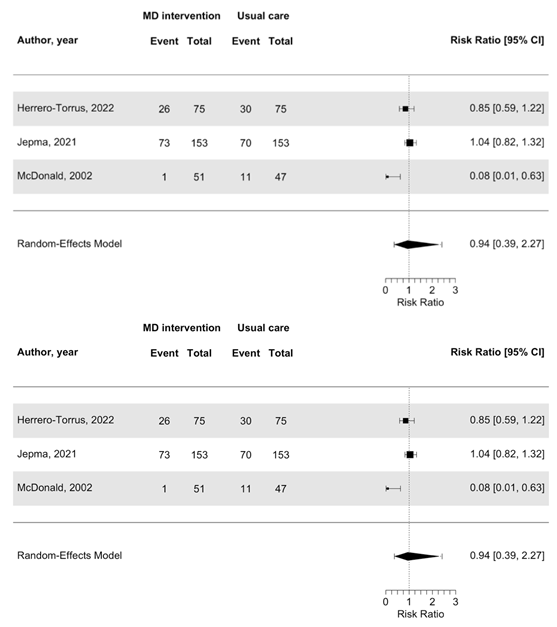
Figure 1. Pooled results for the outcome hospital admissions for heart failure from RCTs
3. Composite endpoint of all-cause mortality and HF readmission
All three RCTs and both cohort studies reported on the composite endpoint of HF readmissions and all-cause mortality. The results are separately reported by study type. Overall, the risk for the composite endpoint decreased by 23% (RR 0.77 95%CI 0.19 to 3.18) in RCTs. The absolute risk difference based on the median event rate in the usual care group was -13% (95%CI -47% to 25%) in favor of the multidisciplinary intervention, although the confidence interval was broad. Although there was a difference in follow-up time between the trials (three months versus twelve months), the effect on the pooled estimate was small as the only trial with three months follow-up (McDonald, 2002) contributed the least to the pooled estimate, because of the lowest number of participants.
A decrease in risk was seen in the results from cohort studies (RR 0.65 95%CI 0.44 to 0.96). Using the median event rate of the three usual care groups of the RCTs, the absolute risk difference in cohort studies was -20% (95%CI -32% to -2%), a difference in favor of the multidisciplinary intervention.
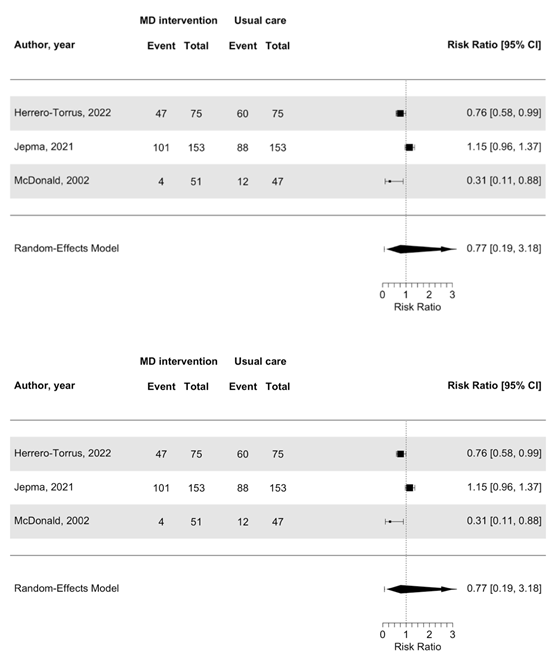
Figure 2. Pooled results for the composite endpoint of hospital admissions for heart failure and all-cause mortality from RCTs
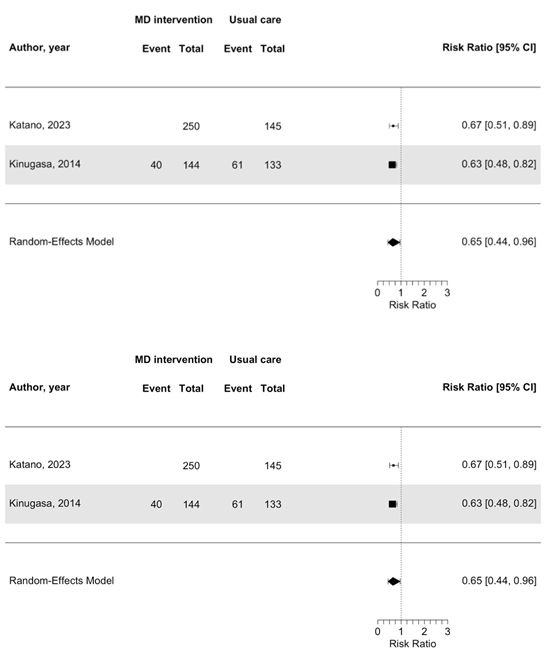
Figure 3. Pooled results for the composite endpoint of hospital admissions for heart failure and all-cause mortality from cohort studies
The number of events per group was not reported in the study from Katano (2023). In total, 115 (29%) participants experienced the composite endpoint
A systematic review of the literature was performed to answer the following question(s):
What are the benefits or harms of care provided by multidisciplinary team or meetings in elderly patients with heart failure admitted to the hospital comparing with routine care?
Table 1. PICO
| Patients | Patients (aged 70 or older) with heart failure admitted to the hospital |
| Intervention | Care provided by multidisciplinary team or multidisciplinary meeting |
| Control | Routine care |
| Outcomes | Quality of life; hospital readmission; all-cause mortality |
| Other selection citeria |
Study design: systematic reviews, RCT’s and observational studies In case of observational studies, only studies which adjusted for confounding, were included. |
Relevant outcome measures
The guideline panel considered quality of life and hospital readmission as a critical outcome measure for decision making; and a composite endpoint of hospital admission and all-cause mortality as an important outcome measure for decision making.
Search and select (Methods)
A systematic literature search was performed by a medical information specialist using the following bibliographic databases: Embase.com and Ovid/Medline. Both databases were searched from 2018 to June 24, 2025 for systematic reviews, RCTs and observational studies. Systematic searches were completed using a combination of controlled vocabulary and natural language keywords. The overall search strategy was derived from three primary search concepts: (1) aged; (2) heart failure; (3) multidisciplinary team. Duplicates were removed using EndNote software. After deduplication a total of 2245 records were imported for title/abstract screening.
Titles and abstracts were screened using the ASReview software. The articles were screened by the guideline methodologist, using the following stopping rule: stop after 200 subsequent exclusions (which was reached after screening 409 records). Based on title and abstract, 50 articles were initially selected. After screening the full-text articles, a total of three studies were included, and 47 studies were excluded (see the table with reasons for exclusion under the tab Methods). In addition, two studies from a separate systematic review were included. Chen (2024) performed a systematic literature search into the effects of collaborative health management of health failure. Potential published articles between 2002 and 2022 could be included. Most of the included articles by Chen (2024) included a population with a mean age below 70 years, except for two studies. Therefore, this review was not included, except for the two studies which met the selection criteria.
Three RCTs and two cohort studies were included in the literature analysis. Data from observational studies was only used when the results were congruent and the level of evidence from RCTs was moderate, low or very low (Cuello-Garcia, 2025).
- Chen CW, Lee MC, Wu SV. Effects of a collaborative health management model on people with congestive heart failure: A systematic review and meta-analysis. J Adv Nurs. 2024 Jun;80(6):2290-2307.
- Cuello-Garcia, Carlos A. and Morgan, Rebeca L. and Santesso, Nancy and Alonso-Coello, Pablo and Brignardello-Petersen, Romina and Schwingshackl, Lukas and Brozek, Jan and Katikireddi, Srinivasa Vittal and Munn, Zachary and Sharma-Waddington, Hugh and Wilson, Kevin C. and Meerpohl, Joerg and Morales, Daniel R. and Neumann, Ignacio and Tugwell, Peter and Guyatt, Gordon H. and Schünemann, Holger J., GRADE guidance: Strategies to enhance the utilization of randomized and non-randomized studies in evidence syntheses of health interventions.
- Herrero-Torrus M, Badosa N, Roqueta C, Ruiz-Bustillo S, Solé-González E, Belarte-Tornero LC, et al. Randomized Controlled Trial Comparing a Multidisciplinary Intervention by a Geriatrician and a Cardiologist to Usual Care after a Heart Failure Hospitalization in Older Patients: The SENECOR Study. Journal of Clinical Medicine. 2022;11(7).
- Jepma P, Verweij L, Buurman BM, Terbraak MS, Daliri S, Latour CHM, et al. The nurse-coordinated cardiac care bridge transitional care programme: A randomised clinical trial. Age and Ageing. 2021;50(6):2105-15.
- Katano S, Yano T, Numazawa R, Nagaoka R, Yamano K, Fujisawa Y, et al. Impact of Radar Chart-Based Information Sharing in a Multidisciplinary Team on In-Hospital Outcomes and Prognosis in Older Patients With Heart Failure. Circulation reports. 2023;5(7):271-81.
- Kinugasa Y, Kato M, Sugihara S, Yanagihara K, Yamada K, Hirai M, Yamamoto K. Multidisciplinary intensive education in the hospital improves outcomes for hospitalized heart failure patients in a Japanese rural setting. BMC Health Serv Res. 2014 Aug 19;14:351.
- Ledwidge M, Barry M, Cahill J, Ryan E, Maurer B, Ryder M, Travers B, Timmons L, McDonald K. Is multidisciplinary care of heart failure cost-beneficial when combined with optimal medical care? Eur J Heart Fail. 2003 Jun;5(3):381-9.
- McDonald K, Ledwidge M, Cahill J, Quigley P, Maurer B, Travers B, Ryder M, Kieran E, Timmons L, Ryan E. Heart failure management: multidisciplinary care has intrinsic benefit above the optimization of medical care. J Card Fail. 2002 Jun;8(3):142-8.
- McDonagh TA, Metra M, Adamo M, Gardner RS, Baumbach A, Böhm M, Burri H, Butler J, Čelutkienė J, Chioncel O, Cleland JGF, Coats AJS, Crespo-Leiro MG, Farmakis D, Gilard M, Heymans S, Hoes AW, Jaarsma T, Jankowska EA, Lainscak M, Lam CSP, Lyon AR, McMurray JJV, Mebazaa A, Mindham R, Muneretto C, Francesco Piepoli M, Price S, Rosano GMC, Ruschitzka F, Kathrine Skibelund A; ESC Scientific Document Group. 2021 ESC Guidelines for the diagnosis and treatment of acute and chronic heart failure: Developed by the Task Force for the diagnosis and treatment of acute and chronic heart failure of the European Society of Cardiology (ESC). With the special contribution of the Heart Failure Association (HFA) of the ESC. Eur J Heart Fail. 2022 Jan;24(1):4-131.
- VanderWeele TJ. Optimal approximate conversions of odds ratios and hazard ratios to risk ratios. Biometrics. 2020 Sep;76(3):746-752. doi: 10.1111/biom.13197. Epub 2020 Jan 6. PMID: 31808145. & https://ebm-helper.cn/en/Conv/HR_RR.html.
Risk of Bias tables
RCT
|
Study reference
(first author, publication year) |
Was the allocation sequence adequately generated?
Definitely yes Probably yes Probably no Definitely no |
Was the allocation adequately concealed?
Definitely yes Probably yes Probably no Definitely no |
Blinding: Was knowledge of the allocated interventions adequately prevented?
Were patients blinded?
Were healthcare providers blinded?
Were data collectors blinded?
Were outcome assessors blinded?
Were data analysts blinded?
Definitely yes Probably yes Probably no Definitely no |
Was loss to follow-up (missing outcome data) infrequent?
Definitely yes Probably yes Probably no Definitely no |
Are reports of the study free of selective outcome reporting?
Definitely yes Probably yes Probably no Definitely no |
Was the study apparently free of other problems that could put it at a risk of bias?
Definitely yes Probably yes Probably no Definitely no |
Overall risk of bias If applicable/necessary, per outcome measure
LOW Some concerns HIGH
|
|
Herrero-Torrus, 2022 |
Probably yes
Reason: Although not clearly stated, randomization lists were created. |
Probably no
Reason: Stated on Clinical trial.gov, only the outcome assessor was blinded. |
Definitely no
Reason: Only the outcome assessor was blinded. |
Definitely yes
Reason: No participant were lost to follow-up. |
Definitely yes
Reason: Outcomes were reported in article compared with trial registration. |
Definitely yes
Reason: Funding was non-industry. |
Some concerns (All outcomes)
Reason: Allocation concealment is unclear. |
|
Jepma, 2021 |
Definitely yes
Reason: Stratified block randomisation to the intervention or control group, allocation ratio 1:1, was used with pre-stratification by study site and cognitive status (MMSE 15–23 vs ≥24). Allocation concealment was ensured by a web-based data management programme and random permuted blocks of two, four and six were used. |
Definitely yes
Reason: Allocation concealment was ensured by a web-based data management programme and random permuted blocks of two, four and six were used. |
Probably yes
Reason: Patients and data collectors were blinded. |
Definitely yes
Reason: No participant were lost to follow-up. |
Probably yes
Reason: Outcomes stated in method section were reported in result section. |
Definitely yes
Reason: Funding was non-industry. |
Low (all outcomes) |
|
McDonald, 2002 |
No information
Reason: Only the following was stated: “[..], all eligible patients were randomized to routine care (RC) or MDC directly under the supervision of the cardiology service.” |
No information
Reason: Only the following was stated: “[..], all eligible patients were randomized to routine care (RC) or MDC directly under the supervision of the cardiology service.” |
Probably no
Reason: Although no information is provided in the paper, because of the intervention it can be assumed that blinding was not possible. |
Probably yes
Reason: Authors suggest that none of the participants were lost to follow-up. |
Probably yes
Reason: The outcomes reported in the methods section were reported in the results section. |
Definitely yes
Reason: Funding was non-industry |
Some concerns (all outcomes)
Reason: Information on randomization was not available. Furthermore, blinding may have been an issue in the outcome HF readmissions. |
Cohort study
|
Author, year |
Selection of participants
Was selection of exposed and non-exposed cohorts drawn from the same population?
|
Exposure
Can we be confident in the assessment of exposure?
|
Outcome of interest
Can we be confident that the outcome of interest was not present at start of study?
|
Confounding-assessment
Can we be confident in the assessment of confounding factors?
|
Confounding-analysis
Did the study match exposed and unexposed for all variables that are associated with the outcome of interest or did the statistical analysis adjust for these confounding variables?
|
Assessment of outcome
Can we be confident in the assessment of outcome?
|
Follow up
Was the follow up of cohorts adequate? In particular, was outcome data complete or imputed?
|
Co-interventions
Were co-interventions similar between groups?
|
Overall Risk of bias
|
|
Definitely yes, probably yes, probably no, definitely no |
Definitely yes, probably yes, probably no, definitely no |
Definitely yes, probably yes, probably no, definitely no |
Definitely yes, probably yes, probably no, definitely no |
Definitely yes, probably yes, probably no, definitely no |
Definitely yes, probably yes, probably no, definitely no |
Definitely yes, probably yes, probably no, definitely no |
Definitely yes, probably yes, probably no, definitely no |
Low, Some concerns, High |
|
|
Katano, 2023 |
Definitely no
Reason: Controls were selected between April 2016 and March 2018. Intervention participants were selected between April 2018 and March 2020 |
Definitely yes
Reason: Every eligible patients either did or did not receive the intervention according to admission date.
|
Definitely yes
Reason: Outcomes concerned readmission or death.
|
Definitely yes
Reason: General factors were adjusted for.
|
Definitely yes
Reason: Survival analysis was adjusted for confounding factors.
|
Probably yes
Reason: Not specially stated. |
Definitely yes
Reason: Participants were followed for at least two years.
|
Definitely no
Reason: Control group received treatment before intervention group. There could have been changes in treatment between 2016 and 2020.
|
Some concerns (all outcomes) |
|
Kinugasa, 2014 |
Definitely no
Reason: Participants from intervention group were treated between 5/2009 and 4/2011. The control group was treated between 5/2006 and 4/2009.
|
Definitely yes
Reason: Every eligible patients either did or did not receive the intervention according to admission date.
|
Definitely yes
Reason: Outcomes concerned readmission or death.
|
Definitely yes
Reason: General factors were adjusted for.
|
Definitely yes
Reason: Survival analysis was adjusted for confounding factors.
|
Definitely yes
Reason: Medical records were used for assessment of the outcomes
|
Definitely yes
Reason: Participants were followed for at least one year.
|
Definitely no
Reason: Control group received treatment before intervention group. There could have been changes in treatment between 2006 and 2011.
|
Some concerns (all outcomes) |
Table of excluded studies
|
Reference |
Reason for exclusion |
|
Aljabri A. An inpatient multidisciplinary educational approach to reduce 30-day heart failure readmissions. Saudi Pharmaceutical Journal. 2021;29(4):337-42. |
Effect estimate (0.24) is outside of CI (0.36 to 1.63). Cannot be deduced from article what correct effect estimate or CI should be. |
|
Baecker A, Meyers M, Koyama S, Taitano M, Watson H, Machado M, et al. Evaluation of a transitional care program after hospitalization for heart failure in an integrated health care system. JAMA Network Open. 2020;3(12):e2027410. |
Focused on discharge, without a multidisciplinary component. |
|
Bhatt AS, Varshney AS, Moscone A, Claggett BL, Miao ZM, Chatur S, et al. Virtual Care Team Guided Management of Patients With Heart Failure During Hospitalization. Journal of the American College of Cardiology. 2023;81(17):1680-93. |
Mean age < 70 & outcomes not relevant |
|
Bhatt AS, Varshney AS, Nekoui M, Moscone A, Cunningham JW, Jering KS, et al. Virtual optimization of guideline-directed medical therapy in hospitalized patients with heart failure with reduced ejection fraction: the IMPLEMENT-HF pilot study. European Journal of Heart Failure. 2021;23(7):1191-201. |
Mean age < 70 & outcomes not relevant |
|
Blood AJ, Fischer CM, Fera LE, MacLean TE, Smith KV, Dunning JR, et al. Rationale and design of a navigator-driven remote optimization of guideline-directed medical therapy in patients with heart failure with reduced ejection fraction. Clinical cardiology. 2020;43(1):4-13. |
Mean age < 70 |
|
Campbell G, Doherty C, D'Silva A, Carr-White G, Webb J, Ismail TF. Implementation and evaluation of specialist heart failure pharmacist prescribing clinics. International journal of clinical pharmacy. 2025;47(1):8-14. |
Mean age < 70, no comparison with a control group, and not relevant outcomes |
|
Cannata A, Mizani MA, Bromage DI, Piper SE, Hardman SMC, Sudlow C, et al. Heart Failure Specialist Care and Long-Term Outcomes for Patients Admitted With Acute Heart Failure. JACC: Heart Failure. 2025;13(3):402-13. |
Observational study with no adjustment for confounding |
|
Chen CW, Lee MC, Wu SFV. Effects of a collaborative health management model on people with congestive heart failure: A systematic review and meta-analysis. Journal of advanced nursing. 2024;80(6):2290-307. |
Only two studies met the inclusion criteria. These studies were described separately. |
|
Chen S-M, Fang Y-N, Wang L-Y, Wu M-K, Wu P-J, Yang T-H, et al. Impact of multi-disciplinary treatment strategy on systolic heart failure outcome. BMC cardiovascular disorders. 2019;19(1):220. |
Intervention is cardiac rehabilitation |
|
Craigo CL, Dow CM, Malkhasian YM, Minissian MB, Zadikany R, Zimmer R. A multidisciplinary transition of care approach to reduce 30-day readmissions in heart failure patients. Heart and Lung. 2025;71:76-80. |
No comparison made |
|
Domingo C, Aros F, Otxandategi A, Beistegui I, Besga A, Latorre PM. [Efficacy of a multidisciplinary care management program for patients admitted at hospital because of heart failure (ProMIC)]. Eficacia de un programa multidisciplinar de gestion de cuidados en pacientes que ingresan por insuficiencia cardiaca (ProMIC). 2019;51(3):142-52. |
Article in Spanish |
|
El Hadidi S, Samir Bazan N, Byrne S, Darweesh E, Bermingham M. Heart Failure Prescribing Quality at Discharge from a Critical Care Unit in Egypt: The Impact of Multidisciplinary Care. Pharmacy (Basel, Switzerland). 2020;8(3). |
Mean age < 70 |
|
Essa H, Walker L, Mohee K, Oguguo C, Douglas H, Kahn M, et al. Multispecialty multidisciplinary input into comorbidities along with treatment optimisation in heart failure reduces hospitalisation and clinic attendance. Open Heart. 2022;9(2). |
Observational study: No correction for confounding and no effect estimates |
|
Essa H, Walker L, Mohee K, Oguguo E, Douglas H, Kahn M, et al. Multispecialty multidisciplinary input into comorbidities in heart failure reduces hospitalisation and clinic attendance. 2022. |
Same study as publication in Open Heart 2022 |
|
Garnier A, Rouiller N, Gachoud D, Nachar C, Voirol P, Griesser A-C, et al. Effectiveness of a transition plan at discharge of patients hospitalized with heart failure: a before-and-after study. ESC heart failure. 2018;5(4):657-67. |
Observational study: Comparison between different periods (seasons) for admission and duration. |
|
Ghobadi P, Gholami M, Hasanvand S, Toulabi T, Moradifar N, Birjandi M. Effects of a multidisciplinary management program on symptom burden and medication adherence in heart failure patients with comorbidities: A randomized controlled trial. BMC nursing. 2022;21(1):346. |
Intervention not started during hospitalization |
|
Hawley A, He J, Crabtree A, Iacovides S, Keeling P. The impact of an integrated heart failure service in a medium-sized district general hospital. Open Heart. 2020;7(1). |
Before-after study with no effect estimates and without adjustment for confounding |
|
Hinch BK, Staffileno BA. Implementing a Heart Failure Transition Program to Reduce 30-Day Readmissions. Journal for Healthcare Quality. 2021;43(2):110-8. |
No comparison made |
|
Jasińska-Stroschein M, Waszyk-Nowaczyk M. Multidimensional Interventions on Supporting Disease Management for Hospitalized Patients with Heart Failure: The Role of Clinical and Community Pharmacists. Journal of Clinical Medicine. 2023;12(8). |
None of the included studies met the selection criteria. No multidisciplinary intervention was assessed. |
|
Koutlas A, Jenkins P. Reducing Hospital Admissions for Patients with Heart Failure by Implementing the Chronic Care Management Framework: A Cost, Quality and Satisfaction Improvement Project. Journal of doctoral nursing practice. 2022. |
No comparison made |
|
Li Y, Fu MR, Luo B, Li M, Zheng H, Fang J. The Effectiveness of Transitional Care Interventions on Health Care Utilization in Patients Discharged From the Hospital With Heart Failure: A Systematic Review and Meta-Analysis. Journal of the American Medical Directors Association. 2021;22(3):621-9. |
Few studies researched a multidisciplinary intervention, of which the majority included younger patients. |
|
Li Z, Wang Y, Hu D, Huang J, Zhang Y. A heart failure center model helped to promote the standardized management and improve the prognosis of patients. Cardiovascular Diagnosis and Therapy. 2025;15(1):128-36. |
No effect estimates and no adjustment for confounding |
|
Luiso D, Herrero-Torrus M, Badosa N, Roqueta C, Ruiz-Bustillo S, Belarte-Tornero LC, et al. Quality of Life in Older Patients after a Heart Failure Hospitalization: Results from the SENECOR Study. Journal of clinical medicine. 2022;11(11). |
Comparison with impaired QoF and good to excellent QoF |
|
Moye PM, Chu PS, Pounds T, Thurston MM. Impact of a pharmacy team-led intervention program on the readmission rate of elderly patients with heart failure. American journal of health-system pharmacy : AJHP : official journal of the American Society of Health-System Pharmacists. 2018;75(4):183-90. |
Historical control group, assessed in different seasons compared with intervention group. |
|
Muk B, Bánfi-Bacsárdi F, Vámos M, Pilecky D, Majoros Z, Török GM, et al. The Impact of Specialised Heart Failure Outpatient Care on the Long-Term Application of Guideline-Directed Medical Therapy and on Prognosis in Heart Failure with Reduced Ejection Fraction. Diagnostics. 2024;14(2). |
Mean age < 70 |
|
Odajima S, Fujimoto K, Kadoi A, Tsuboi T, Nagasawa Y, Hyogo K, et al. Real-World Data on Post-Discharge Prognosis of Elderly and Frail Hospitalized Patients with Heart Failure Reflecting the Latest Guideline-Directed Medical Therapy in Japan. International Heart Journal. 2025;66(3):404-12. |
No intervention, research into the association between clinical factors and the primary outcome |
|
Saizen Y, Ikuta K, Katsuhisa M, Takeshita Y, Moriki Y, Kasamatsu M, et al. Impact of nurse-led interprofessional work in older patients with heart failure and multimorbidity: A retrospective cohort study. American Heart Journal Plus: Cardiology Research and Practice. 2024;38:100361 |
Nurses selected which patients should receive additional care.
|
|
Saldarriaga C, Gallego C, Fajardo LA, Agudelo AM, Sánchez Zapata P, Pérez LE, et al. Multidisciplinary Heart Failure Care Program: An Experience From Colombia. Current Problems in Cardiology. 2023;48(1). |
Focus on cardiac rehabilitation |
|
Son HM, Lee H. Association Between Nurse-Led Multidisciplinary Education and Cardiac Events in Patients With Heart Failure: A Retrospective Chart Review. Asian Nursing Research. 2024;18(1):60-7. |
No outcomes of interest were reported.
|
|
Song W, Hu L, Geng L, Hu P. Effects of multidisciplinary collaborative treatment in patients with chronic heart failure. American Journal of Translational Research. 2024;16(12):7803-16. |
Did not randomize or adjust for confounding |
|
Sukumar S, Orkaby AR, Schwartz JB, Marcum Z, Januzzi JL, Vaduganathan M, et al. Polypharmacy in Older Heart Failure Patients: a Multidisciplinary Approach. Current heart failure reports. 2022;19(5):290-302. |
Narrative review |
|
Takeda A, Martin N, Taylor RS, Taylor SJC. Disease management interventions for heart failure. Cochrane Database of Systematic Reviews. 2019;2019(1). |
None of the included studies met the selection criteria. All studies included patients not hospitalized. |
|
Walgraeve K, Van der Linden L, Flamaing J, Fagard K, Spriet I, Tournoy J. Feasibility of optimizing pharmacotherapy in heart failure patients admitted to an acute geriatric ward: role of the clinical pharmacist. European Geriatric Medicine. 2018;9(1):103-11. |
No comparison made |
|
Yoo HJ, Kim N, Park MK. Patient-centered care for mental health in patients with heart failure in the intensive care unit: A systematic review. Applied nursing research: ANR. 2024;78:151814. |
None of the included studies met the selection criteria. All studies included patients younger than 70 years. |
Beoordelingsdatum en geldigheid
Publicatiedatum : 05-08-2026
Beoordeeld op geldigheid : 05-08-2026
Algemene gegevens
De ontwikkeling/herziening van deze richtlijnmodule werd ondersteund door het Kennisinstituut van de Federatie Medisch Specialisten (www.demedischspecialist.nl/kennisinstituut) en werd gefinancierd door de Stichting Kwaliteitsgelden Medisch Specialisten (SKMS). De financier heeft geen enkele invloed gehad op de inhoud van de richtlijnmodule.
Samenstelling werkgroep
Voor het ontwikkelen van de richtlijnmodule is in 2023 een multidisciplinaire werkgroep ingesteld, bestaande uit vertegenwoordigers van alle relevante specialismen (zie hiervoor de Samenstelling van de werkgroep) die betrokken zijn bij de zorg voor opgenomen ouderen (met een kwetsbare gezondheid) met hartfalen.
Werkgroep
- Prof. Dr. M.H. (Marielle) Emmelot-Vonk, klinisch geriater, werkzaam in het Universitair Medisch Centrum Utrecht te Utrecht, NVKG (voorzitter)
- Dr. K. (Kirsten) Boerlage-van Dijk, cardioloog, werkzaam in het Amphia ziekenhuis te Breda, NVVC
- Dr. M.C. (Miriam) Faes, klinisch geriater, werkzaam in het Amphia ziekenhuis te Breda, NVKG (tot februari 2025)
- Drs. M. (Moniek) Kattenbelt, klinisch geriater, werkzaam in het Radboud Universitair Medisch Centrum te Nijmegen, NVKG
- Dr. H.L. (Dineke) Koek, klinisch geriater, werkzaam in het Universitair Medisch Centrum Utrecht te Utrecht, NVKG
- Prof. Dr. M. (Majon) Muller, internist ouderengeneeskunde, werkzaam in het Amsterdam Universitair Medisch Centrum te Amsterdam, NIV
- Dr. M. (Mieke) van der Heuvel, cardioloog, werkzaam in het Medisch Spectrum Twente te Enschede, NVVC
- Drs. J. (Judith) van der Vloed, beleidsadviseur, werkzaam bij de Hartstichting te Den Haag, Hartstichting
- K. (Kim) van Zutphen, verpleegkundig specialist, werkzaam in het Canisius Wilhelmina Ziekenhuis te Nijmegen, V&VN
Klankbordgroep
- N. (Nicole) Broekman-Peters, dietist, werkzaam in het Universitair Medisch Centrum Utrecht te Utrecht, NVD
- J.A. (Jonneke) Eggink, fysiotherapeut, werkzaam in het Flevoziekenhuis te Almere, KNGF
- A. (Alexander) Pluim-Mentz, specialist ouderengeneeskunde, werkzaam bij Aafje thuiszorg huizen zorghotels, Verenso
Met ondersteuning van
- M. (Mischa) Lenaers, junior adviseur, Kennisinstituut van de Federatie Medisch Specialisten
- Dr. B.H. (Bernardine) Stegeman, senior adviseur, Kennisinstituut van de Federatie Medisch Specialisten
- A. (Alies) Oost, medisch informatiespecialist, Kennisinstituut van de Federatie Medisch Specialisten
Belangenverklaringen
Een overzicht van de belangen van werkgroepleden en het oordeel over het omgaan met eventuele belangen vindt u in onderstaande tabel. De ondertekende belangenverklaringen zijn op te vragen bij het secretariaat van het Kennisinstituut van de Federatie Medisch Specialisten via secretariaat@kennisinstituut.nl.
Gemelde (neven)functies en belangen werkgroepleden en expertisegroepleden
|
Naam |
Hoofdfunctie |
Nevenwerkzaamheden |
Persoonlijke financiële belangen |
Persoonlijke relaties |
Extern gefinancierd onderzoek |
Intellectuele belangen en reputatie |
Overige belangen |
Datum |
Restrictie |
|
Emmelot-Vonk* |
Klinisch geriater, medisch afdelingshoofd en hoogleraar klinische geriatrie UMC Utrecht |
Vanaf 2002: Het geven van diverse presentaties op congressen, symposia en nascholingen. 2009 - heden: lid werkgroep syncope en autonome aandoeningen (WSAA) 2010 - heden: Deelname aan adviesraden en geven van presentaties voor diverse farmaceuten op het gebied van osteoporose 2012 – heden: Lid Special Interest Group (SIG) Valpreventie Nederlandse Vereniging Klinische Geriatrie (NVKG) 2013 - heden: Bestuurslid Interdisciplinaire Werkgroep Osteoporose (IWO). 2014 - heden: Lid werkgroep Richtlijnen Nederlandse Vereniging Klinische Geriatrie (NVKG) 2016 - heden: Member Task & Finish Group Fall Risk Increasing Drugs (European Geriatric Medicine Society (EUGMS) 016 - heden: Lid Special Interest Group “Falls and Fracture prevention” European Geriatric Medicine Society (EUGMS) 2018 - heden: Lid projectgroep Zinnige Zorg Osteoporose 2020 - heden: Voorzitter Special Interest Group Geriatrische cardiologie Nederlandse vereniging voor klnische geriatrie (NVKG) 2020 - heden: Lid koplopertraject cluster duizeligheid en vallen 2023 - heden: Stuurgroeplid deltaplan hartfalen |
Geen |
Geen |
Geen |
Geen |
Geen |
13/10/2023 |
Geen restrictie |
|
Boerlage-van Dijk |
Cardioloog in Jeroen Bosch zkh |
Geen |
Geen |
Geen |
Geen |
Geen |
Geen |
26/02/2024 |
Geen restrictie |
|
Faes |
klinisch geriater Amphia zkh |
Lidmaatschap verschillende commissies NVKG (onbetaald) Vanuit NVKG afgevaardigd als lid van de werkgroep voor de pilot ESC richtlijn Cardiac Pacing and cardiac resynchronization therapy (2021) voor de Nederlandse situatie (Kennisinstituut van Medisch Specialisten). |
Geen |
Geen |
1) ja, ZonMW Medtronic Inc. and Artivion inc. (onderzoek naar een app bij patiënten met een aortic aneurysma) 2) ja, Lid van COOP consortium, onderzoek naar gevolgen van COVID bij ouderen |
Geen |
Geen |
08/12/2023 |
Geen restrictie |
|
Kattenbelt |
Klinisch geriater, Radboud UMC |
Geen |
Geen |
Geen |
Geen |
Geen |
Geen |
11/12/2023 |
Geen restrictie |
|
Koek |
Klinisch geriater UMCU |
Geen |
Geen |
Geen |
Geen |
Geen |
Ontwikkeling van regionaal nascholingsprogramma (CardioGeriatrie Symposium 2024; sponsor Astra Zenica inclusief sprekersvergoeding). Onderwerp CVRM / CGA bij de oudere hartpatiënt. Inhoudelijk programma wordt door UMCU opgesteld. Organisatie van de nascholing gebeurd door de sponsor. Accreditatie is aangevraagd. |
23/11/2023 |
Geen restrictie |
|
Muller |
Internist, Hoogleraar AMC |
PI Hart-Brein consortium (HBCx - CVON) |
Geen |
Geen |
Geen |
Oprichter Hart-Brein kliniek (ism cardiologie) |
Geen |
04/12/2023 |
Geen restrictie |
|
Van den Heuvel |
Cardioloog in het MST, Enschede |
Lid van NVVC werkgroep hartfalen met affiniteit voor geriatrische cardiologie.Klankbordgroeplid voor het project Zorgpad hybride zorg hartfalen Santeon. |
Geen |
Geen |
Geen |
Geen |
Geen |
19/02/2024 |
Geen restrictie |
|
Van der Vloed |
Beleidsadviseur Harteraad betaald. |
Geen |
Geen |
Geen |
Geen |
Geen |
Geen |
01/02/2024 |
Geen restrictie |
|
Van Zutphen |
MSc verpleegkundig specialist AGZ Hartfalenpoli cardiologie Canisius Wilhelmina ziekenhuis 28 uur/week, betaald |
Kernteamlid medical board zorgpad hybride zorg hartfalen Santeon zorg bij jou Betaald |
Geen |
Geen |
Geen |
Geen |
Geen |
08/02/2024 |
Geen restrictie |
|
Stegeman |
Senior adviseur, Kennisinstituut van de Federatie Medisch Specialisten |
Geen |
Geen |
Geen |
Geen |
Geen |
Geen |
22/2/2024 |
Geen restrictie |
|
Lenaers |
Junior adviseur, Kennisinstituut van de Federatie Medisch Specialisten |
Geen |
Geen |
Geen |
Geen |
Geen |
Geen |
22/2/2024 |
Geen restrictie |
|
Klankbordgroep |
|||||||||
|
Broekman |
Dietist UMC Utrecht |
Geen |
Geen |
Geen |
Geen |
Geen |
Geen |
31/10/2023 |
Geen restrictie |
|
Eggink |
Fysiotherapeut in het Flevoziekenhuis Almere |
1e jaar master Fysiotherapiewetenschap |
Geen |
Geen |
Geen |
Geen |
Geen |
08/12/2023 |
Geen restrictie |
|
Pluim Mentz |
Senior lecturer/ docent LUMC |
Beoordelaar management opdracht kaderopleiding GR Aafje, locatie Smeetsland (VVT instelling) |
Geen |
Geen |
Geen |
Geen |
Geen |
08/12/2023 |
Geen restrictie |
Inbreng patiëntenperspectief
De werkgroep besteedde aandacht aan het patiëntenperspectief door afgevaardigde patiëntenorganisatie in de werkgroep, Harstichting. De conceptmodule is tevens voor commentaar voorgelegd aan Harstichting en de eventueel aangeleverde commentaren zijn bekeken en verwerkt.
Kwalitatieve raming van mogelijke financiële gevolgen in het kader van de Wkkgz
Bij de richtlijnmodule voerde de werkgroep conform de Wet kwaliteit, klachten en geschillen zorg (Wkkgz) een kwalitatieve raming uit om te beoordelen of de aanbevelingen mogelijk leiden tot substantiële financiële gevolgen. Bij het uitvoeren van deze beoordeling is de richtlijnmodule op verschillende domeinen getoetst (zie het stroomschema bij Werkwijze).
|
Module |
Uitkomst raming |
Toelichting |
|
Multidisciplinaire interventie of overleg |
Geen financiële gevolgen |
Hoewel uit de toetsing volgt dat de aanbeveling(en) breed toepasbaar zijn (>40.000 patiënten), volgt ook uit de toetsing dat het geen nieuwe manier van zorgverlening of andere organisatie van zorgverlening betreft, het geen toename in het aantal in te zetten voltijdsequivalenten aan zorgverleners betreft en het geen wijziging in het opleidingsniveau van zorgpersoneel betreft. Er worden daarom geen substantiële financiële gevolgen verwacht. |
Werkwijze
Voor meer details over de gebruikte richtlijnmethodologie verwijzen wij u naar de Werkwijze. Relevante informatie voor de ontwikkeling/herziening van deze richtlijnmodule is hieronder weergegeven.
Zoekverantwoording
Zoekstrategie
Embase.com
|
No. |
Query |
Results |
|
#1 |
'aged'/exp OR 'geriatrics'/exp OR 'geriatric assessment'/exp OR 'geriatric patient'/exp OR 'elderly care'/exp OR 'frailty'/exp OR 'dementia'/exp OR 'community dwelling person'/exp OR 'community dwelling':ti,ab,kw OR elder*:ti,ab,kw OR eldest:ti,ab,kw OR frail*:ti,ab,kw OR geriatri*:ti,ab,kw OR psychogeriatr*:ti,ab,kw OR ((oldest NEXT/1 old*):ti,ab,kw) OR ((very NEXT/1 old*):ti,ab,kw) OR senior*:ti,ab,kw OR senium:ti,ab,kw OR septuagenarian*:ti,ab,kw OR septagenarian*:ti,ab,kw OR octagenarian*:ti,ab,kw OR octogenarian*:ti,ab,kw OR nonagenarian*:ti,ab,kw OR centarian*:ti,ab,kw OR centenarian*:ti,ab,kw OR supercentenarian*:ti,ab,kw OR (((65 OR 70 OR 75 OR 80 OR 85 OR 90 OR 95 OR 100) NEAR/2 (year* OR age*)):ti,ab,kw) OR ((older NEXT/1 (man OR men OR male* OR woman OR women OR female*)):ti,ab,kw) OR (((old OR older) NEXT/1 (age* OR subject* OR patient* OR pts OR adult* OR population* OR person* OR individual* OR people OR citizen*)):ti,ab,kw) OR ((aged NEXT/3 (people OR patient* OR individual* OR adult*)):ti,ab,kw) OR senil*:ti,ab,kw OR alzheimer*:ti,ab,kw OR dementia:ti,ab,kw OR 'multiple chronic conditions'/exp OR 'comorbidity'/exp OR multimorbid*:ti,ab,kw OR 'multi morbid*':ti,ab,kw OR comorbid*:ti,ab,kw OR 'co morbid*':ti,ab,kw OR (((multiple OR concurrent OR simultaneous) NEAR/3 (disease* OR illness* OR condition* OR disorder*)):ti,ab,kw) |
5750073 |
|
#2 |
'heart failure'/exp OR (((heart OR cardi* OR coronar* OR cordis OR myocard*) NEAR/3 (fail* OR decompensat* OR destabil* OR incompeten* OR insufficien* OR edema OR oedema OR shock OR collaps* OR arrest* OR infarct* OR standstill OR 'stand* still' OR dysfunction*)):ti,ab,kw) OR adhf:ti,ab,kw OR asystol*:ti,ab,kw OR 'circulat* arrest*':ti,ab,kw OR 'cardiorenal syndrome*':ti,ab,kw OR 'cardio renal syndrome*':ti,ab,kw OR corpulmonale:ti,ab,kw OR 'cor pulmonale':ti,ab,kw OR (((diastolic OR systolic) NEAR/3 (dysfunct* OR fail* OR overload)):ti,ab,kw) OR ((('outflow tract' OR 'ventricular outflow' OR 'inflow tract' OR 'left ventric*' OR 'right ventric*' OR lv OR rv OR lvot OR rvot) NEAR/3 obstruct*):ti,ab,kw) OR (((left OR right) NEAR/3 ventric* NEAR/3 (insufficien* OR fail* OR dysfunction* OR strain)):ti,ab,kw) OR (((low OR high) NEAR/1 (cardiac OR heart) NEAR/1 output):ti,ab,kw) OR (((heart OR ventric*) NEAR/3 overload):ti,ab,kw) OR hfpef:ti,ab,kw OR hfref:ti,ab,kw OR hfmref:ti,ab,kw |
1187545 |
|
#3 |
'multidisciplinary team'/de OR 'multidisciplinary care'/exp OR 'collaborative care team'/exp OR 'interprofessional collaboration'/exp OR 'interprofessional care'/exp OR 'patient care team'/de OR 'integrated health care system'/exp OR (((care OR healthcare) NEAR/3 (team* OR shar*)):ti,ab,kw) OR (((collaborative OR interdisciplin* OR 'inter disciplin*' OR multidisciplin* OR 'multi disciplin*' OR transdisciplin* OR 'trans disciplin*') NEAR/4 (care OR healthcare OR team* OR group* OR collaborat* OR cooperat* OR meeting* OR management OR intervention* OR treatment* OR therap* OR evaluation OR assess* OR model* OR program* OR approach*)):ti,ab,kw) OR ((integrated NEAR/3 (care OR healthcare OR 'health care')):ti,ab,kw) OR 'cross disciplin*':ti,ab,kw OR interprofessional:ti,ab,kw OR 'inter professional':ti,ab,kw OR multiprofessional:ti,ab,kw OR 'multi professional':ti,ab,kw OR interdepartment*:ti,ab,kw OR 'inter department*':ti,ab,kw |
441914 |
|
#5 |
#4 AND [2018-2025]/py |
2477 |
|
#4 |
#1 AND #2 AND #3 NOT ('conference abstract'/it OR 'editorial'/it OR 'letter'/it OR 'note'/it) NOT (('animal'/exp OR 'animal experiment'/exp OR 'animal model'/exp OR 'nonhuman'/exp) NOT 'human'/exp) |
4140 |
|
#6 |
'meta analysis'/exp OR 'meta analysis (topic)'/exp OR metaanaly*:ti,ab OR 'meta analy*':ti,ab OR metanaly*:ti,ab OR 'systematic review'/de OR 'cochrane database of systematic reviews'/jt OR prisma:ti,ab OR prospero:ti,ab OR (((systemati* OR scoping OR umbrella OR 'structured literature') NEAR/3 (review* OR overview*)):ti,ab) OR ((systemic* NEAR/1 review*):ti,ab) OR (((systemati* OR literature OR database* OR 'data base*') NEAR/10 search*):ti,ab) OR (((structured OR comprehensive* OR systemic*) NEAR/3 search*):ti,ab) OR (((literature NEAR/3 review*):ti,ab) AND (search*:ti,ab OR database*:ti,ab OR 'data base*':ti,ab)) OR (('data extraction':ti,ab OR 'data source*':ti,ab) AND 'study selection':ti,ab) OR ('search strategy':ti,ab AND 'selection criteria':ti,ab) OR ('data source*':ti,ab AND 'data synthesis':ti,ab) OR medline:ab OR pubmed:ab OR embase:ab OR cochrane:ab OR (((critical OR rapid) NEAR/2 (review* OR overview* OR synthes*)):ti) OR ((((critical* OR rapid*) NEAR/3 (review* OR overview* OR synthes*)):ab) AND (search*:ab OR database*:ab OR 'data base*':ab)) OR metasynthes*:ti,ab OR 'meta synthes*':ti,ab |
1082130 |
|
#7 |
#5 AND #6 |
134 |
Ovid/Medline
|
# |
Searches |
Results |
|
1 |
exp Aged/ or exp Geriatrics/ or exp "Homes for the Aged"/ or exp "Health Services for the Aged"/ or exp Geriatric Psychiatry/ or exp Geriatric Nursing/ or exp Dementia/ or exp Independent Living/ or 'community dwelling'.ti,ab,kf. or elder*.ti,ab,kf. or eldest.ti,ab,kf. or frail*.ti,ab,kf. or geriatri*.ti,ab,kf. or 'oldest old*'.ti,ab,kf. or 'very old*'.ti,ab,kf. or senior*.ti,ab,kf. or senium.ti,ab,kf. or psychogeriatr*.ti,ab,kf. or septuagenarian*.ti,ab,kf. or septagenarian*.ti,ab,kf. or octagenarian*.ti,ab,kf. or octogenarian*.ti,ab,kf. or nonagenarian*.ti,ab,kf. or centarian*.ti,ab,kf. or centenarian*.ti,ab,kf. or supercentenarian*.ti,ab,kf. or (("65" or "70" or "75" or "80" or "85" or "90" or "95" or "100") adj2 (year* or age*)).ti,ab,kf. or (older adj (man or men or male* or woman or women or female*)).ti,ab,kf. or ((old or older) adj (age* or subject* or patient* or pts or adult* or population* or person* or individual* or people or citizen*)).ti,ab,kf. or (aged adj3 (people or patient* or individual* or adult*)).ti,ab,kf. or senil*.ti,ab,kf. or alzheimer*.ti,ab,kf. or dementia.ti,ab,kf. or exp Comorbidity/ or multimorbid*.ti,ab,kf. or 'multi morbid*'.ti,ab,kf. or comorbid*.ti,ab,kf. or 'co morbid*'.ti,ab,kf. or ((multiple or concurrent or simultaneous) adj3 (disease* or illness* or condition* or disorder*)).ti,ab,kf. |
4668401 |
|
2 |
exp Heart Failure/ or ((heart or cardi* or coronar* or cordis or myocard*) adj3 (fail* or decompensat* or destabil* or incompeten* or insufficien* or edema or oedema or shock or collaps* or arrest* or infarct* or standstill or 'stand* still' or dysfunction*)).ti,ab,kf. or adhf.ti,ab,kf. or asystol*.ti,ab,kf. or 'circulat* arrest*'.ti,ab,kf. or 'cardiorenal syndrome*'.ti,ab,kf. or 'cardio renal syndrome*'.ti,ab,kf. or corpulmonale.ti,ab,kf. or 'cor pulmonale'.ti,ab,kf. or ((diastolic or systolic) adj3 (dysfunct* or fail* or overload)).ti,ab,kf. or (('outflow tract' or 'ventricular outflow' or 'inflow tract' or 'left ventric*' or 'right ventric*' or lv or rv or lvot or rvot) adj3 obstruct*).ti,ab,kf. or ((left or right) adj3 ventric* adj3 (insufficien* or fail* or dysfunction* or strain)).ti,ab,kf. or ((low or high) adj1 (cardiac or heart) adj1 output).ti,ab,kf. or ((heart or ventric*) adj3 overload).ti,ab,kf. or hfpef.ti,ab,kf. or hfref.ti,ab,kf. or hfmref.ti,ab,kf. |
655950 |
|
3 |
exp Patient Care Team/ or exp Interprofessional Relations/ or exp "Delivery of Health Care, Integrated"/ or ((care or healthcare) adj3 (team* or shar*)).ti,ab,kf. or ((collaborative or interdisciplin* or 'inter disciplin*' or multidisciplin* or 'multi disciplin*' or transdisciplin* or 'trans disciplin*') adj4 (care or healthcare or team* or group* or collaborat* or cooperat* or meeting* or management or intervention* or treatment* or therap* or evaluation or assess* or model* or program* or approach*)).ti,ab,kf. or (integrated adj3 (care or healthcare or 'health care')).ti,ab,kf. or 'cross disciplin*'.ti,ab,kf. or interprofessional.ti,ab,kf. or 'inter professional'.ti,ab,kf. or multiprofessional.ti,ab,kf. or 'multi professional'.ti,ab,kf. or interdepartment*.ti,ab,kf. or 'inter department*'.ti,ab,kf. |
394935 |
|
4 |
(1 and 2 and 3) not (comment/ or editorial/ or letter/) not ((exp animals/ or exp models, animal/) not humans/) |
3196 |
|
5 |
limit 4 to yr="2018 -Current" |
1428 |
|
6 |
meta-analysis/ or meta-analysis as topic/ or (metaanaly* or meta-analy* or metanaly*).ti,ab,kf. or systematic review/ or cochrane.jw. or (prisma or prospero).ti,ab,kf. or ((systemati* or scoping or umbrella or "structured literature") adj3 (review* or overview*)).ti,ab,kf. or (systemic* adj1 review*).ti,ab,kf. or ((systemati* or literature or database* or data-base*) adj10 search*).ti,ab,kf. or ((structured or comprehensive* or systemic*) adj3 search*).ti,ab,kf. or ((literature adj3 review*) and (search* or database* or data-base*)).ti,ab,kf. or (("data extraction" or "data source*") and "study selection").ti,ab,kf. or ("search strategy" and "selection criteria").ti,ab,kf. or ("data source*" and "data synthesis").ti,ab,kf. or (medline or pubmed or embase or cochrane).ab. or ((critical or rapid) adj2 (review* or overview* or synthes*)).ti. or (((critical* or rapid*) adj3 (review* or overview* or synthes*)) and (search* or database* or data-base*)).ab. or (metasynthes* or meta-synthes*).ti,ab,kf. |
792302 |
|
7 |
5 and 6 |
79 |