
Medicamenteuze interventie voor hartfalen
Uitgangsvraag
Wat is de aanbevolen medicamenteuze behandelstrategie voor ouderen (met een kwetsbare gezondheid) in het ziekenhuis met hartfalen om kwaliteit van leven te verbeteren en heropnames te voorkomen?
Aanbeveling
Aanbeveling-1 Quadrupel hartfalenmedicatie
Behandel klinische oudere HFrEF-patiënten met quadrupel (‘fantastic four’) hartfalenmedicatie (zie aanbeveling twee voor de plaatsbepaling van SGLT2-remmers) indien de patiënt als behandeldoelen reductie van ziekenhuisopnames door hartfalen en het verlagen van de kans op (cardiovasculaire) sterfte heeft benoemd.
Aanvullende afweging ouderen met een kwetsbare gezondheid
Wees terughoudend met de behandeling van klinische HFrEF-patiënten met een kwetsbare gezondheid met quadrupel (‘fantastic four’) hartfalenmedicatie indien de behandeldoelen van de patiënt niet gericht zijn op het verminderen van ziekenhuisopnames door hartfalen en het verlagen van het risico op (cardiovasculaire) sterfte, vanwege een verhoogd risico op bijwerkingen.
Behandel deze patiënten met lagere dosis en eventueel minder middelen, afgestemd op klinische patiëntkarakteristieken, het bijwerkingenprofiel en de behandeldoelen van de patiënt.
Aanbeveling-2 Plaatsbepaling van SGLT2-remmers
Behandel oudere klinische hartfalenpatiënten (HFpEF, HFmrEF en HFrEF) met een SGLT2-remmer (dapagliflozine of empagliflozine) indien de patiënt als behandeldoelen reductie van ziekenhuisopnames door hartfalen en het verlagen van de kans op (cardiovasculaire) sterfte heeft benoemd.
Overwegingen
Balans tussen gewenste en ongewenste effecten
In de literatuursamenvatting werden vier trials beschreven die elk SGLT2i (plus achtergrondtherapie) met placebo (plus achtergrondtherapie) vergeleken.
De kritieke uitkomstmaten kwaliteit van leven en (her)opname wegens hartfalen werden door vier trials gerapporteerd (EMPEROR-Reduced, EMPEROR-Preserved, DELIVER en DAPA-HF). Er werd geen belangrijk verschil in kwaliteit van leven gevonden en het risico op (her)opname wegens hartfalen was lager bij patiënten die behandeld werden met SGLT2i vergeleken met placebo (-3.9%). Dit verschil was klinisch relevant.
Voor de belangrijke uitkomstmaten (sterfte en de verschillende bijwerkingen) werden wisselende conclusies getrokken.
Voor de volgende uitkomstmaten werd er (gemiddeld) een lager risico gevonden (klinisch relevant verschil) bij patiënten die behandeld werden met SGLT2i vergeleken met patiënten die behandeld werden met placebo:
- Sterfte door alle oorzaken (EMPEROR-Reduced, EMPEROR-Preserved, DELIVER en DAPA-HF)
- Sterfte door cardiovasculaire oorzaken (EMPEROR-Reduced, EMPEROR-Preserved, DELIVER en DAPA-HF)
- Electrolytstoornissen (EMPEROR-Reduced)
- Acuut nierfalen (EMPEROR-Preserved, EMPEROR-Reduced)
- Acute nierschade (DELIVER)
- Ernstige nier-gerelateerde ongewenste voorvallen/voorvallen leidend tot stoppen met de studiebehandeling (DELIVER, DAPA-HF)
- Samengestelde nieruitkomst (EMPEROR-Reduced)
Voor de volgende uitkomstmaten werd er (gemiddeld) een hoger risico gevonden (klinisch relevant verschil) bij patiënten die behandeld werden met SGLT2i vergeleken met patiënten die behandeld werden met placebo:
- (Orthostatische/symptomatische) hypotensie (EMPEROR-Preserved, EMPEROR-Reduced)
- Urineweginfecties (EMPEROR-Preserved, DELIVER, EMPEROR-Reduced)
- Genitale infecties (EMPEROR-Preserved, EMPEROR-Reduced)
Voor de uitkomst ernstige ritmestoornissen werd geen bewijs gevonden.
Voor de uitkomst ketoacidose werden wisselende resultaten gevonden. Deze uitkomst kwam zeer weinig voor.
Aanvullend bewijs
Quadrupel/multiple therapie (‘fantastic four’)
Uit Nederlands observationeel onderzoek onder 80-plussers met HFrEF (CHECK-HF) blijkt dat de meerderheid van deze patiënten ten minste één door richtlijnen aanbevolen hartfalenmedicatie ontvingen (Linssen, 2020). In de recentere Nederlandse TITRATE-HF-studies, uitgevoerd bij een HFrEF-populatie met een mediane leeftijd van 70–71 jaar, kreeg 44–66% van de patiënten een quadrupel therapie (bestaande uit een ARNI/ACEi/ARB, bètablokker, MRA en SGLT2-remmer). Slechts 1% van de patiënten bereikte echter de streefdosering van alle vier de middelen (Malgie 2024; Malgie, 2025).
Een internationale systematische review en netwerkmeta-analyse bevestigt dat uitgebreide combinatiebehandeling met ARNI, BB, MRA en SGLT2i de meest levensverlengende strategie was bij HFrEF (Tromp, 2022). Volgens een schatting van Vaduganathan (2020) leverde deze quadrupel therapie voor een 80-jarige patiënt met HFrEF gemiddeld 2,7 extra jaren op zonder cardiovasculaire sterfte of eerste ziekenhuisopname vanwege hartfalen en 1,4 extra jaren aan totale overleving ten opzichte van conventionele therapie (ACEi/ARB en BB). Deze winst geldt waarschijnlijk vooral voor vitale, poliklinische oudere patiënten.
Voor oudere klinische HFrEF-patiënten met een kwetsbare gezondheid is de evidentie beperkter. Er zijn geen gerandomiseerde studies die specifiek deze populatie hebben onderzocht. Wel blijkt uit observationeel onderzoek dat HFrEF-patiënten die geen of slechts één hartfalenmodificerend middel gebruikten, een verhoogd risico liepen op overlijden en ziekenhuisopname. Dit risico was lager bij patiënten die met drie typen hartfalenmedicatie worden behandeld – een effect dat zowel bij patiënten met milde als matige kwetsbare gezondheid werd gezien (Kondo, 2023).
Ook bij gehospitaliseerde HFrEF-patiënten met een kwetsbare gezondheid is aangetoond dat behandeling met een triple therapie (ACEi/ARB, BB en MRA) geassocieerd was met een verbeterde overleving (Sharm, 2022). Deze bevindingen benadrukken het belang van het streven naar optimale medicamenteuze behandeling, ook bij oudere patiënten en patiënten met een kwetsbare gezondheid, mits dit past bij hun klinische situatie en behandeldoelen. Dit is in lijn met een recente review (Nijskens, 2025) die bevestigde dat er geen verschil was tussen patiënten met een kwetsbare gezondheid en patiënten die geen kwetsbare gezondheid hebben in het effect op survival, verslechtering van hartfalenklachten of composiet eindpunten bij medicatiestudies. Ook toonde deze review aan dat de verbetering op kwaliteit van leven gelijk of zelfs groter is bij ouderen met een kwetsbare gezondheid dan bij vitale ouderen (Nijskens, 2025).
SGLT2-remmers
Het in 2024 gepubliceerde discussieartikel in het Nederlands Tijdschrift voor Geneeskunde, getiteld “SGLT2-remmers, ook bij kwetsbare ouderen?”, geschreven door Van Bruggen, Jansen en Van Poelgeest, komt tot een vergelijkbare conclusie over het gebruik van SGLT2-remmers bij oudere patiënten als de conclusies uit onze literatuuranalyse. De auteurs stellen dat SGLT2-remmers, ongeacht de leeftijd, gunstige effecten laten zien op cardiovasculaire mortaliteit en het aantal ziekenhuisopnames vanwege hartfalen (Van Bruggen DM, 2024).
Een belangrijk aanvullend punt is dat het toevoegen van een SGLT2-remmer aan een bestaande behandeling met polyfarmacie of zelfs hyperpolyfarmacie de positieve effecten op cardiovasculaire mortaliteit en ziekenhuisopnames wegens hartfalen behoudt. Dit blijkt uit een post-hocanalyse van Peikert (2023), wat klinisch relevant is gezien het feit dat polyfarmacie veel voorkomt bij patiënten met een kwetsbare gezondheid met hartfalen.
Er is echter nog onvoldoende literatuur beschikbaar over de effectiviteit en veiligheid van SGLT2-remmers bij ouderen met een zeer kwetsbare gezondheid, gedefinieerd als patiënten met een score > 5 op de Clinical Frailty Scale. Mogelijk komen bijwerkingen zoals hypovolemie en urogenitale infecties in deze populatie vaker voor. De auteurs adviseren daarom terughoudendheid bij het voorschrijven van SGLT2-remmers aan deze groep (Van Bruggen DM, 2024).
Tot slot is de time to benefit van SGLT2-remmers kort. Binnen ongeveer een maand worden gewenste effecten gezien op belangrijke uitkomstmaten. Bij de overige medicamenten voor hartfalen is de time to benefit ook kort, ongeveer een maand tot drie maanden. Dit is dus geen reden om deze medicatie niet te starten bij ouderen.
Kwaliteit van bewijs
De overall kwaliteit van bewijs is redelijk. Dit betekent dat we redelijk zeker zijn over het gevonden geschatte effect van de cruciale uitkomstmaten.
Er is afgewaardeerd vanwege ernstige:
- Risk of Bias (-1 niveau): methodologische beperkingen, vanwege financiering door de farmaceutische industrie. Door grote betrokkenheid van de sponsors bij de trials is er een mogelijk risico op vertekening van de resultaten.
Waarden en voorkeuren van patiënten (en eventueel hun naasten/verzorgers)
Bij de behandeling van oudere patiënten met hartfalen is het essentieel om de waarden, voorkeuren en behandeldoelen van de patiënt centraal te stellen. Dit geldt in het bijzonder voor klinische oudere patiënten met een kwetsbare gezondheid, bij wie de balans tussen baten en risico’s van medicamenteuze behandeling sterk individueel kan verschillen.
Een gezamenlijke besluitvorming (shared decision making) is hierbij cruciaal. Dit houdt in dat zorgverleners samen met de patiënt – en indien gewenst, diens naasten of mantelzorgers – bespreken welke behandeldoelen voorop staan: levensverlenging, vermindering van ziekenhuisopnames, behoud van zelfstandigheid, of verbetering van kwaliteit van leven. Op basis hiervan kan worden bepaald of een intensieve behandeling met meerdere hartfalenmedicatie passend is, of dat een meer terughoudende benadering beter aansluit bij de wensen van de patiënt.
Ook de monitoring van medicatie verdient aandacht in het gesprek. Oudere patiënten, zeker bij polyfarmacie, lopen een verhoogd risico op bijwerkingen zoals hypotensie, nierfunctiestoornissen of elektrolytstoornissen. Het bespreken van het belang van regelmatige controle (bijvoorbeeld bloeddruk, nierfunctie, gewicht) en het herkennen van alarmsymptomen draagt bij aan veiligheid en therapietrouw. Daarnaast is het belangrijk om afspraken te maken over wat te doen bij ziekte of verminderde intake, zoals het tijdelijk staken van medicatie volgens de ‘zieke dagen regels’ (zie bijlage “Zieke dagen regels” bij gebruik van SGLT2-remmers).
Door deze aspecten expliciet te bespreken, wordt de behandeling afgestemd op wat voor de individuele patiënt het meest waardevol is, en wordt het risico op over- of onderbehandeling verkleind.
Gewenste effecten
SGLT2-remmers zijn geassocieerd met klinisch relevante voordelen, met name:
- Vermindering van ziekenhuisopnames vanwege hartfalen
- Verlaging van (cardiovasculaire) mortaliteit
Deze gunstige effecten, met name op hartfalen-gerelateerde ziekenhuisopnames, zijn ook aangetoond in subgroepen met de meest kwetsbare gezondheid binnen klinische studies (Butt, 2022a; Butt 2022b). Het is echter belangrijk om te benadrukken dat slechts 16–24% van de totale onderzoekspopulatie tot deze groep met de meest kwetsbare gezondheid behoorde. Bovendien werden patiënten met een zeer hoog risico – de zogenoemde “real-life” hartfalenpopulatie met een zeer kwetsbare gezondheid – in beide studies uitgesloten van deelname.
Hierdoor blijft het onduidelijk in hoeverre de gevonden effecten geëxtrapoleerd kunnen worden naar klinische patiënten met een meer ernstig kwetsbare gezondheid. Daarbij komt dat de gebruikte Frailty Index in deze post-hocanalyses voornamelijk gebaseerd is op comorbiditeit en minder op functionele status. Dit roept vragen op over de representativiteit van de onderzochte populatie. Voor zover bekend zijn er geen studies met SGLT2-remmers die gebruikmaken van de Clinical Frailty Scale (CFS), een schaal die in de dagelijkse klinische praktijk breder geaccepteerd is en mogelijk een realistischer beeld geeft van de kwetsbaarheid van de gezondheid van patiënten.
Het is aannemelijk dat patiënten met een CFS-score ≥ 5 nauwelijks tot niet zijn geïncludeerd in de bestaande analyses. Daarom concluderen wij dat de effectiviteit van SGLT2-remmers bij hartfalenpatiënten met een matige tot ernstige kwetsbare gezondheid (CFS ≥ 5) onvoldoende onderzocht is. Gezien het verhoogde risico op bijwerkingen in deze populatie, is een terughoudende benadering gerechtvaardigd totdat er meer gegevens beschikbaar zijn.
Ongewenste effecten
Bij het voorschrijven van SGLT2-remmers aan oudere patiënten met hartfalen is het belangrijk om ook de mogelijke ongewenste effecten in overweging te nemen. Belangrijke bijwerkingen zijn:
- Symptomatische (orthostatische) hypotensie of duizeligheid
- (Ernstige) urogenitale infecties
Opvallend is dat de gevreesde bijwerking van klinisch relevante verslechtering van de nierfunctie in de grote studies niet werd bevestigd. Ook het risico op diabetische ketoacidose bleek zeer laag en werd daarom niet als klinisch relevante bijwerking gerapporteerd. Toch is voorzichtigheid geboden bij patiënten met diabetes mellitus type 2 die gelijktijdig een sulfonylureumderivaat (SU) gebruiken. Deze combinatie dient bij voorkeur vermeden te worden, zeker bij patiënten met een kwetsbare gezondheid met hartfalen, vanwege het verhoogde risico op hypoglykemie.
Voor vrijwel alle hartfalenmedicatie, inclusief SGLT2-remmers, geldt dat goede communicatie tussen zorgverleners essentieel is. Daarnaast is het van groot belang dat patiënten en hun mantelzorgers goed geïnformeerd worden over het medicijngebruik en de zogenoemde ‘zieke dagen’-regels (zie bijlage “Zieke dagen regels” bij gebruik van SGLT2-remmers). Deze regels geven aan in welke situaties (zoals koorts, braken of verminderde voedselinname) het tijdelijk staken van de medicatie noodzakelijk is om complicaties te voorkomen.
Bij klinische patiënten met een kwetsbare gezondheid is het bovendien belangrijk om na te gaan of er voldoende cognitieve reserve aanwezig is om deze instructies te begrijpen en toe te passen. Indien dit niet het geval is, moet er adequate (mantel)zorg beschikbaar zijn om de veiligheid van het medicatiegebruik te waarborgen.
Tot slot geldt ook voor de ongewenste effecten dat deze onvoldoende onderzocht zijn in de patiëntengroepen met de meest kwetsbare gezondheid. De bestaande studies sluiten vaak patiënten met een hoge mate van kwetsbaarheid (bijvoorbeeld CFS ≥ 5) uit, waardoor de toepasbaarheid van de resultaten op deze populatie beperkt is. Dit benadrukt het belang van een zorgvuldige, individuele afweging bij het voorschrijven van SGLT2-remmers aan deze groep.
Kostenaspecten
Het kostenaspect van SGLT2-remmers is overzichtelijk. Volgens het Farmacotherapeutisch Kompas bedragen de kosten voor zowel dapagliflozine als empagliflozine circa €1,40 per dag, wat neerkomt op ongeveer €511 per patiënt per jaar (geraadpleegd op 24 november 2025). Deze middelen worden volledig vergoed vanuit het basispakket van de zorgverzekering, aangezien ze onderdeel zijn van de standaardbehandeling bij hartfalen.
De kosteneffectiviteit van SGLT2-remmers wordt met name onderbouwd door hun bewezen effect op het verminderen van ziekenhuisopnames vanwege hartfalen, en in mindere mate op het verlagen van (cardiovasculaire) mortaliteit. Deze uitkomsten zijn klinisch relevant én dragen bij aan een aanzienlijke verlaging van zorgkosten. Hoewel bijwerkingen zoals urogenitale infecties en symptomatische hypotensie extra zorg kunnen vereisen, wegen de baten van verminderde ziekenhuisopnames hier doorgaans tegenop.
Op basis van deze gegevens wordt ingeschat dat behandeling met een SGLT2-remmer per saldo kostenbesparend is ten opzichte van geen behandeling, vooral door het voorkomen van herhaalde ziekenhuisopnames. De overlevingswinst die met deze behandeling wordt behaald, draagt aanvullend bij aan de waarde van deze interventie.
Gelijkheid ((health) equity/equitable)
De interventie behandeling met een SGLT2-remmer is onderdeel van standaard vergoede zorg in Nederland voor symptomatische HF patiënten (functionele NYHA-klasse II-IV). Daarom worden geen problemen op het vlak van gezondheidsgelijkheid ingeschat.
Aanvaardbaarheid
Ethische aanvaardbaarheid
De interventie lijkt aanvaardbaar voor de betrokkenen. Er zijn geen ethische bezwaren.
Duurzaamheid
Voor de medicamenteuze behandeling met SGLT2-remmers speelt duurzaamheid in de traditionele zin – zoals milieubelasting of grondstoffengebruik – momenteel geen prominente rol. Er zijn op dit moment geen specifieke duurzaamheidsaspecten bekend die van invloed zijn op de keuze of toepassing van deze middelen in de klinische praktijk. Daarom wordt duurzaamheid als beoordelingscriterium bij deze medicatie als niet van toepassing beschouwd.
Haalbaarheid
De inzet van SGLT2-remmers bij patiënten met hartfalen is goed haalbaar in de huidige Nederlandse zorgpraktijk. Deze medicatie is inmiddels opgenomen in de standaardbehandeling van hartfalen, zoals beschreven in de NHG-Standaard Hartfalen, en wordt breed toegepast in zowel de eerste als tweede lijn.
Rationale van aanbeveling-1 Quadrupel hartfalenmedicatie versus beperkt tot geen hartfalenmedicatie: weging van argumenten voor en tegen de interventies
Het voorschrijven van hartfalenmedicatie bij oudere HFrEF-patiënten dient afgestemd te worden op zowel de klinische conditie als de behandeldoelen van de patiënt. Bij vitale ouderen is intensieve behandeling met quadrupel therapie (‘fantastic four’) gerechtvaardigd vanwege de bewezen effectiviteit, terwijl bij ouderen met een kwetsbare gezondheid een meer terughoudende benadering passend is om het risico op bijwerkingen te beperken.
Eindoordeel:
Sterke aanbeveling voor.
Rationale van aanbeveling-2 Voor te schrijven middelen en plaatsbepaling van SGLT2-remmers: weging van argumenten voor en tegen de interventies
SGLT2-remmers verlagen het risico op ziekenhuisopnames door hartfalen en cardiovasculaire sterfte bij oudere patiënten, ongeacht het type hartfalen. Bij klinische oudere patiënten met een kwetsbare gezondheid is echter nog onvoldoende bewijs beschikbaar over patiënt-relevante uitkomsten, waardoor een zorgvuldige, individuele afweging van voor- en nadelen noodzakelijk is.
Eindoordeel:
Sterke aanbeveling voor (Doen).
Onderbouwing
There is increasing evidence that a pharmacological heart failure treatment consisting of a combination of a beta-blocker, RAS inhibitor (ACEI or ARB or sacubitril/valsartan (ARNI (angiotensin receptor/neprilysin inhibitor))), SGLT2i, and MRA (also known as the 'fantastic four' heart failure medication) is the most effective, especially in the treatment of heart failure with reduced ejection fraction. However, it is unknown whether this also applies to older, frail, hospitalized heart failure patients, especially in terms of safety, side effects or readmissions. Therefore, this clinical question evaluates the effectiveness of this pharmacological heart failure treatment in this population.
Summary of Findings
Comparison of SGLT2i versus placebo with outcomes quality of life, heart failure readmission/hospitalization, mortality (all-cause death, CV death), severe rhythm disturbances (arrhythmia/bradycardia), (orthostatic/symptomatic) hypotension/dizziness, electrolyte disorders (including hyperkalemia (high potassium)), renal failure/serious renal adverse events/acute kidney injury, (severe) (urogenital tract) infection, ketoacidosis
Population: (Frail) hospitalized elderly patients (70+) with acute/chronic heart failure (HFpEF, HFrEF and HFmrEF)
Interventions:
- Fantastic four heart failure medication: (1. RAS inhibitors: (ACEi, ARB) or ARNI (sacubitril/valsartan), 2. Beta blockers (BB), 3. MRA (spironolactone, eplerenone), 4. SGLT2i (dapagliflozin, empagliflozin))
- (Loop) diuretics (furosemide, bumetanide, torasemide)
Comparator:
- Fantastic four but without ARNI or SGLT2i
- (Loop) diuretics (furosemide, bumetanide, torasemide)
|
Outcome |
Study results and measurements |
Absolute effect estimates |
Certainty of the Evidence (Quality of evidence) |
Summary |
||
|
|
|
SGLT2i (+ background therapy) |
Placebo (+ background therapy) |
|
|
|
|
Quality of life (critical) |
Mean difference: 1.43 points (95% CI 0.72 to 2.14)
Based on data from 9341 participants in 3 studies |
3.57 points (95% CI 3.11 to 4.03 points) |
2.11 points (95% CI 1.57 to 2.66 points) |
Moderate Due to risk of bias1 |
Treatment with SGLT2i likely results in little to no difference in quality of life when compared with placebo in (frail) elderly patients with acute/chronic heart failure.
(Anker, 2021 (EMPEROR-Preserved); Butt, 2022a (DELIVER); Filippatos, 2022 (EMPEROR-Reduced)) |
|
|
Difference: 1.43 points (95% CI 0.72 to 2.14)
|
||||||
|
Heart failure readmission/hospitalization (critical) |
Hazard ratio: 0.74
Based on data from 14399 participants in 4 studies Follow-up (range): 16 months to 2.3 years (median) |
112 per 1000 |
151 per 1000 |
Moderate Due to risk of bias1 |
Treatment with SGLT2i likely results in a lower risk of heart failure readmission/hospitalization when compared with placebo in (frail) elderly patients with acute/chronic heart failure.
(Anker, 2021 (EMPEROR-Preserved); Solomon, 2022 (DELIVER); Filippatos, 2022 (EMPEROR-Reduced); Martinez, 2020 (DAPA-HF)) |
|
|
Difference: 39 fewer per 1000 (95% CI 50 fewer to 29 fewer) |
||||||
|
Mortality (important) |
All-cause death |
Hazard ratio: 0.95
Based on data from 14399 participants in 4 studies Follow-up (range): 16 months to 2.3 years (median) |
157 per 1000 |
165 per 1000 |
Very low Due to risk of bias, due to very serious imprecision2 |
The evidence is very uncertain regarding the effect of SGLT2i on all-cause death when compared with placebo in (frail) elderly patients with acute/chronic heart failure.
(Anker, 2021 (EMPEROR-Preserved); Solomon, 2022 (DELIVER); Filippatos, 2022 (EMPEROR-Reduced); Martinez, 2020 (DAPA-HF)) |
|
Difference: 8 fewer per 1000 (95% CI 21 fewer to 5 more) |
||||||
|
CV death |
Hazard ratio: 0.89
Based on data from 14399 participants in 4 studies Follow-up (range): 16 months to 2.3 years (median) |
92 per 1000 |
104 per 1000 |
Low Due to risk of bias, due to serious imprecision3 |
Treatment with SGLT2i may result in a lower risk of CV death when compared with placebo in (frail) elderly patients with acute/chronic heart failure.
(Anker, 2021 (EMPEROR-Preserved); Solomon, 2022 (DELIVER); Filippatos, 2022 (EMPEROR-Reduced); Martinez, 2020 (DAPA-HF)) |
|
|
Difference: 11 fewer per 1000 (95% CI 22 fewer to 1 fewer) |
||||||
|
Severe rhythm disturbances (arrythmia/bradycardia) (important)
|
No studies reported on the outcome. |
- |
- |
No GRADE |
No conclusion was drawn as none of the included studies reported on clinically relevant rhythm disturbances. |
|
|
- |
||||||
|
(Orthostatic/symptomatic) hypotension (important) |
Relative risk: 1.12 (95% CI 0.86 to 1.46)
Based on data from 6984 participants in 2 studies Follow-up (range): 16 months to 26.2 months (median) |
92 per 1000 |
82 per 1000 |
Very low Due to risk of bias, due to very serious imprecision2 |
The evidence is very uncertain regarding the effect of SGLT2i on (orthostatic/symptomatic) hypotension/dizziness when compared with placebo in (frail) elderly patients with acute/chronic heart failure, but points in the direction of a higher risk of (orthostatic/symptomatic) hypotension in patients treated with SGLT2i.
(Anker, 2021 (EMPEROR-Preserved); Filippatos, 2022 (EMPEROR-Reduced)) |
|
|
Difference: 10 more per 1000 (95% CI 11 fewer to 38 more) |
||||||
|
Electrolyte disorders (including hyperkalemia (high potassium)) (important) |
Relative risk: 0.73 (95% CI 0.46 to 1.17)
Based on data from 999 participants in 1 study Follow-up: 16 months (median) |
57 per 1000 |
79 per 1000 |
Very low Due to risk of bias, due to very serious imprecision2 |
The evidence is very uncertain regarding the effect of SGLT2i on electrolyte disorders when compared with placebo in (frail) elderly patients with acute/chronic heart failure.
(Filippatos, 2022 (EMPEROR-Reduced)) |
|
|
Difference: 21 fewer per 1000 (95% CI 42 fewer to 13 more) |
||||||
|
Renal failure/serious renal adverse events/acute kidney injury (important) |
Acute renal failure |
Relative risk: 0.94 (95% CI 0.83 to 1.07)
Based on data from 6984 participants in 2 studies Follow-up (range): 16 months to 26.2 months (median) |
112 per 1000 |
119 per 1000 |
Very low Due to risk of bias, due to very serious imprecision2 |
The evidence is very uncertain regarding the effect of SGLT2i on acute renal failure when compared with placebo in (frail) elderly patients with acute/chronic heart failure, but points in the direction of a lower risk of acute renal failure in patients treated with SGLT2i.
(Anker, 2021 (EMPEROR-Preserved); Filippatos, 2022 (EMPEROR-Reduced)). |
|
Difference: 7 fewer per 1000 (95% CI 20 fewer to 8 more) |
||||||
|
Acute kidney injury |
Relative risk: 0.92 (95% CI 0.62 to 1.37)
Based on data from 6253 participants in 1 study Follow-up: 2.3 years (median) |
15 per 1000 |
16 per 1000 |
Very low Due to risk of bias, due to very serious imprecision2 |
The evidence is very uncertain regarding the effect of SGLT2i on acute kidney injury when compared with placebo in (frail) elderly patients with acute/chronic heart failure, but points in the direction of a lower risk of acute renal failure in patients treated with SGLT2i.
(Solomon, 2022 (DELIVER)) |
|
|
Difference: 1 fewer per 1000 (95% CI 6 fewer to 6 more) |
||||||
|
Renal SAEs/DAEs |
Relative risk: 0.31 (95% CI 0.03 to 2.93)
Based on data from 7871 participants in 2 studies Follow-up (range): 18.2 months to 2.3 years (median) |
12 per 1000 |
39 per 1000 |
Very low Due to risk of bias, due to very serious imprecision2 |
The evidence is very uncertain regarding the effect of SGLT2i on renal SAEs/DAEs when compared with placebo in (frail) elderly patients with acute/chronic heart failure, but points in the direction of a lower risk of renal SAEs/DAEs in patients treated with SGLT2i.
(Solomon, 2022 (DELIVER); Martinez (2020) (DAPA-HF)) |
|
|
Difference: 27 fewer per 1000 (95% CI 38 fewer to 76 more) |
||||||
|
Composite renal outcome |
Hazard ratio: 0.46 (95% CI 0.19 to 1.14)
Based on data from 999 participants in 1 study Follow-up: 16 months (median) |
14 per 1000 |
30 per 1000 |
Very low Due to risk of bias, due to very serious imprecision2 |
The evidence is very uncertain regarding the effect of SGLT2i on a composite renal outcome when compared with placebo in (frail) elderly patients with acute/chronic heart failure, but points in the direction of a lower risk of a composite renal outcome in patients treated with SGLT2i.
(Filippatos, 2022 (EMPEROR-Reduced)) |
|
|
Difference: 16 fewer per 1000 (95% CI 24 fewer to 4 more) |
||||||
|
(Severe) (urogenital) tract infection (important) |
Urinary tract infection |
Relative risk: 1.17 (95% CI 1.00 to 1.36)
Based on data from 13237 participants in 3 studies Follow-up (range): 16 months to 2.3 years (median) |
171 per 1000 |
146 per 1000 |
Low Due to risk of bias, due to serious imprecision3 |
Treatment with SGLT2i may result in a higher risk of urinary tract infection when compared with placebo in (frail) elderly patients with acute/chronic heart failure.
(Anker, 2021 (EMPEROR-Preserved); Solomon, 2022 (DELIVER); Filippatos, 2022 (EMPEROR-Reduced)) |
|
Difference: 25 more per 1000 (95% CI 0 more to 53 more) |
||||||
|
Genital infection |
Relative risk: 3.10 (95% CI 1.98 to 4.86)
Based on data from 6984 participants in 2 studies Follow-up (range): 16 months to 26.2 months (median) |
21 per 1000 |
7 per 1000 |
Moderate Due to risk of bias1 |
Treatment with SGLT2i likely results in a higher risk of genital infection when compared with placebo in (frail) elderly patients with acute/chronic heart failure. (Anker, 2021 (EMPEROR-Preserved); Filippatos, 2022 (EMPEROR-Reduced)) |
|
|
Difference: 14 more per 1000 (95% CI 7 more to 26 more) |
||||||
|
Ketoacidosis (important) |
Relative risk: 0.80 (95% CI 1.98 to 4.86)
Relative risk: 5.01 (95% CI 0.24 to 104.30)
Relative risk: 0 events
Based on data from 14860 participants in 4 studies Follow-up (range): 16 months to 2.3 years (median) |
Difference:
Anker, 2021 (EMPEROR-Preserved): 0 fewer per 1000 (95% CI 1 fewer to 3 more)
Solomon, 2022 (DELIVER): 0.6 more per 1000 (no events in the placebo group)
Martinez, 2020 (DAPA-HF):
|
Very low Due to risk of bias, due to very serious imprecision2 |
The evidence is very uncertain regarding the effect of SGLT2i on ketoacidosis when compared with placebo in (frail) elderly patients with acute/chronic heart failure.
(Anker, 2021 (EMPEROR-Preserved); Solomon, 2022 (DELIVER); Filippatos, 2022 (EMPEROR-Reduced); Martinez, 2020 (DAPA-HF))
|
||
1. Risk of bias: high (-1 level). Role of industry funding.
2. Risk of bias: high (-1 level). Role of industry funding. Imprecision: very serious (-2 levels). The confidence interval crosses both borders of clinical relevance.
3. Risk of bias: high (-1 level). Role of industry funding. Imprecision: serious (-1 level). The confidence interval crosses one border of clinical relevance.
Description of studies
A total of 4 studies were included in the analysis of the literature. Important study characteristics and results are summarized in table 2. The assessment of the risk of bias is summarized in the risk of bias tables (under the tab ‘Evidence tables’).
Anker (2021) conducted an RCT (EMPEROR-Preserved) in patients with New York Heart Association functional (NYHA) class II–IV chronic heart failure and a left ventricular ejection fraction of more than 40%. Empagliflozin (plus background therapy) was compared with placebo (plus background therapy). Refer to Table 2 for more information regarding background therapy. Patients were required to have an N-terminal pro–B-type natriuretic peptide (NT-proBNP) level of more than 300 pg per milliliter or, for patients with atrial fibrillation at baseline, an NT-proBNP level of more than 900 pg per milliliter. Exclusion criteria were having a disorder that could change the patients’ clinical course, independent of heart failure, or any condition that might jeopardize patient safety or limit trial participation.
Solomon (2022) (& Butt (2022a)) conducted an RCT (DELIVER) in patients with heart failure, comparing dapagliflozin (plus background therapy) with placebo (plus background therapy). Inclusion criteria were having stabilized heart failure, left ventricular ejection fraction of more than 40%, evidence of structural heart disease, and an elevated natriuretic peptide level. Exclusion criteria included, among others, receiving therapy with an SGLT2i within 4 weeks prior to randomization or previous intolerance to an SGLT2i, type 1 diabetes mellitus, and an eGFR <25 mL/min/1.73 m2 (CKD-EPI formula) at Visit 1. For a prespecified analysis on frailty (conducted by Butt (2022a), a frailty index (FI) was calculated. Patients were divided into three subgroups: FI ≤0.210 (FI class 1 [not frail]); FI 0.211 to 0.310 (FI class 2 [moderately frail]); and FI ≥0.311 (FI class 3 [most frail]). The FI consisted of 30 items derived from medical history, vital signs, laboratory data, and the EQ-5D (5-domain EuroQoL) questionnaire. Refer to the article for more details.
Filippatos (2022) conducted an RCT (EMPEROR-Reduced) in patients with symptomatic HFrEF with a left ventricular ejection fraction of 40% or less and increased levels of natriuretic peptides. The study compared empagliflozin (plus background therapy) with placebo (plus background therapy). Inclusion criteria were chronic heart failure (functional class II, III or IV) for at least 3 months, left ventricular ejection fraction ≤40%, and receiving all appropriate treatments for heart failure (as available and tolerated), including diuretics, inhibitors of the renin–angiotensin system and neprilysin, beta-blockers, mineralocorticoid receptor antagonists; the doses of these medications must be stable for at least 1 week prior to screening and remain constant during the screening period until randomization. Several exclusion criteria were defined, including cardiovascular diseases or treatments that increase the unpredictability of or change the patients’ clinical course, independent of heart failure; untreated or undertreated cardiovascular conditions that might influence the course of heart failure or tolerability of the study medications; significant co-morbid conditions that might influence the clinical course, independent of heart failure; and any condition that might jeopardize patient safety, limit the patients’ participation in the trial, or undermine the interpretation of trial data.
Martinez (2020) (& Butt (2022b)) conducted an RCT (DAPA-HF) in patients with NYHA class II or greater, who had a left ventricular ejection fraction ≤40%, and were optimally treated with pharmacological and device therapy for HF. Exclusion criteria included symptoms of hypotension or systolic blood pressure <99 mm Hg, eGFR <30 mL/min/1.73 m2 or rapidly declining renal function, type 1 diabetes mellitus, and another condition likely to prevent patient participation in the trial or to greatly limit life expectancy. The study compared dapagliflozin (plus background therapy) with placebo (plus background therapy). Butt (2022b) conducted a post-hoc analysis according to frailty status for the DAPA-HF trial in the same way as Butt (2022a) did for the DELIVER trial. For Martinez (2020), only the results of patients aged ≥75 years were described. These were not available for Butt (2022b) and the mean age of study participants was <70. The study therefore did not strictly fit the PICO and results should be interpreted with caution.
Table 2. Characteristics of included studies
|
Study |
Participants |
Comparison |
Follow-up |
Outcome measures |
Comments |
Risk of bias (per outcome measure)* |
|
Anker, 2021 (EMPEROR-Preserved) |
N at baseline Intervention: 2997 Control: 2991
Age (mean, SD) Intervention: 71.8 (9.3) years Control: 71.9 (9.6) years
Sex Intervention: 44.6% female Control: 44.7% female
LVEF (mean, SD) Intervention: 54.3% (8.8) Control: 54.3% (8.8) |
Intervention: Empagliflozin (+ background therapy (triple therapy (ACEI or ARB or ARNI) + (beta-blocker or ivabradine) + MRA in 27% of patients))
Control: Placebo (+ background therapy (triple therapy (ACEI or ARB or ARNI) + (beta-blocker or ivabradine) + MRA in 27% of patients))
|
26.2 months (median) |
|
|
HIGH (all outcome measures) |
|
Solomon, 2022 (DELIVER) and analysis by frailty reported in Butt, 2022a
|
Solomon (2022): N at baseline Intervention: 3131 Control: 3132
Age (mean, SD) Intervention: 71.8 (9.6) years Control: 71.5 (9.5) years
Sex Intervention: 43.6% female Control: 44.2% female
LVEF (mean, SD) Intervention: 54.0% (8.6) Control: 54.3% (8.9)
Butt (2022a): N at baseline1 Not frail: 2354 More frail: 2413 Most frail: 1491
Age (mean, SD)1 Not frail: 70.1 (10.3) years More frail: 72.6 (9.0) years Most frail: 72.7 (8.8) years
Sex1 Not frail: 44% female More frail: 44% female Most frail: 44% female
LVEF (mean, SD) Not frail: 54.2% (9.1) More frail: 54.2% (8.8) Most frail: 54.1% (8.3)
|
Intervention: Dapagliflozin (+ background therapy2 (ACEi/ARB/ARNI + BB + MRA))
Control: Placebo (+ background therapy2 (ACEi/ARB/ARNI + BB + MRA))
|
2.3 years (median)
|
Solomon (2022):
Butt (2022a):
|
|
HIGH (all outcome measures) |
|
Filippatos, 2022 (EMPEROR-Reduced) |
N at baseline3 999
Age (mean, SD)3 79.5 (3.5) years
Sex3 26% female
LVEF (mean, SD)3 28.5% (5.8)
|
Intervention: Empagliflozin (+ background therapy2 (ACEi/ARB/ARNI + BB + MRA))
Control: Placebo (+ background therapy2 (ACEi/ARB/ARNI + BB + MRA)) |
16 months (median) |
|
|
HIGH (all outcome measures) |
|
Martinez, 2020 (DAPA-HF) and analysis by frailty reported in Butt, 2022b |
Martinez (2020): N at baseline3 1149
Age (mean, SD)3 79.4 (3.6) years
Sex3 28% female
LVEF (mean, SD)3 No information (but known to be ≤40% for all patients)
Butt (2022b): N at baseline1 Not frail: 2392 More frail: 1606 Most frail: 744
Age (mean, SD)1 Not frail: 63.6 (11.6) years More frail: 68.8 (9.4) years Most frail: 69.8 (9.0) years
Sex1 Not frail: 23% female More frail: 24% female Most frail: 24% female
LVEF (mean, SD) Not frail: 30.2% (7.0) More frail: 31.9% (6.5) Most frail: 32.2% (6.3) |
Intervention: Dapagliflozin (+ background therapy2 (ACEi/ARB/ARNI + BB + MRA))
Control: Placebo (+ background therapy2 (ACEi/ARB/ARNI + BB + MRA)) |
18.2 months (median) |
Martinez (2020):
Butt (2022b):
|
|
HIGH (all outcome measures) |
1Described according to frailty status
2One or more of these medications. Refer to the article for details.
3Described only for patients aged ≥ 75 years and for intervention and control group combined
*For further details, see risk of bias table in the appendix
Results
The results per outcome measure will be described for all patients combined, without making a distinction between heart failure patients with (mildly) reduced and preserved ejection fraction. In case of heterogeneity, it will be assessed whether this is related to the heart failure subtype.
1. Quality of life
Three studies (Anker (2021) (EMPEROR-Preserved), Butt (2022a) (DELIVER) and Filippatos (2022) (EMPEROR-Reduced) reported the outcome quality of life using the KCCQ clinical summary score. Figure 1 shows the pooled effect for the comparison of the mean difference in change scores between SGLT2i and placebo. For this analysis only the not-frail subgroup of the DELIVER trial was included, because we assume this group to be most similar to the other study populations. The pooled mean difference in change scores for the KCCQ clinical summary score was 1.43 (95% CI 0.72 to 2.14) points, meaning that the KCCQ clinical summary score increased more in the SGLT2i group compared to the placebo group. The difference was smaller than 5 points and therefore, not considered clinically relevant.
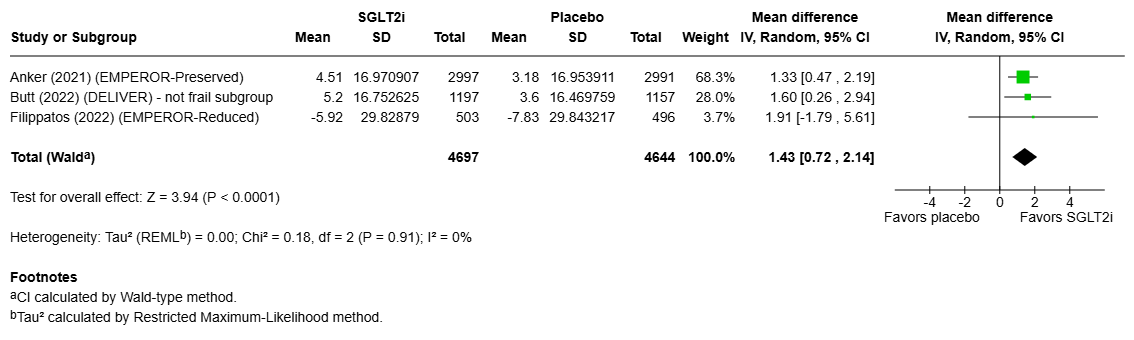
Figure 1. Mean difference in KCCQ clinical summary change scores with subgroup of not frail patients of the DELIVER trial
When comparing the different frailty subgroups in Butt (2022a), it is seen that the mean difference in change scores is similar for all three subgroups (Figure 2) and is not clinically relevant for any of the groups.

Figure 2. Mean difference in KCCQ clinical summary change scores for different subgroups of the DELIVER trial
Solomon (2022) (DELIVER) reported a mean difference in KCCQ total symptom change scores of 2.4 (95% CI 1.5 to 3.4) in favor of the dapagliflozin group, but did not report the KCCQ clinical summary score. However, the reported mean difference in change scores is of similar size compared with the summary score in the other trials. A similar result was found by Martinez (2020) (DAPA-HF), who reported a mean difference in change score of 3.70 (95% CI 1.57 to 5.83) in favor of the SGLT2i group for this same score.
When comparing the different frailty subgroups in the DAPA-HF trial in Butt (2022b), it is seen that the mean difference in change scores is not clinically relevant in any of the groups, despite being higher in the more frail and most frail subgroups compared to the not frail subgroup of patients (Figure 3).

Figure 3. Mean difference in KCCQ clinical summary change scores for different subgroups of the DAPA-HF trial
2. Heart failure readmission/hospitalization
Four studies (Anker (2021) (EMPEROR-Preserved), Solomon (2022) (DELIVER), Filippatos (2022) (EMPEROR-Reduced) and Martinez (2020) (DAPA-HF) reported the outcome heart failure readmission/hospitalization. The outcome was also reported by frailty status in the DELIVER trial (BUTT, 2022). Figure 4 shows the pooled effect for all trials, including all patients of the DELIVER trial (Solomon, 2022). The risk of heart failure readmission/hospitalization was 10.2% in patients treated with SGLT2i (734/7222), compared to 13.3% (955/7177) in those patients receiving placebo, with HR = 0.74 (95% CI 0.67 to 0.81). The absolute risk difference calculated based on this HR was -3.9% (95% CI -5.0% to -2.9%). This is considered a clinically relevant difference, meaning that the risk of heart failure readmission/hospitalization is lower in patients treated with SGLT2i compared to those receiving placebo.
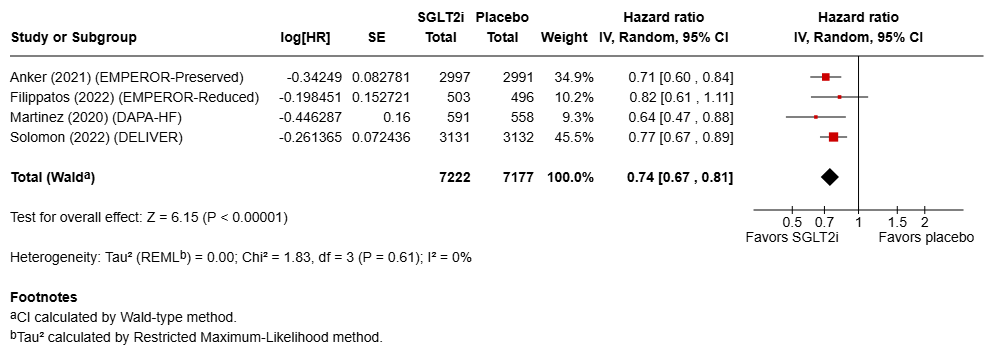
Figure 4 Heart failure readmission/hospitalization for SGLT2i versus placebo
When comparing the frailty subgroups of the DELIVER trial (Butt, 2022a), the risk of heart failure hospitalization/readmission is again consistently lower in patients treated with SGLT2i versus those receiving placebo (Figure 5). The risk seems to be lower in the most frail subgroup but is similar to the pooled HR of 0.74 reported earlier.
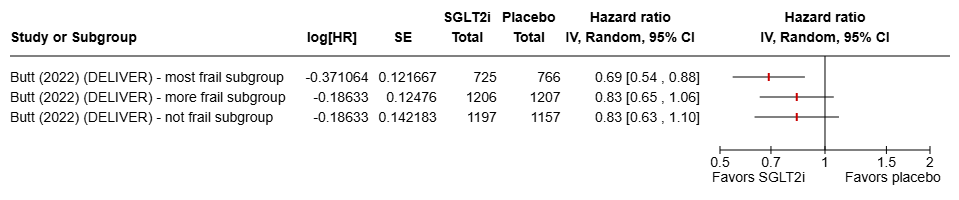
Figure 5. Heart failure rehospitalization for SGLT2i versus placebo: comparison of frailty subgroups in Butt (2022a) (DELIVER)
When comparing the frailty subgroups of the DAPA-HF trial (Butt, 2022b), the risk of heart failure hospitalization/readmission is again consistently lower in patients treated with SGLT2i versus those receiving placebo, and is the lowest in the more frail subgroup of patients (Figure 6).
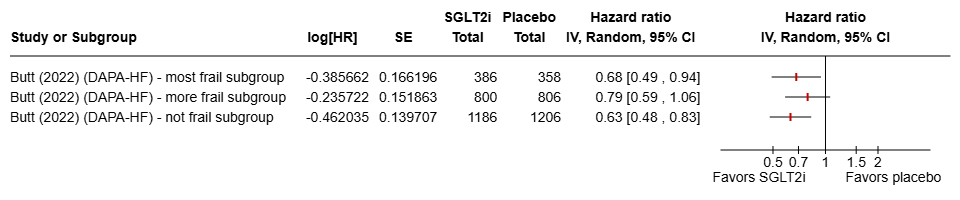
Figure 6. Heart failure rehospitalization for SGLT2i versus placebo: comparison of frailty subgroups in Butt (2022b) (DAPA-HF)
2.1 Urgent visits for heart failure
Solomon (2022) additionally reported urgent visits for heart failure. Urgent visits for heart failure occurred in 60 of 3131 patients (1.9%) in the dapagliflozin group versus 78 of 3132 patients (2.5%), with HR = 0.76 (95% CI 0.55 to 1.07), a similar result as found for the outcome readmission/hospitalization.
3. Mortality
3.1.All-cause death
Four studies (Anker (2021) (EMPEROR-Preserved), Solomon (2022) (DELIVER) (including subgroup analysis in Butt (2022)), Filippatos (2022) (EMPEROR-Reduced) and Martinez (2020) (DAPA-HF) reported the outcome all-cause death. Figure 7 shows the pooled effect for all trials, including all patients of the DELIVER trial (Solomon, 2022). The risk of all-cause death was 15.0% in patients treated with SGLT2i (1086/7222), compared to 15.8% (1136/7177) in patients receiving placebo, with HR = 0.95 (95% CI 0.87 to 1.03). The absolute risk difference was -0.8% (95% CI -2.1% to 0.5%). This difference was considered clinically relevant, meaning that the risk of all-cause death was lower in patients treated with SGLT2i compared to those receiving placebo.
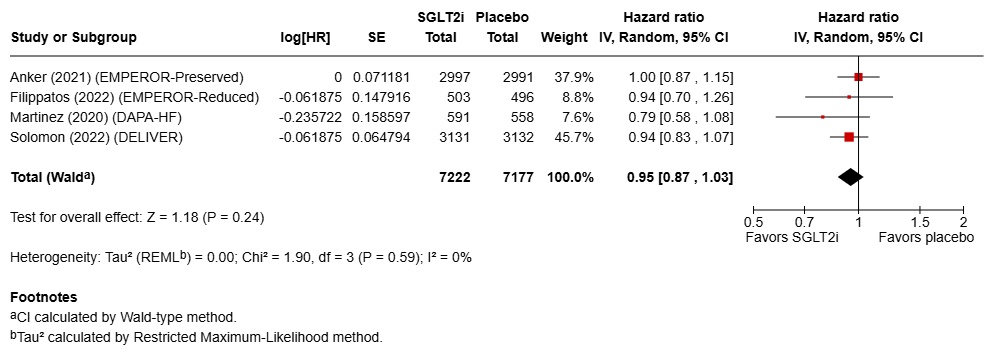
Figure 7. All-cause death for SGLT2i versus placebo
When comparing the frailty subgroups of the DELIVER trial (Butt (2022a)), similar results are found, with hazard ratios varying from 0.90 (95% CI 0.73 to 1.11) in the most frail subgroup to 1.01 (95% CI 0.83 to 1.23) in the more frail subgroup (Figure 8).
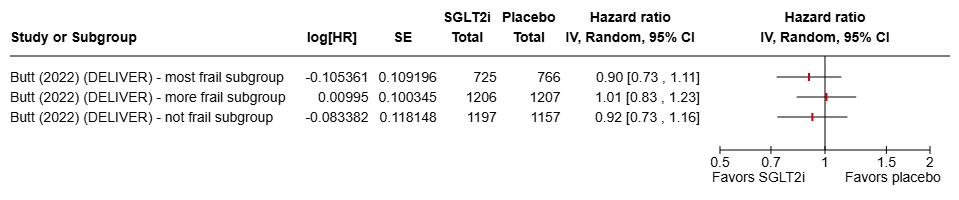
Figure 8. All-cause death for SGLT2i versus placebo: comparison of frailty subgroups in Butt (2022a) (DELIVER)
When comparing the frailty subgroups of the DAPA-HF trial (Butt (2022b)), hazard ratios vary from 0.73 (95% CI 0.57 to 0.94) in the not frail subgroup to 0.91 (95% CI 0.66 to 1.26) in the most frail subgroup of patients (Figure 9). The hazard ratios are likely to be lower than the pooled HR of 0.95 calculated earlier, due to the fact that the patient population was younger in this study.
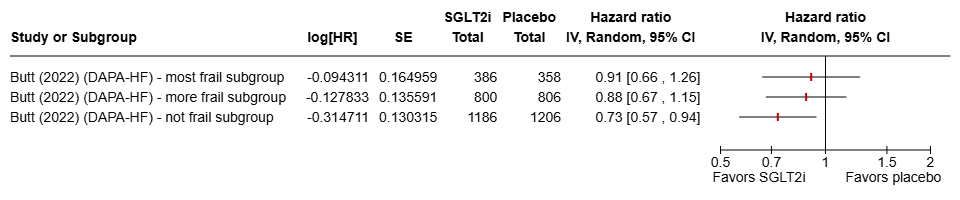
Figure 9. All-cause death for SGLT2i versus placebo: comparison of frailty subgroups in Butt (2022b) (DAPA-HF)
3.2 CV death
Four studies (Anker (2021) (EMPEROR-Preserved), Solomon (2022) (DELIVER) (including subgroup analysis in Butt (2022)), Filippatos (2022) (EMPEROR-Reduced) and Martinez (2020) (DAPA-HF) reported the outcome CV death. Figure 10 shows the pooled effect for all trials, including all patients of the DELIVER trial (Solomon, 2022). The risk of CV death was 7.7% (569/7222) in the SGLT2i group, compared to 8.9% (636/7177) in the placebo group, with HR = 0.89 (95% CI 0.79 to 0.99)). The absolute risk difference was -1.1% (95% CI -2.2% to -0.1%). This difference was considered clinically relevant, meaning that the risk of CV death was lower in patients treated with SGLT2i, compared with patients treated with placebo.
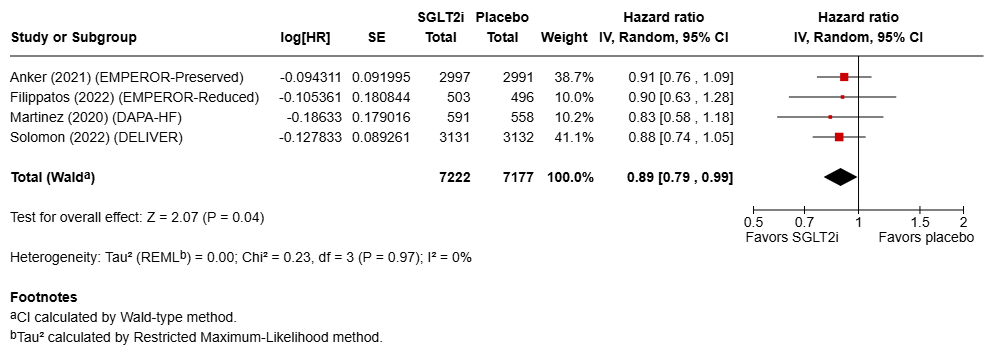
Figure 10. CV death for SGLT2i versus placebo
When comparing the frailty subgroups of the DELIVER trial (Butt (2022a)), similar results are found, with hazard ratios varying from 0.79 (95% CI 0.58 to 1.08) in the most frail subgroup to 1.03 (95% CI 0.77 to 1.37) in the more frail subgroup (Figure 11).
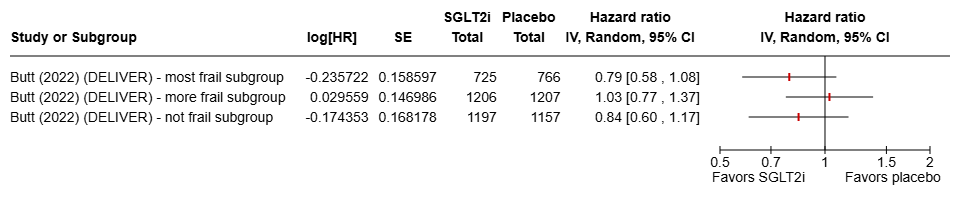
Figure 11. CV death for SGLT2i versus placebo: comparison of frailty subgroups in Butt (2022a) (DELIVER)
When comparing the frailty subgroups of the DAPA-HF trial (Butt (2022b)), lower HRs were found (Figure 12), likely due to the younger study population.
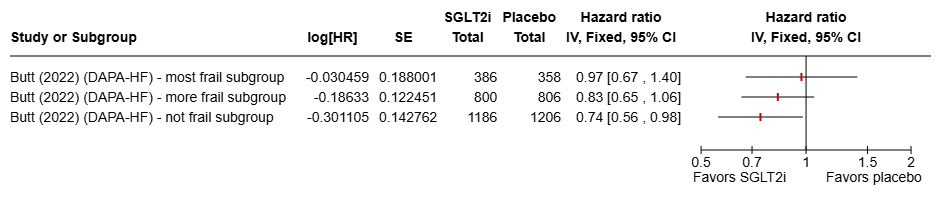
Figure 12. CV death for SGLT2i versus placebo: comparison of frailty subgroups in Butt (2022b) (DAPA-HF)
4. Severe rhythm disturbances (arrythmia/bradycardia)
None of the included studies reported on the outcome clinically relevant rhythm disturbances.
5. (Orthostatic/symptomatic) hypotension/dizziness
Anker (2021) (EMPEROR-Preserved) reported the outcome symptomatic hypotension and Filippatos (2022) (EMPEROR-Reduced) reported the outcome hypotension. (Symptomatic) hypotension occurred in 7.1% (249/3499) of patients in the SGLT2i group, compared to 6.1% (214/3485) of patients in the placebo group, with RR = 1.12 (95% CI 0.86 to 1.46) (Figure 13). The absolute risk difference was 1.0% (95% CI -1.1% to 3.8%). This difference was considered clinically relevant, meaning that the risk of (symptomatic) hypotension was higher in the SGLT2i group compared to the placebo group.
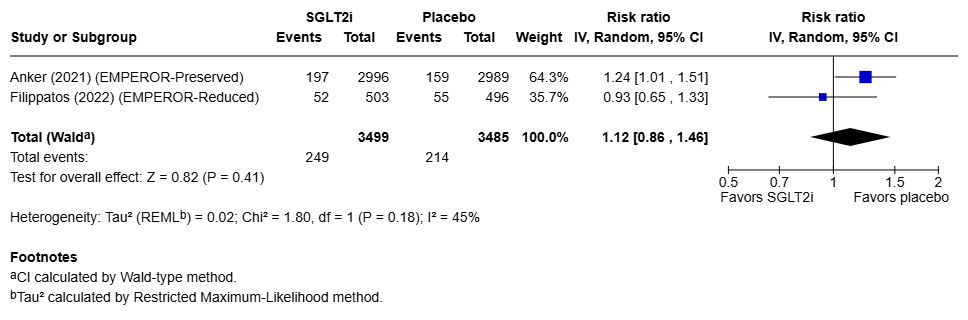
Figure 13. Hypotension for SGLT2i versus placebo
6. Electrolyte disorders (including hyperkalemia)
One study reported the outcome electrolyte disorders. Filippatos (2022) (EMPEROR-Reduced) reported hyperkalemia in 29 of 503 patients (5.8%) treated with empagliflozin, compared to 39 of 496 patients (7.9%) receiving placebo, giving RR = 0.73 (95% CI 0.46 to 1.17). The absolute risk difference was -2.1% (95% CI -4.2% to 1.3%). This is considered to be a clinically relevant difference, meaning that the risk of electrolyte disorders was lower in patients treated with SGLT2i compared to those receiving placebo.
7. Renal failure/(serious) renal adverse events/kidney injury
Kidney failure
Anker (2021) (EMPEROR-Preserved) and Filippatos (2022) (EMPEROR-Reduced) reported the outcome acute renal failure. The pooled RR is 0.94 (95% CI 0.83 to 1.07) (Figure 14) and the absolute risk difference is -0.7% (95% CI -2.0% to 0,8%). This is considered to be a clinically relevant difference, meaning that the risk of kidney failure was lower in patients treated with SGLT2i compared to those receiving placebo.
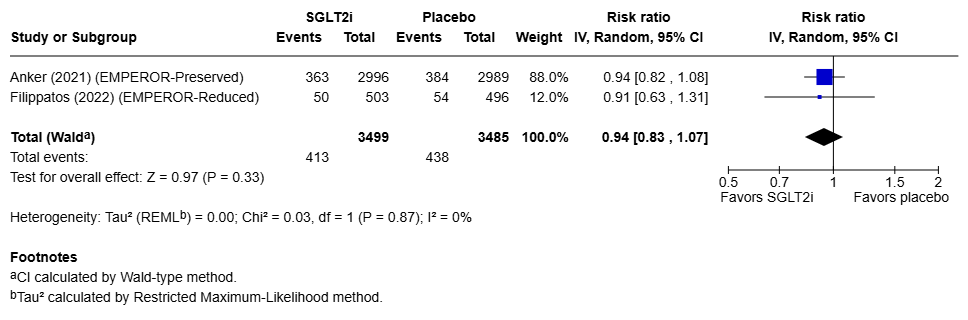
Figure 14. Kidney failure for SGLT2i versus placebo
Acute kidney injury
Solomon (2022) (DELIVER) reported acute kidney injury in 46 of 3126 patients (1.5%) in the dapagliflozin group, compared to 50 of 3127 patients (1.6%) in the placebo group, with RR = 0.92 (95% CI 0.62 to 1.37). The absolute risk difference is -0.1% (95% CI -0.6% to 0.6%), which is considered to be a clinically relevant difference. This means that patients treated with SGLT2i had a lower risk of acute kidney injury than those treated with placebo.
Renal (S)AEs/DAEs
Solomon (2022) (DELIVER) reported the outcome renal SAEs/DAEs (adverse events leading to treatment discontinuation) and Martinez (2020) (DAPA-HF) reported the outcome renal SAEs. The pooled RR = 0.31 (95% CI 0.03 to 2.93) (Figure 15). The absolute risk difference is -2.7% (95% CI -3.8% to 7.6%), which is considered to be a clinically relevant difference. This means that patients treated with SGLT2is had a lower risk of renal SAEs(/DAEs) compared to those receiving placebo).
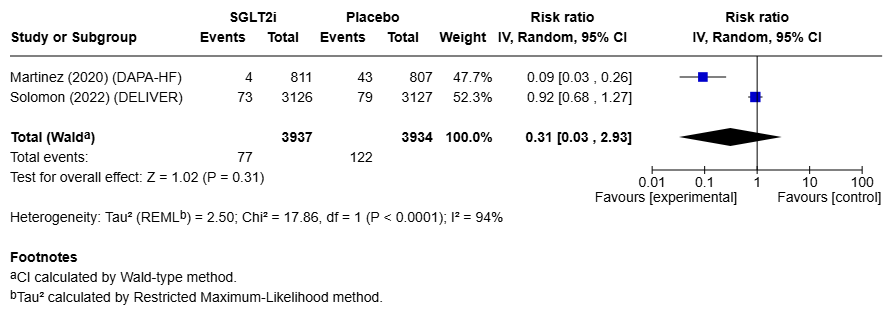
Figure 15. Renal SAEs(/DAEs) for SGLT2i versus placebo
Butt (2022a) (DELIVER) evaluated the outcome renal SAEs/DAEs for different frailty subgroups. RR varied from 0.64 (95% CI 0.31 to 1.33) in the not frail subgroup to 1.14 (95% CI 0.69 to 1.89) in the more frail subgroup (Figure 16). The absolute risk difference was highest in the not frail subgroup (-0.6% (95% CI -1.1% to 0.5%)), meaning that the risk of renal SAEs/DAEs was lower in the SGLT2i group compared to the placebo group. The risk was also lower in the SGLT2i group when considering the most frail subgroup but was higher in the more frail subgroup.
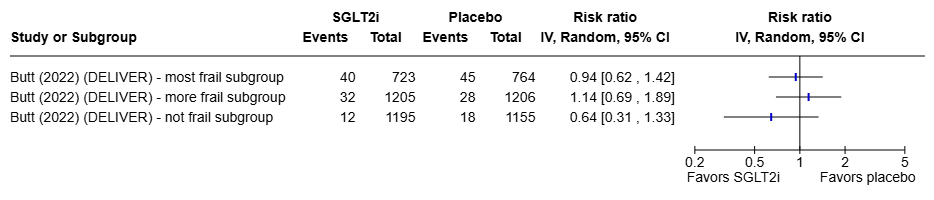
Figure 16. Renal SAEs/DAEs for SGLT2i versus placebo: comparison of frailty subgroups in Butt (2022a) (DELIVER)
Butt (2022b) (DAPA-HF) evaluated the outcome renal AEs for different frailty subgroups. RR varied from 0.80 (95% CI 0.54 to 1.20) in the not frail subgroup to 0.98 (95% CI 0.69 to 1.38) in the more frail subgroup (Figure 17). Even though the study population was younger than in the other analyses, it can be concluded that the risk of renal AEs was lower in the SGLT2i groups compared to the placebo groups. This was similar to the other renal outcomes reported earlier.
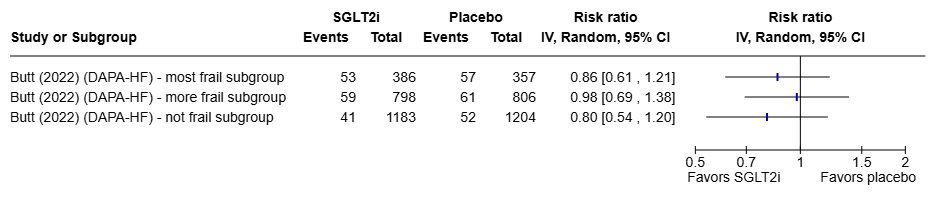
Figure 17. Renal SAEs/DAEs for SGLT2i versus placebo: comparison of frailty subgroups in Butt (2022b) (DAPA-HF)
Composite renal outcome
Filippatos (2022) (EMPEROR-Reduced) reported a composite renal outcome in 7 of 503 patients (1.4%) in the empagliflozin group, compared to 15 of 496 patients (3.0%) in the placebo group, with HR = 0.46 (95% CI 0.19 to 1.14). The absolute risk difference was -1,6% (95% CI -2.4% to 0.4%). This difference was considered to be clinically relevant, meaning that the risk of a composite renal outcome was lower in the SGLT2i group compared to the placebo group.
8. (Severe) (urogenital tract) infection
Urinary tract infection
Three studies (Anker (2021) (EMPEROR-Preserved), Solomon (2022) (DELIVER), and Filippatos (2022) (EMPEROR-Reduced) reported the outcome urinary tract infections.
The pooled RR = 1.17 (95% CI 1.00 to 1.36) (Figure 18). The absolute risk difference was 2.5% (95% CI 0% to 5.3%). This was considered to be clinically relevant, meaning that the risk of urinary tract infections was higher in patients treated with SGLT2i compared to those receiving placebo.
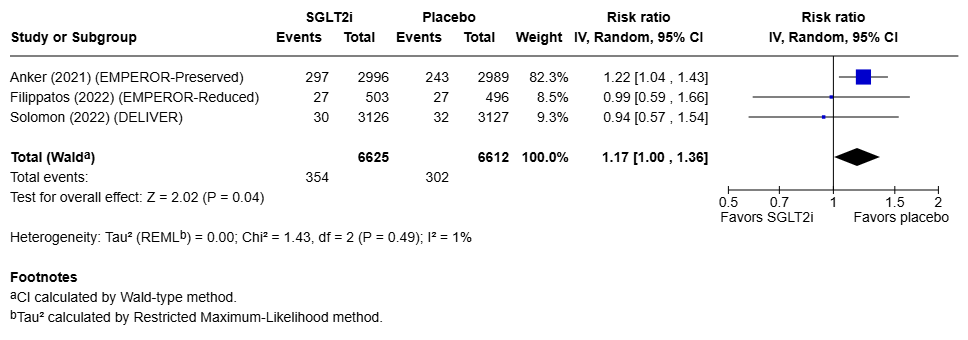
Figure 18. Urinary tract infections for SGLT2i versus placebo
Genital infection
Two studies (Anker (2021) (EMPEROR-Preserved) and Filippatos (2022) (EMPEROR-Reduced) reported the outcome genital infections. The pooled RR = 3.10 (95% CI 1.98 to 4.86) (Figure 19). The absolute risk difference was 1.4% (95% CI 0.7% to 2.6%), which was considered to be clinically relevant. This means that the risk of genital infections was higher in patients treated with SGLT2i compared to those receiving placebo.
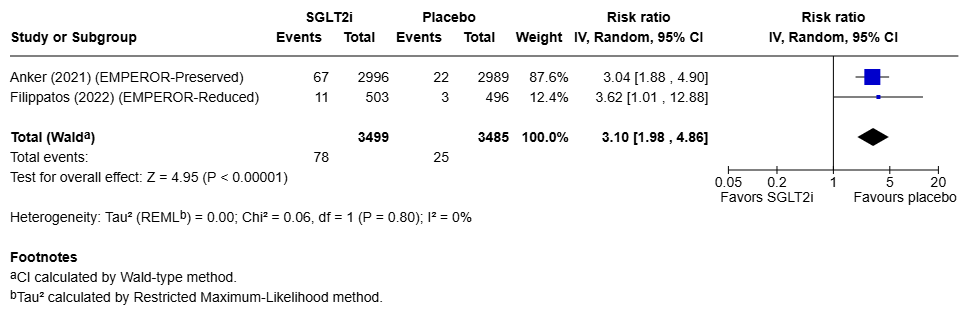
Figure 19. Genital infections for SGLT2i versus placebo
9. Ketoacidosis
Four studies (Anker (2021) (EMPEROR-Preserved), Solomon (2022) (DELIVER) (including subgroup analysis in Butt (2022)), Filippatos (2022) (EMPEROR-Reduced) and Martinez (2020) (DAPA-HF) reported the outcome ketoacidosis. Anker (2021) (EMPEROR-Preserved) reported a risk of 4/2996 (0.1%) in the SGLT2i group, compared to 5/2989 (0.2%) in the placebo group, with RR = 0.80 (95% CI 0.21 to 2.97). The absolute risk difference was -0.03% (95% CI -0.13% to 0.33%), which was not considered a clinically relevant difference. Filippatos (2022) (EMPEROR-Reduced) and Martinez (2020) (DAPA-HF) did not report any ketoacidosis events. Solomon (2022) (DELIVER) reported two events in the SGLT2i group (2/3126 (0.1%)) and no events in the placebo group, giving RR = 5.01 (95% CI 0.24 to 104.30). This indicates a higher risk in the SGLT2i group compared to the placebo group. Both events occurred in the most frail subgroup of patients, as reported by Butt (2022a).
Butt (20222) (DAPA-HF) reported two events of ketoacidosis in the more frail subgroup of patients, compared to one event in the most frail subgroup. All three events occurred in patients treated with dapagliflozin. No events occurred in the not frail subgroup.
A systematic review of the literature was performed to answer the following question(s):
What are the favorable and unfavorable effects of fantastic four heart failure medication compared with fantastic four heart failure medication without ARNI or SGLT2i (see Table 1) in (frail) hospitalized, elderly, heart failure patients?
Table 1. PICO
| Patients | (Frail) hospitalized elderly patients (70+) with acute/chronic heart failure (HFpEF, HFrEF and HFmrEF) |
| Intervention |
|
| Control |
|
| Outcomes | Mortality (all-cause death, CV death), heart failure readmission/hospitalization, quality of life, severe rhythm disturbances (arrythmia/bradycardia), (orthostatic/symptomatic) hypotension/dizziness, electrolyte disorders (including hyperkalemia (high potassium)), renal failure/serious renal adverse events/acute kidney injury, (severe) (urogenital tract) infection, ketoacidosis |
| Other selection criteria |
Study design: systematic reviews, randomized controlled trials, (comparative) observational studies Minimal follow-up: 1 year |
Relevant outcome measures
The guideline panel considered heart failure readmission/hospitalization and quality of life as critical outcome measures for decision making; and mortality (all-cause death, CV death), (orthostatic/symptomatic) hypotension, electrolyte disorders (including hyperkalemia (high potassium)), renal failure/serious renal adverse events/acute kidney injury, severe rhythm disturbances (arrythmia/bradycardia) and worsening heart failure as important outcome measures for decision making.
A priori, the guideline panel did not define the outcome measures listed above but used the definitions used in the studies.
The guideline panel defined the following thresholds as a minimal clinically (patient) important difference:
- Mortality (all-cause death, CV death), heart failure readmission/hospitalization: NNT 100 for a 5-year period, corresponding to an absolute decrease of > 1% in 5 years or > 0,4% in 2 years.
- Renal failure/renal serious adverse events/acute kidney injury, ketoacidosis: NNH 1000 for a 5 year period, corresponding to an absolute increase of 0.04% in 2 years
- (Orthostatic/symptomatic) hypotension/dizziness, electrolyte disorders (including hyperkalemia (high potassium)), (severe) (urogenital tract) infection, (severe) rhythm disturbances (arrythmia/bradycardia): NNH 100 for a 5-year period, corresponding to an absolute increase of > 0.4% in 2 years.
- Quality of life: increase of ≥ 5 points on the Kansas City Cardiomyopathy Questionnaire (KCCQ) clinical summary score (CSS).
Search and select (Methods)
A systematic literature search was performed by a medical information specialist using the following bibliographic databases: Embase.com and Ovid/Medline. Both databases were searched from 2013 to 13 May 2025 for systematic reviews, RCTs and observational studies. Systematic searches were completed using a combination of controlled vocabulary/subject headings (e.g., Emtree-terms, MeSH) wherever they were available and natural language keywords. The overall search strategy was derived from three primary search concepts: (1) aged; (2) heart failure; (3) fantastic four heart failure medication (combination of RAS inhibitor, beta blocker, MRA and SGTL2i). Duplicates were removed using EndNote software. After deduplication a total of 850 records were imported for title/abstract screening. Initially, 79 studies were selected based on title and abstract screening. After reading the full text, 76 studies were excluded (see the exclusion table under the tab ‘Evidence tables’), and 3 studies were included. For two excluded studies which were prespecified/post-hoc analyses of trials, the original trial was included instead. These were Solomon (2022) instead of Butler (2023), and Anker (2021) instead of Anker (2022). For the DELIVER trial, an additional analysis by frailty status was available (Butt, 2022). We included this analysis as well. Furthermore, a post hoc analysis of the DAPA-HF trial (Martinez, 2020) was included, instead of the main study publication. For this trial, an additional analysis by frailty status (Butt, 2022b) was again available. This was also included. Therefore, a total of four studies, described in six articles, were included.
- Anker SD, Butler J, Filippatos G, Ferreira JP, Bocchi E, Böhm M, Brunner-La Rocca HP, Choi DJ, Chopra V, Chuquiure-Valenzuela E, Giannetti N, Gomez-Mesa JE, Janssens S, Januzzi JL, Gonzalez-Juanatey JR, Merkely B, Nicholls SJ, Perrone SV, Piña IL, Ponikowski P, Senni M, Sim D, Spinar J, Squire I, Taddei S, Tsutsui H, Verma S, Vinereanu D, Zhang J, Carson P, Lam CSP, Marx N, Zeller C, Sattar N, Jamal W, Schnaidt S, Schnee JM, Brueckmann M, Pocock SJ, Zannad F, Packer M; EMPEROR-Preserved Trial Investigators. Empagliflozin in Heart Failure with a Preserved Ejection Fraction. N Engl J Med. 2021 Oct 14;385(16):1451-1461. doi: 10.1056/NEJMoa2107038. Epub 2021 Aug 27. PMID: 34449189.
- Butt JH, Jhund PS, Belohlávek J, de Boer RA, Chiang CE, Desai AS, Drożdż J, Hernandez AF, Inzucchi SE, Katova T, Kitakaze M, Kosiborod MN, Lam CSP, Maria Langkilde A, Lindholm D, Bachus E, Martinez F, Merkely B, Petersson M, Saraiva JFK, Shah SJ, Vaduganathan M, Vardeny O, Wilderäng U, Claggett BL, Solomon SD, McMurray JJV. Efficacy and Safety of Dapagliflozin According to Frailty in Patients With Heart Failure: A Prespecified Analysis of the DELIVER Trial. Circulation. 2022 Oct 18;146(16):1210-1224. doi: 10.1161/CIRCULATIONAHA.122.061754. Epub 2022 Aug 27. PMID: 36029465; PMCID: PMC9815819.
- Butt JH, Dewan P, Merkely B, Belohlávek J, Drożdż J, Kitakaze M, Inzucchi SE, Kosiborod MN, Martinez FA, Tereshchenko S, Ponikowski P, Bengtsson O, Lindholm D, Langkilde AM, Schou M, Sjöstrand M, Solomon SD, Sabatine MS, Chiang CE, Docherty KF, Jhund PS, Køber L, McMurray JJV. Efficacy and Safety of Dapagliflozin According to Frailty in Heart Failure With Reduced Ejection Fraction : A Post Hoc Analysis of the DAPA-HF Trial. Ann Intern Med. 2022 Jun;175(6):820-830. doi: 10.7326/M21-4776. Epub 2022 Apr 26. PMID: 35467935.
- Filippatos G, Anker SD, Butler J, Farmakis D, Ferreira JP, Gollop ND, Brueckmann M, Iwata T, Pocock S, Zannad F, Packer M; EMPEROR-Reduced Trial Committees and Investigators. Effects of empagliflozin on cardiovascular and renal outcomes in heart failure with reduced ejection fraction according to age: a secondary analysis of EMPEROR-Reduced. Eur J Heart Fail. 2022 Dec;24(12):2297-2304. doi: 10.1002/ejhf.2707. Epub 2022 Oct 24. PMID: 36194680; PMCID: PMC10092219.
- Kondo T, Adachi T, Kobayashi K, Okumura T, Izawa H, Murohara T, McMurray JJV, Yamada S. Physical Frailty and Use of Guideline-Recommended Drugs in Patients With Heart Failure and Reduced Ejection Fraction. J Am Heart Assoc. 2023 Jun 20;12(12):e026844. doi: 10.1161/JAHA.122.026844. Epub 2023 Jun 10. PMID: 37301739; PMCID: PMC10356033.
- Linssen GCM, Veenis JF, Kleberger A, Grosfeld MJW, Viergever EP, van Dalen BM, de Valk-Bedijn W, Langerveld J, Brunner-La Rocca HP, Hoes AW, Brugts JJ; CHECK-HF investigators. Medical treatment of octogenarians with chronic heart failure: data from CHECK-HF. Clin Res Cardiol. 2020 Sep;109(9):1155-1164. doi: 10.1007/s00392-020-01607-y. Epub 2020 Feb 6. PMID: 32030498.
- Malgie J, Wilde MI, Clephas PRD, Emans ME, Koudstaal S, Schaap J, Mosterd A, van Ramshorst J, Wardeh AJ, van Wijk S, van den Heuvel M, Wierda E, Borleffs CJW, Saraber C, Beeres SLMA, van Kimmenade R, Jansen Klomp W, Denham R, da Fonseca CA, Klip IT, Manintveld OC, van der Boon RMA, van Ofwegen CEE, Yilmaz A, Pisters R, Linssen GCM, Faber N, van Heerebeek L, van de Swaluw JEC, Bouhuijzen LJ, Post MC, Kuijper AFM, Wu KW, van Beek EA, Hesselink T, Kleijn L, Kurvers MJM, Tio RA, Langerveld J, van Dalen BM, van Eck JWM, Handoko ML, Hermans WRM, Koornstra-Wortel HJJ, Szymanski MK, Rooker D, Tandjung K, Eijsbouts SCM, Asselbergs FW, van der Meer P, Brunner-La Rocca HP, de Boer RA, Brugts JJ. Contemporary guideline-directed medical therapy in de novo, chronic, and worsening heart failure patients: First data from the TITRATE-HF study. Eur J Heart Fail. 2024 Jul;26(7):1549-1560. doi: 10.1002/ejhf.3267. Epub 2024 May 12. PMID: 38734980.
- Malgie J, Wilde MI, Brunner-La Rocca HP, Emans ME, De Boer GA, Siegers CEP, van Stipdonk AMW, Wardeh AJ, Schaap J, Sanders-van Wijk S, van den Heuvel M, Wierda E, De Boer RA, Koudstaal S, Brugts JJ. Newly diagnosed heart failure with reduced ejection fraction: timing, sequencing, and titration of guideline-recommended medical therapy. Eur Heart J. 2025 Jul 1;46(25):2394-2405. doi: 10.1093/eurheartj/ehaf244. PMID: 40272103; PMCID: PMC12208773.
- Martinez FA, Serenelli M, Nicolau JC, Petrie MC, Chiang CE, Tereshchenko S, Solomon SD, Inzucchi SE, Køber L, Kosiborod MN, Ponikowski P, Sabatine MS, DeMets DL, Dutkiewicz-Piasecka M, Bengtsson O, Sjöstrand M, Langkilde AM, Jhund PS, McMurray JJV. Efficacy and Safety of Dapagliflozin in Heart Failure With Reduced Ejection Fraction According to Age: Insights From DAPA-HF. Circulation. 2020 Jan 14;141(2):100-111. doi: 10.1161/CIRCULATIONAHA.119.044133. Epub 2019 Nov 17. PMID: 31736328.
- Nederlands Huisartsen Genootschap. NHG-Standaard Diabetes mellitus type 2. NHG-Richtlijnen. 2025. Beschikbaar via: https://richtlijnen.nhg.org/standaarden/diabetes-mellitus-type-2.
- Nierstichting. Factsheet: Soms moet u uw medicijnen even overslaan. 2022. Beschikbaar via: https://tools.nierstichting.nl/documents/396/Factsheet_Medicijnen_overslaan.pdf.
- Nijskens CM, Handoko L, Remmelzwaal S, Ziesemer KA, Muller M. Efficacy and Safety of Heart Failure Treatment According to Frailty Status: A Systematic Review. J Am Heart Assoc. 2025 Sep 2;14(17):e042367. doi: 10.1161/JAHA.125.042367. Epub 2025 Aug 29. PMID: 40878979; PMCID: PMC12553454.
- Peikert A, Goyal P, Vaduganathan M, Claggett BL, Kulac IJ, Miao ZM, Vardeny O, Kosiborod MN, Desai AS, Jhund PS, Lam CSP, Inzucchi SE, Martinez FA, de Boer RA, Hernandez AF, Shah SJ, Petersson M, Langkilde AM, McMurray JJV, Solomon SD. Dapagliflozin in Heart Failure With Mildly Reduced or Preserved Ejection Fraction According to Polypharmacy Status. JACC Heart Fail. 2023 Oct;11(10):1380-1393. doi: 10.1016/j.jchf.2023.05.014. Epub 2023 May 21. PMID: 37294244.
- Sharma Y, Horwood C, Hakendorf P, Thompson C. Benefits of heart failure-specific pharmacotherapy in frail hospitalised patients: a cross-sectional study. BMJ Open. 2022 Sep 19;12(9):e059905. doi: 10.1136/bmjopen-2021-059905. PMID: 36123054; PMCID: PMC9486223.
- Solomon SD, McMurray JJV, Claggett B, de Boer RA, DeMets D, Hernandez AF, Inzucchi SE, Kosiborod MN, Lam CSP, Martinez F, Shah SJ, Desai AS, Jhund PS, Belohlavek J, Chiang CE, Borleffs CJW, Comin-Colet J, Dobreanu D, Drozdz J, Fang JC, Alcocer-Gamba MA, Al Habeeb W, Han Y, Cabrera Honorio JW, Janssens SP, Katova T, Kitakaze M, Merkely B, O'Meara E, Saraiva JFK, Tereshchenko SN, Thierer J, Vaduganathan M, Vardeny O, Verma S, Pham VN, Wilderäng U, Zaozerska N, Bachus E, Lindholm D, Petersson M, Langkilde AM; DELIVER Trial Committees and Investigators. Dapagliflozin in Heart Failure with Mildly Reduced or Preserved Ejection Fraction. N Engl J Med. 2022 Sep 22;387(12):1089-1098. doi: 10.1056/NEJMoa2206286. Epub 2022 Aug 27. PMID: 36027570.
- Tromp J, Ouwerkerk W, van Veldhuisen DJ, Hillege HL, Richards AM, van der Meer P, Anand IS, Lam CSP, Voors AA. A Systematic Review and Network Meta-Analysis of Pharmacological Treatment of Heart Failure With Reduced Ejection Fraction. JACC Heart Fail. 2022 Feb;10(2):73-84. doi: 10.1016/j.jchf.2021.09.004. Epub 2021 Dec 8. Erratum in: JACC Heart Fail. 2022 Apr;10(4):295-296. doi: 10.1016/j.jchf.2022.02.001. PMID: 34895860.
- Vaduganathan M, Claggett BL, Jhund PS, Cunningham JW, Pedro Ferreira J, Zannad F, Packer M, Fonarow GC, McMurray JJV, Solomon SD. Estimating lifetime benefits of comprehensive disease-modifying pharmacological therapies in patients with heart failure with reduced ejection fraction: a comparative analysis of three randomised controlled trials. Lancet. 2020 Jul 11;396(10244):121-128. doi: 10.1016/S0140-6736(20)30748-0. Epub 2020 May 21. PMID: 32446323.
- van Bruggen DM, Jansen DRM, van Poelgeest EP. SGLT2-remmers, ook bij kwetsbare ouderen? [SGLT2 inhibitors, also in frail older adults?]. Ned Tijdschr Geneeskd. 2024 Apr 11;168:D7935. Dutch. PMID: 38602004.
Risk of Bias tables
Risk of bias table for intervention studies (randomized controlled trials; based on Cochrane risk of bias tool and suggestions by the CLARITY Group at McMaster University)
|
Study reference
(first author, publication year) |
Was the allocation sequence adequately generated?
Definitely yes Probably yes Probably no Definitely no |
Was the allocation adequately concealed?
Definitely yes Probably yes Probably no Definitely no |
Blinding: Was knowledge of the allocated interventions adequately prevented?
Were patients blinded?
Were healthcare providers blinded?
Were data collectors blinded?
Were outcome assessors blinded?
Were data analysts blinded?
Definitely yes Probably yes Probably no Definitely no |
Was loss to follow-up (missing outcome data) infrequent?
Definitely yes Probably yes Probably no Definitely no |
Are reports of the study free of selective outcome reporting?
Definitely yes Probably yes Probably no Definitely no |
Was the study apparently free of other problems that could put it at a risk of bias?
Definitely yes Probably yes Probably no Definitely no |
Overall risk of bias If applicable/necessary, per outcome measure
LOW Some concerns HIGH
|
|
Anker, 2021 (EMPEROR-Preserved) |
Definitely yes;
Reason: adequate method used (permuted block design) |
Definitely yes;
Reason: blinded allocation using IRT |
Definitely yes;
Reason: adequate blinding |
Probably yes;
Reason: loss to follow-up similar between groups |
Definitely yes;
Reason: all outcomes are reported |
Definitely no;
Reason: industry funding; sponsor Boehringer Ingelheim had organizational oversight of the trial, including data collection, storage and analysis. |
HIGH (all outcome measures)
Reason: industry funding, influence of sponsor on data analysis |
|
Solomon, 2022 (DELIVER) |
Definitely yes;
Reason: adequate method used (block randomization) |
Definitely yes;
Reason: allocation is blinded |
Definitely yes;
Reason: adequate blinding |
Probably yes;
Reason: loss to follow-up similar between groups |
Definitely yes;
Reason: all outcomes are reported |
Definitely no;
Reason: industry funding; several authors have affiliations with the sponsor (AstraZeneca) and are part of the sponsor leadership |
HIGH (all outcome measures)
Reason: industry funding, affiliations of authors with the sponsor |
|
Butt, 2022a (DELIVER) |
Definitely yes;
Reason: adequate method used (block randomization) |
Definitely yes;
Reason: allocation is blinded |
Definitely yes;
Reason: adequate blinding |
Probably yes;
Reason: loss to follow-up similar between groups |
Definitely yes;
Reason: all outcomes are reported |
Definitely no;
Reason: industry funding, see Solomon (2022) |
HIGH (all outcome measures)
Reason: industry funding, see Solomon (2022) |
|
Filippatos, 2022 (EMPEROR-Reduced) |
Definitely yes;
Reason: adequate method used (computer-generated random sequence) |
Definitely yes;
Reason: blinded allocation using IRT |
Definitely yes;
Reason: adequate blinding |
Probably yes;
Reason: serious adverse events leading to drug discontinuation similar between groups |
Definitely yes;
Reason: all outcomes are reported |
Definitely no;
Reason: industry funding; several authors affiliated with sponsor Boehringer Ingelheim |
HIGH (all outcome measures)
Reason: industry funding, affiliations of authors with the sponsor |
|
Martinez, 2020 (DAPA-HF) |
Definitely yes;
Reason: adequate method used (computer-generated random sequence in IxRS system) |
Definitely yes;
Reason: blinded allocation using IxRS |
Definitely yes;
Reason: adequate blinding |
Probably yes;
Reason: limited loss to follow-up, but not describe specifically for the patients aged ≥75 years |
Definitely yes;
Reason: all outcomes are reported |
Definitely no;
Reason: industry funding; several authors affiliated with sponsor AstraZeneca |
HIGH (all outcome measures)
Reason: industry funding, affiliations of authors with the sponsor |
|
Butt, 2022b (DAPA-HF) |
Definitely yes;
Reason: adequate method used (computer-generated random sequence in IxRS system) |
Definitely yes;
Reason: blinded allocation using IxRS |
Definitely yes;
Reason: adequate blinding |
Probably yes;
Reason: loss to follow-up was similar between the dapagliflozin and placebo groups |
Definitely yes;
Reason: all outcomes are reported |
Definitely no;
Reason: industry funding; several authors affiliated with sponsor AstraZeneca |
HIGH (all outcome measures)
Reason: industry funding, affiliations of authors with the sponsor |
Table of excluded studies
|
Reference |
Reason for exclusion |
|
Alonso A, Morris AA, Naimi AI, Alam AB, Li L, Subramanya V, Chen LY, Lutsey PL. Use of Sodium-Glucose Cotransporter-2 Inhibitors and Angiotensin Receptor-Neprilysin Inhibitors in Patients With Atrial Fibrillation and Heart Failure From 2021 to 2022: An Analysis of Real-World Data. J Am Heart Assoc. 2024 Mar 19;13(6):e032783. doi: 10.1161/JAHA.123.032783. Epub 2024 Mar 8. PMID: 38456406; PMCID: PMC11010035. |
Medication as outcome instead of intervention |
|
Barry AR, Grewal M, Blain L. Use of Guideline-Directed Medical Therapy in Patients Aged 80 Years or Older With Heart Failure With Reduced Ejection Fraction. CJC Open. 2023 Jan 6;5(4):303-309. doi: 10.1016/j.cjco.2023.01.002. PMID: 37124968; PMCID: PMC10140749. |
Outcome measures not matching PICO |
|
Hayashi D, Kubota Y, Nishino T, Watanabe Y, Iwade Y, Matsuda J, Kato K, Tara S, Ise Y, Iwasaki YK, Asai K. Impact of polypharmacy on 3-year mortality in patients with heart failure: a retrospective study. J Pharm Health Care Sci. 2024 Jul 2;10(1):34. doi: 10.1186/s40780-024-00357-7. PMID: 38956739; PMCID: PMC11221177. |
Comparison of types of medication is unclear |
|
Karabulut U, Keskin K, Karabulut D, Yiğit E, Yiğit Z. Effect of Sacubitril/Valsartan Combined with Dapagliflozin on Long-Term Cardiac Mortality in Heart Failure with Reduced Ejection Fraction. Angiology. 2022 Apr;73(4):350-356. doi: 10.1177/00033197211047329. Epub 2021 Sep 24. PMID: 34560822. |
Mean age <70, no subgroup analysis |
|
Kim HJ, Yang E, Koh HB, Jhee JH, Park HC, Choi HY. Cardiac and kidney outcomes after sacubitril-valsartan therapy: recovery of cardiac function relative to kidney function decline. Kidney Res Clin Pract. 2024 Sep;43(5):614-625. doi: 10.23876/j.krcp.24.021. Epub 2024 Sep 30. PMID: 39390621; PMCID: PMC11467369. |
Mean age cohort 1 <70, outcome measures described for cohort 2 not matching PICO |
|
Mizobuchi S, Saito Y, Kitano D, Toyama K, Miyagawa M, Koyama Y, Fujito H, Kojima K, Murata N, Fukamachi D, Okumura Y. Sodium-glucose co-transporter 2 inhibitors in acute heart failure: real-world prescription trends and outcomes analysis. ESC Heart Fail. 2024 Feb;11(1):410-421. doi: 10.1002/ehf2.14597. Epub 2023 Nov 28. PMID: 38017700; PMCID: PMC10804185. |
Only composite outcome of death and rehospitalization was reported |
|
Williams R, Ford W, James A, Thomas K, Wong A. Sodium Zirconium Cyclosilicate for Renin-Angiotensin-Aldosterone System Inhibitor Optimization in Patients with Heart Failure with Reduced Ejection Fraction: A Retrospective Analysis. Cardiol Ther. 2024 Dec;13(4):797-809. doi: 10.1007/s40119-024-00388-z. Epub 2024 Nov 1. PMID: 39485602; PMCID: PMC11607300. |
Drug not matching PICO |
|
Butler J, Usman MS, Filippatos G, Ferreira JP, Böhm M, Brueckmann M, Januzzi JL, Kaul S, Piña IL, Ponikowski P, Senni M, Sumin M, Verma S, Zaremba-Pechmann L, Pocock SJ, Packer M, Anker S. Safety and Efficacy of Empagliflozin and Diuretic Use in Patients with Heart Failure and Preserved Ejection Fraction: A Post Hoc Analysis of the EMPEROR-Preserved Trial. JAMA Cardiol. 2023 Jul 1;8(7):640-649. doi: 10.1001/jamacardio.2023.1090. PMID: 37223933; PMCID: PMC10209829. |
Original trial (Solomon, 2022) will be included |
|
Nakagaito M, Imamura T, Ushijima R, Nakamura M, Kinugawa K. The Impact of the Withdrawal of SGLT2 Inhibitors on Clinical Outcomes in Patients with Heart Failure. J Clin Med. 2024 May 29;13(11):3196. doi: 10.3390/jcm13113196. PMID: 38892907; PMCID: PMC11172815. |
Comparison of withdrawal versus continuation of SGLT2i is not of interest |
|
Oyama K, Raz I, Cahn A, Goodrich EL, Bhatt DL, Leiter LA, McGuire DK, Wilding JPH, Gause-Nilsson IAM, Mosenzon O, Sabatine MS, Wiviott SD. Efficacy and Safety of Dapagliflozin According to Background Use of Cardiovascular Medications in Patients With Type 2 Diabetes: A Prespecified Secondary Analysis of a Randomized Clinical Trial. JAMA Cardiol. 2022 Sep 1;7(9):914-923. doi: 10.1001/jamacardio.2022.2006. PMID: 35857296; PMCID: PMC9301591. |
Median age <70, no subgroup analysis |
|
Pabon M, Claggett BL, Wang X, Miao ZM, Chatur S, Bhatt AS, Vaduganathan M, Fang JC, Desai AS, Jhund P, Martinez F, de Boer RA, Kosiborod MN, Lam CSP, Shah SJ, Hernandez AF, McMurray JJV, Solomon SD, Vardeny O. Influence of background medical therapy on efficacy and safety of dapagliflozin in patients with heart failure with improved ejection fraction in the DELIVER trial. Eur J Heart Fail. 2023 Sep;25(9):1663-1670. doi: 10.1002/ejhf.3001. Epub 2023 Aug 29. PMID: 37632711. |
Wrong comparison (comparison within subgroups of number of drugs instead of between number of drugs) |
|
Palin V, Drozd M, Garland E, Malik A, Straw S, McGinlay M, Simms A, Gatenby VK, Sengupta A, Levelt E, Witte KK, Kearney MT, Cubbon RM. Reduction of heart failure guideline-directed medication during hospitalization: prevalence, risk factors, and outcomes. ESC Heart Fail. 2022 Oct;9(5):3298-3307. doi: 10.1002/ehf2.14051. Epub 2022 Jul 7. PMID: 35796239; PMCID: PMC9715809 |
Outcomes not matching PICO |
|
Polat F, Kaya Z, Süleymanoğlu C. Comparative analysis of the addition of empagliflozin versus doubling the furosemide dose in decompensated heart failure. Cardiovasc Drugs Ther. 2024 Jun 12. doi: 10.1007/s10557-024-07593-x. Epub ahead of print. PMID: 38864970. |
Mean age <70, no subgroup analysis |
|
Rozado J, García Iglesias D, Soroa M, Junco-Vicente A, Barja N, Adeba A, Vigil-Escalera M, Alvarez R, Torres Saura F, Capín E, García L, Rodriguez ML, Calvo D, Moris C, Delgado E, de la Hera JM. Sodium-Glucose Cotransporter-2 Inhibitors at Discharge from Cardiology Hospitalization Department: Decoding A New Clinical Scenario. J Clin Med. 2020 Aug 11;9(8):2600. doi: 10.3390/jcm9082600. PMID: 32796615; PMCID: PMC7464502. |
Mean age <70, no subgroup analysis |
|
Santos-Gallego CG, Vargas-Delgado AP, Requena-Ibanez JA, Garcia-Ropero A, Mancini D, Pinney S, Macaluso F, Sartori S, Roque M, Sabatel-Perez F, Rodriguez-Cordero A, Zafar MU, Fergus I, Atallah-Lajam F, Contreras JP, Varley C, Moreno PR, Abascal VM, Lala A, Tamler R, Sanz J, Fuster V, Badimon JJ; EMPA-TROPISM (ATRU-4) Investigators. Randomized Trial of Empagliflozin in Nondiabetic Patients With Heart Failure and Reduced Ejection Fraction. J Am Coll Cardiol. 2021 Jan 26;77(3):243-255. doi: 10.1016/j.jacc.2020.11.008. Epub 2020 Nov 13. PMID: 33197559. |
Mean age <70, no subgroup analysis |
|
Severino P, D'Amato A, Prosperi S, Mariani MV, Myftari V, Labbro Francia A, Cestiè C, Tomarelli E, Manzi G, Birtolo LI, Marek-Iannucci S, Maestrini V, Mancone M, Badagliacca R, Fedele F, Vizza CD. Strategy for an early simultaneous introduction of four-pillars of heart failure therapy: results from a single center experience. Am J Cardiovasc Drugs. 2024 Sep;24(5):663-671. doi: 10.1007/s40256-024-00660-6. Epub 2024 Jun 23. PMID: 38909334; PMCID: PMC11344711. |
Follow-up <1 year (6 months) |
|
Straw S, Cole CA, McGinlay M, Drozd M, Slater TA, Lowry JE, Paton MF, Levelt E, Cubbon RM, Kearney MT, Witte KK, Gierula J. Guideline-directed medical therapy is similarly effective in heart failure with mildly reduced ejection fraction. Clin Res Cardiol. 2023 Jan;112(1):111-122. doi: 10.1007/s00392-022-02053-8. Epub 2022 Jul 4. PMID: 35781605; PMCID: PMC9849301. |
Cohort study and results only reported according to dosing of medication |
|
Elkammash A, Tam SSC, Yogarajah G, You J. Management of Heart Failure With Preserved Ejection Fraction in Elderly Patients: Effectiveness and Safety. Cureus. 2023 Feb 15;15(2):e35030. doi: 10.7759/cureus.35030. PMID: 36938226; PMCID: PMC10023169. |
Narrative review |
|
Pagnesi M, Baldetti L, Aimo A, Inciardi RM, Tomasoni D, Vizzardi E, Vergaro G, Emdin M, Lombardi CM. Prognostic Benefit of New Drugs for HFrEF: A Systematic Review and Network Meta-Analysis. J Clin Med. 2022 Jan 11;11(2):348. doi: 10.3390/jcm11020348. PMID: 35054042; PMCID: PMC8777808. |
Mean age included studies<70 (except one study), no subgroup analysis. Follow-up in Abraham (2021) only 12 weeks, therefore this specific study will also be excluded |
|
Tsutsui H, Momomura SI, Saito Y, Ito H, Yamamoto K, Sakata Y, Desai AS, Ohishi T, Iimori T, Kitamura T, Guo W; PARALLEL-HF Investigators. Efficacy and Safety of Sacubitril/Valsartan in Japanese Patients With Chronic Heart Failure and Reduced Ejection Fraction - Results From the PARALLEL-HF Study. Circ J. 2021 Apr 23;85(5):584-594. doi: 10.1253/circj.CJ-20-0854. Epub 2021 Mar 16. PMID: 33731544. |
Mean age <70, no subgroup analysis |
|
Asano T, Maeno Y, Nakano M, Taguri M, Miyasaka M, Nakai D, Miyazaki I, Nasu T, Tanimoto S, Masuda N, Morino Y, Isshiki T, Ogata N. Validation of a New Scoring Method to Assess the Efficacy of Rapid Initiation and Titration of Combination Pharmacotherapy for Patients Hospitalized with Acute Decompensated Heart Failure with Reduced and Mildly Reduced Ejection Fraction. J Clin Med. 2024 May 8;13(10):2775. doi: 10.3390/jcm13102775. PMID: 38792317; PMCID: PMC11122539. |
Only composite outcome of death and rehospitalization was reported |
|
Bánfi-Bacsárdi F, Muk B, Pilecky D, Duray GZ, Kiss RG, Nyolczas N. The Optimization of Guideline-Directed Medical Therapy during Hospitalization among Patients with Heart Failure with Reduced Ejection Fraction in Daily Clinical Practice. Cardiology. 2023;148(1):27-37. doi: 10.1159/000528505. Epub 2022 Dec 5. PMID: 36470212. |
Medication as outcome instead of intervention |
|
Bozkurt B, Savarese G, Adamsson Eryd S, Bodegård J, Cleland JGF, Khordoc C, Kishi T, Thuresson M, Vardeny O, Zhang R, Lund LH. Mortality, Outcomes, Costs, and Use of Medicines Following a First Heart Failure Hospitalization: EVOLUTION HF. JACC Heart Fail. 2023 Oct;11(10):1320-1332. doi: 10.1016/j.jchf.2023.04.017. Epub 2023 Jun 21. PMID: 37354145. |
Outcomes not matching PICO |
|
D'Amario D, Rodolico D, Delvinioti A, Laborante R, Iacomini C, Masciocchi C, Restivo A, Ciliberti G, Galli M, Paglianiti AD, Iaconelli A, Zito A, Lenkowicz J, Patarnello S, Cesario A, Valentini V, Crea F. Eligibility for the 4 Pharmacological Pillars in Heart Failure With Reduced Ejection Fraction at Discharge. J Am Heart Assoc. 2023 Jul 4;12(13):e029071. doi: 10.1161/JAHA.122.029071. Epub 2023 Jun 29. PMID: 37382176; PMCID: PMC10356099. |
Follow-up <1 year (30 days) |
|
Hao, Zhengyang, and Yanzhou Zhang. "Dapagliflozin in heart failure with reduced ejection fraction: a real-world study." Cardiovascular Innovations and Applications 6.4 (2022): 219-223. |
Follow-up <1 year (30 days) |
|
Hsiao FC, Lin CP, Tung YC, Chang PC, McMurray JJV, Chu PH. Combining sodium-glucose cotransporter 2 inhibitors and angiotensin receptor-neprilysin inhibitors in heart failure patients with reduced ejection fraction and diabetes mellitus: A multi-institutional study. Int J Cardiol. 2021 May 1;330:91-97. doi: 10.1016/j.ijcard.2021.02.035. Epub 2021 Feb 13. PMID: 33587940. |
Mean age <70, no subgroup analysis |
|
Kim BJ, Huang CW, Chung J, Neyer JR, Liang B, Yu AS, Kwong EK, Park JS, Hung P, Sim JJ. Real-world use patterns of angiotensin receptor-neprilysin inhibitor (sacubitril/valsartan) among patients with heart failure within a large integrated health system. J Manag Care Spec Pharm. 2022 Oct;28(10):1173-1179. doi: 10.18553/jmcp.2022.28.10.1173. PMID: 36125061; PMCID: PMC10372972. |
Mean age <70, no subgroup analysis |
|
Kinugawa K, Matsukawa M, Nakamura Y, Aihara M, Sano H. Impact of tolvaptan add-on treatment on patients with heart failure requiring long-term congestion management: A retrospective cohort study using a medical claim database in Japan. J Cardiol. 2023 Jul;82(1):35-42. doi: 10.1016/j.jjcc.2022.12.006. Epub 2022 Dec 29. PMID: 36587792. |
I not matching PICO |
|
Lee WS, Lee KS, Rismiati H, Lee HY. Impact of discharge checklist on guideline-directed medical therapy and mid-term prognosis in heart failure. Korean J Intern Med. 2024 Nov;39(6):945-956. doi: 10.3904/kjim.2024.088. Epub 2024 Oct 24. PMID: 39444337; PMCID: PMC11569919. |
I and C not matching PICO |
|
Li J, Sanyu V, Coia E, Fernando R, Asghari-Jafarabadi M, Better N, Wojnar R. Challenges to heart failure medication prescribing post-hospitalization. Int J Pharm Pract. 2024 Sep 3;32(5):423-425. doi: 10.1093/ijpp/riae035. PMID: 39011608. |
Outcomes not matching PICO |
|
Matsukawa R, Kabu K, Koga E, Hara A, Kisanuki H, Sada M, Okabe K, Okahara A, Tokutome M, Kawai S, Ogawa K, Matsuura H, Mukai Y. Optimizing Guideline-Directed Medical Therapy During Hospitalization Improves Prognosis in Patients With Worsening Heart Failure Requiring Readmissions. Circ J. 2024 Aug 23;88(9):1416-1424. doi: 10.1253/circj.CJ-24-0265. Epub 2024 Jul 19. PMID: 39034132. |
Wrong design |
|
Michel A, Lecomte C, Ohlmeier C, Raad H, Basedow F, Haeckl D, Beier D, Evers T. Treatment Patterns, Outcomes, and Persistence to Newly Started Heart Failure Medications in Patients with Worsening Heart Failure: A Cohort Study from the United States and Germany. Am J Cardiovasc Drugs. 2024 May;24(3):409-418. doi: 10.1007/s40256-024-00643-7. Epub 2024 Apr 4. PMID: 38573461. |
Only 1-1 comparisons available for drugs |
|
Mishra, Vikas Ashok, et al. "REAL WORLD EXPERIENCE OF SAFETY AND EFFICACY OF DAPAGLIFLOZIN IN PATIENTS WITH HEART FAILURE AND PRESERVED EJECTION FRACTION (HFpEF) IN INDIAN POPULATION." Int J Acad Med Pharm 5.6 (2023): 322-325. |
Not a comparative study |
|
Moghaddam N, Hawkins NM, McKelvie R, Poon S, Joncas SX, MacFadyen J, Honos G, Wang J, Rojas-Fernandez C, Kok M, Sidhu V, Zieroth S, Virani SA. Patient Eligibility for Established and Novel Guideline-Directed Medical Therapies After Acute Heart Failure Hospitalization. JACC Heart Fail. 2023 May;11(5):596-606. doi: 10.1016/j.jchf.2022.10.013. Epub 2023 Jan 11. PMID: 36732099. |
Outcomes not matching PICO |
|
Perera P, O'Donnabhain R, Fazio T, Johnson D, Lange P. 'A Missed Therapeutic Opportunity? SGLT-2 Inhibitor Use in General Medicine Patients With Heart Failure: A Retrospective Audit of Admissions to a Tertiary Health Service'. Clin Med Insights Cardiol. 2022 Oct 27;16:11795468221133607. doi: 10.1177/11795468221133607. PMID: 36329805; PMCID: PMC9623351. |
Outcomes not matching PICO |
|
Pérez-Belmonte LM, Sanz-Cánovas J, Millán-Gómez M, Osuna-Sánchez J, López-Sampalo A, Ricci M, Jiménez-Navarro M, López-Carmona MD, Bernal-López MR, Barbancho MA, Lara JP, Gómez-Huelgas R. Clinical benefits of empagliflozin in very old patients with type 2 diabetes hospitalized for acute heart failure. J Am Geriatr Soc. 2022 Mar;70(3):862-871. doi: 10.1111/jgs.17585. Epub 2021 Nov 29. PMID: 34843628. |
Comparison not matching PICO |
|
Salahuddin T, Hebbe A, Daus M, Essien UR, Waldo SW, Rodriguez F, Ho PM, Simons C, Gilmartin HM, Doll JA. Trends and site-level variation of novel cardiovascular medication utilization among patients admitted for heart failure or coronary artery disease in the US Veterans Affairs System: 2017-2021. Am Heart J. 2024 Feb;268:68-79. doi: 10.1016/j.ahj.2023.11.009. Epub 2023 Nov 11. PMID: 37956920. |
Outcomes not matching PICO |
|
Sharma Y, Horwood C, Hakendorf P, Thompson C. Trends in Frailty and Use of Evidence-Based Pharmacotherapy for Heart Failure in Australian Hospitalised Patients: An Observational Study. J Clin Med. 2021 Dec 10;10(24):5780. doi: 10.3390/jcm10245780. PMID: 34945076; PMCID: PMC8704527. |
Only baseline comparison of frailty status according to medication used |
|
Spahillari A, Cohen LP, Lin C, Liu Y, Tringale A, Sheppard KE, Ko C, Khairnar R, Williamson KM, Wasfy JH, Scott NS, Paquette C, Greene SJ, Fonarow GC, Januzzi JL Jr. Efficacy, Safety and Mechanistic Impact of a Heart Failure Guideline-Directed Medical Therapy Clinic. JACC Heart Fail. 2025 Apr;13(4):554-568. doi: 10.1016/j.jchf.2024.08.017. Epub 2024 Oct 9. PMID: 39387769. |
Mean age <70, no subgroup analysis |
|
Uemura Y, Shibata R, Sawada K, Ishikawa S, Takemoto K, Murohara T, Watarai M. Prognostic impact of polypharmacy and discharge medications in octogenarians and nonagenarian patients with acute heart failure. Heart Vessels. 2024 Jun;39(6):514-523. doi: 10.1007/s00380-024-02366-w. Epub 2024 Feb 22. PMID: 38386100. |
No clear comparison of medications |
|
Viđak, Marin, et al. "Heart Failure with Mid-Range or Mildly Reduced Ejection Fraction in the Era of Sodium–Glucose Co-Transporter 2 Inhibitors: Do We Now Provide Better Care for the “Middle Child of HF”? Real-World Experience from a Single Clinical Centre." Journal of cardiovascular development and disease 11.6 (2024): 171. |
Comparison of two SGLT2-is instead of 4 vs 3 comparison |
|
Wongsalap Y, Poolpun D, Keawhai K, Kitpluem N, Pansiri P, Malaimat S, Senthong V, Kengkla K. Pharmacotherapy treatment patterns at hospital discharge and clinical outcomes among patients with heart failure with reduced ejection fraction. Chronic Dis Transl Med. 2023 Feb 8;9(2):154-163. doi: 10.1002/cdt3.59. PMID: 37305111; PMCID: PMC10249177. |
Mean age <70, no subgroup analysis |
|
Wood SJ, Bell JS, Magliano DJ, Shaw JE, Cesari M, Ilomaki J. Effectiveness of Sodium-Glucose Cotransporter-2 Inhibitors vs. Dipeptidyl Peptidase-4 Inhibitors in Frail People With Diabetes Who Were Recently Hospitalized. Front Pharmacol. 2022 Jul 12;13:886834. doi: 10.3389/fphar.2022.886834. PMID: 35903329; PMCID: PMC9315378. |
Comparison not matching PICO |
|
Xanthopoulos A, Katsiadas N, Giamouzis G, Vangelakou K, Balaskas D, Papamichalis M, Bourazana A, Chrysakis N, Kiokas S, Kourek C, Briasoulis A, Skopeliti N, Makaritsis KP, Parissis J, Stefanidis I, Magouliotis D, Athanasiou T, Triposkiadis F, Skoularigis J. Contemporary Use of Sodium Glucose Co-Transporter 2 Inhibitors in Hospitalized Heart Failure Patients: A "Real-World" Experience. J Clin Med. 2024 Jun 18;13(12):3562. doi: 10.3390/jcm13123562. PMID: 38930091; PMCID: PMC11204975. |
Follow-up <1 year (mean 6.1 months) |
|
Zheng J, Sandhu AT, Bhatt AS, Collins SP, Flint KM, Fonarow GC, Fudim M, Greene SJ, Heidenreich PA, Lala A, Testani JM, Varshney AS, Wi RSK, Ambrosy AP. Inpatient Use of Guideline-Directed Medical Therapy During Heart Failure Hospitalizations Among Community-Based Health Systems. JACC Heart Fail. 2025 Jan;13(1):43-54. doi: 10.1016/j.jchf.2024.08.004. Epub 2024 Sep 11. PMID: 39269395. |
Comparison GDMT initiation/discontinuation versus no initiation/discontinuation instead of comparison specific medications |
|
Anker SD, Butler J, Usman MS, Filippatos G, Ferreira JP, Bocchi E, Böhm M, Rocca HPB, Choi DJ, Chopra V, Chuquiure E, Giannetti N, Gomez-Mesa JE, Janssens S, Januzzi JL, González-Juanatey JR, Merkely B, Nicholls SJ, Perrone SV, Piña IL, Ponikowski P, Senni M, Sim D, Spinar J, Squire I, Taddei S, Tsutsui H, Verma S, Vinereanu D, Zhang J, Iwata T, Schnee JM, Brueckmann M, Pocock SJ, Zannad F. Efficacy of empagliflozin in heart failure with preserved versus mid-range ejection fraction: a pre-specified analysis of EMPEROR-Preserved. Nat Med. 2022 Dec;28(12):2512-2520. doi: 10.1038/s41591-022-02041-5. Epub 2022 Dec 5. PMID: 36471037; PMCID: PMC9800272. |
Original trial (Anker, 2021) will be included |
|
Berg DD, Jhund PS, Docherty KF, Murphy SA, Verma S, Inzucchi SE, Køber L, Kosiborod MN, Langkilde AM, Martinez FA, Bengtsson O, Ponikowski P, Sjöstrand M, Solomon SD, McMurray JJV, Sabatine MS. Time to Clinical Benefit of Dapagliflozin and Significance of Prior Heart Failure Hospitalization in Patients With Heart Failure With Reduced Ejection Fraction. JAMA Cardiol. 2021 May 1;6(5):499-507. doi: 10.1001/jamacardio.2020.7585. PMID: 33595593; PMCID: PMC7890451. |
Mean age <70, no subgroup analysis |
|
Bhm M, Anker S, Mahfoud F, Lauder L, Filippatos G, Ferreira JP, Pocock SJ, Brueckmann M, Saloustros I, Schler E, Wanner C, Zannad F, Packer M, Butler J. Empagliflozin, irrespective of blood pressure, improves outcomes in heart failure with preserved ejection fraction: the EMPEROR-Preserved trial. Eur Heart J. 2023 Feb 1;44(5):396-407. doi: 10.1093/eurheartj/ehac693. PMID: 36478225; PMCID: PMC9890225. |
Original trial (Anker, 2021) will be included |
|
Docherty KF, Jhund PS, Inzucchi SE, Køber L, Kosiborod MN, Martinez FA, Ponikowski P, DeMets DL, Sabatine MS, Bengtsson O, Sjöstrand M, Langkilde AM, Desai AS, Diez M, Howlett JG, Katova T, Ljungman CEA, O'Meara E, Petrie MC, Schou M, Verma S, Vinh PN, Solomon SD, McMurray JJV. Effects of dapagliflozin in DAPA-HF according to background heart failure therapy. Eur Heart J. 2020 Jul 1;41(25):2379-2392. doi: 10.1093/eurheartj/ehaa183. PMID: 32221582; PMCID: PMC7327533. |
Mean age <70, no subgroup analysis |
|
Patil T, Ali S, Kaur A, Akridge M, Eppes D, Paarlberg J, Parashar A, Jarmukli N. Impact of Pharmacist-Led Heart Failure Clinic on Optimization of Guideline-Directed Medical Therapy (PHARM-HF). J Cardiovasc Transl Res. 2022 Dec;15(6):1424-1435. doi: 10.1007/s12265-022-10262-9. Epub 2022 May 2. PMID: 35501544; PMCID: PMC9060399. |
Follow-up <1 year (90 days) |
|
Peikert A, Bart BA, Vaduganathan M, Claggett BL, Kulac IJ, Kosiborod MN, Desai AS, Jhund PS, Lam CSP, Inzucchi SE, Martinez FA, de Boer RA, Hernandez AF, Shah SJ, Petersson M, Langkilde AM, McMurray JJV, Solomon SD, Vardeny O. Contemporary Use and Implications of Beta-Blockers in Patients With HFmrEF or HFpEF: The DELIVER Trial. JACC Heart Fail. 2024 Apr;12(4):631-644. doi: 10.1016/j.jchf.2023.09.007. Epub 2023 Sep 27. PMID: 37767674. |
Wrong comparison (beta blockers versus no beta blockers) |
|
Peikert A, Martinez FA, Vaduganathan M, Claggett BL, Kulac IJ, Desai AS, Jhund PS, de Boer RA, DeMets D, Hernandez AF, Inzucchi SE, Kosiborod MN, Lam CSP, Shah SJ, Katova T, Merkely B, Vardeny O, Wilderäng U, Lindholm D, Petersson M, Langkilde AM, McMurray JJV, Solomon SD. Efficacy and Safety of Dapagliflozin in Heart Failure With Mildly Reduced or Preserved Ejection Fraction According to Age: The DELIVER Trial. Circ Heart Fail. 2022 Oct;15(10):e010080. doi: 10.1161/CIRCHEARTFAILURE.122.010080. Epub 2022 Aug 27. PMID: 36029467. |
Original trial (Solomon, 2021) will be included |
|
Petrie MC, Verma S, Docherty KF, Inzucchi SE, Anand I, Belohlávek J, Böhm M, Chiang CE, Chopra VK, de Boer RA, Desai AS, Diez M, Drozdz J, Dukát A, Ge J, Howlett J, Katova T, Kitakaze M, Ljungman CEA, Merkely B, Nicolau JC, O'Meara E, Vinh PN, Schou M, Tereshchenko S, Køber L, Kosiborod MN, Langkilde AM, Martinez FA, Ponikowski P, Sabatine MS, Sjöstrand M, Solomon SD, Johanson P, Greasley PJ, Boulton D, Bengtsson O, Jhund PS, McMurray JJV. Effect of Dapagliflozin on Worsening Heart Failure and Cardiovascular Death in Patients With Heart Failure With and Without Diabetes. JAMA. 2020 Apr 14;323(14):1353-1368. doi: 10.1001/jama.2020.1906. Erratum in: JAMA. 2021 Apr 6;325(13):1335. doi: 10.1001/jama.2021.2802. PMID: 32219386; PMCID: PMC7157181. |
Mean age <70, no subgroup analysis |
|
Schupp T, Bertsch T, Reinhardt M, Abel N, Schmitt A, Lau F, Abumayyaleh M, Akin M, Weiß C, Weidner K, Behnes M, Akin I. Effect of heart failure pharmacotherapies in patients with heart failure with mildly reduced ejection fraction. Eur J Prev Cardiol. 2024 Aug 22;31(11):1347-1360. doi: 10.1093/eurjpc/zwae121. PMID: 38513366. |
Survival analysis adjusted for different medications, no 4 vs 3 comparison |
|
Aimo A, Pateras K, Stamatelopoulos K, Bayes-Genis A, Lombardi CM, Passino C, Emdin M, Georgiopoulos G. Relative Efficacy of Sacubitril-Valsartan, Vericiguat, and SGLT2 Inhibitors in Heart Failure with Reduced Ejection Fraction: a Systematic Review and Network Meta-Analysis. Cardiovasc Drugs Ther. 2021 Oct;35(5):1067-1076. doi: 10.1007/s10557-020-07099-2. Epub 2020 Oct 19. PMID: 33074526. |
Mean age <70, no subgroup analysis |
|
Huang Y, Zhou H, Fang C, Ma L, Zhang Y, Rong W, Liu X, Ye H. Cost-Effectiveness of New Quadruple Therapy Compared With Standard Treatment for Patients With Heart Failure in China. J Cardiovasc Pharmacol. 2024 Jan 1;83(1):86-92. doi: 10.1097/FJC.0000000000001476. PMID: 38180456. |
Wrong design (model with hypothetical cohort) |
|
Chen DY, Chen CC, Tseng CN, Chen SW, Chang SH, Huang WK, Wen MS, Hsieh MJ, Hsieh IC. Clinical outcomes of Sacubitril/Valsartan in patients with acute heart failure: A multi-institution study. EClinicalMedicine. 2021 Oct 8;41:101149. doi: 10.1016/j.eclinm.2021.101149. PMID: 34693232; PMCID: PMC8515399. |
Mean age <70, no subgroup analysis |
|
Soler-Rangel L, Méndez-Bailón M, Pérez-Silvestre J, Fernández-Rodríguez JM, García BC, Argüelles-Curto A, González-Franco Á, Conde-Martel A, Carrascosa-García S, Sánchez-Marteles M, Cerqueiro-González JM, Lorenzo-Villalba N, Montero-Pérez-Barquero M. Effectiveness of sacubitril-varsartan versus angiotensin converting enzyme inhibitors in patients hospitalized for acute heart failure: a retrospective cohort study of the RICA registry. J Geriatr Cardiol. 2022 Nov 28;19(11):802-810. doi: 10.11909/j.issn.1671-5411.2022.11.010. PMID: 36561058; PMCID: PMC9748269. |
Wrong comparison (RAS inhibitor versus RAS inhibitor) |
|
De Marzo V, Savarese G, Tricarico L, Hassan S, Iacoviello M, Porto I, Ameri P. Network meta-analysis of medical therapy efficacy in more than 90,000 patients with heart failure and reduced ejection fraction. J Intern Med. 2022 Aug;292(2):333-349. doi: 10.1111/joim.13487. Epub 2022 Apr 12. PMID: 35332595; PMCID: PMC9546056. |
Studies after 2013 all-in age <70 |
|
Sreenivasan J, Malik A, Khan MS, Lloji A, Hooda U, Aronow WS, Lanier GM, Pan S, Greene SJ, Murad MH, Michos ED, Cooper HA, Gass A, Gupta R, Desai NR, Mentz RJ, Frishman WH, Panza JA. Pharmacotherapies in Heart Failure With Preserved Ejection Fraction: A Systematic Review and Network Meta-Analysis. Cardiol Rev. 2024 Mar-Apr 01;32(2):114-123. doi: 10.1097/CRD.0000000000000484. Epub 2022 Dec 20. PMID: 36576372. |
Studies after 2013 in age <70 |
|
Suebsaicharoen T, Chunekamrai P, Yingchoncharoen T, Tansawet A, Issarawattana T, Numthavaj P, Thakkinstian A. Comparative cardiovascular outcomes of novel drugs as an addition to conventional triple therapy for heart failure with reduced ejection fraction (HFrEF): a network meta-analysis of randomised controlled trials. Open Heart. 2023 Nov;10(2):e002364. doi: 10.1136/openhrt-2023-002364. PMID: 37940331; PMCID: PMC10632908.
|
Studies after 2013 all-in age <70 |
|
Tromp J, Ouwerkerk W, van Veldhuisen DJ, Hillege HL, Richards AM, van der Meer P, Anand IS, Lam CSP, Voors AA. A Systematic Review and Network Meta-Analysis of Pharmacological Treatment of Heart Failure With Reduced Ejection Fraction. JACC Heart Fail. 2022 Feb;10(2):73-84. doi: 10.1016/j.jchf.2021.09.004. Epub 2021 Dec 8. Erratum in: JACC Heart Fail. 2022 Apr;10(4):295-296. doi: 10.1016/j.jchf.2022.02.001. PMID: 34895860. |
Studies after 2013 all-in age <70 |
|
Esteban-Fernández A, Gómez-Otero I, López-Fernández S, Santamarta MR, Pastor-Pérez FJ, Fluvià-Brugués P, Pérez-Rivera JÁ, López López A, García-Pinilla JM, Palomas JLB, Bonet LA, Cobo-Marcos M, Mateo VM, Llergo JT, Fernández VA, Vives CG, de Juan Bagudá J, Benedicto AM, de Polavieja JIM, Solla-Ruiz I, Solé-González E, Cardona M, Olaetxea JR, Cortés CO, Dosantos VM, López AG, Amao E, Sánchez BC, Torres EA, Carrillo VG, García-Fuertes D, Ridocci-Soriano F; TIDY-HF investigators. Influence of the medical treatment schedule in new diagnoses patients with heart failure and reduced ejection fraction. Clin Res Cardiol. 2024 Aug;113(8):1171-1182. doi: 10.1007/s00392-023-02241-0. Epub 2023 Jun 21. PMID: 37341769. |
Mean age <70, no subgroup analysis |
|
Garay DP, Saner H, Herzberg J, Hellige G, Arenja N. Medication and Outcome in Older Heart Failure Patients: Results from a Prospective Cohort Study. Pharmaceuticals (Basel). 2024 May 30;17(6):711. doi: 10.3390/ph17060711. PMID: 38931378; PMCID: PMC11206917. |
Only composite outcome of death and rehospitalization was reported |
|
Guzmán-Carreras A, Vellisca-González AM, Molina-Puente JI, García-Alonso R, Paz-Cabezas M, Sánchez-Sauce B, Aguilar-Rodríguez F, Iguarán-Bermúdez MDR, Andrès E, Lorenzo-Villalba N, Méndez-Bailón M. Sodium-Glucose Cotransporter Type 2 Inhibitors Use in Elderly Polypathological Patients with Acute Heart Failure: PROFUND-IC Registry. J Clin Med. 2024 Jun 14;13(12):3485. doi: 10.3390/jcm13123485. PMID: 38930015; PMCID: PMC11204832. |
No comparison of number of medications |
|
McMurray JJV, Solomon SD, Inzucchi SE, Køber L, Kosiborod MN, Martinez FA, Ponikowski P, Sabatine MS, Anand IS, Bělohlávek J, Böhm M, Chiang CE, Chopra VK, de Boer RA, Desai AS, Diez M, Drozdz J, Dukát A, Ge J, Howlett JG, Katova T, Kitakaze M, Ljungman CEA, Merkely B, Nicolau JC, O'Meara E, Petrie MC, Vinh PN, Schou M, Tereshchenko S, Verma S, Held C, DeMets DL, Docherty KF, Jhund PS, Bengtsson O, Sjöstrand M, Langkilde AM; DAPA-HF Trial Committees and Investigators. Dapagliflozin in Patients with Heart Failure and Reduced Ejection Fraction. N Engl J Med. 2019 Nov 21;381(21):1995-2008. doi: 10.1056/NEJMoa1911303. Epub 2019 Sep 19. PMID: 31535829. |
Mean age <70, no subgroup analysis |
|
Vaduganathan M, Claggett BL, Jhund PS, Cunningham JW, Pedro Ferreira J, Zannad F, Packer M, Fonarow GC, McMurray JJV, Solomon SD. Estimating lifetime benefits of comprehensive disease-modifying pharmacological therapies in patients with heart failure with reduced ejection fraction: a comparative analysis of three randomised controlled trials. Lancet. 2020 Jul 11;396(10244):121-128. doi: 10.1016/S0140-6736(20)30748-0. Epub 2020 May 21. PMID: 32446323. |
Mean age <70, no subgroup analysis |
|
Tang H, Germinal K, Milfort A, Chen WH, Chang SH, Huang W, Li Y, Lu Y, Ahmed MM, Kimmel SE, Bian J, Guo J. The most effective combination of pharmacological therapy for heart failure with reduced ejection fraction: a network meta-analysis of randomized controlled trials. BMC Cardiovasc Disord. 2024 Nov 23;24(1):666. doi: 10.1186/s12872-024-04339-3. PMID: 39578732; PMCID: PMC11585106. |
Studies after 2013 all-in age <70 or not in hospitalized patients |
|
Bhatt DL, Szarek M, Steg PG, Cannon CP, Leiter LA, McGuire DK, Lewis JB, Riddle MC, Voors AA, Metra M, Lund LH, Komajda M, Testani JM, Wilcox CS, Ponikowski P, Lopes RD, Verma S, Lapuerta P, Pitt B; SOLOIST-WHF Trial Investigators. Sotagliflozin in Patients with Diabetes and Recent Worsening Heart Failure. N Engl J Med. 2021 Jan 14;384(2):117-128. doi: 10.1056/NEJMoa2030183. Epub 2020 Nov 16. PMID: 33200892. |
Wrong I, sotagliflozin is not used in the Netherlands |
|
Lee CC, Te-Wei Kuan D, Chang KC, Chen ZW, Cheng JF, Lin TT, Lin LY, Wu CK. Comparative analysis of mineralocorticoid receptor antagonists and renin-angiotensin system inhibitors/angiotensin receptor neprilysin inhibitor in heart failure with mildly reduced ejection fraction. Front Pharmacol. 2024 Dec 13;15:1507326. doi: 10.3389/fphar.2024.1507326. PMID: 39734408; PMCID: PMC11671259. |
Mean age <70 years |
|
Katov L, Rostan J, Teumer Y, Diofano F, Bothner C, Rottbauer W, Weinmann-Emhardt K. Antiarrhythmic Effects of SGLT2 Inhibitors on Supraventricular Tachyarrhythmias in Patients with HFrEF. J Clin Med. 2025 Jan 25;14(3):786. doi: 10.3390/jcm14030786. PMID: 39941457; PMCID: PMC11818141. |
Mean age <70 years |
|
Levine AR, Sasiela K, Baker M. Safety and Tolerability of Initiating Sacubitril-Valsartan With Spironolactone During Hospitalization for Acute Decompensated Heart Failure. J Pharm Pract. 2025 Feb;38(1):43-51. doi: 10.1177/08971900241262382. Epub 2024 Jul 18. PMID: 39024019. |
Mean age <70 years |
|
Amioka M, Sanada R, Matsumura H, Kinoshita H, Sairaku A, Morishima N, Nakano Y. Impact of SGLT2 inhibitors on old age patients with heart failure and chronic kidney disease. Int J Cardiol. 2023 Jan 1;370:294-299. doi: 10.1016/j.ijcard.2022.09.059. Epub 2022 Sep 27. PMID: 36174820. |
Observational studies without information about side effects were excluded due to low certainty of evidence. This study did report side effects but did not adjust for confounding, and could therefore not be included. |
|
Amioka M, Kinoshita H, Fuji Y, Nitta K, Yamane K, Shokawa T, Nakano Y. Long-term efficacy of SGLT2 inhibitors for elderly patients with acute decompensated heart failure: The OASIS-HF study. ESC Heart Fail. 2025 Feb;12(1):447-455. doi: 10.1002/ehf2.15088. Epub 2024 Sep 28. PMID: 39340221; PMCID: PMC11769660. |
Observational studies without information about side effects were excluded due to low certainty of evidence. |
|
Horiuchi Y, Asami M, Yahagi K, Oshima A, Gonda Y, Yoshiura D, Komiyama K, Yuzawa H, Tanaka J, Aoki J, Tanabe K. Sodium-Glucose Cotransporter-2 Inhibitors in Heart Failure with Malnutrition, Frailty, Sarcopenia, or Cachexia. J Clin Med. 2024 Mar 14;13(6):1670. doi: 10.3390/jcm13061670. PMID: 38541895; PMCID: PMC10970728. |
Observational studies without information about side effects were excluded due to low certainty of evidence. |
|
Karlström P, Pivodic A, Dahlström U, Fu M. Modern heart failure treatment is superior to conventional treatment across the left ventricular ejection spectrum: real-life data from the Swedish Heart Failure Registry 2013-2020. Clin Res Cardiol. 2024 Sep;113(9):1355-1368. doi: 10.1007/s00392-024-02498-z. Epub 2024 Aug 26. PMID: 39186181; PMCID: PMC11371852. |
Observational studies without information about side effects were excluded due to low certainty of evidence. |
|
Möckel M, Pudasaini S, Feldmann K, Baberg HT, Levenson B, Malzahn J, Mansky T, Michels G, Günster C, Jeschke E. Prescription of guideline-directed medical therapy in heart failure: impact on mortality and readmission. ESC Heart Fail. 2025 Aug;12(4):2791-2802. doi: 10.1002/ehf2.15280. Epub 2025 Apr 29. PMID: 40302030; PMCID: PMC12287797. |
Observational studies without information about side effects were excluded due to low certainty of evidence. |
Beoordelingsdatum en geldigheid
Publicatiedatum : 05-08-2026
Beoordeeld op geldigheid : 05-08-2026
Algemene gegevens
De ontwikkeling/herziening van deze richtlijnmodule werd ondersteund door het Kennisinstituut van de Federatie Medisch Specialisten (www.demedischspecialist.nl/kennisinstituut) en werd gefinancierd door de Stichting Kwaliteitsgelden Medisch Specialisten (SKMS). De financier heeft geen enkele invloed gehad op de inhoud van de richtlijnmodule.
Samenstelling werkgroep
Voor het ontwikkelen van de richtlijnmodule is in 2023 een multidisciplinaire werkgroep ingesteld, bestaande uit vertegenwoordigers van alle relevante specialismen (zie hiervoor de Samenstelling van de werkgroep) die betrokken zijn bij de zorg voor opgenomen ouderen (met een kwetsbare gezondheid) met hartfalen.
Werkgroep
- Prof. Dr. M.H. (Marielle) Emmelot-Vonk, klinisch geriater, werkzaam in het Universitair Medisch Centrum Utrecht te Utrecht, NVKG (voorzitter)
- Dr. K. (Kirsten) Boerlage-van Dijk, cardioloog, werkzaam in het Amphia ziekenhuis te Breda, NVVC
- Dr. M.C. (Miriam) Faes, klinisch geriater, werkzaam in het Amphia ziekenhuis te Breda, NVKG (tot februari 2025)
- Drs. M. (Moniek) Kattenbelt, klinisch geriater, werkzaam in het Radboud Universitair Medisch Centrum te Nijmegen, NVKG
- Dr. H.L. (Dineke) Koek, klinisch geriater, werkzaam in het Universitair Medisch Centrum Utrecht te Utrecht, NVKG
- Prof. Dr. M. (Majon) Muller, internist ouderengeneeskunde, werkzaam in het Amsterdam Universitair Medisch Centrum te Amsterdam, NIV
- Dr. M. (Mieke) van der Heuvel, cardioloog, werkzaam in het Medisch Spectrum Twente te Enschede, NVVC
- Drs. J. (Judith) van der Vloed, beleidsadviseur, werkzaam bij de Hartstichting te Den Haag, Hartstichting
- K. (Kim) van Zutphen, verpleegkundig specialist, werkzaam in het Canisius Wilhelmina Ziekenhuis te Nijmegen, V&VN
Klankbordgroep
- N. (Nicole) Broekman-Peters, dietist, werkzaam in het Universitair Medisch Centrum Utrecht te Utrecht, NVD
- J.A. (Jonneke) Eggink, fysiotherapeut, werkzaam in het Flevoziekenhuis te Almere, KNGF
- A. (Alexander) Pluim-Mentz, specialist ouderengeneeskunde, werkzaam bij Aafje thuiszorg huizen zorghotels, Verenso
Met ondersteuning van
- M. (Mischa) Lenaers, junior adviseur, Kennisinstituut van de Federatie Medisch Specialisten
- Dr. B.H. (Bernardine) Stegeman, senior adviseur, Kennisinstituut van de Federatie Medisch Specialisten
- A. (Alies) Oost, medisch informatiespecialist, Kennisinstituut van de Federatie Medisch Specialisten
Belangenverklaringen
Een overzicht van de belangen van werkgroepleden en het oordeel over het omgaan met eventuele belangen vindt u in onderstaande tabel. De ondertekende belangenverklaringen zijn op te vragen bij het secretariaat van het Kennisinstituut van de Federatie Medisch Specialisten via secretariaat@kennisinstituut.nl.
Gemelde (neven)functies en belangen werkgroepleden en expertisegroepleden
|
Naam |
Hoofdfunctie |
Nevenwerkzaamheden |
Persoonlijke financiële belangen |
Persoonlijke relaties |
Extern gefinancierd onderzoek |
Intellectuele belangen en reputatie |
Overige belangen |
Datum |
Restrictie |
|
Emmelot-Vonk* |
Klinisch geriater, medisch afdelingshoofd en hoogleraar klinische geriatrie UMC Utrecht |
Vanaf 2002: Het geven van diverse presentaties op congressen, symposia en nascholingen. 2009 - heden: lid werkgroep syncope en autonome aandoeningen (WSAA) 2010 - heden: Deelname aan adviesraden en geven van presentaties voor diverse farmaceuten op het gebied van osteoporose 2012 – heden: Lid Special Interest Group (SIG) Valpreventie Nederlandse Vereniging Klinische Geriatrie (NVKG) 2013 - heden: Bestuurslid Interdisciplinaire Werkgroep Osteoporose (IWO). 2014 - heden: Lid werkgroep Richtlijnen Nederlandse Vereniging Klinische Geriatrie (NVKG) 2016 - heden: Member Task & Finish Group Fall Risk Increasing Drugs (European Geriatric Medicine Society (EUGMS) 016 - heden: Lid Special Interest Group “Falls and Fracture prevention” European Geriatric Medicine Society (EUGMS) 2018 - heden: Lid projectgroep Zinnige Zorg Osteoporose 2020 - heden: Voorzitter Special Interest Group Geriatrische cardiologie Nederlandse vereniging voor klnische geriatrie (NVKG) 2020 - heden: Lid koplopertraject cluster duizeligheid en vallen 2023 - heden: Stuurgroeplid deltaplan hartfalen |
Geen |
Geen |
Geen |
Geen |
Geen |
13/10/2023 |
Geen restrictie |
|
Boerlage-van Dijk |
Cardioloog in Jeroen Bosch zkh |
Geen |
Geen |
Geen |
Geen |
Geen |
Geen |
26/02/2024 |
Geen restrictie |
|
Faes |
klinisch geriater Amphia zkh |
Lidmaatschap verschillende commissies NVKG (onbetaald) Vanuit NVKG afgevaardigd als lid van de werkgroep voor de pilot ESC richtlijn Cardiac Pacing and cardiac resynchronization therapy (2021) voor de Nederlandse situatie (Kennisinstituut van Medisch Specialisten). |
Geen |
Geen |
1) ja, ZonMW Medtronic Inc. and Artivion inc. (onderzoek naar een app bij patiënten met een aortic aneurysma) 2) ja, Lid van COOP consortium, onderzoek naar gevolgen van COVID bij ouderen |
Geen |
Geen |
08/12/2023 |
Geen restrictie |
|
Kattenbelt |
Klinisch geriater, Radboud UMC |
Geen |
Geen |
Geen |
Geen |
Geen |
Geen |
11/12/2023 |
Geen restrictie |
|
Koek |
Klinisch geriater UMCU |
Geen |
Geen |
Geen |
Geen |
Geen |
Ontwikkeling van regionaal nascholingsprogramma (CardioGeriatrie Symposium 2024; sponsor Astra Zenica inclusief sprekersvergoeding). Onderwerp CVRM / CGA bij de oudere hartpatiënt. Inhoudelijk programma wordt door UMCU opgesteld. Organisatie van de nascholing gebeurd door de sponsor. Accreditatie is aangevraagd. |
23/11/2023 |
Geen restrictie |
|
Muller |
Internist, Hoogleraar AMC |
PI Hart-Brein consortium (HBCx - CVON) |
Geen |
Geen |
Geen |
Oprichter Hart-Brein kliniek (ism cardiologie) |
Geen |
04/12/2023 |
Geen restrictie |
|
Van den Heuvel |
Cardioloog in het MST, Enschede |
Lid van NVVC werkgroep hartfalen met affiniteit voor geriatrische cardiologie.Klankbordgroeplid voor het project Zorgpad hybride zorg hartfalen Santeon. |
Geen |
Geen |
Geen |
Geen |
Geen |
19/02/2024 |
Geen restrictie |
|
Van der Vloed |
Beleidsadviseur Harteraad betaald. |
Geen |
Geen |
Geen |
Geen |
Geen |
Geen |
01/02/2024 |
Geen restrictie |
|
Van Zutphen |
MSc verpleegkundig specialist AGZ Hartfalenpoli cardiologie Canisius Wilhelmina ziekenhuis 28 uur/week, betaald |
Kernteamlid medical board zorgpad hybride zorg hartfalen Santeon zorg bij jou Betaald |
Geen |
Geen |
Geen |
Geen |
Geen |
08/02/2024 |
Geen restrictie |
|
Stegeman |
Senior adviseur, Kennisinstituut van de Federatie Medisch Specialisten |
Geen |
Geen |
Geen |
Geen |
Geen |
Geen |
22/2/2024 |
Geen restrictie |
|
Lenaers |
Junior adviseur, Kennisinstituut van de Federatie Medisch Specialisten |
Geen |
Geen |
Geen |
Geen |
Geen |
Geen |
22/2/2024 |
Geen restrictie |
|
Klankbordgroep |
|||||||||
|
Broekman |
Dietist UMC Utrecht |
Geen |
Geen |
Geen |
Geen |
Geen |
Geen |
31/10/2023 |
Geen restrictie |
|
Eggink |
Fysiotherapeut in het Flevoziekenhuis Almere |
1e jaar master Fysiotherapiewetenschap |
Geen |
Geen |
Geen |
Geen |
Geen |
08/12/2023 |
Geen restrictie |
|
Pluim Mentz |
Senior lecturer/ docent LUMC |
Beoordelaar management opdracht kaderopleiding GR Aafje, locatie Smeetsland (VVT instelling) |
Geen |
Geen |
Geen |
Geen |
Geen |
08/12/2023 |
Geen restrictie |
Inbreng patiëntenperspectief
De werkgroep besteedde aandacht aan het patiëntenperspectief door afgevaardigde patiëntenorganisatie in de werkgroep, Harstichting. De conceptmodule is tevens voor commentaar voorgelegd aan Harstichting en de eventueel aangeleverde commentaren zijn bekeken en verwerkt.
Kwalitatieve raming van mogelijke financiële gevolgen in het kader van de Wkkgz
Bij de richtlijnmodule voerde de werkgroep conform de Wet kwaliteit, klachten en geschillen zorg (Wkkgz) een kwalitatieve raming uit om te beoordelen of de aanbevelingen mogelijk leiden tot substantiële financiële gevolgen. Bij het uitvoeren van deze beoordeling is de richtlijnmodule op verschillende domeinen getoetst (zie het stroomschema bij Werkwijze).
|
Module |
Uitkomst raming |
Toelichting |
|
Medicamenteuze interventie voor hartfalen |
Geen financiële gevolgen |
Hoewel uit de toetsing volgt dat de aanbeveling(en) breed toepasbaar zijn (>40.000 patiënten), volgt ook uit de toetsing dat het overgrote deel (±90%) van de zorgaanbieders en zorgverleners al aan de norm voldoet. Er worden daarom geen substantiële financiële gevolgen verwacht. |
Werkwijze
Voor meer details over de gebruikte richtlijnmethodologie verwijzen wij u naar de Werkwijze. Relevante informatie voor de ontwikkeling/herziening van deze richtlijnmodule is hieronder weergegeven.
Zoekverantwoording
Zoekstrategie - 2 december 2024
Embase.com
|
No. |
Query |
Results |
|
#1 |
'aged'/exp OR 'geriatrics'/exp OR 'geriatric assessment'/exp OR 'geriatric patient'/exp OR 'elderly care'/exp OR 'frailty'/exp OR 'dementia'/exp OR 'community dwelling person'/exp OR 'community dwelling':ti,ab,kw OR elder*:ti,ab,kw OR eldest:ti,ab,kw OR frail*:ti,ab,kw OR geriatri*:ti,ab,kw OR psychogeriatr*:ti,ab,kw OR ((oldest NEXT/1 old*):ti,ab,kw) OR ((very NEXT/1 old*):ti,ab,kw) OR senior*:ti,ab,kw OR senium:ti,ab,kw OR septuagenarian*:ti,ab,kw OR septagenarian*:ti,ab,kw OR octagenarian*:ti,ab,kw OR octogenarian*:ti,ab,kw OR nonagenarian*:ti,ab,kw OR centarian*:ti,ab,kw OR centenarian*:ti,ab,kw OR supercentenarian*:ti,ab,kw OR (((65 OR 70 OR 75 OR 80 OR 85 OR 90 OR 95 OR 100) NEAR/2 (year* OR age*)):ti,ab,kw) OR ((older NEXT/1 (man OR men OR male* OR woman OR women OR female*)):ti,ab,kw) OR (((old OR older) NEXT/1 (age* OR subject* OR patient* OR pts OR adult* OR population* OR person* OR individual* OR people OR citizen*)):ti,ab,kw) OR ((aged NEXT/3 (people OR patient* OR individual* OR adult*)):ti,ab,kw) OR senil*:ti,ab,kw OR alzheimer*:ti,ab,kw OR dementia:ti,ab,kw OR 'multiple chronic conditions'/exp OR 'comorbidity'/exp OR multimorbid*:ti,ab,kw OR 'multi morbid*':ti,ab,kw OR comorbid*:ti,ab,kw OR 'co morbid*':ti,ab,kw OR (((multiple OR concurrent OR simultaneous) NEAR/3 (disease* OR illness* OR condition* OR disorder*)):ti,ab,kw) |
5750073 |
|
#2 |
'heart failure'/exp OR (((heart OR cardi* OR coronar* OR cordis OR myocard*) NEAR/3 (fail* OR decompensat* OR destabil* OR incompeten* OR insufficien* OR edema OR oedema OR shock OR collaps* OR arrest* OR infarct* OR standstill OR 'stand* still' OR dysfunction*)):ti,ab,kw) OR adhf:ti,ab,kw OR asystol*:ti,ab,kw OR 'circulat* arrest*':ti,ab,kw OR 'cardiorenal syndrome*':ti,ab,kw OR 'cardio renal syndrome*':ti,ab,kw OR corpulmonale:ti,ab,kw OR 'cor pulmonale':ti,ab,kw OR (((diastolic OR systolic) NEAR/3 (dysfunct* OR fail* OR overload)):ti,ab,kw) OR ((('outflow tract' OR 'ventricular outflow' OR 'inflow tract' OR 'left ventric*' OR 'right ventric*' OR lv OR rv OR lvot OR rvot) NEAR/3 obstruct*):ti,ab,kw) OR (((left OR right) NEAR/3 ventric* NEAR/3 (insufficien* OR fail* OR dysfunction* OR strain)):ti,ab,kw) OR (((low OR high) NEAR/1 (cardiac OR heart) NEAR/1 output):ti,ab,kw) OR (((heart OR ventric*) NEAR/3 overload):ti,ab,kw) OR hfpef:ti,ab,kw OR hfref:ti,ab,kw OR hfmref:ti,ab,kw |
1187545 |
|
#3 |
'quadruple therapy'/exp OR 'fantastic four':ti,ab,kw OR 'fantastic 4':ti,ab,kw OR '4 pillar*':ti,ab,kw OR 'four pillar*':ti,ab,kw OR ((quadruple NEAR/4 (therap* OR regimen OR combinat* OR gdmt)):ti,ab,kw) OR (('ras inhibitor'/exp OR 'renin angiotensin system inhibitor'/exp OR 'renin angiotensin system blocker'/exp OR (((ras OR 'renin angiotensin system*') NEAR/3 (inhibit* OR block*)):ti,ab,kw) OR 'angiotensin receptor antagonist'/exp OR ((angiotensin NEAR/3 receptor* NEAR/3 (antagonist* OR block*)):ti,ab,kw) OR arb:ti,ab,kw OR 'dipeptidyl carboxypeptidase inhibitor'/exp OR acei:ti,ab,kw OR 'ace i':ti,ab,kw OR 'ace inhibit*':ti,ab,kw OR 'angiotensin converting enzyme inhibit*':ti,ab,kw OR 'angiotensin i converting enzyme inhibit*':ti,ab,kw OR (((dipeptidyl OR peptidyl* OR 'kinase ii') NEAR/3 inhibit*):ti,ab,kw) OR 'angiotensin receptor neprilysin inhibitor'/exp OR 'enkephalinase inhibitor'/exp OR (((enkephalinase OR neprilysin) NEAR/3 inhibit*):ti,ab,kw) OR arni:ti,ab,kw OR 'sacubitril'/exp OR sacubitril:ti,ab,kw OR 'valsartan'/exp OR 'valsartan':ti,ab,kw OR 'sacubitril plus valsartan'/exp OR 'entresto':ti,ab,kw) AND ('beta adrenergic receptor blocking agent'/exp OR (((beta OR β) NEAR/3 (block* OR antagonist* OR adrenolytic* OR sympathicolytic*)):ti,ab,kw) OR betasympatholytic*:ti,ab,kw OR bb:ti,ab,kw OR bbs:ti,ab,kw) AND ('mineralocorticoid antagonist'/exp OR 'antimineralocorticoid*':ti,ab,kw OR ((mineralocorticoid NEAR/3 (antagonist* OR anti)):ti,ab,kw) OR 'aldosterone antagonist'/exp OR ((aldosterone NEAR/3 (antagonis* OR anti)):ti,ab,kw) OR antialdosteron*:ti,ab,kw OR mra:ti,ab,kw OR mras:ti,ab,kw OR 'spironolactone'/exp OR 'spironolacton*':ti,ab,kw OR 'spirolactone':ti,ab,kw OR spironolakton:ti,ab,kw OR aldacton*:ti,ab,kw OR 'eplerenone'/exp OR 'eplerenone':ti,ab,kw) AND ('sodium glucose cotransporter 2 inhibitor'/exp OR (((sglt2 OR 'sglt 2' OR 'sodium dependent glucose cotransporter 2' OR 'sodium dependent glucose co transporter 2' OR 'sodium glucose cotransporter 2' OR 'sodium glucose co transporter 2' OR 'sodium glucose transporter 2') NEAR/3 inhibitor*):ti,ab,kw) OR sglt2i:ti,ab,kw OR 'sglt 2i':ti,ab,kw OR 'sglt 2is':ti,ab,kw OR 'gliflozin*':ti,ab,kw OR 'dapagliflozin'/exp OR 'dapagliflozin':ti,ab,kw OR 'empagliflozin'/exp OR 'empagliflozin':ti,ab,kw)) |
6426 |
|
#4 |
#1 AND #2 AND #3 NOT ('conference abstract'/it OR 'editorial'/it OR 'letter'/it OR 'note'/it) NOT (('animal'/exp OR 'animal experiment'/exp OR 'animal model'/exp OR 'nonhuman'/exp) NOT 'human'/exp) |
857 |
|
#5 |
#4 AND [2013-2025]/py |
850 |
|
#6 |
'meta analysis'/exp OR 'meta analysis (topic)'/exp OR metaanaly*:ti,ab OR 'meta analy*':ti,ab OR metanaly*:ti,ab OR 'systematic review'/de OR 'cochrane database of systematic reviews'/jt OR prisma:ti,ab OR prospero:ti,ab OR (((systemati* OR scoping OR umbrella OR 'structured literature') NEAR/3 (review* OR overview*)):ti,ab) OR ((systemic* NEAR/1 review*):ti,ab) OR (((systemati* OR literature OR database* OR 'data base*') NEAR/10 search*):ti,ab) OR (((structured OR comprehensive* OR systemic*) NEAR/3 search*):ti,ab) OR (((literature NEAR/3 review*):ti,ab) AND (search*:ti,ab OR database*:ti,ab OR 'data base*':ti,ab)) OR (('data extraction':ti,ab OR 'data source*':ti,ab) AND 'study selection':ti,ab) OR ('search strategy':ti,ab AND 'selection criteria':ti,ab) OR ('data source*':ti,ab AND 'data synthesis':ti,ab) OR medline:ab OR pubmed:ab OR embase:ab OR cochrane:ab OR (((critical OR rapid) NEAR/2 (review* OR overview* OR synthes*)):ti) OR ((((critical* OR rapid*) NEAR/3 (review* OR overview* OR synthes*)):ab) AND (search*:ab OR database*:ab OR 'data base*':ab)) OR metasynthes*:ti,ab OR 'meta synthes*':ti,ab |
1082130 |
|
#7 |
'clinical trial'/exp OR 'randomization'/exp OR 'single blind procedure'/exp OR 'double blind procedure'/exp OR 'crossover procedure'/exp OR 'placebo'/exp OR 'prospective study'/exp OR rct:ab,ti OR random*:ab,ti OR 'single blind':ab,ti OR 'randomised controlled trial':ab,ti OR 'randomized controlled trial'/exp OR placebo*:ab,ti |
4154225 |
|
#8 |
'major clinical study'/de OR 'clinical study'/de OR 'case control study'/de OR 'family study'/de OR 'longitudinal study'/de OR 'retrospective study'/de OR 'prospective study'/de OR 'comparative study'/de OR 'cohort analysis'/de OR ((cohort NEAR/1 (study OR studies)):ab,ti) OR (('case control' NEAR/1 (study OR studies)):ab,ti) OR (('follow up' NEAR/1 (study OR studies)):ab,ti) OR (observational NEAR/1 (study OR studies)) OR ((epidemiologic NEAR/1 (study OR studies)):ab,ti) OR (('cross sectional' NEAR/1 (study OR studies)):ab,ti) |
8520156 |
|
#9 |
'case control study'/de OR 'comparative study'/exp OR 'control group'/de OR 'controlled study'/de OR 'controlled clinical trial'/de OR 'crossover procedure'/de OR 'double blind procedure'/de OR 'phase 2 clinical trial'/de OR 'phase 3 clinical trial'/de OR 'phase 4 clinical trial'/de OR 'pretest posttest design'/de OR 'pretest posttest control group design'/de OR 'quasi experimental study'/de OR 'single blind procedure'/de OR 'triple blind procedure'/de OR (((control OR controlled) NEAR/6 trial):ti,ab,kw) OR (((control OR controlled) NEAR/6 (study OR studies)):ti,ab,kw) OR (((control OR controlled) NEAR/1 active):ti,ab,kw) OR 'open label*':ti,ab,kw OR (((double OR two OR three OR multi OR trial) NEAR/1 (arm OR arms)):ti,ab,kw) OR ((allocat* NEAR/10 (arm OR arms)):ti,ab,kw) OR placebo*:ti,ab,kw OR 'sham-control*':ti,ab,kw OR (((single OR double OR triple OR assessor) NEAR/1 (blind* OR masked)):ti,ab,kw) OR nonrandom*:ti,ab,kw OR 'non-random*':ti,ab,kw OR 'quasi-experiment*':ti,ab,kw OR crossover:ti,ab,kw OR 'cross over':ti,ab,kw OR 'parallel group*':ti,ab,kw OR 'factorial trial':ti,ab,kw OR ((phase NEAR/5 (study OR trial)):ti,ab,kw) OR ((case* NEAR/6 (matched OR control*)):ti,ab,kw) OR ((match* NEAR/6 (pair OR pairs OR cohort* OR control* OR group* OR healthy OR age OR sex OR gender OR patient* OR subject* OR participant*)):ti,ab,kw) OR ((propensity NEAR/6 (scor* OR match*)):ti,ab,kw) OR versus:ti OR vs:ti OR compar*:ti OR ((compar* NEAR/1 study):ti,ab,kw) OR (('major clinical study'/de OR 'clinical study'/de OR 'cohort analysis'/de OR 'observational study'/de OR 'cross-sectional study'/de OR 'multicenter study'/de OR 'correlational study'/de OR 'follow up'/de OR cohort*:ti,ab,kw OR 'follow up':ti,ab,kw OR followup:ti,ab,kw OR longitudinal*:ti,ab,kw OR prospective*:ti,ab,kw OR retrospective*:ti,ab,kw OR observational*:ti,ab,kw OR 'cross sectional*':ti,ab,kw OR cross?ectional*:ti,ab,kw OR multicent*:ti,ab,kw OR 'multi-cent*':ti,ab,kw OR consecutive*:ti,ab,kw) AND (group:ti,ab,kw OR groups:ti,ab,kw OR subgroup*:ti,ab,kw OR versus:ti,ab,kw OR vs:ti,ab,kw OR compar*:ti,ab,kw OR 'odds ratio*':ab OR 'relative odds':ab OR 'risk ratio*':ab OR 'relative risk*':ab OR 'rate ratio':ab OR aor:ab OR arr:ab OR rrr:ab OR ((('or' OR 'rr') NEAR/6 ci):ab))) |
15582010 |
|
#10 |
#5 AND #6 |
57 |
|
#11 |
#5 AND #7 NOT #10 |
290 |
|
#12 |
#5 AND (#8 OR #9) NOT (#10 OR #11) |
326 |
|
#13 |
#10 OR #11 OR #12 |
673 |
Ovid/Medline
|
# |
Searches |
Results |
|
1 |
exp Aged/ or exp Geriatrics/ or exp "Homes for the Aged"/ or exp "Health Services for the Aged"/ or exp Geriatric Psychiatry/ or exp Geriatric Nursing/ or exp Dementia/ or exp Independent Living/ or 'community dwelling'.ti,ab,kf. or elder*.ti,ab,kf. or eldest.ti,ab,kf. or frail*.ti,ab,kf. or geriatri*.ti,ab,kf. or 'oldest old*'.ti,ab,kf. or 'very old*'.ti,ab,kf. or senior*.ti,ab,kf. or senium.ti,ab,kf. or psychogeriatr*.ti,ab,kf. or septuagenarian*.ti,ab,kf. or septagenarian*.ti,ab,kf. or octagenarian*.ti,ab,kf. or octogenarian*.ti,ab,kf. or nonagenarian*.ti,ab,kf. or centarian*.ti,ab,kf. or centenarian*.ti,ab,kf. or supercentenarian*.ti,ab,kf. or (("65" or "70" or "75" or "80" or "85" or "90" or "95" or "100") adj2 (year* or age*)).ti,ab,kf. or (older adj (man or men or male* or woman or women or female*)).ti,ab,kf. or ((old or older) adj (age* or subject* or patient* or pts or adult* or population* or person* or individual* or people or citizen*)).ti,ab,kf. or (aged adj3 (people or patient* or individual* or adult*)).ti,ab,kf. or senil*.ti,ab,kf. or alzheimer*.ti,ab,kf. or dementia.ti,ab,kf. or exp Comorbidity/ or multimorbid*.ti,ab,kf. or 'multi morbid*'.ti,ab,kf. or comorbid*.ti,ab,kf. or 'co morbid*'.ti,ab,kf. or ((multiple or concurrent or simultaneous) adj3 (disease* or illness* or condition* or disorder*)).ti,ab,kf. |
4668401 |
|
2 |
exp Heart Failure/ or ((heart or cardi* or coronar* or cordis or myocard*) adj3 (fail* or decompensat* or destabil* or incompeten* or insufficien* or edema or oedema or shock or collaps* or arrest* or infarct* or standstill or 'stand* still' or dysfunction*)).ti,ab,kf. or adhf.ti,ab,kf. or asystol*.ti,ab,kf. or 'circulat* arrest*'.ti,ab,kf. or 'cardiorenal syndrome*'.ti,ab,kf. or 'cardio renal syndrome*'.ti,ab,kf. or corpulmonale.ti,ab,kf. or 'cor pulmonale'.ti,ab,kf. or ((diastolic or systolic) adj3 (dysfunct* or fail* or overload)).ti,ab,kf. or (('outflow tract' or 'ventricular outflow' or 'inflow tract' or 'left ventric*' or 'right ventric*' or lv or rv or lvot or rvot) adj3 obstruct*).ti,ab,kf. or ((left or right) adj3 ventric* adj3 (insufficien* or fail* or dysfunction* or strain)).ti,ab,kf. or ((low or high) adj1 (cardiac or heart) adj1 output).ti,ab,kf. or ((heart or ventric*) adj3 overload).ti,ab,kf. or hfpef.ti,ab,kf. or hfref.ti,ab,kf. or hfmref.ti,ab,kf. |
655950 |
|
3 |
('fantastic four' or 'fantastic 4' or '4 pillar*' or 'four pillar*' or (quadruple adj4 (therap* or regimen or combinat* or gdmt))).ti,ab,kf. or ((exp Angiotensin-Converting Enzyme Inhibitors/ or ((ras or 'renin angiotensin system*') adj3 (inhibit* or block*)).ti,ab,kf. or exp Angiotensin Receptor Antagonists/ or (angiotensin adj3 receptor* adj3 (antagonist* or block*)).ti,ab,kf. or arb.ti,ab,kf. or acei.ti,ab,kf. or 'ace i'.ti,ab,kf. or 'ace inhibit*'.ti,ab,kf. or 'angiotensin converting enzyme inhibit*'.ti,ab,kf. or 'angiotensin i converting enzyme inhibit*'.ti,ab,kf. or ((dipeptidyl or peptidyl* or 'kinase ii') adj3 inhibit*).ti,ab,kf. or ((enkephalinase or neprilysin) adj3 inhibit*).ti,ab,kf. or arni.ti,ab,kf. or sacubitril.ti,ab,kf. or exp Valsartan/ or 'valsartan'.ti,ab,kf. or 'entresto'.ti,ab,kf.) and (exp Adrenergic beta-Antagonists/ or ((beta or "β") adj3 (block* or antagonist* or adrenolytic* or sympathicolytic*)).ti,ab,kf. or betasympatholytic*.ti,ab,kf. or bb.ti,ab,kf. or bbs.ti,ab,kf.) and (exp Mineralocorticoid Receptor Antagonists/ or 'antimineralocorticoid*'.ti,ab,kf. or (mineralocorticoid adj3 (antagonist* or anti)).ti,ab,kf. or (aldosterone adj3 (antagonis* or anti)).ti,ab,kf. or antialdosteron*.ti,ab,kf. or mra.ti,ab,kf. or mras.ti,ab,kf. or exp Spironolactone/ or 'spironolacton*'.ti,ab,kf. or 'spirolactone'.ti,ab,kf. or spironolakton.ti,ab,kf. or aldacton*.ti,ab,kf. or exp Eplerenone/ or 'eplerenone'.ti,ab,kf.) and (exp Sodium-Glucose Transporter 2 Inhibitors/ or ((sglt2 or 'sglt 2' or 'sodium dependent glucose cotransporter 2' or 'sodium dependent glucose co transporter 2' or 'sodium glucose cotransporter 2' or 'sodium glucose co transporter 2' or 'sodium glucose transporter 2') adj3 inhibitor*).ti,ab,kf. or SGLT2i.ti,ab,kf. or 'sglt 2i'.ti,ab,kf. or 'sglt 2is'.ti,ab,kf. or 'gliflozin*'.ti,ab,kf. or 'dapagliflozin'.ti,ab,kf. or 'empagliflozin'.ti,ab,kf.)) |
2737 |
|
4 |
(1 and 2 and 3) not (comment/ or editorial/ or letter/) not ((exp animals/ or exp models, animal/) not humans/) |
119 |
|
5 |
limit 4 to yr="2013 -Current" |
113 |
|
6 |
meta-analysis/ or meta-analysis as topic/ or (metaanaly* or meta-analy* or metanaly*).ti,ab,kf. or systematic review/ or cochrane.jw. or (prisma or prospero).ti,ab,kf. or ((systemati* or scoping or umbrella or "structured literature") adj3 (review* or overview*)).ti,ab,kf. or (systemic* adj1 review*).ti,ab,kf. or ((systemati* or literature or database* or data-base*) adj10 search*).ti,ab,kf. or ((structured or comprehensive* or systemic*) adj3 search*).ti,ab,kf. or ((literature adj3 review*) and (search* or database* or data-base*)).ti,ab,kf. or (("data extraction" or "data source*") and "study selection").ti,ab,kf. or ("search strategy" and "selection criteria").ti,ab,kf. or ("data source*" and "data synthesis").ti,ab,kf. or (medline or pubmed or embase or cochrane).ab. or ((critical or rapid) adj2 (review* or overview* or synthes*)).ti. or (((critical* or rapid*) adj3 (review* or overview* or synthes*)) and (search* or database* or data-base*)).ab. or (metasynthes* or meta-synthes*).ti,ab,kf. |
792302 |
|
7 |
exp clinical trial/ or randomized controlled trial/ or exp clinical trials as topic/ or randomized controlled trials as topic/ or Random Allocation/ or Double-Blind Method/ or Single-Blind Method/ or (clinical trial, phase i or clinical trial, phase ii or clinical trial, phase iii or clinical trial, phase iv or controlled clinical trial or randomized controlled trial or multicenter study or clinical trial).pt. or random*.ti,ab. or (clinic* adj trial*).tw. or ((singl* or doubl* or treb* or tripl*) adj (blind$3 or mask$3)).tw. or Placebos/ or placebo*.tw. |
2810956 |
|
8 |
Epidemiologic studies/ or case control studies/ or exp cohort studies/ or Controlled Before-After Studies/ or Case control.tw. or cohort.tw. or Cohort analy$.tw. or (Follow up adj (study or studies)).tw. or (observational adj (study or studies)).tw. or Longitudinal.tw. or Retrospective*.tw. or prospective*.tw. or consecutive*.tw. or Cross sectional.tw. or Cross-sectional studies/ or historically controlled study/ or interrupted time series analysis/ [Onder exp cohort studies vallen ook longitudinale, prospectieve en retrospectieve studies] |
4893101 |
|
9 |
Case-control Studies/ or clinical trial, phase ii/ or clinical trial, phase iii/ or clinical trial, phase iv/ or comparative study/ or control groups/ or controlled before-after studies/ or controlled clinical trial/ or double-blind method/ or historically controlled study/ or matched-pair analysis/ or single-blind method/ or (((control or controlled) adj6 (study or studies or trial)) or (compar* adj (study or studies)) or ((control or controlled) adj1 active) or "open label*" or ((double or two or three or multi or trial) adj (arm or arms)) or (allocat* adj10 (arm or arms)) or placebo* or "sham-control*" or ((single or double or triple or assessor) adj1 (blind* or masked)) or nonrandom* or "non-random*" or "quasi-experiment*" or "parallel group*" or "factorial trial" or "pretest posttest" or (phase adj5 (study or trial)) or (case* adj6 (matched or control*)) or (match* adj6 (pair or pairs or cohort* or control* or group* or healthy or age or sex or gender or patient* or subject* or participant*)) or (propensity adj6 (scor* or match*))).ti,ab,kf. or (confounding adj6 adjust*).ti,ab. or (versus or vs or compar*).ti. or ((exp cohort studies/ or epidemiologic studies/ or multicenter study/ or observational study/ or seroepidemiologic studies/ or (cohort* or 'follow up' or followup or longitudinal* or prospective* or retrospective* or observational* or multicent* or 'multi-cent*' or consecutive*).ti,ab,kf.) and ((group or groups or subgroup* or versus or vs or compar*).ti,ab,kf. or ('odds ratio*' or 'relative odds' or 'risk ratio*' or 'relative risk*' or aor or arr or rrr).ab. or (("OR" or "RR") adj6 CI).ab.)) |
5845386 |
|
10 |
5 and 6 |
9 |
|
11 |
(5 and 7) not 10 |
30 |
|
12 |
(5 and (8 or 9)) not (10 or 11) |
40 |
|
13 |
10 or 11 or 12 |
79 |
Zoekstrategie - 13 mei 2025
Embase.com
|
No. |
Query |
Results |
|
#1 |
'aged'/exp OR 'geriatrics'/exp OR 'geriatric assessment'/exp OR 'geriatric patient'/exp OR 'elderly care'/exp OR 'frailty'/exp OR 'dementia'/exp OR 'community dwelling person'/exp OR 'community dwelling':ti,ab,kw OR elder*:ti,ab,kw OR eldest:ti,ab,kw OR frail*:ti,ab,kw OR geriatri*:ti,ab,kw OR psychogeriatr*:ti,ab,kw OR ((oldest NEXT/1 old*):ti,ab,kw) OR ((very NEXT/1 old*):ti,ab,kw) OR senior*:ti,ab,kw OR senium:ti,ab,kw OR septuagenarian*:ti,ab,kw OR septagenarian*:ti,ab,kw OR octagenarian*:ti,ab,kw OR octogenarian*:ti,ab,kw OR nonagenarian*:ti,ab,kw OR centarian*:ti,ab,kw OR centenarian*:ti,ab,kw OR supercentenarian*:ti,ab,kw OR (((65 OR 70 OR 75 OR 80 OR 85 OR 90 OR 95 OR 100) NEAR/2 (year* OR age*)):ti,ab,kw) OR ((older NEXT/1 (man OR men OR male* OR woman OR women OR female*)):ti,ab,kw) OR (((old OR older) NEXT/1 (age* OR subject* OR patient* OR pts OR adult* OR population* OR person* OR individual* OR people OR citizen*)):ti,ab,kw) OR ((aged NEXT/3 (people OR patient* OR individual* OR adult*)):ti,ab,kw) OR senil*:ti,ab,kw OR alzheimer*:ti,ab,kw OR dementia:ti,ab,kw OR 'multiple chronic conditions'/exp OR 'comorbidity'/exp OR multimorbid*:ti,ab,kw OR 'multi morbid*':ti,ab,kw OR comorbid*:ti,ab,kw OR 'co morbid*':ti,ab,kw OR (((multiple OR concurrent OR simultaneous) NEAR/3 (disease* OR illness* OR condition* OR disorder*)):ti,ab,kw) |
5975170 |
|
#2 |
'heart failure'/exp OR (((heart OR cardi* OR coronar* OR cordis OR myocard*) NEAR/3 (fail* OR decompensat* OR destabil* OR incompeten* OR insufficien* OR edema OR oedema OR shock OR collaps* OR arrest* OR infarct* OR standstill OR 'stand* still' OR dysfunction*)):ti,ab,kw) OR adhf:ti,ab,kw OR asystol*:ti,ab,kw OR 'circulat* arrest*':ti,ab,kw OR 'cardiorenal syndrome*':ti,ab,kw OR 'cardio renal syndrome*':ti,ab,kw OR corpulmonale:ti,ab,kw OR 'cor pulmonale':ti,ab,kw OR (((diastolic OR systolic) NEAR/3 (dysfunct* OR fail* OR overload)):ti,ab,kw) OR ((('outflow tract' OR 'ventricular outflow' OR 'inflow tract' OR 'left ventric*' OR 'right ventric*' OR lv OR rv OR lvot OR rvot) NEAR/3 obstruct*):ti,ab,kw) OR (((left OR right) NEAR/3 ventric* NEAR/3 (insufficien* OR fail* OR dysfunction* OR strain)):ti,ab,kw) OR (((low OR high) NEAR/1 (cardiac OR heart) NEAR/1 output):ti,ab,kw) OR (((heart OR ventric*) NEAR/3 overload):ti,ab,kw) OR hfpef:ti,ab,kw OR hfref:ti,ab,kw OR hfmref:ti,ab,kw |
1232045 |
|
#3 |
'quadruple therapy'/exp OR 'fantastic four':ti,ab,kw OR 'fantastic 4':ti,ab,kw OR '4 pillar*':ti,ab,kw OR 'four pillar*':ti,ab,kw OR ((quadruple NEAR/4 (therap* OR regimen OR combinat* OR gdmt)):ti,ab,kw) OR (('ras inhibitor'/exp OR 'renin angiotensin system inhibitor'/exp OR 'renin angiotensin system blocker'/exp OR (((ras OR 'renin angiotensin system*') NEAR/3 (inhibit* OR block*)):ti,ab,kw) OR 'angiotensin receptor antagonist'/exp OR ((angiotensin NEAR/3 receptor* NEAR/3 (antagonist* OR block*)):ti,ab,kw) OR arb:ti,ab,kw OR 'dipeptidyl carboxypeptidase inhibitor'/exp OR acei:ti,ab,kw OR 'ace i':ti,ab,kw OR 'ace inhibit*':ti,ab,kw OR 'angiotensin converting enzyme inhibit*':ti,ab,kw OR 'angiotensin i converting enzyme inhibit*':ti,ab,kw OR (((dipeptidyl OR peptidyl* OR 'kinase ii') NEAR/3 inhibit*):ti,ab,kw) OR 'angiotensin receptor neprilysin inhibitor'/exp OR 'enkephalinase inhibitor'/exp OR (((enkephalinase OR neprilysin) NEAR/3 inhibit*):ti,ab,kw) OR arni:ti,ab,kw OR 'sacubitril'/exp OR sacubitril:ti,ab,kw OR 'valsartan'/exp OR 'valsartan':ti,ab,kw OR 'sacubitril plus valsartan'/exp OR 'entresto':ti,ab,kw) AND ('beta adrenergic receptor blocking agent'/exp OR (((beta OR β) NEAR/3 (block* OR antagonist* OR adrenolytic* OR sympathicolytic*)):ti,ab,kw) OR betasympatholytic*:ti,ab,kw OR bb:ti,ab,kw OR bbs:ti,ab,kw) AND ('mineralocorticoid antagonist'/exp OR 'antimineralocorticoid*':ti,ab,kw OR ((mineralocorticoid NEAR/3 (antagonist* OR anti)):ti,ab,kw) OR 'aldosterone antagonist'/exp OR ((aldosterone NEAR/3 (antagonis* OR anti)):ti,ab,kw) OR antialdosteron*:ti,ab,kw OR mra:ti,ab,kw OR mras:ti,ab,kw OR 'spironolactone'/exp OR 'spironolacton*':ti,ab,kw OR 'spirolactone':ti,ab,kw OR spironolakton:ti,ab,kw OR aldacton*:ti,ab,kw OR 'eplerenone'/exp OR 'eplerenone':ti,ab,kw) AND ('sodium glucose cotransporter 2 inhibitor'/exp OR (((sglt2 OR 'sglt 2' OR 'sodium dependent glucose cotransporter 2' OR 'sodium dependent glucose co transporter 2' OR 'sodium glucose cotransporter 2' OR 'sodium glucose co transporter 2' OR 'sodium glucose transporter 2') NEAR/3 inhibitor*):ti,ab,kw) OR sglt2i:ti,ab,kw OR 'sglt 2i':ti,ab,kw OR 'sglt 2is':ti,ab,kw OR 'gliflozin*':ti,ab,kw OR 'dapagliflozin'/exp OR 'dapagliflozin':ti,ab,kw OR 'empagliflozin'/exp OR 'empagliflozin':ti,ab,kw)) |
7169 |
|
#4 |
#1 AND #2 AND #3 NOT ('conference abstract'/it OR 'editorial'/it OR 'letter'/it OR 'note'/it) NOT (('animal'/exp OR 'animal experiment'/exp OR 'animal model'/exp OR 'nonhuman'/exp) NOT 'human'/exp) |
1054 |
|
#5 |
#4 AND [2013-2025]/py |
1047 |
|
#6 |
'meta analysis'/exp OR 'meta analysis (topic)'/exp OR metaanaly*:ti,ab OR 'meta analy*':ti,ab OR metanaly*:ti,ab OR 'systematic review'/de OR 'cochrane database of systematic reviews'/jt OR prisma:ti,ab OR prospero:ti,ab OR (((systemati* OR scoping OR umbrella OR 'structured literature') NEAR/3 (review* OR overview*)):ti,ab) OR ((systemic* NEAR/1 review*):ti,ab) OR (((systemati* OR literature OR database* OR 'data base*') NEAR/10 search*):ti,ab) OR (((structured OR comprehensive* OR systemic*) NEAR/3 search*):ti,ab) OR (((literature NEAR/3 review*):ti,ab) AND (search*:ti,ab OR database*:ti,ab OR 'data base*':ti,ab)) OR (('data extraction':ti,ab OR 'data source*':ti,ab) AND 'study selection':ti,ab) OR ('search strategy':ti,ab AND 'selection criteria':ti,ab) OR ('data source*':ti,ab AND 'data synthesis':ti,ab) OR medline:ab OR pubmed:ab OR embase:ab OR cochrane:ab OR (((critical OR rapid) NEAR/2 (review* OR overview* OR synthes*)):ti) OR ((((critical* OR rapid*) NEAR/3 (review* OR overview* OR synthes*)):ab) AND (search*:ab OR database*:ab OR 'data base*':ab)) OR metasynthes*:ti,ab OR 'meta synthes*':ti,ab |
1136089 |
|
#7 |
'clinical trial'/exp OR 'randomization'/exp OR 'single blind procedure'/exp OR 'double blind procedure'/exp OR 'crossover procedure'/exp OR 'placebo'/exp OR 'prospective study'/exp OR rct:ab,ti OR random*:ab,ti OR 'single blind':ab,ti OR 'randomised controlled trial':ab,ti OR 'randomized controlled trial'/exp OR placebo*:ab,ti |
4392629 |
|
#8 |
'major clinical study'/de OR 'clinical study'/de OR 'case control study'/de OR 'family study'/de OR 'longitudinal study'/de OR 'retrospective study'/de OR 'prospective study'/de OR 'comparative study'/de OR 'cohort analysis'/de OR ((cohort NEAR/1 (study OR studies)):ab,ti) OR (('case control' NEAR/1 (study OR studies)):ab,ti) OR (('follow up' NEAR/1 (study OR studies)):ab,ti) OR (observational NEAR/1 (study OR studies)) OR ((epidemiologic NEAR/1 (study OR studies)):ab,ti) OR (('cross sectional' NEAR/1 (study OR studies)):ab,ti) |
8859906 |
|
#9 |
'case control study'/de OR 'comparative study'/exp OR 'control group'/de OR 'controlled study'/de OR 'controlled clinical trial'/de OR 'crossover procedure'/de OR 'double blind procedure'/de OR 'phase 2 clinical trial'/de OR 'phase 3 clinical trial'/de OR 'phase 4 clinical trial'/de OR 'pretest posttest design'/de OR 'pretest posttest control group design'/de OR 'quasi experimental study'/de OR 'single blind procedure'/de OR 'triple blind procedure'/de OR (((control OR controlled) NEAR/6 trial):ti,ab,kw) OR (((control OR controlled) NEAR/6 (study OR studies)):ti,ab,kw) OR (((control OR controlled) NEAR/1 active):ti,ab,kw) OR 'open label*':ti,ab,kw OR (((double OR two OR three OR multi OR trial) NEAR/1 (arm OR arms)):ti,ab,kw) OR ((allocat* NEAR/10 (arm OR arms)):ti,ab,kw) OR placebo*:ti,ab,kw OR 'sham-control*':ti,ab,kw OR (((single OR double OR triple OR assessor) NEAR/1 (blind* OR masked)):ti,ab,kw) OR nonrandom*:ti,ab,kw OR 'non-random*':ti,ab,kw OR 'quasi-experiment*':ti,ab,kw OR crossover:ti,ab,kw OR 'cross over':ti,ab,kw OR 'parallel group*':ti,ab,kw OR 'factorial trial':ti,ab,kw OR ((phase NEAR/5 (study OR trial)):ti,ab,kw) OR ((case* NEAR/6 (matched OR control*)):ti,ab,kw) OR ((match* NEAR/6 (pair OR pairs OR cohort* OR control* OR group* OR healthy OR age OR sex OR gender OR patient* OR subject* OR participant*)):ti,ab,kw) OR ((propensity NEAR/6 (scor* OR match*)):ti,ab,kw) OR versus:ti OR vs:ti OR compar*:ti OR ((compar* NEAR/1 study):ti,ab,kw) OR (('major clinical study'/de OR 'clinical study'/de OR 'cohort analysis'/de OR 'observational study'/de OR 'cross-sectional study'/de OR 'multicenter study'/de OR 'correlational study'/de OR 'follow up'/de OR cohort*:ti,ab,kw OR 'follow up':ti,ab,kw OR followup:ti,ab,kw OR longitudinal*:ti,ab,kw OR prospective*:ti,ab,kw OR retrospective*:ti,ab,kw OR observational*:ti,ab,kw OR 'cross sectional*':ti,ab,kw OR cross?ectional*:ti,ab,kw OR multicent*:ti,ab,kw OR 'multi-cent*':ti,ab,kw OR consecutive*:ti,ab,kw) AND (group:ti,ab,kw OR groups:ti,ab,kw OR subgroup*:ti,ab,kw OR versus:ti,ab,kw OR vs:ti,ab,kw OR compar*:ti,ab,kw OR 'odds ratio*':ab OR 'relative odds':ab OR 'risk ratio*':ab OR 'relative risk*':ab OR 'rate ratio':ab OR aor:ab OR arr:ab OR rrr:ab OR ((('or' OR 'rr') NEAR/6 ci):ab))) |
16181127 |
|
#10 |
#5 AND #6 |
60 |
|
#11 |
#5 AND #7 NOT #10 |
350 |
|
#12 |
#5 AND (#8 OR #9) NOT (#10 OR #11) |
421 |
|
#13 |
#10 OR #11 OR #12 |
831 |
Ovid/Medline
|
# |
Searches |
Results |
|
1 |
exp Aged/ or exp Geriatrics/ or exp "Homes for the Aged"/ or exp "Health Services for the Aged"/ or exp Geriatric Psychiatry/ or exp Geriatric Nursing/ or exp Dementia/ or exp Independent Living/ or 'community dwelling'.ti,ab,kf. or elder*.ti,ab,kf. or eldest.ti,ab,kf. or frail*.ti,ab,kf. or geriatri*.ti,ab,kf. or 'oldest old*'.ti,ab,kf. or 'very old*'.ti,ab,kf. or senior*.ti,ab,kf. or senium.ti,ab,kf. or psychogeriatr*.ti,ab,kf. or septuagenarian*.ti,ab,kf. or septagenarian*.ti,ab,kf. or octagenarian*.ti,ab,kf. or octogenarian*.ti,ab,kf. or nonagenarian*.ti,ab,kf. or centarian*.ti,ab,kf. or centenarian*.ti,ab,kf. or supercentenarian*.ti,ab,kf. or (("65" or "70" or "75" or "80" or "85" or "90" or "95" or "100") adj2 (year* or age*)).ti,ab,kf. or (older adj (man or men or male* or woman or women or female*)).ti,ab,kf. or ((old or older) adj (age* or subject* or patient* or pts or adult* or population* or person* or individual* or people or citizen*)).ti,ab,kf. or (aged adj3 (people or patient* or individual* or adult*)).ti,ab,kf. or senil*.ti,ab,kf. or alzheimer*.ti,ab,kf. or dementia.ti,ab,kf. or exp Comorbidity/ or multimorbid*.ti,ab,kf. or 'multi morbid*'.ti,ab,kf. or comorbid*.ti,ab,kf. or 'co morbid*'.ti,ab,kf. or ((multiple or concurrent or simultaneous) adj3 (disease* or illness* or condition* or disorder*)).ti,ab,kf. |
4810711 |
|
2 |
exp Heart Failure/ or ((heart or cardi* or coronar* or cordis or myocard*) adj3 (fail* or decompensat* or destabil* or incompeten* or insufficien* or edema or oedema or shock or collaps* or arrest* or infarct* or standstill or 'stand* still' or dysfunction*)).ti,ab,kf. or adhf.ti,ab,kf. or asystol*.ti,ab,kf. or 'circulat* arrest*'.ti,ab,kf. or 'cardiorenal syndrome*'.ti,ab,kf. or 'cardio renal syndrome*'.ti,ab,kf. or corpulmonale.ti,ab,kf. or 'cor pulmonale'.ti,ab,kf. or ((diastolic or systolic) adj3 (dysfunct* or fail* or overload)).ti,ab,kf. or (('outflow tract' or 'ventricular outflow' or 'inflow tract' or 'left ventric*' or 'right ventric*' or lv or rv or lvot or rvot) adj3 obstruct*).ti,ab,kf. or ((left or right) adj3 ventric* adj3 (insufficien* or fail* or dysfunction* or strain)).ti,ab,kf. or ((low or high) adj1 (cardiac or heart) adj1 output).ti,ab,kf. or ((heart or ventric*) adj3 overload).ti,ab,kf. or hfpef.ti,ab,kf. or hfref.ti,ab,kf. or hfmref.ti,ab,kf. |
673218 |
|
3 |
('fantastic four' or 'fantastic 4' or '4 pillar*' or 'four pillar*' or (quadruple adj4 (therap* or regimen or combinat* or gdmt))).ti,ab,kf. or ((exp Angiotensin-Converting Enzyme Inhibitors/ or ((ras or 'renin angiotensin system*') adj3 (inhibit* or block*)).ti,ab,kf. or exp Angiotensin Receptor Antagonists/ or (angiotensin adj3 receptor* adj3 (antagonist* or block*)).ti,ab,kf. or arb.ti,ab,kf. or acei.ti,ab,kf. or 'ace i'.ti,ab,kf. or 'ace inhibit*'.ti,ab,kf. or 'angiotensin converting enzyme inhibit*'.ti,ab,kf. or 'angiotensin i converting enzyme inhibit*'.ti,ab,kf. or ((dipeptidyl or peptidyl* or 'kinase ii') adj3 inhibit*).ti,ab,kf. or ((enkephalinase or neprilysin) adj3 inhibit*).ti,ab,kf. or arni.ti,ab,kf. or sacubitril.ti,ab,kf. or exp Valsartan/ or 'valsartan'.ti,ab,kf. or 'entresto'.ti,ab,kf.) and (exp Adrenergic beta-Antagonists/ or ((beta or "β") adj3 (block* or antagonist* or adrenolytic* or sympathicolytic*)).ti,ab,kf. or betasympatholytic*.ti,ab,kf. or bb.ti,ab,kf. or bbs.ti,ab,kf.) and (exp Mineralocorticoid Receptor Antagonists/ or 'antimineralocorticoid*'.ti,ab,kf. or (mineralocorticoid adj3 (antagonist* or anti)).ti,ab,kf. or (aldosterone adj3 (antagonis* or anti)).ti,ab,kf. or antialdosteron*.ti,ab,kf. or mra.ti,ab,kf. or mras.ti,ab,kf. or exp Spironolactone/ or 'spironolacton*'.ti,ab,kf. or 'spirolactone'.ti,ab,kf. or spironolakton.ti,ab,kf. or aldacton*.ti,ab,kf. or exp Eplerenone/ or 'eplerenone'.ti,ab,kf.) and (exp Sodium-Glucose Transporter 2 Inhibitors/ or ((sglt2 or 'sglt 2' or 'sodium dependent glucose cotransporter 2' or 'sodium dependent glucose co transporter 2' or 'sodium glucose cotransporter 2' or 'sodium glucose co transporter 2' or 'sodium glucose transporter 2') adj3 inhibitor*).ti,ab,kf. or SGLT2i.ti,ab,kf. or 'sglt 2i'.ti,ab,kf. or 'sglt 2is'.ti,ab,kf. or 'gliflozin*'.ti,ab,kf. or 'dapagliflozin'.ti,ab,kf. or 'empagliflozin'.ti,ab,kf.)) |
2927 |
|
4 |
(1 and 2 and 3) not (comment/ or editorial/ or letter/) not ((exp animals/ or exp models, animal/) not humans/) |
162 |
|
5 |
limit 4 to yr="2013 -Current" |
156 |
|
6 |
meta-analysis/ or meta-analysis as topic/ or (metaanaly* or meta-analy* or metanaly*).ti,ab,kf. or systematic review/ or cochrane.jw. or (prisma or prospero).ti,ab,kf. or ((systemati* or scoping or umbrella or "structured literature") adj3 (review* or overview*)).ti,ab,kf. or (systemic* adj1 review*).ti,ab,kf. or ((systemati* or literature or database* or data-base*) adj10 search*).ti,ab,kf. or ((structured or comprehensive* or systemic*) adj3 search*).ti,ab,kf. or ((literature adj3 review*) and (search* or database* or data-base*)).ti,ab,kf. or (("data extraction" or "data source*") and "study selection").ti,ab,kf. or ("search strategy" and "selection criteria").ti,ab,kf. or ("data source*" and "data synthesis").ti,ab,kf. or (medline or pubmed or embase or cochrane).ab. or ((critical or rapid) adj2 (review* or overview* or synthes*)).ti. or (((critical* or rapid*) adj3 (review* or overview* or synthes*)) and (search* or database* or data-base*)).ab. or (metasynthes* or meta-synthes*).ti,ab,kf. |
835720 |
|
7 |
exp clinical trial/ or randomized controlled trial/ or exp clinical trials as topic/ or randomized controlled trials as topic/ or Random Allocation/ or Double-Blind Method/ or Single-Blind Method/ or (clinical trial, phase i or clinical trial, phase ii or clinical trial, phase iii or clinical trial, phase iv or controlled clinical trial or randomized controlled trial or multicenter study or clinical trial).pt. or random*.ti,ab. or (clinic* adj trial*).tw. or ((singl* or doubl* or treb* or tripl*) adj (blind$3 or mask$3)).tw. or Placebos/ or placebo*.tw. |
2895488 |
|
8 |
Epidemiologic studies/ or case control studies/ or exp cohort studies/ or Controlled Before-After Studies/ or Case control.tw. or cohort.tw. or Cohort analy$.tw. or (Follow up adj (study or studies)).tw. or (observational adj (study or studies)).tw. or Longitudinal.tw. or Retrospective*.tw. or prospective*.tw. or consecutive*.tw. or Cross sectional.tw. or Cross-sectional studies/ or historically controlled study/ or interrupted time series analysis/ [Onder exp cohort studies vallen ook longitudinale, prospectieve en retrospectieve studies] |
5058452 |
|
9 |
Case-control Studies/ or clinical trial, phase ii/ or clinical trial, phase iii/ or clinical trial, phase iv/ or comparative study/ or control groups/ or controlled before-after studies/ or controlled clinical trial/ or double-blind method/ or historically controlled study/ or matched-pair analysis/ or single-blind method/ or (((control or controlled) adj6 (study or studies or trial)) or (compar* adj (study or studies)) or ((control or controlled) adj1 active) or "open label*" or ((double or two or three or multi or trial) adj (arm or arms)) or (allocat* adj10 (arm or arms)) or placebo* or "sham-control*" or ((single or double or triple or assessor) adj1 (blind* or masked)) or nonrandom* or "non-random*" or "quasi-experiment*" or "parallel group*" or "factorial trial" or "pretest posttest" or (phase adj5 (study or trial)) or (case* adj6 (matched or control*)) or (match* adj6 (pair or pairs or cohort* or control* or group* or healthy or age or sex or gender or patient* or subject* or participant*)) or (propensity adj6 (scor* or match*))).ti,ab,kf. or (confounding adj6 adjust*).ti,ab. or (versus or vs or compar*).ti. or ((exp cohort studies/ or epidemiologic studies/ or multicenter study/ or observational study/ or seroepidemiologic studies/ or (cohort* or 'follow up' or followup or longitudinal* or prospective* or retrospective* or observational* or multicent* or 'multi-cent*' or consecutive*).ti,ab,kf.) and ((group or groups or subgroup* or versus or vs or compar*).ti,ab,kf. or ('odds ratio*' or 'relative odds' or 'risk ratio*' or 'relative risk*' or aor or arr or rrr).ab. or (("OR" or "RR") adj6 CI).ab.)) |
5998043 |
|
10 |
5 and 6 |
9 |
|
11 |
(5 and 7) not 10 |
38 |
|
12 |
(5 and (8 or 9)) not (10 or 11) |
66 |
|
13 |
10 or 11 or 12 |
113 |