
Telemonitoring in patiënten met COPD
Uitgangsvraag
Wat is de (meer)waarde van telemonitoring in patiënten met COPD in de tweedelijnszorg?
Aanbeveling
Zet telemonitoring op maat in, passend bij de doelstellingen, de mogelijkheden en wensen van de patiënt en zorgverlener/instelling.
Als gekozen wordt voor toepassing van telemonitoring dan moet, naast kwaliteit, het verminderen van de reguliere zorg als doel worden gesteld.
Overwegingen
Balans tussen gewenste en ongewenste effecten
De belangrijkste conclusie is dat er bijzonder weinig goed onderzoek is naar de inzet van telehealthinterventies. Ondanks de al grootschalige inzet van deze zorg, ontbreekt het nog aan overtuigend bewijs. Daarnaast bestaat de wens om de randvoorwaarden in de toekomst beter in kaart te brengen zoals evaluatiemomenten, patiëntenparticipatie, gebruikersvriendelijkheid, sluit functionaliteit aan bij noodzaak patiënt en begeleiding van patiënten met lage digitale vaardigheden, laaggeletterdheid en anderstaligen, toegankelijkheid en dataveiligheid.
Kijkende naar de mogelijke winst van de interventie wordt er meestal naar 3 pijlers gekeken: verbetering van patiënt-uitkomsten door vroege herkenning van klachten, verbetering van kwaliteit van leven en afname van zorgconsumptie.
Uit de literatuur komt geen duidelijk voordeel naar voren van telehealthinterventies, aanvullend op gebruikelijke zorg, als zelfstandige interventie of als onderdeel van een multicomponent interventie, op exacerbaties, ziekenhuisopnames, kwaliteit van leven en patiënttevredenheid.
Hoewel telehealthinterventies geen duidelijke voordelen laten zien, toont zij ook geen schadelijke effecten aan. Telehealthinterventies zijn daarom mogelijk wel waardevol, zeker gezien de beperkte toegang tot zorg voor veel mensen met COPD, en een zorgvuldig afgestemde, geïndividualiseerde aanpak met professionele begeleiding en ondersteuning van mantelzorgers kan van belang zijn voor effectieve zorg op afstand, waarbij verder onderzoek noodzakelijk blijft.
Door het beperkte bewijs is het onduidelijk of COPD-patiënten hiervan profiteren, maar telehealth kan mogelijk als aanvullende zorg worden ingezet op basis van individuele behoeften en professionele beoordeling.
Kwaliteit van bewijs
De kwaliteit van het bewijs is in alle uitkomsten zeer laag vanwege methodologische beperkingen (onvoldoende blindering), onnauwkeurigheid (brede betrouwbaarheidsintervallen) en in sommige gevallen inconsistentie. Daarnaast hadden de studies hadden sterk uiteenlopende follow-up periodes (13-52 weken), waardoor het niet altijd mogelijk was de resultaten te poolen.
Waarden en voorkeuren van patiënten (en eventueel hun naasten/verzorgers)
Onderzoek naar de voorkeuren van patiënten is er nauwelijks. Belangrijk is dat er bij inzet van digitale zorg altijd de mogelijkheid voor patiënten om terug te vallen op de reguliere zorg. Zowel bij onvoldoende digitale vaardigheden als op basis van persoonlijke voorkeuren moet reguliere zorg mogelijk zijn. Op deze manier speelt de voorkeur van de patiënt mee in de keuze.
Afhankelijk van de lokale beschikbaarheid van zorgverleners kan het voorkomen dat alleen digitale zorg mogelijk is. Zoals dit tijdens de coronapandemie ook voorkwam. Op die momenten zal er altijd een goede afweging moeten worden gemaakt op populatieniveau van de voor- en nadelen van een eventuele verplichting tot digitale zorg.
Gewenste effecten
Gewenste effecten zijn patiëntrelevante uitkomstmaten.
Oordeel de gewenste effecten zijn:
- Onbekend, omdat wetenschappelijk onderzoek niet toereikend is om deze vraag te beantwoorden
Ongewenste effecten
Ongewenste effecten zijn bijvoorbeeld ernstige bijwerkingen, langere ligduur in het ziekenhuis of lagere kans op terugkeer naar werk.
Oordeel de ongewenste effecten zijn:
- Bekend en niet aanwezig
Let op: telehealthinterventies zijn alleen geschikt voor mensen met voldoende digitale vaardigheden. Dit is een mogelijk ongewenst effect.
Ongewenst effect van de inzet van digitale zorg is het vergroten van de kloof tussen patiënten met slechte en goede digitale vaardigheden. Doordat patiënten met een lagere sociale economische klasse vaak een hogere ziektelast hebben, maar minder geholpen worden door dit soort interventies kan deze groep extra achterblijven. Op dit moment is er geen bewijs voor verbetering van de kwaliteit van de zorg in het algemeen. Echter wanneer er interventies komen waar dit wel een positief effect heeft zal er extra aandacht moeten zijn voor deze groep patiënten.
Kostenaspecten
Er zijn geen Nederlandse gegevens beschikbaar om de vraag te beantwoorden of met hetzelfde zorgpersoneelbestand meer COPD-patiënten kunnen worden geholpen. Een Duitse studie (Hofer 2022) voerde een retrospectieve cohortstudie uit met administratieve gegevens om de effecten te evalueren van oktober 2012 tot december 2015 van een gestructureerd thuis-telemonitoring programma, geïmplementeerd door een wettelijke zorgverzekeraar. Conclusies waren dat telemonitoring enerzijds gepaard ging met hogere zorgkosten, vooral in het eerste jaar van het programma. Zo werd een statistisch significante toename waargenomen in de kosten voor ziekenhuisopnames door COPD, het aantal poliklinische contacten en medicijnvoorschriften bij deelnemers aan het telemonitoring programma. Anderzijds liet deze studie kijkend naar het telemonitoring programma een overlevingsvoordeel zien, mogelijk als gevolg van een hogere therapietrouw, intensievere behandeling of een beter begrip van COPD bij deze patiënten (Hofer 2022).
Een 12 maanden durende studie in Denemarken (Witt-Udsen 2013) onderzocht de kosteneffectiviteit van telezorg naast de gebruikelijke zorg bij 1.225 COPD-patiënten. De resultaten toonden aan dat telezorg leidde tot een beperkte verbetering in kwaliteit van leven (0,0132 QALY) tegen extra kosten van €728 per patiënt. De kosten per extra gewonnen kwaliteitsjaar (€55.327) lagen boven de gebruikelijke kosteneffectiviteitsdrempels. Conclusie uit het onderzoek: telezorg is waarschijnlijk niet kosteneffectief als het breed wordt ingezet voor alle COPD-patiënten.
Grote kennislacune hier is wat schaalgrote doet op de kosten en dus op de kosteneffectiviteit. Wat we hier zien is dat het moeilijk is om binnen kleinschalige programma’s te komen tot kostenreductie. Wellicht dat regionale of landelijke oplossingen hier wel in kunnen bijdragen, door het verlagen van de overhead kosten zonder verlies aan kwaliteit van zorg. Andere kennislacunes zijn de beperkte kennis over zorgverlenerslast, de responstijd op meldingen en, verantwoordelijkheid buiten kantooruren en administratieve lasten.
Gelijkheid ((health) equity/equitable)
Op dit moment is er geen bewijs van gezondheidswinst door het inzetten van telemonitoring. Uitgaande van toegankelijkheid tot digitale systemen heeft de interventie geen invloed op gezondheidsgelijkheid. Er is in het land al een groot aanbod van systemen om telemonitoring te gebruiken, maar nog niet alle patiënten met COPD kunnen profiteren van de nieuwe mogelijkheden. Met steeds grotere beschikbaarheid van patiënten-portalen, zelfmetingen en ondersteunende applicaties kan het steeds meer onder de aandacht worden gebracht bij de patiënt. Indien in de toekomst positieve effecten worden bewezen is het belangrijk rekening te houden met mensen met verminderde digitale vaardigheden, om te voorkomen dat voor deze groep de gezondheidskloof toeneemt. Zie ook: Leidraad Kwaliteitscriteria bij invoeren telebegeleiding, 2022
Aanvaardbaarheid:
Ethische aanvaardbaarheid
De interventie/ diagnostiek lijkt aanvaardbaar voor de betrokkenen. Er zijn geen ethische bezwaren.
Duurzaamheid
Er is op dit moment geen specifiek onderzoek beschikbaar naar de impact van telemonitoring op duurzaamheid bij COPD. Het is wel aannemelijk te veronderstellen dat telemonitoring voordelen kan opleveren door minder reisbewegingen en efficiënter zorggebruik, al zijn er ook factoren zoals energieverbruik en de productie van technologie die de milieu-impact negatief kunnen beïnvloeden.
Onderzoek naar telezorg in bredere zin laat zien dat digitale zorgoplossingen de uitstoot van reisbewegingen door patiënten kunnen verlagen (bijv. Greenhalgh 2016; Honeyman 2020). Een studie over telemonitoring bij chronische ziekten in het Verenigd Koninkrijk berekende dat digitale consulten de CO₂-uitstoot per patiënt met 30–50% kunnen verminderen (Pang 2022). Aan de andere kant vereist telemonitoring de inzet van digitale infrastructuur, zoals servers, apps en meetapparatuur, die energie verbruiken en grondstoffen vereisen. De productie en het gebruik van deze technologieën dragen ook bij aan de CO₂-voetafdruk. Onderzoek naar de ecologische impact van e-health wijst erop dat de totale besparing in uitstoot grotendeels afhankelijk is van de levensduur van de apparatuur en de efficiëntie van de IT-infrastructuur (Timmers 2021).
Haalbaarheid
De interventie is al standaardzorg op diverse plaatsen in de praktijk. Het is dus haalbaar om deze interventie in te zetten in de dagelijkse praktijk.
Op plaatsen waar het nog niet is geïntroduceerd voorziet de werkgroep belemmeringen rondom praktische, technische, juridische, logistieke, organisatorische, financiële aspecten (betaaltitel, DOT/DBC), professionele interacties en personele capaciteit. Dit zijn zaken die lokaal zullen moeten worden uitgewerkt aan de hand van de specifieke situatie.
Het werk van zorgverleners én de zorgverlener-patiënt relatie kan veranderen door de introductie van nieuwe technologie zoals e-health. Dit maakt digitale zorgtransformatie meer dan alleen een technisch proces (RIVM, 2021). Zorgverleners kunnen bijvoorbeeld een andere rol krijgen. Dit vraagt om nieuwe vaardigheden, kennis en attitudeverandering bij zorgverleners én patiënten. Het kan niet genoeg benadrukt worden dat we hier van elkaar kunnen leren. Het delen van geleerde lessen tussen ziekenhuizen kan voorkomen dat onnodige investeringen (in geld en tijd) worden gedaan.
Rationale van de aanbeveling: weging van argumenten voor en tegen de interventies
Uit de literatuur komt geen duidelijk voordeel van telemonitoring naar voren. Desalniettemin is het aan te bevelen om telemonitoring voorwaardelijk te implementeren met lokale evaluatie en met de mogelijkheid tot opschaling bij bewezen meerwaarde. Het is een veilige interventie met gelijke uitkomsten als de reguliere fysieke zorg in het ziekenhuis. De kleine patiënten aantallen in de onderzoeken, samen met de zeer heterogene patiëntenpopulaties die onderzocht zijn maken het niet mogelijk een conclusie te trekken in het voor- of nadeel van deze interventie.
Het is de mening van de werkgroep dat wanneer telemonitoring wordt ingezet, dit niet los kan worden gezien van het veranderen van de manier van zorg. Naast het toevoegen van de digitale zorg, zal de reguliere zorg moeten verminderen (dus minder vaste fysieke controles), alleen op deze manier gaan we mogelijk kosteneffectiviteit bereiken. Op deze manier is het ook een instrument om met hetzelfde personeel meer patiënten te zien en dus een deel van de groeiende zorgvraag op te vangen. Het is daarom raadzaam juist nu op korte termijn deze verandering toe te passen. Zodra ingevoerd, kan het systeem verder worden aangepast door het uitvoeren van evaluaties en wetenschappelijk onderzoek en verdere verbetering van efficiëntie en doelmatigheid in de zorg. Of we bij deze interventie gaan komen tot een RCT met voldoende volume is de vraag.
Eindoordeel:
Zwakke aanbeveling voor.
Aanbeveling-subgroep
Er is voldoende vertrouwen om een positieve aanbeveling te steunen. De werkgroep is van mening dat toename van gebruik in de algemene praktijk kan helpen om het wetenschappelijk bewijs te gaan leveren die nu nog ontbreekt.
Onderbouwing
Remote monitoring has the potential to alert healthcare professionals to changes in a person's symptoms early in deterioration (McLean 2011) allowing the best opportunity for early intervention. Early intervention is known to decrease exacerbation severity hospitalisation frequency and disease progression in COPD (GOLD 2021a). Additionally continuous monitoring can provide a more robust picture of a person's condition when compared with the single snapshot or retrospective symptoms recalled by the patient (or both) which clinicians commonly rely on in traditional face-to-face consultations (Breen 2015; Tomasic 2018).
While remote monitoring and consultations are increasingly promoted by healthcare providers, it remains uncertain whether these technologies are as safe and effective as traditional care for people with COPD. Therefore, it is crucial to establish whether telemonitoring ensures safe and comparable outcomes for individuals with COPD, avoiding any compromise in their care quality.
Comparison 1: remote monitoring plus usual care vs. usual care alone
Population: Patients with COPD
Intervention: remote monitoring plus usual care
Comparator: usual care alone
|
Outcome
|
Study results and measurements |
Absolute effect estimates |
Certainty of the Evidence (Quality of evidence) |
Conclusions |
|
|
Risk with usual care alone |
Risk with remote monitoring plus usual care |
||||
|
|||||
|
(Mean) COPD-related hospital admissions (critical)
|
Based on data from 400 participants from 3 studies. Follow-up 45 weeks (weighted mean duration) |
(Mean) - |
(Mean) - |
Low Due to serious risk of bias, due to serious imprecision and incosistency1 |
Remote monitoring intervention plus usual care has little to no effect on mean hospital admissions compared to usual care alone at a mean of 45 weeks. (Janjua 2020) |
|
Difference: SMD -0.01 lower (CI 95% -0.21 to 0.18) |
|||||
|
(Rate of) COPD-related hospital admissions (critical)
|
Based on data from 2 studies |
Kandoussi (2024) reported a odds ratio of 0.23 (95% CI 0.10 to 0.52) in favor of the remote monitoring plus usual care group at 6 months. Vianello (2016) reported a rate ratio of 0.89 (95% CI 0.79 to 1.00), in favor of the of the remote monitoring plus usual care group at 12 months. |
Very low Due to serious risk of bias, due to serious imprecision2 |
The evidence is very uncertain about the effect of remote monitoring intervention plus usual care on rate of hospital admissions compared to usual care alone (6-12 months). (Janjua 2020; Kandoussi 2024) |
|
|
COPD-related hospital readmissions (critical)
|
Based on data from 1 study |
Ho (2016) reported hazard ratio of 0.42 (95% CI 0.19 to 0.93) in favor of the remote monitoring plus usual care group at 6 months.
|
Very low Due to serious risk of bias, due to serious imprecision3 |
The evidence is very uncertain about the effect of remote monitoring intervention plus usual care on readmissions compared to usual care alone within the first 6 months. (Janjua 2020) |
|
|
COPD-related IC admissions (critical)
|
|
|
|
No GRADE no evidence was found |
No evidence was found regarding the effect of Remote monitoring intervention plus usual care when compared with usual care alone in patients with COPD |
|
COPD-related outpatient visists |
|
|
|
No GRADE no evidence was found |
No evidence was found regarding the effect of Remote monitoring intervention plus usual care when compared with usual care alone in patients with COPD |
|
|||||
|
Exacerbations: mean number of exacerbations |
Based on data from 2 studies at different follow-up intervals |
McDowell (2015) reported mean difference of -0.46 (95% CI -1.19 to 0.27) in favor of the telemonitoring intervention group. or 52 weeks (MD 0.10, 95% CI -0.40 to 0.60). Pinnock (2013) reported mean difference of 0.10 (95% CI -0.40 to 0.60). |
Very low Due to serious risk of bias, due to serious imprecision4 |
The evidence is very uncertain about the effect of remote monitoring intervention on exacerbations compared to usual care (6 months). (Janjua 2020) |
|
|
|||||
|
SGRQ total score, scale 0 to 100, lower score is better |
Based on data from 1 study at 3 months follow-up |
Kopfli (2023) reported a MD of –0.40 (95% CI -6.64 to 5.84) in favor of the remote monitoring plus usual care group at 3 months. |
Very low Due to serious risk of bias, due to serious imprecision5 |
The evidence is very uncertain about the effect of remote monitoring intervention plus usual care on SGRQ total score compared to usual care alone. (Janjua 2030; Kopfli 2023) |
|
|
|
Based on data from 338 participants from 3 studies at 6 months follow-up |
(Mean) - |
(Mean) - |
Very low Due to serious risk of bias, due to serious imprecision6 |
|
|
Difference: MD -1.55 lower (CI 95% -6.37 to 3.27) |
|||||
|
|
Based on data from 2 studies at 12 months follow-up |
Kopfli (2023) reported a MD of –0.40 (95% CI -6.87 to 6.07) in favor of the remote monitoring plus usual care group at 12 months. Pinnock (2013) reported a MD of 0.90 (95% CI –3.71 to 5.51) in favor of the remote monitoring plus usual care group at 12 months. |
Very low Due to serious risk of bias, due to serious imprecision7 |
||
|
|
Based on data from 1 study at 24 months follow-up |
Kopfli (2023) reported a MD of -0.52 (95% CI -7.93 to 6.93) in favor of the remote monitoring plus usual care group at 24 months. |
Very low Due to serious risk of bias, due to serious imprecision8 |
||
|
|||||
|
Patient satisfaction (important) |
|
|
No GRADE no evidence was found |
No evidence was found regarding the effect of Remote monitoring intervention plus usual care when compared with usual care alone in patients with COPD |
|
1Risk of Bias: serious. Due to lack of blinding. Imprecision: serious. Due to overlap of the upper limit of the 95% confidence interval with the minimal clinically important difference. Inconsistency: serious. Due to conflicting results.
2Risk of Bias: serious. Due to lack of blinding Imprecision: serious. Due to not meeting OIS.
3Risk of Bias: serious. Due to lack of blinding Imprecision: serious. Due to not meeting OIS.
4Risk of Bias: serious. Due to lack of blinding Imprecision: serious. Due to not meeting OIS.
5Risk of Bias: serious. Due to lack of blinding Imprecision: serious. Due to wide confidence intervals.
6Risk of Bias: serious. Due to lack of blinding Imprecision: serious. Due to wide confidence intervals.
7Risk of Bias: serious. Due to lack of blinding Imprecision: serious. Due to wide confidence intervals.
8Risk of Bias: serious. Due to lack of blinding Imprecision: serious. Due to wide confidence intervals.
Comparison 2: remote monitoring vs. usual care alone
Population: Patients with COPD
Intervention: remote monitoring
Comparator: usual care
|
Outcome
|
Study results and measurements |
Absolute effect estimates |
Certainty of the Evidence (Quality of evidence) |
Conclusions |
|
|
Risk with usual care alone |
Risk with remote monitoring plus usual care |
||||
|
|||||
|
(Rate of) COPD-related hospital admissions |
Based on data from 2 studies |
De San Miguel (2013) reported a mean difference of -0.27 (95% CI -0.59 to 0.05) in favor of the telemonitoring intervention group. Stamenova (2020) reported a mean difference of -0.13 (95% CI -0.42 to 0.16) in favor of the telemonitoring intervention group. |
Very low Due to serious risk of bias, due to serious imprecision1 |
The evidence is very uncertain about the effect of remote monitoring intervention on rate of hospital admissions compared to usual care (6 months). (Janjua 2020) |
|
|
COPD-related hospital readmissions |
Based on data from 2 studies |
Andersen (2024) reported an odds ratio of 1.26 (95% CI 0.71 to 2.23). Walker (2018) reported an incidence rate ratio (IRR 0.46, 95% CI 0.24 to 0.87). |
Very low Due to serious risk of bias, due to serious imprecision2 |
The evidence is very uncertain about the effect of remote monitoring intervention on readmissions compared to usual care within the first 6 months. (Janjua 2020; Andersen 2024) |
|
|
COPD-related IC admissions |
|
|
|
No GRADE no evidence was found |
No evidence was found regarding the effect of remote monitoring intervention when compared with usual care in patients with COPD |
|
COPD-related outpatient visits |
|
|
|
No GRADE no evidence was found |
No evidence was found regarding the effect of remote monitoring intervention when compared with usual care in patients with COPD |
|
|||||
|
Exacerbations: mean number of exacerbations |
Based on data from 2 studies with mean follow-up intervals of 46 weeks
The analysis was converted to standardized mean difference (SMDs) and 95% CIs to account for different follow-up times, and we assessed imprecision by calculating the absolute effect estimate
|
McDowell (2015) reported mean difference of -0.46 (95% CI -1.19 to 0.27) in favor of the telemonitoring intervention group. Pinnock (2013) reported mean difference of 0.10 (95% CI -0.40 to 0.60).
Soriano (2018) and Stamenova (2020) reported standardized mean difference of 0.22 (95% CI -0.01 to 0.44) in favor of the usual care group. Pinnock (2013) reported mean difference of 0.10 (95% CI -0.40 to 0.60). |
Very low Due to serious risk of bias, due to serious imprecision3 |
The evidence is very uncertain about the effect of remote monitoring intervention on exacerbations compared to usual care (6 months). (Janjua 2020) |
|
|
|||||
|
SGRQ total score, scale 0 to 100, lower score is better |
Based on data from 1 study at 17 weeks follow-up |
Jódar-Sanches (2013) reported a mean difference of -6.40 (95% CI -18.56 to 5.76) in favor of the telemonitoring intervention group. |
Very low Due to serious risk of bias, due to serious imprecision4 |
The evidence is very uncertain about the effect of remote monitoring intervention plus usual care on SGRQ total score compared to usual care. (Janjua 2020) |
|
|
CAT total score |
Based on data from 3 studies at different follow-up intervals |
Minguez (2017) reported a mean difference of 0.90 (59% CI -1.31 to 3.11) in favor of the usual care group. Walker (2018) reported a mean difference of-0.50 (95% CI -2.30 to 1.30) in favor of the telemonitoring intervention group. Soriano (2018) reported a mean difference of 0.10 (95% CI -1.42 to 1.62) in favor of the telemonitoring usual care group. |
Very low Due to serious risk of bias, due to serious imprecision5 |
The evidence is very uncertain about the effect of remote monitoring intervention plus usual care on CAT total score compared to usual care. (Janjua 2020) |
|
|
|||||
|
Patient satisfaction |
|
|
No GRADE no evidence was found |
No evidence was found regarding the effect of Remote monitoring intervention plus usual care when compared with usual care in patients with COPD. |
|
1Risk of Bias: serious. Due to lack of blinding. Imprecision: serious. Due to overlap of the upper limit of the 95% confidence interval with the minimal clinically important difference. Inconsistency: serious. Due to conflicting results.
2Risk of Bias: serious. Due to lack of blinding Imprecision: serious. Due to not meeting OIS.
3Risk of Bias: serious. Due to lack of blinding Imprecision: serious. Due to not meeting OIS.
4Risk of Bias: serious. Due to lack of blinding Imprecision: serious. Due to not meeting OIS.
5Risk of Bias: serious. Due to lack of blinding Imprecision: serious. Due to wide confidence intervals. Incosistency: serious. Due to conflicting results.
Comparison 3: multi-component vs. usual care alone
Population: Patients with COPD
Intervention: multi-component
Comparator: usual care alone
|
Outcome
|
Study results and measurements |
Absolute effect estimates |
Certainty of the Evidence (Quality of evidence) |
Conclusions |
|
|
Risk with usual care alone |
Risk with remote monitoring plus usual care |
||||
|
|||||
|
(Rate of) COPD-related hospital admissions |
Based on data from 1 study |
Ringbaeck (2015) reported a mean difference 0.01 (95% CI -0.24 to 0.26). |
Very low Due to serious risk of bias, due to serious imprecision1 |
The evidence is very uncertain about the effect of multi-component rate of hospital admissions compared to usual care. (Janjua 2020) |
|
|
COPD-related hospital readmissions |
Based on data from 1 study |
Ringbaeck (2015) reported a mean difference -0.06 (95% CI -0.57 to 0.45) in favor of the multi-component intervention. |
Very low Due to serious risk of bias, due to serious imprecision2 |
The evidence is very uncertain about the effect of multi-component intervention on readmissions compared to usual care. (Janjua 2020) |
|
|
COPD-related IC admissions |
|
|
|
No GRADE no evidence was found |
No evidence was found regarding the effect of multi-component intervention when compared with usual care in patients with COPD. |
|
COPD-related outpatient visists |
|
|
|
No GRADE no evidence was found |
No evidence was found regarding the effect of multi-component intervention when compared with usual care in patients with COPD. |
|
COPD-related ER admissions |
|
|
No GRADE no evidence was found |
No evidence was found regarding the effect of multi-component intervention when compared with usual care in patients with COPD. |
|
|
|||||
|
Exacerbations: mean number of exacerbations |
|
|
No GRADE no evidence was found |
No evidence was found regarding the effect of multi-component intervention when compared with usual care in patients with COPD. |
|
|
|||||
|
SGRQ total score, scale 0 to 100, lower score is better |
Based on data from 2 studies < 6 months follow-up |
Koff (2009) reported a mean difference of -9.70 (95% CI -18.32 to -1.08) at 13 weeks follow-up in favor of the multi-component intervention group. Jakobsen (2015) reported a mean difference of 7.00 (95% CI -4.79 to 18.79) at 6 months follow-up in favor of the usual care group. |
Very low Due to serious risk of bias, due to serious imprecision and inconsistency3 |
The evidence is very uncertain about the effect of remote monitoring intervention plus usual care on SGRQ total score compared to usual care. (Janjua 2020) |
|
|
|
Based on data from 3 studies at 12 month follow-up |
Casas (2006) reported a mean difference of -2.40 (95% CI -9.84 to 5.04) at 12 months follow-up in favor of the multi-component intervention group. Farmer (2017) reported a mean difference of 0.10 (95% CI -7.02 to 7.22) at 12 months follow-up in favor of the usual care group. Rose (2018) reported a mean difference and standard error showing no difference in effect at 12 months follow-up: -0.001 (0.0046). |
Very low Due to serious risk of bias, due to serious imprecision and inconsistency4 |
The evidence is very uncertain about the effect of remote monitoring intervention plus usual care on SGRQ total score at ≤ 6 months compared to usual care. (Janjua 2020) |
|
|
CAT total score |
Based on data from 2 studies at different follow-up intervals |
Ringbaek (2015) reported a mean difference of-1.90 (95% CI -3.59 to -0.21) in favor of the telemonitoring intervention group at 26 weeks follow-up. Yan (2018) reported a mean difference of -5.80 (95% CI -6.37 to -5.23)in favor of the telemonitoring intervention group. . |
Very low Due to serious risk of bias, due to serious imprecision5 |
The evidence is very uncertain about the effect of remote monitoring intervention plus usual care on SGRQ total score at 12 months compared to usual care. (Janjua 2020) |
|
|
|||||
|
Client Satisfaction Questionnaire total score, scale 8 to 32, higher score is better |
Based on data from 1 study |
Tabak (2014) reported a mean difference of -3.60 (95% CI -7.32 to 0.12) in favor of the multi-component intervention group. |
Very low Due to serious risk of bias, due to serious imprecision6 |
The evidence is very uncertain about the effect of multi-component intervention on patient satisfaction at 39 weeks compared to usual care. (Janjua 2020) |
|
1Risk of Bias: serious. Due to lack of blinding. Imprecision: serious. Due to overlap of the upper limit of the 95% confidence interval with the minimal clinically important difference. Inconsistency: serious. Due to conflicting results.
2Risk of Bias: serious. Due to lack of blinding Imprecision: serious. Due to not meeting OIS.
3Risk of Bias: serious. Due to lack of blinding Imprecision: serious. Due to not meeting OIS.
4Risk of Bias: serious. Due to lack of blinding Imprecision: serious. Due to not meeting OIS.
5Risk of Bias: serious. Due to lack of blinding Imprecision: serious. Due to wide confidence intervals. Incosistency: serious. Due to conflicting results.
6 Risk of Bias: serious. Due to lack of blinding Imprecision: serious. Due to wide confidenc intervals.
Description of studies
A total of four studies were included in the analysis of the literature. Important study characteristics and results are summarized in table 2. The assessment of the risk of bias is summarized in the risk of bias tables (under the tab ‘Evidence tabellen’).
Janjua (2021) reported a Cochrane systematic review that included 29 randomized controlled trials with a total of 5,654 participants to evaluate telehealth interventions in adults with COPD. The review examined interventions for remote monitoring and consultations, either alone or as part of multicomponent interventions, compared with usual care. The primary outcomes were exacerbations, quality of life, dyspnea, use of hospital care, and mortality. Most interventions consisted of home monitoring with subsequent review by healthcare professionals; only a limited number of studies used real-time monitoring.
Andersen (2024) reported a randomized clinical trial that was conducted at a single center to evaluate telemonitoring as an add-on to usual care versus usual care alone in patients hospitalized for an acute exacerbation of COPD. The study included 281 COPD patients who were randomized after discharge and followed for 12 months. Telemonitoring consisted of daily home-based symptom reporting and physiological measurements with clinical feedback. The primary outcome was hospital readmission due to COPD exacerbation.
Kaddoussi (2024) reported a randomized controlled trial (IMTEC study) that was conducted to evaluate home mobile phone–based telemonitoring as an add-on to usual care versus usual care alone in patients with COPD. The study included 120 COPD patients with a history of exacerbations who were followed for 12 months. The telemonitoring intervention consisted of daily symptom reporting and physiological monitoring via a mobile phone platform with clinical oversight.
Køpfli (2023) reported a randomized controlled trial that was conducted to evaluate telemonitoring as an add-on to usual care versus usual care alone in patients with COPD. The study included 281 COPD patients who were followed for 12 months. The telemonitoring intervention consisted of home-based symptom reporting and physiological monitoring with clinical feedback. The primary outcome was health-related quality of life.
Results
In line with analyses by Janjua (2020) three forms of telemonitoring were distinguished and analyzed separately: 1) Telemonitoring plus regular care vs. usual care alone (10 studies, Antoniades 2012; Berkhof 2015; Ho 2016; Kandoussi 2024; Køpfli 2024; Lewis 2010; McDowell 2015; Pinnock 2013; Shany 2016; Vianello 2016); 2) Telemonitoring vs. usual care (11 studies, Andersen 2024; Calvo 2014; De San Miguel 2013; Jódar-Sanchez 2013; Minguez 2017; Pedone 2013; Sink 2020; Soriano 2018; Stamenova 2020; Udsen 2017; Walker 2018); 3) Multi-component or integrated care (when external monitoring, external consultations or both are parts of the care) vs. usual care (11 studies, Bourbeau 2016; Casas 2006; Farmer 2017; Jakobsen 2015; KoJ 2009; Ringbaek 2015; Ritchie 2016; Rose 2018; Sorknaes 2013; Tabak 2014; Yan 2018).
The data used for the analyses in the current results section were obtained from the publication of Janjua (2020), except for the studies that were additionally included to the systematic review (Andersen 2024; Kandoussi 2024; Køpfli 2024). Results are presented per outcome measure.
1. COPD-related contacts (crucial)
1.1. COPD-related hospital admissions
Comparison 1: remote monitoring plus usual care vs. usual care alone
Five studies reported on COPD-related hospital admissions (Antoniades 2012; Kandoussi 2024; McDowell 2015; Pinnock 2013; Vianello, 2016). Results of three studies reporting mean admissions could be pooled in a meta-analysis (Figure 1.1.1). The pooled standardized mean difference was -0.01 (95% CI -0.21 to 0.18) at a mean follow-up of 45 weeks. This difference was not considered clinically relevant.
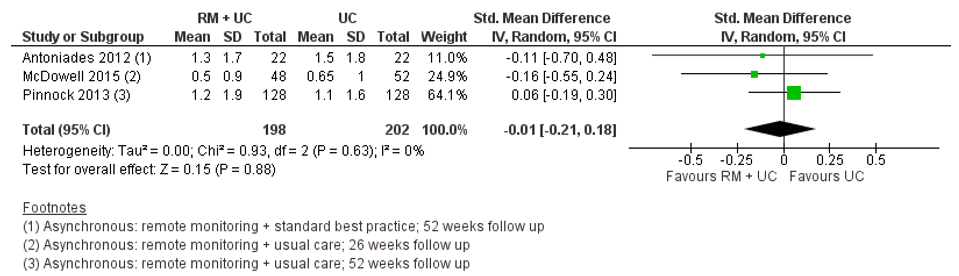
Figure 1.1.1 COPD-related hospital admissions | remote monitoring plus usual care vs. usual care alone
Z: p-value of overall effect; df: degrees of freedom; I2: statistical heterogeneity; CI: confidence interval
RM, remote monitoring; UC, usual care
Kandoussi (2024) reported rate of hospitalization for exacerbations after a 6 month follow-up. The telemonitoring group (n=106) had a lower rate compared to the usual care group (n=57) (15.8% vs. 44.3%, respectively), with an odds ratio of 0.23 (95% CI 0.10 to 0.52). Vianello (2016) reported rate of COPD-related hospital admissions at 52 weeks follow-up. The telemonitoring group (n=25) had a lower rate compared to the usual care group (n=81), with a rate ratio of 0.89 (95% CI 0.79 to 1.00).
Ho (2016) reported hospital readmission within the first 6 months follow-up in patients who were previously hospitalized due to a COPD exacerbation and found reduced risk for the telemonitoring intervention group with a hazard ratio of 0.42 (95% CI 0.19 to 0.93).
Comparison 2: remote monitoring vs. usual care
Four included studies reported on COPD-related hospital (re)admissions (Andersen 2024; De San Miguel 2013; Stamenova 2020; Walker 2018). De San Miguel (2013) reported a mean score of 0.22 (0.48 SD) in the telemonitoring intervention group (N=36) compared to a mean score of 0.49 (0.85 SD) in the usual care group (N=35) at 6 months follow-up, with a mean difference of -0.27 (95% CI -0.59 to 0.05) in favor of the telemonitoring intervention group. Stamenova (2020) reported a mean score of 0.05 (0.22 SD) in the telemonitoring intervention group (N=25) compared to a mean score of 0.18 (0.81 SD) in the usual care group (N=33) at 6 months follow-up, with a mean difference of -0.13 (95% CI -0.42 to 0.16) in favor of the telemonitoring intervention group.
Andersen (2024) reported hospital readmission within the first 6 months follow-up in patients above who were previously hospitalized due to a COPD exacerbation. The telemonitoring group (n=110) had a lower rate compared to the usual care group (n=112) (28% vs. 33%, respectively), with an odds ratio of 1.26 (95% CI 0.71 to 2.23). Walker (2018) reported hospital readmission at 39 weeks in patients who were previously hospitalized due to a COPD exacerbation as the incidence rate ratio (IRR 0.46, 95% CI 0.24 to 0.87).
Comparison 3: Multi-component vs. usual care
One of the included studies reported on COPD-related hospital admission (Ringbaeck 2015), with a mean difference 0.01 (95% CI -0.24 to 0.26). One of the included studies reported on COP-related readmissions (Sorknaes 2013), with a mean difference of -0.06 (95% CI -0.57 to 0.45).
1.2 COPD-related IC admissions (important)
Not reported for none of the comparisons.
1.3 COPD-related outpatient visits (important)
Not reported for none of the comparisons.
2. Exacerbations (crucial)
Comparison 1: remote monitoring plus usual care vs. usual care alone
Two studies (McDowell 2015, Pinnock 2013) reported mean number of exacerbations at 26 weeks compared to standard care (MD -0.46, 95% CI -1.19 to 0.27) or 52 weeks (MD 0.10, 95% CI -0.40 to 0.60).
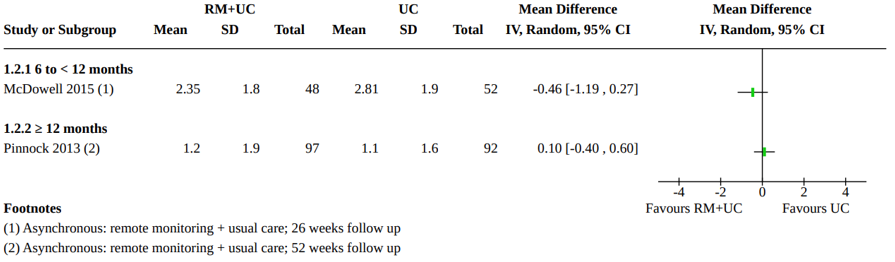
Figure 2.1 Remote monitoring plus usual care vs usual care alone on mean number of exacerbations.
Comparison 2: remote monitoring vs. usual care
Two studies (Soriano 2018, Stamenova 2020) reported mean number of exacerbations at 46 weeks compared to standard care (SMD 0.22, 95% CI -0.01 to 0.44).
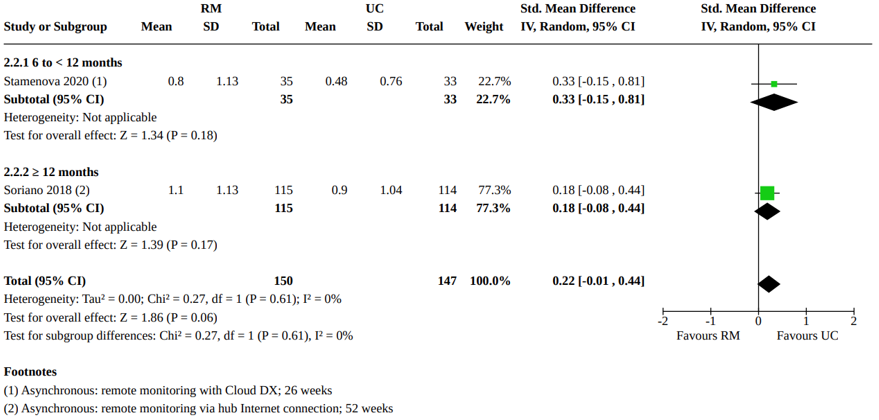
Figure 2.2 Remote monitoring vs usual care on mean number of exacerbations
Comparison 3: Multi-component vs. usual care
The mean number of exacerbations was not reported for this comparisons.
3. Quality of life (crucial)
Comparison 1: remote monitoring plus usual care vs. usual care alone
Four included studies reported on quality of life as measured with St George's Respiratory Questionnaire (SGRQ; total scores range from 0 (no limitations) to 100 (increased limitations)) (Berkhof 2015; McDowell 2015; Køpfli 2024; Pinnock 2013). Data was available at 3, 6, 12 and 24 month follow-up. Results at 3, 12 and 24 follow-up are reported per study in Figure 1.3. Results at 6 month follow-up were pooled in a meta-analysis (Figure 1.3.2). The pooled mean difference for quality of life improvement (SGRQ total score) was -1.55 (95% CI -6.37 to 3.27) in favor of the remote monitoring plus usual care group. The mean difference was not considered clinically relevant.
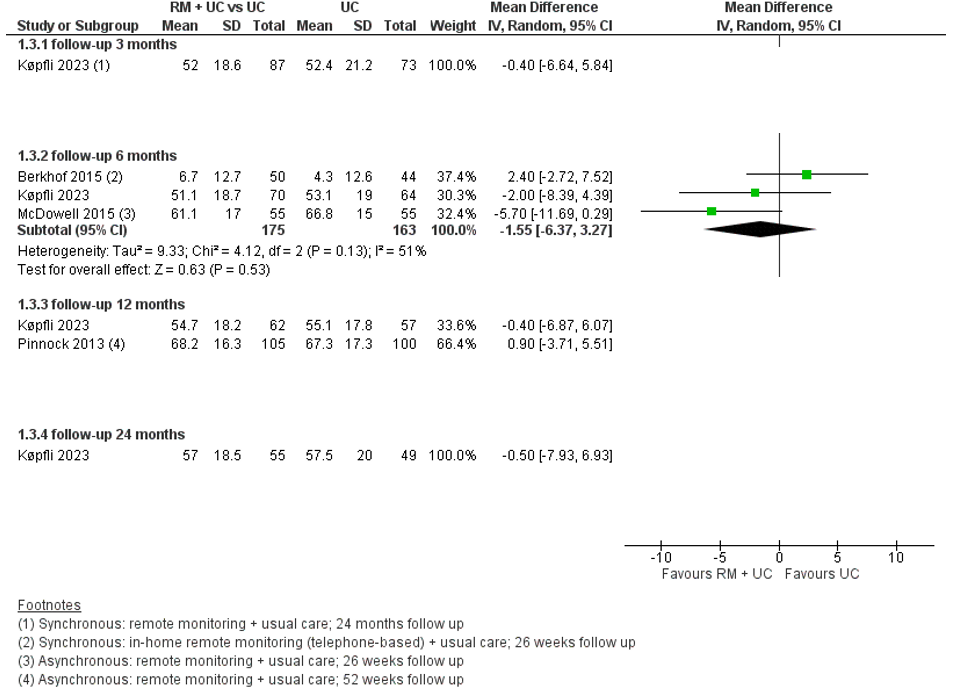
Figure 3.1. Quality of life improvement | remote monitoring plus usual care vs. usual care alone
Z: p-value of overall effect; df: degrees of freedom; I2: statistical heterogeneity; CI: confidence interval
RM, remote monitoring; UC, usual care
Comparison 2: remote monitoring vs. usual care
One included study (Jódar-Sanches 2013) reported quality of life as measured with SGRQ at 17 weeks follow-up. They reported a mean score of -10.9 (21.9 SD) in the telemonitoring intervention group (N=24) compared to a mean score of -4.5 (19.7 SD) in the usual care group (N=21), with a mean difference of -6.40 (95% CI -18.56 to 5.76) in favor of the telemonitoring intervention group. The mean difference was considered clinically relevant.
Three included studies reported on quality of life as measured with CAT score (score range from 0 (no limitations) to 40 (increased limitations)) (Minguez 2017; Soriano 2018; Walker
2018). Results per study are presented in table 3. Due to the differences in follow-up, studies could not be pooled and overall conclusions could not be drawn.
Table 3. Quality of life (CAT total score) | remote monitoring vs. usual care
|
study |
Follow-up |
Telemonitoring |
Usual care |
Mean difference (95% CI) |
||
|
Mean (SD) |
N |
Mean (SD) |
N |
|||
|
Minguez (2017) |
26 weeks |
9.6 (6.3) |
49 |
8.7 (4.9) |
52 |
0.90 (-1.31 to 3.11) |
|
Walker (2018) |
39 weeks |
16.7 (7.71) |
150 |
17.2 (8.3) |
154 |
-0.50 (-2.30 to 1.30) |
|
Soriano (2018) |
52 weeks |
21.5 (5.6) |
115 |
21.4 (6.1) |
114 |
0.10 (-1.42 to 1.62) |
CAT, score range 0 to 40; lower scores represent better outcomes
CI, confidence interval; N, number of patients
Comparison 3: Multi-component vs. usual care
Five included studies reported quality of life as measured with SGRQ (Casas 2006; Farmer 2017; Jakobsen 2015; KoJ 2009; Rose 2018). Data from these studies could not be pooled and were separated by follow-up duration in table 4. Rose (2018) only reported a mean difference and standard error showing no difference in effect at 12 months follow-up: -0.001 (0.0046).
Table 4. Quality of life (SGRQ total) | multi-component vs. usual care
|
study |
Follow-up |
Telemonitoring |
Usual care |
Mean difference (95% CI) |
||
|
Mean (SD) |
N |
Mean (SD) |
N |
|||
|
Koff (2009) |
13 weeks |
-10.3 (14.8) |
19 |
-0.6 (12.2) |
19 |
-9.70 (-18.32 to -1.08) |
|
Jakobsen (2015) |
6 months |
55 (19) |
21 |
48 (19) |
19 |
7.00 (-4.79 to 18.79) |
|
Casas (2006) |
12 months |
-13.4 (13.4) |
21 |
-11 (15.5) |
41 |
-2.40 (-9.84 to 5.04) |
|
Farmer (2017) |
12 months |
56.9 (19.5) |
93 |
56.8 (20.9) |
48 |
0.10 (-7.02 to 7.22) |
|
Rose (2018) |
12 months |
na |
|
na |
|
-0.00 (-0.01 to 0.01) |
CAT, score range 0 to 40; lower scores represent better outcomes
CI, confidence interval; N, number of patients; na, not applicable.
Two included studies reported on quality of life as measured with CAT score (Ringbaek 2015; Yan 2018). Results per study are presented in table 5. Although both studies were fundamentally different (follow-up duration and telemonitoring intervention, see study characteristics) both studies show an improvement in QoL for the multi-component intervention as compared to the usual care group. Due to these differences, data of studies could not be pooled and overall conclusions could not be drawn.
Table 3. Quality of life (CAT total score) | multi-component vs. usual care
|
study |
Follow-up |
Telemonitoring |
Usual care |
Mean difference (95% CI) |
||
|
Mean (SD) |
N |
Mean (SD) |
N |
|||
|
Ringbaek (2015) |
26 weeks |
25.6 (6.9) |
141 |
27.5 (7.5) |
140 |
-1.90 (-3.59 to -0.21) |
|
Yan (2018) |
52 weeks |
12.8 (1.7) |
120 |
18.6 (2.7) |
120 |
-5.80 (-6.37 to -5.23) |
CAT, score range 0 to 40; lower scores represent better outcomes
CI, confidence interval; N, number of patients
4. Participant satisfaction (important)
For comparisons 1 and 2 no studies were included that reported on this outcome.
Comparison 3: Multi-component vs. usual care
One included study reported on patient satisfaction as measured with the Client Satisfaction Questionnaire (total score range 8–32, a higher score indicates a higher degree of satisfaction) at 39 weeks follow-up (Tabak 2014). They reported a mean score of 26.3 (4.5 SD) in the multi-component intervention group (N=12) compared to a mean score of 29.9 (4.8 SD) in the usual care group (N=12), with a mean difference of -3.60 (95% CI -7.32 to 0.12) in favor of the multi-component intervention group.
A systematic review of the literature was performed to answer the following question(s):
What are the favorable and unfavorable effects of telemonitoring compared to usual care (not telemonitoring) in adult patients with COPD?
Table 1. PICO
|
Patients |
adult patients with COPD in secondary care |
|
Intervention |
Telemonitoring |
|
Control |
Usual care (no telemonitoring) |
|
Outcomes |
Critical: number of hospital admissions, exacerbations and quality of life Important: number of ICU admissions, number of ER visits, patient satisfaction |
|
Other selection criteria |
Study design: systematic reviews and randomized controlled trials |
Relevant outcome measures
The guideline panel considered number of hospital admissions
and number of (unplanned) outpatient clinic visits, exacerbations and quality of life as a critical outcome measure for decision making; and number of ICU admissions, number of (unplanned) outpatient clinic visits, patient satisfaction as an important outcome measure for decision making.
The guideline panel defined the outcome measures and minimal clinically (patient) important differences as shown in table 2.
Table 2. Minimally clinically important differences per outcome.
|
Outcome |
Definition |
minimal clinically (patient) important difference |
|
Critical |
||
|
Mean hospital admissions (COPD-related) |
Risk difference of ≥ 20% (0.80>RR>1.20) |
|
Mean number of exacerbations |
Risk difference of ≥ 20% (0.80>RR>1.20) |
|
CRQ total (score 0-3, low is good control of symptoms), CAT (score 0-40, low is low impact of COPD on a patient's life) or St. George’s Respiratory Questionnaire (SGRQ) (score 0-100, lower is better). |
CRQ: Mean Difference ≥ 0.5 (Wijkstra 1994); CAT: Mean Difference ≥10 points (Jones 2009, Tsiligianni 2012) SGRQ: Mean Difference ≥ 4 units (Jones 1992) |
|
Important |
|
|
|
The number of people who were admitted to the ICU because of a COPD event |
Risk difference of ≥ 20% (0.80>RR>1.20) |
|
The number of people who were in need of (unplanned) outpatient clinic visits |
Risk difference of ≥ 20% (0.80>RR>1.20) |
|
The number of people satisfied with either digital technology intervention or usual care. |
Mean Difference ≥ 10% |
Search and select (Methods)
The Cochrane review by Janjua (2021) was used as a starting point due to the high number of studies, and the search was updated from 2020 onward. A systematic literature search was performed by a medical information specialist using the following bibliographic databases: Embase.com and Ovid/Medline. Both databases were searched from 2020 to 09-02-2025 for systematic reviews, RCTs and observational studies. Systematic searches were completed using a combination of controlled vocabulary/subject headings (e.g., Emtree-terms, MeSH) wherever they were available and natural language keywords. The overall search strategy was derived from 2 primary search concepts: (1) COPD; (2) telemonitoring. Duplicates were removed using EndNote software. After deduplication a total of 1891 records were imported for title/abstract screening. Screening was performed by an advisor using ASReview. One possibly suitable article provided by a working group member was used as prior knowledge. However, after screening, this article was researching pain in procedures and therefore excluded. Screening was stopped after 114 consecutive irrelevant records were ranked as such. Out of 1891 studies, 47 were considered relevant and 326 were considered irrelevant. After full-text screening, in addition to the Cochrane review by Janjua (2021), three studies were included.
- Andersen FD, Trolle C, Pedersen AR, Køpfli ML, Børgesen S, Jensen MS, Hyldgaard C. Effect of telemonitoring on readmissions for acute exacerbation of chronic obstructive pulmonary disease: A randomized clinical trial. J Telemed Telecare. 2024 Oct;30(9):1417-1424. doi: 10.1177/1357633X221150279. Epub 2023 Jan 23. PMID: 36683440.
- Janjua S, Carter D, Threapleton CJ, Prigmore S, Disler RT. Telehealth interventions: remote monitoring and consultations for people with chronic obstructive pulmonary disease (COPD). Cochrane Database Syst Rev. 2021 Jul 20;7(7):CD013196. doi: 10.1002/14651858.CD013196.pub2. PMID: 34693988; PMCID: PMC8543678.
- Kaddoussi R, Bel Haj Ali K, Hajji E, Ben Soltane H, Chamtouri I, Dhaoui R, Younes S, Fahem N, Khalifa M, Dhouib W, Msolly MA, Sekma A, Boubaker H, Bouida W, Nouira S. Impact of Home Mobile Phone-Based Telemonitoring in Preventing Exacerbations and Hospitalizations Among Patients with Chronic Obstructive Pulmonary Disease: An IMTEC Study. J Clin Med. 2024 Oct 23;13(21):6319. doi: 10.3390/jcm13216319. PMID: 39518459; PMCID: PMC11546387.
- Køpfli ML, Børgesen S, Jensen MS, Hyldgaard C, Bell C, Andersen FD. Effect of telemonitoring on quality of life for patients with chronic obstructive pulmonary disease-A randomized controlled trial. Chron Respir Dis. 2023 Jan-Dec;20:14799731231157771. doi: 10.1177/14799731231157771. PMID: 36775280; PMCID: PMC9926364.
Table 2. Characteristics of included studies
|
Study |
Participants |
Comparison |
Follow-up |
Outcome measures |
Comments |
Risk of bias (per outcome measure)* |
|
Remote monitoring plus usual care |
||||||
|
Included in systematic review Janjua, 2020 |
||||||
|
Antoniades 2012 |
N=44 adults with COPD; tertiary care (Australia). Mean age: 68 (intervention) vs 70 (control). ~45% male in each arm. |
Remote monitoring + standard best practice/usual care vs standard best practice/usual care. |
52 weeks |
Hospital admissions; length of stay; quality of life. |
Funding: Department of Human Services, Victoria (Australia). Open-label RCT. |
Random sequence: Unclear; Allocation concealment: Low; Blinding participants/personnel: High; Blinding outcome assessment: High; Incomplete outcome data: High (27% vs 9%); Selective reporting: Low; Other bias: Low. |
|
Berkhof 2015 |
Adults with severe COPD; Isala Hospital, Zwolle (Netherlands). (Baseline N and demographics reported in review tables.) |
Telemonitoring + usual care vs usual care. |
26 weeks (follow-up/UC continued to 52 weeks per review description) |
Hospital admissions; healthcare utilization; quality of life. |
Fortnightly telephone calls with call-center nurse; protocol not publicly available (as per RoB notes). |
Random sequence: Low; Allocation concealment: Unclear; Blinding participants/personnel: High; Blinding outcome assessment: High; Incomplete outcome data: Low (<10% attrition); Selective reporting: High (no protocol); Other bias: Low. |
|
Ho 2016 |
N=106 adults; National Taiwan University Hospital (Taiwan). Mean age: 81.4 vs 79.0; male: 81% vs 72%. |
Telemonitoring intervention vs usual care. |
26 weeks |
Hospital admissions; ER/ED visits; mortality. |
Funding: National Taiwan University. |
Random sequence: Low; Allocation concealment: Unclear; Blinding participants/personnel: High; Blinding outcome assessment: Low; Incomplete outcome data: Low; Selective reporting: Low; Other bias: Low. |
|
Lewis 2010 |
N=40 adults; Wales (UK). Mean age: 70 vs 73; male: 50% vs 50%. |
Telemonitoring + standard care vs standard care. |
26 weeks (UC continued to 52 weeks) |
Mortality; patient satisfaction (and service use outcomes reported in review). |
Funding: EU grant. |
Random sequence: Low; Allocation concealment: Low; Blinding participants/personnel: High; Blinding outcome assessment: Low; Incomplete outcome data: Unclear; Selective reporting: High; Other bias: Low/unclear. |
|
McDowell 2015 |
N=116 adults; Spain (Puerta de Hierro University Hospital). |
Telemonitoring + usual care vs usual care. |
26 weeks |
Hospital admissions; healthcare utilisation. |
Funding: European Centre for Connected Health. |
Random sequence: Low; Allocation concealment: Low; Blinding participants/personnel: High; Blinding outcome assessment: High; Incomplete outcome data: Low; Selective reporting: Unclear; Other bias: Low. |
|
Pinnock 2013 |
N=256 adults from 96 GP practices (UK). Mean age: 69.4 vs 68.4; male: 41% vs 49%. |
Touchscreen telemonitoring integrated into services + education vs usual care/education comparator. |
52 weeks |
Hospital admissions; ER/ED visits; mortality; quality of life. |
Funding: NHS/Chief Scientist Office. |
Random sequence: Low; Allocation concealment: High; Blinding participants/personnel: High; Blinding outcome assessment: Low; Incomplete outcome data: Low; Selective reporting: Low; Other bias: Low. |
|
Shany 2016 |
Adults with COPD; Australia (Sydney region). |
Telehealth intervention (RACS-Plus) + usual care vs usual care. |
52 weeks |
Hospital admissions; ER/ED visits; length of stay. |
Funding: NSW Government / TelemedCare / ARC / Sydney West AHS / UNSW. |
Random sequence: Low; Allocation concealment: Unclear; Blinding participants/personnel: High; Blinding outcome assessment: Unclear; Incomplete outcome data: High; Selective reporting: High; Other bias: Low. |
|
Vianello 2016 |
Adults with GOLD III–IV COPD; Italy. |
Telemonitoring system (physiology + symptoms to web platform) vs self-management educational materials. |
12 months |
Hospital admissions (number/duration); ED visits; mortality; quality of life. |
Funding: Renewing Health Project (European Commission). Trial registered (NCT01513980). |
Random sequence: Low; Allocation concealment: High; Blinding participants/personnel: High; Blinding outcome assessment: High; Incomplete outcome data: Low; Selective reporting: Low; Other bias: Low. |
|
Individual studies |
||||||
|
Kandoussi 2024 |
Adults with group E COPD (Fattouma Bourguiba Hospital, Tunisia) |
Weekly phone-based telemonitoring (TLM) vs standard care |
7 months |
Hospital admissions; ED visits |
This research received no external funding. |
Random sequence: Low; Allocation concealment: Low; Blinding participants/personnel: High; Blinding outcome assessment: Unclear; Incomplete outcome data: Unclear; Selective reporting: Unclear; Other bias: Low. |
|
Køpfli 2023 |
Adults with COPD; Denmark. |
Home TM (Tunstall HealthCare’s telemonitoring equipment) in addition to standard COPD treatment. |
6 months |
Quality of life |
Chronic Diseases, Ministry of Health and Prevention, Denmark |
Low |
|
Telemonitoring vs. usual care |
||||||
|
Included in systematic review Janjua, 2020 |
||||||
|
|
|
|
|
|
|
|
|
Calvo 2014 |
Adults with COPD; Spain. |
Telemonitoring vs usual care. |
12 months |
Hospital admissions; ER/ED visits; quality of life. |
No industry funding reported in review tables. |
Random sequence: Unclear; Allocation concealment: Low; Blinding participants/personnel: High; Blinding outcome assessment: High; Incomplete outcome data: Low; Selective reporting: Unclear; Other bias: Low. |
|
De San Miguel 2013 |
Adults with COPD; Australia. |
Telemonitoring vs usual care. |
12 months |
Hospital admissions; ER/ED visits; quality of life. |
Public funding; no conflicts noted in review tables. |
Random sequence: Low; Allocation concealment: Low; Blinding participants/personnel: High; Blinding outcome assessment: Unclear; Incomplete outcome data: Unclear; Selective reporting: Unclear; Other bias: Low. |
|
Jódar-Sanchez 2013 |
Adults with COPD; Spain. |
Telemonitoring vs usual care. |
12 months |
Hospital admissions; ER/ED visits; patient satisfaction; quality of life. |
Funded by Spanish Ministry of Science and Innovation (per review). |
Random sequence: Unclear; Allocation concealment: Unclear; Blinding participants/personnel: High; Blinding outcome assessment: High; Incomplete outcome data: Low; Selective reporting: Unclear; Other bias: Low. |
|
Minguez 2017 |
Adults with COPD; Spain. |
Telemonitoring vs usual care. |
12 months |
Hospital admissions; ER/ED visits. |
Selection may limit generalizability (cognitive capacity noted in review). |
Random sequence: Unclear; Allocation concealment: Unclear; Blinding participants/personnel: High; Blinding outcome assessment: High; Incomplete outcome data: Low; Selective reporting: Unclear; Other bias: High. |
|
Pedone 2013 |
Older adults with COPD; Italy. |
Telemonitoring vs usual care. |
9 months |
Hospital admissions; mortality; quality of life. |
SweetAge trial (per review). |
Random sequence: Low; Allocation concealment: Unclear; Blinding participants/personnel: High; Blinding outcome assessment: High; Incomplete outcome data: Low; Selective reporting: Low; Other bias: Low. |
|
Sink 2020 |
Adults with COPD; USA. |
Telemonitoring vs usual care. |
12 months |
Hospital admissions; ER/ED visits. |
Control group included additional non-randomised participants (per review). |
Random sequence: Unclear; Allocation concealment: Unclear; Blinding participants/personnel: High; Blinding outcome assessment: High; Incomplete outcome data: Low; Selective reporting: Low; Other bias: High. |
|
Soriano 2018 |
Adults with COPD; Spain. |
Telemonitoring vs usual care. |
12 months |
Hospital admissions; ER/ED visits; mortality. |
Public funding; no conflicts noted. |
Random sequence: Unclear; Allocation concealment: High; Blinding participants/personnel: High; Blinding outcome assessment: High; Incomplete outcome data: Low; Selective reporting: Low; Other bias: Low. |
|
Stamenova 2020 |
Adults with COPD; Canada. |
Telemonitoring vs usual care. |
6 months |
Hospital admissions; quality of life; patient satisfaction. |
Mixed-methods evaluation; public funding. |
Random sequence: Low; Allocation concealment: High; Blinding participants/personnel: High; Blinding outcome assessment: High; Incomplete outcome data: Low; Selective reporting: Low; Other bias: Low. |
|
Udsen 2017 |
Adults with COPD; Denmark (cluster RCT). |
Telemonitoring vs usual care. |
52 weeks |
Hospital admissions; quality of life. |
Cluster design. |
Random sequence: Low; Allocation concealment: Low; Blinding participants/personnel: High; Blinding outcome assessment: High; Incomplete outcome data: High; Selective reporting: Low; Other bias: Low. |
|
Individual studies |
||||||
|
Andersen 2024 |
Adults with COPD; baseline details not reported in extracted review tables. |
Telemonitoring intervention vs usual care. |
6 months |
Hospital admissions; ER/ED visits; quality of life. |
Funding: Ministry of Health and Prevention, the Fund for Chronic Diseases |
Low |
|
Multi-component or integrated care (when external monitoring, external consultations or both are parts of the care) vs. usual care |
||||||
|
Included in systematic review Janjua, 2020 |
||||||
|
Bourbeau 2016 |
Adults with COPD (multinational); severe disease profile in review tables. |
Home-based disease management (Living Well with COPD) with telehealth component vs routine COPD management/usual care. |
≈12 months |
Hospital admissions (unscheduled hospitalisation days); mortality; quality of life (SGRQ-C). |
Funding: Air Liquide Healthcare. Trial ID: NCT01241526. |
Random sequence: Low; Allocation concealment: Unclear; Blinding participants/personnel: High; Blinding outcome assessment: High; Incomplete outcome data: High; Selective reporting: Low; Other bias: Low. |
|
Casas 2006 |
N=80 adults; mean age 71 vs 74; domiciliary oxygen; Western Australia. |
Integrated platform (web-based call centre + telehealth monitoring) + education materials vs education materials/usual care. |
26 weeks |
Hospital service utilisation; quality of life; patient satisfaction; mortality (not explicitly listed in extracted outcomes). |
Funding: Australian Department of Health and Ageing. |
RoB details not fully captured in extracted block; Figure 2 indicates overall: random sequence Low; allocation concealment Low; performance High; detection Unclear; attrition Low; reporting Unclear; other Low. |
|
Farmer 2017 |
Adults with COPD; UK primary care. Inclusion: post-bronchodilator FEV1 <80% predicted, FEV1/FVC <0.70; ≥10 pack-years; MRC dyspnoea ≥2; exacerbation last 12 months or PR referral. Exclusion includes CHF, severe comorbidity, no mobile internet. |
EDGE platform digital self-management (remote monitoring + self-management support) vs standardised usual care. |
52 weeks (after 6-week run-in) |
Quality of life (SGRQ-C); hospital admissions; length of stay; deaths; ED presentation/admission; other secondary outcomes. |
Funding: Health Innovation Challenge Fund (Wellcome Trust & UK Dept of Health); sponsored by University of Oxford; ISRCTN 40367841. |
Random sequence: Low; Allocation concealment: Unclear; Blinding participants/personnel: High; Blinding outcome assessment: High; Incomplete outcome data: Unclear; Selective reporting: Low; Other bias: Low. |
|
Jakobsen 2015 |
N=266 adults with severe COPD; Denmark (2 hospitals). Mean age 71 vs 72. |
Remote monitoring + video consultations post-discharge vs usual care. |
Up to 180 days |
Readmissions; hospitalisation days; mortality; quality of life; patient satisfaction. |
Trial ID: NCT01155856. |
Random sequence: Low; Allocation concealment: Low; Blinding participants/personnel: High; Blinding outcome assessment: High; Incomplete outcome data: Low; Selective reporting: Low; Other bias: Low. |
|
KoJ 2009 |
Adults with COPD; USA (review notes). |
Telemonitoring component within integrated care vs usual care. |
Not clearly reported |
Quality of life; mortality; (service utilisation variably reported). |
Trial ID: ISRCTN 41424840 (as listed in review references). |
Figure 2 indicates: random sequence Unclear; allocation concealment Low; performance High; detection High; attrition Low; reporting Unclear; other Low. |
|
Ringbaek 2015 |
Adults with severe COPD; Denmark; outpatient setting. |
Integrated care with remote monitoring via wireless tablet (webcam/microphone; colour-coded alerts) vs usual care. |
26 weeks |
Hospital admissions; length of stay; quality of life (CAT); mortality. |
No protocol registered (per RoB); good compliance (82.6% ≥6 consultations). |
Random sequence: Low; Allocation concealment: Low; Blinding participants/personnel: High; Blinding outcome assessment: Unclear; Incomplete outcome data: Low; Selective reporting: Unclear; Other bias: Low. |
|
Ritchie 2016 |
N=137 adults; USA (Alabama); hospital recruited. |
Interactive voice response remote monitoring post-discharge vs usual discharge plan/usual care. |
30 days |
Rehospitalisation; mortality. |
Funding: AHRQ grant; Trial ID: NCT01135381. |
Random sequence: Low; Allocation concealment: Unclear; Blinding participants/personnel: High; Blinding outcome assessment: Low; Incomplete outcome data: Low; Selective reporting: High; Other bias: Low. |
|
Rose 2018 |
N=42 adults; Sydney (Australia). Mean age 72.1 vs 74.2; severe COPD; ≥1 admission prior year. |
Integrated care with teleconsultations/education/self-management plan (RACS-Plus) vs usual care. |
52 weeks |
Hospital admissions; ED visits; (QoL/anxiety/depression as secondary). |
Public funding (NSW Government/ARC/others). |
Random sequence: Low; Allocation concealment: Unclear; Blinding participants/personnel: High; Blinding outcome assessment: High/Unclear; Incomplete outcome data: Low; Selective reporting: High; Other bias: Low. |
|
Sorknaes 2013 |
Adults with severe COPD; Denmark. |
Video consultations + remote monitoring + follow-up calls post-discharge vs conventional treatment. |
26 weeks |
Hospital admissions; hospital days; mortality. |
Trial ID: NCT01178879. |
Random sequence: Low; Allocation concealment: Unclear; Blinding participants/personnel: High; Blinding outcome assessment: Low; Incomplete outcome data: Low; Selective reporting: Unclear; Other bias: Low. |
|
Tabak 2014 |
Adults with COPD; Netherlands; municipal districts / primary care; large sample (review tables). |
Tablet-based monitoring/consultation platform vs usual care. |
52 weeks |
Quality of life; (service utilisation variably reported). |
Trial ID: NCT01984840. |
Random sequence: Low; Allocation concealment: Low; Blinding participants/personnel: High; Blinding outcome assessment: High; Incomplete outcome data: High; Selective reporting: Low; Other bias: Low. |
|
Yan 2018 |
N=240 adults; China; mean age 65.4 vs 64.6; 60% vs 66% male; GOLD I–IV. |
Mobile remote consultation platform (video/voice/photo/text) + electronic education vs usual care. |
52 weeks |
Hospitalisations; quality of life (CAT); mortality. |
Funding: China Medical Board. Trial not registered; reporting limitations. |
Random sequence: Unclear; Allocation concealment: Unclear; Blinding participants/personnel: High; Blinding outcome assessment: Unclear; Incomplete outcome data: Unclear; Selective reporting: High; Other bias: Low. |
Table of excluded studies
|
Reference |
Reason for exclusion |
|
Janjua S, Carter D, Threapleton CJD, Prigmore S, Disler RT. Telehealth interventions: remote monitoring and consultations for people with chronic obstructive pulmonary disease (COPD). Cochrane Database Syst Rev. 2021 Jul 20;7(7):CD013196. doi: 10.1002/14651858.CD013196.pub2. PMID: 34693988; PMCID: PMC8543678. |
Article not found |
|
Dennett EJ, Janjua S, Stovold E, Harrison SL, McDonnell MJ, Holland AE. Tailored or adapted interventions for adults with chronic obstructive pulmonary disease and at least one other long-term condition: a mixed methods review. Cochrane Database Syst Rev. 2021 Aug 5;8(8):CD013384. doi: 10.1002/14651858.CD013384.pub2. PMID: 34363464. |
duplicate - wrong study design: secondary analysis of 2 randomized controlled trials |
|
Aburub A, Darabseh MZ, Badran R, Eilayyan O, Shurrab AM, Degens H. The effects of digital health interventions for pulmonary rehabilitation in people with COPD: A systematic review of randomized controlled trials. Medicina (Kaunas). 2024 Jun 6;60(6):963. doi: 10.3390/medicina60060963. PMID: 38931245; PMCID: PMC11234567. |
No studies after the Janjua review |
|
Zhang X, Jia G, Zhang L, Liu Y, Wang S, Cheng L. Effect of internet-based pulmonary rehabilitation on physical capacity and health-related life quality in patients with chronic obstructive pulmonary disease: A systematic review and meta-analysis. Disabil Rehabil. 2024 Apr 22;46(7):1450-1458. doi: 10.1080/09638288.2023.2196095. PMID: 37012345. |
No studies after the Janjua review |
|
Shaw G, Whelan ME, Armitage LC, Roberts N, Farmer AJ. Are COPD self-management mobile applications effective? A systematic review and meta-analysis. NPJ Prim Care Respir Med. 2020 Apr 1;30(1):11. doi: 10.1038/s41533-020-0167-1. PMID: 32238810; PMCID: PMC7110739. |
No studies after the Janjua review |
|
Liu YY, Li YJ, Lu HB, Song CY, Yang TT, Xie J. Effectiveness of internet-based self-management interventions on pulmonary function in patients with chronic obstructive pulmonary disease: A systematic review and meta-analysis. J Adv Nurs. 2023 Jul;79(7):2802-2814. doi: 10.1111/jan.15693. PMID: 36781234. |
Search date earlier than Janjua |
|
Chung C, Lee JW, Lee SW, Jo MW. Clinical efficacy of mobile app-based, self-directed pulmonary rehabilitation for patients with chronic obstructive pulmonary disease: Systematic review and meta-analysis. JMIR Mhealth Uhealth. 2024 Jan 12;12:e41753. doi: 10.2196/41753. PMID: 38212345; PMCID: PMC10876543. |
Search date earlier than Janjua |
|
Dai Y, Huang H, Zhang Y, He N, Shen M, Li H. The effects of telerehabilitation on physiological function and disease symptom for patients with chronic respiratory disease: A systematic review and meta-analysis. BMC Pulm Med. 2024 Jan 15;24:305. doi: 10.1186/s12890-024-03104-8. PMID: 38245678; PMCID: PMC10987654. |
SR to assess the efects of tele-monitoring devices on HR-QoL in older adults with COPD. |
|
Verma A, Behera A, Kumar R, Gudi N, Joshi A, Islam KM. Mapping of digital health interventions for the self-management of COPD: A systematic review. Clin Epidemiol Glob Health. 2023 Nov;23:101427. doi: 10.1016/j.cegh.2023.101427. PMID: 37891234. |
Wrong comparison. This meta-analysis aims to evaluate the clinical efficacy of |
|
Wang L, Guo Y, Wang M, Zhao Y. A mobile health application to support self-management in patients with chronic obstructive pulmonary disease: a randomised controlled trial. Clin Rehabil. 2021 Jan;35(1):90-101. doi: 10.1177/0269215520946931. PMID: 32936789. |
Wrong design |
|
Hartman M, Mináriková J, Batalik L, Pepera G, Formiga MF, Cahalin L, Dosbaba F, Su JJ. Effects of home-based training with internet telehealth guidance in COPD patients entering pulmonary rehabilitation: A systematic review. Int J Chron Obstruct Pulmon Dis. 2023 Oct 31;18:2305-2319. doi: 10.2147/COPD.S425218. PMID: 37912345; PMCID: PMC10678901. |
Wrong design: This study aimed to construct functional modules of Pulmonary |
|
Wang G, Li Z, Li H, He W, Yang X, Li S. Effectiveness of telerehabilitation in elderly patients with chronic obstructive pulmonary disease: A meta-analysis. Chin Med J (Engl). 2023 Dec 5;136(23):2870-2881. doi: 10.3760/cma.j.cn211501-20230607-01386. PMID: 38045678. |
Wrong I |
|
Reychler G, Piraux E, Beaumont M, Caty G, Liistro G. Telerehabilitation as a form of pulmonary rehabilitation in chronic lung disease: A systematic review. Healthcare (Basel). 2022 Sep 15;10(9):1795. doi: 10.3390/healthcare10091795. PMID: 36123456; PMCID: PMC9498765. |
Wrong I |
|
Chang H, Zhou J, Chen Y, Wang X, Wang Z. Comparative effectiveness of eHealth interventions on the exercise endurance and quality of life of patients with COPD: A systematic review and network meta-analysis. J Clin Nurs. 2024 Aug;33(15-16):3711-3720. doi: 10.1111/jocn.17225. PMID: 38956789. |
Wrong I |
|
Song CY, Liu X, Wang YQ, Cao HP, Yang Z, Ma RC, Yin YY, Xie J. Effects of home-based telehealth on the physical condition and psychological status of patients with chronic obstructive pulmonary disease: A systematic review and meta-analysis. Int J Nurs Stud. 2023 Jun;137:e13062. doi: 10.1111/ijn.13062. PMID: 37234567. |
Wrong I: 12-weeks hybrid virtual coaching on health-related quality-of-life (HrQoL). Wrong comparison: all patients were equipped with a CAir Desk for telemonitoring, the intervention group additionally received hybrid virtual |
|
Huang Q, Lin P, Dang J, Fu L, Ding L. Effect of internet-based self-management on pulmonary function rehabilitation and living quality in patients with chronic obstructive pulmonary disease. J Int Med Res. 2021 Sep;49(9):5224-5231. PMID: 34567891. |
Wrong I: a structured intervention for COPD |
|
Ayala-Chauvin M, Chicaiza FA, Acosta-Vargas P, Jadan J, Maldonado-Garcés V, Ortiz-Prado E, Acosta-Vargas G, Carrión-Toro M, Santórum M, Gonzalez-Rodriguez M, Madera C, Esparza W. Web-based pulmonary telehabilitation: a systematic review. NPJ Prim Care Respir Med. 2024 Nov 22. doi: 10.1038/s41533-024-00396-5. |
Wrong I: home-based exercise (eg, PR or another exercise such as aerobic or resistance training) delivered using advanced telehealth technology. Wrong study focus: The main goal of this systematic review is to evaluate the effects of PR in patients with COPD using various Internet |
|
Zhang Y, Chen G, Xu C, Zheng X, Li L, Xia Z, Jie Z. Efficacy of online pulmonary rehabilitation management among community-dwelling patients with stable chronic obstructive pulmonary disease. Chin Gen Pract. 2024 Jan 25;27(1):41-45. doi: 10.3760/cma.j.cn114798-20231107-00359. |
Wrong I: internet-based self-management interventions. Wrong O |
|
Calvache-Mateo A, López-López L, Heredia-Ciuró A, Martín-Núñez J, Rodríguez-Torres J, Ortiz-Rubio A, Valenza MC. Efficacy of web-based supportive interventions in quality of life in COPD patients: a systematic review and meta-analysis. Int J Environ Res Public Health. 2021 Dec 7;18(23):12692. doi: 10.3390/ijerph182312692. PMID: 34886145; PMCID: PMC8656762. |
Wrong I: self-management |
|
Jiang Y, Liu F, Guo J, Sun P, Chen Z, Li J, Cai L, Zhao H, Gao P, Ding Z, Wu X. Evaluating an intervention program using WeChat for patients with chronic obstructive pulmonary disease: Randomized controlled trial. JMIR Mhealth Uhealth. 2020 May 1;8(5):e17089. doi: 10.2196/17089. PMID: 32330172; PMCID: PMC7235841. |
Wrong I: self-management intervention (iobservation), no monitoring |
|
Ora J, Prendi E, Attinà ML, Cazzola M, Calzetta L, Rogliani P. Efficacy of respiratory tele-rehabilitation in COPD patients: Systematic review and meta-analysis. Monaldi Arch Chest Dis. 2022 Dec 8;92(6). doi: 10.4081/monaldi.2022.2105. PMID: 36456788. |
Wrong I: self-management intervention, no monitoring |
|
de la Cruz Hanna A, López Marcos JJ, López-Fernández D. Efficacy of tele-rehabilitation in patients with chronic obstructive pulmonary disease: A systematic review. Respir Med Res. 2023;83:100781. doi: 10.1016/j.resmer.2022.100781. |
Wrong I: singing |
|
Uche-Okoye D, Ajemba MN, Amy B, Arene EC, Ugo CH, Eze NP, Anyadike IK, Onuorah UM, Chiwenite CM. Is telerehabilitation an effective maintenance strategy for patients with chronic obstructive pulmonary diseases: A systematic review. Adv Biomed Res. 2023;12:13. doi: 10.1186/s42269-023-00980-8. PMID: 37823456. |
wrong I: telemonitoring is not part of this review |
|
Park SK, Bang CH, Lee SH. Evaluating the effect of a smartphone app-based self-management program for people with COPD: A randomized controlled trial. Appl Nurs Res. 2020 May;53:151231. doi: 10.1016/j.apnr.2020.151231. PMID: 32356789. |
Wrong I: telerehabilitation |
|
Isernia S, Pagliari C, Bianchi LNC, Banfi PI, Rossetto F, Borgnis F, Tavanelli M, Brambilla L, Baglio F. Characteristics, components, and efficacy of telerehabilitation approaches for people with chronic obstructive pulmonary disease: A systematic review and meta-analysis. Int J Environ Res Public Health. 2022 Nov 30;19(22):15165. doi: 10.3390/ijerph192215165. PMID: 36467890; PMCID: PMC9784567. |
Wrong I: Web-based pulmonary telehabilitation. This study aims to investigate web-based platforms for |
|
Stamenova V, Liang K, Yang R, Engel K, van Lieshout F, Lalingo E, Cheung A, Erwood A, Radina M, Greenwald A, Agarwal P, Sidhu A, Bhatia RS, Shaw J, Shafai R, Bhattacharyya O. Technology-enabled self-management of chronic obstructive pulmonary disease with or without asynchronous remote monitoring: Randomized controlled trial. JMIR Mhealth Uhealth. 2020 Sep 2;8(9):e18598. doi: 10.2196/18598. PMID: 32899231; PMCID: PMC7481880. |
Wrong I/ comparison: to compare the effect between tele-pulmonary rehabilitation |
|
Cox NS, McDonald C, Burge AT, Hill CJ, Bondarenko J, Holland AE. Comparison of clinically meaningful improvements after center-based and home-based telerehabilitation in people with COPD. Chest. 2024 Nov;166(5):0012-3692. doi: 10.1016/j.chest.2024.11.001. PMID: 39987654. |
Wrong I/ comparison: to determine whether a maintenance pulmonary telerehabilitation (TelePR) programme, after intensive initial PR, is superior to usual care in sustaining over time benefits achieved by intensive PR. |
|
Cox DNS, McDonald DC, Burge DAT, Hill DCJ, Bondarenko MJ, Holland PAE. Comparison of clinically meaningful improvements following center-based and home-based tele rehabilitation in people with COPD. Chest. 2024 Nov 25;166(5):0012-3692. doi: 10.1016/j.chest.2024.11.001. PMID: 39987655. |
wrong language, Article in Spanish |
|
Renzi E, Baccolini V, Migliara G, De Vito C, Gasperini G, Cianciulli A, Marzuillo C, Villari P, Massimi A. The impact of eHealth interventions on the improvement of self-care in chronic patients: An overview of systematic reviews. Life. 2022 Aug 12;12(8):1253. doi: 10.3390/life12081253. PMID: 35898765; PMCID: PMC9356789. |
wrong O |
|
Lear SA, Norena M, Banner D, Whitehurst DGT, Gill S, Burns J, Kandola DK, Johnston S, Horvat D, Vincent K, Levin A, Kaan A, Van Spall HGC, Singer J. Assessment of an interactive digital health-based self-management program to reduce hospitalizations among patients with multiple chronic diseases: A randomized clinical trial. JAMA Netw Open. 2021 Jan 25;4(1):e210591. doi: 10.1001/jamanetworkopen.2021.40591. PMID: 33518960; PMCID: PMC7863221. |
wrong P, wrong I: self-management |
|
Sul AR, Lyu DH, Park DA. Effectiveness of telemonitoring versus usual care for chronic obstructive pulmonary disease: A systematic review and meta-analysis. Telemed J E Health. 2020 Oct;26(10):189-199. doi: 10.1177/1357633X18811757. PMID: 32421115. |
wrong P, wrong I: self-management |
|
Lu JW, Wang Y, Sun Y, Zhang Q, Yan LM, Wang YX, Gao JH, Yin Y, Wang QY, Li XL, Hou G. Effectiveness of telemonitoring for reducing exacerbation occurrence in COPD patients with past exacerbation history: A systematic review and meta-analysis. Chronic Obstr Pulm Dis. 2021 Jan 11;8(1):2296-858X. doi: 10.3389/fmed.2021.720019. PMID: 34523456; PMCID: PMC8452345. |
Wrong study design, wrong P, |
|
Køpfli ML, Børgesen S, Jensen MS, Hyldgaard C, Bell C, Andersen FD. Effect of telemonitoring on quality of life for patients with chronic obstructive pulmonary disease: A randomized controlled trial. Chronic Respir Dis. 2023 Aug 7;20:1479-9731. doi: 10.1177/14799731231157771. PMID: 37589012. |
Wrong study design: secondary analysis of 2 randomized controlled trials |
|
Godtfredsen N, Frølich A, Bieler T, Beyer N, Kallemose T, Wilcke T, Østergaard L, Andreassen HF, Martinez G, Lavesen M, Hansen H. 12-months follow-up of pulmonary tele-rehabilitation versus standard pulmonary rehabilitation: A multicentre randomised clinical trial in patients with severe COPD. Respir Med. 2020 Sep;171:106129. doi: 10.1016/j.rmed.2020.106129. PMID: 32890123. |
Wrong study design/ focus: this article described our research findings of Chinese telemedicine in COPD patients from the aspects of providers, technology, and duration |
|
Andersen FD, Trolle C, Pedersen AR, Køpfli ML, Børgesen S, Jensen MS, Hyldgaard C. Effect of telemonitoring on readmissions for acute exacerbation of chronic obstructive pulmonary disease: A randomized clinical trial. Telemed J E Health. 2024 Sep 25;30(11):1417-1424. doi: 10.1177/1357633X221150279. PMID: 38745678. |
See Janjua's exclusion criterion: rehabilitation |
|
Kohlbrenner D, Kuhn M, Kläy A, Muszynski M, Ivankay A, Gross CS, Brunschwiler T, Clarenbach CF, Sievi NA, Asisof A. Hybrid virtual coaching and telemonitoring in COPD management: The CAir randomised controlled study. Int J Chron Obstruct Pulmon Dis. 2024 Jan 10;19:2739-2750. doi: 10.2147/COPD.S487105. PMID: 39923456; PMCID: PMC8998765. |
See Janjua's exclusion criterion: rehabilitation |
|
Lippi L, Turco A, Folli A, D’Abrosca F, Curci C, Mezian K, de Sire A, Invernizzi M. Technological advances and digital solutions to improve quality of life in older adults with chronic obstructive pulmonary disease: A systematic review. Aging Clin Exp Res. 2023 Jun;35(6):953-968. doi: 10.1007/s40520-023-02381-3. PMID: 36912345. |
See Janjua's exclusion criterion: rehabilitation |
Beoordelingsdatum en geldigheid
Publicatiedatum : 01-10-2026
Beoordeeld op geldigheid : 01-10-2026
Samenstelling werkgroep
Voor het ontwikkelen van de richtlijnmodule is in 2024 een multidisciplinair cluster ingesteld. Het cluster Astma & COPD bestaat uit meerdere richtlijnen (zie hier de actuele clusterindeling). De stuurgroep bewaakt het proces van modulair onderhoud binnen het cluster. De expertisegroepsleden brengen hun expertise in, indien nodig. De volgende personen uit het cluster zijn betrokken geweest bij de herziening van deze module:
Clusterstuurgroepleden
- Dhr. dr. F. (Folkert) Brijker, voorzitter cluster Astma & COPD, longarts, Spaarne Gasthuis te Haarlem, NVALT
- Dhr. dr. G.J. (Gert-Jan) Braunstahl, vicevoorzitter cluster Astma & COPD longarts, Franciscus Gasthuis & Vlietland, NVALT
- Mevr. C.L.Y. (Chantal) Knoops, longarts, VieCuri medisch centrum, NVALT
- Mevr. dr. E. (Eline) bij de Vaate, longarts, Merem medisch revalidatie NVALT
- Mevr. M.C. (Myrthe) van der Burg, longarts, Jeroen Bosch Ziekenhuis, NVALT
- Mevr. drs. P.M.G.A. (Pascale) Lubbers-van Tuynn, beleidsmedewerker, Longfonds
- Mevr. dr. M.C. (Marloes) Minnaard, huisarts/wetenschappelijk medewerker NHG
Betrokken clusterexpertisegroepleden
- Dhr. dr. J.A. (Hans) Hardeman, longarts, St. Antonius Ziekenhuis, NVALT
Met ondersteuning van
- Mevr. dr. A.N. (Nynke) Kampstra, adviseur, Kennisinstituut van de Federatie Medisch Specialisten
- Mevr. dr. L. (Lisette) van Leeuwen, adviseur, Kennisinstituut van de Federatie Medisch Specialisten
- Mevr. E. (Esther) van der Bijl, medisch informatiespecialist, Kennisinstituut van de Federatie Medisch Specialisten
Belangenverklaringen
Clusterstuurgroepleden
Tabel 9 Gemelde (neven)functies en belangen stuurgroep
|
Naam |
Hoofdfunctie |
Nevenwerkzaamheden |
Persoonlijke financiële belangen |
Persoonlijke relaties |
Extern gefinancierd onderzoek |
Overige belangen |
Restrictie |
|
dr. Folkert Brijker (vz.) |
Longarts, Spaarne Gasthuis |
Geen |
Laatste 3 jaar adviesraden en presentaties verzorgd voor AstraZeneca, Chiesi, GSK, Sanofi, Sananet |
Geen |
Geen |
Geen |
Geen |
|
dr. Gert-Jan Braunstahl (vicevoorzitter) |
Longarts Franciscus Gasthuis & Vlietland |
Geen |
In laatste 3 jaar advieswerk gedaan voor GSK, Sanofi, AstraZeneca en ALK ABello. |
Geen |
* Astra Zeneca - Studie naar astma-exacerbaties - Projectleider |
Geen |
Geen |
|
Chantal Knoops |
Longarts, VieCuri Medisch Centrum Noord Limburg |
Geen |
Geen |
Geen |
Geen |
Geen |
Geen |
|
Eline Droppers - bij de Vaate |
Longarts, Merem Medische Revalidatie |
Geen |
Geen |
Geen |
Geen |
Geen |
Geen |
|
Myrthe van der Burg |
AIOS Longziekten in het Jeroen Bosch Ziekenhuis |
Geen |
Geen |
Geen |
Geen |
Geen |
Geen |
|
Yvonne Kappe |
Projectleider Longfonds |
Geen |
Geen |
Geen |
Geen |
Geen |
Geen |
|
Marloes Minnaarrd |
Huisarts en wetenschappelijk medewerker afdeling richtlijnontwikkeling. Nederlands Huisartsen Genootschap (NHG) |
Huisarts-redacteur Thuisarts (8u betaald) |
Geen |
Geen |
Geen |
Geen |
Geen |
|
Pascale Lubbers-van Tuyn |
Beleidsadviseur, Longfonds, betaalde functie |
Geen |
Geen |
Geen |
Geen |
Geen |
Geen |
Betrokken clusterexpertisegroepleden
Tabel 10 Gemelde (neven)functies en belangen expertisegroep
|
Naam |
Hoofdfunctie |
Nevenwerkzaamheden |
Persoonlijke financiële belangen |
Persoonlijke relaties |
Extern gefinancierd onderzoek |
Overige belangen |
Restrictie |
|
Hans Hardeman |
Longarts st Antonius Ziekenhuis |
Geen |
Geen |
Geen |
Geen |
Geen |
Geen |
Inbreng patiëntenperspectief
Het patiëntenperspectief is ingebracht door deelname van Longfonds aan het cluster.
Kwalitatieve raming van mogelijke financiële gevolgen in het kader van de Wkkgz
Bij de richtlijnmodule voerden de clusterleden conform de Wet kwaliteit, klachten en geschillen zorg (Wkkgz) een kwalitatieve raming uit om te beoordelen of de aanbevelingen mogelijk leiden tot substantiële financiële gevolgen. Bij het uitvoeren van deze beoordeling is de richtlijnmodule op verschillende domeinen getoetst (zie het stroomschema bij Werkwijze).
|
Module |
Uitkomst raming |
Toelichting |
|
Module telemonitoring in patiënten met COPD |
Geen substantiële financiële gevolgen. |
Hoewel uit de toetsing volgt dat de aanbeveling(en) breed toepasbaar zijn (>40.000 patiënten), volgt ook uit de toetsing dat het geen nieuwe manier van zorgverlening of andere organisatie van zorgverlening betreft, het geen toename in het aantal in te zetten voltijdsequivalenten aan zorgverleners betreft en het geen wijziging in het opleidingsniveau van zorgpersoneel betreft. Er worden daarom geen substantiële financiële gevolgen verwacht.
|
Werkwijze
Voor meer details over de gebruikte richtlijnmethodologie verwijzen wij u naar de Werkwijze. Relevante informatie voor de ontwikkeling/herziening van deze richtlijnmodule is hieronder weergegeven.
Zoekverantwoording
Algemene informatie
|
Richtlijn: |
|
|
Uitgangsvraag: Wat is de (meer)waarde van telemonitoring in patiënten met COPD in de tweedelijnszorg?
|
|
|
Database(s): Ovid/Medline, Embase.com |
Datum: 9-2-2025 |
|
Periode: vanaf 2020- |
Talen: nvt |
|
Literatuurspecialist: Ingeborg van Dusseldorp |
|
|
Toelichting: Voor deze vraag is gezocht met de volgende concepten:
Het sleutelartikel wordt gevonden. Vanwege de hoge aantallen wordt de Cochrane review: Janjua S Carter D Threapleton CJ Prigmore S Disler RT. Telehealth interventions: remote monitoring and consultations for people with chronic obstructive pulmonary disease (COPD). Cochrane Database Syst Rev. 2021 Jul 20;7(7):CD013196, als uitgangspunt genomen en wordt gezocht vanaf 2020. Omdat er een beperkt aantal artikelen over kinderen is gevonden, wordt geen gebruik gemaakt van het volwassenen filter. |
|
|
Te gebruiken voor richtlijnen tekst: In de databases Embase.com en Ovid/Medline is op 9-2-2025 met relevante zoektermen systematische gezocht naar SRs, clinical trials, observationele studies en richtlijnen over telemonitoring bij patiënten met COPD. De literatuurzoekactie leverde 1891 unieke treffers op. |
|
Zoekopbrengst
|
|
EMBASE |
OVID/MEDLINE |
Ontdubbeld |
|
SRs |
300 |
178 |
334 |
|
RCTs |
485 |
220 |
536 |
|
Observationele studies |
929 |
241 |
975 |
|
Richtlijnen |
48 |
4 |
46 |
|
Totaal |
1762 |
643 |
1891 |
Zoekstrategie
Embase
|
No. |
Query |
Results |
|
#1 |
'chronic obstructive lung disease'/exp OR (('chronic obstructive' NEAR/2 (lung OR pulmonary OR airway)):ti,ab,kw) OR 'copd':ab,ti,kw OR emphysema:ab,ti,kw OR aecopd:ti,ab,kw |
266167 |
|
#2 |
'telehealth'/exp OR 'telemedicine'/exp OR 'telemonitoring'/exp OR 'medical informatics'/exp OR 'web-based intervention'/exp OR 'wearable sensor'/exp OR 'personal digital assistant'/exp OR 'social media'/exp OR 'remote sensing'/exp OR 'e-health':ti,ab,kw OR 'ehealth':ti,ab,kw OR telehealth:ti,ab,kw OR 'tele medicine':ti,ab,kw OR 'telemedicine':ti,ab,kw OR (((tele OR distance OR remote OR online OR 'on-line' OR self OR virtual OR tele) NEAR/3 (monitor* OR 'medical assistan*' OR triage)):ti,ab,kw) OR 'mobile app':ti,ab,kw OR 'mobile-apps':ti,ab,kw OR 'remote care':ti,ab,kw OR 'remote sensing':ti,ab,kw OR ((('clinical informat*' OR 'medical informat*' OR mobile) NEAR/2 technolog*):ti,ab,kw) OR econsult*:ti,ab,kw OR 'e-consult*':ti,ab,kw OR ediagnos*:ti,ab,kw OR 'e-diagnos*':ti,ab,kw OR 'mobile-health*':ti,ab,kw OR mhealth*:ti,ab,kw OR 'm-health*':ti,ab,kw OR telehealth*:ti,ab,kw OR 'tele-health':ti,ab,kw OR telerehabilitat*:ti,ab,kw OR telehabilitat*:ti,ab,kw OR teleconsult*:ti,ab,kw OR telecoach*:ti,ab,kw OR telehomecare:ti,ab,kw OR videoconsult*:ti,ab,kw OR telenursing:ti,ab,kw OR (((tele OR remote OR distan* OR online OR 'on-line' OR video OR electronic OR digital OR virtual) NEAR/2 (rehabilitat* OR habilitat* OR nurs* OR diagnos* OR medic* OR monitor* OR care OR counsel* OR consult* OR coach* OR homecare OR 'communicat* system*' OR 'patient management')):ti,ab,kw) OR telediagnos*:ti,ab,kw OR telemedic*:ti,ab,kw OR telemonitor*:ti,ab,kw OR ehealth*:ti,ab,kw OR 'e-health*':ti,ab,kw OR telecare:ti,ab,kw OR 'digital-health*':ti,ab,kw OR 'digital-intervention*':ti,ab,kw OR 'health-app':ti,ab,kw OR 'health-apps':ti,ab,kw OR telecounsel*:ti,ab,kw OR 'e-coach*':ti,ab,kw OR ecoach*:ti,ab,kw OR app:ti,ab,kw OR zoom:ti,ab,kw OR 'face tim*':ti,ab,kw OR 'smart phon*':ti,ab,kw OR smartphon*:ti,ab,kw OR 'social media':ti,ab,kw OR android:ti,ab,kw OR blog*:ti,ab,kw OR 'cell phone*':ti,ab,kw OR chat:ti,ab,kw OR chatting:ti,ab,kw OR chats:ti,ab,kw OR tiktok:ti,ab,kw OR instagram:ti,ab,kw OR gaming:ti,ab,kw OR 'e-therap*':ti,ab,kw OR etherap*:ti,ab,kw OR internet:ti,ab,kw OR 'mobile device*':ti,ab,kw OR iphone*:ti,ab,kw OR 'i-phone*':ti,ab,kw OR cellphone*:ti,ab,kw OR ipad*:ti,ab,kw OR 'i-pad*':ti,ab,kw OR email*:ti,ab,kw OR 'e-mail*':ti,ab,kw OR skype:ti,ab,kw OR sms:ti,ab,kw OR mms:ti,ab,kw OR wearable*:ti,ab,kw OR 'text messag*':ti,ab,kw OR texting:ti,ab,kw OR 'information technolog*':ti,ab,kw OR smartphone*:ti,ab,kw OR 'smartwatch':ti,ab,kw OR 'smart watch':ti,ab,kw OR 'propellor health':ti,ab,kw OR mycopd:ti,ab,kw OR sanacoach:ti,ab,kw OR luscii:ti,ab,kw OR luchtbrug:ti,ab,kw OR 'astma app':ti,ab,kw OR 'asthma app':ti,ab,kw OR carohealth:ti,ab,kw OR sandy:ti,ab,kw OR (((distan* OR 'screen to screen') NEAR/2 consult*):ti,ab,kw) OR siilo:ti,ab,kw OR ((('digital care' OR 'patient centric') NEAR/3 platform*):ti,ab,kw) OR zorgmessenger:ti,ab,kw OR beterdichtbij:ti,ab,kw OR 'nedap ons':ti,ab,kw OR 'chipsoft-hix':ti,ab,kw OR carenzorgt:ti,ab,kw OR 'microsoft teams':ti,ab,kw OR 'zoom for healthcare':ti,ab,kw OR 'telecoaching'/de |
595778 |
|
#3 |
#1 AND #2 |
4535 |
|
#4 |
#3 AND [2020-2025]/py NOT ('conference abstract'/it OR 'editorial'/it OR 'letter'/it OR 'note'/it) NOT (('animal'/exp OR 'animal experiment'/exp OR 'animal model'/exp OR 'nonhuman'/exp) NOT 'human'/exp) |
2782 |
|
#5 |
'meta analysis'/exp OR 'meta analysis (topic)'/exp OR metaanaly*:ti,ab OR 'meta analy*':ti,ab OR metanaly*:ti,ab OR 'systematic review'/de OR 'cochrane database of systematic reviews'/jt OR prisma:ti,ab OR prospero:ti,ab OR (((systemati* OR scoping OR umbrella OR 'structured literature') NEAR/3 (review* OR overview*)):ti,ab) OR ((systemic* NEAR/1 review*):ti,ab) OR (((systemati* OR literature OR database* OR 'data base*') NEAR/10 search*):ti,ab) OR (((structured OR comprehensive* OR systemic*) NEAR/3 search*):ti,ab) OR (((literature NEAR/3 review*):ti,ab) AND (search*:ti,ab OR database*:ti,ab OR 'data base*':ti,ab)) OR (('data extraction':ti,ab OR 'data source*':ti,ab) AND 'study selection':ti,ab) OR ('search strategy':ti,ab AND 'selection criteria':ti,ab) OR ('data source*':ti,ab AND 'data synthesis':ti,ab) OR medline:ab OR pubmed:ab OR embase:ab OR cochrane:ab OR (((critical OR rapid) NEAR/2 (review* OR overview* OR synthes*)):ti) OR ((((critical* OR rapid*) NEAR/3 (review* OR overview* OR synthes*)):ab) AND (search*:ab OR database*:ab OR 'data base*':ab)) OR metasynthes*:ti,ab OR 'meta synthes*':ti,ab |
1034791 |
|
#6 |
'clinical trial'/exp OR 'randomization'/exp OR 'single blind procedure'/exp OR 'double blind procedure'/exp OR 'crossover procedure'/exp OR 'placebo'/exp OR 'prospective study'/exp OR rct:ab,ti OR random*:ab,ti OR 'single blind':ab,ti OR 'randomised controlled trial':ab,ti OR 'randomized controlled trial'/exp OR placebo*:ab,ti |
4072859 |
|
#7 |
'major clinical study'/de OR 'clinical study'/de OR 'case control study'/de OR 'family study'/de OR 'longitudinal study'/de OR 'retrospective study'/de OR 'prospective study'/de OR 'comparative study'/de OR 'cohort analysis'/de OR ((cohort NEAR/1 (study OR studies)):ab,ti) OR (('case control' NEAR/1 (study OR studies)):ab,ti) OR (('follow up' NEAR/1 (study OR studies)):ab,ti) OR (observational NEAR/1 (study OR studies)) OR ((epidemiologic NEAR/1 (study OR studies)):ab,ti) OR (('cross sectional' NEAR/1 (study OR studies)):ab,ti) |
6767914 |
|
#8 |
'case control study'/de OR 'comparative study'/exp OR 'control group'/de OR 'controlled study'/de OR 'controlled clinical trial'/de OR 'crossover procedure'/de OR 'double blind procedure'/de OR 'phase 2 clinical trial'/de OR 'phase 3 clinical trial'/de OR 'phase 4 clinical trial'/de OR 'pretest posttest design'/de OR 'pretest posttest control group design'/de OR 'quasi experimental study'/de OR 'single blind procedure'/de OR 'triple blind procedure'/de OR (((control OR controlled) NEAR/6 trial):ti,ab,kw) OR (((control OR controlled) NEAR/6 (study OR studies)):ti,ab,kw) OR (((control OR controlled) NEAR/1 active):ti,ab,kw) OR 'open label*':ti,ab,kw OR (((double OR two OR three OR multi OR trial) NEAR/1 (arm OR arms)):ti,ab,kw) OR ((allocat* NEAR/10 (arm OR arms)):ti,ab,kw) OR placebo*:ti,ab,kw OR 'sham-control*':ti,ab,kw OR (((single OR double OR triple OR assessor) NEAR/1 (blind* OR masked)):ti,ab,kw) OR nonrandom*:ti,ab,kw OR 'non-random*':ti,ab,kw OR 'quasi-experiment*':ti,ab,kw OR crossover:ti,ab,kw OR 'cross over':ti,ab,kw OR 'parallel group*':ti,ab,kw OR 'factorial trial':ti,ab,kw OR ((phase NEAR/5 (study OR trial)):ti,ab,kw) OR ((case* NEAR/6 (matched OR control*)):ti,ab,kw) OR ((match* NEAR/6 (pair OR pairs OR cohort* OR control* OR group* OR healthy OR age OR sex OR gender OR patient* OR subject* OR participant*)):ti,ab,kw) OR ((propensity NEAR/6 (scor* OR match*)):ti,ab,kw) OR versus:ti OR vs:ti OR compar*:ti OR ((compar* NEAR/1 study):ti,ab,kw) OR (('major clinical study'/de OR 'clinical study'/de OR 'cohort analysis'/de OR 'observational study'/de OR 'cross-sectional study'/de OR 'multicenter study'/de OR 'correlational study'/de OR 'follow up'/de OR cohort*:ti,ab,kw OR 'follow up':ti,ab,kw OR followup:ti,ab,kw OR longitudinal*:ti,ab,kw OR prospective*:ti,ab,kw OR retrospective*:ti,ab,kw OR observational*:ti,ab,kw OR 'cross sectional*':ti,ab,kw OR cross?ectional*:ti,ab,kw OR multicent*:ti,ab,kw OR 'multi-cent*':ti,ab,kw OR consecutive*:ti,ab,kw) AND (group:ti,ab,kw OR groups:ti,ab,kw OR subgroup*:ti,ab,kw OR versus:ti,ab,kw OR vs:ti,ab,kw OR compar*:ti,ab,kw OR 'odds ratio*':ab OR 'relative odds':ab OR 'risk ratio*':ab OR 'relative risk*':ab OR 'rate ratio':ab OR aor:ab OR arr:ab OR rrr:ab OR ((('or' OR 'rr') NEAR/6 ci):ab))) |
15739808 |
|
#9 |
'practice guideline'/exp OR 'professional standard'/de OR 'consensus'/de OR guideline:ti,kw OR consensus:ti,kw OR 'white paper*':ti,kw |
946240 |
|
#10 |
#4 AND #5 |
429 |
|
#11 |
#4 AND #6 NOT #10 |
729 |
|
#12 |
#4 AND (#7 OR #8) NOT #10 NOT #11 |
848 |
|
#13 |
#4 AND #9 NOT #10 NOT #11 NOT #12 |
97 |
|
#14 |
#10 OR #11 OR #12 OR #13 |
2103 |
|
#15 |
'telehealth interventions: remote monitoring and consultations for people with chronic obstructive pulmonary disease (copd)':ti |
1 |
|
#16 |
#14 AND #15 |
1 |
Ovid/Medline
|
# |
Searches |
Results |
|
1 |
exp Pulmonary Disease, Chronic Obstructive/ or (chronic obstructive adj2 (lung or pulmonary or airway)).ti,ab,kf. or copd.ti,ab,kf. or emphysema.ti,ab,kf. or aecopd.ti,ab,kf. |
127077 |
|
2 |
exp Telemedicine/ or Internet-Based Intervention/ or exp Wearable Electronic Devices/ or exp Computers, Handheld/ or Social Media/ or exp Remote Sensing Technology/ or e-health.ti,ab,kf. or ehealth.ti,ab,kf. or telehealth.ti,ab,kf. or tele medicine.ti,ab,kf. or telemedicine.ti,ab,kf. or ((tele or distance or remote or online or on-line or self or digital or virtual) adj3 (monitor* or triage or medical assistan*)).ti,ab,kf. or mobile app.ti,ab,kf. or mobile-apps.ti,ab,kf. or remote care.ti,ab,kf. or remote sensing.ti,ab,kf. or ((clinical informat* or medical informat* or mobile) adj2 technolog*).ti,ab,kf. or econsult*.ti,ab,kf. or e-consult*.ti,ab,kf. or ediagnos*.ti,ab,kf. or e-diagnos*.ti,ab,kf. or mobile-health*.ti,ab,kf. or mhealth*.ti,ab,kf. or m-health*.ti,ab,kf. or telehealth*.ti,ab,kf. or tele-health.ti,ab,kf. or telerehabilitat*.ti,ab,kf. or telehabilitat*.ti,ab,kf. or teleconsult*.ti,ab,kf. or telecoach*.ti,ab,kf. or telehomecare.ti,ab,kf. or videoconsult*.ti,ab,kf. or telenursing.ti,ab,kf. or ((tele or remote or distan* or online or on-line or video or "screen to screen") adj2 (rehabilitat* or habilitat* or nurs* or diagnos* or medic* or monitor* or care or counsel* or consult* or coach* or homecare)).ti,ab,kf. or telediagnos*.ti,ab,kf. or telemedic*.ti,ab,kf. or telemonitor*.ti,ab,kf. or ehealth*.ti,ab,kf. or e-health*.ti,ab,kf. or telecare.ti,ab,kf. or digital-health*.ti,ab,kf. or digital-intervention*.ti,ab,kf. or health-app.ti,ab,kf. or health-apps.ti,ab,kf. or telecounsel*.ti,ab,kf. or e-coach*.ti,ab,kf. or ecoach*.ti,ab,kf. or app.ti,ab,kf. or zoom.ti,ab,kf. or face tim*.ti,ab,kf. or smart phon*.ti,ab,kf. or smartphon*.ti,ab,kf. or social media.ti,ab,kf. or android.ti,ab,kf. or blog*.ti,ab,kf. or cell phone*.ti,ab,kf. or chat.ti,ab,kf. or chatting.ti,ab,kf. or chats.ti,ab,kf. or tiktok.ti,ab,kf. or instagram.ti,ab,kf. or gaming.ti,ab,kf. or e-therap*.ti,ab,kf. or etherap*.ti,ab,kf. or internet.ti,ab,kf. or mobile device*.ti,ab,kf. or iphone*.ti,ab,kf. or i-phone*.ti,ab,kf. or cellphone*.ti,ab,kf. or ipad*.ti,ab,kf. or i-pad*.ti,ab,kf. or email*.ti,ab,kf. or e-mail*.ti,ab,kf. or skype.ti,ab,kf. or sms.ti,ab,kf. or mms.ti,ab,kf. or wearable*.ti,ab,kf. or text messag*.ti,ab,kf. or texting.ti,ab,kf. or information technolog*.ti,ab,kf. or smartphone*.ti,ab,kf. or smartwatch.ti,ab,kf. or smart watch.ti,ab,kf. or propellor health.ti,ab,kf. or mycopd.ti,ab,kf. or sanacoach.ti,ab,kf. or luscii.ti,ab,kf. or luchtbrug.ti,ab,kf. or carohealth.ti,ab,kf. or sandy.ti,ab,kf. or astma app.ti,ab,kf. or asthma app.ti,ab,kf. or (distan* adj2 consult*).ti,ab,kf. |
454223 |
|
3 |
1 and 2 |
2186 |
|
4 |
limit 3 to yr="2020 -Current" |
1088 |
|
5 |
4 not ((exp animals/ or exp models, animal/) not humans/) not (letter/ or comment/ or editorial/) |
1074 |
|
6 |
meta-analysis/ or meta-analysis as topic/ or (metaanaly* or meta-analy* or metanaly*).ti,ab,kf. or systematic review/ or cochrane.jw. or (prisma or prospero).ti,ab,kf. or ((systemati* or scoping or umbrella or "structured literature") adj3 (review* or overview*)).ti,ab,kf. or (systemic* adj1 review*).ti,ab,kf. or ((systemati* or literature or database* or data-base*) adj10 search*).ti,ab,kf. or ((structured or comprehensive* or systemic*) adj3 search*).ti,ab,kf. or ((literature adj3 review*) and (search* or database* or data-base*)).ti,ab,kf. or (("data extraction" or "data source*") and "study selection").ti,ab,kf. or ("search strategy" and "selection criteria").ti,ab,kf. or ("data source*" and "data synthesis").ti,ab,kf. or (medline or pubmed or embase or cochrane).ab. or ((critical or rapid) adj2 (review* or overview* or synthes*)).ti. or (((critical* or rapid*) adj3 (review* or overview* or synthes*)) and (search* or database* or data-base*)).ab. or (metasynthes* or meta-synthes*).ti,ab,kf. |
807612 |
|
7 |
exp clinical trial/ or randomized controlled trial/ or exp clinical trials as topic/ or randomized controlled trials as topic/ or Random Allocation/ or Double-Blind Method/ or Single-Blind Method/ or (clinical trial, phase i or clinical trial, phase ii or clinical trial, phase iii or clinical trial, phase iv or controlled clinical trial or randomized controlled trial or multicenter study or clinical trial).pt. or random*.ti,ab. or (clinic* adj trial*).tw. or ((singl* or doubl* or treb* or tripl*) adj (blind$3 or mask$3)).tw. or Placebos/ or placebo*.tw. |
2843202 |
|
8 |
Epidemiologic studies/ or case control studies/ or exp cohort studies/ or Controlled Before-After Studies/ or Case control.tw. or cohort.tw. or Cohort analy$.tw. or (Follow up adj (study or studies)).tw. or (observational adj (study or studies)).tw. or Longitudinal.tw. or Retrospective*.tw. or prospective*.tw. or consecutive*.tw. or Cross sectional.tw. or Cross-sectional studies/ or historically controlled study/ or interrupted time series analysis/ [Onder exp cohort studies vallen ook longitudinale, prospectieve en retrospectieve studies] |
4956426 |
|
9 |
Case-control Studies/ or clinical trial, phase ii/ or clinical trial, phase iii/ or clinical trial, phase iv/ or comparative study/ or control groups/ or controlled before-after studies/ or controlled clinical trial/ or double-blind method/ or historically controlled study/ or matched-pair analysis/ or single-blind method/ or (((control or controlled) adj6 (study or studies or trial)) or (compar* adj (study or studies)) or ((control or controlled) adj1 active) or "open label*" or ((double or two or three or multi or trial) adj (arm or arms)) or (allocat* adj10 (arm or arms)) or placebo* or "sham-control*" or ((single or double or triple or assessor) adj1 (blind* or masked)) or nonrandom* or "non-random*" or "quasi-experiment*" or "parallel group*" or "factorial trial" or "pretest posttest" or (phase adj5 (study or trial)) or (case* adj6 (matched or control*)) or (match* adj6 (pair or pairs or cohort* or control* or group* or healthy or age or sex or gender or patient* or subject* or participant*)) or (propensity adj6 (scor* or match*))).ti,ab,kf. or (confounding adj6 adjust*).ti,ab. or (versus or vs or compar*).ti. or ((exp cohort studies/ or epidemiologic studies/ or multicenter study/ or observational study/ or seroepidemiologic studies/ or (cohort* or 'follow up' or followup or longitudinal* or prospective* or retrospective* or observational* or multicent* or 'multi-cent*' or consecutive*).ti,ab,kf.) and ((group or groups or subgroup* or versus or vs or compar*).ti,ab,kf. or ('odds ratio*' or 'relative odds' or 'risk ratio*' or 'relative risk*' or aor or arr or rrr).ab. or (("OR" or "RR") adj6 CI).ab.)) |
5903961 |
|
10 |
exp Guideline/ or Consensus/ or (guideline* or consensus or white paper).ti,kf. |
184245 |
|
11 |
5 and 6 |
182 |
|
12 |
(5 and 7) not 11 |
224 |
|
13 |
(5 and (8 or 9)) not 11 not 12 |
253 |
|
14 |
(5 and 10) not 11 not 12 not 13 |
5 |
|
15 |
11 or 12 or 13 or 14 |
664 |
|
16 |
exp Pulmonary Disease, Chronic Obstructive/ or (chronic obstructive adj2 (lung or pulmonary or airway)).ti,ab,kf. or copd.ti,ab,kf. or emphysema.ti,ab,kf. or aecopd.ti,ab,kf. |
127077 |
|
17 |
exp Telemedicine/ or Internet-Based Intervention/ or exp Wearable Electronic Devices/ or exp Computers, Handheld/ or Social Media/ or exp Remote Sensing Technology/ or e-health.ti,ab,kf. or ehealth.ti,ab,kf. or telehealth.ti,ab,kf. or tele medicine.ti,ab,kf. or telemedicine.ti,ab,kf. or ((tele or distance or remote or online or on-line) adj3 monitor*).ti,ab,kf. or mobile app.ti,ab,kf. or mobile-apps.ti,ab,kf. or remote care.ti,ab,kf. or remote sensing.ti,ab,kf. or ((clinical informat* or medical informat* or mobile) adj2 technolog*).ti,ab,kf. or econsult*.ti,ab,kf. or e-consult*.ti,ab,kf. or ediagnos*.ti,ab,kf. or e-diagnos*.ti,ab,kf. or mobile-health*.ti,ab,kf. or mhealth*.ti,ab,kf. or m-health*.ti,ab,kf. or telehealth*.ti,ab,kf. or tele-health.ti,ab,kf. or telerehabilitat*.ti,ab,kf. or telehabilitat*.ti,ab,kf. or teleconsult*.ti,ab,kf. or telecoach*.ti,ab,kf. or telehomecare.ti,ab,kf. or videoconsult*.ti,ab,kf. or telenursing.ti,ab,kf. or ((tele or remote or distan* or online or on-line or video) adj2 (rehabilitat* or habilitat* or nurs* or diagnos* or medic* or monitor* or care or counsel* or consult* or coach* or homecare)).ti,ab,kf. or telediagnos*.ti,ab,kf. or telemedic*.ti,ab,kf. or telemonitor*.ti,ab,kf. or ehealth*.ti,ab,kf. or e-health*.ti,ab,kf. or telecare.ti,ab,kf. or digital-health*.ti,ab,kf. or digital-intervention*.ti,ab,kf. or health-app.ti,ab,kf. or health-apps.ti,ab,kf. or telecounsel*.ti,ab,kf. or e-coach*.ti,ab,kf. or ecoach*.ti,ab,kf. or app.ti,ab,kf. or zoom.ti,ab,kf. or face tim*.ti,ab,kf. or smart phon*.ti,ab,kf. or smartphon*.ti,ab,kf. or social media.ti,ab,kf. or android.ti,ab,kf. or blog*.ti,ab,kf. or cell phone*.ti,ab,kf. or chat.ti,ab,kf. or chatting.ti,ab,kf. or chats.ti,ab,kf. or tiktok.ti,ab,kf. or instagram.ti,ab,kf. or gaming.ti,ab,kf. or e-therap*.ti,ab,kf. or etherap*.ti,ab,kf. or internet.ti,ab,kf. or mobile device*.ti,ab,kf. or iphone*.ti,ab,kf. or i-phone*.ti,ab,kf. or cellphone*.ti,ab,kf. or ipad*.ti,ab,kf. or i-pad*.ti,ab,kf. or email*.ti,ab,kf. or e-mail*.ti,ab,kf. or skype.ti,ab,kf. or sms.ti,ab,kf. or mms.ti,ab,kf. or wearable*.ti,ab,kf. or text messag*.ti,ab,kf. or texting.ti,ab,kf. or information technolog*.ti,ab,kf. or smartphone*.ti,ab,kf. or smartwatch.ti,ab,kf. or smart watch.ti,ab,kf. or propellor health.ti,ab,kf. or mycopd.ti,ab,kf. or sanacoach.ti,ab,kf. or luscii.ti,ab,kf. or luchtbrug.ti,ab,kf. or carohealth.ti,ab,kf. or sandy.ti,ab,kf. or astma app.ti,ab,kf. or asthma app.ti,ab,kf. or (distan* adj2 consult*).ti,ab,kf. |
442506 |
|
18 |
16 and 17 |
2105 |
|
19 |
limit 18 to yr="2020 -Current" |
1060 |
|
20 |
19 not ((exp animals/ or exp models, animal/) not humans/) not (letter/ or comment/ or editorial/) |
1046 |
|
21 |
meta-analysis/ or meta-analysis as topic/ or (metaanaly* or meta-analy* or metanaly*).ti,ab,kf. or systematic review/ or cochrane.jw. or (prisma or prospero).ti,ab,kf. or ((systemati* or scoping or umbrella or "structured literature") adj3 (review* or overview*)).ti,ab,kf. or (systemic* adj1 review*).ti,ab,kf. or ((systemati* or literature or database* or data-base*) adj10 search*).ti,ab,kf. or ((structured or comprehensive* or systemic*) adj3 search*).ti,ab,kf. or ((literature adj3 review*) and (search* or database* or data-base*)).ti,ab,kf. or (("data extraction" or "data source*") and "study selection").ti,ab,kf. or ("search strategy" and "selection criteria").ti,ab,kf. or ("data source*" and "data synthesis").ti,ab,kf. or (medline or pubmed or embase or cochrane).ab. or ((critical or rapid) adj2 (review* or overview* or synthes*)).ti. or (((critical* or rapid*) adj3 (review* or overview* or synthes*)) and (search* or database* or data-base*)).ab. or (metasynthes* or meta-synthes*).ti,ab,kf. |
807612 |
|
22 |
exp clinical trial/ or randomized controlled trial/ or exp clinical trials as topic/ or randomized controlled trials as topic/ or Random Allocation/ or Double-Blind Method/ or Single-Blind Method/ or (clinical trial, phase i or clinical trial, phase ii or clinical trial, phase iii or clinical trial, phase iv or controlled clinical trial or randomized controlled trial or multicenter study or clinical trial).pt. or random*.ti,ab. or (clinic* adj trial*).tw. or ((singl* or doubl* or treb* or tripl*) adj (blind$3 or mask$3)).tw. or Placebos/ or placebo*.tw. |
2843202 |
|
23 |
Epidemiologic studies/ or case control studies/ or exp cohort studies/ or Controlled Before-After Studies/ or Case control.tw. or cohort.tw. or Cohort analy$.tw. or (Follow up adj (study or studies)).tw. or (observational adj (study or studies)).tw. or Longitudinal.tw. or Retrospective*.tw. or prospective*.tw. or consecutive*.tw. or Cross sectional.tw. or Cross-sectional studies/ or historically controlled study/ or interrupted time series analysis/ [Onder exp cohort studies vallen ook longitudinale, prospectieve en retrospectieve studies] |
4956426 |
|
24 |
Case-control Studies/ or clinical trial, phase ii/ or clinical trial, phase iii/ or clinical trial, phase iv/ or comparative study/ or control groups/ or controlled before-after studies/ or controlled clinical trial/ or double-blind method/ or historically controlled study/ or matched-pair analysis/ or single-blind method/ or (((control or controlled) adj6 (study or studies or trial)) or (compar* adj (study or studies)) or ((control or controlled) adj1 active) or "open label*" or ((double or two or three or multi or trial) adj (arm or arms)) or (allocat* adj10 (arm or arms)) or placebo* or "sham-control*" or ((single or double or triple or assessor) adj1 (blind* or masked)) or nonrandom* or "non-random*" or "quasi-experiment*" or "parallel group*" or "factorial trial" or "pretest posttest" or (phase adj5 (study or trial)) or (case* adj6 (matched or control*)) or (match* adj6 (pair or pairs or cohort* or control* or group* or healthy or age or sex or gender or patient* or subject* or participant*)) or (propensity adj6 (scor* or match*))).ti,ab,kf. or (confounding adj6 adjust*).ti,ab. or (versus or vs or compar*).ti. or ((exp cohort studies/ or epidemiologic studies/ or multicenter study/ or observational study/ or seroepidemiologic studies/ or (cohort* or 'follow up' or followup or longitudinal* or prospective* or retrospective* or observational* or multicent* or 'multi-cent*' or consecutive*).ti,ab,kf.) and ((group or groups or subgroup* or versus or vs or compar*).ti,ab,kf. or ('odds ratio*' or 'relative odds' or 'risk ratio*' or 'relative risk*' or aor or arr or rrr).ab. or (("OR" or "RR") adj6 CI).ab.)) |
5903961 |
|
25 |
exp Guideline/ or Consensus/ or (guideline* or consensus or white paper).ti,kf. |
184245 |
|
26 |
20 and 21 |
178 |
|
27 |
(20 and 22) not 26 |
220 |
|
28 |
(20 and (23 or 24)) not 26 not 27 |
241 |
|
29 |
(20 and 25) not 26 not 27 not 28 |
4 |
|
30 |
26 or 27 or 28 or 29 |
643 |