
Screening ondervoeding
Uitgangsvraag
Welke screeningsinstrumenten hebben de voorkeur om het risico op ondervoeding bij ouderen met een kwetsbare gezondheid op de polikliniek, afdeling geriatrie en andere ziekenhuisafdelingen te bepalen?
Aanbeveling
Subgroep ouderen met een kwetsbare gezondheid opgenomen in het ziekenhuis
Screen ouderen met een kwetsbare gezondheid die worden opgenomen in het ziekenhuis op het risico op ondervoeding binnen 24 uur na opname.
Gebruik hiervoor bij voorkeur de MNA-sf versie 1.
Bespreek de uitslag van de screening met de patiënt en naasten. Indien sprake is van een verhoogd risico op ondervoeding op basis van de screening, bespreek dan samen met de patiënt en naasten de mogelijke vervolgstappen en maak hierin samen een keuze.
Subgroep ouderen met een kwetsbare gezondheid op de polikliniek
Screen ouderen met een kwetsbare gezondheid die op de polikliniek geriatrie/ ouderengeneeskunde komen op het risico op ondervoeding.
Overweeg screening op ondervoeding bij ouderen met een kwetsbare gezondheid op andere poliklinieken.
Gebruik voor screening op ondervoeding bij ouderen met een kwetsbare gezondheid bij voorkeur de MNA-sf versie 1.
Overweeg deze screening op indicatie te herhalen.
Bespreek de uitslag van de screening met de patiënt en naasten. Indien sprake is van een verhoogd risico op ondervoeding als uitkomst van de screening, bespreek dan samen met de patiënt en naasten de mogelijke vervolgstappen en maak hierin samen een keuze.
Overwegingen
Voor- en nadelen van de interventie en de kwaliteit van het bewijs
In deze literatuursamenvatting werden een review (Power, 2018) en drie losse observationele studies (Bellanti, 2020; Dent, 2017; Sobrini, 2021) geïncludeerd, die de validiteit en betrouwbaarheid van verschillende screeningsinstrumenten voor risico op ondervoeding bij oudere patiënten in de ziekenhuissetting rapporteerden. De review van Power (2018) includeerde meerdere soorten settings waarvan het ziekenhuis er één was. Van de 56 studies geïncludeerd in de review en uitgevoerd in de ziekenhuissetting voldeed slechts één aan de inclusiecriteria van deze richtlijn (Baek, 2015). De uitkomsten uit deze studie zijn samen met die van de andere drie studies beoordeeld om tot aanbevelingen te komen.
De vier studies (Baek, 2015; Bellanti, 2020; Dent, 2017; Sobrini, 2021) onderzochten de Mini Nutritional Assessment short form (MNA-SF) versie 1, MNA-SF versie 2, Malnutrition Universal Screening Tool (MUST), Geriatric Nutritional Risk Index (GNRI) en Nutritional Risk Screening 2002 (NRS-2002).
Eén studie betrof poliklinische, geriatrische patiënten (Sobrini, 2021), de andere drie includeerden ouderen met een kwetsbare gezondheid en/of geriatrische patiënten opgenomen in het ziekenhuis.
Bij twee studies (Sobrini, 2021; Bellanti, 2020) voldeden mogelijk niet de gehele studiepopulatie aan de inclusiecriteria voor deze richtlijn. Op basis van de karakteristieken van de studiepopulatie zoals gerapporteerd in deze artikelen heeft de werkgroep geoordeeld dat het zeer waarschijnlijk een kwetsbare groep patiënten betrof en daarom geïncludeerd kon worden in deze literatuuranalyse.
Tabel 1 geeft een overzicht van de (ranges van) sensitiviteit en specificiteit van de instrumenten zoals gerapporteerd in de vier studies. Door de lage tot zeer lage bewijskracht van de studies zijn geen goede conclusies te trekken over de validiteit van de instrumenten. Met betrekking tot de uitkomstmaat betrouwbaarheid (reliability) konden geen conclusies worden getrokken, omdat deze uitkomstmaat door geen van de geïncludeerde studies werd gerapporteerd. Voor de SGA is redelijk bewijs gevonden dat deze waarschijnlijk geen valide screeningsinstrument is voor het bepalen van het risico op ondervoeding in ouderen met een kwetsbare gezondheid in het ziekenhuis.
Op basis van wetenschappelijke bewijs van lage kwaliteit zijn de NRS-2002, GNRI en MUST mogelijk geen geschikte screeningsinstrumenten voor ouderen met een kwetsbare gezondheid in het ziekenhuis. Voor MNA-SF 2 is het wetenschappelijke bewijs erg onzeker en van lage kwaliteit, voor MNA-SF 1 werd de bewijskracht ook als laag beoordeeld. Voor het screenen van poliklinische patiënten kon slechts één studie worden geïncludeerd van twijfelachtige kwaliteit waarin de MNA-sf 1 werd onderzocht (Sobrini, 2021) bij slechts 40 patiënten.
De onderzochte screeningsinstrumenten bevatten meestal items over antropometrische gegevens, zoals gewichtsverlies en BMI, en over de voedingsinname of klachten die te maken hebben met eten en drinken. De GNRI gebruikt als enige van de screeningsinstrumenten een biochemische maat, namelijk albumine. De verwachting is dat alle screeningsinstrumenten kunnen worden toegepast zonder nadelige gevolgen voor de doelgroep. Uitzondering is de bepaling van albumine in die gevallen dat hiervoor extra bloed afgenomen zou moeten worden enkel en alleen voor het uitvoeren van de screening met de GNRI.
In de meeste Nederlandse ziekenhuizen is het screenen op het risico op ondervoeding van alle klinische patiënten, waaronder ouderen met een kwetsbare gezondheid, al jaren onderdeel van de reguliere zorg. Daarbij wordt gebruikgemaakt van de SNAQ of de MUST en deze zijn veelal geïntegreerd in het elektronisch patiëntendossier.
Tijdens deze literatuurreview zijn geen studies gevonden met betrekking tot de validiteit van het screenen met de SNAQ bij ouderen met een kwetsbare gezondheid in het ziekenhuis. Twee studies onderzochten de validiteit van de MUST, waaronder één studie waarbij mogelijk de studiepopulatie niet geheel voldeed aan de inclusiecriteria (Bellanti). De richtlijn voeding- en vochttekort voor verpleegkundigen, verzorgenden en verpleegkundig-specialisten (V&VN) adviseert om voor het screenen op risico op ondervoeding bij ouderen met een kwetsbare gezondheid die opgenomen zijn gebruik te maken van de SNAQ, MUST, MNA-sf of PG-SGA SF (referentie volgt in de autorisatiefase).
Voor het screenen op ondervoeding in de polikliniek adviseert deze richtlijn de MNA-sf, MUST of PG-SGA SF.
Waarden en voorkeuren van patiënten (en evt. hun verzorgers)
Kwetsbare oudere patiënten zijn zich over het algemeen weinig bewust van de risico’s van ondervoeding op de gezondheid, het fysiek functioneren en de kwaliteit van leven. Vanwege de lage bewustwording heeft het niet de voorkeur om de keuze voor het wel of niet screenen op ondervoeding over te laten aan de patiënt zelf. Vanwege de nadelige gezondheidsuitkomsten van ondervoeding is het belangrijk alle ouderen met een kwetsbare gezondheid te screenen bij opname in het ziekenhuis of bezoek aan de polikliniek zodat een dieetbehandeling tijdig gestart kan worden en een eventuele (medische) behandeling ondersteunt. Om de bewustwording te vergroten is het belangrijk uitleg te geven over waarom het screenen op ondervoeding gedaan wordt.
Om de belasting van het screenen voor de toch al kwetsbare patiënt zo laag mogelijk te houden gaat de voorkeur uit naar een instrument dat snel en zonder ingrijpende handelingen kan worden afgenomen.
Als de uitslag van de screening aangeeft dat sprake is van een verhoogd risico op ondervoeding, ga dan met de patiënt en de naasten in gesprek over wat de risico’s van ondervoeding zijn. Breng de informatie niet alleen mondeling over maar geef ook schriftelijke informatie (papier of digitaal). Bij een ziekenhuisbezoek of -opname komt er veel af op de patiënt en de naasten en wordt mondelinge informatie niet altijd goed onthouden of begrepen. Schriftelijke informatie kan op een later moment worden nagelezen. Ook is het prettig voor naasten en/of mantelzorgers die niet bij het gesprek zijn om de informatie te kunnen nalezen en wordt voorkomen dat informatie mondeling niet goed wordt overgebracht.
Kosten (middelenbeslag)
Ondervoeding kan leiden tot verminderd fysiek functioneren, slechtere wondgenezing, langere ligduur in de instelling, verminderde kwaliteit van leven en verhoogde kans op overlijden (Valmorbida, 2020; Rizzoli, 2013; Lim, 2012). In de algemene ziekenhuispopulatie is screenen op het risico op ondervoeding kosteneffectief gebleken (Schuetz, 2020). Volgens een gezondheidseconomische analyse van de algemene ziekenhuispopulatie kost onbehandelde ondervoeding de Nederlandse maatschappij jaarlijks tot wel drie miljard euro (Nuijten, 2024). Door te screenen op het risico op ondervoeding kan ondervoeding vroegtijdig opgespoord en behandeld worden. Zo kunnen mogelijk extra zorgkosten voorkomen worden.
Naar verwachting zijn er weinig tot geen extra kosten nodig voor ziekenhuizen om het screenen op het risico op ondervoeding te implementeren omdat in de meeste ziekenhuizen screenen al onderdeel is van de reguliere zorg. Het screenen op het risico op ondervoeding van alle klinische patiënten, waaronder ouderen met een kwetsbare gezondheid, is sinds jaren onderdeel van de reguliere zorg en veelal geïntegreerd in het elektronisch patiëntendossier als onderdeel van de verpleegkundige anamnese. Ook op veel poliklinieken geriatrie is screening op ondervoeding onderdeel van de reguliere zorg.
Aanvaardbaarheid, haalbaarheid en implementatie
Er zijn geen studies bekend naar de aanvaardbaarheid en haalbaarheid van screenen op ondervoeding in specifiek ouderen met een kwetsbare gezondheid in de (poli)kliniek.
In de meeste Nederlandse ziekenhuizen is het screenen op het risico op ondervoeding van alle klinische patiënten, waaronder ouderen met een kwetsbare gezondheid, al jaren onderdeel van de reguliere zorg. Daarbij wordt gebruikgemaakt van de SNAQ of de MUST en deze zijn veelal geïntegreerd in het elektronisch patiëntendossier. Daarnaast worden de onderdelen van de MNA-sf meestal al standaard uitgevraagd en toepassing hiervan zal geen extra werkbelasting met zich meebrengen. Ook op veel poliklinieken geriatrie is screening op ondervoeding al onderdeel van de reguliere zorg. Er worden daarom geen belemmeringen verwacht bij de implementatie aangezien het in de meeste ziekenhuizen al geïmplementeerd is.
Subgroep ouderen met een kwetsbare gezondheid opgenomen in het ziekenhuis
Rationale van de aanbeveling: weging van argumenten voor en tegen de diagnostische procedure
Vanuit het VMS Veiligheidsprogramma moeten ouderen met een kwetsbare gezondheid binnen 24 uur gescreend worden op ondervoeding (sterke aanbeveling).
Op basis van de literatuurstudie is er geen screeningsinstrument dat hiervoor sterk aanbevolen kan worden vanwege de (zeer) lage bewijskracht voor de beoordeelde instrumenten. Wel is de SGA waarschijnlijk geen en zijn de MUST, de GNRI en de NRS-2002 mogelijk geen valide screeningsinstrumenten voor de doelgroep ouderen met een kwetsbare gezondheid. Voor de MNA-SF 2 is de bewijskracht onzeker. De MNA-SF 1 is het enige screeningsinstrument waarvoor de gevonden bewijskracht voorzichtig positief is (mogelijk adequaat screeningsinstrument). Op basis hiervan geeft de werkgroep daarom de voorkeur aan het gebruik van de MNA-sf 1 als screeningsinstrument voor klinische patiënten. De werkgroep is zich ervan bewust dat de SNAQ en de MUST in de meeste ziekenhuizen geïmplementeerd zijn en worden gebruikt om alle volwassenen bij opname te screenen op ondervoeding, inclusief geriatrische patiënten en ouderen met een kwetsbare gezondheid. Op basis van het beperkte beschikbare wetenschappelijke bewijs kunnen deze screeningsinstrumenten niet worden aanbevolen in deze specifieke doelgroep maar gebruik wordt ook niet uitgesloten.
Subgroep ouderen met een kwetsbare gezondheid op de polikliniek
Rationale van de aanbeveling: weging van de argumenten voor en tegen de diagnostische procedure voor subgroep ouderen met een kwetsbare gezondheid op de polikliniek
Voor het screenen op de polikliniek is slechts één studie beschikbaar over de validiteit van één screeningsinstrument (MNA-versie 1), waarvan de methodologische kwaliteit twijfelachtig is. In veel ziekenhuizen wordt de MNA-sf al gebruikt als screeningsinstrument op de polikliniek Geriatrie. Op basis van de op dit moment beschikbare kennis uit wetenschappelijk onderzoek en de dagelijkse zorgpraktijk beveelt de werkgroep aan om bij voorkeur de MNA-sf te gebruiken op de polikliniek. Vanwege een gebrek aan studies uitgevoerd bij poliklinische patiënten, kan geen aanbeveling worden gedaan voor een alternatief instrument. Herhaal de screening op het risico op ondervoeding op indicatie. Indicaties voor het screenen zijn bijvoorbeeld: verlies van een partner, neerslachtigheid, depressie, een valincident, een ziekenhuisopname.
Onderbouwing
Inadequate nutritional intake in combination with illness and/or inactivity can lead to unintentional weight loss and/or reduced muscle mass, which are important characteristics of malnutrition. Malnourished people more often have a poorer immune status, poorer wound healing, a greater chance of developing pressure ulcers and decline in functioning, a lower quality of life, and increased mortality. These factors can contribute to a longer hospital stay, reduced self-reliance, a poorer response to medical treatment, and an increased use of medication. However, malnutrition can be difficult to recognize. For example, loss of muscle mass/weight can be masked by fluid retention (e.g. edema, ascites, heart failure) and overweight people can also be malnourished. Frail older people, being more vulnerable and in need of more protein, gives an even higher chance on malnourishment and its unwanted outcomes. Structural screening for the risk of malnutrition of frail older people upon admission to hospital or outpatient clinic visits is therefore important and contributes to the identification of frail older people who have an increased risk of malnutrition and who could benefit from multifactorial treatment, including the combination with dietary and exercise, for the prevention/treatment of malnutrition. This supports early medical treatment and prevents/limits loss of muscle mass and complications, and improves fitness and quality of life. Therefore, a sensitive and specific screening instrument is required.
1. Validity
1.1 Criterion validity
|
Low GRADE |
The evidence suggests that the MNA-SF version 1 might be an adequate screening instrument (criterion validity) to detect malnutrition, but this screening instrument is also prone to false positive results in older adults in the hospital at geriatric ward.
Sources: Baek, 2015; Dent, 2017;, Sobrini, 2021 |
|
Very low GRADE |
The evidence is very uncertain about the criterion validity of the MNA-SF version 2 for assessing the risk of malnutrition in older adults in the hospital at geriatric ward.
Source: Dent, 2017 |
|
Low GRADE |
The evidence suggests that the MUST might not be a valid screening instrument (criterion validity) for assessing the risk of malnutrition in older adults in the hospital.
Sources: Baek, 2015; Bellanti, 2020 |
|
Low GRADE |
The evidence suggests that the GNRI might not be a valid screening instrument (criterion validity) for assessing the risk of malnutrition in older adults in the hospital at geriatric ward.
Source: Baek, 2015 |
|
Low GRADE |
The evidence suggests that the NRS-2002 might not be a valid screening instrument (criterion validity) for assessing the risk of malnutrition in older adults in the hospital at geriatric ward.
Sources: Baek, 2015; Bellanti, 2020 |
|
Moderate GRADE |
The evidence suggests that the SGA is likely not a valid screening instrument (criterion validity) for assessing the risk of malnutrition in older adults in the hospital at geriatric ward.
Source: Bellanti, 2020 |
Description of studies
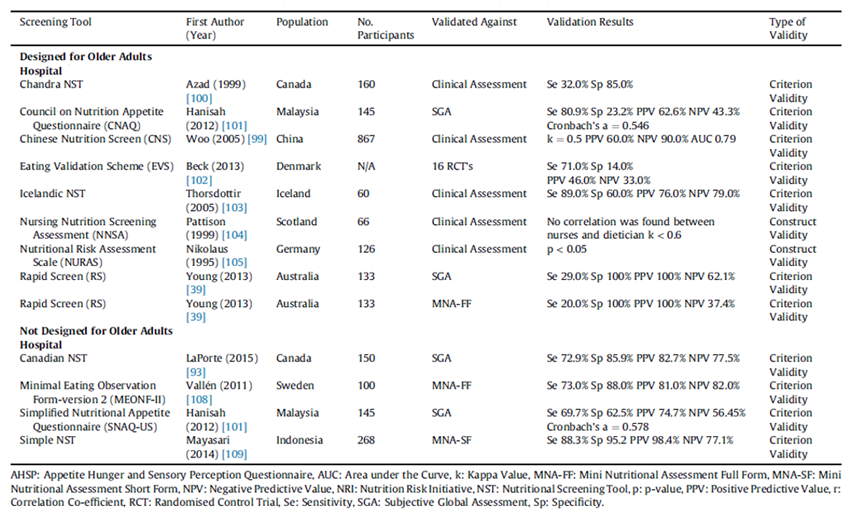
Power (2018) performed a systematic review to report the validity of existing malnutrition tools for older adults. PubMed Central, CINAHL Plus, Science Direct, and SCOPUS were searched from inception until April 2017. Reference lists were also checked for relevant citations. Articles were included when they reported validity of a malnutrition screening tool in community, rehabilitation, residential care, and hospital populations with a mean age of 65y or older. A database was created containing information on all malnutrition screening tool validation studies identified from the literature search. The database was circulated to experts in the field of malnutrition within ‘Malnutrition in the Elderly Knowledge Hub' (MaNuEL) and across the world for review, to ensure no tool had been omitted and that all relevant information on each tool was included in the database. Methodological quality of the study design was assessed by determining whether the study was appropriately designed using a semi-gold reference standard or inappropriately designed. In total, 119 studies were included, of which 56 were conducted in the hospital setting and included in this literature summary. Power (2018) reported that the following tools were mostly used in validation studies of screening tools for malnutrition in older adults in the hospital. Only one study (Baek, 2015) from the review of Power fulfilling the inclusion criteria for this guideline and was therefore included in our literature analysis.
Baek (2015) evaluated the efficacy of the MNA-FF, MNA-SF V1, GNRI, MUST and NRS 2002 in patients aged 65 and above admitted to a geriatric care hospital. A combined index was used as a reference standard, consisting of a synthesis of the results of the MNA(-SF), the GNRI, the MUST, and the NRS 2002. A patient was categorized as malnourished in the combined index classification if the patient was evaluated as malnourished to any degree or at risk of malnutrition according to at least four out of five of the aforementioned tools.
Sobrini (2021) assessed the nutritional status of outpatients aged 70 and above at risk of frailty who were referred for an onco-geriatric consultation. They investigated the validity of the MNA-SF tool compared to GLIM criteria, and examined and criterion validity (sensitivity, specificity, AUC, although without 95% confidence intervals).
Bellanti (2020) performed a validation study in hospitalized patients aged 65 and above within an internal and aging medicine clinic. The MUST, SGA and NRS-2002 were compared to GLIM criteria. Reported outcomes were criterion validity (sensitivity and specificity), and the speed of assessment for the assessment of malnutrition. A total of 152 patients were included, with a mean age of 77.8 ± SD 7.8 years, and 57.2% were male.
Dent (2017) investigated the validity of the MNA-SF tool in geriatric ward patients aged 70 and above, compared to the MNA-FF. They reported criterion validity (sensitivity and specificity) as outcome. A total of 100 patients were included, with a mean age of 85.2 ± SEM 0.6 years, and 25% were male.
Results
1. Validity (critical outcome)
The domain validity refers to the degree to which an outcome measure measures the construct it purports to measure and contains the measurement properties content validity (including face validity), construct validity (including structural validity, hypotheses testing, and cross-cultural validity/measurement invariance) and criterion validity.
1.1 Criterion validity
MNA-SF version 1
Baek (2015) reported a sensitivity of 100%, specificity of 49.4% (95% CI 38.3 to 60.4%), PPV of 60.8% (95% CI 51.3 to 70.3%) and NPV of 100%, using a combined index as reference test. The high sensitivity indicates that MNA-SF1 may be an adequate tool to detect malnutrition, but the low specificity suggests that that the test is prone to false positive results.
Dent (2017) reported a sensitivity of 90.0%, specificity of 78.3%, PPV of 73.5%, NPV of 92.2%, and AUC = 0.93 (p < 0.001). As the MNA was used as reference standard, incorporation bias may be present.
Sobrini (2021) reported a sensitivity of 100%, specificity of 50%, and AUC = 0.75. Confidence intervals were not reported, making it difficult to understand the imprecision related to these results. The high sensitivity indicates that MNA-SF1 may be an adequate tool to detect malnutrition, but the low specificity suggests that that the test is prone to false positive results.
MNA-SF version 2
Dent (2017) reported a sensitivity of 95.0%, specificity of 65.0%, PPV of 64.4%, NPV of 95.1%, and AUC = 0.90 (p < 0.01). This study reported high sensitivity, but specificity of 65.0% suggests that the test is prone to false positive results. As the MNA was used as reference standard, incorporation bias may be present.
MUST
Baek (2015) reported a sensitivity of 80.6% (95% CI 70.8 to 90.5%), specificity of 98.7% (95% CI 96.3 to 100%), PPV of 98.0% (95% CI 94.2 to 100%) and NPV of 86.7% (95% CI 79.6 to 93.7%), using a combined index as reference test. The results suggest that the MUST may be an adequate tool to detect malnutrition in the hospital setting.
Bellanti (2020) reported a sensitivity of 64.3% (95% CI 51.9 to 75.4), specificity of 81.7% (95% CI 71.6-89.3), positive predictive value of 75.0% (95% CI 62.1 to 85.3), negative predictive value of 72.8% (95% CI 62.5 to 81.6), and accuracy of 73.7% (95% CI 66.7 to 80.7), using the GLIM criteria as reference test. This suggests that the test may underestimate malnutrition risk in the hospital setting.
GNRI
Baek (2015) reported a sensitivity of 95.2% (95% CI 89.8 to 100%), specificity of 67.1% (95% CI 56.7 to 77.4%), PPV of 69.4% (95% CI 59.6 to 79.2%) and NPV of 94.6% (95% CI 88.8 to 100%), using a combined index as reference test. The results suggest that the GNRI may be an adequate tool to detect malnutrition in the hospital setting, but the low specificity suggests that that the test is prone to false positive results.
NRS-2002
Baek (2015) reported a sensitivity of 100%, specificity of 78.5% (95% CI 69.4 to 87.5), PPV of 78.5% (95% CI 69.4 to 87.5%) and NPV of 100%, using a combined index as reference test. The results suggest that the NRS-2002 may be an adequate tool to detect malnutrition in the hospital setting, but the low specificity suggests that that the test is prone to false positive results.
Bellanti (2020) reported a sensitivity of 47.1% (95%CI 35.1 to 59.4), specificity of 75.6% (95% CI: 64.9 to 84.4), positive predictive value of 62.3% (95%CI 47.9 to 75.2), negative predictive value of 62.6% (95% CI: 52.3 to 72.1), and accuracy of 62.5% (95%CI 54.8 to 70.2), using the GLIM criteria as reference test. This suggests that the test may underestimate malnutrition risk in the hospital setting.
SGA
Bellanti (2020) reported a sensitivity of 95.7% (95%CI 88.0 to 99.1), specificity of 14.6% (95% CI: 7.8 to 24.1), positive predictive value of 48.9% (95%CI 40.3 to 57.6), negative predictive value of 80.0% (95% CI: 51.9 to 95.7), and accuracy of 52.0% (95%CI 44.1 to 59.9), using the GLIM criteria as reference test. The results suggest that the SGA might overestimate malnutrition in the hospital setting.
2. Reliability (important outcome)
The domain reliability refers to the degree to which the measurement is free from measurement error, and it contains the measurement properties internal consistency, reliability, and measurement error. The outcome reliability was reported in none of the included studies.
Table 1. Criterion validity of different screening instruments reported in included studies
|
Questionnaire |
Individual study |
Setting |
Criterion validity |
||||
|
|
|
|
n |
Prevalence malnutrition |
Reference standard |
Meth qual* |
Result (rating)** |
|
MUST |
Bellanti, 2020 |
Admission at teaching hospital |
152 |
46% |
GLIM |
Very good |
Sensitivity= 64.3% (95%CI 51.9-75.4%) (-) Specificity = 81.7% (95%CI 71.6-89.3%)(+) PPV = 75.0% (95%CI 62.1-85.3%) (-) NPV = 72.8% AUC = 0.80 (+) |
|
Baek, 2015 |
Geriatric care hospital (not specified) |
141 |
46.6% (at risk and malnourished) |
Combined index of 5 tools including MNA-FF |
Doubtful |
Sensitivity = 80.6% (95%CI: 70.8-90.5%) (+) Specificity = 98.7% (95%CI: 96.3-100%) (+) |
|
|
NRS-2002 |
Bellanti, 2020 |
Admission at teaching hospital |
152 |
46% |
GLIM |
Very good |
Sensitivity = 47.1% (95%CI: 35.1-59.4%) (-) Specificity = 75.6% (95%CI: 64.9-84.4%) (+) PPV = 62.3% (95%CI: 47.9-75.2%) (-) NPV = 62.6% (95%CI: AUC = 0.69 (-) |
|
Baek, 2015 |
Geriatric care hospital (not specified) |
141 |
46.6% (at risk and malnourished) |
Combined index of 5 tools including MNA-FF |
Doubtful |
Sensitivity = 100% (+) Specificity = 78.5% (95%CI 69.4-87.5) (+) |
|
|
SGA |
Bellanti, 2020 |
Admission at teaching hospital |
152 |
46% |
GLIM |
Very good |
Sensitivity = 95.7% (95%CI 88.0-99.1%) (+) Specificity = 14.6% (95%CI: 7.8-24.1%) (-) PPV = 48.9% (95%CI: 40.3-57.6%) (-) NPV = 80.0% (95%CI: AUC = 0.77 (+) |
|
MNA-SF version 1 |
Dent, 2017 |
Within 72 h after hospital admission |
100 |
40% |
MNA-FF |
Doubtful |
Sensitivity = 90.0% (+) Specificity = 78.3% (+) PPV = 73.5% (+) NPV = 92.2% (+) AUC = 0.93 (p < 0.001) (+) |
|
Baek, 2015 |
Geriatric care hospital (not specified) |
141 |
46.6% (at risk and malnourished) |
Doubtful |
Sensitivity = 100% (+) Specificity = 49.4% (95%CI 38.3-60.4%) (-) |
||
|
Sobrini (2021) |
Onco-geriatric patients |
40 |
57.5% |
GLIM |
Doubtful |
Sensitivity = 100% AUC = 0.75 |
|
|
MNA-SF version 2 |
Dent, 2017 |
Within 72 h after hospital admission |
100 |
40% |
MNA-FF |
Doubtful |
Sensitivity = 95.0% (+) Specificity = 65.0% (-) PPV = 64.4% (-) NPV = 95.1% (+) AUC = 0.90 (p < 0.01) (+) |
|
GNRI |
Baek, 2015 |
Geriatric care hospital (not specified) |
141 |
46.6% (at risk and malnourished) |
Combined index of 5 tools including MNA-FF |
Doubtful |
Sensitivity = 95.2% (95%CI 89.8 to 100) Specificity = 67.1% (95%CI 56.7 to 77.4) |
*Risk of bias assessment based on COSMIN risk of bias tool: lowest score counts
**Measurement properties of each study could be rated as: sufficient (+), insufficient (–), or indeterminate (?).
Lowest validity in range determines rating.
Level of evidence of the literature
Validity
The level of evidence regarding the criterion validity for the screening instrument MNA-SF version 1 was downgraded by two levels because of study limitations (risk of bias), and imprecision (small study sample and 95% CI’s not reported) to low GRADE.
The level of evidence regarding the criterion validity for the screening instrument MNA-SF version 2 was downgraded by three levels because of study limitations (risk of bias) and imprecision (one small study and 95% CI’s not reported) to very low GRADE.
The level of evidence regarding the criterion validity for the screening instrument MUST was downgraded by two levels because of study limitations (risk of bias) and applicability (bias due to indirectness because the studies were not in frail older people) to low GRADE.
The level of evidence regarding the criterion validity for the screening instrument GNRI was downgraded by two levels because of study limitations (risk of bias) to low GRADE.
The level of evidence regarding the criterion validity for the screening instrument NRS-2002 was downgraded by two levels because of study limitations (risk of bias) and applicability (bias due to indirectness because the studies were not in frail older people) to low GRADE.
The level of evidence regarding the criterion validity for the screening instrument SGA was downgraded by one level because of applicability (bias due to indirectness because the study was not in frail older people) to moderate GRADE.
Reliability
The level of evidence regarding the reliability for the screening instruments was not graded as no studies were included reporting this outcome measure.
A systematic review of the literature was performed to answer the following question:
What is the validity and reliability of instruments for the screening of risk of malnutrition in frail older and geriatric patients in the hospital?
| P: | Frail older (>70 years) and/or geriatric patients in the outpatient clinic, geriatric ward, emergency department, and other hospital wards |
| I: | Screening instruments for the risk of malnutrition: such as Nutritional Risk Screening 2002 (NRS -2022), Malnutrition Universal Screening Tool (MUST), Mini Nutritional Assessment short form (MNA-SF), Short Nutritional Assessment Questionnaire (SNAQ), Malnutrition Screening Tool (MST), Nutrition Risk in Critically ill (NUTRIC) score, Nutritional Risk Index (NRI), Geriatric Nutritional Risk Index (GNRI), Prognostic Nutritional Index (PNI), Prognostic Inflammatory and Nutritional Index (PINI) |
| C: | Global Leadership Initiative on Malnutrition (GLIM) criteria, Mini Nutritional Assessment full form (MNA-FF) |
| O: | Validity, reliability |
| Timing and setting: | Outpatient clinic, geriatric ward, emergency department, and other hospital wards |
Relevant outcome measures
The guideline development group considered validity as critical outcome measures for decision making; and reliability as important outcome measure for decision making.
The measurement properties validity and reliability were defined following the taxonomy of the COnsensus-based Standards for the selection of health Measurement INstruments (COSMIN) (Mokkink, 2010).
The working group defined the discriminate validity of the screening tools as follows:
AUC < 0.7: poor; 0.7 ≤ AUC < 0.8: acceptable; 0.8 ≤ AUC < 0.9: excellent; AUC ≥ 0.9: outstanding. The working group defined the reliability of the screening tools as follows: ICC < 0.5: poor; 0.5 ≤ ICC < 0.75: moderate; 0.75 ≥ ICC < 0.9: good; ICC≥ 0.9: excellent.
Search and select (Methods)
The databases Medline (via OVID) and Embase (via Embase.com) were searched with relevant search terms from 2011 until 16th of January 2024. The detailed search strategy is depicted under the tab Methods. The systematic literature search resulted in 2529 hits. Initially, only the 143 systematic reviews were screened on title and abstract.
Studies were selected based on the following criteria: systematic reviews reporting the diagnostic accuracy, validity, and/or reliability of screening instruments for malnutrition in older adults. Ten studies were initially selected based on title and abstract screening. After reading the full text, nine studies were excluded (see the table with reasons for exclusion under the tab Methods), and one study was included. Due to the large number of hits for the observational studie (N=2386), the active learning tool ASReview (https://www.asreview.nl) was used to screen the observational studies on title and abstract by a guideline methodologist. A total of 22 studies were selected based on this title and abstract screening in ASReview. After reading the full text, 19 studies were excluded (see the table with reasons for exclusion under the tab Methods), and three studies were included.
Results
Four studies were included in the analysis of the literature. Important study characteristics and results are summarized in the evidence tables. The assessment of the risk of bias is summarized in the risk of bias tables.
The COSMIN Risk of Bias tool was used to assess the quality of single studies for each measurement property. Thereby, the worst-score-counts method was used to determine the risk of bias, this means that the lowest rating given in a box determines the final rating, i.e., the quality of the study. The result of each study on a measurement property was rated against the updated criteria for good measurement properties (Table 1). Each result was rated as either sufficient (+), insufficient (–), or indeterminate (?).
Table 1. Criteria for good measurement properties
|
Measurement property |
Rating1 |
Criteria |
|
Structural validity |
+ |
CTT: CFA: CFI or TLI or comparable measure >0.95 OR RMSEA <0.06 OR SRMR <0.082 IRT/Rasch: No violation of unidimensionality3: CFI or TLI or comparable measure >0.95 OR RMSEA <0.06 OR SRMR <0.08 AND no violation of local independence: residual correlations among the items after controlling for the dominant factor < 0.20 OR Q3's < 0.37 AND no violation of monotonicity: adequate looking graphs OR item scalability >0.30 AND adequate model fit: IRT: χ2 >0.01 Rasch: infit and outfit mean squares ≥ 0.5 and ≤ 1.5 OR Z-standardized values > ‐2 and <2 |
|
? |
CTT: Not all information for ‘+’ reported IRT/Rasch: Model fit not reported |
|
|
- |
Criteria for ‘+’ not met |
|
|
Internal consistency |
+ |
At least low evidence4 for sufficient structural validity5 AND Cronbach's alpha(s) ≥ 0.70 for each unidimensional scale or Subscale.6 |
|
? |
Criteria for “At least low evidence for sufficient structural validity” not met |
|
|
- |
At least low evidence4 for sufficient structural validity5 AND Cronbach’s alpha(s) < 0.70 for each unidimensional scale or Subscale.6 |
|
|
Reliability |
+ |
ICC or weighted Kappa ≥ 0.70 |
|
? |
ICC or weighted Kappa not reported |
|
|
- |
ICC or weighted Kappa < 0.70 |
|
|
Measurement error |
+ |
SDC or LoA < MIC |
|
? |
MIC not defined |
|
|
- |
SDC or LoA > MIC |
|
|
Hypotheses testing for construct validity |
+ |
The result is in accordance with the hypothesis7 |
|
? |
No hypothesis defined (by the review team) |
|
|
- |
The result is not in accordance with the hypothesis |
|
|
Cross‐cultural validity\measurement invariance |
+ |
No important differences found between group factors (such as age, gender, language) in multiple group factor analysis OR no important DIF for group factors (McFadden's R2 < 0.02) |
|
? |
No multiple group factor analysis OR DIF analysis performed |
|
|
- |
Important differences between group factors OR DIF was found |
|
|
Criterion validity |
+ |
Correlation with gold standard ≥ 0.70 OR AUC ≥ 0.70 |
|
? |
Not all information for ‘+’ reported |
|
|
- |
Correlation with gold standard < 0.70 OR AUC < 0.70 |
|
|
Responsiveness |
+ |
The result is in accordance with the hypothesis OR AUC ≥ 0.70 |
|
? |
No hypothesis defined (by the review team) |
|
|
- |
The result is not in accordance with the hypothesis OR AUC < 0.70 |
|
|
Test-retest reliability* |
+ |
The p-value <0.5 and Pearson correlation coefficient (Pearson’s r) > 0.7 |
|
- |
The p-value >0.5 or Pearson correlation coefficient (Pearson’s r) < 0.7 |
|
|
AUC: area under the curve, CFA: confirmatory factor analysis, CFI: comparative fit index, CTT: classical test theory, DIF: differential item functioning, ICC: intraclass correlation coefficient, IRT: item response theory, LoA: limits of agreement, MIC: minimal important change, RMSEA: Root Mean Square Error of Approximation, SEM: Standard Error of Measurement, SDC: smallest detectable change, SRMR: Standardized Root Mean Residuals, TLI = Tucker‐Lewis Index |
||
* Criteria retrieved from https://www.scalestatistics.com/test-retest-reliability.html
[1] “+” = sufficient, ” –“ = insufficient, “?” = indeterminate
2 To rate the quality of the summary score, the factor structures should be equal across studies
3 unidimensionality refers to a factor analysis per subscale, while structural validity refers to a factor analysis of a (multidimensional) patient‐reported outcome measure
4 As defined by grading the evidence according to the GRADE approach
5 This evidence may come from different studies
6 The criteria ‘Cronbach alpha < 0.95’ was deleted, as this is relevant in the development phase of a PROM and not when evaluating an existing PROM.
7 The results of all studies should be taken together, and it should then be decided if 75% of the results are in accordance with the hypotheses
The level of evidence of the literature was evaluated as described in the COSMIN user manual for systematic reviews of patient-reported outcome measures (Prinsen, 2018).
The following four factors were taken into account: (1) risk of bias (i.e., the methodological quality of the studies), (2) inconsistency (i.e., unexplained inconsistency of results across studies), (3) imprecision (i.e. total sample size of the available studies), and (4) indirectness (i.e. evidence from different populations than the population of interest in the review). The quality of evidence could be downgraded with one level (e.g., from high to moderate evidence) if there is serious risk of bias, with two levels (e.g., from high to low) if there is very serious risk of bias, or with three levels (i.e., from high to very low) if there is extremely risk of bias. The quality of the evidence could be downgraded with one or two levels for inconsistency, imprecision (-1 if total N=50-100; -2 if total N<50) and indirectness.
- Baek, M. H., & Heo, Y. R. (2015). Evaluation of the efficacy of nutritional screening tools to predict malnutrition in the elderly at a geriatric care hospital. Nutrition research and practice, 9(6), 637–643. https://doi.org/10.4162/nrp.2015.9.6.637.
- Bellanti, F., Lo Buglio, A., Quiete, S., Pellegrino, G., Dobrakowski, M., Kasperczyk, A., Kasperczyk, S., & Vendemiale, G. (2020). Comparison of Three Nutritional Screening Tools with the New Glim Criteria for Malnutrition and Association with Sarcopenia in Hospitalized Older Patients. Journal of clinical medicine, 9(6), 1898. https://doi.org/10.3390/jcm9061898.
- Dent, E., Chapman, I., Piantadosi, C., & Visvanathan, R. (2017). Screening for malnutrition in hospitalised older people: Comparison of the Mini Nutritional Assessment with its short‐form versions. Australasian journal on ageing, 36(2), E8-E13.
- Lim, S. L., Ong, K. C. B., Chan, Y. H., Loke, W. C., Ferguson, M., & Daniels, L. (2012). Malnutrition and its impact on cost of hospitalization, length of stay, readmission and 3-year mortality. Clinical nutrition, 31(3), 345-350.
- Mokkink, L. B., De Vet, H. C., Prinsen, C. A., Patrick, D. L., Alonso, J., Bouter, L. M., & Terwee, C. B. (2018). COSMIN risk of bias checklist for systematic reviews of patient-reported outcome measures. Quality of Life Research, 27, 1171-1179.
- Nuijten, M. (2024). Ondervoeding in de zorg: behandeling loont; Een gezondheidseconomische analyse van ondervoeding. https://www.kenniscentrumondervoeding.nl/wp-content/uploads/2024/06/Ondervoeding-in-de-zorg-behandeling-loont-een-gezondheidseconomische-analyse-dd-19-juni-2024.pdf.
- Power, L., Mullally, D., Gibney, E. R., Clarke, M., Visser, M., Volkert, D., ... & MaNuEL Consortium. (2018). A review of the validity of malnutrition screening tools used in older adults in community and healthcare settings–A MaNuEL study. Clinical nutrition ESPEN, 24, 1-13.
- Rizzoli, R., Reginster, J. Y., Arnal, J. F., Bautmans, I., Beaudart, C., Bischoff-Ferrari, H., ... & Bruyère, O. (2013). Quality of life in sarcopenia and frailty. Calcified tissue international, 93, 101-120.
- Schuetz, P., Sulo, S., Walzer, S., Vollmer, L., Stanga, Z., Gomes, F., ... & Partridge, J. (2020). Economic evaluation of individualized nutritional support in medical inpatients: secondary analysis of the EFFORT trial. Clinical nutrition, 39(11), 3361-3368.
- Sobrini, P., Sánchez-Castellano, C., & Cruz-Jentoft, A. J. (2021). MNA-SF as a screening tool for malnutrition diagnosed with the glim criteria in older persons with cancer. European Geriatric Medicine, 12, 653-656.
- Valmorbida, E., Trevisan, C., Imoscopi, A., Mazzochin, M., Manzato, E., & Sergi, G. (2020). Malnutrition is associated with increased risk of hospital admission and death in the first 18 months of institutionalization. Clinical Nutrition, 39(12), 3687-3694.
|
Study reference |
Study characteristics |
Patient characteristics
|
Index test (test of interest) |
Reference test
|
Follow-up |
Outcome measures and effect size |
Comments |
|
Power, 2018
PS., study characteristics and results are extracted from the SR (unless stated otherwise) |
Review
Literature search up to between October 2016 and April 2017
See figures 1-4 for country.
Source of funding and conflicts of interest: No conflicts of interest. The preparation of this paper was supported by the MAlNUtrition in the ELderly (MaNuEL) knowledge hub. This work was supported by the Joint Programming Initiative ‘A Healthy Diet for a Healthy Life’. The funding agencies supporting this work are the Irish Department of Agriculture, Food and the Marine (DAFM) and the Health Research Board (HRB).
|
Inclusion criteria SR: - Studies reporting validity of a malnutrition screening tool in community, rehabilitation, residential care and hospital populations with a mean age of 65y or greater. - Tools which report screening for risk of malnutrition, protein-energy malnutrition and/or undernutrition. - Tools which were developed in and or/validated in European and non-European populations. - Studies deemed both ‘appropriately designed’ using a semi-gold standard reference and ‘inappropriately designed’ were included in the review to allow for a complete critical appraisal of the literature.
Exclusion criteria SR: - Validation studies of malnutrition screening tools in the hospital setting that focus on an older group with a specific clinical condition (e.g. cancer, coronary heart disease). - Validation studies of nutritional assessment tools.
119 studies included, of which 56 in the hospital setting
Important patient characteristics: For number of patients, see figures 1-4. Other characteristics are not reported in the review. |
See figures 1-4. |
See figures 1-4. |
Not reported in the review. |
See figures 1-4.
|
Study quality Of the 93 studies that assessed criterion validity; 38 used the MNA-FF as the validation reference standard, 16 used clinical assessment by a nutrition-trained professional and 14 used the SGA. Thus, in total, 68 studies validated against a reference considered ‘semi-gold-standard’. Eight studies used another screening tool [e.g. MUST, Nutrition Risk Screening-2002 (NRS- 2002)], eight studies used a combined index of tools, seven studies used various definitions of malnutrition, one study used albumin and one study used results from 16 randomised control trials (RCTs), none of which is considered an appropriate reference standard. Eleven of these studies validated a malnutrition screening tool against a nutritional assessment tool that contained all components of the screening tool (i.e. the MNA-SF validated against MNA-FF); this standard is not considered appropriate as incorporation bias is introduced.
Author’s conclusion After a thorough critical review of the validity of malnutrition screening tools in older adults, it became apparent that due to poor validation study design and results, it is insufficient to make recommendations for malnutrition screening based on current validation evidence alone. Although the validation of malnutrition screening tools in older populations requires further work, it is important to acknowledge the work carried out to date and its positive impact on malnutrition screening, particularly in the older population. |
|
Bellanti, 2020 |
Type of study: observational
Setting and country: Hospital, Italy
Funding and conflicts of interest: no external funding and no conflicts of interest were declared |
Inclusion criteria
Exclusion criteria
N total at baseline N=152
Mean BMI in no malnutrition group = 28.9 kg/m2 ± SD 5.9, mean BMI in malnutrition group = 27.4 kg/m2 ± SD 5.5 |
Index tests:
Malnutrition Universal Screening Tool (MUST)
Overall risk of malnutrition is described as: 0 = low risk, 1 = medium risk, 2 = high risk
Subjective Global Assessment (SGA)
Includes patient history (weight loss, changes in dietary intake, gastrointestinal symptoms and functional capacity), physical examination (muscle, subcutaneous fat, sacral and ankle edema, ascites) and the clinician’s overall judgment of the patient status ((a) well nourished; (b) suspected malnourished or moderately malnourished; (c) severely malnourished)
Nutritional Risk Screening 2002 (NRS-2002)
Consists of a nutritional score and a severity of disease score and an age adjustment for patients aged >70 years (+1). Patients are classified as no risk = 0, low risk = 0-1, medium risk = 3-4, and high risk = ≥ 5.
|
Reference test:
GLIM (source*): Malnutrition was defined as meeting one phenotypic criterion (non-volitional weight loss, low body mass index, reduced muscle mass), and one etiologic criterion (reduced food intake or assimilation, and disease burden/inflammatory condition).
See Figures 11 and 12 for an overview of patient parameters stratified by nutritional status based on GLIM criteria.
|
Not reported in the article |
See Figure 13 |
|
|
Sobrini (2021) |
Type of study:
Cross-sectional
Setting and country: cancer patients referred for onco-geriatric consultation at hospital, Spain
No external source of funding, no conflicts of interest were declared |
Inclusion criteria:
Exclusion criteria:
Not defined
N=40
Prevalence of malnutrition: 57.5%
Mean age ± SD: 84.8 ± 5.5 years
Sex: 60% males, 40% females
Other important characteristics: see Figure |
MNA-SF:
≤ 11 points defined as malnourished or at risk of malnutrition |
GLIM: standard GLIM criteria were used * |
Time between the index test and reference test was not reported in the article.
It was not described if there were patients with incomplete outcome data.
|
AUC = 0.75 |
|
|
Dent (2017) |
Type of study: Observational
Setting and country: within 72 hours of admission to hospital, Australia
Funding and conflicts of interest:
No conflicts of interest were declared |
Inclusion criteria:
Exclusion criteria:
N=100
Prevalence of malnourishment: 40% as assessed by the MNA
Mean age ± SEM: 85.3 ± SD 0.6 years
Sex: 25 % male, 75% female
Other important characteristics: see Figure 16 |
MNA-SF using calf circumference (MNA-SF version 2): cut-off <8 |
MNA: cut-off <17 |
Time between the index test and reference test was not reported.
It was not reported whether there were patients with incomplete outcome data
|
MNA-SF version 1:
MNA-SF version 2:
|
|
Figure 1. Validation of the MNA-Short Form (both version 1 and version 2) in the hospital setting. Figure directly retrieved from the article of Power (2018)
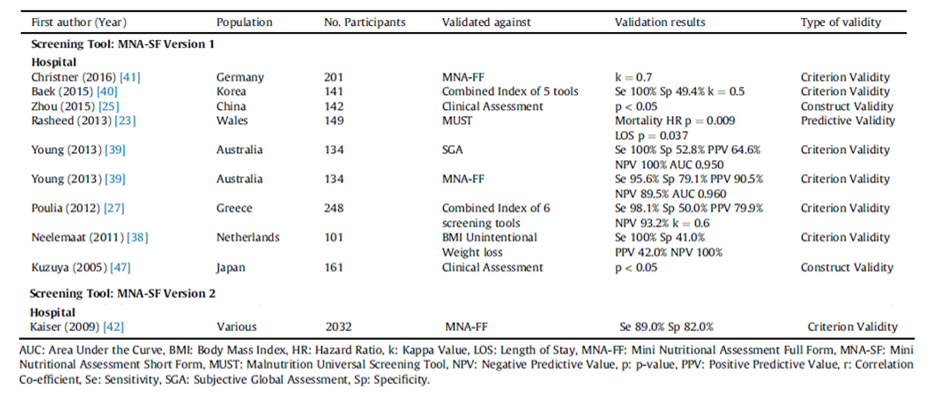
Figure 2. Validation of the malnutrition universal screening tool (MUST) in the hospital setting. Figure directly retrieved from the article of Power (2018)
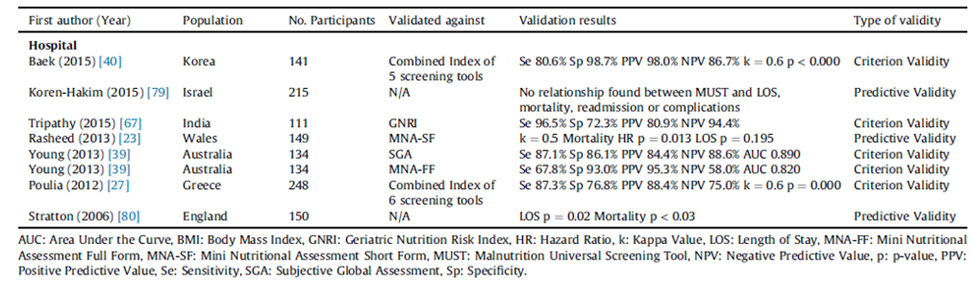
Figure 3. Validation of the malnutrition screening tool (MST) in the hospital setting. Figure directly retrieved from the article of Power (2018)
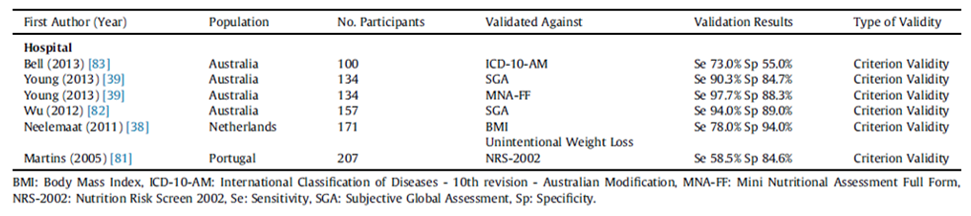
Figure 4. Validation of other malnutrition screening tools in the hospital setting in older populations in less than three studies. Figure directly retrieved from the article of Power (2018)
Risk of bias assessment diagnostic accuracy studies included in Power (2018) and other studies, based on COSMIN Risk of Bias checklis
|
Study reference |
Setting |
For continuous scores: Were correlations, or the area under the receiver operating curve calculated? |
For dichotomous scores: Were sensitivity and specificity determined? |
Were there any other important flaws in the design or statistical methods of the study? |
Overall risk of bias |
|
|
|
Very good – correlations or AUC calculated Inadequate – correlations or AUC NOT calculated NA - Not applicable |
Very good – sensitivity and specificity calculated Inadequate – sensitivity and specificity NOT calculated NA - Not applicable |
Very good – no other important methodological flaws Doubtful – other minor methodological flaws Inadequate – other important methodological flaws |
Based on the lowest judgement |
|
GNRI |
|||||
|
Poulia, 2012 |
Elderly upon emergent admission to the hospital |
NA |
Very good |
Doubtful
Cut-off points reported and an appropriate reference standard. All patients received the same reference standard. However, the article does not report whether the results of the GNRI were interpreted without knowledge of the results of the reference standard. |
Doubtful |
|
Baek, 2015 |
In geriatric care hospital (not further specified) |
NA |
Very good |
Doubtful
Cut-off points reported and an appropriate reference standard was used. All patients received the same reference standard. However, the article does not report whether the results of the GNRI were interpreted without knowledge of the results of the reference standard. |
Doubtful |
|
Abd-El-Gawad, 2014 |
Acute geriatrics medical wards |
Very good |
Very good |
Very good
The article compares the GNRI with clinical outcomes (mortality, PLOS, and infections). |
Very good |
|
MNA-SF V1 |
|||||
|
Baek, 2015 |
In geriatric care hospital (not further specified) |
NA |
Very good |
Doubtful
Cut-off points reported and an appropriate reference standard was used. All patients received the same reference standard. However, the article does not report whether the results of the MNA-SF V1 were interpreted without knowledge of the results of the reference standard. |
Doubtful |
|
Young, 2013 |
Elderly with hospital stay longer than 2 days |
Very good |
NA |
Doubtful
Cut-off points reported and an appropriate reference standard. All patients received the same reference standard. However, the article does not report whether the results of the MNA-SF V1 were interpreted without knowledge of the results of the reference standard. |
Doubtful |
|
Poulia, 2012 |
Elderly upon emergent admission to the hospital |
NA |
Very good |
Doubtful
Cut-off points reported and an appropriate reference standard. All patients received the same reference standard. However, the article does not report whether the results of the MNA-SF V1 were interpreted without knowledge of the results of the reference standard. |
Doubtful |
|
Neelemaat, 2011 |
Elderly inpatients admitted to the hospital |
NA |
Very good |
Inadequate
No appropriate reference standard used (definition by the authors) |
Inadequate |
|
Zhou, 2015 |
Surgery department |
NA |
Very good |
Inadequate
No appropriate reference standard used (serum albumin) |
Inadequate
|
|
Dent, 2017 |
Elderly patients within 72 hours after hospital admission |
NA |
Very good
However, 95%CIs were not reported |
Doubtful
Cut-off points and all patients received the same reference standard. However, no confidence intervals were reported for the validity measures. In addition, there is risk of incorporation bias due to the MNA test being used as the reference standard. |
Doubtful
|
|
Sobrini (2021) |
Onco-geriatric patients |
Very good (however, 95%CI was not provided) |
Very good (however, 95%CIs were not reported) |
Doubtful
Cut-off points reported and an appropriate reference standard. All patients received the same reference standard. However, 95%CIs were not reported. Furthermore, the population consists of cancer patients, limiting generalizability to the general population of frail older people. |
Doubtful |
|
MUST |
|||||
|
Baek, 2015 |
In geriatric care hospital (not further specified) |
NA |
Very good |
Doubtful
Cut-off points reported and an appropriate reference standard was used. All patients received the same reference standard. However, the article does not report whether the results of the MUST were interpreted without knowledge of the results of the reference standard. |
Doubtful |
|
Young, 2013 |
Elderly with hospital stay longer than 2 days |
Very good |
NA |
Doubtful
Cut-off points reported and an appropriate reference standard. All patients received the same reference standard. However, the article does not report whether the results of the MUST were interpreted without knowledge of the results of the reference standard. |
Doubtful |
|
Poulia, 2012 |
Elderly upon emergent admission to the hospital |
NA |
Very good |
Doubtful
Cut-off points reported and an appropriate reference standard. All patients received the same reference standard. However, the article does not report whether the results of the MUST were interpreted without knowledge of the results of the reference standard. |
Doubtful |
|
Bellanti, 2020 |
Elderly at hospital admission |
NA |
Very good |
Very good
Cut-off points reported and an appropriate reference standard. |
Very good |
|
MST |
|||||
|
Bell, 2013 |
Orthogeriatric unit |
NA |
Very good |
Doubtful
Reference standard is not appropriate (ICD-10-AM classification of malnutrition). Cut-off points are reported. The dietitian was blinded to screening results and geriatrician nutritional diagnosis until individual screens and assessments were recorded. The treating orthogeriatrician (including RCP) independently assessed each participant’s nutritional status. |
Doubtful |
|
Young, 2013 |
Elderly with hospital stay longer than 2 days |
Very good |
NA |
Doubtful
Cut-off points reported and an appropriate reference standard. All patients received the same reference standard. However, the article does not report whether the results of the MST were interpreted without knowledge of the results of the reference standard. |
Doubtful |
|
Wu, 2012 |
Patients admitted to hospital medical wards |
NA |
Very good |
Doubtful
An appropriate reference standard was used (SGA), and all patients received the same reference standard. However, cut-off points were not reported, and the article does not report whether the results of the MST were interpreted without knowledge of the results of the reference standard. |
Doubtful |
|
Neelemaat, 2011 |
Elderly inpatients admitted to the hospital |
NA |
Very good |
Inadequate
No appropriate reference standard used (definition by the authors) |
Inadequate |
|
Martins, 2005 |
Hospitalized elderly with a length of stay >24 hours |
NA |
Very good |
Inadequate
Cut-off points for screening instruments not reported. Reference standard is not appropriate (NRS-2002). Additionally, the article does not report whether the results of the MST were interpreted without knowledge of the results of the reference standard. |
Inadequate |
|
NRS-2002 |
|||||
|
Poulia, 2012 |
Elderly upon emergent admission to the hospital |
NA |
Very good |
Doubtful
Cut-off points reported and an appropriate reference standard. All patients received the same reference standard. However, the article does not report whether the results of the NRS-2002 were interpreted without knowledge of the results of the reference standard. |
Doubtful |
|
Baek, 2015 |
In geriatric care hospital (not further specified) |
NA |
Very good |
Doubtful
Cut-off points reported and an appropriate reference standard was used. All patients received the same reference standard. However, the article does not report whether the results of the NRS-2002 were interpreted without knowledge of the results of the reference standard. |
Doubtful |
|
Zhou, 2015 |
Surgery department |
NA |
Very good |
Inadequate
No appropriate reference standard used (serum albumin) |
Inadequate |
|
Young, 2013 |
Elderly with hospital stay longer than 2 days |
Very good |
NA |
Doubtful
Cut-off points reported and an appropriate reference standard. All patients received the same reference standard. However, the article does not report whether the results of the NRS-2002 were interpreted without knowledge of the results of the reference standard. |
Doubtful |
|
Bellanti, 2020 |
Elderly at hospital admission |
NA |
Very good – sensitivity and specificity calculated |
Doubtful
Cut-off points reported and an appropriate reference standard. |
Very good |
|
MNA-SF V2 |
|||||
|
Kaiser, 2009 |
Elderly hospital population (not specified) |
Very good |
NA |
Doubtful
Systematic review, but does not provide clear PICO and search strategy. |
Doubtful |
|
Dent, 2017 |
Elderly patients within 72 hours after hospital admission |
NA |
Very good |
Doubtful
Cut-off points and all patients received the same reference standard. However, no confidence intervals were reported for the validity measures. In addition, there is risk of incorporation bias due to the MNA test being used as the reference standard.
|
Doubtful |
|
SGA |
|||||
|
Bellanti, 2020 |
Elderly at hospital admission |
|
Very good – sensitivity and specificity calculated |
Doubtful
Cut-off points reported and an appropriate reference standard. |
Very good |
Table of excluded studies
|
Author, year |
Title |
Exclusion reason |
|
Cederholm, 2023 |
Validity and feasibility of the global leadership initiative on malnutrition diagnostic concept in older people: A literature review from August 2021 to August 2022 |
Wrong aim: validation of GLIM criteria |
|
Gavran, 2019 |
Malnutrition screening tools for elderly in general practice |
Wrong setting: community or gerontology setting (hospital environment is excluded) |
|
Malazonia, 2019 |
Development and adaptation of dietary assessment tools for elderly in Georgia |
Development study |
|
Racic, 2015 |
Screening of nutritional status among elderly people at family medicine |
Wrong language: article in Croatian |
|
Silva, 2020 |
Nutritional Risk Screening Tools for Older Adults with COVID-19: A Systematic Review |
Wrong P: screening of nutritional risk in elderly with covid-19 specifically |
|
Skipper, 2012 |
Nutrition screening tools: An analysis of the evidence |
Wrong P: not in eldery and not described specifically |
|
Van Bokhorst-de van der Schueren, 2014 |
Nutrition screening tools: Does one size fit all? A systematic review of screening tools for the hospital setting |
More recent review included. Reference checking is performed, and most studies are also included in Power (2018). |
|
Vrdoljak, 2015 |
Malnutrition screening tools for elderly in general practice |
Wrong language: article in Croatian |
|
Zhang (2017) |
Evaluation of blood biomarkers associated with risk of malnutrition in older adults: A systematic review and meta-analysis |
Wrong I: Biomarkers used for diagnosis |
|
Article included in Power (2018) |
|
Exclusion reason |
|
Tripathy 2015 |
Assessing nutrition in the critically ill elderly patient: a comparison of two screening tools |
Wrong P: ICU patients |
|
Bouillanne, 2005 |
Geriatric Nutritional Risk Index: a new Index for evaluating at-risk elderly medical patients |
Wrong O: prediction of morbidity and mortality |
|
Christner (2016) |
Evaluation of the nutritional status of older hospitalised geriatric patients: a comparative analysis of a Mini Nutritional Assessment (MNA) version and the Nutritional Risk Screening (NRS 2002) |
Wrong O: only reports k value |
|
Rasheed (2013) |
Predictive Validity of ‘malnutrition universal screening tool’ (MUST) and short form mini nutritional assessment (MNA-SF) in terms of survival and length of hospital stay |
Wrong O: only reports hazard ratios |
|
Kuzuya (2005) |
Lack of correlation between total lymphocyte count and nutritional status in the elderly |
Wrong O: only reports p value |
|
Koren-Hakim (2016) |
Comparing the adequacy of the MNA-SF, NRS-2002 and MUST nutritional tools in assessing malnutrition in hip fracture operated elderly patients |
Wrong O: prediction of length of stay, mortality, readmission, or complications |
|
Stratton (2006) |
‘Malnutrition Universal Screening Tool’ predicts mortality and length of hospital stay in acutely ill elderly |
Wrong O: prediction of length of stay and mortality |
Beoordelingsdatum en geldigheid
Publicatiedatum : 22-01-2026
Beoordeeld op geldigheid : 22-01-2026
Algemene gegevens
De Vereniging van Specialisten Ouderengeneeskunde (Verenso) heeft een verklaring van geen bezwaar afgegeven.
De ontwikkeling/herziening van deze richtlijnmodule werd ondersteund door het Kennisinstituut van de Federatie Medisch Specialisten (www.demedischspecialist.nl/kennisinstituut) en werd gefinancierd uit de Stichting Kwaliteitsgelden Medisch Specialisten (SKMS). De financier heeft geen enkele invloed gehad op de inhoud van de richtlijnmodule.
Samenstelling werkgroep
Voor het ontwikkelen van de richtlijnmodule is in 2023 een multidisciplinaire werkgroep ingesteld, bestaande uit vertegenwoordigers van alle relevante specialismen (zie hiervoor de Samenstelling van de werkgroep) die betrokken zijn bij de zorg voor ondervoeding en sarcopenie bij ouderen met een kwetsbare gezondheid.
Werkgroep
- Dr. W.M.W.H. (Walther) Sipers, klinisch geriater, werkzaam in het Zuyderland Medisch Centrum te Heerlen- Sittard-Geleen, NVKG
- Dr. ir. E. (Emmelyne) Vasse, diëtist-onderzoeker, werkzaam in Ziekenhuis Gelderse Vallei te Ede en bij het Lectoraat Voeding, Diëtetiek & Leefstijl aan de Hogeschool van Arnhem en Nijmegen, NVD
- Dr. CH. (Christian) Oudshoorn, internist en klinisch geriater, werkzaam in het Erasmus MC te Rotterdam, NVKG
- Drs. A. (Aurélie) Rutten, AIOS klinische geriatrie, werkzaam in het Zuyderland MC te Heerlen-Sittard-Geleen, NVKG
- L. (Lichelle) Wong, MSc, AIOS klinische geriatrie, werkzaam in het Zuyderland MC te Heerlen-Sittard-Geleen, NVKG
- Drs. S. (Simone) Verhaar, klinisch geriater, werkzaam in het Catharina Ziekenhuis te Eindhoven, NVKG
- Dr. A.Y. (Astrid) Hagedoorn-Bijlsma, internist ouderengeneeskunde, werkzaam in het Elisabeth-TweeSteden Ziekenhuis te Tilburg, NIV
- Prof. Dr. J. (Jos) Schols, hoogleraar ouderengeneeskunde, werkzaam bij Maastricht University te Maastricht, Verenso
- V. (Vera) Luijckx, MSc, geriatriefysiotherapeut, werkzaam bij Surplus te West-Brabant, KNGF
- L. (Lotte) Kunst-Haasdijk, projectleider, werkzaam als zzp’er, KNGF
Klankbordgroep
- D.S.V.M. (Dominique) Clément, MSc, MDL-arts, werkzaam in het King’s College Hospital te Londen, NVMDL
- Dr. I.A.M. (Ingrid) Gisbertz, MDL-arts, werkzaam bij Bernhoven te Uden, NVMDL
- Dhr. dr. T.E. (Taco) Otto, chirurg, werkzaam in het Dijklander Ziekenhuis te Hoorn, NVvH
- C. (Charlotte) van der Hulst, MSc, verpleegkundig specialist AGZ, werkzaam bij Brentano te Amstelveen, V&VN
- Dr. R. (Robert) Tepaske, anesthesioloog-intensivist, werkzaam bij het Amsterdam UMC – locatie AMC te Amsterdam, NVIC
Met ondersteuning van
- Dr. J. (Janneke) Hoogervorst-Schilp, senior adviseur, Kennisinstituut van de Federatie Medisch Specialisten
- F. (Florien) Ham, MSc, adviseur, Kennisinstituut van de Federatie Medisch Specialisten
- A. (Alies) Oost, medisch informatiespecialist, Kennisinstituut van de Federatie Medisch Specialisten
Belangenverklaringen
Een overzicht van de belangen van werkgroepleden en het oordeel over het omgaan met eventuele belangen vindt u in onderstaande tabel. De ondertekende belangenverklaringen zijn op te vragen bij het secretariaat van het Kennisinstituut van de Federatie Medisch Specialisten.
|
Naam |
Hoofdfunctie |
Nevenwerkzaamheden |
Persoonlijke Financiële Belangen |
Persoonlijke Relaties |
Extern gefinancierd onderzoek |
Intell. belangen en reputatie |
Overige |
Datum |
Restrictie |
||||
|
Werkgroep |
|||||||||||||
|
Hagedoorn-Bijlsma |
Internist ouderengeneeskunde bij vakgroep geriatrie in ETZ |
Vicevoorzitter wetenschapscommissie van NIV en NVKG |
Geen |
Geen |
Geen |
Geen |
Geen |
22-08-2023 |
Geen |
||||
|
Kunst-Haasdijk |
Beleidsadviseur / projectleider, KNGF/NVFG Project beroepsprofielen, betaald als ZZP |
Als ondernemer coach ik mensen naar een meer plantaardige leefstijl en geven we workshop aan teams in bedrijven op het gebied van een gezonde leefstijl. |
Geen |
Geen |
Geen |
Geen |
Geen |
21-08-2023 |
Geen |
||||
|
Luijckx |
Werkgever: Surplus, betaalde functie. Geriatriefysiotherapeut: Verlenen van fysiotherapeutische zorg (onderzoek, behandeling, advisering) aan ouderen met een kwetsbare gezondheid. Betaalde functie. Lid professionele adviesraad (PAR) bij Surplus: Via de PAR aandacht voor zeggenschap binnen Surplus creëren en raad van bestuur adviseren over vakinhoudelijk beleid. |
Geen |
Geen |
Geen |
Geen |
Geen |
Geen |
20-12-2023 |
Geen |
||||
|
Oudshoorn |
Internist en kinisch geriater Erasmus MC |
Geen |
Geen |
Geen |
Geen |
Geen |
Geen |
15-08-2023 |
Geen |
||||
|
Rutten |
AIOS geriatrie Zuyderland MC |
Geen |
Geen |
Geen |
Geen |
Geen |
Geen |
14-11-2023 |
Geen |
||||
|
Schols |
Hoogleraar ouderengeneeskunde Universiteit Maastricht |
*Lid van Gezondheidsraad *Lid van Adviescommissie pakket van Zorginstituut die adviezen geeft over de toelating van dure geneesmiddelen en andere behandelingen tot het vergoedingenpakket in de ZVW en over het pakket van de Wlz --> uitgevraagd in de vergadering, dit betreft geen geneesmiddelen, voedingdinterventies of andere interventies die in de richtlijn voor zullen komen. *Lid van RvT Vitala+ een zorgorganisatie voor geriatrische revalidatiezorg in Maastricht. Voor deze 3 nevenfuncties geldt deelname aan vergaderingen met vacatiegeldvergoeding incl. reiskosten. |
Geen |
Geen |
Betrokken geweest bij extern gefinancierd promotietraject op onderwerp: Samenhang tussen mondzorg, ondervoeding en dysfagie. Project voltooid met promotie in oktober 2022. Daarmee was project afgerond. Financier was Nutricia en financiering geschiedde op basis van officiële overeenkomst met Universiteit Maastricht. Ik was promotor van de promovendus maar geen projectleider. |
Ik heb uiteraard de reputatie van mijn universiteit hoog te houden. Verder geen specifieke zaken |
Geen |
21-09-2023 |
Geen |
||||
|
Sipers (voorzitter) |
Klinisch geriater en opleider Zuyderland Medisch Centrum, full time werkzaam |
SCEN arts, 6x/ jaar 5 dagen dienst volgens rooster. Consulten buiten werktijden om en vergoeding per daadwerkelijk uitgevoerd consult conform tarieven KNMG |
Geen |
Geen |
Geen |
Ik ben door de NVKG gevraagd om deze taak op me te nemen. Dit heeft ermee te maken daar ik reeds enige expertise heb op dit gebied en het een belangrijk thema vind in de dagelijkse zorg voor kwetsbare oudere patiënten. Mijn drijfveer is om zodoende een bijdrage te leveren aan een kwaliteit betere zorg. |
Geen |
28-07-2022 |
Geen |
||||
|
Vasse |
Post-doc onderzoeker/projectleider - Hogeschool van Arnhem en Nijmegen, Lectoraat Voeding, Dietetiek & Leefstijl / Kenniscentrum Ondervoeding (16 uur/week, tot oktober 2024) Projectleider - Alliantie Voeding in de Zorg (8 uur/week) Dietist - Ziekenhuis Gelderse Vallei in Ede (oproepbasis) |
Geen |
Geen |
Geen |
Geen |
Geen |
Geen |
20-07-2023 |
Geen |
||||
|
Verhaar |
Klinisch geriater, Catharina ziekenhuis Eindhoven |
Geen |
Geen |
Geen |
Geen |
Geen |
Geen |
03-08-2023 |
Geen |
||||
|
Wong |
AIOS Zuyderland MC |
Geen |
Geen |
Geen |
Geen |
Geen |
Geen |
17-10-2023 |
Geen |
||||
|
Klankbordgroep |
|||||||||
|
Clément |
Maag-, darm- en leverarts (Consultant Gastroenterologist) King's College Hospital Londen |
Geen |
Geen |
Geen |
Geen |
Geen |
Geen |
15-10-2023 |
Geen |
|
Gisbertz |
MDL arts Bernhoven |
Voorzitter Nederlands voedingsteam overleg Lid commissie Voeding NVMDL |
Geen |
Geen |
Geen |
Geen |
Geen |
23-10-2023 |
Geen |
|
Hulst, van der |
Verpleegkundig specialist AGZ Stichting Brentano Amstelveen. Regiebehandelaar psychogeriatrisch verpleeghuis. |
Geen |
Geen |
Geen |
Geen |
Geen |
Geen |
12-12-2023 |
Geen |
|
Otto |
Chirurg, Dijklander ziekenhuis, Hoorn |
Geen |
Geen |
Geen |
Geen |
Geen |
Geen |
16-12-2023 |
Geen |
|
Tepaske |
Anesthesioloog-Intensivist, Intensive Care volwassenen AUMC. plv. hoofd/ WPM, plv. Opleider fellows IC (tot 1 feb 2024), Stagebegeleider AIOS. Interne, anesthesiologie, heelkunde. Begeleider Nurse practitioners profielen circulation & ventilation. Voorzitter materialen commissie Intensive Care volwassenen Investeringen en Europese aanbestedingen Verder lid van de IC- werkgroepen vv- en va-ECMO, decubitus, klinisch chemisch, peersupport, monitoring & ICT, apotheek & AMC-brede |
Allen onbezoldigd: Lid concillium IC (GIC, tot 1 feb 2024), Lid van de sectie IC van de NVA Lid NVIC Bezoldigd: Docent ICverpleegkundigen, Amstel Academie, opleidingsinstituut AmsterdamUMC, loc VUmc
|
Geen |
Geen |
Geen |
Geen |
Eenmalig vergoeding voor deelname aan masterclass 'meten van metabolisme' van Hamilton, Zwitserland |
01-12-2023 |
Geen |
Inbreng patiëntenperspectief
Er werd aandacht besteed aan het patiëntenperspectief door de Patientenfederatie Nederland en de KBO-PCOB uit te nodigen voor de schriftelijke knelpunteninventarisatie, maar beide hebben geen input gegeven. Daarnaast is de KBO-PCOB uitgenodigd voor de werkgroep, maar heeft afgezien van deelname. De conceptrichtlijn is tevens voor commentaar voorgelegd aan de Patientenfederatie Nederland en de KBO-PCOB en de eventueel aangeleverde commentaren zijn bekeken en verwerkt.
Kwalitatieve raming van mogelijke financiële gevolgen in het kader van de Wkkgz
Bij de richtlijnmodule is conform de Wet kwaliteit, klachten en geschillen zorg (Wkkgz) een kwalitatieve raming uitgevoerd om te beoordelen of de aanbevelingen mogelijk leiden tot substantiële financiële gevolgen. Bij het uitvoeren van deze beoordeling is de richtlijnmodule op verschillende domeinen getoetst (zie het stroomschema op de Richtlijnendatabase).
|
Module |
Uitkomst raming |
Toelichting |
|
Screening ondervoeding |
Geen financiële gevolgen |
Hoewel uit de toetsing volgt dat de aanbeveling(en) breed toepasbaar zijn (>40.000 patiënten), volgt uit de toetsing dat het overgrote deel (±90%) van de zorgaanbieders en zorgverleners al aan de norm voldoet. Er worden daarom geen financiële gevolgen verwacht. |
Werkwijze
Voor meer details over de gebruikte richtlijnmethodologie verwijzen wij u naar de Richtlijnendatabase. Relevante informatie over de ontwikkeling/herziening van deze richtlijnmodules is hieronder weergegeven.
Zoekverantwoording
Zoekstrategie
Embase.com
|
No. |
Query |
Results |
|
#1 |
'aged'/exp/mj OR 'geriatrics'/exp OR 'geriatric assessment'/exp OR 'geriatric patient'/exp OR 'elderly care'/exp OR 'frailty'/exp OR 'physical frailty'/exp OR 'geriatric nutritional risk index'/exp OR 'senile dementia'/exp OR 'aged hospital patient'/exp OR 'frail elderly'/exp OR 'institutionalized elderly'/exp OR 'very elderly'/exp OR elder*:ti,ab,kw OR eldest:ti,ab,kw OR frail*:ti,ab,kw OR geriatri*:ti,ab,kw OR ((oldest NEXT/1 old*):ti,ab,kw) OR ((very NEXT/1 old*):ti,ab,kw) OR senior*:ti,ab,kw OR senium:ti,ab,kw OR septuagenarian*:ti,ab,kw OR octagenarian*:ti,ab,kw OR octogenarian*:ti,ab,kw OR nonagenarian*:ti,ab,kw OR centarian*:ti,ab,kw OR centenarian*:ti,ab,kw OR supercentenarian*:ti,ab,kw OR ((older NEXT/1 (man OR men OR male* OR woman OR women OR female*)):ti,ab,kw) OR (((old OR older) NEXT/1 (age* OR subject* OR patient* OR pts OR adult* OR population* OR person* OR people OR citizen*)):ti,ab,kw) OR ((senil* NEAR/3 (dement* OR confus* OR alzheimer*)):ti,ab,kw) |
1339598 |
|
#2 |
'malnutrition assessment'/exp OR 'nutritional assessment'/exp OR 'short nutritional assessment questionnaire'/exp OR 'nutric score'/exp OR 'nutric scor*':ti,ab,kw OR 'nutritional risk*':ti,ab,kw OR 'nutrition risk*':ti,ab,kw OR (((nutrition* OR 'health* eating' OR dietary OR malnutrition* OR undernutrition* OR malnourish* OR undernourish* OR underfeed*) NEAR/4 (screen* OR assess* OR determin* OR evaluat* OR index* OR tool* OR test* OR scale* OR questionnaire*)):ti,ab,kw) OR ((nrs NEAR/2 tool):ti,ab,kw) OR 'nrs 2002':ti,ab,kw OR mna:ti,ab,kw OR mnasf:ti,ab,kw OR snaq*:ti,ab,kw OR nri:ti,ab,kw OR gnri:ti,ab,kw OR hei:ti,ab,kw OR pni:ti,ab,kw OR (('malnutrition'/exp OR 'geriatric nutrition'/exp OR 'nutritional health'/exp OR 'nutritional status'/exp) AND ('risk assessment'/exp OR 'screening'/de OR 'screening test'/exp OR 'mass screening'/de OR 'questionnaire'/exp OR 'checklist'/exp OR 'scoring system'/exp OR 'rating scale'/exp)) |
161700 |
|
#3 |
'sensitivity and specificity'/de OR sensitivity:ab,ti OR specificity:ab,ti OR 'roc curve':ab,ti OR 'receiver operator':ab,ti OR 'receiver operators':ab,ti OR likelihood:ab,ti OR 'diagnostic error'/exp OR 'diagnostic accuracy'/exp OR 'diagnostic test accuracy study'/exp OR 'inter observer':ab,ti OR 'intra observer':ab,ti OR interobserver:ab,ti OR intraobserver:ab,ti OR validity:ab,ti OR kappa:ab,ti OR reliability:ab,ti OR reproducibility:ab,ti OR ((test NEAR/2 're-test'):ab,ti) OR ((test NEAR/2 'retest'):ab,ti) OR 'reproducibility'/exp OR accuracy:ab,ti OR 'differential diagnosis'/exp OR 'validation study'/de OR 'measurement precision'/exp OR 'diagnostic value'/exp OR 'reliability'/exp OR 'predictive value'/exp OR ppv:ti,ab,kw OR npv:ti,ab,kw OR (((false OR true) NEAR/3 (negative OR positive)):ti,ab) |
4241378 |
|
#4 |
#1 AND #2 AND #3 AND [2011-2024]/py NOT ('conference abstract'/it OR 'editorial'/it OR 'letter'/it OR 'note'/it) NOT (('animal'/exp OR 'animal experiment'/exp OR 'animal model'/exp OR 'nonhuman'/exp) NOT 'human'/exp) |
1911 |
|
#5 |
'meta analysis'/exp OR 'meta analysis (topic)'/exp OR metaanaly*:ti,ab OR 'meta analy*':ti,ab OR metanaly*:ti,ab OR 'systematic review'/de OR 'cochrane database of systematic reviews'/jt OR prisma:ti,ab OR prospero:ti,ab OR (((systemati* OR scoping OR umbrella OR 'structured literature') NEAR/3 (review* OR overview*)):ti,ab) OR ((systemic* NEAR/1 review*):ti,ab) OR (((systemati* OR literature OR database* OR 'data base*') NEAR/10 search*):ti,ab) OR (((structured OR comprehensive* OR systemic*) NEAR/3 search*):ti,ab) OR (((literature NEAR/3 review*):ti,ab) AND (search*:ti,ab OR database*:ti,ab OR 'data base*':ti,ab)) OR (('data extraction':ti,ab OR 'data source*':ti,ab) AND 'study selection':ti,ab) OR ('search strategy':ti,ab AND 'selection criteria':ti,ab) OR ('data source*':ti,ab AND 'data synthesis':ti,ab) OR medline:ab OR pubmed:ab OR embase:ab OR cochrane:ab OR (((critical OR rapid) NEAR/2 (review* OR overview* OR synthes*)):ti) OR ((((critical* OR rapid*) NEAR/3 (review* OR overview* OR synthes*)):ab) AND (search*:ab OR database*:ab OR 'data base*':ab)) OR metasynthes*:ti,ab OR 'meta synthes*':ti,ab |
994512 |
|
#6 |
'major clinical study'/de OR 'clinical study'/de OR 'case control study'/de OR 'family study'/de OR 'longitudinal study'/de OR 'retrospective study'/de OR 'prospective study'/de OR 'comparative study'/de OR 'cohort analysis'/de OR ((cohort NEAR/1 (study OR studies)):ab,ti) OR (('case control' NEAR/1 (study OR studies)):ab,ti) OR (('follow up' NEAR/1 (study OR studies)):ab,ti) OR (observational NEAR/1 (study OR studies)) OR ((epidemiologic NEAR/1 (study OR studies)):ab,ti) OR (('cross sectional' NEAR/1 (study OR studies)):ab,ti) |
8030027 |
|
#7 |
'case control study'/de OR 'comparative study'/exp OR 'control group'/de OR 'controlled study'/de OR 'controlled clinical trial'/de OR 'crossover procedure'/de OR 'double blind procedure'/de OR 'phase 2 clinical trial'/de OR 'phase 3 clinical trial'/de OR 'phase 4 clinical trial'/de OR 'pretest posttest design'/de OR 'pretest posttest control group design'/de OR 'quasi experimental study'/de OR 'single blind procedure'/de OR 'triple blind procedure'/de OR (((control OR controlled) NEAR/6 trial):ti,ab,kw) OR (((control OR controlled) NEAR/6 (study OR studies)):ti,ab,kw) OR (((control OR controlled) NEAR/1 active):ti,ab,kw) OR 'open label*':ti,ab,kw OR (((double OR two OR three OR multi OR trial) NEAR/1 (arm OR arms)):ti,ab,kw) OR ((allocat* NEAR/10 (arm OR arms)):ti,ab,kw) OR placebo*:ti,ab,kw OR 'sham-control*':ti,ab,kw OR (((single OR double OR triple OR assessor) NEAR/1 (blind* OR masked)):ti,ab,kw) OR nonrandom*:ti,ab,kw OR 'non-random*':ti,ab,kw OR 'quasi-experiment*':ti,ab,kw OR crossover:ti,ab,kw OR 'cross over':ti,ab,kw OR 'parallel group*':ti,ab,kw OR 'factorial trial':ti,ab,kw OR ((phase NEAR/5 (study OR trial)):ti,ab,kw) OR ((case* NEAR/6 (matched OR control*)):ti,ab,kw) OR ((match* NEAR/6 (pair OR pairs OR cohort* OR control* OR group* OR healthy OR age OR sex OR gender OR patient* OR subject* OR participant*)):ti,ab,kw) OR ((propensity NEAR/6 (scor* OR match*)):ti,ab,kw) OR versus:ti OR vs:ti OR compar*:ti OR ((compar* NEAR/1 study):ti,ab,kw) OR (('major clinical study'/de OR 'clinical study'/de OR 'cohort analysis'/de OR 'observational study'/de OR 'cross-sectional study'/de OR 'multicenter study'/de OR 'correlational study'/de OR 'follow up'/de OR cohort*:ti,ab,kw OR 'follow up':ti,ab,kw OR followup:ti,ab,kw OR longitudinal*:ti,ab,kw OR prospective*:ti,ab,kw OR retrospective*:ti,ab,kw OR observational*:ti,ab,kw OR 'cross sectional*':ti,ab,kw OR cross?ectional*:ti,ab,kw OR multicent*:ti,ab,kw OR 'multi-cent*':ti,ab,kw OR consecutive*:ti,ab,kw) AND (group:ti,ab,kw OR groups:ti,ab,kw OR subgroup*:ti,ab,kw OR versus:ti,ab,kw OR vs:ti,ab,kw OR compar*:ti,ab,kw OR 'odds ratio*':ab OR 'relative odds':ab OR 'risk ratio*':ab OR 'relative risk*':ab OR 'rate ratio':ab OR aor:ab OR arr:ab OR rrr:ab OR ((('or' OR 'rr') NEAR/6 ci):ab))) |
14749967 |
|
#8 |
#4 AND #5 |
104 |
|
#9 |
#4 AND (#6 OR #7) NOT #8 |
1590 |
|
#10 |
#8 OR #9 |
1694 |
Ovid/Medline
|
# |
Searches |
Results |
|
1 |
exp *Aged/ or exp Geriatrics/ or exp "Homes for the Aged"/ or exp "Health Services for the Aged"/ or exp Geriatric Psychiatry/ or exp Geriatric Nursing/ or exp "Aged, 80 and over"/ or exp Frail Elderly/ or elder*.ti,ab,kf. or eldest.ti,ab,kf. or frail*.ti,ab,kf. or geriatri*.ti,ab,kf. or 'oldest old*'.ti,ab,kf. or 'very old*'.ti,ab,kf. or senior*.ti,ab,kf. or senium.ti,ab,kf. or septuagenarian*.ti,ab,kf. or octagenarian*.ti,ab,kf. or octogenarian*.ti,ab,kf. or nonagenarian*.ti,ab,kf. or centarian*.ti,ab,kf. or centenarian*.ti,ab,kf. or supercentenarian*.ti,ab,kf. or (older adj (man or men or male* or woman or women or female*)).ti,ab,kf. or ((old or older) adj (age* or subject* or patient* or pts or adult* or population* or person* or people or citizen*)).ti,ab,kf. or (senil* adj3 (dement* or confus* or alzheimer*)).ti,ab,kf. |
1622447 |
|
2 |
exp Nutrition Assessment/ or exp Nutrition Surveys/ or 'nutric scor*'.ti,ab,kf. or 'nutritional risk*'.ti,ab,kf. or 'nutrition risk*'.ti,ab,kf. or ((nutrition* or 'health* eating' or dietary or malnutrition* or undernutrition* or malnourish* or undernourish* or underfeed*) adj4 (screen* or assess* or determin* or evaluat* or index* or tool* or test* or scale* or questionnaire*)).ti,ab,kf. or (nrs adj2 tool).ti,ab,kf. or ('nrs 2002' or mna or mnasf or snaq* or nri or gnri or hei or pni).ti,ab,kf. or ((exp Malnutrition/ or exp Nutritional Status/) and (Risk Assessment/ or "Surveys and Questionnaires"/)) |
126401 |
|
3 |
exp "Sensitivity and Specificity"/ or (sensitivity or specificity).ti,ab. or (ROC-curve or receiver-operator*).ti,ab. or (likelihood or LR*).ti,ab. or exp Diagnostic Errors/ or (inter-observer or intra-observer or interobserver or intraobserver or validity or kappa or reliability).ti,ab. or reproducibility.ti,ab. or (test adj2 (re-test or retest)).ti,ab. or "Reproducibility of Results"/ or accuracy.ti,ab. or Diagnosis, Differential/ or Validation Study/ or ((false or true) adj3 (negative or positive)).ti,ab. |
3436676 |
|
4 |
(1 and 2 and 3) not (comment/ or editorial/ or letter/) not ((exp animals/ or exp models, animal/) not humans/) |
2936 |
|
5 |
limit 4 to yr="2011 -Current" |
2154 |
|
6 |
meta-analysis/ or meta-analysis as topic/ or (metaanaly* or meta-analy* or metanaly*).ti,ab,kf. or systematic review/ or cochrane.jw. or (prisma or prospero).ti,ab,kf. or ((systemati* or scoping or umbrella or "structured literature") adj3 (review* or overview*)).ti,ab,kf. or (systemic* adj1 review*).ti,ab,kf. or ((systemati* or literature or database* or data-base*) adj10 search*).ti,ab,kf. or ((structured or comprehensive* or systemic*) adj3 search*).ti,ab,kf. or ((literature adj3 review*) and (search* or database* or data-base*)).ti,ab,kf. or (("data extraction" or "data source*") and "study selection").ti,ab,kf. or ("search strategy" and "selection criteria").ti,ab,kf. or ("data source*" and "data synthesis").ti,ab,kf. or (medline or pubmed or embase or cochrane).ab. or ((critical or rapid) adj2 (review* or overview* or synthes*)).ti. or (((critical* or rapid*) adj3 (review* or overview* or synthes*)) and (search* or database* or data-base*)).ab. or (metasynthes* or meta-synthes*).ti,ab,kf. |
719087 |
|
7 |
Epidemiologic studies/ or case control studies/ or exp cohort studies/ or Controlled Before-After Studies/ or Case control.tw. or cohort.tw. or Cohort analy$.tw. or (Follow up adj (study or studies)).tw. or (observational adj (study or studies)).tw. or Longitudinal.tw. or Retrospective*.tw. or prospective*.tw. or consecutive*.tw. or Cross sectional.tw. or Cross-sectional studies/ or historically controlled study/ or interrupted time series analysis/ [Onder exp cohort studies vallen ook longitudinale, prospectieve en retrospectieve studies] |
4625727 |
|
8 |
Case-control Studies/ or clinical trial, phase ii/ or clinical trial, phase iii/ or clinical trial, phase iv/ or comparative study/ or control groups/ or controlled before-after studies/ or controlled clinical trial/ or double-blind method/ or historically controlled study/ or matched-pair analysis/ or single-blind method/ or (((control or controlled) adj6 (study or studies or trial)) or (compar* adj (study or studies)) or ((control or controlled) adj1 active) or "open label*" or ((double or two or three or multi or trial) adj (arm or arms)) or (allocat* adj10 (arm or arms)) or placebo* or "sham-control*" or ((single or double or triple or assessor) adj1 (blind* or masked)) or nonrandom* or "non-random*" or "quasi-experiment*" or "parallel group*" or "factorial trial" or "pretest posttest" or (phase adj5 (study or trial)) or (case* adj6 (matched or control*)) or (match* adj6 (pair or pairs or cohort* or control* or group* or healthy or age or sex or gender or patient* or subject* or participant*)) or (propensity adj6 (scor* or match*))).ti,ab,kf. or (confounding adj6 adjust*).ti,ab. or (versus or vs or compar*).ti. or ((exp cohort studies/ or epidemiologic studies/ or multicenter study/ or observational study/ or seroepidemiologic studies/ or (cohort* or 'follow up' or followup or longitudinal* or prospective* or retrospective* or observational* or multicent* or 'multi-cent*' or consecutive*).ti,ab,kf.) and ((group or groups or subgroup* or versus or vs or compar*).ti,ab,kf. or ('odds ratio*' or 'relative odds' or 'risk ratio*' or 'relative risk*' or aor or arr or rrr).ab. or (("OR" or "RR") adj6 CI).ab.)) |
5597437 |
|
9 |
5 and 6 |
92 |
|
10 |
(5 and (7 or 8)) not 9 |
1593 |
|
11 |
9 or 10 |
1685 |