
Intensiteit van oefentherapie na herseninfarct/-bloeding
Uitgangsvraag
Wat is de minimale dagelijkse intensiteit van oefentherapie voor patiënten met een herseninfarct of hersenbloeding tijdens opname in een stroke unit in een ziekenhuis, revalidatiecentrum, verpleeghuis met revalidatiefaciliteiten of bij ontslag naar huis?
Om de minimale hoeveelheid oefentherapie te kunnen inschatten dat nodig is voor een betere ADL zelfstandigheid is de uitgangsvraag opgesplitst in twee deelvragen:
- Wat is de minimale (extra) hoeveelheid oefentherapie die nodig is om de arm-handvaardigheid te verbeteren?
- Wat is de minimale (extra) hoeveelheid oefentherapie die nodig is om loopvaardigheid (inclusief stabalans en basisvaardigheden in het ADL) te verbeteren?
Aanbeveling
Geef bij patiënten met een beperking (Barthel Index ≤ 19) na een herseninfarct of hersenbloeding tijdens opname in een stroke unit in een ziekenhuis, revalidatiecentrum of verpleeghuis met revalidatiefaciliteiten, intensieve functionele oefentherapie voor het verkrijgen van een betere ADL-zelfstandigheid, loop- of armhandvaardigheid.
De exacte benodigde hoeveelheid is onduidelijk, maar ligt minimaal rond de 20 uur. Bij voorkeur dient deze functionele, taak-specifieke oefentherapie in de subacute fase te starten en in een tijdsbestek van 3–5 keer per week, gedurende 4–6 weken gegeven te worden.
Overwegingen
Balans tussen gewenste en ongewenste effecten
Het antwoord op de vraag wat de minimale dagelijkse intensiteit van oefentherapie moet zijn voor patiënten met een herseninfarct of hersenbloeding en een beperking (Barthel Index ≤ 19) tijdens opname in een ziekenhuis stroke unit, revalidatiecentrum, verpleeghuis met revalidatiefaciliteiten of extramuraal in de thuissituatie, is nog onduidelijk. Vooralsnog konden de beschikbare studies geen klinisch relevante effecten aantonen van meer uren oefentherapie op ADL, loopvermogen en arm-handvaardigheid onder de voorwaarde dat experimentele en controle groepen dezelfde type oefentherapie kregen. Deze onduidelijkheid hangt samen met gebrek aan dose-response trials met een verhoogd risico op bias en imprecisie in de beschikbare studies. Op basis van systematisch literatuur onderzoek van 18 trials werden bij kleine behandelcontrasten van 20 uur of minder (verspreid over een periode van 4-6 weken) geen klinisch relevante effecten, maar ook geen schadelijke effecten van extra oefentherapie gevonden. Dit laatste gegeven staat los van de bevindingen van de AVERT-studie waarbij patiënten <24 tot 48 uur werden gemobiliseerd. Gezien deze studie meer gaat over de schadelijke effecten van langdurige verticalisatie bij patiënten met een ernstige neurologische stoornissen (NIHSS > 16) willen wij verwijzen naar de module ‘Vroeg mobiliseren na herseninfarct/-bloeding’ in de richtlijn ‘Herseninfarct en hersenbloeding’. De ESO geeft aan dat een doseringsverschil van 20 uur of meer verspreid over een periode van 4-6 weken nodig is om tot klinisch relevante effecten te komen (Alt-Murphy, 2025) voor wat betreft herstel van loopvaardigheid, ADL en mogelijk ook handvaardigheid. Alle onderzoeken tonen aan dat oefentherapie bij voorkeur taak-specifiek wordt aangeboden, waarbij vaardigheden die relevant zijn voor het dagelijks functioneren direct worden geoefend. Deze bevindingen lijken onafhankelijk van de discipline (ergo-, fysio- of oefentherapeut) die de therapie aanbiedt, mits voldoende geschoold (Otterman, 2019), en ongeacht leeftijd, geslacht, comorbiditeit en eventuele cognitieve beperkingen zoals neglect en dysfasie van de patiënt.
Arm-handvaardigheid:
Kleinere behandelcontrasten van enkele uren oefentherapie geven in trials kleine effect-sizes met een mean difference (MD) variërend van 0.26 tot 0.45. (Veerbeek, 2014; Lohse, 2014) terwijl studies met een hogere dosering en sterker behandelcontrast van meer dan 20 uur als ondergrens, een verwachte effect sizes geven van 0.5 of meer (Lohse, 2015; Lang, 2015). Dit wordt verder bevestigd door alleen te kijken naar trials die minimaal 20 uur hebben gegeven (Clarke, 2021). Door gebrek aan trials is echter het beschikbare bewijs beperkt, terwijl de studies zelf methodologische heterogeniteit vertonen. Hierdoor werd de bewijskracht als zeer laag beoordeeld. Op basis van deze zwakke evidentie concludeerde de ESO-werkgroep dat er minimaal 20 uur of meer nodig is voor een klinisch relevant effect wat betreft arm-handtraining. Geadviseerd wordt om deze 20 uur, 3 tot 5 keer per week over 4 tot 6 weken aan te bieden. Op basis van de Critical Period after Stroke Study (CPASS) wordt geadviseerd om al in de vroege subacute fase (< 3 maanden) hiermee te starten (Dromerick, 2021; Bernhardt, 2017) Echter de kwaliteit van deze evidentie is zeer laag en gebaseerd op slechts een ‘proof-of-concept’ studie van 72 patiënten.
Loopvaardigheid:
Voor looprevalidatie identificeerde de ESO-werkgroep één gerandomiseerde gecontroleerde studie (Klassen, 2020) waarin werd onderzocht of ≥20 aanvullende uren looptraining, (verspreid over een periode van 4-6 weken, 3-5 keer per week) gegeven werd ook leidde tot betere loopuitkomsten dan een lagere dosering. De onderzochte uitkomstmaten betroffen loopsnelheid, loopuithoudingsvermogen en zelfstandigheid in mobiliteit. De studie suggereert dat 20 uur of meer, verspreid over deze periode van 4-6 weken, nodig is om tot klinisch relevante verbeteringen in loopvaardigheid te komen, wat betreft loopsnelheid en loopafstand.
Aangezien deze bevindingen gebaseerd zijn op één kleine studie, is de bewijskracht als zeer laag beoordeeld.
Algemene conclusie
Er is slechts één dosis-responstrial op het gebied van oefentherapie (Lang, 2015). Om medisch-ethische redenen zijn er geen trials uitgevoerd met een controlegroep die geen oefentherapie ontving. Hierdoor wordt de effectiviteit van oefentherapie altijd vergeleken met een controlegroep die eveneens oefentherapie krijgt, wat leidt tot een beperkt behandelcontrast.
Als gevolg hiervan ontbreken trials - laat staan fase-3- of fase-4-studies - waarin een hogere dosering oefentherapie wordt vergeleken met een lagere dosering van dezelfde therapie in een klassiek dosis-responsontwerp.
De richtlijn identificeert een duidelijke lacune in de huidige kennisbasis met betrekking tot de optimale dosering van oefentherapie binnen de motorische revalidatie na een beroerte. De werkgroep benadrukt de noodzaak van robuuste trials van hoge methodologische kwaliteit om dosis-responsrelaties betrouwbaar vast te kunnen stellen.
De meerwaarde van niet-invasieve neuromodulatietherapieën, zoals transcraniële gelijkstroomstimulatie (tDCS) (Schlaug, 2025) en repetitieve transcraniële magnetische stimulatie (rTMS) in combinatie met oefentherapie (Hofmeijer, 2023), evenals van arm-handrobotica (Iaco, 2024), is nog niet of onvoldoende aangetoond.
Kwaliteit van bewijs
De overall kwaliteit van bewijs is laag. Dit betekent dat we onzeker zijn over het gevonden geschatte effect van de cruciale uitkomstmaten. Er is afgewaardeerd vanwege (zeer) ernstige:
- Risk of Bias: methodologische beperkingen (ontbreken van blindering, potentiële selectie bias en overige bias).
- Imprecisie: onnauwkeurigheid, vanwege de kleine studies, waardoor de betrouwbaarheidsintervallen van de individuele studies erg breed zijn.
Waarden en voorkeuren van patiënten
Patiënten ervaren intensieve revalidatie als waardevol wanneer zij verbetering merken in hun dagelijks functioneren. Deze interventies zijn vooral zinvol voor patiënten met een beperking (Barthel Index ≤ 19). Vooruitgang in fysieke functies en activiteiten wordt daarbij gezien als een belangrijke bron van motivatie om te trainen. Met name revalidatieprogramma’s die uitdagend zijn, duidelijke doelen hebben en een progressief karakter kennen wat betreft intensiteit en complexiteit, dragen bij aan een gevoel van vooruitgang.
Vermoeidheid en verminderde motivatie komen vaak voor tijdens de revalidatie na een beroerte. Deze factoren zijn niet zonder meer een reden om oefentherapie af te bouwen of te stoppen, maar vragen wel om individueel maatwerk, met aandacht voor belastbaarheid, haalbaarheid en het voorkomen van overbelasting. Dit is mede relevant omdat longitudinaal onderzoek bij CVA-patiënten die hun loopvaardigheid hebben herwonnen laat zien dat factoren zoals vermoeidheid en een sedentaire leefstijl onafhankelijke risicofactoren zijn voor achteruitgang in mobiliteit gedurende een follow-up van drie jaar (Van de Port, 2006). Ook geleerd ongebruik ‘learned non-use’ waarbij patiënten geleidelijk (ongewenst) aanleren de arm minder in het dagelijks leven te integreren, kan door regelmatig oefenen worden voorkomen.
Er wordt verondersteld dat intensieve oefentherapie ook leidt tot een hogere intrinsieke motivatie om zelfstandig te (blijven) oefenen, met name wanneer patiënten duidelijke vooruitgang ervaren. Daarnaast kan intensieve oefentraining een positief effect hebben op het mentaal welbevinden, doordat patiënten actief bijdragen aan hun eigen herstel. In de beschikbare studies worden vermoeidheid en stemming niet beschouwd als contra-indicaties voor intensief oefenen. Ook voor patiënten met een beperkt ziekte-inzicht.
Voor een succesvol revalidatietraject is het daarom van belang dat vooraf duidelijk wordt gecommuniceerd met de patiënt, partner en familie over de doelstellingen van de revalidatie en de rationale voor intensieve training. Deze doelen dienen zoveel mogelijk gezamenlijk te worden afgestemd op de individuele behoeften en mogelijkheden van de patiënt. Intensieve revalidatie is onder meer van belang voor jongere patiënten met perspectief op terugkeer naar werk.
Kostenaspecten
Er zijn diverse pragmatische redenen waarom de aanbevolen dosering van oefentherapie in de praktijk vaak niet wordt gehaald, waaronder kosten, tijdsgebrek en daarmee samenhangende personele beperkingen (Lin, 2025). Er zijn aanwijzingen dat patiënten tijdens opname in revalidatiecentra, mede door beperkte personele bezetting, onvoldoende gelegenheid krijgen om intensief te oefenen.
Om de kosten van extra oefentherapie zoveel mogelijk te beperken, kunnen binnen bestaande revalidatieprogramma’s (klinisch en poliklinisch) verschillende strategieën worden toegepast. Hierbij kan worden gedacht aan training in groepsverband, zoals Circuit Class Training (CCT), waarbij meerdere patiënten gelijktijdig taak-specifiek oefenen (English, 2017). Daarnaast kan het zelfstandig oefenen tijdens opname of in de thuissituatie worden gestimuleerd, al dan niet ondersteund door op maat gemaakte telerevalidatieprogramma’s (Laver, 2020). Ook caregiver-mediated exercises (CME), waarbij een mantelzorger of familielid functionele oefeningen begeleidt in de thuissituatie, kunnen bijdragen aan een hogere oefendosering (Mulder, 2024; Vloothuis, 2016).
De werkgroep is van mening dat deze veelal goedkope en budget neutrale interventies een haalbare manier vormen om de oefenintensiteit te verhogen, waarbij de potentiële opbrengst in effectiviteit opweegt tegen de beperkte extra kosten.
In de toekomst zouden in specifieke situaties bepaalde typen revalidatierobots mogelijk een aanvullende rol kunnen spelen bij het herwinnen van loopvaardigheid (Mehrholz, 2025) of bij verbetering van arm-handvaardigheid (De Iaco, 2024; Rodgers, 2019). Tot op heden tonen studies echter aan dat revalidatierobots geen meerwaarde hebben voor het herstel van arm-handvaardigheid (De Iaco, 2024) en dat zij niet kosteneffectief zijn (Fernández-García, 2021). De meerwaarde van revalidatierobots voor loopvaardigheid is eveneens onduidelijk en lijkt beperkt tot patiënten die bij aanvang niet loopvaardig zijn. Zo worden er geen klinisch relevante effecten gevonden op loopsnelheid en loopafstand (Mehrholz, 2025). Daarmee lijkt de inzet van looprobots vooral relevant voor een selecte groep patiënten die bij aanvang nog niet kunnen lopen, maar bij wie herstel van loopvaardigheid na een herseninfarct of hersenbloeding mogelijk wordt geacht (Mehrholz, 2025). Hiermee zijn bovengenoemde, veelal technologische ondersteunende vormen om intensiteit van oefentherapie te vergroten, nog geen vervanging, maar hooguit een toevoeging op de huidige zorg.
Gelijkheid ((health) equity/equitable)
De interventie lijkt niet te leiden tot verschillen in gezondheidsgelijkheid. De effecten van intensieve oefentherapie (20 uur of meer) lijken onafhankelijk van leeftijd, geslacht, type beroerte (herseninfarct of hersenbloeding), etniciteit en aanwezigheid van comorbiditeit.
Voor patiënten met beperkte gezondheidsvaardigheden of een taalbarrière moeilijker zijn om zelfstandig oefenactiviteiten op te pakken. Dit vraagt om aanvullende ondersteuning en aangepaste communicatie om gelijke toegang tot en benutting van de interventie te waarborgen.
Aanvaardbaarheid
Ethische aanvaardbaarheid
De interventie is aanvaardbaar voor de betrokkenen. De werkgroep voorziet geen ethische bezwaren.
Duurzaamheid
De interventie heeft naar verwachting gelijke milieu-impact ten opzichte van de huidige zorg. Het cluster is van mening dat de milieu-impact geen doorslaggevende rol speelt in de richting van de aanbeveling.
Haalbaarheid
De haalbaarheid van intensieve oefentherapie is in sterke mate afhankelijk van de organisatie van zorg, zowel intramuraal als extramuraal. Een belangrijke randvoorwaarde is dat de zorg zo wordt ingericht dat patiënten daadwerkelijk in de gelegenheid worden gesteld om meer en zelfstandiger te oefenen. Het is echter onbekend of (on)gesuperviseerd zelf oefenen leidt tot een vergelijkbaar veiligheidsniveau en tot dezelfde functionele uitkomsten als gesuperviseerde oefentherapie.
Daarnaast vraagt dit om een bredere verandering in de manier waarop patiënten, zorgverleners en de samenleving kijken naar zelfmanagement en gezondheidszorg. Deze uitdaging beperkt zich niet tot patiënten na een CVA, maar speelt ook bij andere chronische aandoeningen, zoals neuromusculaire ziekten en kanker. In de huidige praktijk leeft bij veel patiënten nog sterk het idee dat zij “recht hebben” op een vast aantal fysiotherapie- of oefentherapiesessies, terwijl onvoldoende wordt onderkend dat herstel en behoud van functioneren in belangrijke mate ook afhankelijk zijn van eigen inzet buiten de formele therapiemomenten.
De rol van de fysio-, ergo-, en oefentherapeut verschuift hierbij van primair behandelen naar coachen, begeleiden en motiveren. Dit vraagt om duidelijke uitleg aan patiënt en hun naasten, over het nut en de noodzaak van zelfstandig oefenen, het gezamenlijk formuleren van haalbare en betekenisvolle doelen, en het ondersteunen van patiënten bij het integreren van bewegen en oefenen in het dagelijks leven. Intensieve oefentherapie betekent daarbij niet uitsluitend meer behandeluren, maar ook het creëren van voorwaarden waarbinnen patiënten deze oefentijd zelf kunnen en durven invullen.
Mogelijk kunnen in de toekomst aanvullende technologieën, zoals revalidatierobots, hierin een ondersteunende rol spelen (De Iaco, 2024; Mehrholz, 2025).
De werkgroep acht intensieve oefenen haalbaar, mits dit gepaard gaat met een andere inrichting van de zorg én met gerichte aandacht voor educatie, motivatie en gedragsverandering. Tegelijkertijd worden belangrijke belemmeringen voorzien, met name op het gebied van personele capaciteit. Dit benadrukt de noodzaak van een transitie naar een zorgmodel waarin zelfmanagement, ondersteuning door naasten en doelgerichte inzet van technologie een centralere plaats innemen, zowel tijdens opname als na ontslag naar de thuissituatie.
Rationale van de aanbeveling: weging van argumenten voor en tegen de interventies
Systematisch literatuuronderzoek laat zien dat er minimaal 20 uur functionele oefentherapie nodig is om tot klinisch relevante effecten te komen wat betreft uitkomst op herstel van ADL-, loop- en armhandvaardigheid na een herseninfarct of hersenbloeding. Als gevolg van het ontbreken van robuuste trials van hoge methodologische kwaliteit, is het bewijs nog zwak. Expert consensus en praktijkervaring zijn meegenomen om de aanbevelingen op te stellen.
Eindoordeel: Conditionele aanbeveling voor.
Onderbouwing
Motor rehabilitation aims to improve motor function, activity capacity and performance in daily life among people after stroke. It is indicated for individuals with residual motor impairments who aim to improve function, independence and participation (Kwakkel, 2023). The European Stroke Organization recently, stated that motor rehabilitation enables patients to optimize and adapt motor, sensory and cognitive functioning through appropriately dosed, repetitive, goal-oriented, progressive, task- and context-specific training (Kwakkel, 2023). Despite this, considerable variation exists in the intensity of practice within stroke services. Although higher rehabilitation intensity is consistently associated with better outcomes, routine clinical practice shows a trend toward lower treatment intensities, both during inpatient care and after discharge to the home setting. This trend may be partly explained by shortages of trained, allied health professionals and by fragmentation within current stroke care pathways. The following section summarizes the available evidence on increased treatment duration, focusing on total hours of treatment.
Over the past two decades, several systematic reviews and meta-analyses have shown that higher dose in terms of more time spent on exercise therapy is associated with improved outcomes in terms of body functions, activity limitations, well-being and quality of life after stroke (Kwakkel, 2004, 2011; Veerbeek, 2011; Lohse, 2014; Lang, 2015; Kwakkel, 2015). However, there is a lack of evidence about the exact dosing or intensity of exercise therapy required for improving basic ADLs, gait- and upper limb capacity post stroke when the same type of exercise therapy is given in a higher dose for the experimental group when compared to a lower dose in the control group of a randomized controlled trial. In this section we focus on patients with reduced ADL (Bartel-Index <19 points).
Summary of findings
Population: Patients post stroke
Intervention: More time of exercise therapy (in hours)
Comparator: Less time of the same exercise therapy (in hours)
|
Outcome |
Study results and measurements |
Absolute effect estimates |
Certainty of the evidence (Quality of evidence) |
Conclusions |
|
|
More time |
Less time |
||||
|
Activities of daily living (ADL) (critical) |
Based on data from 1136 participants in 10 studies. Studies measured ADL outcomes using different scales. Higher scores indicate greater independence. |
Difference: SMD 0.18 higher (95%CI 0.06 higher to 0.30 higher) |
Moderate Due to serious risk of bias1 |
More time of exercise therapy likely results in little to no difference in activities of daily living when compared with less time of exercise therapy in patients post-stroke. (Im, 2024) |
|
|
Walking ability (critical) |
Based on data from 1042 participants in 7 studies. Studies measured lower limb activity using different scales. Higher scores indicate greater activity. |
Difference: SMD 0.16 higher (95%CI 0.03 lower to 0.35 higher) |
Moderate Due to risk of bias2
|
More time of exercise therapy likely results in little to no difference in walking capacity when compared with less time of exercise therapy in patients post-stroke. (Im, 2024; Alt-Murphy, 2025) |
|
|
Upper limb capacity (critical) |
Based on data from 227 participants in 8 studies. Studies measured upper limb activity using different scales. Higher scores indicate greater activity. |
Difference: SMD 0.10 higher (95%CI 0.17 lower to 0.36 higher) |
Low Due to serious risk of bias and imprecision3 |
More time of exercise therapy may result in little to no difference in upper limb capacity when compared with less time of exercise therapy in patients post-stroke. (Im, 2024; Alt-Murphy, 2025) |
|
|
Quality of life (important) |
- |
- |
No GRADE |
No evidence was found regarding the effect of more time of exercise therapy on quality of life when compared with less time of exercise therapy in patients post-stroke. |
|
|
Adverse events (important) |
Relative risk: 1.37 (95%CI 0.60 to 3.16) Based on data from 279 participants in 2 studies |
9 per 100* |
7 per 100 |
Very Low Due to serious risk of bias and very serious imprecision4 |
The evidence is very uncertain about the effect of more time of exercise therapy on adverse events when compared with less time of exercise therapy in patients post-stroke. (im, 2024) |
|
Difference: 2.4 more per 100 (95%CI 3 fewer to 14 more) |
|||||
1. Risk of bias: serious. Due to lack of blinding and potential other bias.
2. Risk of bias: serious. Due to lack of blinding, potential selection bias, and potential other bias.
3. Risk of bias: serious. Due to lack of blind outcome assessment, potential selection bias, and potential other bias. Imprecision: serious. Due to wide confidence intervals of individual studies.
4. Risk of bias: serious. Due to missing information about the randomization procedure and other bias. Imprecision: very serious. Due to overlap of confidence interval with both borders of clinical relevance.
*Baseline/comparator Control arm of reference used for intervention.
Description of studies
Two relevant systematic reviews were considered for writing this guideline (i.e., Im, 2024; Alt-Murphy, 2025). Their objectives and key findings are summarized below, beginning with Im et al. (2024) and followed by the most recent European Stroke Organization (ESO) guideline by Alt-Murphy et al. (2025). The latter includes a subanalysis examining the effects of providing at least 20 hours or more of the same therapy, based on a previous Cochrane Review by Clark and colleagues (2021).
The systematic review of Im et al (2024) investigated whether more time spent on exercise therapy improves arm-hand capacity, walking ability or activities of daily living and the occurrence of adverse events in adult stroke patients compared with less time spent on the same type of exercise (i.e., lower dose) (Im, 2024). For this guideline, the systematic review by Im (2024) was used as the primary evidence base. Im et al (2024) searched Medline, Embase, and the Cochrane Library for studies published up to 28 February 2022, using search terms based on earlier reviews and stroke rehabilitation guidelines. RCTs in adults (>18 years) with stroke were included that compared a higher versus lower total amount of the same exercise therapy, defined by more spent on exercise therapy. Outcomes studied were upper limb function, lower limb function, activities of daily living or adverse events. A total of 18 RCTs were included; 16 compared more versus less time, while two varied exercise intensity and were therefore excluded from this module. Important study characteristics and results of this review are summarized in table 3. All included studies were RCTs, and used a range of standardized outcome measures including as the Barthel Index, Functional Independence Measure, Motor Activity Log, Wolf Motor Function Test, Action Research Arm Test, walking speed, the 6-minute walk test, and the Rivermead Mobility Index. The assessment of the risk of bias is summarized in the risk of bias tables (under the tab ‘Evidence tabellen’).
Table 3. Characteristics of included studies
|
Study |
Participants |
Comparison |
Follow-up |
Outcome measures |
Comments |
Risk of bias* |
|
Included in systematic review Im (2024) |
||||||
|
Abdullahi, 2018 |
N at baseline Intervention: 11 Control: 12
Age (mean, SD): Not reported
Sex: Not reported |
Intervention: 600 repetitions of shaping practice in 3 sessions per day (200 repetitions per session) and constraint for 90% of the waking hours, 5 times per week for 4 weeks. Control: 300 repetitions of shaping practice in 3 sessions per day (100 repetitions per session) and constraint for 90% of the waking hours, 5 times per week for 4 weeks. |
4 weeks |
Upper limb Fugl-Meyer assessment, motor activity log, Wolf Motor Function Test, and upper limb self-efficacy test |
None |
Low |
|
Burgar, 2011 |
N at baseline Intervention: 17 Control: 19
Age (mean, SD): Not reported
Sex: Not reported |
Intervention: up to 30 one-hour therapy sessions over a 3-week period. Control: up to 15 one-hour therapy sessions over the same period.
|
6 months |
Fugl-Meyer Assessment, Functional Independence Measure, Wolf Motor Function Test, Motor Power, and Ashworth scores |
None |
High |
|
Cooke, 2009 |
N at baseline Intervention: 35 Control: 38
Age (mean, SD): Not reported
Sex: Not reported |
Intervention: Conventional physiotherapy + conventional physiotherapy [~230 (sd: 10.4) hours lower limb training] vs. Control: Conventional physiotherapy [~9.2 (sd: 6.9) hours lower limb training] |
12 weeks |
Walking speed, ability to walk, knee flexion and extension torque, and functional mobility (Rivermead) |
None |
Some concerns |
|
Donaldson, 2009 |
N at baseline Intervention: 10 Control: 10
Age (mean, SD): Not reported
Sex: Not reported |
Intervention: Conventional physiotherapy + conventional physiotherapy for upper limb training. 13.8 (7.1) hours. Control: Conventional physiotherapy for upper limb training 2.8 (3.7) hours. |
12 weeks |
Action Research Arm Test |
None |
Low |
|
English, 2015 |
N at baseline Intervention: 96 Control: 94
Age (mean, SD): Not reported
Sex: Not reported |
Intervention: Seven-day week therapy. Control: Five-days week usual care therapy.
|
4 weeks |
Six-minute walk test |
None |
Low |
|
GAPS, 2004 |
N at baseline Intervention: 35 Control: 35
Age (mean, SD): Not reported
Sex: Not reported |
Intervention: Augmented physiotherapy Double the total daily physiotherapy time to 60-80 minutes per day, five days per week. Control: Standard physiotherapy 30-40 minutes direct physiotherapy contact per day, five days per week. |
6 months |
Mobility milestones (ability to stand, step, and walk), Rivermead Mobility Index, walking speed |
None |
Low |
|
Han, 2013 |
N at baseline Intervention: 10 Control: 10
Age (mean, SD): Not reported
Sex: Not reported |
Intervention: 2-3 hours a day of arm training, 5 days per week for a period of 6 weeks. Control: 1 hour a day of arm training, 5 days per week for a period of 6 weeks. |
6 weeks |
Fugl-Meyer Assessment, Action Research Arm Test, Barthel Index |
None |
Some concerns |
|
Hsieh, 2012 |
N at baseline Intervention: 18 Control: 18
Age (mean, SD): Not reported
Sex: Not reported |
Intervention: Higher-intensity robot-assisted therapy 600 to 800 repetitions of modes 1 and 2 for 15 to 20 minutes and 150 to 200 repetitions of mode 3 for 3 to 5 minutes for bilateral forearm and wrist movements. Control: Lower-intensity robot-assisted therapy 300 to 400 repetitions of modes 1 and 2 for 15 to 20 minutes and 75 to 100 repetitions of mode 3 for 3 to 5 minutes for bilateral forearm and wrist movements. |
4 weeks |
Fugl-Meyer Assessment, Medical Research Council scale, the Motor Activity Log, and the physical domains of the Stroke Impact Scale |
None |
Some concerns |
|
Hunter, 2011 |
N at baseline Intervention-1: 20 Intervention-2: 16 Control: 18
Age (mean, SD): Not reported
Sex: Not reported |
Intervention-1: up to 120 minutes per day Mobilization and Tactile Stimulation therapy. Intervention-2: up to 60 minutes per day Mobilization and Tactile Stimulation therapy. Control: up to 30 minutes per day Mobilization and Tactile Stimulation therapy. For 14 consecutive working days. |
16 days |
Motricity Index, Action Research Arm Test |
None |
Low |
|
Klassen, 2020 |
N at baseline Intervention-1: 25 Intervention-2: 25 Control: 25
Age (mean, SD): 57 ± 11 years (total population)
Sex: Not reported |
Intervention-1: One hour of aerobic and stepping exercise, 5 days/week. Intervention-2: Two hours of aerobic and stepping exercise, 5 days/week. Control: Usual care physical therapy, 1 hour, 5 days/week. |
12 months |
6-Minute walk test, paretic maximal isometric quadriceps strength, 5-meter walk test, Berg Balance Scale, Patient Health Questionniare-9, EQ-5D-5L |
None |
Low
|
|
Lang, 2016 |
N at baseline Intervention-1: 20 Intervention-2: 21 Intervention-3: 21 Control: 20
Age (mean, SD): Not reported
Sex: Not reported |
Intervention-1: Individualized maximum of repetitions of upper limb tasks. Intervention-2: 9600 repetitions of upper limb tasks. Intervention-3: 6400 repetitions of upper limb tasks. Control: 3200 repetitions of upper limb tasks. |
2 months |
Slope of the Action Research Arm Test |
None |
High |
|
Partridge, 2000 |
N at baseline Intervention: 54 Control: 60
Age (mean, SD): Not reported
Sex: Not reported |
Intervention: 60 minutes of Bobath method of treatment per day. Control: 30 minutes of Bobath method of treatment per day. |
6 months |
Profiles of Recovery scale, functional reach, step-time ratio, five-meter timed walk, time to stand up from sitting in a chair, Hospital Anxiety and Depression Scale, Recovery Locus of Control Scale |
None |
High |
|
Smith, 1981 |
N at baseline Intervention-1: 46 Intervention-2: 43 Control: 44
Age (mean, SD): Not reported
Sex: Not reported |
Intervention-1: Intensive group; attendance in the rehabilitation department four whole days a week Intervention-2: Conventional group; attendance three half days a week. Control: No rehabilitation. |
12 months |
Index of activities of daily living |
None |
High |
|
Tollar, 2021 |
N at baseline Intervention-1: 272 Intervention-2: 286 Control: 83
Age (mean, SD): Not reported
Sex: Not reported |
Intervention-1: Exergaming group 1, 5 times a week once daily; 25 sessions. Intervention-2: Exergaming group 2, 5 times a week twice daily; 50 sessions. Control: Low-intensity standard care exergaming groups, 25 sessions. |
5 weeks |
Modified Rankin Scale, activities of daily living, 5 aspects of health-related quality of life, Beck Depression Inventory, 6-minute walk test, Berg Balance Scale, and static balance (center of pressure) |
None |
High |
|
Tong, 2019 |
N at baseline Intervention: 86 Control: 80
Age (mean, SD): Not reported
Sex: Not reported |
Intervention: Early Intensive mobilization protocol- ≥ 3 h/d out-of-bed mobilization within 24–48 h after stroke onset. Control: Early Routine Mobilization Protocol- < 1.5 h/d (lower dose) of out-of-bed mobilization within 24–48 h after stroke onset. |
3 months |
Modified Rankin Scale |
None |
Some concerns |
|
Winstein, 2019 |
N at baseline Intervention-1: 11 Intervention-2: 12 Intervention-3: 11 Control: 10
Age (mean, SD): Not reported
Sex: Not reported |
Intervention-1: 60 minute sessions of arm therapy. Totally 0, 15, 30 or 60 hours of therapy Intervention-2: 30 hours-duration of arm therapy. Intervention-3: 15 hours-duration of arm therapy. Control: 0 hours-duration of arm therapy. |
Monthly visits in 4 months |
Motor Activity Log-Quality of Movement rating, the Wolf Motor Function Test time score |
None |
Low |
*For further details, see risk of bias table in the appendix
The second systematic review considered for this NVN-guideline was the recently published European Stroke Guideline (ESO). This review examined whether a minimum dose of at least 20 hours of the same type of exercise therapy is associated with improvements in upper limb capacity or walking ability after stroke (Alt-Murphy, 2025). The assumption of minimal dosing of 20 hours was based on a previous Cochrane review by Clark and colleagues (2021) in which they included 21 trials, involving 1,412 participants.
In line with the findings of Im et al. (2024), the Cochrane Review reported no statistically significant or clinically meaningful differences favoring higher doses of the same exercise therapy for upper limb capacity, walking ability, or basic ADLs, with the certainty of evidence rated as low to very low for all outcomes.
Results
1a. Activities of daily living (ADL) (Im, 2024)
To evaluate the impact of additional time spent on exercise therapy for improving activities of daily living, 10 RCTs were analyzed. The meta-analysis revealed that more time spent on exercise therapy significantly improved activities of daily living performance compared to the less time group (standardized mean difference [SMD] = 0.18; 95%CI 0.06 to 0.30) (Figure 1). This difference was considered not clinically relevant.
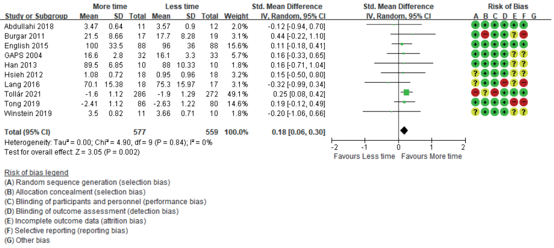
Figure 1. Forest plot and risk of bias for activities of daily living (Im, 2024)
Z: p-value of the pooled effect; df: degrees of freedom; I2: statistic heterogeneity; CI: confidence interval
1b. ESO-guideline ADL (Alt-Murphy, 2025)
The ESO guideline did not describe ADL outcome (Alt-Murphy, 2025).
2a. Walking ability (Im, 2024)
To evaluate the impact of the amount of exercise therapy on walking ability (i.e., walking speed, 6-minute walking test, Rivermead Mobility Index, 5-meter timed walk) six RCTs were analyzed. There was no difference in lower limb function between the ‘’more time’’ and ‘’less time’’ exercise therapy groups (SMD = 0.16; 95%CI -0.03 to 0.35) (Figure 2). This difference was considered not clinically relevant.
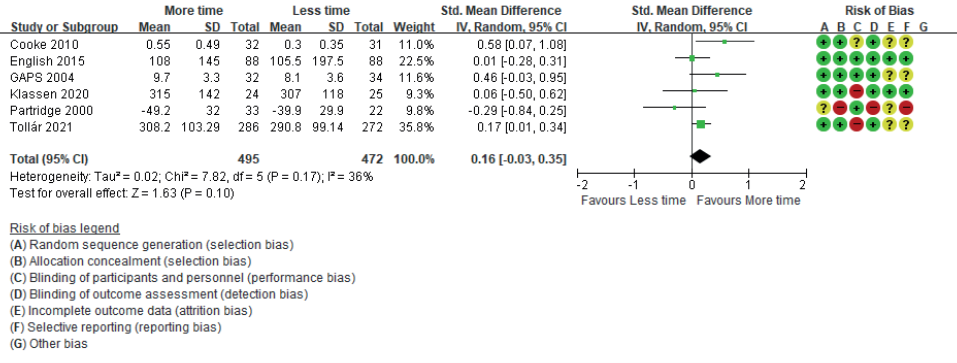
Figure 2. Forest plot and risk of bias for lower limb function (Im, 2024)
Z: p-value of the pooled effect; df: degrees of freedom; I2: statistic heterogeneity; CI: confidence interval
2b. ESO-guideline walking ability (Alt-Murphy, 2025)
The ESO-guideline -focusing on studies that added at least 20 hours or more of same type of gait training- included one study (Klassen, 2020) that reported on walking capacity and walking speed. The study investigated the effect of higher dosages of task-specific, progressive walking exercise, including weight-bearing walking related activities, compared to a lower dosage and control (usual care).
In a post-evaluation, the authors reported a mean (SD) result on the 6MWT (walking capacity) of 315 (142) meters for the higher dosage group (n=24) and 307 (118) meters for the lower dosage group (n=25). Mean difference was 8.00 meters (95%CI -65.26 to 81.26) in favor of the higher dosage group. This difference is not considered clinically relevant.
Additionally, the authors reported on walking speed. At post-evaluation, a mean (SD) speed on the 5-meter walk test of 0.97 (0.40) m/s was reported for the higher dosage group (n=24) and 0.90 (0.31) for the lower dosage group (n=25). Mean difference was 0.07 (95%CI -0.13 to 0.27) in favor of the higher dosage group. This difference is considered not clinically relevant.
3a. Upper limb capacity (Im, 2024)
To evaluate the impact of spent time on exercise therapy for improving upper limb function outcomes, 8 RCTs were included. There was no difference in upper limb function between-group difference with respect to more time or less time spent on exercise therapy groups (SMD = 0.10; 95%CI -0.17 to 0.36) (Figure 3). This difference is considered not clinically relevant.
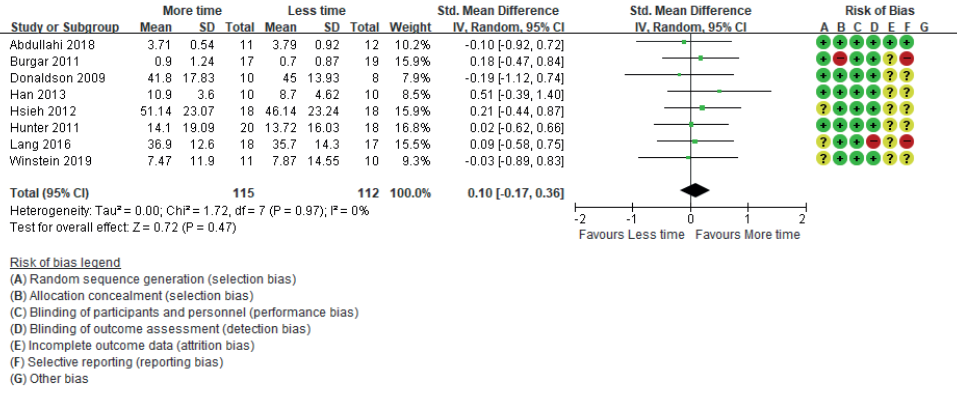
Figure 3. Forest plot and risk of bias for upper limb capacity (Im, 2024)
Z: p-value of the pooled effect; df: degrees of freedom; I2: statistic heterogeneity; CI: confidence interval
3b. ESO-guideline upper limb capacity (Alt-Murphy, 2025)
The ESO-guideline included two studies (n=103) investigating 20 hours or more time spent on upper limb rehabilitation to improve upper limb capacity (Dromerick, 2021; Han, 2013). Results are displayed in Figure 4. Mean difference is 4.05 on the Action Research Arm Test (ARAT) (95%CI 0.21 to 7.89) in favor of a higher dosage of upper limb practice compared to the lower dosage. This difference is considered not clinically relevant.
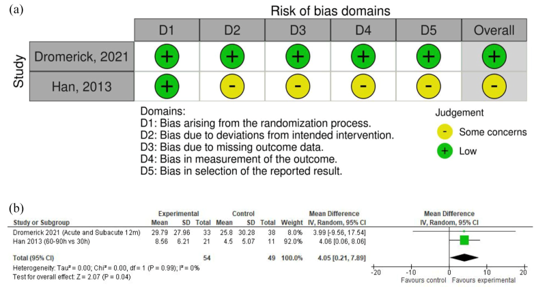
Figure 4. Forest plot and risk of bias for upper limb capacity (ESO-guideline)
Z: p-value of the pooled effect; df: degrees of freedom; I2: statistic heterogeneity; CI: confidence interval
4. Quality of life
Quality of life outcomes were not reported in either Im (2024) or the ESO guideline (Alt-Murphy, 2025).
5a. Adverse events (Im, 2024)
To evaluate the impact of the amount of exercise therapy on adverse events two RCTs were analyzed. Risk ratio was 1.37 (95%CI 0.60 to 3.16) in favor of the ‘’more time’’ exercise therapy groups (Figure 5). This difference was not considered clinically relevant suggesting safety for high dosing of therapy. The adverse events monitored in these studies included death, stroke recurrence, and falls.
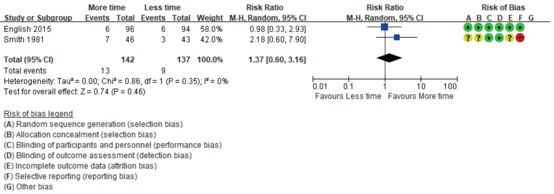
Figure 5. Forest plot and risk of bias for adverse events (Im, 2024)
Z: p-value of the pooled effect; df: degrees of freedom; I2: statistic heterogeneity; CI: confidence interval
5b. ESO-guideline adverse events (Alt-Murphy, 2025)
The ESO-guideline reported no serious adverse events related to the high dosing of therapy.
A systematic review of the literature was performed to answer the following question(s):
What are the effects of higher dose (i.e., more time spent on exercise therapy) compared with a lower dose (i.e., less time for the same exercise therapy) on outcomes in ADL, walking ability, upper limb capacity, quality of life and adverse events in adult stroke patients?
Table 1. PICO
| Patients | Adult stroke patients (ischemic stroke), intracerebral hemorrhage, transient ischemic attack) with reduced ADL (Bartel-Index <19 points) |
| Intervention | More time spent on exercise therapy (in hours) |
| Control | Less time spent on the same type of exercise therapy (in hours) |
| Outcomes | Activities of daily living (ADL), walking ability (e.g., gait pattern and gait speed), upper limb capacity, quality of life, adverse events |
| Other selection criteria | Study design: systematic reviews (and randomized controlled trials) |
Relevant outcome measures
The guideline panel considered upper limb capacity, walking ability and ADL (e.g., Barthel Index), as critical outcome measures for decision making, and quality of life and adverse events as an important outcome measure for decision making.
The guideline panel defined the outcome measures including minimal clinically (patient) important differences as shown in Table 2.
Table 2. Definitions and minimally clinical important differences (MCID) for all outcome measures
|
Outcome units |
Outcome measures |
Definition |
Minimal clinically important difference |
|
Effects on skills and abilities (ICF-activities) |
Activities of Daily Living (ADL) |
For example, using Barthel Index, including social functioning. |
Barthel Index: 1.85 points (scale 0-20) (Hsieh, 2007). In case an SMD was calculated, the following MCID was applied: -0.5 > standardized mean difference (SMD) > 0.5.
|
|
Walking ability |
Measured with 10-meter walking test (10MWT), 6-min walking test (6MWT) |
0.1 m/s gait speed difference for 10MWT, 54 meter difference for 6MWT (Wise, 2005). In case an SMD was calculated, the following MCID was applied: -0.5 > SMD > 0.5. |
|
|
Upper limb capacity |
Measured with Action Research Arm Test (ARAT) or 9-hole peg test (9HPT) |
5.7 points on the ARAT (Lang, 2008) and 20% in test score for the 9HPT (Feys, 2017). In case an SMD was calculated, the following MCID was applied: -0.5 > SMD > 0.5. |
|
|
Quality of life |
|
For example, using SF-36, EQ-5D |
25% difference for dichotomous outcomes (0.8 ≥ RR ≥ 1.25), and 0.5 SD or -0.5 > SMD > 0.5 for continuous outcomes. |
|
Adverse events and patient safety |
A priori, the working group did not define adverse events, but used the definitions as they were used in the studies. |
25% difference (0.8 ≥ RR ≥ 1.25) |
|
Search and select (Methods)
A systematic literature search was performed by a medical information specialist using the following bibliographic databases: Embase.com and Ovid/Medline. Both databases were searched from 01-01-2010 to 19-08-2025 for systematic reviews and RCTs. Systematic searches were completed using a combination of controlled vocabulary/subject headings (e.g., Emtree-terms, MeSH) wherever they were available and natural language keywords. The overall search strategy was derived from the following primary search concepts: (1) cerebrovascular accident; (2) training intensity. Duplicates were removed using EndNote software. After deduplication, a total of 754 records were imported for title/abstract screening. Only studies that compared more hours spent on exercise therapy versus fewer hours spent on exercise therapy of the same type were included.
Initially, 15 studies were selected based on title and abstract screening. After reading the full text, 13 studies were excluded (see the exclusion table under the tab ‘Evidence tables’), and two studies were included. In addition, a relevant international guideline of the European Stroke Organization was identified.
- Alt Murphy M, Munoz-Novoa M, Heremans C, Branscheidt M, Cabanas-Valdés R, Engelter ST, Kruuse C, Kwakkel G, Lakičević S, Lampropoulou S, Luft AR, Marque P, Moore SA, Podlasek A, Shankaranarayana AM, Shaw L, Solomon JM, Stinear C, Swinnen E, Turolla A, Verheyden G. European Stroke Organisation (ESO) guideline on motor rehabilitation. Eur Stroke J. 2025 Dec;10(4):1160-1188. doi: 10.1177/23969873251338142. Epub 2025 May 22. PMID: 40401760; PMCID: PMC12098312.
- Bernhardt J, Hayward KS, Kwakkel G, Ward NS, Wolf SL, Borschmann K, Krakauer JW, Boyd LA, Carmichael ST, Corbett D, Cramer SC. Agreed Definitions and a Shared Vision for New Standards in Stroke Recovery Research: The Stroke Recovery and Rehabilitation Roundtable Taskforce. Neurorehabil Neural Repair. 2017 Sep;31(9):793-799. doi: 10.1177/1545968317732668. PMID: 28934920.
- Clark B, Whitall J, Kwakkel G, Mehrholz J, Ewings S, Burridge J. The effect of time spent in rehabilitation on activity limitation and impairment after stroke. Cochrane Database Syst Rev. 2021 Oct 25;10(10):CD012612. doi: 10.1002/14651858.CD012612.pub2. PMID: 34695300; PMCID: PMC8545241.
- Dromerick AW, Geed S, Barth J, Brady K, Giannetti ML, Mitchell A, Edwardson MA, Tan MT, Zhou Y, Newport EL, Edwards DF. Critical Period After Stroke Study (CPASS): A phase II clinical trial testing an optimal time for motor recovery after stroke in humans. Proc Natl Acad Sci U S A. 2021 Sep 28;118(39):e2026676118. doi: 10.1073/pnas.2026676118. PMID: 34544853; PMCID: PMC8488696.
- English C, Hillier SL, Lynch EA. Circuit class therapy for improving mobility after stroke. Cochrane Database Syst Rev. 2017 Jun 2;6(6):CD007513. doi: 10.1002/14651858.CD007513.pub3. PMID: 28573757; PMCID: PMC6481475.
- Feys P, Lamers I, Francis G, Benedict R, Phillips G, LaRocca N, Hudson LD, Rudick R; Multiple Sclerosis Outcome Assessments Consortium. The Nine-Hole Peg Test as a manual dexterity performance measure for multiple sclerosis. Mult Scler. 2017 Apr;23(5):711-720. doi: 10.1177/1352458517690824. Epub 2017 Feb 16. PMID: 28206826; PMCID: PMC5405844.
- Hofmeijer J, Ham F, Kwakkel G. Evidence of rTMS for Motor or Cognitive Stroke Recovery: Hype or Hope? Stroke. 2023 Oct;54(10):2500-2511. doi: 10.1161/STROKEAHA.123.043159. Epub 2023 Sep 25. PMID: 37747964.
- Hsieh YW, Wang CH, Wu SC, Chen PC, Sheu CF, Hsieh CL. Establishing the minimal clinically important difference of the Barthel Index in stroke patients. Neurorehabil Neural Repair. 2007 May-Jun;21(3):233-8. doi: 10.1177/1545968306294729. Epub 2007 Mar 9. PMID: 17351082.
- De Iaco L, Veerbeek JM, Ket JCF, Kwakkel G. Upper Limb Robots for Recovery of Motor Arm Function in Patients With Stroke: A Systematic Review and Meta-Analysis. Neurology. 2024 Jul 23;103(2):e209495. doi: 10.1212/WNL.0000000000209495.
- Im S, Kim YH. The Impact of the Total Amount of Exercise Therapy on Post-Stroke Activities of Daily Living and Motor Function: A Meta-Analysis. Brain Neurorehabil. 2024 Oct 22;17(3):e16. doi: 10.12786/bn.2024.17.e16. PMID: 39649711; PMCID: PMC11621670.
- Kwakkel G, Stinear C, Essers B, Munoz-Novoa M, Branscheidt M, Cabanas-Valdés R, Lakičević S, Lampropoulou S, Luft AR, Marque P, Moore SA, Solomon JM, Swinnen E, Turolla A, Alt Murphy M, Verheyden G. Motor rehabilitation after stroke: European Stroke Organisation (ESO) consensus-based definition and guiding framework. Eur Stroke J. 2023 Dec;8(4):880-894. doi: 10.1177/23969873231191304. Epub 2023 Aug 7. PMID: 37548025; PMCID: PMC10683740.
- Kwakkel G, Veerbeek JM, van Wegen EE, Wolf SL. Constraint-induced movement therapy after stroke. Lancet Neurol. 2015 Feb;14(2):224-34. doi: 10.1016/S1474-4422(14)70160-7. PMID: 25772900; PMCID: PMC4361809.
- Lang CE, Edwards DF, Birkenmeier RL, Dromerick AW. Estimating minimal clinically important differences of upper-extremity measures early after stroke. Arch Phys Med Rehabil. 2008 Sep;89(9):1693-700. doi: 10.1016/j.apmr.2008.02.022. PMID: 18760153; PMCID: PMC2819021.
- Lang CE, Strube MJ, Bland MD, Waddell KJ, Cherry-Allen KM, Nudo RJ, Dromerick AW, Birkenmeier RL. Dose response of task-specific upper limb training in people at least 6 months poststroke: A phase II, single-blind, randomized, controlled trial. Ann Neurol. 2016 Sep;80(3):342-54. doi: 10.1002/ana.24734. Epub 2016 Aug 16. PMID: 27447365; PMCID: PMC5016233.
- Lang CE, Lohse KR, Birkenmeier RL. Dose and timing in neurorehabilitation: prescribing motor therapy after stroke. Curr Opin Neurol 2015;28:549-555.
- Laver KE, Adey-Wakeling Z, Crotty M, Lannin NA, George S, Sherrington C. Telerehabilitation services for stroke. Cochrane Database Syst Rev. 2020 Jan 31;1(1):CD010255. doi: 10.1002/14651858.CD010255.pub3. PMID: 32002991; PMCID: PMC6992923.
- Lin DJ, Cramer SC, Boyne P, Khatri P, Krakauer JW. High-Dose, High-Intensity Stroke Rehabilitation: Why Aren't We Giving It? Stroke. 2025 May;56(5):1351-1364. doi: 10.1161/STROKEAHA.124.043650. Epub 2025 Apr 28. PMID: 40294175; PMCID: PMC12039970.
- Lohse KR, Lang CE, Boyd LA. Is more better? Using metadata to explore dose-response relationships in stroke rehabilitation. Stroke. 2014 Jul;45(7):2053-8. doi: 10.1161/STROKEAHA.114.004695. Epub 2014 May 27. PMID: 24867924; PMCID: PMC4071164.
- Mehrholz J, Kugler J, Pohl M, Elsner B. Electromechanical-assisted training for walking after stroke. Cochrane Database Syst Rev. 2025 May 14;5(5):CD006185. doi: 10.1002/14651858.CD006185.pub6. PMID: 40365867; PMCID: PMC12076539.
- Otterman NM, Maas M, Schiemanck SK, van der Wees P, Kwakkel G. Development and validity of an innovative test to assess guideline-consistent clinical reasoning by physical therapists in stroke rehabilitation. J Rehabil Med. 2019 Jun 18;51(6):418-425. doi: 10.2340/16501977-2562. PMID: 31099400.
- van de Port IG, Wevers LE, Lindeman E, Kwakkel G. Effects of circuit training as alternative to usual physiotherapy after stroke: randomised controlled trial. BMJ. 2012 May 10;344:e2672. doi: 10.1136/bmj.e2672. PMID: 22577186; PMCID: PMC3349299.
- van de Port IG, Kwakkel G, van Wijk I, Lindeman E. Susceptibility to deterioration of mobility long-term after stroke: a prospective cohort study. Stroke. 2006 Jan;37(1):167-71. doi: 10.1161/01.STR.0000195180.69904.f2. Epub 2005 Dec 1. PMID: 16322486.
- Saunders DH, Sanderson M, Hayes S, Kilrane M, Greig CA, Brazzelli M, Mead GE. Physical fitness training for stroke patients. Cochrane Database Syst Rev. 2016 Mar 24;3(3):CD003316. doi: 10.1002/14651858.CD003316.pub6. Update in: Cochrane Database Syst Rev. 2020 Mar 20;3:CD003316. doi: 10.1002/14651858.CD003316.pub7. PMID: 27010219; PMCID: PMC6464717.
- Schlaug G, Cassarly C, Feld JA, Wolf SL, Rowe VT, Fritz S, Chhatbar PY, Shinde A, Su Z, Broderick JP, Zorowitz R, Awosika O, Edwards D, Lin C, Franciso GE, Wittenberg GF, Pundik S, Gregory C, Borich MR, Ramakrishnan V, Feng W. Safety and efficacy of transcranial direct current stimulation in addition to constraint-induced movement therapy for post-stroke motor recovery (TRANSPORT2): a phase 2, multicentre, randomised, sham-controlled triple-blind trial. Lancet Neurol. 2025 May;24(5):400-412. doi: 10.1016/S1474-4422(25)00044-4. Epub 2025 Mar 26. PMID: 40157380; PMCID: PMC12758568.
- Veerbeek JM, Koolstra M, Ket JC, van Wegen EE, Kwakkel G. Effects of augmented exercise therapy on outcome of gait and gait-related activities in the first 6 months after stroke: a meta-analysis. Stroke 2011;42:3311-3315.
- Vloothuis JD, Mulder M, Veerbeek JM, Konijnenbelt M, Visser-Meily JM, Ket JC, Kwakkel G, van Wegen EE. Caregiver-mediated exercises for improving outcomes after stroke. Cochrane Database Syst Rev. 2016 Dec 21;12(12):CD011058. doi: 10.1002/14651858.CD011058.pub2. PMID: 28002636; PMCID: PMC6463929.
- Wise RA, Brown CD. Minimal clinically important differences in the six-minute walk test and the incremental shuttle walking test. COPD. 2005 Mar;2(1):125-9. doi: 10.1081/copd-200050527. PMID: 17136972.
Risk of bias tables
For further details about the risk of bias assessment of the studies included in Im (2024), see https://e-bnr.org/search.php?where=aview&id=10.12786/bn.2024.17.e16&code=0176BN&vmode=FULL.
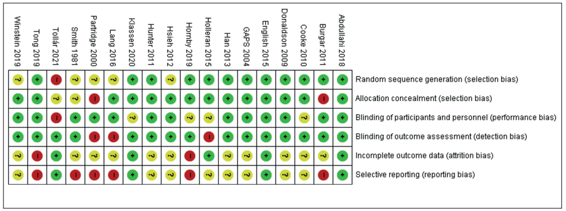
Table of excluded studies
|
Reference |
Reason for exclusion |
|
Górna S, Podgórski T, Kleka P, Domaszewska K. Effects of Different Intensities of Endurance Training on Neurotrophin Levels and Functional and Cognitive Outcomes in Post-Ischaemic Stroke Adults: A Randomised Clinical Trial. Int J Mol Sci. 2025 Mar 20;26(6):2810. doi: 10.3390/ijms26062810. PMID: 40141452; PMCID: PMC11943154. |
Other PICO training intensity |
|
Pulimoot RS, Bhuvaneswari CKV, Harshavardhan G, Annadurai K. A Preliminary Study on Effectiveness of Varying Dose of Paretic Upper Limb Training with Visual Deprivation in Poststroke Patients: A Randomised Clinical Trial. Journal of Clinical and Diagnostic Research. 2024 Dec;18(12):YC05-YC10. doi: 10.7860/JCDR/2024/73704.20400. |
Wrong patient group |
|
Boyne P, Billinger SA, Reisman DS, Awosika OO, Buckley S, Burson J, Carl D, DeLange M, Doren S, Earnest M, Gerson M, Henry M, Horning A, Khoury JC, Kissela BM, Laughlin A, McCartney K, McQuaid T, Miller A, Moores A, Palmer JA, Sucharew H, Thompson ED, Wagner E, Ward J, Wasik EP, Whitaker AA, Wright H, Dunning K. Optimal Intensity and Duration of Walking Rehabilitation in Patients With Chronic Stroke: A Randomized Clinical Trial. JAMA Neurol. 2023 Apr 1;80(4):342-351. doi: 10.1001/jamaneurol.2023.0033. PMID: 36822187; PMCID: PMC9951105. |
High versus moderate intensity feasibility |
|
English C, Bernhardt J, Crotty M, Esterman A, Segal L, Hillier S. Circuit class therapy or seven-day week therapy for increasing rehabilitation intensity of therapy after stroke (CIRCIT): a randomized controlled trial. Int J Stroke. 2015 Jun;10(4):594-602. doi: 10.1111/ijs.12470. Epub 2015 Mar 19. PMID: 25790018. |
RCT on circuit class training, other PICO |
|
Han C, Wang Q, Meng PP, Qi MZ. Effects of intensity of arm training on hemiplegic upper extremity motor recovery in stroke patients: a randomized controlled trial. Clin Rehabil. 2013 Jan;27(1):75-81. doi: 10.1177/0269215512447223. Epub 2012 Jul 16. PMID: 22801472. |
Included in Im (2024). |
|
Chi X-L, Yu Y-P, Bi K-P. Group intensive rehabilitation for lower limb functional recovery early after stroke: A non-randomized controlled trial. Journal of Brain Science. 2013;41:17-36. doi: 10.20821/jbs.41.0_17 |
Wrong design (non-randomized trial). |
|
Smania N, Gandolfi M, Paolucci S, Iosa M, Ianes P, Recchia S, Giovanzana C, Molteni F, Avesani R, Di Paolo P, Zaccala M, Agostini M, Tassorelli C, Fiaschi A, Primon D, Ceravolo MG, Farina S. Reduced-intensity modified constraint-induced movement therapy versus conventional therapy for upper extremity rehabilitation after stroke: a multicenter trial. Neurorehabil Neural Repair. 2012 Nov-Dec;26(9):1035-45. doi: 10.1177/1545968312446003. Epub 2012 Jun 1. PMID: 22661278. |
Other PICO, intensity of training session |
|
Psychouli P, Mamais I, Anastasiou C. An Exploration of the Effectiveness of Different Intensity Protocols of Modified Constraint-Induced Therapy in Stroke: A Systematic Review. Rehabil Res Pract. 2023 Oct 10;2023:6636987. doi: 10.1155/2023/6636987. PMID: 37854484; PMCID: PMC10581859. |
Other PICO, intensity of training session |
|
Newton SP, Dalton EJ, Ang JY, Klaic M, Thijs V, Hayward KS. Dose, Content, and Context of Usual Care in Stroke Upper Limb Motor Interventions: A Systematic Review. Clin Rehabil. 2023 Nov;37(11):1437-1450. doi: 10.1177/02692155231172295. Epub 2023 May 7. PMID: 37151039; PMCID: PMC10492439. |
Other PICO, intensity of training session |
|
Goikoetxea-Sotelo G, van Hedel HJA. Defining, quantifying, and reporting intensity, dose, and dosage of neurorehabilitative interventions focusing on motor outcomes. Front Rehabil Sci. 2023 Aug 10;4:1139251. doi: 10.3389/fresc.2023.1139251. PMID: 37637933; PMCID: PMC10457006. |
Other PICO, intensity of training session |
|
Amanzonwé ER, Tedesco Triccas L, Codjo L, Hansen D, Feys P, Kossi O. Exercise dosage to facilitate the recovery of balance, walking, and quality of life after stroke. S Afr J Physiother. 2023 Feb 10;79(1):1846. doi: 10.4102/sajp.v79i1.1846. PMID: 36873960; PMCID: PMC9982519. |
Other PICO, intensity of training session |
|
Abbasian S, Rastegar Mm M. Is the Intensity or Duration of Treadmill Training Important for Stroke Patients? A Meta-Analysis. J Stroke Cerebrovasc Dis. 2018 Jan;27(1):32-43. doi: 10.1016/j.jstrokecerebrovasdis.2017.09.061. Epub 2017 Nov 3. PMID: 29108807. |
Other PICO, intensity of training session |
|
Nijland R, Kwakkel G, Bakers J, van Wegen E. Constraint-induced movement therapy for the upper paretic limb in acute or sub-acute stroke: a systematic review. Int J Stroke. 2011 Oct;6(5):425-33. doi: 10.1111/j.1747-4949.2011.00646.x. PMID: 21951408. |
Other PICO |
Beoordelingsdatum en geldigheid
Publicatiedatum : 25-09-2026
Beoordeeld op geldigheid : 25-09-2026
Algemene gegevens
Het Nederlands Huisartsen Genootschap heeft een verklaring van geenbezwaar afgegeven.
Samenstelling werkgroep
Voor het ontwikkelen van de richtlijnmodule is in 2022 een multidisciplinair cluster ingesteld. Het cluster Cerebrovasculaire ziekten bestaat uit meerdere richtlijnen (zie hier de actuele clusterindeling). De stuurgroep bewaakt het proces van modulair onderhoud binnen het cluster. De expertisegroepsleden brengen hun expertise in, indien nodig. De volgende personen uit het cluster zijn betrokken geweest bij de herziening van deze module:
Clusterstuurgroepleden
- dr. J.H. (Julia) van Tuijl, neuroloog, NVN
- dr. M.D.I. (Mervyn) Vergouwen, neuroloog, NVN
- dr. I.R. (Ido) van den Wijngaard, neuroloog, NVN
- dr. R. (René) van den Berg, interventie neuro-radioloog, NVvR
- A.M. (Annegien) Lips, ervaringsdeskundige, Hersenletsel
- dr. M. (Margriet) van der Werf, revalidatiearts, VRA
- dr. H.D. (Jeroen) Boogaarts, neurochirurg, NVvN
Betrokken clusterexpertisegroepleden
- Prof. dr. G. (Gert) Kwakkel, hoogleraar neurorevalidatie, KNGF
- Prof. dr. C.G.M. (Carel) Meskers, revalidatiearts, VRA
- dr. M.H. (Heleen) den Hertog, neuroloog, NVN
- Prof. dr. J.M.A. (Anne) Visser-Meily, revalidatiearts, VRA
Met ondersteuning van
- dr. M.L. (Marja) Molag, adviseur, Kennisinstituut van de Federatie Medisch Specialisten
- L.C. (Laura) van Wijngaarden, junior adviseur, Kennisinstituut van de Federatie Medisch Specialisten
- I. (Ingeborg) van Dusseldorp, senior informatiespecialist, Kennisinstituut van de Federatie Medisch Specialisten
Belangenverklaringen
Een overzicht van de belangen van de clusterleden en het oordeel over het omgaan met eventuele belangen vindt u in onderstaande tabel. De ondertekende belangenverklaringen zijn op te vragen bij het secretariaat van het Kennisinstituut van de Federatie Medisch Specialisten via secretariaat@kennisinstituut.nl.
Gemelde (neven)functies en belangen stuurgroepleden
|
Naam |
Hoofdfunctie |
Nevenwerkzaamheden |
Persoonlijke financiële belangen |
Persoonlijke relaties |
Extern gefinancierd onderzoek |
Intellectuele belangen en reputatie |
Overige belangen |
Datum |
Restrictie |
|
dr. J.H. (Julia) van Tuijl |
Neuroloog, ETZ Tilburg |
*Commissielid richtlijn epilepsie *Voorzitter focusgroep acute neurologie van de ROAZ Brabant |
Geen |
Geen |
Enkel deelname aan landelijke vasculaire trials zoals CASES en DIST |
Geen |
Geen |
25-03-2025 |
Geen |
|
dr. M.D.I. (Mervyn) Vergouwen |
Neuroloog, UMC Utrecht |
Geen |
Geen |
Geen |
*CSL Behring: deelname aan advisory board meeting, betaling aan UMC Utrecht *Bayer: onderzoeksgeld voor Investigator Initiated Research, betaling aan UMC Utrecht |
Geen |
Geen |
15-08-2023 |
Geen |
|
dr. I.R. (Ido) van den Wijngaard |
Neuroloog, Haaglanden MC |
Commissielid NVN richtlijn |
Geen |
Geen |
Geen |
Geen |
Geen |
02-08-2022 |
Geen |
|
dr. R. (René) van den Berg |
Interventie Neuro-radioloog, Amsterdam UMC, locatie AMC |
Geen |
Geen |
Geen |
Geen |
Geen |
Geen |
15-08-2023 |
Geen |
|
A.M. (Annegien) Lips |
Patiëntvertegenwoordiger en ervaringsdeskundige NAH |
Deelname aan verschillende richtlijnclusters |
Geen |
Geen |
Geen |
Geen |
Geen |
18-09-2025 |
Geen |
|
dr. M. (Margriet) van der Werf |
Revalidatiearts, Rijndam revalidatie |
Geen |
Geen |
Geen |
Geen |
Geen |
Geen |
27-10-2022 |
Geen |
|
dr. H.D. (Jeroen) Boogaarts |
Neurochirurg, Radboud UMC, Nijmegen |
Voorzitter stichting kwaliteitsbevordering neurochirurgie. |
Geen |
Geen |
Gecombineerde subsidie van Hartstichting, ZonMW en ook industrie binnen CONTRAST WP2 en 6 (https://www.contrast-consortium.nl/) (voor verbetering overleving stroke patienten door betere triage en aandacht veilige behandeling ; alsook registratie SAB patienten ZonMw; intracerebrale bloedingen trial (DIST) https://www.dutch-ich.nl/ |
Geen |
Consultant voor stryker neurovascular, inkomsten worden aan de afdeling Neurochirurgie van het Radboud UMC betaald. |
29-10-2024 |
Geen |
Gemelde (neven)functies en belangen betrokken expertisegroepleden
|
Naam |
Hoofdfunctie |
Nevenwerkzaamheden |
Persoonlijke financiële belangen |
Persoonlijke relaties |
Extern gefinancierd onderzoek |
Intellectuele belangen en reputatie |
Overige belangen |
Datum |
Restrictie |
|
Prof. dr. G. (Gert) Kwakkel |
Hoogleraar revalidatiegeneeskunde, Amsterdam UMC |
European Editor NeuroRehabilitation & Neural Repair Journal (ASNR) |
Geen |
Geen |
Geen |
Geen |
Geen |
2-03-2026 |
Geen |
|
Prof. dr. C.G.M. (Carel) Meskers |
Hoogleraar/ revalidatiearts, Amsterdam UMC |
Geen |
Geen |
Geen |
www.Health-Holland.com; Care4Musle, projectleider ja Dutch Cardiovascular Alliance;Contrast 2.0, projectleider Ja |
Geen |
Geen |
29-10-2024 |
Geen |
|
dr. M.H. (Heleen) den Hertog |
Neuroloog, Erasmus MC |
Lid zorgevaluatienetwerk neurologie Voorzitter Nederlandse Neurovasculaire werkgroep Medisch hoofd innovatie & wetenschap Isala Lid werkgroep digitale cardiovasculaire zorg Isala Medical board speerpunt Isala Acute Zorg en Traumacentrum Klankboard groep tijdskritieke aandoeningen, FMS |
Geen |
Geen |
Ja: Innovatie & wetenschapsfonds Isala Zinnige diagnostiek na chronisch subduraal hematoom |
Geen |
Ontwikkelen app nazorg acuut verworven hersenletsel samen met VWS |
29-07-2024 |
Geen |
|
Prof. dr. J.M.A. (Anne) Visser-Meily |
Revalidatiearts, UMC Utrecht |
Geen |
Geen |
Geen |
Fin. 1: ALS stichting: verbeteren inhoud zorg ALS Fin.2: ZonMw: uitkomst maten in revalidatie |
Geen |
Geen |
26-08-2024 |
Geen |
Inbreng patiëntenperspectief
Kwalitatieve raming van mogelijke financiële gevolgen in het kader van de Wkkgz
Bij de richtlijnmodule voerden de clusterleden conform de Wet kwaliteit, klachten en geschillen zorg (Wkkgz) een kwalitatieve raming uit om te beoordelen of de aanbevelingen mogelijk leiden tot substantiële financiële gevolgen. Bij het uitvoeren van deze beoordeling is de richtlijnmodule op verschillende domeinen getoetst (zie het stroomschema bij Werkwijze).
|
Module |
Uitkomst raming |
Toelichting |
|
Intensiteit van oefentherapie na herseninfarct/-bloeding |
Geen financiële gevolgen |
Hoewel uit de toetsing volgt dat de aanbevelingen breed toepasbaar zijn (>40.000 patiënten), volgt ook uit de toetsing dat het geen nieuwe manier van zorgverlening of andere organisatie van zorgverlening betreft |
Werkwijze
Voor meer details over de gebruikte richtlijnmethodologie verwijzen wij u naar de Werkwijze. Relevante informatie voor de ontwikkeling/herziening van deze richtlijnmodule is hieronder weergegeven.
Zoekverantwoording
Algemene informatie
|
Cluster/richtlijn: Cluster cerebrovasculaire ziekten, richtlijn: Herseninfarct en hersenbloeding, |
|
|
Uitgangsvraag/modules: module 9.4 Oefentherapie na een herseninfarct/-bloeding. What is the clinical effectiveness of more intensive rehabilitation compared with standard rehabilitation in stroke patients? |
|
|
Database(s): Embase.com, Ovid/Medline |
Datum: 19-8-2025 |
|
Periode: vanaf 2010 |
Talen: geen restrictie |
|
Literatuurspecialist: Ingeborg van Dusseldorp |
Rayyan review: https://new.rayyan.ai/reviews/1584594/screening |
|
Toelichting: In overleg met de adviseur wordt afgesproken dat specifiek wordt gezocht naar de intensiteit van de therapie en niet naar oefentherapie in het algemeen. Als blijkt dat onvoldoende evidence wordt gevonden kan meer sensitief worden gezocht. De sensitieve strategie leverde in 1 database >6000 referenties op. Van de sleutelartikelen wordt het volgende artikel niet gevonden vanwege het studiedesign. Ook met de sensitieve zoekstrategie wordt het sleutelartikel niet gevonden: Henderson CE, Plawecki A, Lucas E, Lotter JK, Scofield M, Carbone A, Jang JH, Hornby TG. Increasing the Amount and Intensity of Stepping Training During Inpatient Stroke Rehabilitation Improves Locomotor and Non-Locomotor Outcomes. Neurorehabil Neural Repair. 2022 Sep;36(9):621-632 |
|
Zoekopbrengst
|
|
EMBASE |
OVID/MEDLINE |
Ontdubbeld |
|
SR |
226 |
202 |
247 |
|
RCT |
471 |
424 |
507 |
|
Observationele studies |
|
|
|
|
Totaal |
697 |
626 |
754 |
*in Rayyan
Zoekstrategie
Embase.com
|
No. |
Query |
Results |
|
#1 |
'cerebrovascular accident'/exp OR 'brain hemorrhage'/exp OR 'brain infarction'/exp OR 'brain ischemia'/exp OR 'intracranial aneurysm'/exp OR 'stroke patient'/exp OR 'stroke unit'/exp OR cva:ti,ab,kw OR cvas:ti,ab,kw OR stroke:ti,ab,kw OR poststroke:ti,ab,kw OR (((cerebrovascular OR 'cerebro vascular' OR cerebral OR intracerebral OR cerebellum OR brain OR 'corpus callosum' OR intracranial OR intraventricular OR periventricular OR subarachnoid OR encephalopath* OR epidural OR subdural) NEAR/3 (accident* OR attack* OR infarct* OR insult* OR event* OR bleed* OR microbleed* OR aneurysm* OR hemorrhag* OR haemorrhag* OR microhemorrhag* OR microhaemorrhag* OR ischemi* OR ischaemi* OR haematoma* OR hematoma* OR thrombo* OR emboli* OR occlus*)):ti,ab,kw) OR apoplex*:ti,ab,kw OR encephalorrhagia:ti,ab,kw |
1111792 |
|
#2 |
'high intensity exercise'/exp OR (((intensity OR 'seven day*') NEAR/6 (exercise OR training OR therap* OR rehabilitat*)):ti,ab,kw) |
77091 |
|
#3 |
#1 AND #2 |
3819 |
|
#4 |
#3 AND [2010-2026]/py NOT ('conference abstract'/it OR 'editorial'/it OR 'letter'/it OR 'note'/it OR 'clinical trial':dtype) NOT (('animal'/exp OR 'animal experiment'/exp OR 'animal model'/exp OR 'nonhuman'/exp) NOT 'human'/exp) |
1685 |
|
#5 |
'meta analysis'/exp OR 'systematic review'/exp OR 'scoping review'/exp OR 'rapid review'/exp OR 'umbrella review'/exp OR 'cochrane database of systematic reviews'/jt OR 'network meta-analysis'/exp OR 'networkmeta analy*':ti,ab,kw OR 'networkmetaanaly*':ti,ab,kw OR metaanaly*:ti,ab,kw OR 'meta analy*':ti,ab,kw OR metanaly*:ti,ab,kw OR prisma:ti,ab,kw OR prospero:ti,ab,kw OR metaanali*:ti,ab,kw OR 'meta anali*':ti,ab,kw OR metanali*:ti,ab,kw OR (((systemati* OR scoping OR umbrella OR 'structured literature') NEAR/3 (review* OR overview*)):ti,ab,kw) OR (((structured OR systemic*) NEAR/3 (review* OR overview* OR synth*) NEAR/3 literature):ti,ab,kw) OR ((systemic* NEAR/1 review*):ti,ab,kw) OR (((systemati* OR literature OR database* OR 'data base*') NEAR/10 search*):ti,ab,kw) OR (((structured OR comprehensive* OR systemic*) NEAR/3 search*):ti,ab,kw) OR (((literature NEAR/3 (review* OR overview*)):ti,ab,kw) AND (search*:ti,ab,kw OR database*:ti,ab,kw OR 'data base*':ti,ab,kw)) OR (('data extraction*':ti,ab,kw OR 'data source*':ti,ab,kw) AND ('study selection*':ti,ab,kw OR 'studies selection*':ti,ab,kw)) OR ('search strateg*':ti,ab,kw AND 'selection criteria*':ti,ab,kw) OR ('data source*':ti,ab,kw AND 'data synth*':ti,ab,kw) OR medline*:ti,ab,kw OR pubmed*:ti,ab,kw OR 'pub med*':ti,ab,kw OR embase:ti,ab,kw OR cochrane*:ti,ab,kw OR (((critical* OR rapid*) NEAR/2 (review* OR overview* OR synth*)):ti) OR ((((critical* OR rapid*) NEAR/3 (review* OR overview* OR synth*)):ab) AND (search*:ab OR database*:ab OR 'data base*':ab)) OR metasynth*:ti,ab,kw OR 'meta synth*':ti,ab,kw OR 'review* of review*':ti,ab,kw |
1150829 |
|
#6 |
'randomized controlled trial'/exp OR (((pragmatic OR practical) NEAR/1 'clinical trial'):ti,ab) OR ((('non inferiority' OR noninferiority OR superiority OR equivalence) NEXT/3 trial):ti,ab) OR rct:ti OR randomly*:ti,ab OR randomi*:ti,ab OR 'random* control*':ti,ab |
2203356 |
|
#7 |
#4 AND #5 |
226 |
|
#8 |
#4 AND #6 NOT #7 |
471 |
|
#9 |
#7 OR #8 |
697 |
|
#10 |
'increasing the amount and intensity of stepping training during inpatient stroke rehabilitation improves locomotor and non-locomotor outcomes':ti |
1 |
|
#11 |
'high intensity physical rehabilitation later than 24 h post stroke is beneficial in patients: a pilot randomized controlled trial (rct) study in mild to moderate ischemic stroke':ti NOT commentary:ti |
1 |
|
#12 |
'circuit class therapy or seven-day week therapy for increasing rehabilitation intensity of therapy after stroke (circit): a randomized controlled trial':ti |
1 |
|
#13 |
#10 OR #11 OR #12 |
3 |
|
#14 |
#9 AND #13 |
2 |
|
#15 |
#13 NOT #14 |
1 |
Ovid/Medline
|
# |
Searches |
Results |
|
1 |
Cerebrovascular Disorders/ or exp Stroke/ or exp Intracranial Aneurysm/ or exp Intracranial Hemorrhages/ or exp Brain Infarction/ or exp Stroke Rehabilitation/ or exp Brain Ischemia/ or cva.ti,ab,kf. or cvas.ti,ab,kf. or stroke.ti,ab,kf. or poststroke.ti,ab,kf. or ((cerebrovascular or 'cerebro vascular' or cerebral or intracerebral or cerebellum or brain or 'corpus callosum' or intracranial or intraventricular or periventricular or subarachnoid or encephalopath* or subdural or epidural) adj3 (accident* or attack* or infarct* or insult* or event* or bleed* or microbleed* or aneurysm* or hemorrhag* or haemorrhag* or microhemorrhag* or microhaemorrhag* or ischemi* or ischaemi* or haematom* or hematom* or thrombo* or emboli* or occlus*)).ti,ab,kf. or apoplex*.ti,ab,kf. or encephalorrhagia.ti,ab,kf. |
652426 |
|
2 |
((intensity or seven day*) adj6 (exercise or training or therap* or rehabilitat*)).ti,ab,kf. |
51000 |
|
3 |
1 and 2 |
2056 |
|
4 |
limit 3 to yr="2010 -Current" |
1611 |
|
5 |
4 not ((exp animals/ or exp models, animal/) not humans/) not (letter/ or comment/ or editorial/) |
1540 |
|
6 |
exp Meta-Analysis/ or exp Network Meta-Analysis/ or exp Systematic Review/ or (networkmeta analy* or networkmetaanaly* or metaanaly* or meta analy* or metanaly* or prisma or prospero or metaanali* or meta anali* or metanali*).ti,ab,kf. or ((systemati* or scoping or umbrella or structured literature) adj3 (review* or overview*)).ti,ab,kf. or ((structured or systemic*) adj3 (review* or overview* or synth*) adj3 literature).ti,ab,kf. or (systemic* adj1 review*).ti,ab,kf. or ((systemati* or literature or database* or data base*) adj10 search*).ti,ab,kf. or ((structured or comprehensive* or systemic*) adj3 search*).ti,ab,kf. or ((literature adj3 (review* or overview*)) and (search* or database* or data base*)).ti,ab,kf. or ((data extraction* or data source*) and (study selection* or studies selection*)).ti,ab,kf. or (search strateg* and selection criteria*).ti,ab,kf. or (data source* and data synth*).ti,ab,kf. or (medline* or pubmed* or pub med* or embase or cochrane*).ti,ab,kf. or cochrane.jw. or ((critical* or rapid*) adj2 (review* or overview* or synth*)).ti. or (((critical* or rapid*) adj3 (review* or overview* or synth*)) and (search* or database* or data base*)).ab. or metasynth*.ti,ab,kf. or meta synth*.ti,ab,kf. |
853420 |
|
7 |
exp randomized controlled trial/ or randomi*.ti,ab. or rct?.ti,ab. or randomly.ti,ab. or "random* control*".ti,ab. or ((pragmatic or practical) adj "clinical trial*").ti,ab. or ((non-inferiority or noninferiority or superiority or equivalence) adj3 trial*).ti,ab. |
1457305 |
|
8 |
5 and 6 |
202 |
|
9 |
(5 and 7) not 8 |
424 |
|
10 |
8 or 9 |
626 |